
 US
UL 508A Explained: Industrial Control Panels and the UL-Listed Computers Inside Them
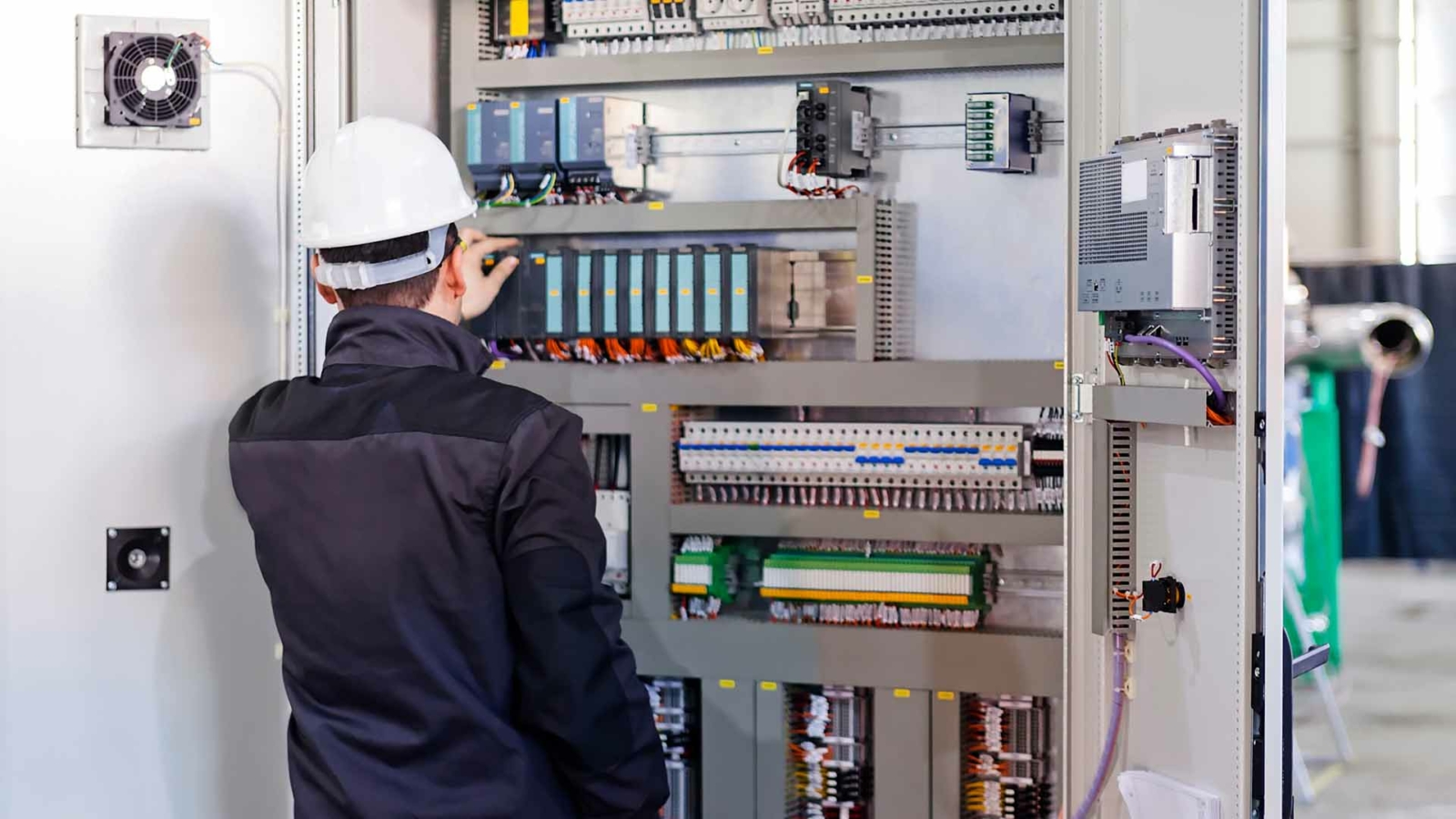
UL 508A is the UL Standard for Safety for Industrial Control Panels: the US rulebook for how a control panel is designed, built, wired and marked, and the basis on which a listed panel shop applies a UL mark to the finished panel. It is a construction standard for the panel as a whole, not a certificate that a computer, PLC or power supply carries on its own. The parts inside the panel are judged by their own listings, so a computer fitted in a UL 508A panel needs the right listing from UL or another recognized laboratory.
That split matters to anyone building panels for North America. Machine builders, OEMs and system integrators increasingly put industrial computers inside the cabinet next to the PLC, drives and I/O, for HMI, data collection, vision and edge analytics. A panel that is otherwise compliant can fail inspection because one component in it has no suitable listing, or has a listing that does not cover the way it is used.
This guide explains what UL 508A covers and how it relates to UL 508, UL 61010-1, UL 62368-1, cULus and ETL marks; what UL Listed, Recognized and Classified mean; what an NRTL is; how short-circuit current rating works; what to check before specifying a computer for a listed panel; and how hazardous locations, enclosure types and markets outside North America change the picture.
Key takeaways
- 01UL 508A certifies the panel, not the parts
- It covers construction, wiring, spacing, component selection, short-circuit current rating and marking of industrial control panels up to 1,000 V, and is applied by a UL-listed panel shop.
- 02Every component brings its own listing
- Computers, HMIs, power supplies and switches inside the panel should be UL Listed or Recognized for their use, typically to UL 62368-1, UL 61010-1 or UL 61010-2-201.
- 03SCCR is marked on every panel
- The US National Electrical Code requires an industrial control panel to carry a short-circuit current rating, usually set by the weakest component in the power circuit.
- 04UL is one of several NRTLs
- OSHA recognizes other laboratories, such as CSA and Intertek (ETL), whose marks show compliance with the same UL standards.
- 05Hazardous locations need more
- Panels with intrinsically safe circuits follow UL 698A, and computers in Class I, Division 2 areas need their own hazardous location certification.
UL 508A and the standards around it
Several UL standards and marks turn up on the same drawings, and they are easy to mix up. The table sets out what each one covers, who holds the certification and why it matters for a computer inside a control panel.
| Standard or mark | What it covers | Who holds it | Relevance to a computer in the panel |
|---|---|---|---|
| UL 508A | Construction of industrial control panels for general industrial use, 1,000 V or less | The panel shop, for each panel it builds and labels | Sets the rules the computer must fit into: listed components, wiring, spacing, SCCR |
| UL 508 | Industrial control equipment such as contactors, relays, starters and some network devices | The product maker | Some DIN rail switches and I/O carry it; it is being superseded by the UL 60947 series |
| UL 61010-1 | Electrical equipment for measurement, control and laboratory use | The product maker | A common listing for industrial Ethernet switches, I/O and instruments |
| UL 61010-2-201 | Control equipment: PLCs, HMIs, PC-based controllers and their I/O | The product maker | The listing written for control-system computers and HMIs |
| UL 62368-1 | Audio/video, information and communication technology equipment | The product maker | The usual listing for box PCs, panel PCs and edge computers; replaced UL 60950-1 |
| UL 121201 | Nonincendive equipment for Class I and II, Division 2 hazardous locations | The product maker | Needed when the computer sits in a Division 2 area |
| UL 698A | Control panels with intrinsically safe circuits that extend into hazardous locations | The panel shop | Applies to the panel when it serves sensors in a classified area |
| NFPA 79 | Electrical standard for industrial machinery | The machine builder | UL 508A Supplement SA aligns panels on machines with it |
| NEC Article 409 | Installation rules for industrial control panels | The installer and inspector | Requires the SCCR marking on the panel |
| CSA C22.2 No. 286 | Canadian standard for industrial control panels and assemblies | The panel shop | The Canadian counterpart to UL 508A |
| cULus, cETLus | Marks showing a product meets US and Canadian requirements | The product maker, via an NRTL | The marks to look for on a computer shipped to the US and Canada |
The pattern is simple once it is laid out. The panel shop certifies the assembly to UL 508A; every product inside it is certified by its maker to a product standard; the installer and inspector apply the National Electrical Code on site. A computer only becomes a problem when its listing is missing, covers a different use or does not match the build that was actually fitted.
What does UL 508A cover?
UL 508A applies to industrial control panels intended for general industrial use and operating from 1,000 V or less. It includes motor control panels, PLC panels, machine control panels and similar assemblies of two or more power circuit or control circuit components, built in a shop and shipped to site. The current third edition dates from 2018 and has been revised several times since, so the edition and revision a project is built to belong in the panel documentation.
In practice the standard asks the panel shop to show five things: that each component is suitable and used within its ratings, that the panel is wired correctly, that spacings and protection are right, that the short-circuit current rating has been worked out, and that the panel is marked so an installer can use it safely.
| Area | What UL 508A asks for | Where a computer comes in |
|---|---|---|
| Components | Listed or Recognized components, used within their ratings and conditions of acceptability | The computer’s listing, voltage input and temperature rating |
| Wiring | Conductor sizes, insulation, color coding and field wiring terminals rated for the job | Power and earth wiring to the computer, cable routing away from power conductors |
| Protection | Overcurrent protection for branch and control circuits, sized to the load | The fuse or breaker on the 24 V DC supply that feeds the computer |
| Spacings | Minimum through-air and over-surface distances between live parts | Mounting position relative to terminals and busbars |
| Enclosure | An enclosure rated for the environment, to UL 50 and UL 50E | Panel PCs in the door must not reduce the enclosure’s type rating |
| SCCR | A short-circuit current rating for the whole panel (Supplement SB) | The computer’s DC supply is one of the components considered |
| Marking | Manufacturer, ratings, SCCR, enclosure type and wiring diagram reference | The computer appears in the bill of materials and drawings |
UL 508A also has supplements for particular uses. Supplement SA covers panels for industrial machinery and lines them up with NFPA 79, and Supplement SB sets out how to work out the short-circuit current rating. Panels for other uses, such as HVAC equipment or elevators, follow further supplements or their own standards.
What is the difference between UL 508 and UL 508A?
The names differ by one letter, but they apply to different things. UL 508 is a product standard for industrial control equipment: the contactor, overload relay, push button or motor starter a panel shop buys. UL 508A is a construction standard for the panel those parts go into. A UL 508A panel is often full of UL 508 components.
| UL 508 | UL 508A | |
|---|---|---|
| Type of standard | Product standard | Assembly (construction) standard |
| Applies to | Individual control devices | Complete industrial control panels |
| Certified by | The device maker, through an NRTL | A listed panel shop, under UL’s follow-up service |
| Typical mark | UL Listed or Recognized on the device | UL 508A label on the finished panel |
| Status | Being superseded by the harmonized UL 60947 series | Current, third edition with revisions |
The changeover from UL 508 to the UL 60947 series is gradual, so a panel built today often contains devices listed to either. For a panel builder the question is the same either way: is each device listed or recognized for what it is doing in this panel?
UL Listed, Recognized and Classified: what each mark means
UL’s marks are grouped by what the product is and how it will be used. The difference between them decides whether a part can go into a UL 508A panel as it is, or only within limits set out in its UL file.
| Mark | What it applies to | What it tells a panel builder | Typical examples |
|---|---|---|---|
| UL Listed | Finished, standalone products | The product meets the safety standard for its category and can be installed as supplied | Computers, panel PCs, power supplies, circuit breakers |
| UL Recognized Component | Components and incomplete products for use inside other equipment | Acceptable inside a listed product or panel, but only within its conditions of acceptability | Power supply modules, terminal blocks, wiring, circuit boards, plastics |
| UL Classified | Products evaluated for specific properties, hazards or uses only | Suitable for the limited purpose named, not a general safety listing | Fire-resistant materials, some industrial instruments |
UL Listed is the mark most panel components carry. The maker’s product has been tested against the relevant standard and is covered by ongoing factory follow-up, so a listed computer or power supply can be specified for the panel provided it is used within its ratings.
UL Recognized Component marks, shown as a reversed UR symbol, cover parts that will be built into something else. Each comes with conditions of acceptability, such as a maximum temperature, a required enclosure or a particular power source, which the panel builder has to meet. Recognized parts are welcome in UL 508A panels, but the conditions are part of the deal. Both marks have US, Canadian and combined versions, shown below.
UL Classified products have been evaluated only for certain properties or hazards. Most are construction materials or instruments for industrial and commercial use, and the mark says nothing about other risks.
UL marks for the US, Canada and both
The UL Listed, Recognized Component and Classified marks each come in US, Canadian and combined US and Canada versions.
-
01

Listed mark, USA
Finished product meets US requirements.
-
02
Listed mark, Canada
Finished product meets Canadian requirements.
-
03
Listed mark, USA and Canada
The cULus mark: both markets.
-
04
Recognized component mark, USA
Component for use in other equipment, US.
-
05
Recognized component mark, Canada
Component for use in other equipment, Canada.
-
06
Recognized component mark, USA and Canada
Component recognized for both markets.
-
07
Classified mark, USA
Evaluated for specific properties, US.
-
08
Classified mark, Canada
Evaluated for specific properties, Canada.
-
09
Classified mark, USA and Canada
Classified for both markets.


What is an NRTL?
An NRTL, or Nationally Recognized Testing Laboratory, is a private testing and certification body that the US Occupational Safety and Health Administration (OSHA) has recognized to certify products to specific safety standards. OSHA’s workplace rules require many types of electrical equipment to be approved for safety, and certification by an NRTL is how that approval is usually shown. The program is set out in OSHA regulation 29 CFR 1910.7.
Recognition is granted standard by standard. An NRTL may be recognized for UL 62368-1 and UL 61010-1 but not for UL 121201, so the useful question is whether the laboratory behind a mark is recognized for the standard the product was tested to. OSHA publishes the current list and each laboratory’s scope.
UL is the best-known NRTL in North America, but not the only one. A product tested to UL 62368-1 by Intertek carries the ETL mark rather than the UL mark, and inspectors generally accept either for the same standard. Our explainers on ETL vs UL and the cULus mark go into the detail.
| Laboratory | Mark you will see | Notes |
|---|---|---|
| UL Solutions | UL, cULus, UR | Also runs the UL 508A panel shop program |
| CSA Group | CSA, cCSAus | Also develops Canadian standards, including CSA C22.2 No. 286 |
| Intertek | ETL, cETLus | Common on industrial computers, switches and power supplies |
| TÜV SÜD America | TÜV SÜD with US and Canada markers | Tests to the same UL and CSA standards |
| TÜV Rheinland of North America | TÜV Rheinland with US and Canada markers | Tests to the same UL and CSA standards |
| MET Laboratories | MET | Seen on some industrial network equipment |
The list changes over time and each laboratory’s scope is specific, so check OSHA’s published list against the standard named on the product before relying on a mark you have not met before.
UL and the UL 62368-1 standard for computers
UL began in Chicago in 1894 as the Underwriters’ Electrical Bureau, testing electrical products for fire insurers after a run of serious fires blamed on early electrical wiring and equipment. Today its testing, inspection and certification work sits with UL Solutions, while the standards themselves are developed by UL Standards & Engagement.
For computers the key standard is UL 62368-1, the US version of IEC 62368-1. It covers audio/video, information and communication technology equipment and replaced UL 60950-1 for IT equipment and UL 60065 for audio and video equipment; UL 60950-1 was withdrawn in the US at the end of 2020. Unlike the older prescriptive standards, 62368-1 is built on hazard-based safety engineering (HBSE): identify each source of energy that could cause harm, classify it, and put safeguards between it and the people who use or service the equipment.
| Energy source | Example inside a computer | Typical safeguard |
|---|---|---|
| Electrical | Mains or high-voltage DC input stage | Insulation, earthing, enclosure, fusing |
| Thermal | Heatsink fins on a fanless enclosure | Touch temperature limits, guards, markings |
| Fire | Power supply components under fault | Fire-rated materials and enclosure openings |
| Mechanical | Fans, sharp edges, heavy chassis | Guards, edge finishing, mounting strength |
| Radiation | Lasers in fiber optics, bright displays | Classification and labeling |
A computer that passes UL 62368-1 has been checked in normal operation, under foreseeable misuse and with single faults applied, which is why panel builders and inspectors treat it as a known quantity. Control equipment such as PLCs and HMIs is more often listed to UL 61010-2-201, the part of the UL 61010 series written for control systems. Either listing can be appropriate for a computer in a control panel; what matters is that the listing covers the product and its intended use.
What is SCCR in UL 508A?
Short-circuit current rating (SCCR) is the highest fault current, in amps at a stated voltage, that a panel can withstand safely if a short circuit occurs on its supply. Article 409 of the National Electrical Code requires an industrial control panel to be marked with its SCCR, and the installer must check that the marked figure is at least the fault current available where the panel is connected. A panel rated 5 kA connected to a supply that can deliver 35 kA is a violation, however well it is built.
UL 508A Supplement SB gives the method. In outline, the panel builder lists every component in the power circuits with its own short-circuit rating, applies any increase allowed by current-limiting fuses or breakers upstream, takes the lowest figure as the panel’s rating and checks it against the main protective device. Components without a marked rating are given conservative default values from the supplement’s tables, which is often what pulls a panel rating down.
| Component in the power circuit | Example rating | Effect on the panel |
|---|---|---|
| Main circuit breaker | 65 kA interrupting rating | Not the limit |
| Motor starter combination | Marked high-fault rating with specified fuses | Not the limit when the specified fuses are used |
| Power distribution block | 10 kA | Sets the panel rating unless protected by current-limiting fuses |
| 24 V DC power supply feeding the control circuit | Marked SCCR, or a default value if unmarked | Can become the limit if it has no marked rating |
| Panel SCCR | Lowest applicable figure, here 10 kA | Marked on the panel nameplate |
The figures in the table are illustrative; real panels are calculated from the component markings and the supplement’s tables. The point for anyone specifying a computer is where it sits in that calculation. Most industrial computers run from a 24 V DC supply on the panel’s control circuit, so the computer itself is usually on the secondary side and outside the SCCR calculation. The industrial power supply that feeds it is in the calculation, and so is any computer powered directly from the mains. Choosing a listed DC supply with a marked short-circuit rating avoids a default value setting the whole panel’s rating. Our explainer on the computer power supply covers the basics.
How a panel builder adds a computer to a UL 508A panel
Adding a computer to a listed panel takes the same steps as any other component. Most of the work is checking documents before anything is mounted.
-
Select
Listing and ratingChoose a computer listed for the use, typically to UL 62368-1 or UL 61010-2-201, with an input voltage and temperature range that suit the panel.
-
Verify
UL file and buildCheck the listing in the NRTL’s online directory and confirm it covers the exact model, power input and options being fitted.
-
Mount
DIN rail or panelMount it as the listing and installation guide require, with the clearances for heat and the spacings from live parts the standard asks for.
-
Wire
Protection and earthFeed it from a listed supply through suitably rated overcurrent protection, earth it as the manual requires and keep signal cables away from power wiring.
-
Document
BOM and drawingsAdd the computer, its listing and its supply to the bill of materials, wiring diagram and SCCR worksheet that support the panel label.
Does a computer in a control panel need to be UL listed?
In practice, yes. UL 508A expects the components in a listed panel to be listed or recognized for their use, and a computer is no exception. A computer without a suitable listing has to be evaluated separately, which costs time and money and may not be possible at all, so most panel builders treat a recognized listing as a condition of purchase.
Which listing depends on what the computer does and where it is mounted. The table covers the devices we most often see in North American control panels.
| Device in the panel | Listing to look for | Also check |
|---|---|---|
| DIN rail or wall-mount box PC | UL 62368-1 or UL 61010-2-201 (Listed) | 24 V DC input range, temperature with the panel closed, mounting orientation |
| Panel PC or HMI in the door | UL 62368-1 or UL 61010-2-201 (Listed) | That the front seal keeps the enclosure’s type rating, such as Type 4X or 12 |
| Industrial Ethernet switch | UL 61010-1, UL 62368-1 or UL 508 | DIN rail fit, redundant DC inputs, hazardous location rating if needed |
| DC power supply | UL 61010-1 or UL 62368-1, Class 2 where required | Marked SCCR, output rating against the computer’s peak draw |
| Remote I/O and data acquisition | UL 61010-2-201 or UL 61010-1 | Isolation between field and logic sides |
| Computer in a Division 2 area | UL 121201 or equivalent, plus a safety listing | Temperature code and the conditions of use in the certificate |
Two details catch people out. First, a listing covers a specific build. Neousys, for example, sells separate UL-certified versions of several computers, and on the POC-715-UL the PoE+ budget is 30 W in the UL-certified configuration, so the camera load has to be planned around that figure. Fitting an option that is outside the certified configuration can take a computer out of its listing. Second, a panel PC in the door is part of the enclosure: if the panel is a Type 4X enclosure, the panel PC’s front has to be rated to keep it that way.
Our DIN rail PCs are the usual choice inside the cabinet, mounted on the same DIN rail as the PLC and I/O, while panel mount PCs fit a cut-out in the door and give operators an HMI without opening the panel. For data collection next to them, data acquisition and I/O modules and remote I/O carry their own listings in the same way.
The industrial angle: heat, power and lifecycle inside the cabinet
A listing is a safety minimum, not proof that a computer will last in a control panel. Cabinets run hot: a closed steel enclosure with drives and power supplies inside often sits 10 to 15 °C above the room around it, and a panel in a hot plant or outdoors can reach the top of a commercial computer’s range on a summer afternoon. We size the computer to the temperature inside the cabinet, not to the room, which usually points to a fanless industrial computer rated to at least 60 °C and sometimes to wide temperature computers rated to 70 °C. The industrial temperature range explainer sets out the usual grades.
| Requirement | Why it matters in a UL panel | What to specify |
|---|---|---|
| Operating temperature | Inside a closed cabinet the air is warmer than the room | A rating with margin above the worst-case cabinet temperature |
| DC input | Panels distribute 24 V DC from a listed supply | A wide input range, often 9–36 V or 12–48 V DC, with reverse polarity protection |
| Isolation | Field wiring can carry noise and ground differences | Isolated serial ports and digital I/O, ideally with galvanic isolation ratings stated |
| Mounting | Vibration from motors and door slams | DIN rail or wall mounting with locking connectors |
| Coating | Dust, humidity and corrosive air in some plants | Conformal coating where the environment calls for it |
| Lifecycle | A model change can mean new listing paperwork | A model with a long availability commitment and change notification |
Lifecycle deserves more attention than it usually gets. A panel design is often repeated for years, and if the computer in it is discontinued the replacement needs its own listing check and an update to the drawings. Choosing a model with a long availability commitment, and planning a last-time buy when an end-of-life notice arrives, keeps the panel design stable. Our article on how long computers last covers the service-life side, and our guide to mounting DIN rail computers covers spacing and orientation for heat.
What is the difference between UL 508A and UL 698A?
UL 698A covers industrial control panels that sit in an ordinary, unclassified location but have intrinsically safe circuits extending into a hazardous (classified) location, such as wiring to sensors in a solvent store or a refinery process area. It adds requirements for barriers, segregation, wiring and marking on top of UL 508A, and panel shops are listed for it separately.
Computers that are themselves installed in a hazardous area are a different case. In a Class I, Division 2 location, where flammable gas or vapor is present only under abnormal conditions, a computer typically needs nonincendive certification to UL 121201 or an equivalent, as well as its normal safety listing. Our explainers on Class I, Division 2 and intrinsically safe vs non-incendive protection set out the differences, and ATEX covers the European equivalent.
| Situation | Standard that applies | Typical equipment |
|---|---|---|
| Panel in a safe area, no hazardous circuits | UL 508A | PLC panels, machine panels with DIN rail PCs |
| Panel in a safe area with intrinsically safe circuits to a hazardous area | UL 698A, with UL 508A | Panels with IS barriers and isolators |
| Computer or HMI installed in a Class I, Division 2 area | UL 121201 (or equivalent) plus UL 62368-1 or UL 61010 | Class I, Division 2 panel PCs and switches |
| Equipment in a Class I, Division 1 area | Explosion-proof or intrinsically safe certification | Purged enclosures, intrinsically safe HMIs |
We supply intrinsically safe and hazardous area panel PCs and intrinsically safe computers for these locations. The certificate’s conditions of use, such as the temperature code and the permitted ambient range, belong in the panel documentation alongside the listing.
Enclosure types: NEMA, UL 50E and IP ratings
The enclosure is part of a UL 508A panel’s certification, and its type rating, defined in UL 50E and NEMA 250, tells the installer what environment it can go into. Anything cut into the door, including a panel PC or HMI, must keep that rating. The table gives the types most often met in industrial panels, with the IP rating usually considered closest. The two systems test differently, so a NEMA type is not a direct equivalent of an IP code.
| Enclosure type | Protects against | Typical location | Closest IP rating (approximate) |
|---|---|---|---|
| Type 1 | Contact with live parts, falling dirt | Clean indoor rooms | IP20 |
| Type 12 | Dust, dripping and splashing non-corrosive liquids | Factory floors, machine shops | IP54 |
| Type 4 | Hose-directed water, windblown dust, ice | Washdown areas, outdoors | IP66 |
| Type 4X | As Type 4, plus corrosion | Food plants, water treatment, coastal sites | IP66 |
| Type 6P | Prolonged submersion, corrosion | Pits and flood-prone sites | IP67 to IP68 |
For a panel PC in the door of a Type 4X panel, look for a front panel rated to Type 4X or at least IP66, stainless steel or a corrosion-resistant housing, and a gasket and mounting clamps that hold the seal. Our explainers on NEMA 4X and NEMA vs IP ratings go further, and our IP rating guide covers the IEC 60529 codes in full.
Is UL certification recognized in other countries?
UL certification is not a legal requirement in itself: no US federal law requires the UL mark. What is required, through OSHA rules, the National Electrical Code and local inspectors, is equipment approved for safety, and an NRTL listing is how that is normally shown. A panel shipped to the US without listed components can be refused by the end customer or held up at inspection.
Outside North America other systems apply. The table summarizes the main ones a panel builder exporting from the USA or Europe will meet.
| Market | Safety route | What it means for a computer |
|---|---|---|
| United States | NRTL listing (UL, ETL, CSA and others); UL 508A for panels | Listed to UL 62368-1 or UL 61010-2-201 |
| Canada | Certification to CSA standards by an accredited body; CSA C22.2 No. 286 for panels | cULus, cETLus or CSA mark |
| European Union | CE marking under the Low Voltage and EMC Directives, using EN 62368-1 or EN 61010 | Declaration of conformity and technical file |
| Great Britain | UKCA marking under equivalent USA regulations (CE also accepted) | As for the EU, with USA documents |
| Other markets | National schemes, often accepting IECEE CB Scheme test reports | A CB report to IEC 62368-1 shortens national approvals |
The IECEE CB Scheme lets a product tested once by a participating laboratory use that report towards certification in more than 50 member countries, which saves repeating the same safety tests for each market. Electromagnetic compatibility is a separate requirement in every market; our explainer on EMC testing covers what is tested.
UL-ready computers and components in our range
These are the categories where listed builds most often go into North American control panels.
DIN rail PCs
Fanless computers that mount on the panel’s DIN rail, several with UL 62368-1 certified builds.
View range
Panel mount PCs
Panel PCs for a cut-out in the cabinet door, with sealed fronts for Type 12 and Type 4X panels.
View range
Fanless industrial computers
Sealed computers with no fan to clog with dust inside the cabinet.
View range
Industrial Ethernet switches
DIN rail switches, many listed to UL 61010-1 or UL 62368-1 and some for Class I, Division 2.
View range
Hazardous area panel PCs
Panel PCs certified for Class I, Division 2 and ATEX Zone 2 locations.
View range
Industrial power supplies
DIN rail DC supplies and UPS modules for the panel’s control circuit.
View rangeUL-certified computers from our range
These systems carry UL certification in their manufacturers’ published specifications. As your system integrator we configure the computer for the panel, image the operating system and application, and test it before it ships, keeping to the certified build so the listing still applies. We supply the manufacturer’s certification details for your panel documentation; the listing itself always belongs to the manufacturer, so check the current certificate for the exact model and options you order.
| Workload | Example from our range | Certification in its specification |
|---|---|---|
| Gateway or HMI controller on the DIN rail | Neousys POC-712-UL | UL 62368-1 and IEC 62368-1, Atom x7425E |
| Camera capture on the DIN rail | Neousys POC-715-UL | UL 62368-1 and IEC 62368-1; PoE+ budget 30 W in the UL configuration |
| Vision or motion control with a PCIe card | Neousys Nuvo-9006E-UL | UL 62368-1; Intel 14th, 13th and 12th Gen Core |
| GPU inspection inside a machine | Neousys Nuvo-9166GC-UL | UL 62368-1 and IEC 62368-1 on a 24 V DC input, NVIDIA L4 GPU |
| Operator station with three displays | Premio BCO-1000-EHL-20C | UL 62368-1, DIN rail mounting |
| Door-mounted HMI | Premio VIO-217C-PC100-EHL | cULus to UL 62368-1, IP65 front |
| Small gateway with 2.5GbE | Axiomtek eBOX100A-N97-2E | UL 62368-1 among its listed marks |
| HMI in a Class I, Division 2 area | Winmate R15ITWS-MHB1-EX | Class I, Division 2, Groups A, B, C and D |
| Fiber uplink switch on the DIN rail | Antaira LNX-0501-M-T | UL 508 and UL Class 1, Division 2 |
Where a project needs a listing a model does not have, or a build outside the certified configuration, we say so at the quotation stage rather than after delivery. Many of the same computers also carry CE and UKCA marks, so one panel design can serve USA, European and North American customers.
UL-certified computers for control panels
Four starting points from the table above: two UL-certified DIN rail computers from the Neousys POC-700 series, a UL-certified Nuvo-9000 with a PCIe cassette and a UL-certified GPU computer with an NVIDIA L4.
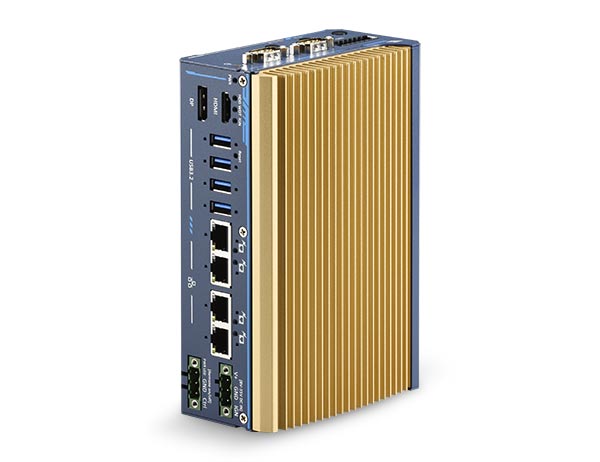
UL-Certified Intel Atom x7425E Ultra-Compact Fanless Embedded Computer with 4x GbE
- CPU
- Intel Atom x7425E (Alder Lake)
- Ethernet
- 4× GbE
- Temp
- −25 to +70 °C
UL-Certified Intel Core i3-N305 Ultra-Compact Fanless Embedded Computer with 4x PoE+
- CPU
- Intel Core i3-N305 (Alder Lake)
- Ethernet
- 4× GbE (4× PoE)
- Temp
- −25 to +70 °C
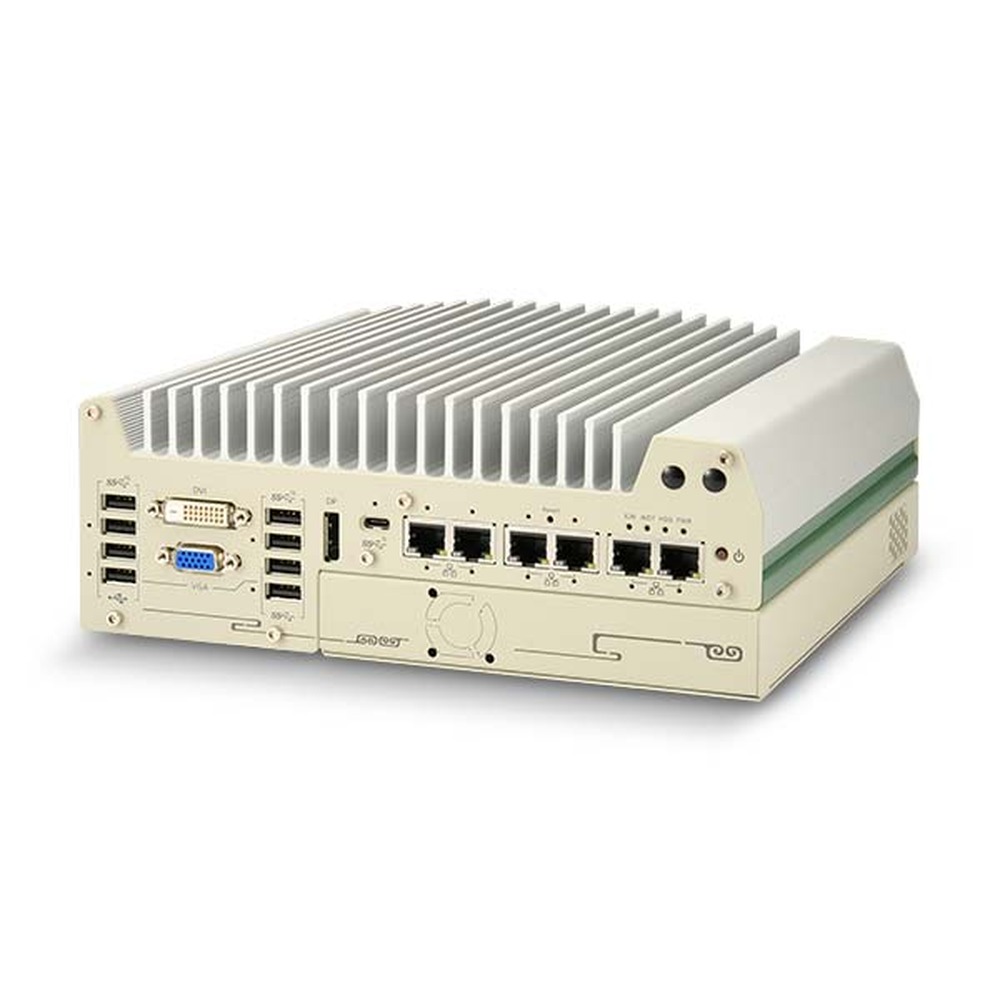
UL-Certified Intel 14th/13th/12th Gen Core Fanless Rugged Computer with PCIe and 6x 2.5GbE
- CPU
- Intel Core 13th Gen (Raptor Lake)
- Ethernet
- 1× 2.5GbE, 1× GbE
- Temp
- −25 to +70 °C
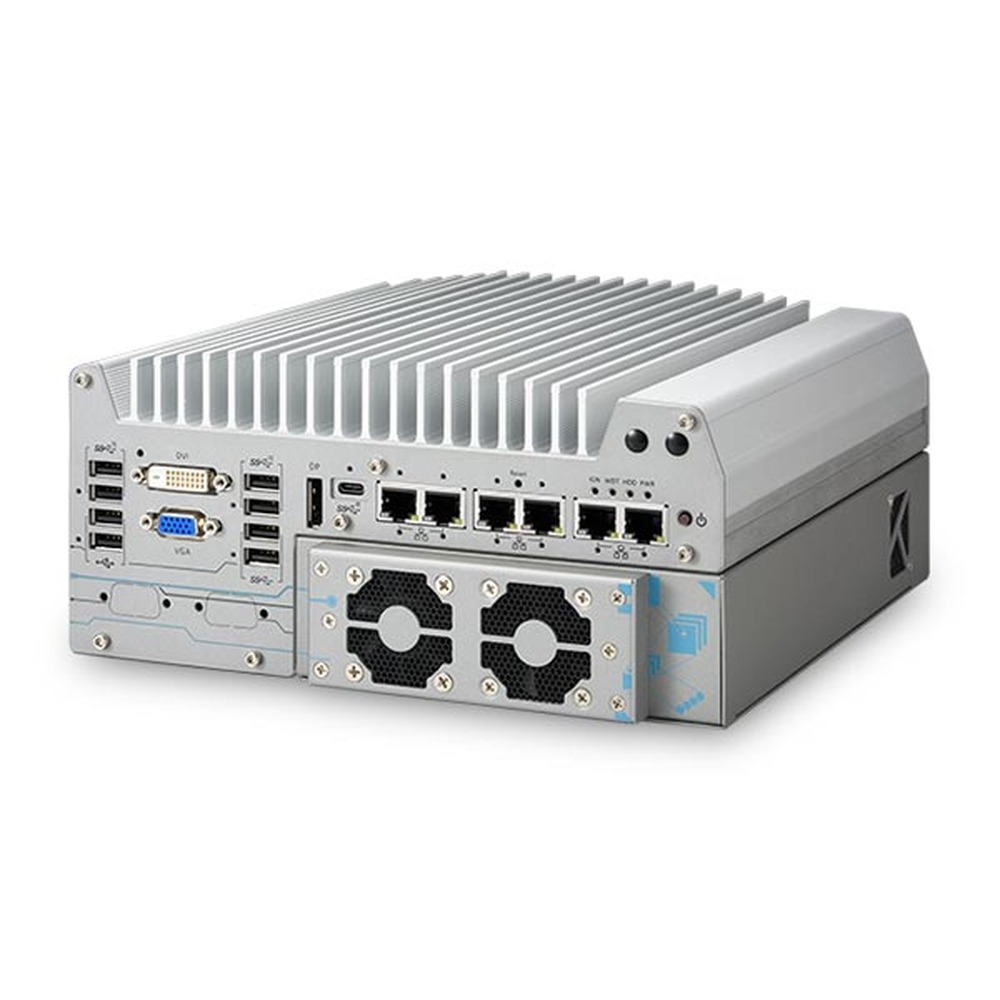
Intel 14th/13th/12th Gen Core UL-Certified Rugged Edge AI Computer with NVIDIA L4 GPU
- CPU
- Intel Core 13th Gen (Raptor Lake)
- GPU
- NVIDIA L4
- AI
- 485 TOPS
Panel builder checklist for computers
Seven checks before a computer goes into a UL 508A panel.
-
01
Listing
The computer is UL Listed or certified by another NRTL, to UL 62368-1, UL 61010-2-201 or another standard that covers its use.
-
02
Exact build
The certificate covers the model, power input and options being fitted, such as PoE, expansion cards or a particular power supply.
-
03
Power
It runs from a listed DC supply with a marked SCCR, through suitably rated overcurrent protection.
-
04
Temperature
Its rated range covers the air temperature inside the closed panel, with margin.
-
05
Enclosure
A door-mounted panel PC keeps the enclosure’s type rating, such as Type 12 or Type 4X.
-
06
Hazardous areas
Equipment in a classified location carries the right Division or Zone certification and its conditions of use are met.
-
07
Documents
The listing, manual and certificate are filed with the bill of materials, wiring diagram and SCCR worksheet.
UL 508A: common questions
Quick answers
What is UL 508A?
The US safety standard for building industrial control panels. It covers how panels up to 1,000 V are designed, wired, protected and marked, and is applied by panel shops listed under UL’s program, which can then label the panels they build.
What is the difference between UL 508 and UL 508A?
UL 508 is for control devices; UL 508A is for the panel. UL 508 covers individual products such as contactors and relays, and is being superseded by the UL 60947 series. UL 508A covers the assembly those products go into.
What is the difference between UL Listed and UL Recognized?
Listed products stand alone; Recognized components go inside something else. A UL Listed product can be installed as supplied. A Recognized component is acceptable inside a listed product or panel only within the conditions of acceptability in its UL file.
Does a computer in a control panel need to be UL listed?
In practice, yes. UL 508A expects every component to be listed or recognized for its use. A computer is usually listed to UL 62368-1 or UL 61010-2-201; one without a suitable listing has to be evaluated separately.
What is SCCR in UL 508A?
The panel’s short-circuit current rating. It is the highest fault current the panel can withstand safely, worked out using Supplement SB and marked on the panel as the National Electrical Code requires.
How do you become a UL 508A panel shop?
By applying to UL’s industrial control panel program. The shop shows that it has trained staff, procedures and the standard in hand, passes an initial inspection, and then accepts regular unannounced follow-up inspections. It buys UL 508A labels for the panels it certifies.
What is the difference between UL 508A and UL 698A?
UL 698A adds rules for hazardous location circuits. It covers panels in ordinary locations whose intrinsically safe circuits extend into a hazardous area, and builds on UL 508A rather than replacing it.
Is an ETL-listed computer acceptable in a UL 508A panel?
Generally, yes. Intertek is an OSHA-recognised NRTL, and an ETL listing to the same UL standard is normally accepted. Check with the end customer and inspector where a specification names UL alone.
UL and certification FAQs
-
ETL vs UL: What Is the Difference?
ETL and UL are product safety marks from two competing test laboratories, Intertek and UL Solutions. Both are recognized by OSHA as Nationally Recognized Testing Laboratories (NRTLs) and test to the same published safety standards, such as UL 62368-1, so an ETL Listed product meets the same requirements as a UL Listed one.
-
What Is cULus?
cULus is a UL safety mark showing that a product has been tested and certified by UL Solutions to both Canadian (c) and US (us) safety standards. One certification covers both markets, and UL inspects the factory on an ongoing basis. It is accepted by US OSHA rules and Canadian electrical codes.
-
What Is IEC 62368-1?
IEC 62368-1 is the international safety standard for audio/video, information and communication technology equipment, including computers, monitors, network equipment and their power supplies. It replaced IEC 60950-1 and IEC 60065 with a hazard-based approach that classifies energy sources and specifies safeguards. It is adopted as EN 62368-1 in Europe and the USA and as UL 62368-1 in North America.
-
What Is Class 1 Division 2?
Class 1 Division 2, often written C1D2, is a North American hazardous location rating. Class 1 means flammable gases or vapours may be present; Division 2 means they are only expected under abnormal conditions, such as a leak or equipment failure. Equipment rated C1D2 will not ignite the atmosphere during normal operation.
-
Intrinsically Safe vs Non-Incendive: What Is the Difference?
Intrinsically safe equipment limits electrical and thermal energy so it cannot ignite a hazardous atmosphere even when faults occur, which allows use in the most hazardous areas. Non-incendive equipment cannot cause ignition in normal operation, but is not protected against faults, so it is limited to Division 2 or Zone 2 areas.
-
What Is NEMA 4X?
NEMA 4X is an enclosure type from the NEMA 250 standard for indoor or outdoor equipment. Like NEMA 4, it protects against windblown dust and rain, splashing and hose-directed water, and ice forming on the outside. The X adds corrosion resistance, which is why NEMA 4X enclosures are usually stainless steel, aluminum or plastic.
-
NEMA vs IP rating — how the two enclosure systems compare
NEMA and IP are parallel enclosure rating systems used in North America and internationally — they overlap, but they are not equivalent. Here is the practical mapping between them, what each system tests that the other does not, and which to specify when both matter.
Need a UL-listed computer for your panel?
Tell us what the panel controls, where it will be installed and which certification your customer needs. We will recommend listed computers, panel PCs and switches, then configure, image and test them before they ship.