
 US
US White Papers
What is an embedded computer?
Read our comprehensive guide for an in-depth embedded computer definition, exploring their advantages through real-world examples. We hope this resource assists you in finding a solution that precisely meets your requirements.

Upgrading to Windows 11 IoT Enterprise and Pro Editions
This article provides an overview of the key changes between Windows 10 and Windows 11, license editions currently available, hardware requirements needed to upgrade, and updates we can expect in the future.
Understanding GMSL Technology for Industrial Edge AI
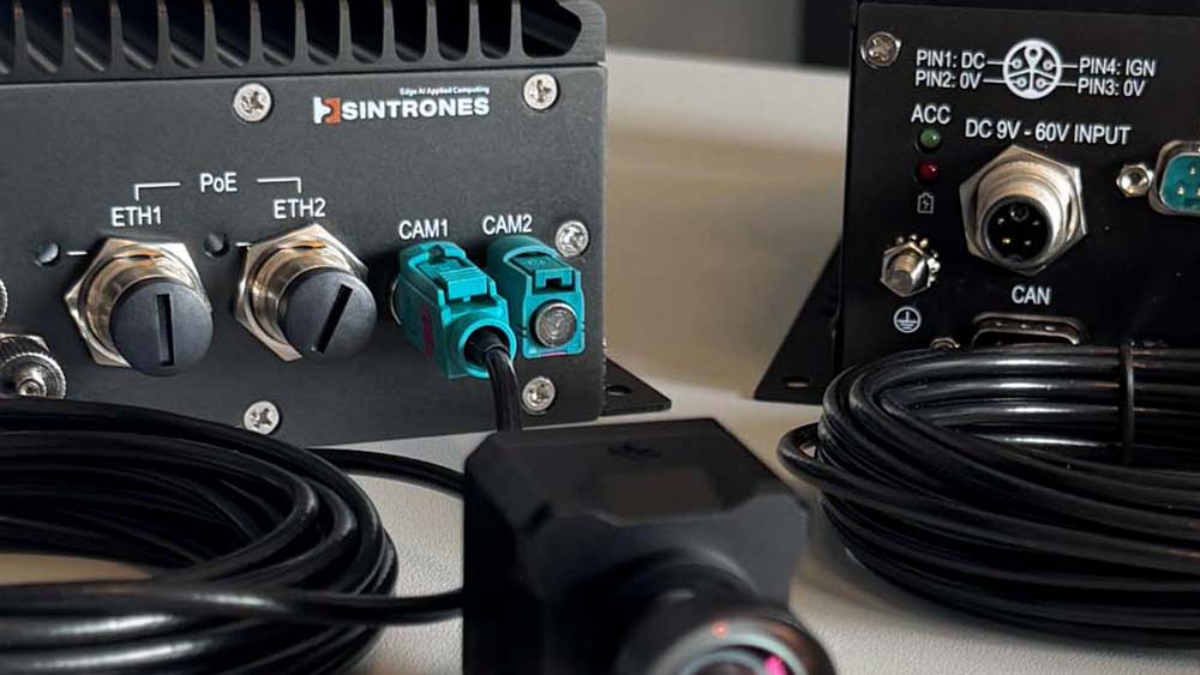
At Things Embedded, we help customers leverage GMSL for industrial edge AI by providing the right computers, cameras, and integration expertise to simplify deployment and accelerate time-to-market.
Choosing an Embedded Motherboard or Single Board Computer
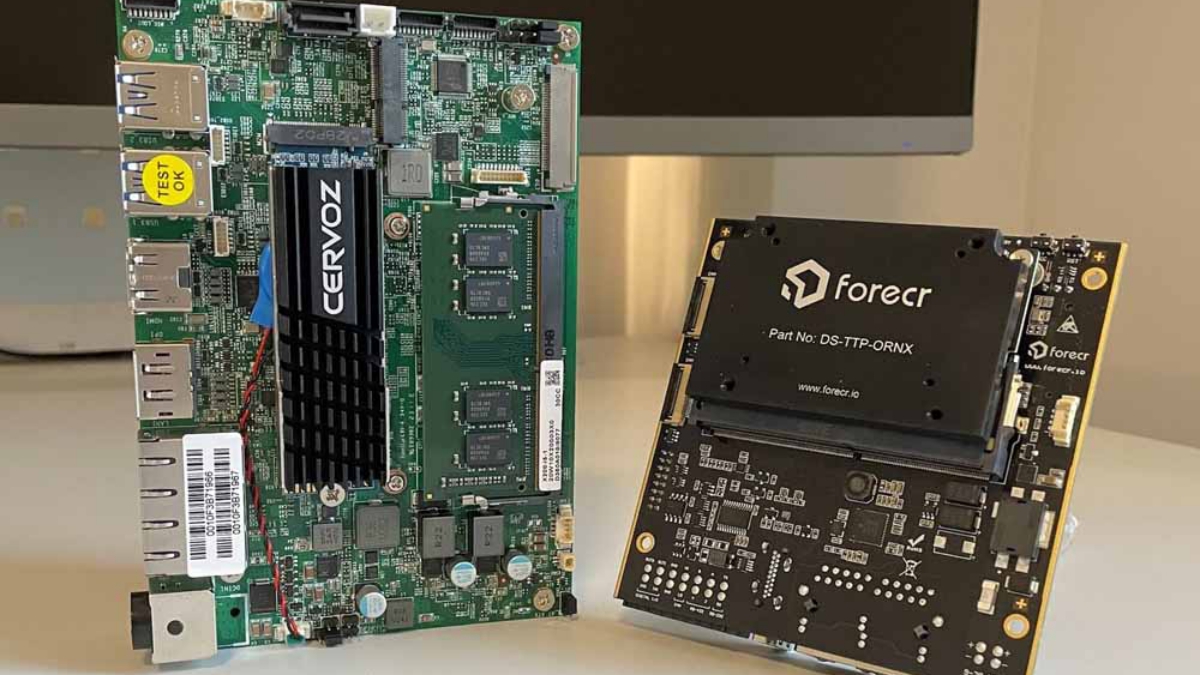
Is your embedded motherboard or SBC built for edge deployment? Learn about AMD, Intel, I/O, thermal dissipation, and available form factors.

Why edge AI is outgrowing 2.5GbE — and what 10GbE actually changes
Why 2.5GbE is running out of headroom for edge AI, why 10GbE with RDMA and RoCEv2 is becoming the practical next step, and what that means when specifying an industrial platform today.

The GMSL Camera Interface: Integrating Stereolabs ZED X with NVIDIA Jetson
The ZED X is a GMSL2 camera, not USB. Connecting it to a Jetson means the right deserialiser on the carrier board and a board support package configured to match. Here is how the integration actually works.

Which NVIDIA Jetson Module Should You Choose? Nano vs NX vs AGX vs Thor
From the 7 W Orin Nano to the 130 W Thor, the Jetson line spans roughly a 30x range of AI performance. Choosing well means matching the module to the workload, power budget, and lifecycle, not chasing the biggest number.

PoE Power Budgeting for Multi-Camera Edge AI
When one edge computer powers several cameras over PoE, the power budget decides how many it can drive. This guide explains per-port classes, the total source budget and cable loss, with a worked example.

PoE in Surveillance and NVR Systems
PoE powers and connects IP cameras over a single cable, with the footage recorded on an NVR or an edge computer. This guide covers how PoE surveillance is wired and how to choose the recorder.

Managed vs Unmanaged Industrial Ethernet Switches: A Selection Guide
An unmanaged switch is plug-and-play; a managed switch adds control — segmentation, prioritization, redundancy and visibility. This guide covers what each does, where unmanaged is genuinely the right call, and where managed earns its place.

Layer 2 vs Layer 3 Switches: What's the Difference and When You Need Layer 3
A Layer 2 switch forwards frames by MAC address within one network; a Layer 3 switch can also route IP between networks. The distinction decides whether a switch can move traffic between subnets on its own, or whether it needs a router to do it.

Time-Sensitive Networking (TSN): A Guide to Deterministic Ethernet
TSN is a set of IEEE 802.1 standards that give standard Ethernet bounded, guaranteed latency. This guide covers the problem it solves, the core standards, how it delivers determinism, and where it is used.

Embedded Ethernet Switch Modules: Board-Level Switching for Integration
A board-level switch puts managed switching on a module you integrate into your system, instead of a separate box. This guide covers what they are, why you would integrate at board level, what to look for, and where a boxed switch is the better call.

How a Military Ethernet Switch Is Built
A military Ethernet switch is rarely an off-the-shelf box. They are built by integrating proven board-level switching into a rugged, MIL-rated system, sized, powered and connected for the platform.

NVIDIA Jetson Xavier & TX2 End-of-Life: Last-Time-Buy and Migration to Orin
NVIDIA has brought forward end-of-life for its LPDDR4 Jetson modules. Last-time-buy orders close on 1 July 2026. Here is what is affected, the dates that matter, and how to migrate to Orin.

TAA-Compliant NVIDIA Jetson: Country of Origin and Part Numbers Explained
For defense and sensitive industrial programs, the country of origin of an NVIDIA Jetson module decides whether it can be used. Here is what TAA compliance means, which Jetson part numbers qualify, and how we source compliant modules into your bill of materials.

What Is NVIDIA Jetson? The Edge AI Platform Explained
NVIDIA Jetson is a family of compact AI computers built to run modern machine learning at the edge: in robots, cameras, vehicles, and industrial machines. Here is what the platform is, what it is made of, and what it is used for.

CPU Generations and Embedded Processors Explained
For a consumer PC, the CPU generation is shorthand for speed. For an industrial system it tells you far more — and the newest is rarely the right answer.

x86 vs Arm: Architectures Compared for Industrial and Embedded Systems
x86 and Arm are the two processor architectures behind almost every industrial and embedded computer. Choosing between them is the first real decision in a design — it shapes performance, power, thermals, software and how the system is built.

DDR4 vs DDR5: What's the Difference for Industrial Computing?
Newer industrial systems use DDR5; many proven embedded platforms still run DDR4. They are not interchangeable. This guide covers what changed, whether it matters for your application, and how memory ties to the processor platform.

Arm Processors in Embedded and Industrial Systems
Arm is the architecture behind most low-power embedded computing — but "Arm" is not a chipmaker. This guide explains what Arm actually is, the Cortex profiles, why it suits embedded systems, and what to check when you specify one.

Intel Core Ultra Explained
Intel Core Ultra is the biggest change to Intel's processor branding in over a decade — it dropped the "i" and added an on-chip NPU for AI. This guide covers what it is, how the naming works, and where it fits in industrial computing.

What Is a Jetson Carrier Board? How to Choose the Right One
A Jetson module only becomes a usable system when it sits on a carrier board. The carrier board provides the I/O, power, and form factor your product needs. Here is what a carrier board does, and how to choose or design the right one.

What Is an NPU? Neural Processing Units for Edge AI
An NPU is a dedicated AI accelerator built into a processor to run machine-learning inference efficiently. It is the hardware behind on-device AI — now across Intel Core Ultra, AMD Ryzen AI and NVIDIA Jetson.

What Is a System on Chip (SoC)?
A system-on-chip packs the CPU, graphics, memory controller, I/O and often an AI accelerator onto one chip. It is how most compact, low-power embedded computers are built — and the norm for Arm platforms.

AMD EPYC Embedded for Edge Servers
An edge server brings server-class compute out of the data centre and close to where data is created. AMD EPYC Embedded 8004 — "Siena" — was built for exactly that: server cores in an energy-efficient, single-socket footprint.

GPU vs NPU: Which for Edge AI?
GPUs and NPUs both accelerate AI, but they are built for different jobs. For an edge-AI design, the choice — or whether you need both — decides the power, size and cost of the system.

What Is a System-on-Module (SoM)?
A system-on-module packs the processor, memory and storage onto one small board that plugs into a carrier. Here is what a SoM is, how it differs from a single board computer, which module standards matter, and when a module-based design is the right call.

NVIDIA Jetson Orin Nano Super: What the 67 TOPS Update Means
The Jetson Orin Nano Super is a free software update that lifts the Orin Nano from 40 to 67 TOPS, and a lower-cost developer kit. Here is what the Super refresh changed, whether it is worth taking, and where the module fits.

The ZED ROS2 Wrapper on NVIDIA Jetson: Setting Up a ZED X Robotics Stack
The ZED ROS2 wrapper turns a Stereolabs camera into ROS 2 depth, point cloud and odometry topics. This guide shows how the stack fits together on an NVIDIA Jetson, from the ZED X driver and ZED SDK to the launch file.

Jetson Orin NX vs AGX Orin: Which Module to Choose
The Jetson Orin NX and AGX Orin are the mid-range and high-end of the Orin family. The Orin NX offers up to 157 TOPS in a compact, low-power module; the AGX Orin up to 275 TOPS with far more memory and I/O. Here is how they differ, and which one fits.

What Is NVIDIA JetPack? The Jetson Software Stack Explained
NVIDIA JetPack is the software development kit that turns Jetson hardware into a working edge AI computer. It bundles the operating system and the GPU-accelerated libraries every Jetson application needs.

Global Shutter vs Rolling Shutter: Choosing a Camera for Robotics and Machine Vision
A global shutter captures the whole frame at once, while a rolling shutter reads it line by line. This guide explains what that does to moving images and depth, and how to choose the right shutter for a robot or vision system.

NVIDIA Jetson for Drones: Choosing an AI Companion Computer
A drone companion computer is the AI brain that rides alongside the flight controller, turning camera and sensor data into autonomy. NVIDIA Jetson Orin makes that practical in a package light enough to fly.

PC/104 Bus Variants Explained: PC/104, PC/104-Plus, PCI-104, PCIe/104 and PCI/104-Express
Five PC/104 variants share one footprint and differ in the expansion connector. This guide explains what each bus carries, the two PCIe/104 connector types, how to mix generations in one stack and how to choose.

JetPack 7.2 and Yocto on Jetson Orin: What the Production Update Means for Your Fleet
JetPack 7.2 brings Jetson AGX Orin and Orin NX onto the same software generation as Jetson Thor, and makes Yocto a supported OS path. A practical look at what it changes for deployed programs.

Industrial Cellular Computers: Integrating 4G, LTE, and 5G Connectivity
At Things Embedded, we integrate advanced 4G, LTE, and 5G modems inside a wide range of industrial-grade computers, enabling organizations to stay connected wherever their applications take them.

A Guide to SDI Capture for Edge AI
In an era where machines see, decide, and act faster than ever before, the ability to ingest video at scale and with precision is no longer optional, it is foundational.

NVIDIA Jetson Thor: Advancing Edge AI Beyond AGX Orin
Jetson Thor brings server-class AI to a compact edge module: up to 2,070 FP4 TFLOPS and a 7.5x leap over AGX Orin for robotics and intelligent machines.

Automotive-Grade Single-Pair Ethernet in Industrial & Edge AI Computing
Learn how single-pair automotive Ethernet (SPE) enables lightweight, high-bandwidth connectivity for industrial box PCs and edge AI systems. Discover its advantages for robotics, machine vision, and factory automation.

Effective Ways to Mount an Industrial Computer
When it comes to mounting an industrial computer, there are several mounting options to keep your system safe, cool, and conveniently positioned. Popular options include wall mounting, VESA mounting, DIN rail mounting, and rack mounting.

Managing Industrial Grade PCs with Allxon's Out-of-Band Solution
Integrating remote management services onboard our industrial grade PCs simplifies system access and upgradability through standard protocol.

Essentials of Fanless Industrial Mini PCs for Modern Edge Computing
Edge computing applications are at the forefront of a transformative shift in technology, requiring compact, efficient, and high-performance solutions to process data directly at its source.

How Does a Fanless PC Work?
Learn about the innovative design strategies behind fanless PCs for advanced thermal management, showcasing how passive cooling ensures reliable, maintenance-free performance in even the most demanding edge applications.

Installing an Industrial Fanless PC for Reliable Performance
This guide outlines the essential considerations for installing an industrial fanless PC, including effective heat management, the importance of a dedicated power supply, and strategies for thermal monitoring.

NVIDIA Jetson Thermal Design Guide: Unleash Peak AI Performance
Jetson Orin SOMs ship without a fan or thermal plate. Getting the thermal design right is what unlocks sustained Super Mode performance in the field.

How to Choose the Best Solid State Industrial PC
In this guide, we explore the advantages of solid-state industrial PCs, emphasizing their reliability and performance in austere environments.

U.S. Department of Defense Military Standards (MIL-STDs)
Military standards define how electronic equipment is tested and powered for defense use, from environmental and shock testing to EMC and platform power. This guide summarizes the MIL-STDs that matter most when specifying a rugged or mil-grade computer.

Designing Outdoor Computer Enclosures for Embedded Systems
Choosing the right outdoor computer enclosure for embedded systems and industrial displays ensures optimal performance and longevity in challenging environments.

Intel and AMD Unite for the Future of x86 Embedded Computing
In a groundbreaking collaboration, Intel and AMD, two longstanding rivals in the semiconductor industry, have joined forces to establish the x86 Ecosystem Advisory Group.

COM-HPC vs COM Express
In this article, we’ll explore the specifications and applications of COM Express and COM-HPC, highlighting their distinct capabilities for embedded systems and edge computing applications.

P Core vs E Core and Intel Hybrid CPU Architecture Explained
Intel’s latest processors feature a ground-breaking hybrid architecture, separating cores for efficiency and performance.

Edge Computers for Confined, Sealed, and Waterproof Enclosures
The evolution of edge computing is marked by a continuous drive to deliver high-performance processing closer to data sources, particularly in harsh and remote environments.

Intel Alder Lake for Power and Efficiency in Compact Rugged Computers
Built with a hybrid architecture consisting of Performance (P-cores) and Efficient (E-cores), we take a look at the computational capabilities of our latest small form factor rugged computers configured with Intel Alder Lake-N and Alder Lake-S CPUs.

How to Mount DIN Rail Computers
Things Embedded offers a wide variety of DIN Rail mountable computers that are available in countless configurations for industrial applications. Learn more about the advantages of installing an industrial PC with a DIN rail clip in our comprehensive guide.

Comparing NVIDIA Orin for Edge AI Performance
Orin Nano, Orin NX, or AGX Orin? A guide for OEMs and integrators choosing the right Jetson Orin module for an industrial edge-AI deployment.

E-Mark Certification For Automotive Computers: A Comprehensive Guide
In the ever-evolving automotive industry, technology has become an integral part of vehicle functionality.

Small Single Board Computers Without Limitations
Small Single Board Computers (SBCs) have evolved as crucial components in the domain of Industry 4.0. Designed for space constrained applications without any compromise on versatility, these tiny embedded boards take the lead on industrial applications at the edge.

Rugged Embedded Computers vs Industrial Counterparts
It is said that every rugged embedded computer is industrial, however, not every industrial embedded computer is rugged. So what's different?

UL Computers Ensure Safety For Industrial Control Panel Builders
UL computer systems offered by Things Embedded meet the stringent requirements of industrial control panel builders in the USA and Canada.

AGX Orin vs AGX Xavier: Jetson Ampere GPU Brings 8x AI Performance
NVIDIA Ampere-based AGX Orin brings up to 8x the AI performance of AGX Xavier. What the jump means when you are planning an edge-AI platform upgrade.

Synchronizing Machine Vision with Precision: IEEE-1588 PTP
IEEE 1588 PTP is a protocol used to synchronize clocks in a network to sub-microsecond accuracy for improved accuracy and reduced latency.

Why You Need a Harsh Environment Computer for Industrial Applications
Harsh environment computers can help you eliminate system failures from wide temperatures, dust or water ingress, shock, vibration, and more.

Hailo-8 AI Accelerators: Benefits and Integration for Edge Computing
The Hailo-8 runs deep learning inference at up to 26 TOPS on around 2.5 W. This guide covers how it works, how it compares with the Hailo-8L and Hailo-10H, and how to build it into an industrial edge computer.

Hygienic Design for Washdown Computers and Monitors
Washdown computers and monitors are foamed, hosed and sanitized every shift. This guide explains the hygienic design principles, IP69K sealing and stainless steel grades that keep them clean and working on food and beverage lines.

Industrial Vision Computers Benefit from Remote On/Off Functionality
The ascent of edge computing has brought a variety of advantages to manufacturing, such as flexibility and decentralisation.

Benefits of Open Frame Displays vs Embedded LCD Display Kits
Things Embedded works with machine builders and OEMs throughout the USA providing a wide range of open frame displays and embedded LCD kits.

304 vs 316 Stainless Steel: Differences, Uses and Which to Choose
304 and 316 stainless steel look the same, but 316 adds molybdenum for resistance to salt and chlorides. This guide compares the two grades, covers 304L, 316L, marine and food grade, and explains which to choose.

Configuring Ignition Control Found Onboard Rugged Vehicle Computers
Last-mile delivery vehicles save critical power reserves with our rugged NVIDIA Jetson carrier boards featuring ignition sensing.

Advantages of a Fanless Industrial PC and How to Install One
Installing an industrial PC fit for purpose can be the difference between project success and failure, learn the benefits and install methods.

Clean Room Computers: What to Specify for Cleanroom Manufacturing
A clean room computer must add no particles to the room and survive daily disinfection. This guide covers cleanroom classes, fanless sealed design, gloved touch and mounting for pharmaceutical, electronics and medical device production.

M.2 Expansion Slots & Keys: Industrial SSDs, Connectivity, I/O, Accelerators
Quickly becoming the common standard for onboard expansion in embedded and industrial computing, M.2 expansion is replacing the likes of mPCIe and mSATA for expansion and storage capabilities.

AI Edge Computing: Deploying Rugged Edge Computers for AIoT
Advances in edge AIoT require rugged edge computers built for providing reliability and performance in industrial or harsh environments.

All Things USB. Industrial USB Applications Since 1996
USB stands for Universal Serial Bus and is a standardized protocol which enables computers to power and communicate with peripheral devices.

Types of Rugged Ethernet Switches for Industrial Applications
Rugged Ethernet Switches are optimized for use industrial and edge-based applications where they are required to operate in the harshest environments in the presence of dust, water, extreme temperatures and vibration.

DIO vs GPIO? Key Differences for IIOT Gateways and Edge Computing
Edge computing often requires GPIO or DIO. Key difference include isolation technologies for reliable industrial measurement and control.

Processor Base Power: Which CPU TDP For Performance, Efficiency & Reliability?
What is CPU TDP (processor base power)? How thermal design power affects performance, efficiency and reliability when choosing a processor for an industrial system.

Benefits of AMD Ryzen Embedded Motherboards, SBCs, and Industrial PCs
AMD Ryzen Embedded for industrial computing: the Zen x86 SoC benefits, the embedded family, and the newer Ryzen Embedded 8000 with a Ryzen AI NPU for on-device edge AI.

IP Rating Chart: IP65, IP66, IP67, IP68 and IP69K Explained
An IP rating chart and guide to ingress protection: what IP65, IP66, IP67, IP68 and IP69K mean, how each rating is tested, NEMA equivalents and how to choose the right rating for industrial computers.

A Guide to Industrial Power over Ethernet Devices: IEEE Standards, Active vs Passive & PD vs PSE
Power over Ethernet carries data and power over one cable. This guide covers the IEEE standards and power levels, active versus passive PoE, the PSE and PD roles, and where a PoE computer fits.

M12 Connectors Explained: Coding, Pinouts and Uses in Industrial Computers
M12 connectors carry power, signals and Ethernet through a sealed, screw-locked connector. This guide explains M12 coding, pinouts and sizes, D vs X coded Ethernet, and why rugged and waterproof computers use them.

Choosing an Industrial HMI: Panel PCs, Touch Monitors and Vehicle HMIs
An industrial HMI is the touch screen operators use to run a machine, line or vehicle. This guide compares panel PCs, touch monitors and operator panels, and covers the size, touch, sealing and mounting choices that matter.

Common Terms in AI GPU Computing: Machine Learning, Deep Learning, Inferencing & Sensor Fusion
Learn the basics of machine learning, deep learning, inferencing and sensor Fusion when applied to industrial GPU computing.

What is a rugged computer?
Built to run where standard PCs fail: the types, the standards and how to choose one.

Adopting 5G at the Edge in IIoT Applications
Faster network speeds, lower latency, and enhanced provisioning benefit integrating 5G modems inside your next edge computer, we can help.

Understand Maritime Computing Requirements with DNV GL, IEC 60945 & IEC 61174
Navigation and radio communication onboard maritime vessels require IEC-60945 certification. Learn more about standards with DNV GL approval.

What is EN50155? A Quick Summary Behind the Rolling Stock Standard
Performance and reliability is critical when deploying rugged computers in rail applications. Learn about EN50155, EN50121, and IEC61373.

Key Features for Choosing a Sunlight Readable Display
High bright sunlight readable displays can help combat poor visibility in environments with high ambient lighting.

A Quick Guide to ECC Memory in RAM for Industrial Computing
ECC RAM is the quiet difference between a computer that runs for years and one that occasionally corrupts data or crashes for no obvious reason. In industrial and server systems it is often a requirement, not an upgrade.

What Is Optical Bonding? Benefits, Process and Uses in Industrial Displays
Optical bonding fills the air gap between a display and its cover glass with clear adhesive, cutting glare and stopping condensation. This guide explains how it works, dry vs liquid bonding and where bonded displays are used.

Choosing the Right Touch Technology for your Industrial Display
Resistive, PCAP, SAW, and IR touch technologies have become increasingly important in improving productivity and efficiency in daily activities. This guide talks you through the best touch technology for your application.

What Is PC/104? The Stackable Embedded Computer Standard Explained
PC/104 is a 90 × 96 mm stackable board standard for rugged embedded computers. This guide covers how a stack is built, the bus generations, where it is used and how it compares with COM Express and 3.5-inch boards.