
 US
US 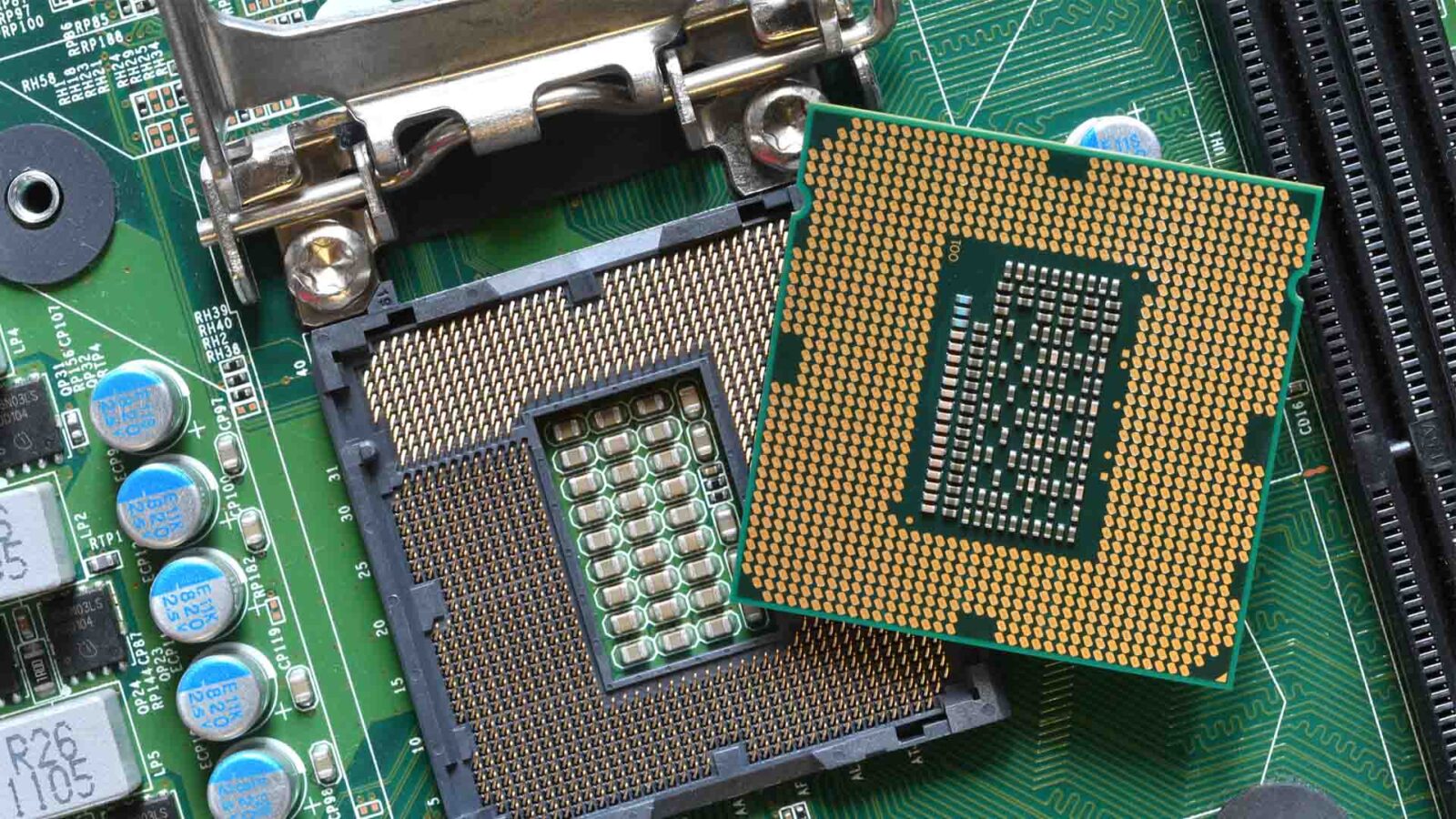
CPU Generations and Embedded Processors Explained
For a consumer PC, the CPU generation is shorthand for speed. For an industrial system it tells you far more — and the newest is rarely the right answer. This guide covers what a generation actually signals, how the naming works, and what makes an embedded processor different.
Pick almost any industrial computer and the specification leads with a processor and a generation — “13th Gen Intel Core”, “AMD Ryzen Embedded”, “NVIDIA Jetson Orin”. On a consumer PC the generation is shorthand for speed. On an industrial or embedded system it tells you a great deal more, and the newest part is rarely the right answer. This guide explains what a CPU generation actually signals, how the naming works, what makes an embedded processor different, and how the main families — Intel, AMD, NVIDIA and Arm — compare for a system that has to run unchanged for years.
What a CPU generation actually tells you
A CPU generation tells you which processor family and technology period a part belongs to — architecture, core layout, graphics, memory, PCIe, power and platform compatibility. It is not a simple performance score.

Architecture and cores
Newer generations can change core design, core counts and cache, add hybrid performance/efficiency layouts, and improve IPC — more work at the same clock speed.
Platform support
A generation affects chipset choice, socket compatibility, BIOS support, memory type and PCIe generation — and which boards are available for a build.
Graphics and acceleration
Integrated graphics, media engines and AI acceleration (NPUs) can change significantly between generations — which matters for vision, display and edge-AI workloads.
Why industrial CPU selection is different
An industrial computer is specified around a longer service life than an office PC. The processor has to provide enough performance, but it must also fit the thermal design, I/O, operating-system image and expected availability of the complete system.

Performance
Processing headroom for control software, data logging, machine vision, virtualization or edge analytics.
Thermals
Power draw and heat output directly affect fanless designs, sealed enclosures, panel PCs and compact embedded systems.
I/O
PCIe lanes, chipset support, serial ports, LAN, storage interfaces and expansion all depend on the platform.
Software
Operating-system support, drivers, BIOS versions and validated system images can matter as much as raw CPU speed.
Lifecycle
Long-life projects need parts that can be supplied, supported and replicated without unexpected redesign.
x86 vs Arm: The Architecture Choice
Before the brand comes the instruction set, and it is the first real fork in choosing a processor. Most industrial computing runs on x86 — Intel and AMD — with the broadest operating-system and application compatibility and the strongest single-thread performance. Arm takes the other path: more performance per watt, which is why it dominates compact, sealed and battery-powered devices, and why edge-AI modules such as NVIDIA Jetson pair an Arm CPU with a GPU. The decision usually comes down to software compatibility and raw performance (x86) against power efficiency and integration (Arm).
The processor families
Within x86 and Arm, four families cover most industrial designs — each a place to look depending on the workload.

Intel Core & Core Ultra
Mainstream x86 — Core 3 to Core Ultra 9, embedded E/TE long-life variants, and an NPU on Core Ultra for on-device AI. Powers most industrial PCs.
View range AMD Ryzen Embedded & EPYC
Strong integrated graphics and multi-core value — Ryzen Embedded for long-life designs, EPYC Embedded for high-core-count edge servers.
View range NVIDIA Jetson
An Arm CPU paired with an NVIDIA GPU for edge AI — Orin and the newer Thor, run through the JetPack stack.
View range
Arm SoCs (Cortex-A)
Low-power Arm cores from vendors such as NXP and TI, for compact, sealed or battery-powered devices where efficiency beats peak performance.
Consumer vs Embedded Processors
A consumer processor is chosen for peak performance and replaced within a year or two. An industrial system is chosen to run, unchanged, for the better part of a decade — so the priorities invert. Most families have an embedded line for exactly this: Intel marks embedded variants with an E (and lower-power TE) suffix, with longer guaranteed availability and, on industrial parts, extended-temperature operation; AMD offers Ryzen Embedded and EPYC Embedded. These parts trade a little peak performance for the longevity, thermal range and platform stability an embedded design needs.
The Core i5-13500 family shows it well — the same 14 cores throughout, but the power envelope and intended use change across the standard, E and TE variants:
| Feature | Core i5-13500 | Core i5-13500E | Core i5-13500TE |
|---|---|---|---|
| Typical role | Desktop processor | Embedded processor | Embedded, lower-power |
| Cores / threads | 14C / 20T | 14C / 20T | 14C / 20T |
| Max turbo | up to 4.8 GHz | up to 4.6 GHz | up to 4.5 GHz |
| Power | 65 W base, up to ~154 W turbo | 65 W base, up to ~154 W turbo | 35 W base, up to ~106 W turbo |
| Best suited to | Desktop-style platforms with standard cooling and availability | Industrial systems needing embedded alignment and long-life supply | Thermally constrained systems where lower power beats peak frequency |
CPU Brand Naming Cheatsheet
Processor naming is not consistent across every brand. Intel, AMD, Arm-based platforms and NVIDIA Jetson modules each describe families, generations and performance classes differently. This is a practical key for reading the names before you check the full specification.
-
01
Family Name
Core, Core Ultra, Atom and Xeon families indicate the broad processor line. For industrial PCs, Core and Core Ultra suit higher-performance systems, while Atom-class parts are common in lower-power embedded platforms.
View range -
02
Tier
3, 5, 7 and 9 (or the older i3, i5, i7 and i9) indicate the performance tier within the family. A higher tier is not automatically the best fit if power, thermals or lifecycle matter more.
-
03
Model Number
Older names such as Core i5-13500 make the generation easy to infer from the leading digits. Newer names such as Core 5 Processor 221E or Core Ultra 7 use series-style naming, so check the full product listing.
-
04
Suffix Key
E indicates an embedded-focused part; TE an embedded, lower-power part. Newer embedded listings may also carry PE, PTE or PQE, so use Intel ARK to confirm the exact role, power figure and platform support.
-
05
Family Name
Ryzen Embedded is associated with embedded x86 computing, graphics-capable systems and compact edge platforms. EPYC Embedded targets higher-core-count, server-style or infrastructure-class embedded workloads.
View range -
06
Architecture
AMD generations are best understood through the underlying Zen architecture and the specific embedded family. The model number alone may not tell the full story when comparing performance, graphics and long-life availability.
-
07
Model / Series
AMD embedded parts are grouped by product family and series rather than one simple generation digit. Check the exact family, core count, graphics capability, power envelope and supported lifecycle.
-
08
Suffix Key
AMD embedded naming is less suffix-led than Intel. Suffixes such as U, H or HS are more common in mobile Ryzen naming; embedded products should be checked by family, series, TDP, temperature support and lifecycle status.
-
09
Brand Name
Arm is usually the CPU architecture or processor IP inside another vendor's system-on-chip. The finished processor may be sold under an NXP, TI, Qualcomm, Rockchip or other silicon-vendor name.
-
10
Profile Letters
Cortex-A is used for application processors running rich operating systems such as Linux. Cortex-R targets real-time requirements. Cortex-M targets microcontroller-style embedded tasks.
-
11
Generation
Generation is a combination of the Arm architecture, the specific CPU core and the SoC vendor's platform. Two products can both be Arm-based yet differ greatly in CPU cores, GPU, NPU, memory and I/O.
-
12
What to Check
Check the SoC vendor, CPU core family, board support package, Linux or real-time OS support, I/O, industrial temperature options and lifecycle. The SoC and software support are often as important as the CPU core.
-
13
Family Name
Jetson Nano, Xavier and Orin describe platform families or generations. Moving between families can change CPU cores, GPU architecture, AI performance, memory bandwidth and software support.
View range -
14
Module Class
Nano indicates a smaller, lower-power edge-AI option; NX a compact module class with more performance; AGX the higher-performance modules.
-
15
Industrial
Where used, "Industrial" indicates a Jetson variant for more demanding environmental or deployment requirements — confirm the exact temperature, lifecycle and availability against the module datasheet.
-
16
What to Check
Compare the module family, AI performance, memory, power modes, camera interfaces, carrier-board compatibility and JetPack software support. The GPU and software stack are usually as important as the CPU.
Processor selection checklist
A good processor choice starts with the workload, then is checked against the physical and commercial requirements of the system.

Workload
What the system actually needs to run — control software, visualization, databases, video, AI inference or virtual machines.
Thermal design
Whether the system is fanless, enclosed, panel-mounted, rack-mounted or exposed to high ambient temperatures.
Expansion
The PCIe slots, storage interfaces, LAN, serial and USB ports and display outputs required.
Operating system
Windows, Linux, real-time, driver and image support — confirmed before locking the platform.
Lifecycle
How long the system must be available, replicated and supported without hardware changes.
Validation
Headroom for BIOS, drivers, thermal testing, application testing and certification where required.
Where This Fits
Things Embedded builds and supplies the industrial computers around these processors, and choosing the right family, generation and embedded variant for the lifecycle and environment is part of that. Tell us the workload, the temperature range and how long the product has to stay in production, and we will recommend a platform — from a long-life embedded Core to a Ryzen Embedded part or an NVIDIA Jetson edge-AI module. Browse our industrial computers to see the platforms in use.
Related Guides
Explore the cluster: x86 vs Arm · DDR4 vs DDR5 · Arm Processors · Intel Core Ultra · What Is an NPU? · GPU vs NPU · System on Chip · AMD EPYC for Edge Servers.
Choosing a Processor Platform?
Tell us the workload, the temperature range and how long the product must stay in production, and we will recommend an industrial computer on the right processor — long-life, embedded and matched to the environment.