
 US
US Rugged Embedded Systems Built for Harsh Environments
Rugged embedded systems for vehicles, rail, defense and exposed outdoor sites, where a computer has to cope with shock, vibration, water, dust and a wide temperature range. We specify the right rugged embedded computing hardware for the installation, then build, image and support it for the life of the project.
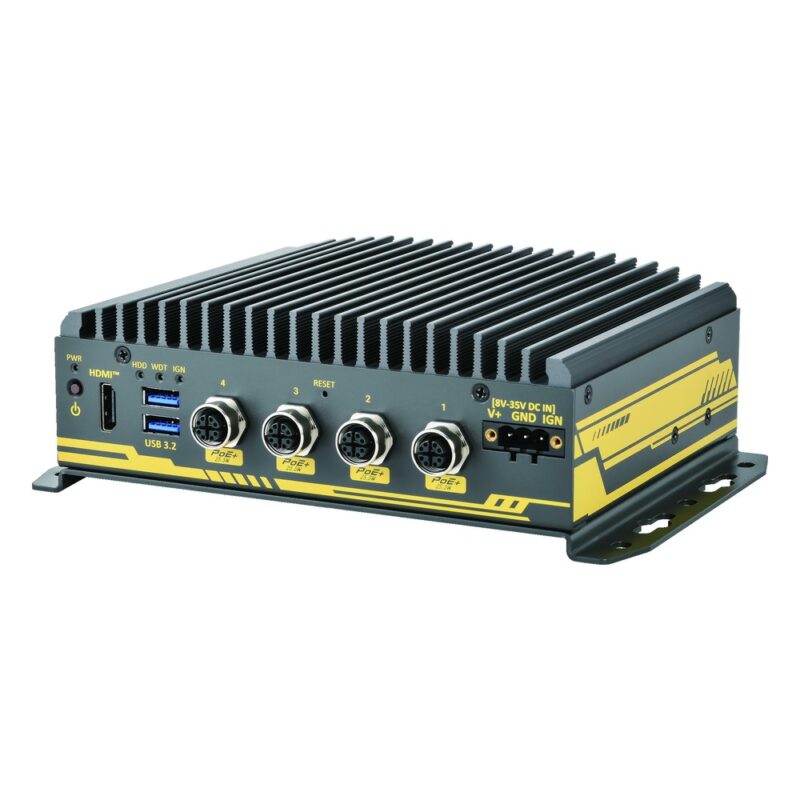
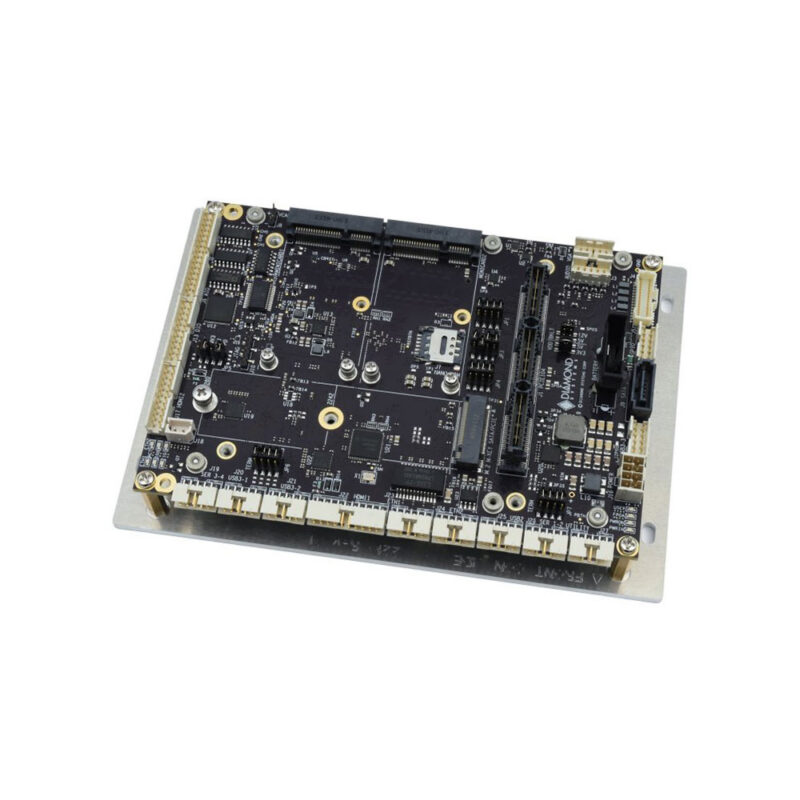
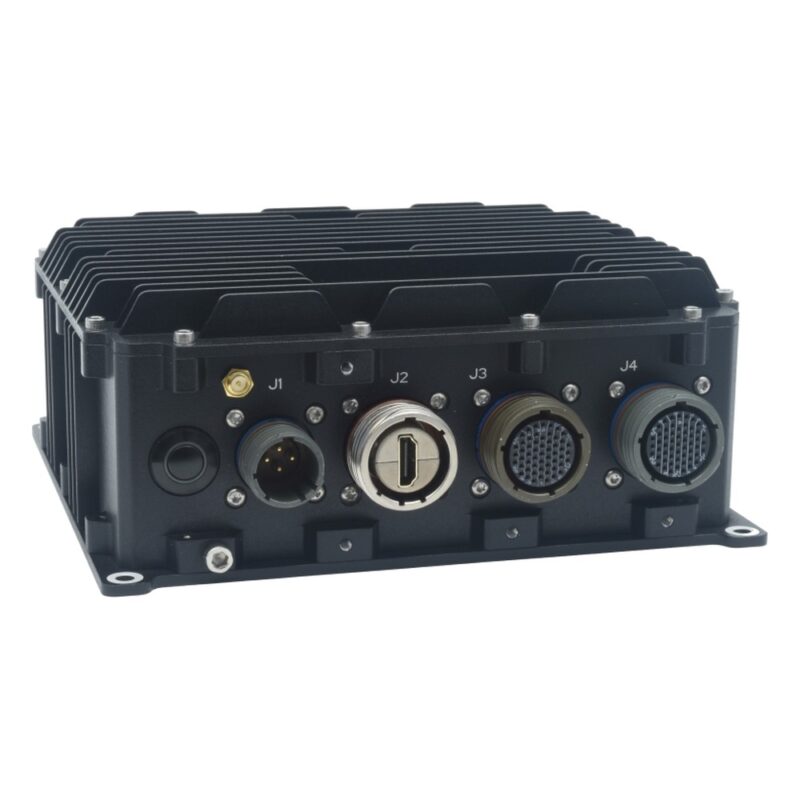
Ingress protection against dust and water. All four ratings are dust-tight; the second digit is the water test. IP65 resists low-pressure water jets, IP66 powerful jets, IP67 temporary immersion up to 1 m deep for 30 minutes, and IP69K close-range, high-pressure, high-temperature wash-down. Fully sealed systems drop the fan and vents, so the rating to specify depends on whether the computer faces rain, hose-down or submersion. IP Rating Chart: IP65, IP66, IP67, IP68 and IP69K Explained
What makes an embedded system rugged
A rugged system is defined by the standards it is designed and tested against, not by the word on the datasheet. We select products whose manufacturer datasheets state each rating, and say clearly where a system is designed to a standard rather than certified to it. Here is how those ratings show up on a sealed rugged computer.
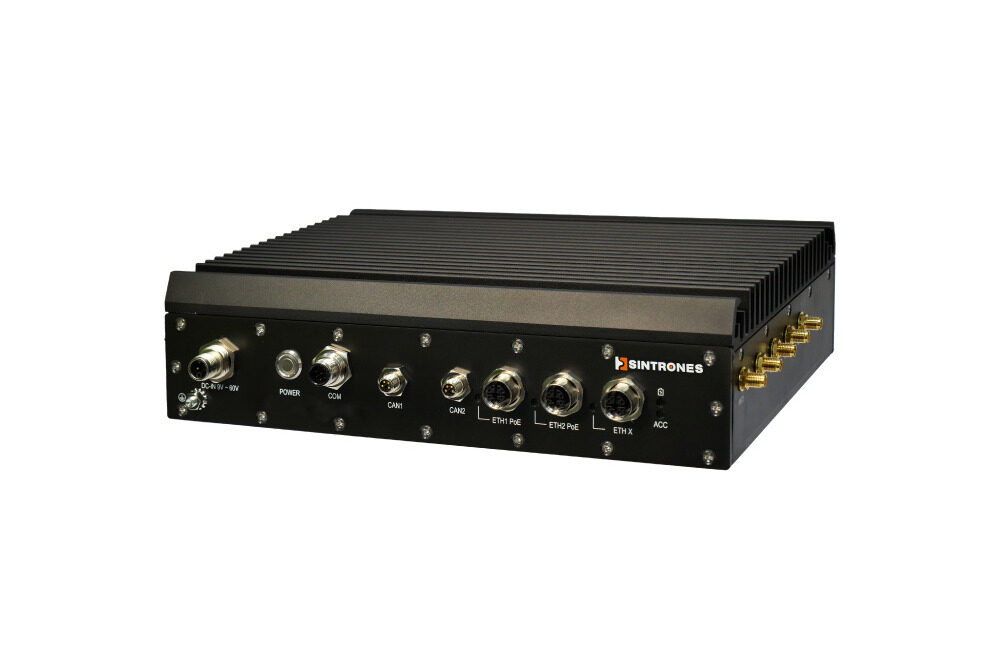
Sealed, fanless IP66 enclosure
The aluminum enclosure is sealed to IP66 with no fan and no vents, so there is nothing for rain, hose-down or dust to get through.
X-coded M12 connectors
Ethernet, serial and power connect on screw-locking M12 connectors that stay sealed and seated under vibration, where an RJ45 plug can work loose. Two of the ports carry PoE+ for cameras or LiDAR.
9–60 V DC input with ignition detection
A wide-range DC input with ignition detection rides through cranking dips and shuts the system down cleanly with the engine, on anything from a 12 V car supply to a 48 V vehicle bus.
Passive cooling from −25 °C to 70 °C
Heat leaves through the finned lid, so the computer runs fanless from −25 °C to 70 °C in an unheated cabinet or a vehicle parked in the sun.
MIL-STD-810H shock and vibration
Vibration and shock are tested to MIL-STD-810H, and the listed standards include E-Mark and EN 50155 for road and rail installations. The enclosure wall-mounts, and we match the mounting to the installation.
Where rugged embedded computing is deployed
Most rugged systems end up in one of five places: a vehicle, a train or trackside cabinet, an exposed outdoor site, a defense vehicle or aircraft, or a heavy industrial plant. Each one sets its own power, sealing and connector requirements, so the right system differs from one to the next.
01Vehicles and fleets

Rugged computers for vehicles and mobile fleets
Vehicle installations run from a 12 V or 24 V supply that dips on cranking and spikes on load dump, with constant vibration from the road. Rugged in-vehicle computers take a wide-range DC input with ignition control, so the system starts and shuts down with the engine, and are designed against the shock and vibration methods of MIL-STD-810 and E-Mark for road vehicles. We set the ignition delays, fit the 4G or 5G modem and GNSS, and match the mounting to the cab.
See our in-vehicle solutions02Rail and trackside

EN 50155 computers for rolling stock and trackside
Rolling stock computers are specified against EN 50155 for the train’s electrical supply, temperature range, shock and vibration, with M12 connectors that stay locked under continuous vibration. The same rugged systems run track inspection, passenger information and CCTV recording, often with PoE for the cameras and isolated wide-range power for the battery supplies used on trains.
See our rail solutions03Outdoor and wet sites

Sealed IP66 and IP67 systems for outdoor and wet sites
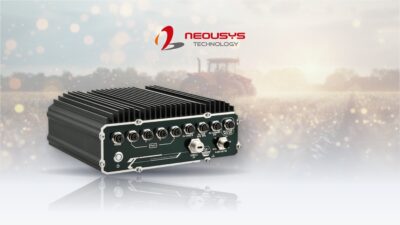
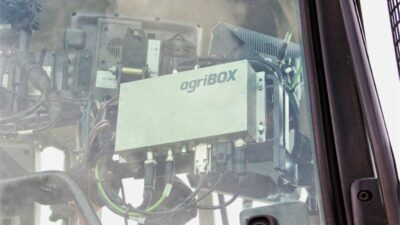
Agricultural machines, fish farms, ports and food plants expose the computer to rain, hose-down and dust. Fully sealed IP66 and IP67 rugged computers with M12 connectors and passive cooling keep water and particles out without a cabinet, and wide-temperature components keep them running from a frozen morning to direct sun.
See our agriculture solutions04Defense and aerospace
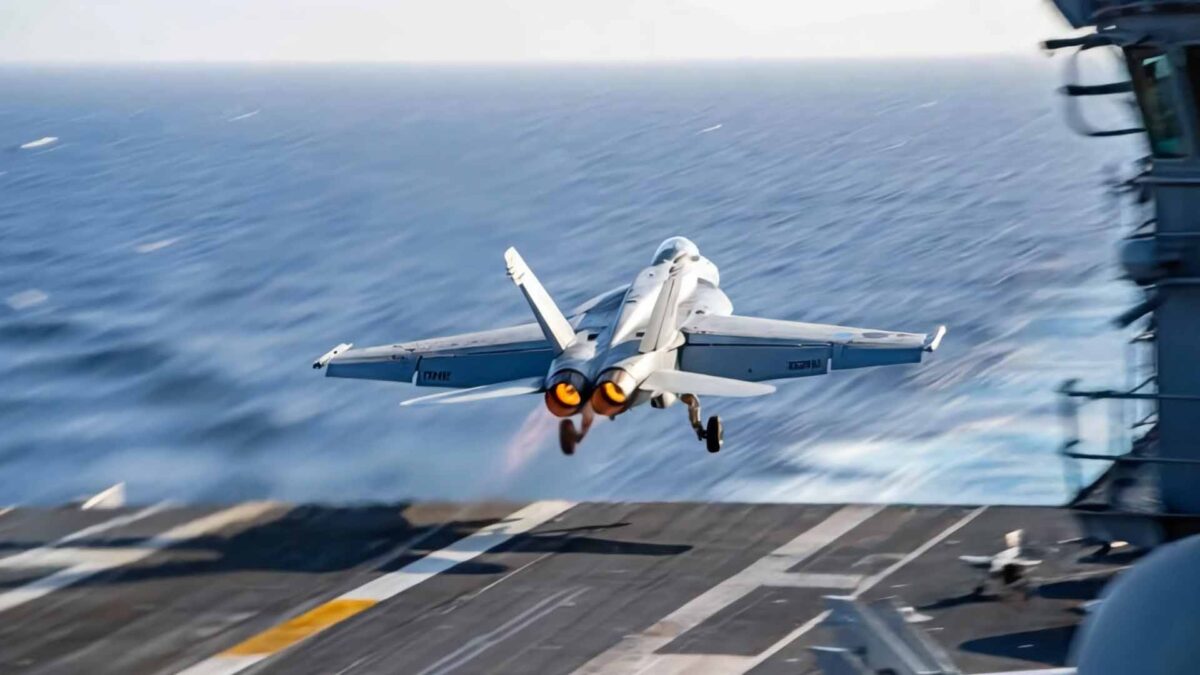
Mission computers for land, air and sea
Defense programs specify rugged systems against MIL-STD-810 for environment, MIL-STD-461 for EMC and MIL-STD-1275 or MIL-STD-704 for vehicle and aircraft power. Sealed mission computers with MIL-DTL-38999 connectors, and NVIDIA Jetson edge AI computers for ISR and counter-UAS payloads, are the usual starting point, with TAA-compliant sourcing where a program requires it.
See our military and aerospace solutions05Heavy industry
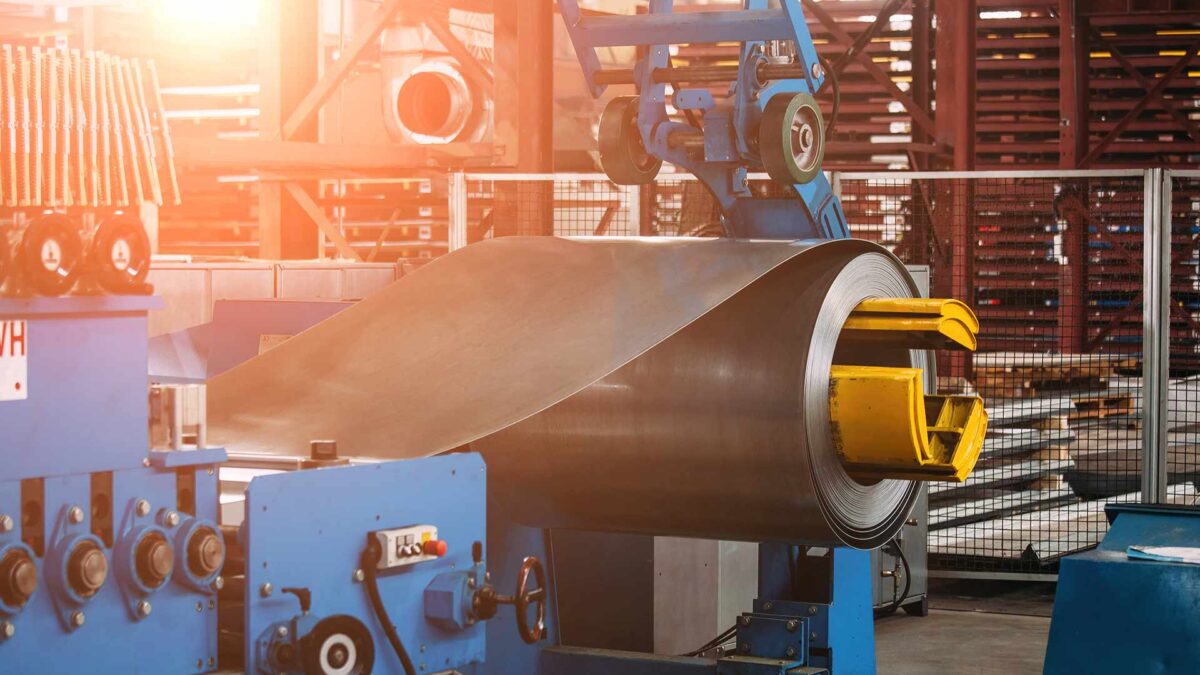
Rugged panel PCs and computers for heavy industry
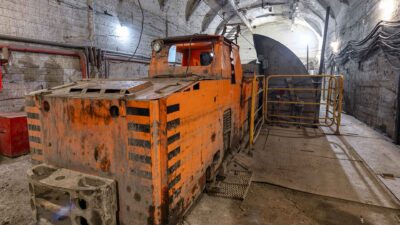
Steelworks, quarries and mines combine heat, dust, conductive particles and chemical cleaning. Sealed stainless steel panel PCs and fanless rugged computers with no vents to clog take the place of office hardware, which typically struggles on a production line running around the clock.
See our manufacturing solutionsHow we build a rugged embedded system
Every system ships as a complete build, with your image loaded and the hardware tested together. Where a standard product does not fit, our in-house design centre adapts it or builds a custom rugged computer around your requirement.
-
Scope
Scope the environment
We start with the installation: ingress rating, temperature range, shock and vibration, power supply and the standards the application specifies. That shortlist decides the system before the processor does.
-
Design
Design the I/O and mounting
We match the I/O, connectors and mounting to the installation, add PoE, CAN, serial or GNSS where the application needs them, and make up custom cable harnesses. Semi-custom variants and custom enclosures come from our in-house design centre.
-
Build
Build and test in the USA
Systems are assembled in our USA antistatic engineering facility with industrial memory and storage, modems and cards fitted, the BIOS set and a “golden image” loaded. Each build is functionally tested and documented with photographs.
-
Lifecycle
Support for the life of the project
Warranties of up to five years, a global RMA service and free lifetime technical support from our USA team, with EOL and PCN management so later systems match the first.
An extension of your engineering team
Our engineers work alongside yours, checking power, sealing and connector requirements against the standards before you commit to a build.
Custom branding and white label
Custom I/O labeling, chassis colors and OEM packaging, with white-label direct delivery, while keeping the manufacturer’s serial number and nameplate.
Stock and call-off
We can hold stock on your behalf, with call-off or pre-agreed inventory under a project SLA, so systems arrive when the rollout or production line needs them.
BOM and asset tracking
We scan and track every BOM component, recording the contents, warranty status and delivery address of each system we ship.
Rugged hardware we build on
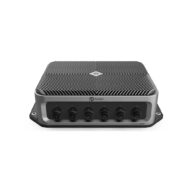
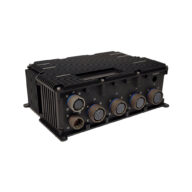
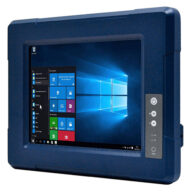
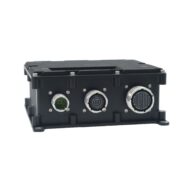
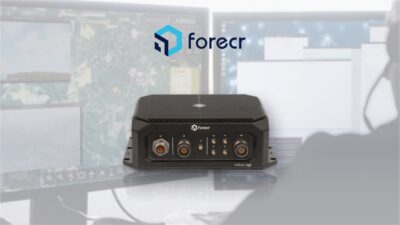
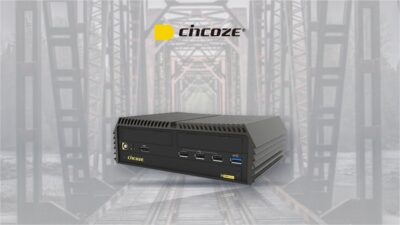
Seven product families cover most rugged projects, from rugged SBCs that go inside your own enclosure to sealed rugged embedded computers and the rugged network switches that connect them.
-

-
-
-
-
-
-
Rugged case studies, guides and FAQs
Rugged systems we have built for fleets, railways, farms and defense programs, and our guides to what makes a computer rugged.
-

-
-
-
-
-

What is the difference between IP65, IP66, IP67 and IP69K?
All four are dust-tight; the second digit is the water test. IP65 resists low-pressure water jets and IP66 powerful water jets. IP67 covers temporary immersion, up to 1 m deep for 30 minutes. IP69K covers close-range, high-pressure, high-temperature wash-down, and does not imply protection against submersion.
IP rating chartWhat is the difference between MIL-STD-810G and 810H?
MIL-STD-810G (2008) and MIL-STD-810H (2019) are successive revisions of the US military environmental test standard. 810H is the current version; it refined and reorganised test methods and tightened guidance, but both define test methods rather than a pass or fail certificate.
MIL-STD-810G vs 810HWhat is M12 coding?
M12 coding is the shape of the key inside an M12 connector that stops incompatible plugs and sockets being mated. Each coding is reserved for a job: A for sensors, DC power and general signals, B for PROFIBUS, D and X for Ethernet, and L, S, K and T for power. A plug only fits a socket with the same coding.
M12 connector codingSpeak to a rugged systems specialist.
Tell us where the system will be installed, how it is powered, the ratings the application specifies and what it needs to connect to. We will recommend the right rugged system to start from, then configure, image and test it before it ships.