
 US
IP Rating Chart: IP65, IP66, IP67, IP68 and IP69K Explained
A working guide to ingress protection ratings under IEC 60529 and DIN 40050-9: the IP rating chart, what IP65, IP66, IP67, IP68 and IP69K mean, how each is tested, how they map to NEMA enclosure types and how to choose the right rating for an industrial computer.
An IP rating chart shows what each digit of an ingress protection code means: the first digit, from 0 to 6, grades protection against solid objects and dust, and the second, from 0 to 9K, grades protection against water. The code is defined in IEC 60529, so IP65, for example, always means dust-tight and protected against low-pressure water jets, whoever made the enclosure.
For industrial computers, displays and panel PCs, five ratings do most of the work: IP65 for low-pressure jets, IP66 for powerful jets, IP67 for temporary immersion, IP68 for continuous immersion and IP69K for hot, high-pressure washdown. This guide gives the full chart, the test behind every digit, how the five industrial ratings compare, how they map to NEMA enclosure types and how to choose the right rating for a computer that has to survive its installation.
Key takeaways
- 01Two independent digits
- The first is solids (0 to 6), the second is liquids (0 to 9K); 6 means dust-tight and no dust may enter at all.
- 02Higher is not always better
- IP69K covers hot, high-pressure jets but not immersion; IP67 covers immersion but not jets. Above IPX6 the water digits are separate tests.
- 03Dual ratings are normal
- IP66/IP67 or IP67/IP69K on a datasheet means the enclosure passed both tests, which is what jet-washed equipment that may also be submerged needs.
- 04Front or full
- A front IP65 panel PC is sealed only on the operator side; the rear has to sit inside a sealed cabinet.
- 05Match the environment
- Choose the rating that meets the dominant water and dust exposure, with no more than one step of margin, then match connectors and cables to it.
IP rating chart
The IP ratings table below lists every level of both digits. Read the first digit from the solids chart and the second from the liquids chart: IP65, for example, is dust-tight (6) and protected against water jets (5). The combined chart after them shows the codes you will meet most often on industrial equipment.
First digit: protection against solids
| Digit | Protected against | In practice |
|---|---|---|
| 0 | No protection | Open equipment |
| 1 | Solid objects over 50 mm | The back of a hand |
| 2 | Solid objects over 12.5 mm | Fingers |
| 3 | Solid objects over 2.5 mm | Tools and thick wires |
| 4 | Solid objects over 1 mm | Most wires, screws and small tools |
| 5 | Dust-protected | Limited dust ingress that does not affect operation |
| 6 | Dust-tight | No dust ingress at all |
Second digit: protection against liquids
| Digit | Protected against | Test |
|---|---|---|
| 0 | No protection | None |
| 1 | Dripping water | Vertically falling drops |
| 2 | Dripping water when tilted | Drops with the enclosure tilted up to 15° |
| 3 | Spraying water | Spray up to 60° from vertical |
| 4 | Splashing water | Splashes from any direction |
| 5 | Water jets | 6.3 mm nozzle, 12.5 litres per minute, about 30 kPa at 2.5 to 3 m |
| 6 | Powerful water jets | 12.5 mm nozzle, 100 litres per minute, about 100 kPa at 2.5 to 3 m |
| 7 | Temporary immersion | Up to 1 m depth for 30 minutes |
| 8 | Continuous immersion | Beyond 1 m, conditions set by the manufacturer |
| 9K | High-pressure, high-temperature jets | 80 °C water at 8 to 10 MPa from 100 to 150 mm (DIN 40050-9, now ISO 20653) |
Combined IP rating chart: the codes you will meet
| IP code | Solids | Water | Typical use |
|---|---|---|---|
| IP20 | Fingers and objects over 12.5 mm | None | Equipment inside a closed, dry cabinet |
| IP44 | Wires and objects over 1 mm | Splashing water | Indoor enclosures near occasional splashes |
| IP54 | Dust-protected | Splashing water | Indoor factory cabinets in light dust |
| IP55 | Dust-protected | Low-pressure water jets | Light industrial enclosures that are wiped or sprayed |
| IP65 | Dust-tight | Low-pressure water jets | Panel-mount HMIs, outdoor kiosks, signage |
| IP66 | Dust-tight | Powerful water jets | Hosed-down equipment, marine decks, exposed sites |
| IP67 | Dust-tight | Immersion to 1 m for 30 minutes | Vehicles, agriculture, field equipment |
| IP68 | Dust-tight | Continuous immersion, maker-specified | Sub-sea and permanently wet installations |
| IP69K | Dust-tight | Hot, high-pressure jets | Food and beverage washdown, vehicle cleaning |
Every one of the five industrial ratings starts with a 6. The construction that keeps out water jets also keeps out dust, so the practical choice is almost always about the second digit. For the dust digit on its own, see the difference between IP5X and IP6X.
How IP ratings are structured
Ingress protection (IP) ratings are the international standard for classifying how well a sealed enclosure resists dust and water. They are published as IEC 60529 by the International Electrotechnical Commission, adopted in the United Kingdom as BS EN 60529, recognized in the United States as ANSI/IEC 60529, and extended by the German DIN 40050-9 standard for high-pressure, high-temperature washdown, the “K” in IP69K. DIN 40050-9 has since been carried into ISO 20653 for road vehicles, which keeps the 9K level.
For industrial computers, displays and panel PCs, the IP rating is one of the most consequential lines on the specification for any deployment outside a controlled office. The right rating matches the environment: one step too low and the system fails in service, one step too high and the budget goes on protection the application will never need.
In North America, the parallel NEMA 250 enclosure type system, published by the National Electrical Manufacturers Association, is widely used alongside IP. The two systems overlap on water and dust but differ on corrosion, ice and oil, so for food and beverage, marine, cold-climate and coastal deployments both ratings often appear on the specification.
Reading the code
An IP rating consists of the letters “IP” followed by two digits. The first digit (0 to 6) describes protection against solid particles. The second digit (0 to 9K) describes protection against liquids. A higher digit indicates greater protection within each scale.
The two digits are independent. An enclosure can be dust-tight without being waterproof, or the reverse, although in practice almost every industrial computer rated IPX5 or higher is also IP6X dust-tight, because the construction that resists water also resists dust.
What IPX means
An X in place of a digit means that characteristic was not tested. IPX7, for example, has been immersion-tested but not dust-tested. It is common on consumer devices and rare on industrial computers, where both digits matter, but it appears on some components and accessories.
Optional letters after the digits
IEC 60529 allows letters after the two digits. They are rare on computer datasheets, but worth recognizing when they appear on enclosures, connectors or switchgear.
| Letter | Meaning | Example |
|---|---|---|
| A | Protected against access to hazardous parts with the back of a hand | IP20A |
| B | Protected against access with a finger | IP20B |
| C | Protected against access with a tool (2.5 mm) | IP20C |
| D | Protected against access with a wire (1 mm) | IP20D |
| H | High-voltage apparatus | IP54H |
| M | Water test made with moving parts in motion | IPX5M |
| S | Water test made with moving parts stationary | IPX5S |
| W | Suitable for stated weather conditions with extra measures | IP54W |
How IP ratings are tested under IEC 60529
The IP test method is set by IEC 60529, or by DIN 40050-9 and ISO 20653 for IP69K, and is the same across the BS EN and ANSI/IEC adoptions. Tests are made in a laboratory on production-representative samples, and each one is pass or fail: a product is either IP65 or it is not. There is no partial rating, although front-of-panel and full-enclosure ratings are stated separately, as described under IP65 below.
| Test | Digit | Equipment and conditions | Duration | Pass criterion |
|---|---|---|---|---|
| Dust-tightness | IP6X | Sealed chamber with circulating talcum powder; partial vacuum drawn inside the enclosure where it would normally breathe | Up to 8 hours | No dust inside |
| Dust protection | IP5X | Same chamber, normally without the vacuum | Up to 8 hours | Dust may enter but must not affect operation or safety |
| Water jets | IPX5 | 6.3 mm nozzle, 12.5 litres per minute, about 30 kPa, from 2.5 to 3 m | 1 minute per square meter, at least 3 minutes | No harmful ingress |
| Powerful water jets | IPX6 | 12.5 mm nozzle, 100 litres per minute, about 100 kPa, from 2.5 to 3 m | 1 minute per square meter, at least 3 minutes | No harmful ingress |
| Temporary immersion | IPX7 | Lowest point 1 m below the surface, or top 150 mm below for enclosures taller than 850 mm | 30 minutes | No harmful ingress |
| Continuous immersion | IPX8 | Depth and duration agreed by the manufacturer, more severe than IPX7 | As stated | No harmful ingress |
| Hot, high-pressure jets | IPX9K | 80 °C water at 8 to 10 MPa and 14 to 16 litres per minute, 100 to 150 mm away, turntable at 5 rpm | 30 seconds at each of 0°, 30°, 60° and 90° | No harmful ingress |
“No harmful ingress” is the key phrase for the water digits. A small amount of water may be allowed inside if it does not interfere with operation, reach live parts or collect where it could cause tracking. For a computer, the practical aim is no water inside at all, which is why most industrial designs are tested well inside the limits.
IP ratings are not cumulative above IPX6
Up to IPX6, a higher water digit includes the lower ones: an IPX6 enclosure also meets IPX5 and IPX4. Above that the rule changes. IEC 60529 treats an enclosure marked only IPX7 or IPX8 as unsuitable for water jets unless it has also passed the jet test. IPX9K is a third, separate test again.
That is why rugged equipment often carries two ratings. IP66/IP67 means the enclosure passed the powerful-jet test and the immersion test. IP67/IP69K means it survives immersion and hot, high-pressure washdown. When a deployment sees more than one kind of water, look for a dual rating rather than the highest single number.
The five industrial IP ratings
Jump to a rating, or read on for each one in turn. All five are dust-tight; they differ in what the water does.
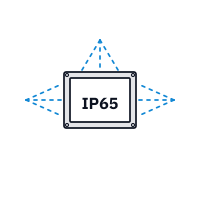
IP65
Dust-tight and protected against low-pressure water jets. The practical minimum for a waterproof claim.
View range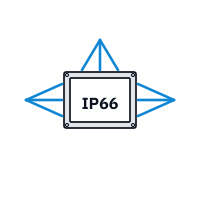
IP66
Dust-tight and protected against powerful water jets, for hosing and storm-driven rain.
View range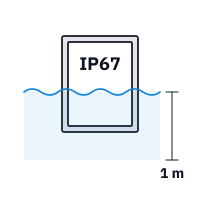
IP67
Dust-tight and protected against temporary immersion to 1 m for 30 minutes.
View range
IP68
Dust-tight and protected against continuous immersion to a stated depth.
View range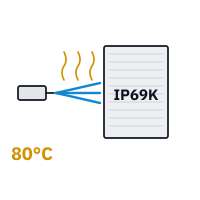
IP69K
Dust-tight and protected against hot, high-pressure washdown.
View rangeWhat is IP65?
An IP65 rating means an enclosure is dust-tight and protected against low-pressure water jets from any direction. It is the practical minimum for any “waterproof” claim on an industrial computer, and the most common rating on panel-mount displays and panel PCs.
| Property | IP65 |
|---|---|
| Solids | 6: dust-tight |
| Liquids | 5: low-pressure water jets |
| Test | 6.3 mm nozzle, 12.5 litres per minute, about 30 kPa |
| NEMA equivalent | NEMA 4 (approximately) |
| Typical use | Outdoor kiosks, signage, panel-mount HMIs |
IP65 meaning
The first digit, 6, means the enclosure is dust-tight: no dust enters during the dust chamber test. The second digit, 5, means it is protected against water jets from a 6.3 mm nozzle at any angle. The jets are low pressure, enough to cover rain, hosing and wipe-down cleaning, but not a pressure washer.
IP65 test specification
- The enclosure is sprayed from every practicable direction through a 6.3 mm nozzle.
- Flow is 12.5 litres per minute at about 30 kPa, from 2.5 to 3 m away.
- Spraying lasts at least 3 minutes, and at least 1 minute per square meter of surface.
- Before the water test, the enclosure spends up to 8 hours in a dust chamber to prove it is dust-tight.
Front IP65 vs full IP65
Industrial displays and panel PCs are often specified with a front IP65 or front IP66 rating rather than full enclosure protection. The distinction matters and is often misunderstood.
Front IP65 or IP66. The display is rated when installed in a panel cut-out with the front bezel and its gasket exposed. The back, where the I/O connectors are, is not rated; it sits inside the protected enclosure on the dry side of the panel.
Full IP65 or IP66. The whole enclosure is rated, on every side, including the I/O. This usually needs M12 waterproof connectors in place of standard RJ45, USB and HDMI, because conventional connectors break the seal.
A front IP65 panel PC in an outdoor kiosk is a correct specification: the back of the computer is inside the kiosk and never sees weather. A front IP65 panel PC bolted to the outside of a forestry vehicle is the wrong one: the back is exposed and the system will fail within months. If a datasheet does not say front or full, ask. The difference is not cosmetic.
Is IP65 waterproof?
Water-resistant, not submersible. It keeps out rain, splashes and low-pressure hosing, but not powerful jets, pressure washing or immersion; those need IP66, IP69K and IP67 respectively.
Is IP65 suitable for outdoor use?
Yes, for most outdoor installations. It handles rain, wind-driven spray and dust, which is why kiosks, signage and building-mounted equipment use it. For storm-driven rain or hosing step up to IP66, and to IP67 where brief submersion is possible.
Our front IP65 panel PCs and front IP65 monitors are sealed at the bezel for panel mounting, while IP65 panel PCs and IP65 computers are sealed all round.
What is IP66?
An IP66 rating means an enclosure is dust-tight and protected against powerful water jets from any direction: a 12.5 mm nozzle at about 100 kPa, over three times the pressure and eight times the flow of the IP65 test. It is the step up from IP65 for equipment that is hosed down or faces storm-driven rain.
| Property | IP66 |
|---|---|
| Solids | 6: dust-tight |
| Liquids | 6: powerful water jets |
| Test | 12.5 mm nozzle, 100 litres per minute, about 100 kPa |
| NEMA equivalent | NEMA 4 or 4X (approximately) |
| Typical use | Hosed-down equipment, marine decks, exposed outdoor sites |
IP66 meaning
The first digit, 6, is the same as IP65: no dust enters during the dust chamber test. The second digit, 6, means protection against powerful water jets from any direction, strong enough to cover hosing, heavy seas washing over a deck and storm-driven rain.
IP66 test specification
- The enclosure is sprayed from every practicable direction through a 12.5 mm nozzle.
- Flow is 100 litres per minute at about 100 kPa, from 2.5 to 3 m away.
- Spraying lasts at least 3 minutes, and at least 1 minute per square meter of surface.
- The same dust test as IP65 applies to the first digit.
Is IP66 waterproof?
Yes, against powerful jets and heavy rain. It does not include immersion, so equipment that may be submerged needs IP67 as well, which is why many rugged computers carry IP66/IP67 together.
Is IP66 suitable for outdoor use?
Yes, including exposed and coastal sites. It suits equipment in the open, on ships and on hosed-down vehicles. For salt air, pair it with 316 stainless steel or NEMA 4X construction, because IP ratings do not test corrosion.
Our IP66 computers, IP66 panel PCs and IP66 monitors are sealed all round; front IP66 panel PCs are sealed at the bezel only. The IP66 FAQ covers the rating in brief.
Recent IP66 launches include the sealed, fanless iBOX-650P-IP66 AGX Orin computer, the compact iBOX-602P-IP66 with PoE for cameras and the SBOX-2624P-IP66 waterproof industrial PC.
What is IP67?
An IP67 rating means an enclosure is dust-tight and protected against temporary immersion in water to 1 m for 30 minutes. It is the usual rating for vehicles, field equipment and anything that might be dropped in water or caught in a flood.
| Property | IP67 |
|---|---|
| Solids | 6: dust-tight |
| Liquids | 7: temporary immersion |
| Test | 1 m depth for 30 minutes |
| NEMA equivalent | NEMA 6 (approximately) |
| Typical use | Vehicles, agriculture, field and military equipment |
IP67 meaning
The 6 is the same dust-tight rating as IP65 and IP66. The 7 means the enclosure keeps water out when fully submerged for a limited time, under test conditions fixed by IEC 60529 rather than set by the manufacturer.
IP67 test specification
- The enclosure is fully submerged in water for 30 minutes.
- Enclosures under 850 mm tall sit with their lowest point 1 m below the surface; taller ones with their top 150 mm below it.
- After the test the enclosure is opened and inspected for water ingress.
- The same dust test applies to the first digit.
Is IP67 waterproof?
Yes, to 1 m for 30 minutes. It is not tested against water jets, so equipment that is also hosed down should carry IP66 or IP69K as well.
Is IP67 submersible?
For short periods only. IP67 covers brief, accidental immersion, such as a vehicle fording a stream or a computer dropped in a tank. For equipment that stays under water, specify IP68 with the depth and duration stated.
See our IP67 computers, IP67 panel PCs and IP67 monitors. The IP67 FAQ covers the rating in brief.
What is IP68?
An IP68 rating means an enclosure is dust-tight and protected against continuous immersion under conditions stated by the manufacturer, typically deeper than 1 m and longer than 30 minutes. Unlike IP65 to IP67, the test is not fixed, so two IP68 products can protect to very different depths.
| Property | IP68 |
|---|---|
| Solids | 6: dust-tight |
| Liquids | 8: continuous immersion |
| Test | Set by the manufacturer, beyond IP67 |
| NEMA equivalent | NEMA 6P (approximately) |
| Typical use | Sub-sea instruments, permanently wet installations |
IP68 meaning
The 6 is dust-tight, as for every industrial rating. The 8 means protection against continuous immersion, but IEC 60529 leaves the depth and duration to the manufacturer, provided they are more severe than the IP67 test. The rating only means something alongside those stated conditions.
IP68 test specification
- The manufacturer sets the depth and duration, which must exceed IP67 (1 m for 30 minutes).
- The conditions are published alongside the rating.
- After immersion the enclosure is opened and inspected for water ingress.
- The same dust test applies to the first digit.
Is IP68 waterproof?
Yes, to the depth and time the manufacturer states. “IP68” alone does not tell you whether a device survives 2 m for an hour or 50 m for a week, so always read the stated conditions.
Is IP68 better than IP67?
For immersion, yes; for everything else, no. Neither IP67 nor IP68 includes a jet test, so equipment that is hosed or pressure-washed still needs IP66 or IP69K alongside it.
IP68 is rarely needed on industrial computers, and most of our sealed range stops at IP67 for immersion. If equipment must work under water permanently, tell us the depth and duration and we will advise. The IP68 FAQ covers the rating in brief.
What is IP69K?
An IP69K rating means an enclosure is dust-tight and protected against close-range, high-pressure, high-temperature water jets, as defined by DIN 40050-9 and now ISO 20653. It is the food and beverage industry’s usual requirement for equipment cleaned every shift with hot water, steam and chemical disinfectants.
| Property | IP69K |
|---|---|
| Solids | 6: dust-tight |
| Liquids | 9K: hot, high-pressure jets |
| Test | 80 °C water at 8 to 10 MPa from 100 to 150 mm |
| NEMA equivalent | None; NEMA 4X is closest for corrosion |
| Typical use | Food and beverage washdown, pharmaceutical, vehicles |
IP69K meaning
The 6 is dust-tight. The 9K, from the German standard DIN 40050-9, means protection against close-range, high-pressure, high-temperature water jets: the conditions of a pressure washer or steam cleaner used in food plants and on vehicles.
IP69K test specification
- The enclosure sits on a turntable rotating at 5 rpm.
- Water at 80 °C is sprayed at 8 to 10 MPa (about 1,160 to 1,450 psi) and 14 to 16 litres per minute.
- The nozzle is held 100 to 150 mm from the enclosure.
- The spray is applied for 30 seconds at each of four angles: 0°, 30°, 60° and 90°.
Benefits of IP69K
- Hygiene. IP69K equipment can be cleaned as thoroughly as the machinery around it, so it never becomes the weak point in a sanitation regime.
- Less downtime. Equipment that survives the daily clean does not need covering, removing or drying out before production restarts.
- Longer life. IP69K enclosures are usually stainless steel with sealed M12 connectors, built to resist the caustic and acidic chemistry of washdown for years.
Is IP69K submersible?
No. The 9K test covers hot, high-pressure jets and includes no immersion. Where equipment may be submerged and washed down, look for a combined rating such as IP67/IP69K; the IP69K vs IP67 comparison sets out the two tests side by side.
What is the difference between IP69 and IP69K?
They describe a near-identical hot, high-pressure jet test from two standards. IP69K comes from DIN 40050-9, written for pressure-washed road vehicles and adopted by food processing; IEC 60529 later added its own IPX9 level. In industrial computing, IP69K is still the rating usually specified and tested.
See our IP69K panel PCs and IP69K monitors, and our guide to hygienic design for what else a washdown area asks of the equipment.
IP65 vs IP66 vs IP67 vs IP68 vs IP69K
The five industrial ratings differ only in the second digit, so the choice comes down to what the water does: falls, jets, submerges or blasts.
| Rating | Dust | Water | Test in brief | Typical use |
|---|---|---|---|---|
| IP65 | Dust-tight | Low-pressure jets | 6.3 mm nozzle, 12.5 L/min | Outdoor kiosks, signage, panel-mount HMIs |
| IP66 | Dust-tight | Powerful jets | 12.5 mm nozzle, 100 L/min | Hosed-down equipment, marine decks, exposed outdoor sites |
| IP67 | Dust-tight | Immersion to 1 m for 30 minutes | Immersion tank | Vehicles, agriculture, field equipment |
| IP68 | Dust-tight | Continuous immersion, maker-specified | Maker’s stated depth and time | Sub-sea and permanently wet installations |
| IP69K | Dust-tight | Hot, high-pressure jets | 80 °C, 8 to 10 MPa, 100 to 150 mm | Food and beverage washdown |
IP65 vs IP66
Both are dust-tight; the difference is jet strength. IP66 is tested with a larger nozzle at over three times the pressure and eight times the flow, so choose it where equipment is hosed down or faces driving rain. The IP65 vs IP66 FAQ gives the short version.
IP65 vs IP67
IP65 protects against water jets; IP67 against temporary immersion to 1 m. IP67 does not include a jet test, so a device that may be both submerged and hosed needs both ratings.
IP65 vs IP68
IP65 is a jet rating, IP68 an immersion rating with conditions set by the maker. They answer different questions, so an IP68 device is not automatically suitable for hosing; see IP65 vs IP68 for where each fits.
IP66 vs IP67
IP66 is for powerful jets, IP67 for brief immersion. They test different things, which is why rugged vehicle and outdoor equipment often carries IP66/IP67 together. More in IP66 vs IP67.
IP67 vs IP68
Both cover immersion. IP67 is fixed at 1 m for 30 minutes; IP68 goes further, to a depth and duration the manufacturer must state, so always read the conditions behind an IP68 claim. The IP67 vs IP68 FAQ has worked examples.
IP68 vs IP69K
IP68 is about staying under water; IP69K is about surviving hot water fired at close range. A sub-sea instrument needs the first, a food line HMI the second, and neither rating implies the other.
IP55 vs IP65
IP55 allows limited dust ingress; IP65 allows none. Both resist low-pressure jets. IP55 suits indoor enclosures in light dust; IP65 is the minimum for a dust-tight, waterproof industrial computer. For indoor cabinets that only see splashes, IP54 is often enough.
How do IP ratings map to NEMA enclosure types?
NEMA, the National Electrical Manufacturers Association, publishes a parallel enclosure rating system used widely in the United States and Canada, defined in NEMA 250. The two systems test slightly different things. NEMA covers environmental factors IP does not, such as corrosion resistance, external ice formation, oil and gasket ageing; IP covers precise water pressures and flows that NEMA does not.
There is no exact one-to-one mapping, and the conversion only works one way: a NEMA type can be given an approximate IP equivalent, but an IP rating cannot be converted into a NEMA type, because the NEMA tests include things IP never checks. The closest practical equivalents are:
| NEMA type | Description | Approximate IP rating |
|---|---|---|
| NEMA 1 | Indoor, general purpose | IP20 |
| NEMA 3 / 3R / 3S | Outdoor, rain and snow, external ice | IP54 |
| NEMA 4 | Indoor or outdoor, watertight, hose-directed water | IP65 or IP66 |
| NEMA 4X | NEMA 4 plus corrosion resistance | IP66 |
| NEMA 6 | Occasional submersion, limited depth | IP67 |
| NEMA 6P | Prolonged submersion | IP68 |
| NEMA 12 / 13 | Indoor, dust-resistant, dripping oil and coolant | IP52 to IP54 |
Where corrosion or chemical resistance matters, in food, pharmaceutical and offshore marine sites, the NEMA 4X or 6P designation may be the more meaningful line even where the project nominally uses IP.
For equipment specified into projects that span the USA and North America, common in food and beverage processing, marine, defense and multinational manufacturing, calling out both ratings is the safer approach. “IP66 / NEMA 4X stainless steel” tells USA and US buyers everything they need to check against their local standard.
IP ratings vs IK ratings and MIL-STD-810
An IP rating says nothing about impact, vibration, temperature or salt. Rugged specifications usually pair it with other standards, and it helps to know which question each one answers.
| Standard | What it tests | How it complements IP |
|---|---|---|
| IEC 60529 (IP) | Dust and water ingress | The baseline for sealing |
| IEC 62262 (IK) | Impact energy on the enclosure, IK00 to IK10 (20 J) | Glass and housings that may be struck |
| NEMA 250 | Ingress plus corrosion, ice and oil | North American projects and corrosive sites |
| MIL-STD-810H | Environmental methods such as rain (506), humidity (507), salt fog (509), sand and dust (510), immersion (512), vibration (514) and shock (516) | Tailored, mission-specific environmental testing |
| IEC 60068-2 | Climatic and mechanical tests: cold, dry heat, damp heat, vibration, shock | Commercial environmental qualification |
For impact, see what an IK rating means. For the military methods, our guide to military standards sets out what each method simulates. A sealed enclosure is only part of what makes a rugged computer: wide operating temperature, wide-range DC input and shock-rated internals matter as much in the field.
Choosing the right IP rating for the deployment
The right rating is set by the environment, not by aspiration. Identify the dominant water and dust exposure, choose the rating that meets it and add no more than one step of margin for unknowns.
Add margin carefully. An IP67 computer specified for an IP65 application usually costs more, weighs more and may need more elaborate connector seals, none of which helps the deployment. The right specification is precise to the environment, not as protective as possible.
| Environment | Recommended rating |
|---|---|
| Indoor office, climate-controlled | IP20 or unrated. No waterproofing needed. |
| Indoor factory floor, dusty, occasional cleaning | IP54 to IP55 (NEMA 12 in North America). Sealed against dust build-up, tolerates light cleaning spray. |
| Indoor heavy industry, regular wash-downs | IP65 (front) or IP66 (full). NEMA 4 equivalent. Withstands routine cleaning. |
| Outdoor sheltered (under a canopy, building-mounted) | IP65 / NEMA 4. Protected against wind-driven rain and dust. |
| Outdoor fully exposed (forecourt, transport hub, kiosk) | IP66 / NEMA 4X. Protected against driving rain; stainless construction adds corrosion resistance for coastal sites. |
| Outdoor cold climate | IP66 plus NEMA 3R or 4 for ice loading, with a cold-start heater where the computer must boot below about −20 °C. |
| Field-deployed mobile equipment (agriculture, forestry, military) | IP67 / NEMA 6. Survives temporary submersion if the vehicle fords a stream or rolls. |
| Marine deck-mounted equipment | IP66 minimum, IP67 preferred. NEMA 4X stainless for salt water. Marine type approvals may apply on top of IP and NEMA. |
| Sub-sea or permanent immersion | IP68 with manufacturer-specified conditions. NEMA 6P equivalent. |
| Food and beverage processing, daily sanitary wash-down | IP69K, usually with stainless steel construction. Food-safety requirements such as BRCGS in the USA and FDA and USDA in the US apply on top. |
| Pharmaceutical, cleanroom | IP65 minimum, with fanless construction so no air is circulated. GMP requirements from the MHRA or FDA set the cleanroom class. |
| Hazardous area (oil and gas, chemical processing) | IP66/IP67 plus hazardous-area certification: ATEX or IECEx zone marking, or Class and Division marking in North America. |
Worked examples
A meat processing line. The HMI is cleaned every shift with hot water and chlorinated foam. That points to full IP69K in 316 stainless steel, with M12 or sealed-conduit cable entries, rather than a front IP65 panel PC in a painted cabinet. Our food and beverage customers usually specify stainless steel panel PCs for these positions.
A forklift moving between a cold store and a loading bay. Water exposure is spray and condensation rather than jets or immersion, so IP65 is enough for the sealing. The bigger risks are internal fogging and cold starts, which point to a bonded display, a wide temperature range and a heater, not a higher IP number.
A ticket kiosk on an exposed platform. The kiosk housing is the weather barrier, so a front IP65 or IP66 display or panel PC mounted in it is the right choice. The kiosk itself should be IP54 or better, with the computer inside rated for the cabinet temperature it will see in summer sun.
A camera computer on a quayside mast. Driving rain and salt air call for full IP66 with M12 connections, and a stainless or treated enclosure for corrosion. Our guide to outdoor computer enclosures covers the thermal side, and marine computers add the type approvals ships need.
Keeping the rating in service
An IP rating is earned in the laboratory on a correctly assembled enclosure. In service it depends on how the system is cabled, mounted and maintained, and that is where most ingress failures start.
| Weak point | What goes wrong | What to specify |
|---|---|---|
| Connectors | Standard RJ45, USB and HDMI break the seal; open ports let water in | M12 or other sealed circular connectors, with the right M12 coding for each signal, and caps on unused ports |
| Cable entries | Glands that are not tightened or not sized to the cable leak | Correctly sized glands, or a sealed conduit to a dry cabinet |
| Panel cut-out | A front-rated display only seals against a flat, rigid panel of the right thickness | Follow the cut-out and torque figures; check the panel does not flex |
| Gaskets | Compression set, heat and cleaning chemicals age gaskets over the years | Planned inspection and replacement on long-life installations |
| Pressure and condensation | Temperature swings pump moist air through tiny gaps and condense inside | Pressure-equalising vents where specified, bonded displays and conformal coating on the boards |
| Service access | Panels and drive covers that are opened in the field and refitted badly | Sealed service hatches, and re-sealing as part of the maintenance routine |
We configure, image and test every computer before it ships, and for sealed systems that includes fitting and checking the connector caps, cable glands and mounting hardware the installation needs, so the rating on the datasheet is the rating on site.
Common misunderstandings
- 01IP69K is not submersible
- The 9K digit covers high-pressure, high-temperature jets and includes no immersion test. For immersion and washdown, specify an IP67/IP69K dual-rated enclosure.
- 02A higher number is not always a higher rating
- IP69K is more demanding than IP67 in its test conditions but does not include the IPX7 immersion test. The two ratings cover different exposures.
- 03Front and full ratings are not interchangeable
- A front IP65 panel PC is not waterproof in the way a full IP65 computer is. The back of a front-rated device is unprotected.
- 04A rating describes the tested condition
- Gasket ageing, sealant failure and field-replaced parts can degrade protection over the service life, so manufacturers typically state the rating for correct installation and maintenance.
- 05IP ratings do not cover corrosion or chemicals
- Salt water, alkaline disinfectants and hydrocarbons are outside IEC 60529. For food, marine and offshore sites, the material and NEMA 4X or 6P carry that information.
- 06IP alone does not meet sector approvals
- Food (BRCGS, FSA, FDA, USDA), marine (MCA, Lloyd’s Register, USCG, ABS), defense (MIL-STD-810H, DEF STAN 00-35), pharmaceutical (MHRA, FDA GMP) and hazardous-area (ATEX, IECEx, Class I Division 2) requirements sit on top of the IP rating.
Specifying an IP rating with Things Embedded
Tell us about these six things and our engineers will shortlist practical options for the application.
-
01
Environment
Water exposure (rain, spray, immersion, washdown), dust load, temperature range and vibration.
-
02
Cleaning regime
Wipe-down, low-pressure spray, pressure jets or full sanitary washdown, and the chemicals used.
-
03
Front or full
Whether the device sits in a panel cut-out with a dry side behind it, or is exposed on every side.
-
04
Cabling
Which ports must stay connected in the wet area, and whether M12 connectors or a sealed conduit suit the site.
-
05
Markets and standards
USA, US, EU or several, and any approvals on top of IP: BRCGS, FDA, marine type approval, ATEX, MIL-STD-810H or DEF STAN.
-
06
Lifecycle
Years in service, last-time-buy planning and how gaskets and seals will be inspected.
Waterproof computers, displays and panel PCs
Industrial computers, displays and panel PCs from front IP65 to full IP69K, with front-of-panel and full-enclosure options.
-
01

Waterproof panel PCs
Front IP65 to full IP69K panel PCs for washdown, outdoor and panel-mount HMIs.
View range -
02
Waterproof displays
Front and fully sealed monitors from IP65 to IP69K.
View range -
03
Waterproof computers
Sealed box PCs from IP65 to IP69K with M12 I/O.
View range -
04

IP69K computers
Stainless steel computers for hot, high-pressure washdown.
View range
One system for each rating
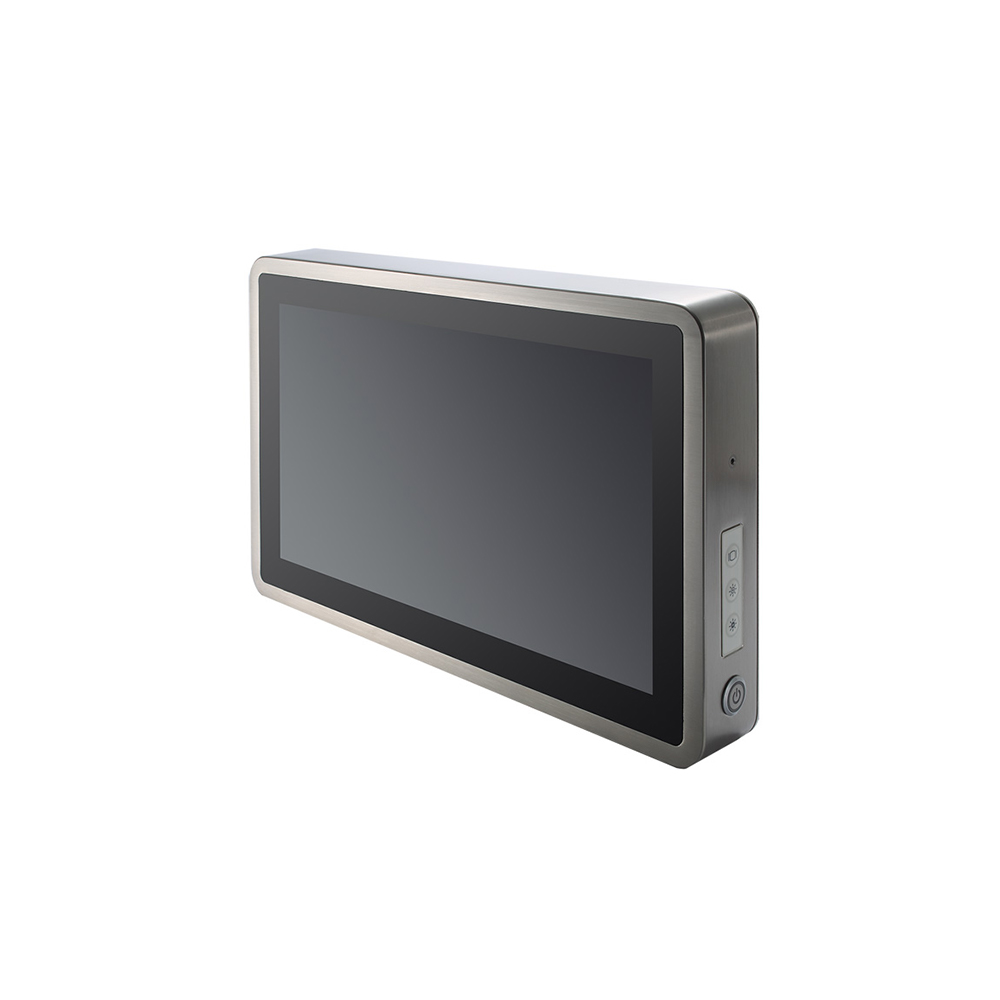
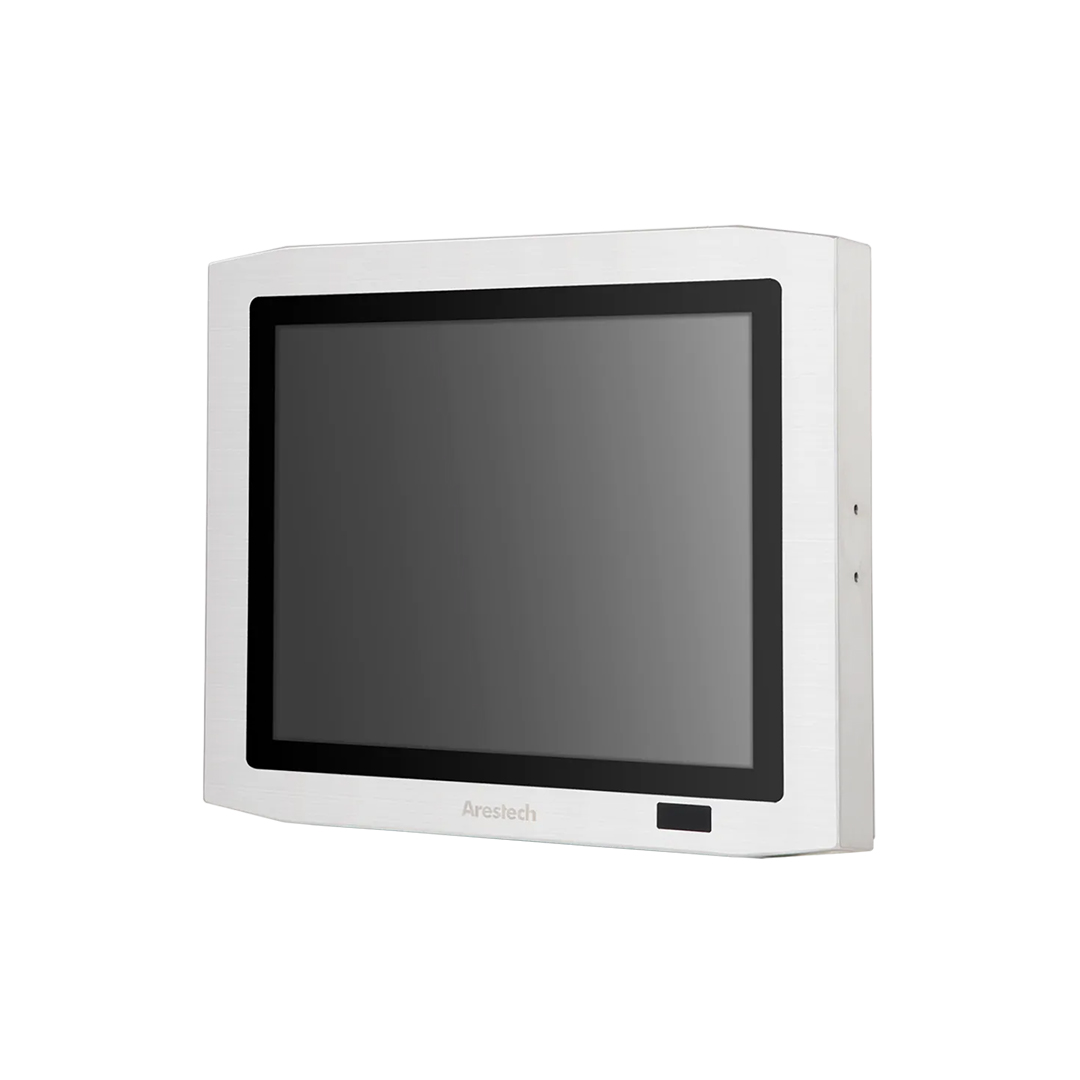
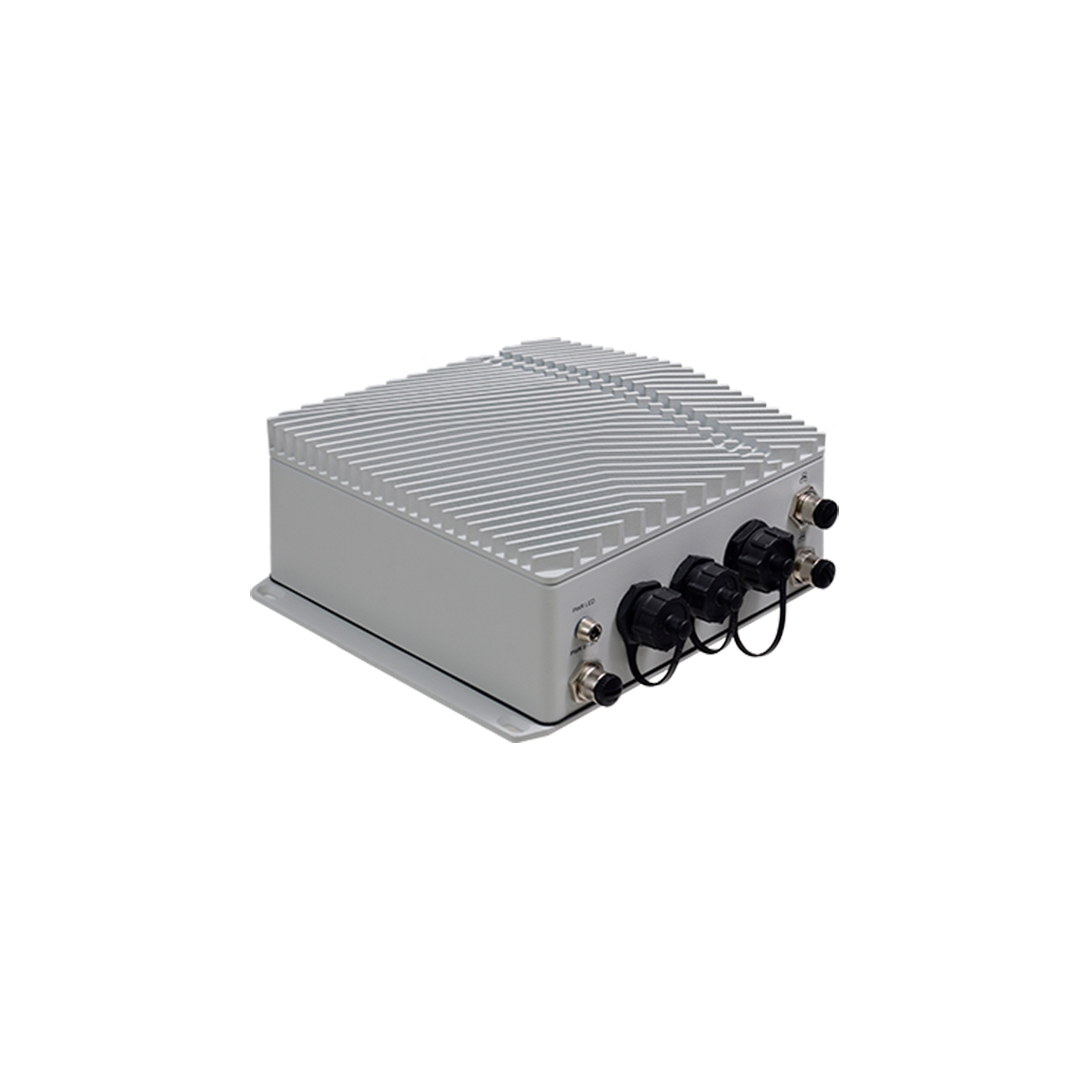
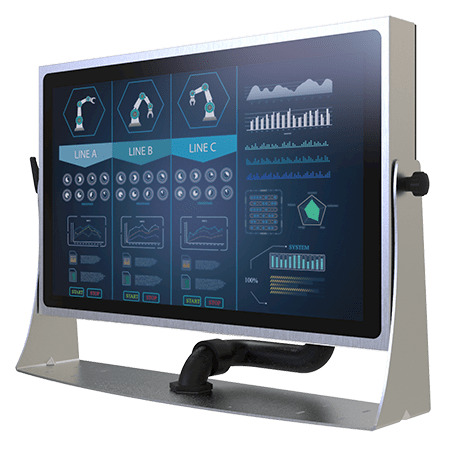
Four examples from the range, one for each step up the chart: a 15 inch (15") front IP65 panel PC, a compact IP66 box PC with M12 PoE, a 15" full IP67 panel PC and an IP69K stainless steel computer with eight M12 Ethernet ports.
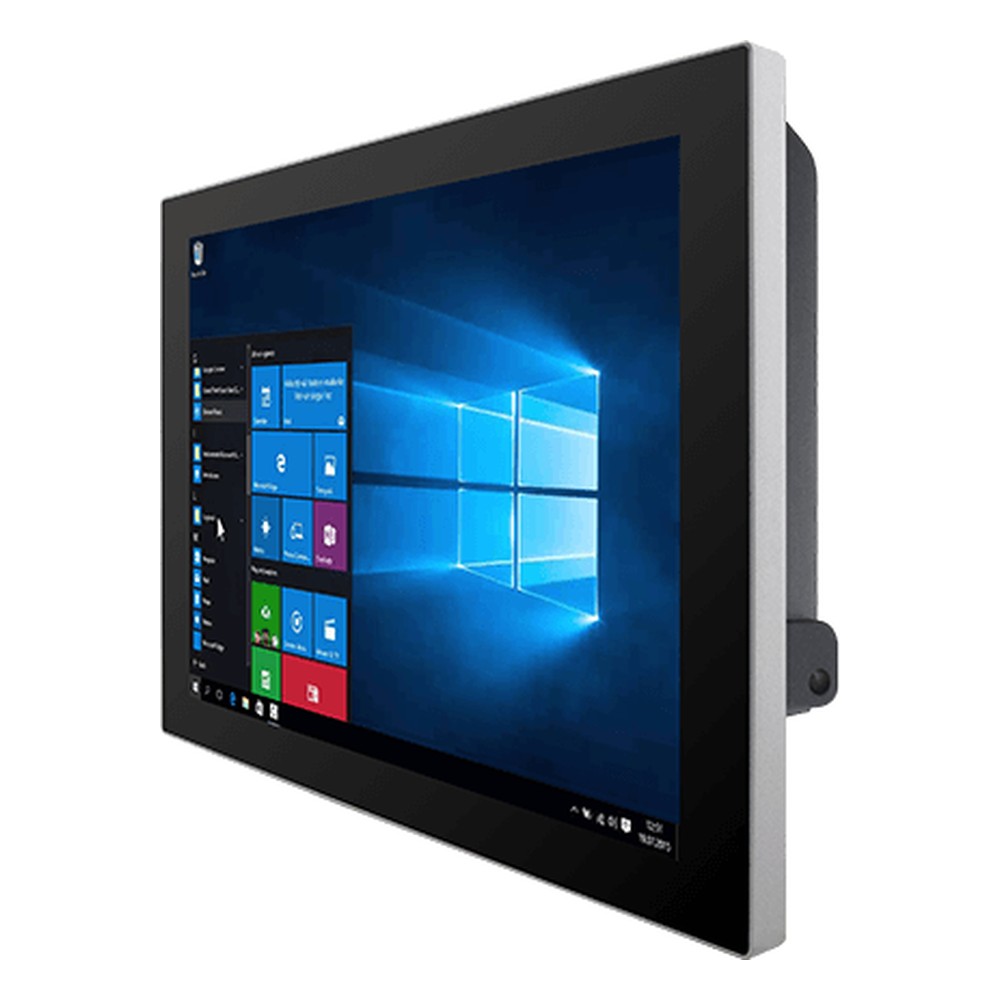
15″ G-WIN Front IP65 Panel PC with Intel Tiger Lake Core i5-1135G7 and MIL-STD-810G
- Display
- 15″ (4:3, 1024×768, XGA)
- Brightness
- 1000, 300
- Touch
- Multi Touch PCAP
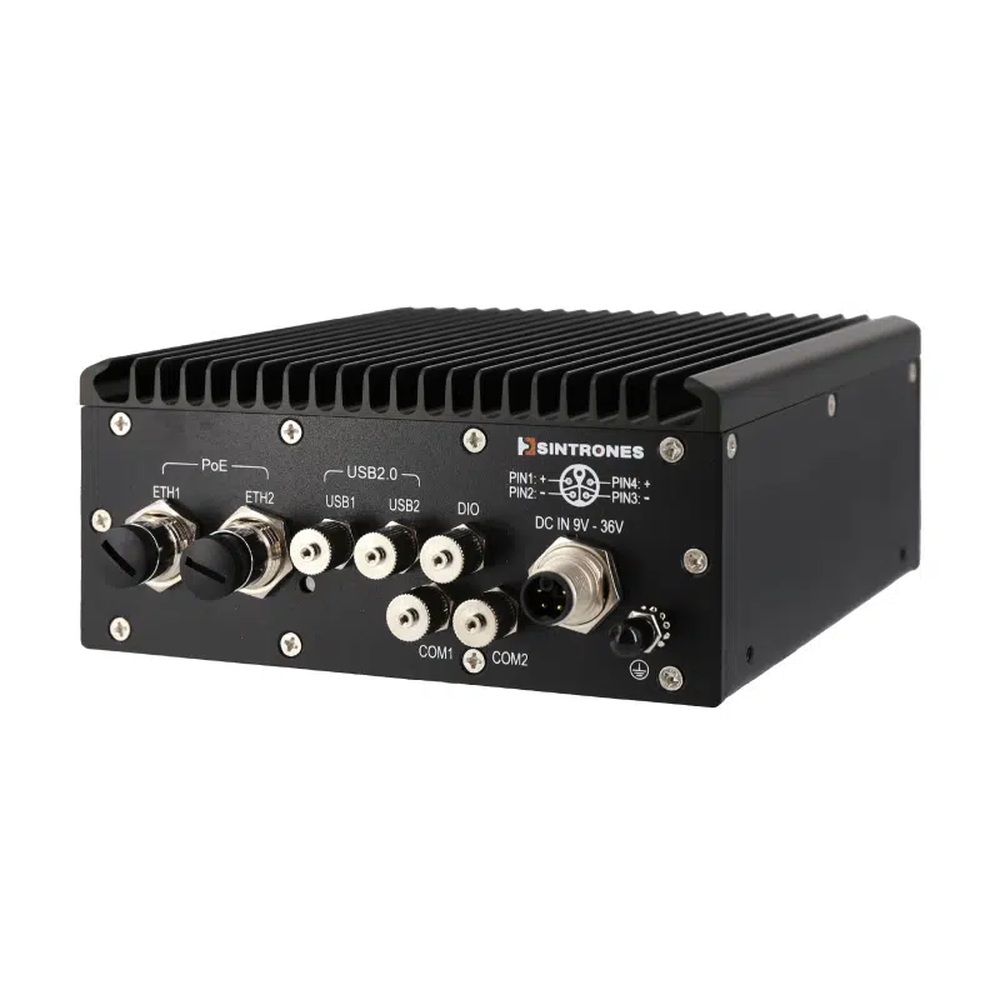
AMD Ryzen Embedded R2312 IP66 Waterproof Embedded PC with 2x M12 PoE
- CPU
- AMD Ryzen R2000
- Ethernet
- 2× GbE (2× PoE)
- IP Rating
- IP66
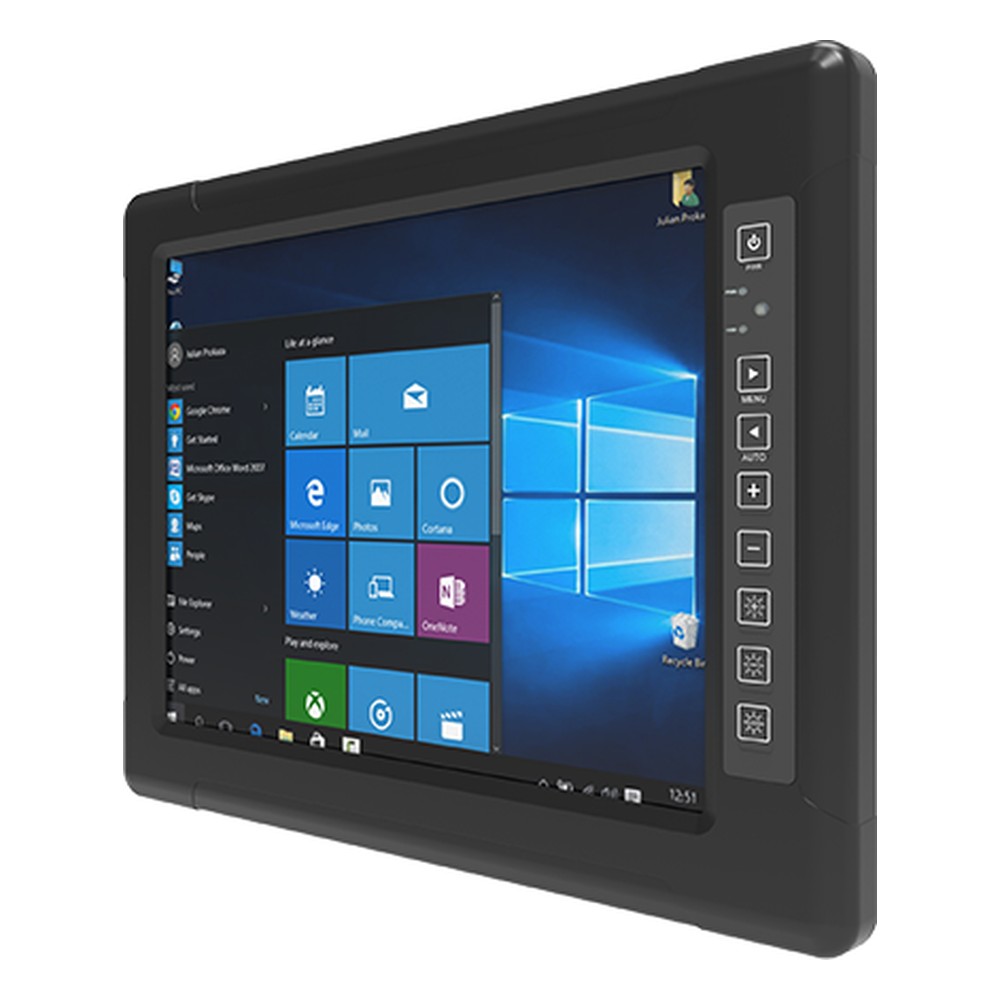
15″ Full IP67 Panel PC with Intel Celeron N6211 and MIL-STD-810G
- Display
- 15″ (4:3, 1024×768, XGA)
- Brightness
- 1000 nits
- Touch
- 5-Wire Resistive Touch
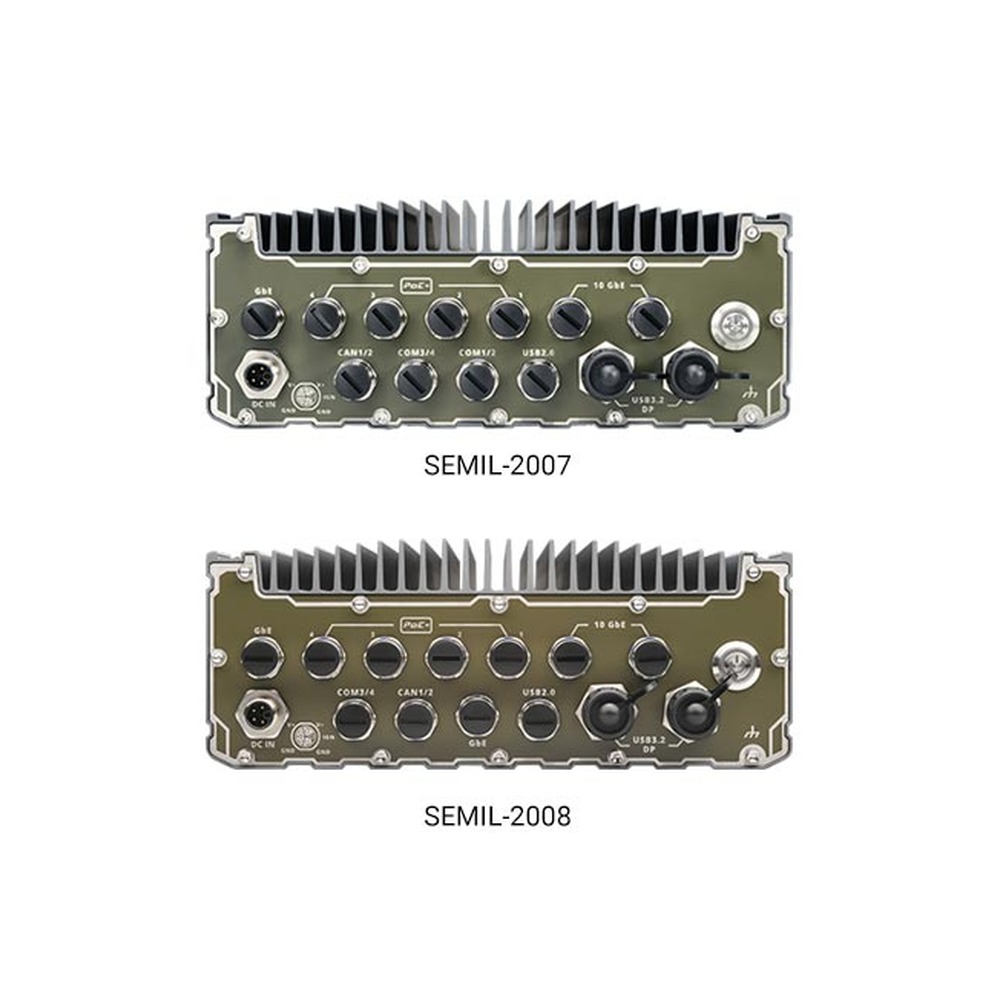
Intel 14th Gen Core IP69K Waterproof Industrial PC with 8x M12 LAN and ECC Memory
- CPU
- Intel Core 13th Gen (Raptor Lake)
- Ethernet
- 2× 10GbE, 5× 2.5GbE, 1× GbE (4× PoE)
- IP Rating
- IP69K
IP ratings: common questions
Quick answers
What does IP stand for in an IP rating?
Ingress protection. Some sources say “international protection”, the term used in IEC 60529 itself. Both refer to the same two-digit code for dust and water.
What is the difference between IP65 and IP67?
Jets against immersion. IP65 is tested with low-pressure water jets; IP67 with immersion to 1 m for 30 minutes. IP67 does not include a jet test, so equipment that is hosed and may be submerged needs both.
Is IP67 waterproof?
Yes, for temporary immersion. It survives 1 m of water for 30 minutes. It is not rated for jets or pressure washing, and not for permanent immersion, which needs IP68.
Which is better, IP67 or IP68?
IP68, for immersion only. IP68 covers deeper or longer immersion than IP67, to conditions the manufacturer states. Neither covers water jets.
What does IP69K mean?
Dust-tight and safe from hot, high-pressure washdown. The 9K test sprays 80 °C water at 8 to 10 MPa from 100 to 150 mm, at four angles, on a rotating turntable.
What is the highest IP rating?
IP69K, but it is not the most complete. It is the most demanding jet test, but it does not include immersion. For the widest cover, look for a dual rating such as IP67/IP69K.
How is an IP rating tested?
In a laboratory, against IEC 60529. Dust tests use talcum powder in a sealed chamber; water tests use calibrated drip rigs, spray nozzles, immersion tanks or, for 9K, a hot high-pressure spray on a turntable.
What NEMA rating is equivalent to IP66?
NEMA 4X, approximately. NEMA 4 is usually equated with IP65 to IP66, and NEMA 4X adds corrosion resistance. The mapping is approximate and only works from NEMA to IP.
What is IP44?
Protection against objects over 1 mm and splashing water. IP44 is common on indoor electrical fittings. It is not dust-tight and not suitable for jets, so it is rarely enough for industrial computers.
IP rating FAQs
-
IP65 vs IP66: What Is the Difference?
IP65 and IP66 are both dust tight under IEC 60529; the difference is the strength of water jet they withstand. IP65 is tested with a 6.3 mm nozzle delivering 12.5 liters per minute, and IP66 with a 12.5 mm nozzle delivering 100 liters per minute, so IP66 suits heavy rain, sea spray and hose-down cleaning.
-
IP65 vs IP68: What Is the Difference?
IP65 and IP68 are both dust tight, so the difference is water. IP65 protects against low-pressure water jets from any direction, while IP68 protects against continuous immersion beyond 1 meter, under depth and time conditions set by the manufacturer. An IP68 rating does not automatically cover jets, so check for a dual rating if the equipment will be hosed.
-
IP66 vs IP67: What Is the Difference?
IP66 and IP67 are both dust tight, but they test different water hazards. IP66 means an enclosure withstands powerful water jets from any direction; IP67 means it survives temporary immersion to 1 meter for 30 minutes. One does not include the other, so equipment that faces both hosing and flooding should carry a dual IP66/IP67 rating.
-
IP67 vs IP68: What Is the Difference?
IP67 and IP68 are both dust tight under IEC 60529. The difference is water: IP67 means an enclosure survives temporary immersion to 1 meter for 30 minutes, while IP68 means it survives continuous immersion beyond 1 meter, under depth and time conditions the manufacturer states. Neither rating covers water jets unless the product also carries IP65 or IP66.
-
IP69K vs IP67: What Is the Difference?
Both ratings mean the enclosure is dust tight, but they test water in different ways. IP67 covers temporary immersion, up to 1 m deep for 30 minutes. IP69K covers close-range, high-pressure, high-temperature water jets, like those used in wash-downs. Passing one does not mean passing the other, so equipment that faces both is tested to both.
-
NEMA vs IP rating — how the two enclosure systems compare
NEMA and IP are parallel enclosure rating systems used in North America and internationally — they overlap, but they are not equivalent. Here is the practical mapping between them, what each system tests that the other does not, and which to specify when both matter.
-
What Is IP54?
IP54 is an ingress protection rating from IEC 60529. The 5 means the enclosure is dust protected: some dust can enter, but not enough to affect operation. The 4 means it resists water splashed from any direction. IP54 is splash resistant, not waterproof, so it is not tested against water jets, hosing or immersion.
Need help choosing an IP rating?
Tell us where the equipment will be installed, how it is cleaned and the standards your market requires. We will recommend computers, displays and panel PCs with the right front or full rating, then configure and test every system, imaging the computers, before it ships.