
 US
US 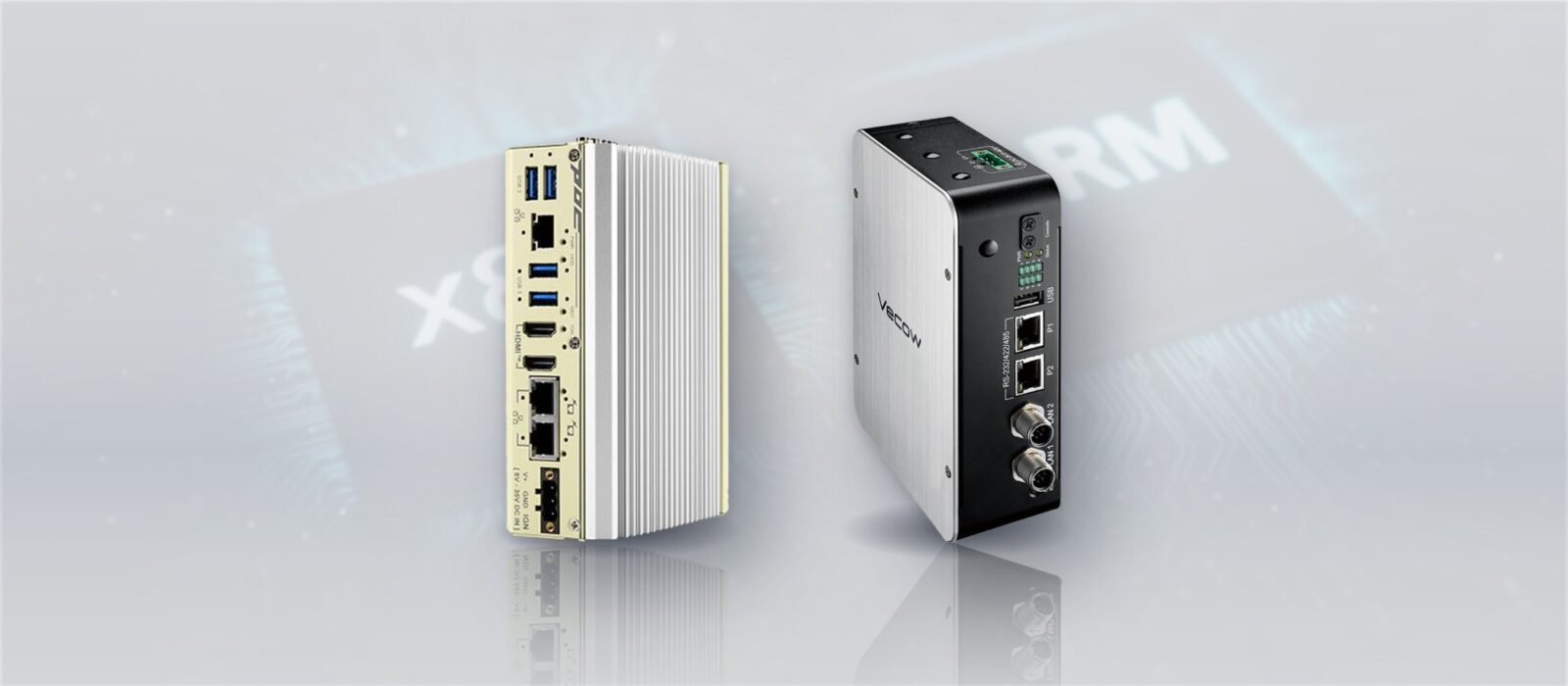
x86 vs Arm: Architectures Compared for Industrial and Embedded Systems
x86 and Arm are the two processor architectures behind almost every industrial and embedded computer. Choosing between them is the first real decision in a design — it shapes performance, power, thermals, software and how the system is built.
x86 and Arm are the two processor architectures behind almost every embedded and industrial computer. They are not just different brands — they are different instruction-set architectures, with different strengths, ecosystems and commercial models. Choosing between them is the first real decision in an embedded design, and it shapes everything after: performance, power, thermals, software and how the system is built. This guide compares the two on the terms that matter for an industrial or embedded project.
CISC vs RISC: The Core Difference
The split goes back to instruction-set philosophy. x86 is a CISC (Complex Instruction Set Computing) design: instructions are powerful and variable-length, doing more work per instruction. Arm is a RISC (Reduced Instruction Set Computing) design: instructions are simpler and fixed-length, executing in fewer cycles and drawing less power. Modern chips blur the line — x86 cores break complex instructions into simpler internal operations, and high-end Arm cores are far from “reduced” — but the inheritance still shows: x86 leans toward raw performance, Arm toward efficiency.
x86: Compatibility and Raw Performance
x86 is made by just two companies — Intel and AMD — and it carries the broadest software ecosystem of any architecture. Decades of Windows and Linux applications run on it natively, with no translation. It leads on single-thread performance and peak throughput, and the platform is built for expansion: PCIe lanes, standard sockets and large memory capacities. The trade is power and heat — x86 parts generally draw more, which matters in a fanless or sealed design. For industrial systems running established control software, virtualization, databases or machine vision, x86 is usually the default.
Arm: Efficiency and Integration
Arm works on a different model. Arm Holdings licenses the architecture and core designs to other vendors — NXP, TI, Qualcomm, NVIDIA and many more — who build them into systems-on-chip. That produces highly integrated, power-efficient processors with strong performance per watt, which is why Arm dominates compact, sealed, battery-powered and fanless devices, and why edge-AI modules such as NVIDIA Jetson pair an Arm CPU with a GPU. The trade is software: native Arm software is excellent, but legacy x86 applications need recompiling or run under emulation. For gateways, HMIs, compact controllers and edge AI, Arm is often the better fit.
x86 vs Arm at a Glance
| x86 | Arm | |
|---|---|---|
| Instruction set | CISC | RISC |
| Made by | Intel, AMD | Licensed to many SoC vendors (NXP, TI, Qualcomm, NVIDIA…) |
| Leads on | Raw performance, expansion | Performance per watt, integration |
| Power / heat | Higher | Lower |
| Software | Broadest native compatibility (Windows & Linux) | Native fast; x86 apps via emulation |
| Typical fit | Industrial PCs, control, vision, virtualization | Gateways, HMIs, compact/fanless, edge AI |
Software and Compatibility
Software is often the deciding factor. On x86, essentially everything runs natively. On Arm, native applications run very well — Linux on Arm is mature, and Windows on Arm now runs most software, translating x86 applications by emulation (Microsoft’s Prism) at roughly 70 to 80 per cent of native speed. For a new application compiled for the target, Arm is no barrier; for a system that must run an existing x86 binary, control package or driver, x86 avoids the compatibility question entirely. Check what your software actually requires before the architecture is fixed.
When to choose each
The right architecture follows the application, not a benchmark — and a deployment can use both.

Choose x86 when
You need broad software compatibility, the strongest single-thread performance, lots of expansion, or must run existing Windows or x86 software unchanged.
Choose Arm when
Power, heat and size are the priority — fanless, sealed, battery or compact designs — or the system is built around an integrated SoC or an edge-AI module.

Often it is both
A single deployment can mix the two: an x86 industrial PC at the control point, with Arm-based edge nodes, cameras or AI modules, each used where it fits best.
Where This Fits
Things Embedded supplies both architectures, and matching the architecture to the application is part of specifying the system. On x86, our Intel and AMD industrial computers cover performance, compatibility and expansion. On Arm, our NVIDIA Jetson range brings GPU-accelerated edge AI. If you are weighing the two, see our guide to CPU generations and embedded processors, or tell us the workload, software and environment and we will recommend the right platform.
x86 or Arm for Your Project?
Tell us the workload, the software it must run and the power and size budget, and we will recommend the right architecture and platform — x86 or Arm — and supply it.