
 US
Embedded x86: Intel and AMD Processors for Industrial Systems
Intel and AMD formed the x86 advisory group in 2024 to keep x86 consistent across both vendors. Here is what embedded x86 means today: the processor families in industrial systems, what the group has agreed, how x86 compares with Arm and how long embedded processors stay available.
Embedded x86 means using Intel and AMD x86 processors inside industrial and embedded systems, on versions supplied for longer than consumer chips, so that a machine, vehicle or controller can be built the same way for many years. It covers everything from 6 W Atom and Ryzen Embedded parts in small fanless computers to 64-core EPYC Embedded processors in edge servers, all running the same instruction set as a desktop PC.
In October 2024, Intel and AMD, two long-standing rivals, formed the x86 advisory group with a set of software and hardware companies. Its aim is to keep the x86 architecture consistent across both vendors, with shared rules for new instructions and interfaces, at a time when Arm-based alternatives have been gaining ground: Qualcomm has pushed Arm processors into PCs and edge devices, and NVIDIA Jetson has made Arm the default for many AI edge computing designs.
For anyone building industrial systems, the collaboration matters less as news than as a signal: both vendors intend x86 to stay compatible, long-lived and present at the edge. This guide sets out the embedded x86 families available today, why x86 is still the default for so much industrial software, what the advisory group has agreed so far, how embedded x86 compares with Arm, and how long the processors stay available.
Key takeaways
- 01Same software, longer supply
- Embedded x86 runs standard Windows and Linux software but is supplied for many more years than consumer chips.
- 02Two vendors, one instruction set
- Intel and AMD parts run the same x86 code, which gives a real second source.
- 03From 6 W to 225 W
- Atom, Processor N and Ryzen Embedded at the low end; Core, Core Ultra and EPYC Embedded above.
- 04AI is now built in
- Core Ultra and Ryzen Embedded 8000 add NPUs, so light inference runs without a separate accelerator.
- 05The advisory group keeps x86 aligned
- Shared decisions on AVX10 and other extensions reduce vendor-specific code paths.
What is embedded x86?
Embedded x86 processors are the parts Intel and AMD place on their embedded or IoT roadmaps. They use the same cores as consumer and server processors, but they are sold for longer, often with industrial temperature options, ECC memory support and real-time features. Board and system makers build on them because a design can stay in production for years without a forced processor change.
The table lists the main embedded x86 families on sale today. Figures are approximate and individual models vary.
| Family | Vendor | Cores | Power | Graphics and AI | Typical systems |
|---|---|---|---|---|---|
| Atom x7000RE (Amston Lake) | Intel | 2–8 E-cores | 6–12 W | UHD Graphics; no NPU | Rail, utility and DIN rail controllers |
| Processor N and Core i3-N (Alder Lake-N, Twin Lake) | Intel | 4–8 E-cores | 6–15 W | UHD Graphics; no NPU | Gateways, HMIs, signage, compact rugged PCs |
| Core 13th and 14th Gen E and TE (Raptor Lake) | Intel | Up to 24 hybrid | 15–65 W | Iris Xe or UHD Graphics | Machine vision and industrial box PCs |
| Core Series 2 (Bartlett Lake-S) | Intel | Up to 24 hybrid | 35–65 W | UHD Graphics | Socketed industrial PCs and GPU computers |
| Core Ultra Series 1 to 3 (Meteor, Arrow and Panther Lake) | Intel | Up to 16 hybrid | 15–45 W mobile; up to 65 W desktop | Arc or Xe graphics; NPU | Edge AI PCs, panel PCs, DIN rail PCs |
| Ryzen Embedded R2000, V2000, V3000 | AMD | 2–8 | 10–54 W | Radeon Vega on R and V2000; none on V3000 | SBCs, Mini-ITX boards, networking appliances |
| Ryzen Embedded 8000 | AMD | Up to 8 | 15–54 W | Radeon RDNA 3; 16 TOPS NPU | Edge AI box PCs and boards |
| Ryzen Embedded 7000 and 9000 | AMD | Up to 16 | 65–170 W | Small Radeon GPU | High-performance industrial PCs |
| EPYC 4004 and 4005, EPYC Embedded 8004 and 9004 | AMD | Up to 128 | 65–400 W | None; GPUs added in slots | Edge servers and network equipment |
Our guides to Intel Core Ultra and AMD Ryzen Embedded cover the two largest families in detail, our guide to EPYC 8004 for edge servers covers the server end, and our guide to CPU generations and embedded processors explains how the generations fit together.
Is x86 used in embedded systems?
Yes, widely. x86 is built on a complex instruction set computing (CISC) design that handles complex, multi-step operations, and decades of software have been written for it. That makes x86 versatile enough to run anything from a simple controller to an AI vision pipeline without special co-processors, and it is why x86 remains the backbone of industrial PCs, panel PCs, gateways and edge servers. The table sets out the reasons it is chosen.
| Reason | What it means in practice |
|---|---|
| Software compatibility | Windows, Linux and real-time operating systems, legacy industrial applications and AI frameworks run with little or no change |
| Performance range | From battery-powered devices at a few watts to multi-socket servers, on one instruction set |
| Thermal efficiency | Low-power parts suit compact, fanless designs that survive harsh conditions |
| Built-in security | Secure Boot, hardware encryption and TPM 2.0 protect devices exposed in critical infrastructure |
| Long lifecycle | Embedded roadmaps keep the same processor available for years, cutting requalification and upgrade costs |
| Two vendors | Intel and AMD both make x86, so designs are less dependent on one supplier |
Security in particular has moved up the list for industrial buyers. Our explainers on Secure Boot and TPM 2.0 cover the two features most often written into specifications, and our Intel industrial PCs and AMD industrial PCs support both.
What is the x86 advisory group?
Intel and AMD announced the x86 advisory group in October 2024. Its founding members included Broadcom, Dell, Google, HP, HPE, Lenovo, Meta, Microsoft, Oracle and Red Hat, with Linux creator Linus Torvalds and Epic Games founder Tim Sweeney taking part as individuals. The group’s stated aims are to improve compatibility between Intel and AMD processors, simplify how new instructions and interfaces are introduced, and give software developers a more consistent target.
By the group’s first anniversary in October 2025, Intel and AMD reported agreement on several shared features, including the AVX10 vector instruction set, a common approach to interrupt and event handling known as FRED, a memory-tagging extension for security called ChkTag and a matrix-multiplication extension for AI work called ACE. These will appear in future processors over several generations.
| Area | Before | Direction agreed |
|---|---|---|
| Vector instructions | AVX-512 on some Intel and AMD parts but not others | AVX10 as a common, versioned vector instruction set |
| Matrix and AI instructions | Vendor-specific extensions | A shared matrix extension (ACE) for AI and signal processing |
| Memory safety | Separate approaches | A common memory-tagging extension (ChkTag) |
| Interrupts and events | Long-standing legacy mechanisms | FRED as a modern, shared mechanism |
For embedded systems the effect is gradual but useful. Software built for one vendor’s processor is more likely to run well on the other’s, operating system and compiler support arrives once rather than twice, and switching between Intel and AMD boards in a long-running product becomes less risky. It reinforces one of x86’s main strengths for industry: a large, stable body of software that keeps working as hardware changes.
How embedded x86 has moved on since 2024
When Intel and AMD formed the advisory group, the embedded x86 families most in use were Ryzen Embedded 8000, Intel Elkhart Lake, Alder Lake and Raptor Lake. All four remain in production, and each has gained a successor.
| Family in 2024 | What it brought | What has followed |
|---|---|---|
| AMD Ryzen Embedded 8000 | AMD’s first embedded processors with an XDNA NPU, for machine vision and robotics | Ryzen AI processors with larger NPUs, and newer Ryzen Embedded lines |
| Intel Elkhart Lake (Atom x6000E) | Low power, real-time features and multiple 4K displays for industrial IoT | Amston Lake (Atom x7000RE) with more cores and extended-temperature options |
| Intel Alder Lake (12th Gen) | The first hybrid P-core and E-core design, DDR5 and PCIe 5.0 on desktop parts | Bartlett Lake-S (Core Series 2) on the same LGA1700 socket |
| Intel Raptor Lake (13th and 14th Gen) | Up to 24 cores with Thread Director scheduling | Core Ultra Series 2 and 3 with NPUs, and Wildcat Lake for low-power systems |
Our Intel Elkhart Lake and Intel Bartlett Lake ranges show both ends of that change, and our guide to P-core vs E-core explains the hybrid designs that now dominate Intel’s range. The addition of NPUs and other AI accelerators inside x86 processors is the trend we find most significant: light AI now runs on the same chip as the control software.
x86 vs Arm for embedded systems
Arm processors are the main alternative to embedded x86, and both have clear strengths. The summary below covers the points that usually decide the choice; our full guide to x86 vs Arm goes into each one.
| Embedded x86 | Embedded Arm | |
|---|---|---|
| Software | Runs standard Windows and Linux applications, including legacy industrial software | Mostly Linux and Android; Windows on Arm is growing but less common in industry |
| Power | From about 6 W upwards | From under 1 W upwards |
| AI | NPUs on newer parts, or added GPUs and accelerators | NVIDIA Jetson GPUs and NPUs on many SoCs |
| Expansion | PCIe slots, M.2 and standard memory modules | More often fixed, soldered designs |
| Supply | Two vendors with long embedded roadmaps | Many vendors, each with its own lifecycle |
Our guide to Arm architecture covers the Arm side, and many projects end up with both: an x86 computer running the control and HMI software, and an Arm-based Jetson running the vision models.
How long are embedded CPUs available?
Availability is the main reason to choose an embedded processor over a consumer one. The figures below are typical commitments; always check the vendor’s current statement for the exact part before starting a long-running design.
| Processor type | Typical availability | Notes |
|---|---|---|
| Consumer desktop and laptop processors | A few years | Replaced as each new generation launches |
| Intel processors on the embedded and IoT roadmap | Often seven years or more from launch | Marked as embedded options on Intel’s specification pages |
| AMD Ryzen Embedded | Up to ten years | Planned from launch for each series |
| AMD EPYC Embedded | Longer than the standard EPYC part | Aimed at networking, storage and industrial equipment makers |
| Industrial boards and systems | Often five years or more | Set by the board maker as well as the processor vendor |
Processor availability is only half of the picture: the board, memory and storage must stay available too, and the system needs a stable BIOS and operating system image. How long computers last in service is a separate question, answered by design and environment. We manage both sides, keeping a build unchanged for as long as the parts allow and planning migrations before a processor reaches end of life.
Embedded x86 systems in our range
Boards and computers built on Intel and AMD embedded processors.

Intel SBCs
Single board computers on Atom, Processor N, Core and Core Ultra.
View range
AMD Ryzen SBCs
Ryzen Embedded boards from femto-ITX to Mini-ITX.
View range
COM Express
Computer-on-modules on x86 processors for custom carrier designs.
View range
Industrial Mini-ITX motherboards
The most common x86 board format for machines and enclosures.
View range
Fanless PCs
Passively cooled x86 computers for harsh and dusty sites.
View range
Edge AI servers
EPYC and Xeon servers with GPUs for on-site AI.
View rangeEmbedded x86 boards and systems
Five examples across both vendors: an Atom x7425E fanless PC, a Ryzen 7 8845HS 4-inch x86 SBC, a Bartlett Lake industrial PC with ECC, a Panther Lake fanless NUC and an AM5 Mini-ITX board for EPYC 4005.
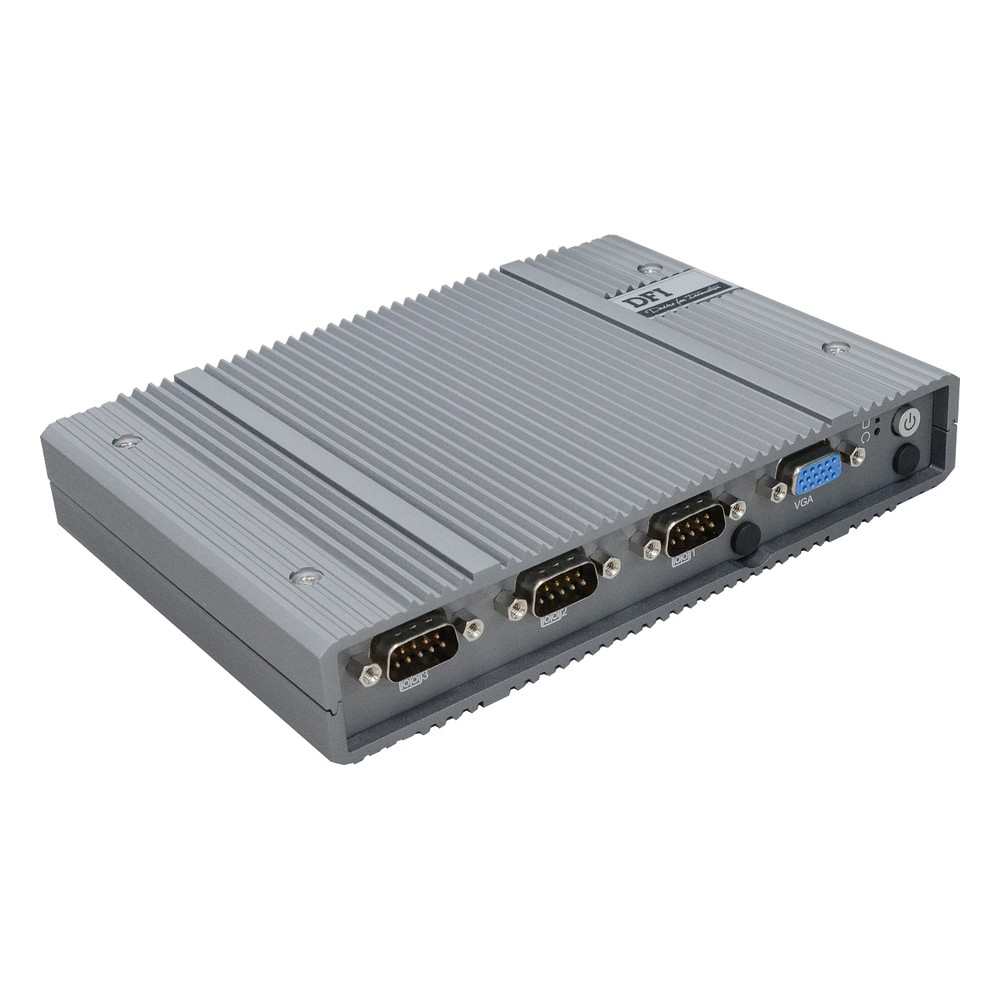
Intel Atom x7425E Fanless Embedded PC with 9-36V DC, 2x 2.5GbE and OOB
- CPU
- Intel Atom x7425E (Alder Lake)
- Ethernet
- 2× 2.5GbE, 1× GbE
- Temp
- −5 to +60 °C
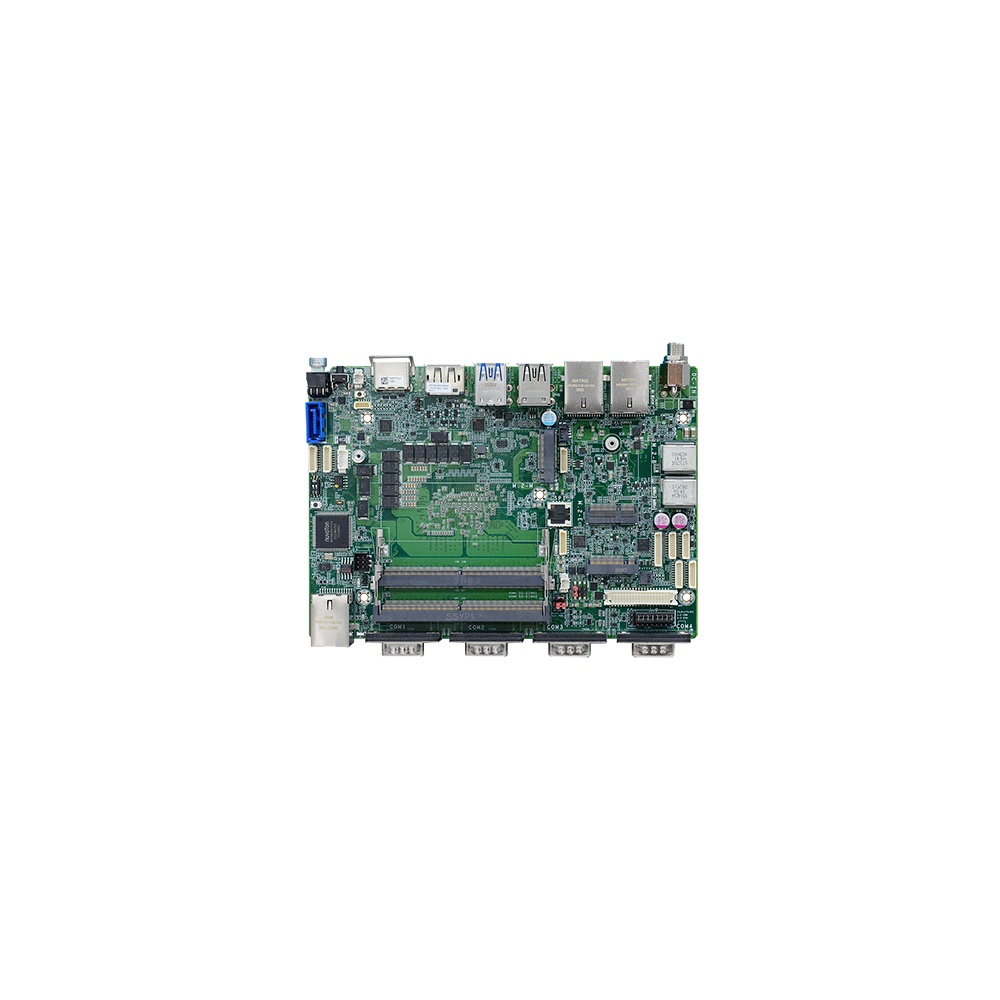
AMD Ryzen 7 8845HS 4″ x86 SBC with 9 to 36 V DC Input and Triple LAN
- AI
- 16 TOPS
- CPU
- AMD Ryzen Embedded 8000
- Ethernet
- 2× 2.5GbE, 1× GbE
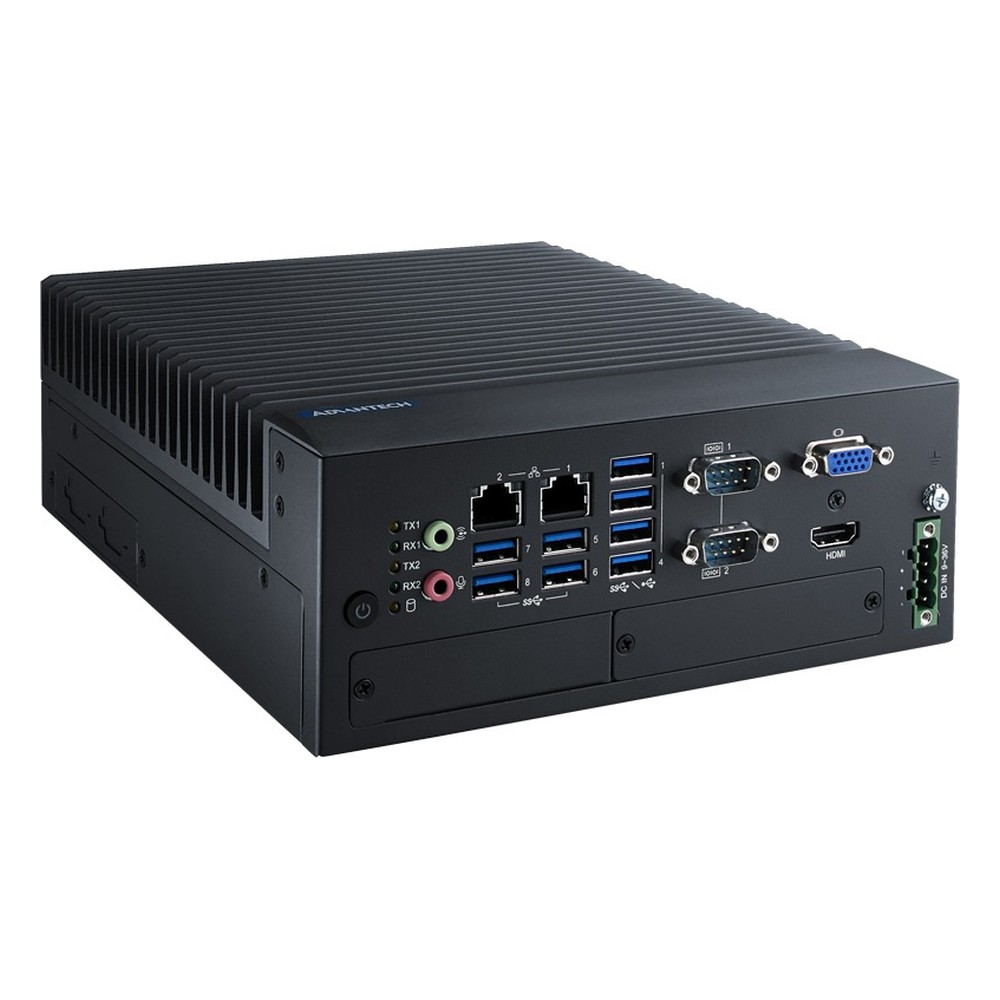
Intel Core Series 2 (Bartlett Lake) Fanless Industrial PC with R680E, i-Module Expansion and Quad Display
- CPU
- Intel Core 14th Gen Raptor Lake Refresh
- Ethernet
- 2× GbE
- IP Rating
- IP40
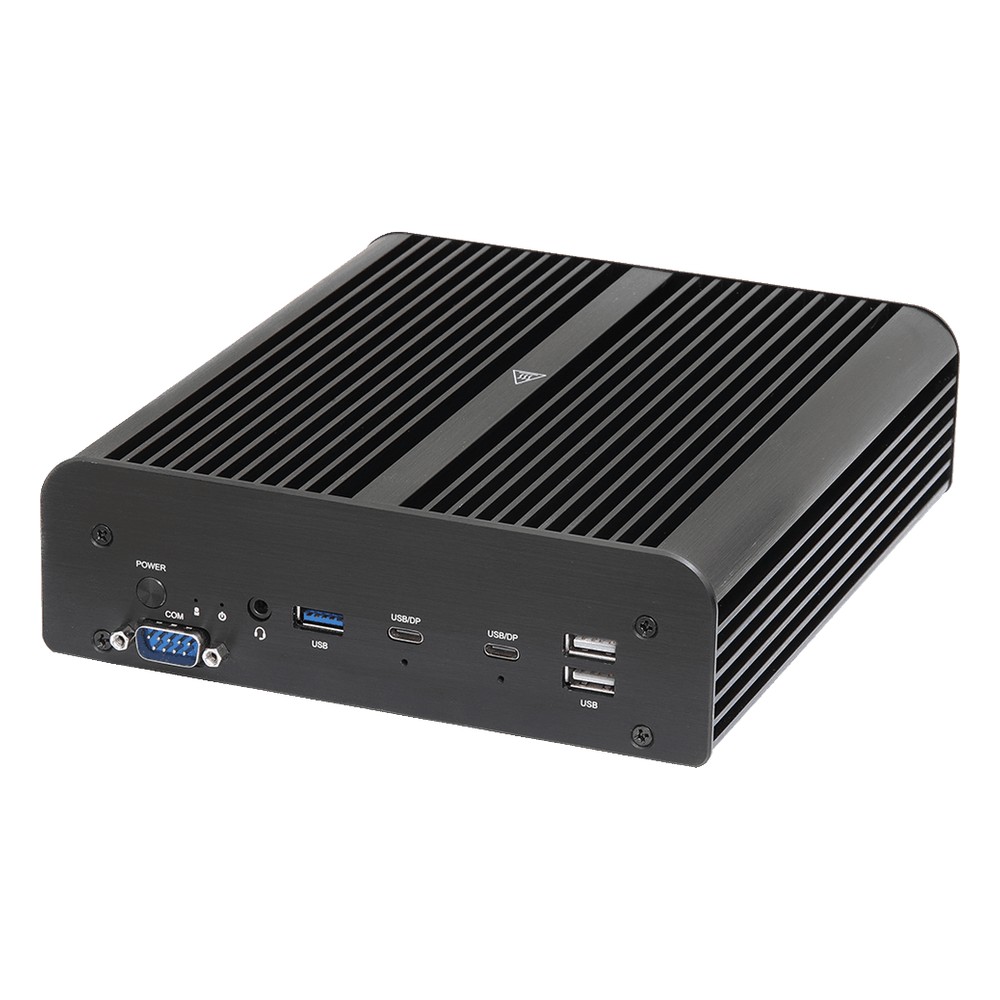
Intel Panther Lake Core Ultra 5 325 Fanless Industrial NUC with USB4 and Quad Display
- AI
- 47 TOPS
- CPU
- Intel Core Ultra 3 (Panther Lake)
- Ethernet
- 2× 2.5GbE
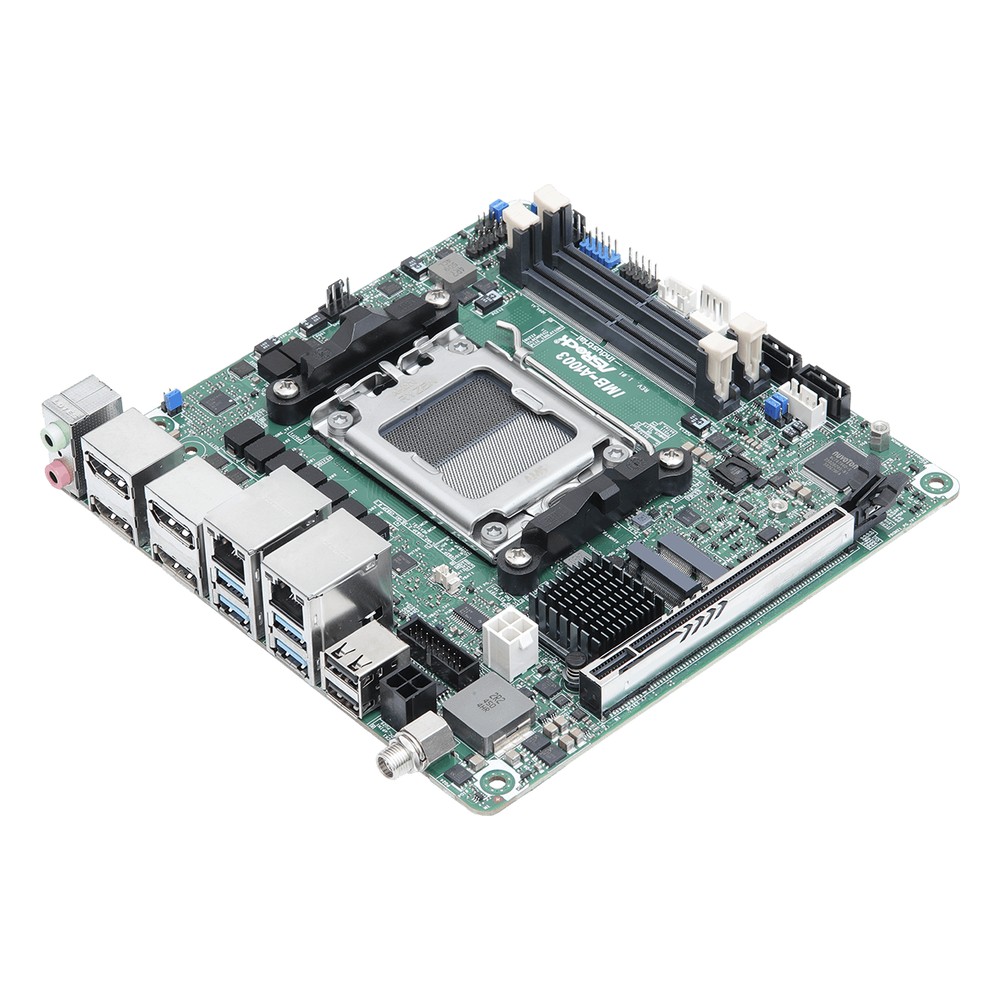
AMD EPYC 4005 and Ryzen 9000 AM5 Mini-ITX Motherboard with ECC and 12-28V DC Input
- CPU
- AMD EPYC 4005
- Ethernet
- 2× GbE
- Temp
- −20 to +60 °C
Configured and supported for the life of the project
We supply embedded x86 boards and systems from both Intel and AMD, and configure each one to its job: processor and memory sized to the workload, BIOS settings for the enclosure and power supply, and Windows 11 IoT Enterprise or Linux imaged with your software and tested before it ships. When a processor approaches end of life, we help plan the move to its successor so the software keeps running.
Choosing an embedded x86 processor
Six questions that narrow the choice.
-
01
Software
Does the application need Windows, legacy x86 software or specific drivers?
-
02
Performance
Is the workload light control, multi-display HMI, vision, or server consolidation?
-
03
AI
Is an NPU enough, or does the system need a GPU or accelerator?
-
04
Power and cooling
What power and temperature can the enclosure handle without a fan?
-
05
Lifecycle
How many years must the same build be supplied?
-
06
Vendor
Is there a reason to prefer Intel or AMD, or should the design allow either?
Embedded x86: common questions
Quick answers
What is embedded x86?
Intel and AMD x86 processors supplied for industrial and embedded systems. They use the same cores as consumer chips but stay available for longer, with options such as ECC, industrial temperature ratings and real-time features.
Is x86 used in embedded systems?
Yes, widely. x86 powers industrial PCs, panel PCs, gateways, signage players and edge servers because of its software compatibility and long-life embedded roadmaps.
What is the x86 advisory group?
An industry group formed by Intel and AMD in October 2024. It aims to keep x86 consistent across both vendors, and has agreed shared features such as AVX10 and a common memory-tagging extension.
Is x86 or Arm better for embedded?
It depends on the software and power budget. x86 suits Windows and legacy industrial software and expandable systems; Arm suits very low power and Jetson-based AI.
What are AMD Ryzen Embedded processors?
AMD’s x86 processors for embedded systems. They range from 6 W dual-core R1000 parts to the 8000 series with an NPU, with up to ten years of planned availability.
How long are embedded CPUs available?
Typically seven to ten years or more. Intel embedded parts are often available for seven years or more and AMD plans up to ten years for Ryzen Embedded; check each model.
Embedded processor FAQs
-
What Is a CPU?
A CPU, or central processing unit, is the chip that runs a computer’s software. It fetches instructions from memory, decodes them and carries them out, billions of times a second. A modern CPU packs several cores, cache memory and often graphics and an NPU into one package.
-
What Is an Embedded System?
An embedded system is a combination of a processor, memory, input/output and software built into a larger device to do one dedicated job, such as controlling a washing machine, a car’s brakes or a factory machine. Unlike a general-purpose PC, it runs fixed software, often in real time, and is designed around the device it serves.
-
Microcontroller vs Microprocessor: What Is the Difference?
A microcontroller (MCU) puts a CPU core, program flash, RAM and peripherals on one chip and runs a single firmware program, often without an operating system. A microprocessor (MPU) is a CPU that relies on external memory and storage and usually runs a full operating system such as Linux or Windows. Microcontrollers control hardware; microprocessors run applications.
-
What Is Arm Cortex?
Arm Cortex is the name of the CPU core designs Arm licenses to chipmakers. The cores come in three profiles: Cortex-A for applications processors that run Linux or Android, Cortex-R for real-time and safety-related control, and Cortex-M for microcontrollers. NXP, Rockchip, TI, NVIDIA and others build them into their own chips.
-
What Is Secure Boot?
Secure Boot is a UEFI firmware feature that lets a computer start only bootloaders, drivers and operating systems signed with a trusted key. It blocks bootkits and tampered boot files before the operating system loads. Windows 11 requires a Secure Boot capable system, and major Linux distributions also support it.
-
What Is TPM 2.0, and Why Do Industrial PCs Need It?
A TPM, or Trusted Platform Module, is a security chip or processor function that stores encryption keys and records whether a computer started with untampered firmware. TPM 2.0 is the current version. Windows 11 requires it, and it underpins disk encryption, measured boot and device identity on industrial PCs.
-
How Long Do Computers Last?
Most consumer laptops last around three to five years and desktops around five to eight. Industrial and embedded computers typically stay in service for seven to ten years or more, because they use fanless cooling, industrial components and processors from long-life embedded roadmaps. Heat, workload, storage wear and software support decide the rest.
Building on x86?
Tell us the workload, the environment and how long the system must stay in production. We will recommend the right Intel or AMD processor, then configure, image and test the system before it ships.