
 US
US 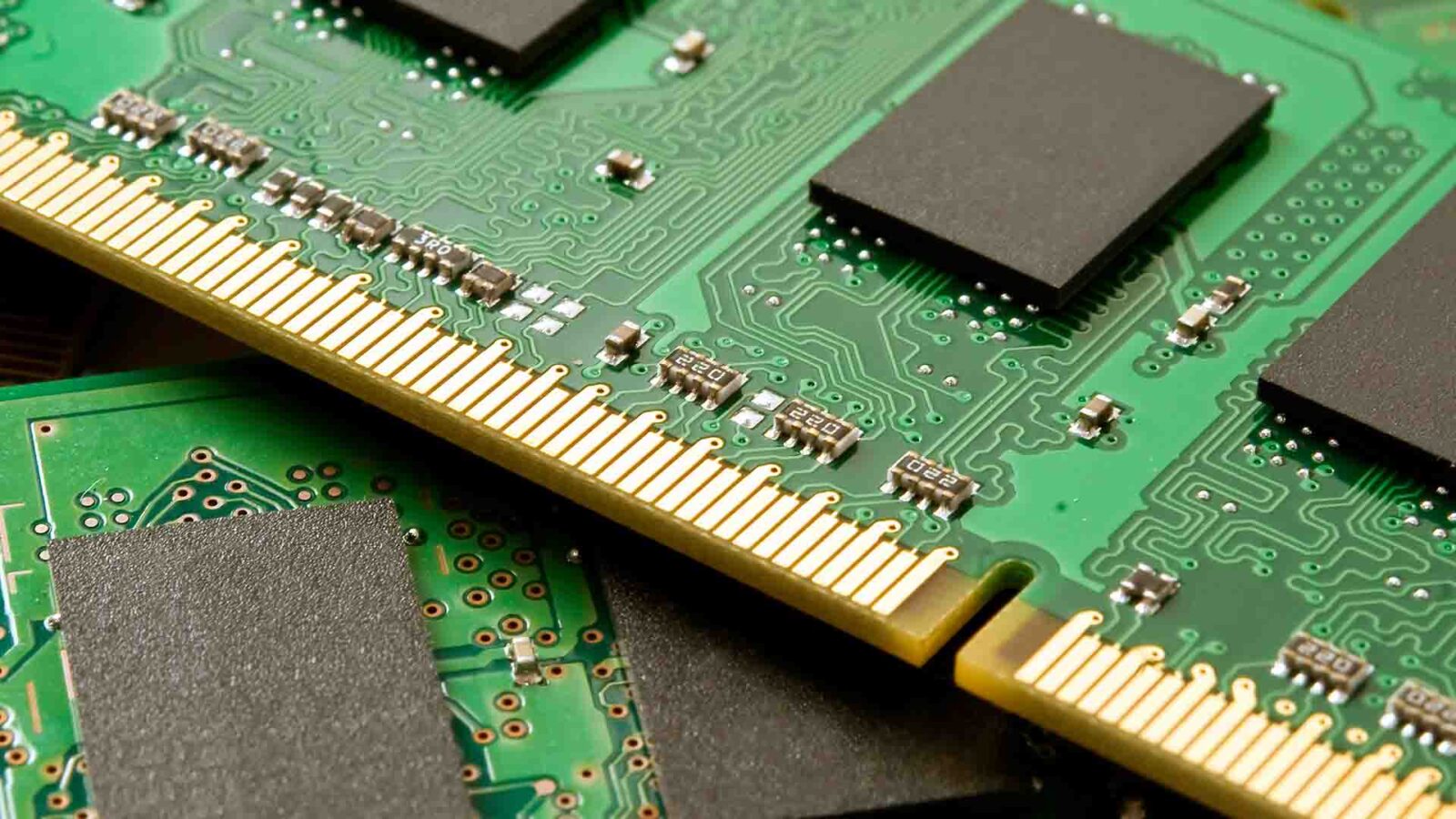
DDR4 vs DDR5: What's the Difference for Industrial Computing?
Newer industrial systems use DDR5; many proven embedded platforms still run DDR4. They are not interchangeable. This guide covers what changed, whether it matters for your application, and how memory ties to the processor platform.
Memory is part of the platform a processor generation defines, and right now it is in transition: newer industrial systems use DDR5, while many proven embedded platforms still run DDR4. The two are not interchangeable — different slots, different generations — so the choice is usually made for you by the processor. It still pays to understand what changes between them and when the difference actually matters.
What Changed in DDR5
DDR5 is a generational step over DDR4, not a faster version of the same thing. It roughly doubles the starting data rate — DDR4 tops out around 3200 MT/s in standard use, while DDR5 starts at 4800 MT/s and climbs past 6400 — allows larger modules, and runs at a slightly lower voltage (1.1 V against 1.2 V) with the power-management circuitry moved onto the module itself. Each DDR5 module is also split into two independent sub-channels, which improves efficiency for multi-core and bandwidth-hungry workloads. DDR5 adds on-die ECC too — internal error correction on the chip — though that is not the same as full system ECC.
DDR4 vs DDR5 at a Glance
| DDR4 | DDR5 | |
|---|---|---|
| Data rate | ~2133–3200 MT/s | 4800 MT/s and up (6400+) |
| Voltage | 1.2 V | 1.1 V (PMIC on module) |
| Channels per module | 1 | 2 sub-channels |
| On-die ECC | No | Yes (not full system ECC) |
| Typical platforms | Mature embedded, 12th-Gen and earlier | Core Ultra, 12th-Gen+, Ryzen 7000+/Embedded |
Does the Difference Matter?
For a control system, a gateway or an HMI, DDR4 is usually plenty, and it brings lower cost and longer-proven availability. DDR5 bandwidth earns its place where data moves fast and in parallel — machine vision, multi-camera capture, virtualization, and edge-AI inference, where memory bandwidth often limits throughput before the CPU does. If the application is bandwidth-bound, DDR5 helps; if it is not, DDR4 is the pragmatic, long-life choice.
Choosing DDR4 or DDR5
Memory type rarely gets chosen on its own — it follows the platform — but a few factors decide which platform to favor.

It follows the CPU
The processor generation fixes the memory type; you rarely choose DDR independently of the platform.

DDR5 for bandwidth
Machine vision, multi-camera capture, virtualization and edge AI all benefit from the higher data rate.
DDR4 for cost & longevity
Mature embedded platforms, lower cost and long-proven availability suit long-life designs.

Mind capacity & ECC
Check the maximum module size, and whether the platform supports full ECC for reliability-critical work.
ECC and Industrial Memory
DDR5’s on-die ECC corrects errors inside the memory chip, but it is not the same as full, system-level ECC, which protects data across the whole memory path and reports errors to the system — important for long-running, reliability-critical industrial and server workloads. If data integrity matters, look for a platform and modules that support full ECC, not just DDR5’s built-in correction. See our guide to ECC memory in industrial computing.
Where This Fits
Because memory type follows the processor, the practical question is which platform — see our guide to CPU generations and embedded processors. DDR5 comes with the newer Intel Core Ultra and 12th-Gen-plus platforms and AMD Ryzen 7000-series and Ryzen Embedded parts; DDR4 remains across many proven embedded systems. Tell us the workload and we will recommend a platform with the right memory — browse our Intel and AMD industrial computers.
Specifying Memory for an Industrial System?
Tell us the workload and how long the system must stay in production, and we will recommend a platform with the right memory — DDR4 or DDR5, with full ECC where it is needed.