
 US
US 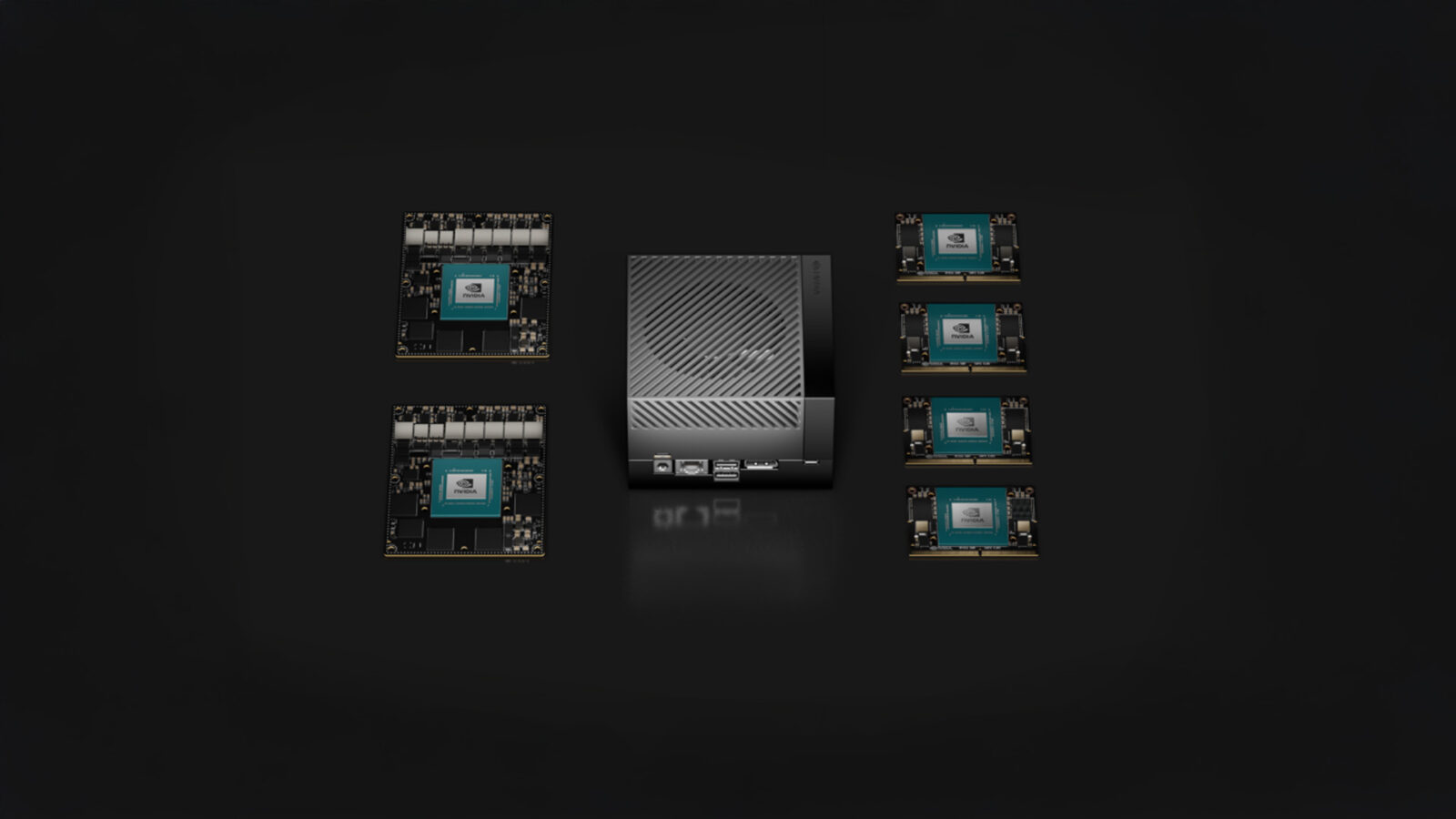
Which NVIDIA Jetson Module Should You Choose? Nano vs NX vs AGX vs Thor
From the 7 W Orin Nano to the 130 W Thor, the Jetson line spans roughly a 30x range of AI performance. Choosing well means matching the module to the workload, power budget, and lifecycle, not chasing the biggest number.
The Short Answer
Choose the Jetson Orin Nano for entry-level, low-power vision; the Jetson Orin NX for mid-range, multi-camera AI; the Jetson AGX Orin for demanding multi-sensor workloads; and Jetson Thor for generative and physical AI. The right module is the smallest one that covers your AI workload inside your power, I/O, and lifecycle budget.
The Jetson Line Is Wider Than It Looks
NVIDIA Jetson is not one product but a family that now spans roughly a 30x range of AI performance, from the pocket-sized Orin Nano to the data-centre-class Thor. That breadth is the point: it lets you put exactly as much compute at the edge as the application needs, and no more.
It also makes “which Jetson?” a real engineering question rather than a default to the top of the range. The right answer is rarely the most powerful module; it is the one that matches your AI workload, your power and thermal envelope, your I/O and cameras, and how long you need the platform supported. This guide walks the current lineup and the way we size it with customers.
The Current Jetson Lineup at a Glance
| Module | AI performance | Power | Memory | Best for |
|---|---|---|---|---|
| Jetson Orin Nano | Up to 67 TOPS | 7 to 25 W | 4 to 8 GB | Entry edge AI, single-camera vision, robotics development |
| Jetson Orin NX | Up to 157 TOPS | 10 to 40 W | 8 to 16 GB | Multi-camera vision, mid-range inference |
| Jetson AGX Orin | Up to 275 TOPS | 15 to 60 W | 32 to 64 GB | Demanding multi-sensor AI, autonomous machines |
| Jetson AGX Thor | Up to 2,070 FP4 TFLOPS | 40 to 130 W | 64 to 128 GB | Generative and physical AI, humanoid robotics |
Orin figures are INT8 TOPS; Thor is quoted in FP4 TFLOPS on the new Blackwell architecture, so the headline numbers are not a like-for-like comparison. In NVIDIA’s own terms, Thor delivers around 7.5x the AI compute of AGX Orin.
Modules, Developer Kits, and the Super Refresh
Two points cause most of the confusion. First, a developer kit is not a production module: the kit is a reference carrier board plus a module, meant for evaluation, while a deployed system pairs the bare module with a carrier board built for your I/O and environment. Second, the Super refresh did not change the silicon — a software update lifted the Orin Nano from 40 to 67 TOPS and the Orin NX to 157 TOPS by unlocking higher clocks and power, so existing designs gained performance without new hardware.
All current modules run the same JetPack and Linux for Tegra (L4T) software stack, which is what lets you move an application up or down the range as requirements change. For the underlying datasheets, NVIDIA publishes full specifications for each Jetson module. For systems already on Orin, what JetPack 7.2 and supported Yocto builds mean for production Orin fleets explains where that software stack is heading.
How We Size a Jetson Module
- 01AI workload first
- Match the compute to the model you actually run. A single detection model is an Orin Nano job; concurrent multi-camera perception or a large language model is AGX Orin or Thor territory.
- 02Power and thermal envelope
- The module sets the cooling job. A 7 W Orin Nano can run fanless in a sealed box; a 130 W Thor needs serious thermal design and power. The enclosure follows the module, not the other way round.
- 03Memory ceiling
- Model size is bounded by memory. 4 to 8 GB suits classic vision; large or generative models need the 32 to 128 GB that AGX Orin and Thor provide.
- 04I/O and cameras
- Camera count and interface (CSI, GMSL), networking, and expansion vary by module and carrier board, and often decide the platform as much as raw TOPS.
- 05Lifecycle and budget
- Production longevity and unit cost matter. The newest, fastest module is not always the right one for a program that has to ship for years.
Three Worked Examples
A sealed outdoor sensor running a single detection model needs little compute and no fan: an Orin Nano at 10 to 15 W fits a passively cooled, sealed enclosure.
A four-camera autonomous mobile robot fusing vision and navigation in real time is an Orin NX job — enough headroom for several concurrent pipelines without the size, power, and cost of the largest module.
A multi-sensor autonomous machine, or a generative model at the edge, is where AGX Orin and Thor earn their place: 32 GB and up of memory and the compute to fuse many real-time streams, or to run a large model locally on Thor. Each step up the range adds heat to remove, so keeping a Jetson module inside its thermal limits is part of the sizing decision rather than an afterthought.
Where Each Module Fits
The same lineup, module by module, from the entry-level Orin Nano to the top-of-the-range Thor. Each card links through to its family page, where you will find the modules and the rugged systems we build around them.
-
01
Jetson Orin Nano
Up to 67 TOPS in 7 to 25 W. Entry edge AI: single-camera vision, classic inference, and robotics development where power and budget are tight.
View range -
02
Jetson Orin NX
Up to 157 TOPS in 10 to 40 W, 8 to 16 GB. The mid-range module for multi-camera vision and heavier inference.
View range -
03
Jetson AGX Orin
Up to 275 TOPS and 64 GB. The high-end Orin for demanding multi-sensor AI and autonomous machines that fuse several real-time pipelines.
View range -
04
Jetson AGX Thor
Blackwell-based, up to 2,070 FP4 TFLOPS and 128 GB. The highest-performance module, for generative and physical AI and humanoid robotics.
View range
What We Actually Ship, and Where
Specifications only take the decision so far; the rest comes from having built these systems. In our own deployments, AGX Orin powers autonomous spot-spraying for agriculture and AI surveillance for transit; Orin NX runs vision-based human-robot safety on the factory floor; and the previous-generation AGX Xavier still ships in counter-drone optical tracking and IP67 waterproof aquaculture systems.
In each case the module followed the application — the camera count, the environment, the power budget, and the lifecycle decided it, not the headline TOPS figure.
And the Modules You May Be Migrating From
Plenty of fielded systems still run the previous generation. The Jetson Xavier family (AGX Xavier and Xavier NX) and the older Jetson TX2 remain in production designs, but NVIDIA has now brought their end-of-life forward. If you are refreshing one, the usual path is Xavier NX to Orin NX, or AGX Xavier to AGX Orin: the same class of module with a large generational jump in AI performance per watt. The software stack carries across, so the application generally moves with it.
There Is No Single Best Jetson
The right module is the one that disappears into the application: enough compute for the workload, inside the power and thermal budget, with the I/O the system needs and a lifecycle that matches the program. Over-specifying wastes power, budget, and thermal headroom; under-specifying caps the application before it ships.
As your system integrator, that sizing is our job. Tell us what the system has to do and where it has to run, and we will recommend the module and the platform around it, often starting from a carrier board and rugged computer we already build, so the decision is about your application rather than the datasheet.
Frequently Asked Questions
-
What Is the Difference Between a Jetson Module and a Developer Kit?
A developer kit is a reference carrier board with a module fitted, meant for evaluation and prototyping. A production system uses the bare module on a carrier board designed for your I/O, environment, and lifecycle. The module is the same; the kit is not what you deploy.
-
Jetson Orin Nano vs Orin NX: What Is the Difference?
The Orin Nano delivers up to 67 TOPS in 7 to 25 W with 4 to 8 GB, suited to entry-level, low-power vision. The Orin NX steps up to 157 TOPS in 10 to 40 W with 8 to 16 GB, for multi-camera and heavier inference. Choose the NX when one camera or one model is not enough.
-
Does Jetson Thor Need a New Carrier Board?
Yes. Jetson Thor uses a different connector, higher power (up to 130 W), and new I/O compared with AGX Orin, so it needs a carrier board designed for Thor rather than an Orin board. Moving from AGX Orin to Thor is a platform change, not a drop-in module swap.
-
How Long Is NVIDIA Jetson Supported?
NVIDIA gives Jetson modules long, published production lifecycles, which is part of why they suit industrial designs. Current Orin modules run well into the 2030s, and Industrial variants carry a ten-year production life. The exception is the older LPDDR4 generation, Xavier and TX2, which NVIDIA has brought to early end-of-life.
Not Sure Which Jetson Module Fits?
Tell us about your AI workload, power envelope, and where the system has to run. As your system integrator we will recommend the Jetson module and the platform around it that fit, not just the most powerful one.