
 US
Jetson Orin Specs: Orin Nano, Orin NX and AGX Orin Compared
Every Jetson Orin module’s specs in one place: Orin Nano, Orin NX and AGX Orin by TOPS, GPU, memory, I/O and power, with the Super modes, the Industrial module and what each is used for.
Jetson Orin specs cover seven production modules, from the Orin Nano 4GB at up to 34 TOPS to the AGX Orin 64GB at 275 TOPS, all built on the same Ampere GPU architecture and the same software stack. That spread, roughly eightfold on one architecture, is why a project can often prototype on one Orin module and ship on another.
NVIDIA Jetson brought GPU-accelerated AI into small, low-power computers, and Jetson Orin is the generation most industrial edge AI systems are built on today. For OEMs and system integrators it is a scalable alternative to an industrial PC with a discrete GPU: one module family covers entry-level vision through to multi-camera robotics, in a fraction of the power.
This reference puts every Orin module’s specifications in one place, with the Super figures from JetPack 6.2, the I/O, the power modes and the Industrial module, and then shows what each module is used for. Figures are NVIDIA’s published values; always confirm against the current module datasheet before fixing a design.
Key takeaways
- 01Seven modules, three families
- Orin Nano 4GB and 8GB, Orin NX 8GB and 16GB, and AGX Orin 32GB, 64GB and Industrial.
- 0234 to 275 TOPS
- Sparse INT8, with Orin Nano and Orin NX shown in the Super modes JetPack 6.2 added.
- 03Two connectors
- Orin Nano and Orin NX share a 260-pin SO-DIMM; AGX Orin uses a 699-pin connector.
- 04Power from 7 to 75 W
- From the lowest Orin Nano mode to the AGX Orin Industrial at full power; the mode you ship sets the cooling.
- 05Industrial is its own module
- AGX Orin Industrial adds ECC memory, a −40 °C to 85 °C rating and a ten-year production life.
Jetson Orin specs: every module compared
The master table lists the compute, memory and power of each module. Orin Nano and Orin NX are shown in their Super modes with the original figure in brackets.
| Module | AI performance | GPU | CPU | DLA | Memory and bandwidth | Power range |
|---|---|---|---|---|---|---|
| Orin Nano 4GB | 34 TOPS (20) | 512-core Ampere, 16 Tensor Cores | 6-core Cortex-A78AE | None | 4 GB 64-bit LPDDR5, 51 GB/s (34) | 7–25 W |
| Orin Nano 8GB | 67 TOPS (40) | 1,024-core Ampere, 32 Tensor Cores | 6-core Cortex-A78AE | None | 8 GB 128-bit LPDDR5, 102 GB/s (68) | 7–25 W |
| Orin NX 8GB | 117 TOPS (70) | 1,024-core Ampere, 32 Tensor Cores | 6-core Cortex-A78AE | 1× NVDLA v2 | 8 GB 128-bit LPDDR5, 102.4 GB/s | 10–40 W |
| Orin NX 16GB | 157 TOPS (100) | 1,024-core Ampere, 32 Tensor Cores | 8-core Cortex-A78AE | 2× NVDLA v2 | 16 GB 128-bit LPDDR5, 102.4 GB/s | 10–40 W |
| AGX Orin 32GB | 200 TOPS | 1,792-core Ampere, 56 Tensor Cores | 8-core Cortex-A78AE | 2× NVDLA v2 | 32 GB 256-bit LPDDR5, 204.8 GB/s | 15–40 W |
| AGX Orin 64GB | 275 TOPS | 2,048-core Ampere, 64 Tensor Cores | 12-core Cortex-A78AE | 2× NVDLA v2 | 64 GB 256-bit LPDDR5, 204.8 GB/s | 15–60 W |
| AGX Orin Industrial | 248 TOPS | 2,048-core Ampere, 64 Tensor Cores | 12-core Cortex-A78AE | 2× NVDLA v2 | 64 GB 256-bit LPDDR5 with ECC, 204.8 GB/s | 15–75 W |
Storage differs by family. AGX Orin modules carry 64 GB of eMMC 5.1 on the module; Orin NX and Orin Nano have none and boot from an NVMe SSD on the carrier. CPU cache follows the core count, from 1.5 MB of L2 and 4 MB of L3 on the six-core modules to 3 MB of L2 and 6 MB of L3 on the 12-core AGX Orin.
TOPS are sparse INT8, which assumes a pruned network; dense throughput is about half. Our explainer on what TOPS means covers how the figure is counted, and CUDA cores vs Tensor Cores explains which part of the GPU does the deep learning work.
Jetson Orin I/O, camera and video specs
Interfaces often narrow the choice faster than TOPS. These are module capabilities; the carrier board decides which of them reach a connector.
| Interface | Orin Nano | Orin NX | AGX Orin |
|---|---|---|---|
| PCIe | Gen 3, 1× x4 and 3× x1 | Gen 4, 1× x4 and 3× x1 | Gen 4, up to 2× x8, 1× x4 and 2× x1 |
| Camera | Up to 4 cameras (8 with virtual channels), 8 lanes MIPI CSI-2 | Up to 4 cameras (8 with virtual channels), 8 lanes MIPI CSI-2 | Up to 6 cameras (16 with virtual channels), 16 lanes MIPI CSI-2 |
| Video encode (H.265) | None in hardware; 1080p30 on the CPU | 1× 4K60 or 3× 4K30 | 2× 4K60 on 64GB; 1× 4K60 on 32GB |
| Video decode (H.265) | 1× 4K60 or 11× 1080p30 | 1× 8K30 or 2× 4K60 | 1× 8K30 or 3× 4K60 on 64GB |
| Display | DisplayPort 1.2 or HDMI 1.4 | 1× 8K30 DisplayPort 1.4a or HDMI 2.1 | 1× 8K60 DisplayPort 1.4a or HDMI 2.1 |
| Networking from the module | 1× GbE | 1× GbE | 1× GbE plus 10GbE |
| Vision accelerator | None | Varies by module; check the datasheet | PVA v2 |
| Connector | 260-pin SO-DIMM | 260-pin SO-DIMM | 699-pin |
Two points stand out. Orin Nano has no hardware video encoder, so recorders and video gateways usually start at Orin NX; our answer on Orin Nano vs Orin NX covers that difference. And AGX Orin brings 16 camera lanes and 10GbE from the module, which is why multi-camera vehicles and robots usually use it. Our explainers on MIPI CSI-2 and GMSL2 cover the two camera links most Orin systems use.
NVIDIA’s original-mode specification chart, reproduced below, adds the full encode and decode stream counts, the low-speed I/O and the module connectors. Its AI figures predate the Super modes.

What is Jetson Orin Super mode?
JetPack 6.2 added Super modes for Orin Nano and Orin NX, raising GPU and CPU clocks, memory bandwidth and the power ceiling on the same silicon. Existing modules gain them with a software update; nothing changes on the module. Our answer on Jetson Super mode explains the mechanism, and the Orin Nano Super white paper covers the upgrade in depth.
| Module | AI performance | Top power mode | What else rises |
|---|---|---|---|
| Orin Nano 4GB | 20 → 34 TOPS | 10 → 25 W | GPU 625 → 1,020 MHz; bandwidth 34 → 51 GB/s |
| Orin Nano 8GB | 40 → 67 TOPS | 15 → 25 W | GPU 625 → 1,020 MHz; CPU 1.5 → 1.7 GHz; bandwidth 68 → 102 GB/s |
| Orin NX 8GB | 70 → 117 TOPS | 20 → 40 W | GPU clock rises to about 1,173 MHz |
| Orin NX 16GB | 100 → 157 TOPS | 25 → 40 W | GPU clock rises to about 1,173 MHz |
The catch is heat. A Super mode can draw up to 25 W on Orin Nano and 40 W on Orin NX, so a fanless enclosure sized for the original modes may not hold the clocks. Catalog ratings show the trade: Premio rates its fanless JCO-1000-ORN to 55 °C at 15 or 25 W but to 35 °C at 40 W. Decide the power mode with the enclosure, then validate at the hottest ambient.
How much power does Jetson Orin use?
Every Orin module has a set of NVIDIA power modes, selected with the nvpmodel tool. The mode caps the power and sets the clocks, so it decides the cooling, the power supply and the temperature the system can run at.
| Module | NVIDIA power modes (examples) | Typical cooling in a system |
|---|---|---|
| Orin Nano 4GB | 7 W, 10 W, 25 W, MAXN SUPER | Fanless in a compact sealed case at the lower modes |
| Orin Nano 8GB | 7 W, 15 W, 25 W, MAXN SUPER | Fanless at 15 W; more heatsink area for 25 W |
| Orin NX 8GB and 16GB | 10 W, 15 W, 25 W, 40 W, MAXN SUPER | Fanless at 25 W; a larger heatsink or fan for 40 W |
| AGX Orin 32GB | 15 W, 30 W, 40 W | Large fanless heatsink or conduction to the enclosure |
| AGX Orin 64GB | 15 W, 30 W, 50 W, MAXN | Large heatsink, conduction cooling or a fan at MAXN |
| AGX Orin Industrial | Modes up to 75 W | Conduction or active cooling sized for the top mode |
System power is always above module power, because the carrier, NVMe, cameras and USB devices draw on top. Worked example: an Orin NX 16GB at 25 W, two PoE cameras at about 7 W each, an NVMe SSD at about 5 W and carrier overhead of a few watts puts the system near 45 W, so a 60 W supply leaves sensible margin. Run the same system at 40 W and the supply, the heatsink and the battery all need resizing.
MAXN modes remove the caps and are best treated as a benchmark setting unless the cooling is designed for them. Our guide to thermal throttling explains what happens when a module runs out of thermal margin, and the Jetson thermal design guide covers fans, heatsinks and conduction-cooled heat spreaders.
What is the Jetson AGX Orin Industrial?
Most Orin modules are commercial parts, with the system’s temperature rating set by the carrier, cooling and enclosure. The AGX Orin Industrial is a separate module built for harsher duty at the module itself.
| AGX Orin 64GB (commercial) | AGX Orin Industrial | |
|---|---|---|
| AI performance | 275 TOPS | 248 TOPS |
| Memory | 64 GB LPDDR5 | 64 GB LPDDR5 with ECC |
| Module operating temperature | Commercial range | −40 °C to 85 °C |
| Power range | 15–60 W | 15–75 W |
| Production life | Into the early 2030s | Ten-year production life |
| Typical use | Robots, vision and industrial AI | Rail, defense, outdoor and safety-related systems |
ECC memory detects and corrects single-bit errors, which matters in long-running systems where a corrupted value has consequences; our guide to ECC memory explains how it works. The Industrial module gives up some peak TOPS for its rating, which is the usual trade on cold or exposed sites. Neousys, for example, rates its Industrial-module NRU-240S-AWP-JAOi outdoor computer from −40 °C to 70 °C in its 35 W mode, and our answer on the industrial temperature range explains what such ratings cover.
Memory often decides the Orin module
TOPS get the attention, but memory is often what rules a module in or out. On Jetson the CPU and GPU share one pool, so the operating system, the application, every model’s weights and the camera buffers all sit in the same memory.
| Workload | Approximate memory need | Smallest Orin that usually fits |
|---|---|---|
| One YOLO-class detector on one or two 1080p cameras | 1–2 GB for the model and buffers | Orin Nano 4GB or 8GB |
| Detection, tracking and recording on four cameras | 3–6 GB | Orin NX 8GB |
| Several models with a small language model alongside | 8–12 GB | Orin NX 16GB |
| A vision language model plus a multi-camera pipeline | 16–32 GB or more | AGX Orin 32GB or 64GB |
The figures are planning estimates; quantisation, resolution and batch size move them a long way, so measure the real application with tegrastats before fixing a module. Bandwidth matters too: the Super modes raise Orin Nano 8GB from 68 to 102 GB/s, and AGX Orin doubles it again to 204.8 GB/s, which is why camera-heavy pipelines often scale better on the larger modules than the TOPS alone suggest.
Worked example. A four-camera inspection cell runs a detector at 30 frames per second on each stream and records the results. On an Orin Nano 8GB it fits in memory but has no hardware encoder, so recording falls on the CPU. On an Orin NX 8GB the encoder takes the recording, the DLA can run part of the detector and the GPU keeps headroom, so the cell holds its frame rate at 25 W. The NX is the right module, not because of its TOPS, but because of its encoder and memory bandwidth.
For language and vision language models, our explainers on a local LLM and a vision language model cover why memory size sets the ceiling.
Jetson Orin vs an industrial PC with a discrete GPU
Orin is not the only way to run AI at the edge. An x86 industrial PC with a discrete GPU card is the other common route, and each suits different jobs.
| Jetson Orin system | x86 industrial PC with a discrete GPU | |
|---|---|---|
| AI compute | 34–275 TOPS from one module | Set by the card; the highest per system |
| Power | 7–75 W at the module | Often well above 150 W for the system |
| Size | Compact, often fanless | Larger chassis with active cooling |
| Software | JetPack, CUDA and TensorRT on Linux | CUDA on Windows or Linux |
| Camera inputs | MIPI CSI-2 and GMSL2 through the carrier, plus Ethernet | USB, Ethernet and capture cards |
| Lifecycle | Published by NVIDIA, into the early 2030s for Orin | Depends on the board and the card |
| Best for | Vision and robotics in compact, low-power systems | The heaviest models, many streams and training |
Orin’s advantages come from integration. The CPU, GPU, memory and power management sit on one module, so the system is smaller, uses less power and needs fewer parts to fail. The modules are built for edge AI rather than adapted from graphics cards, and they run the same CUDA software as NVIDIA’s data-centre GPUs, so models move from development to deployment with little change. We integrate Orin carrier boards in factory cabinets and custom enclosures with heat spreaders that draw heat away from the module, and every Orin system we ship comes with the carrier vendor’s BSP and a JetPack image.
Where a project needs the most GPU compute per system, a full-size card is the better form factor, and our industrial PCs with GPU cover that route. For the wider comparison, our guide to what NVIDIA Jetson is sets Jetson against NPUs and Raspberry Pi-class boards, and NPU vs GPU for edge AI covers the accelerator choice.
What each Jetson Orin module is used for
The spec sheet narrows the field; the application decides it. The table below is where each family usually lands in the industrial projects we support.
| Module family | Typical workload | Example applications |
|---|---|---|
| Orin Nano | One or two cameras, one detection model, low power | Basic quality checks, monitoring, compact sensors, prototyping and education |
| Orin NX | Two to four cameras, several models, video recording | Factory automation, measurement, tracking, surveillance, AMRs |
| AGX Orin | Six or more cameras, sensor fusion, larger models | Advanced robotics and cobots, agricultural machines, multi-camera inspection |
| AGX Orin Industrial | As AGX Orin, in harsh or long-life duty | Rail, defense, mining and cold outdoor sites |
Orin Nano
The entry-level module is a large step up from the original Jetson Nano, which launched in 2019: NVIDIA quoted the Orin Nano at up to 80 times its predecessor’s AI performance, and the Super modes raise that further. It suits small automation tasks with modest processing needs, installations limited by space or power, and prototyping, where it gives a practical, low-cost way to test whether AI fits a process.
Orin NX
Orin NX keeps the footprint and pin-out of the Orin Nano with up to 157 TOPS in 10 to 40 W. It balances performance and efficiency for medium-scale factory automation, handles vision tasks such as object detection, measurement, tracking and surveillance across several cameras, and is flexible enough to standardize on across a whole manufacturing site.
AGX Orin
AGX Orin is the most capable Orin module, up to 275 TOPS, in a slightly larger form that still fits a compact carrier board or box PC. It suits compute-intensive automation, advanced robotics and cobotics, sophisticated computer vision and large deployments where many systems run in parallel. In our own projects it powers agricultural spot spraying and AI surveillance at stations, while Orin NX runs human-robot safety on the factory floor.
Before Orin, the same jobs ran on the Jetson Xavier generation, the AGX Xavier and Xavier NX, which are now at end of life; our comparison of Jetson Orin vs Xavier covers the step. For a structured way to choose between the Orin modules and Thor, see our Jetson modules comparison, and for the step between the two larger modules, Orin NX vs AGX Orin.
Jetson Orin systems and carrier boards in our range
-
01

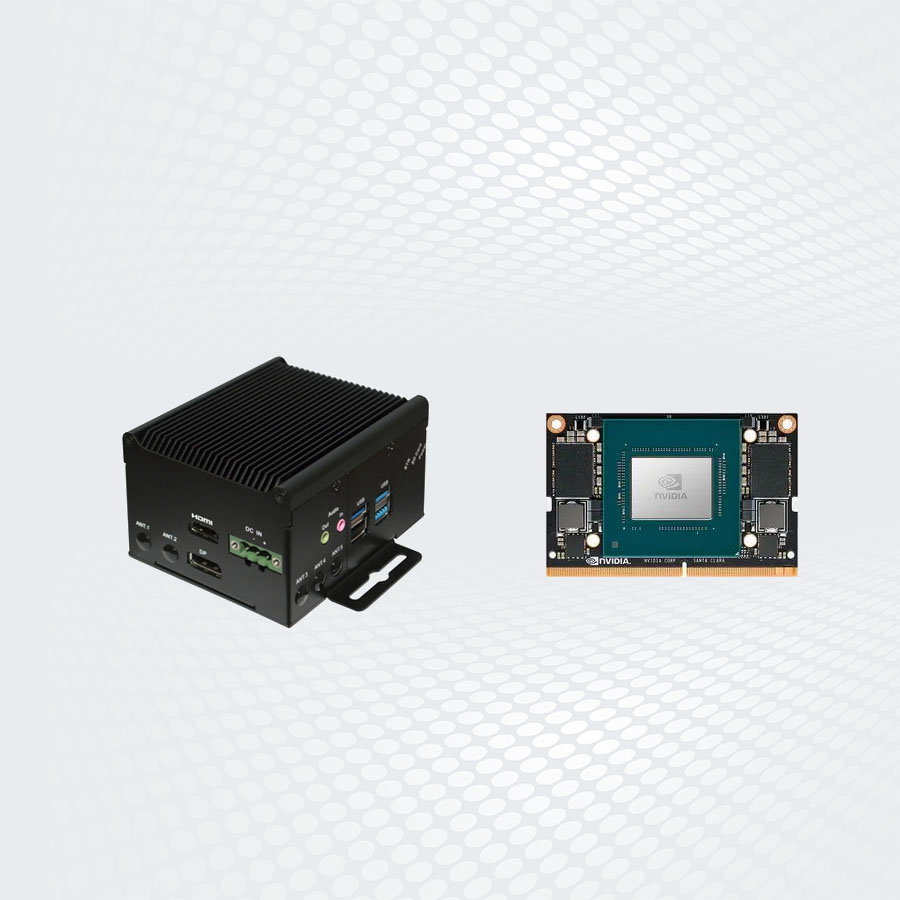
Jetson Orin Nano systems
Compact, low-power Orin Nano computers.
View range -
02
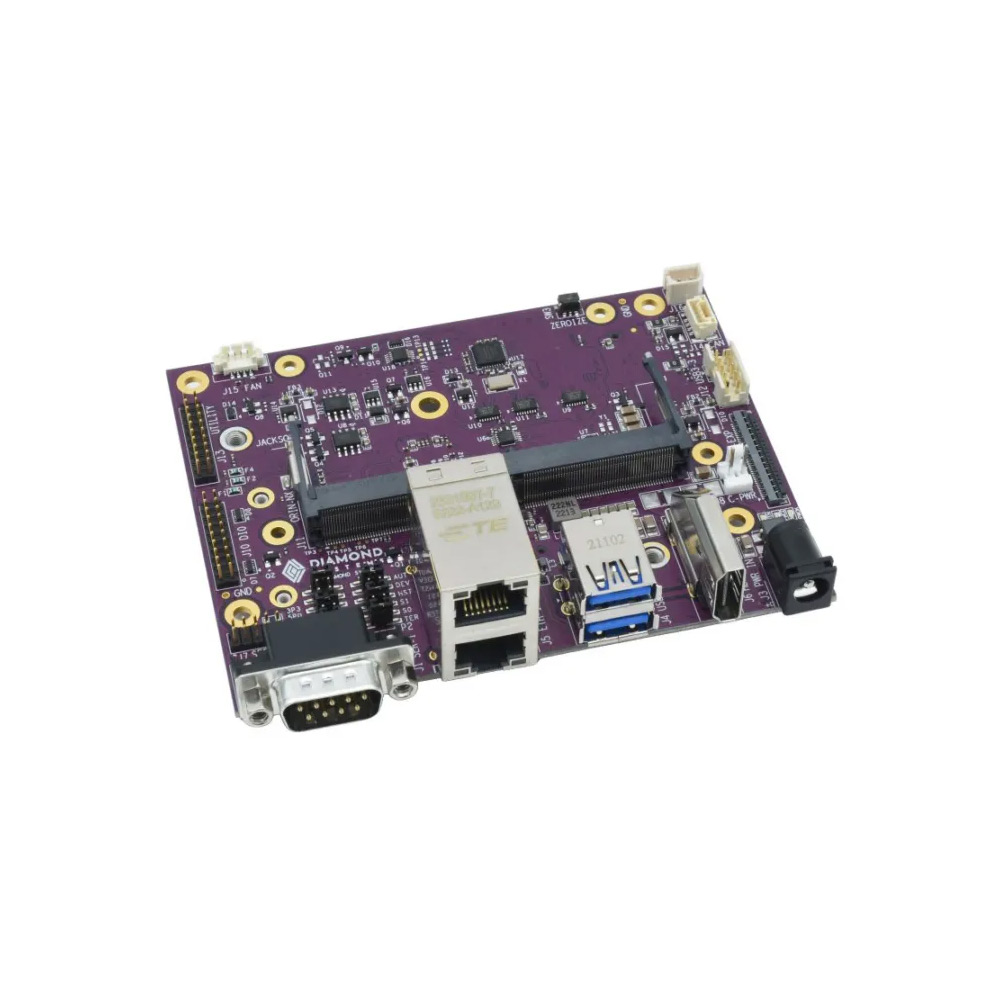
Jetson Orin Nano carrier boards
Carriers for the Orin Nano module.
View range -
03
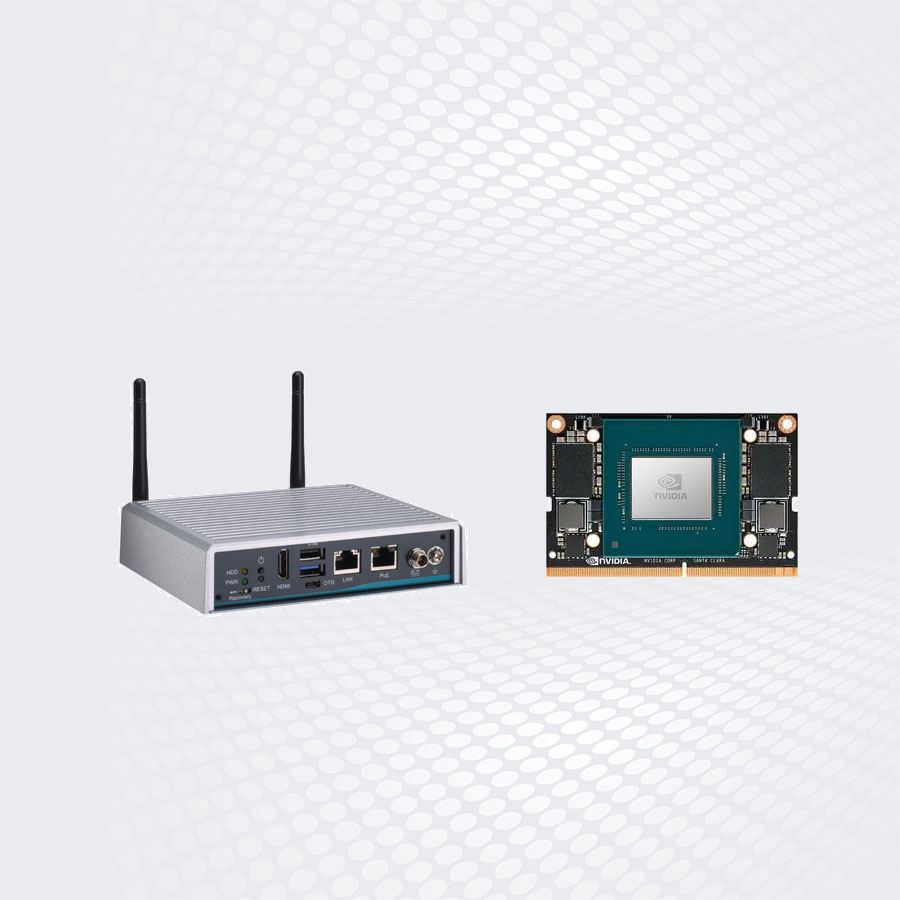
Jetson Orin NX systems
Multi-camera Orin NX computers.
View range -
04
Jetson Orin NX carrier boards
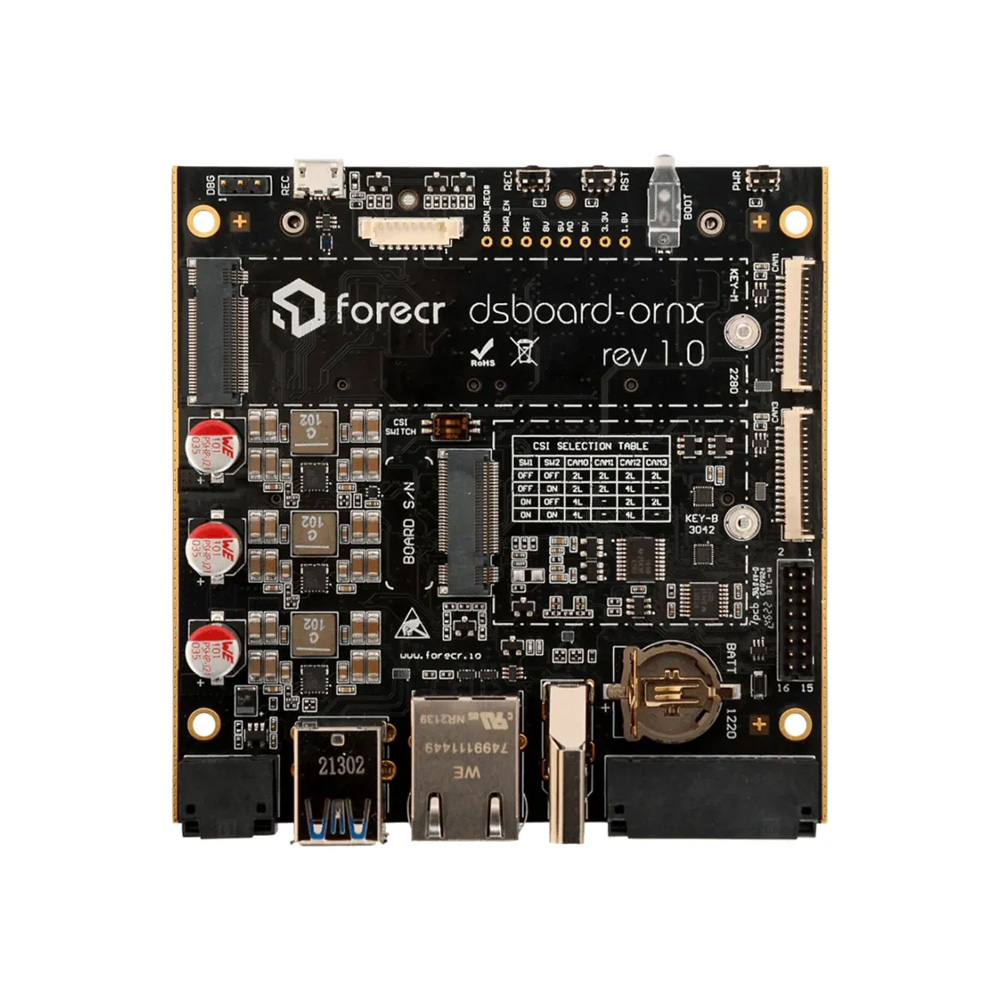
Carriers that usually take both Orin NX and Orin Nano.
View range -
05
Jetson AGX Orin systems
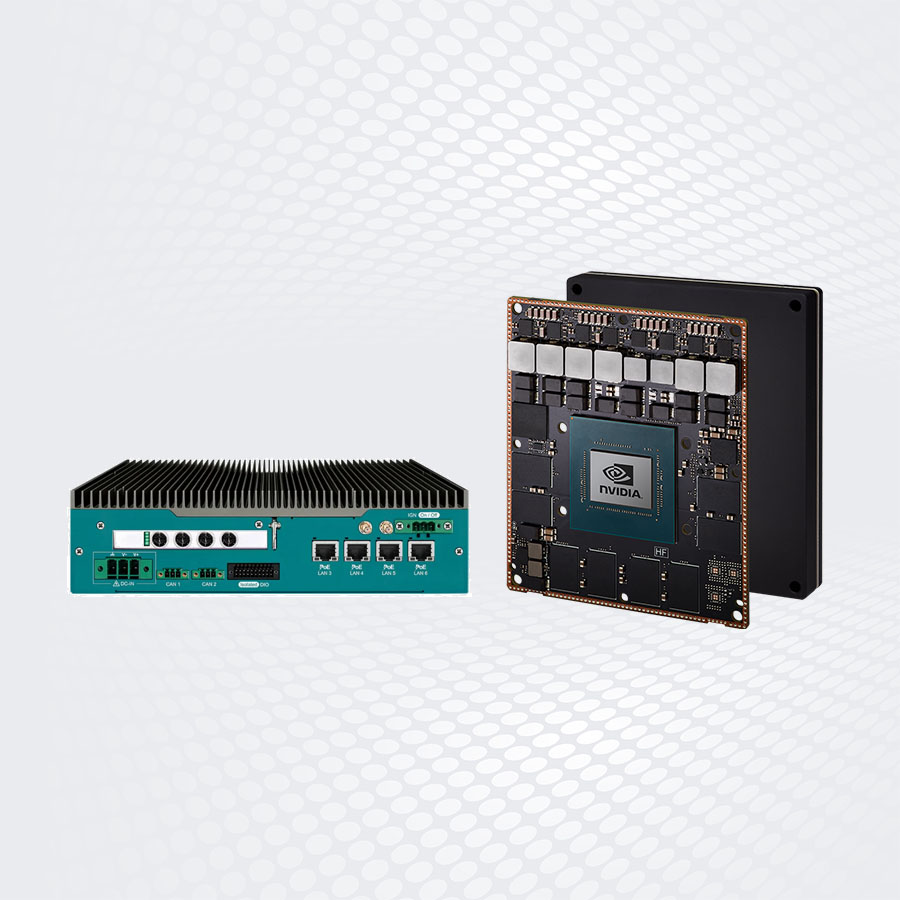
AGX Orin computers from 200 to 275 TOPS.
View range -
06
Jetson AGX Orin carrier boards
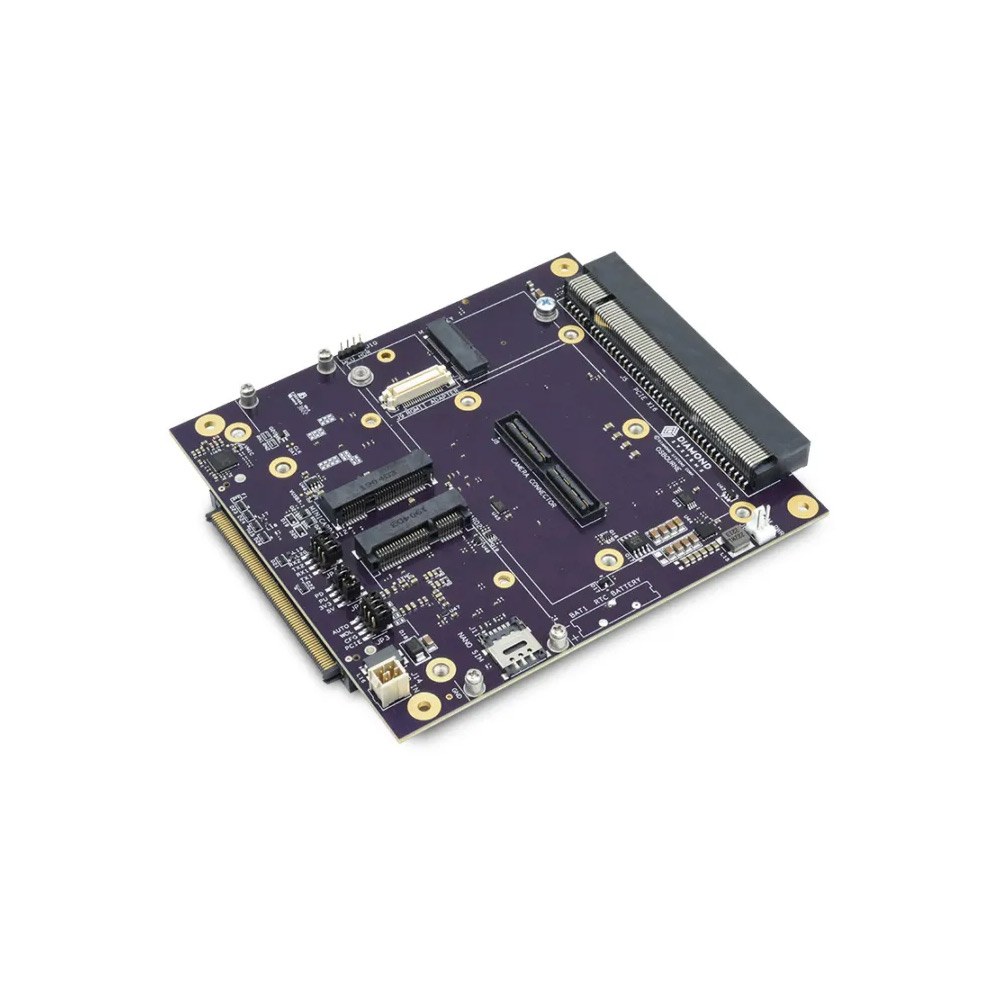
699-pin carriers for AGX Orin modules.
View range
More Jetson Orin categories
Orin systems grouped by how and where they are deployed.

Jetson Orin carrier boards
Every Orin carrier, from compact boards to I/O-rich designs.
View range
Jetson PoE systems
Orin computers that power IP cameras over Ethernet.
View range
Rugged Jetson computers
Jetson systems for vibration, wide temperature and vehicle power.
View range
In-vehicle computers
Computers with ignition control and wide DC input for vehicles.
View range
DIN rail PCs
Compact computers for control cabinets and panels.
View range
Edge AI computers
AI systems from Jetson to x86 with GPUs and NPUs.
View rangeJetson Orin systems by module
One system per Orin tier from our range: an Orin Nano computer, an IP66 Orin NX 16GB computer, an eight-camera AGX Orin 32GB computer and an AGX Orin Industrial outdoor computer.
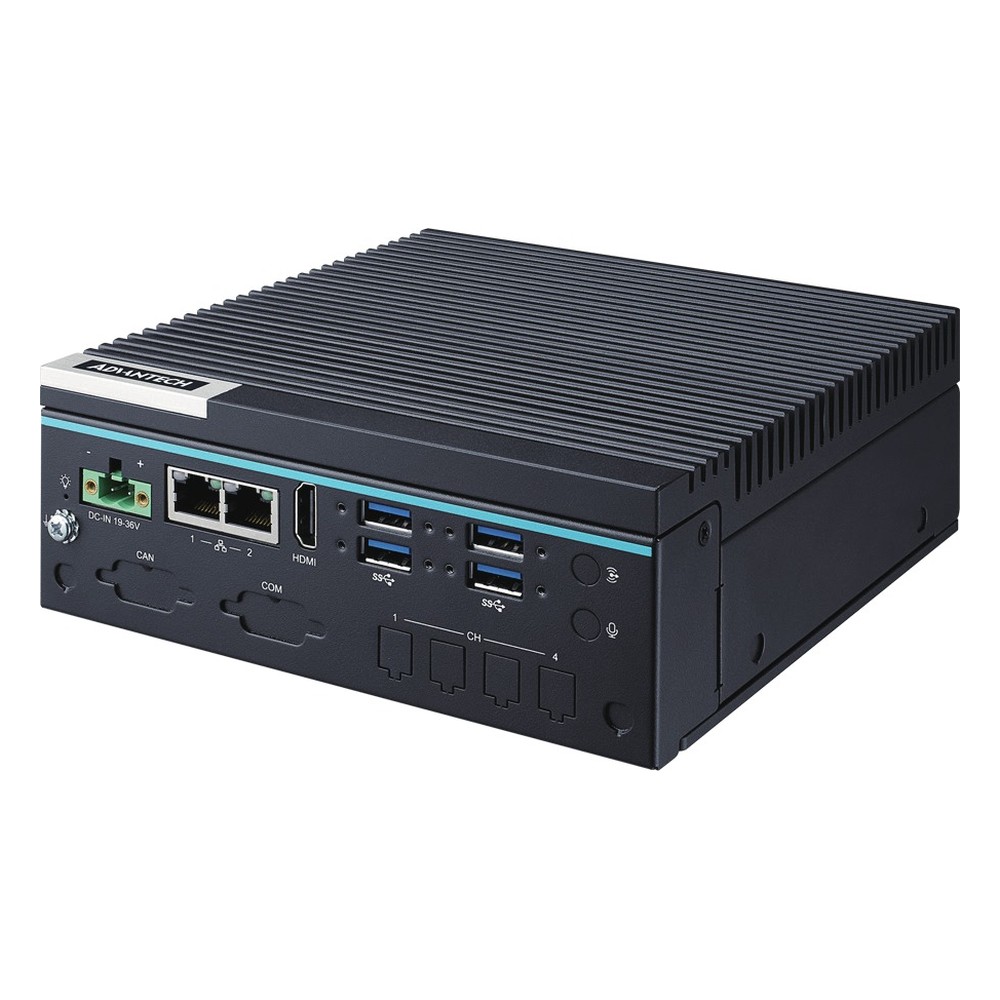
NVIDIA Jetson Orin Nano Fanless Embedded Computer with 4x USB 3.2 Gen 2 and Wide Temperature
- AI
- 20–40 TOPS
- SOM
- NVIDIA Jetson Orin Nano 8 GB
- Ethernet
- 2× GbE
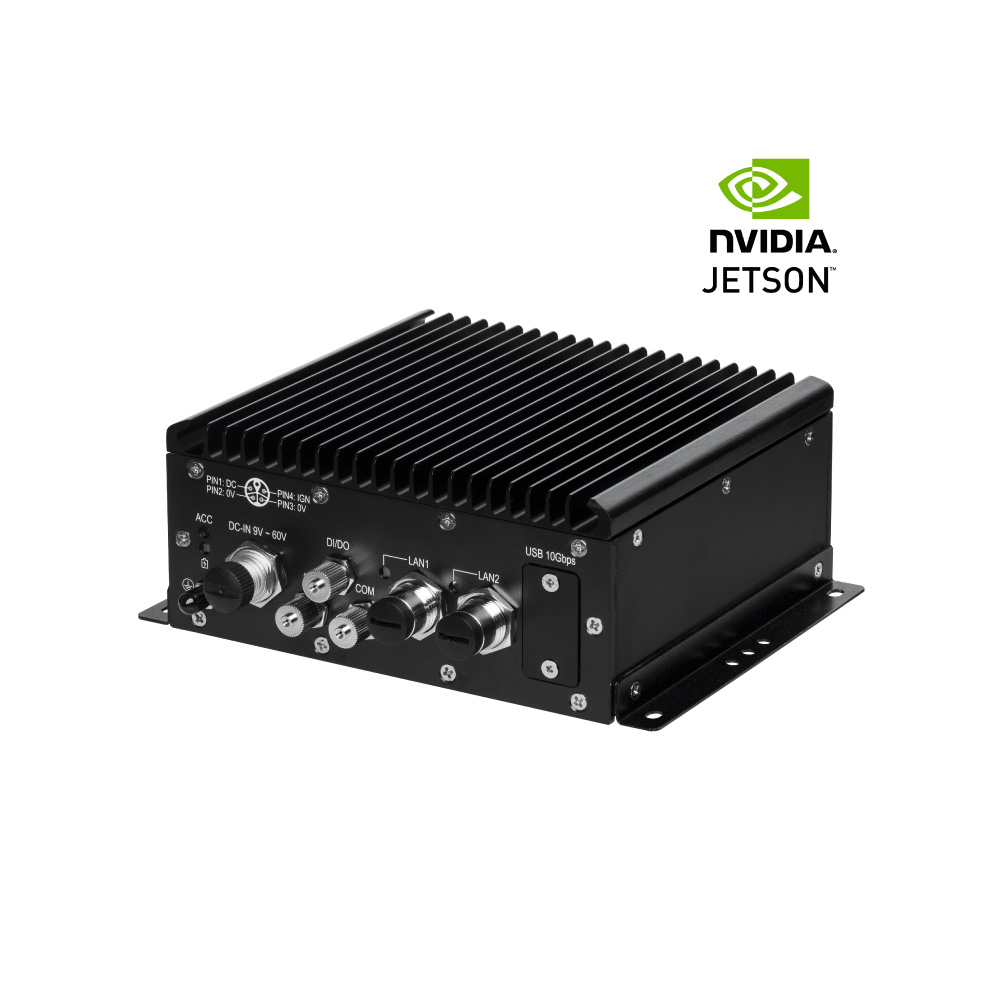
NVIDIA Jetson Orin NX 16GB Fanless IP66 Waterproof Edge AI Computer
- AI
- 100 TOPS
- SOM
- NVIDIA Jetson Orin NX 16 GB
- Ethernet
- 1× 2.5GbE, 1× GbE
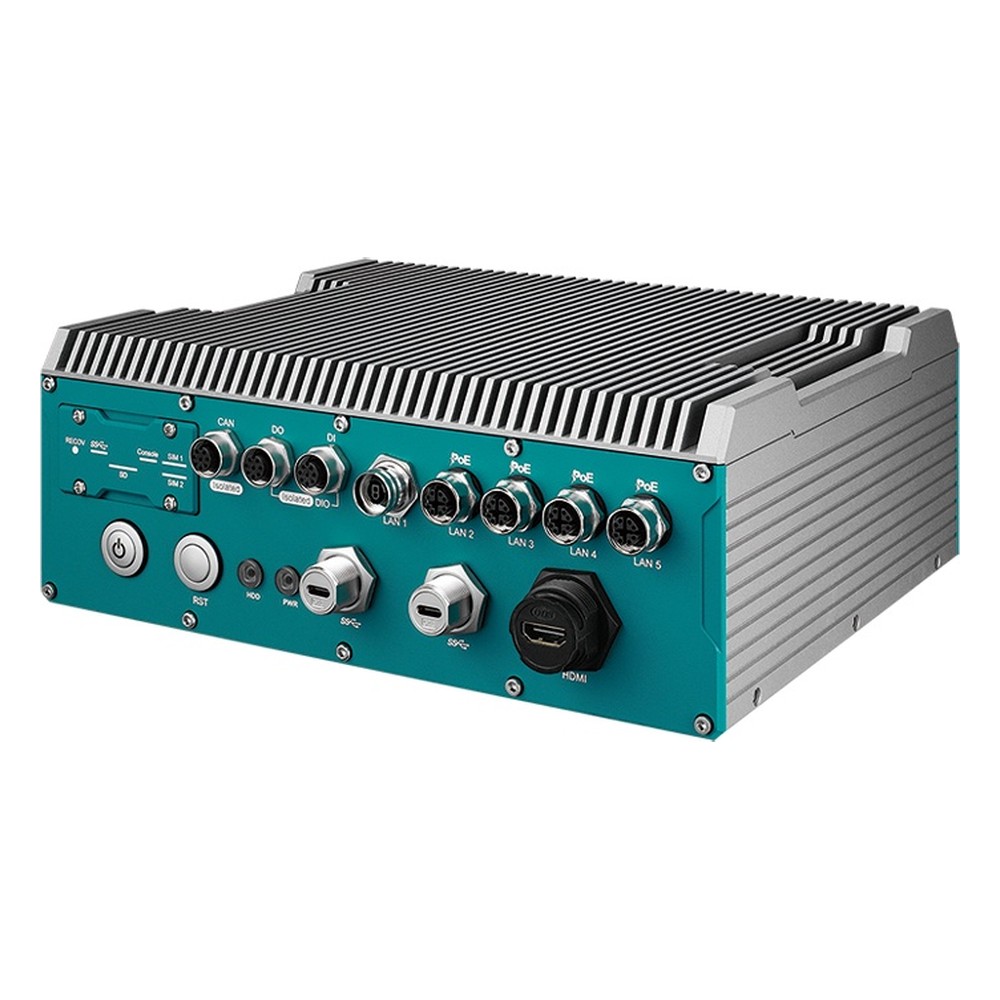
NVIDIA Jetson AGX Orin 32GB IP66 Rugged Computer with 8x GMSL, 4x M12 PoE+ and Wide Temperature
- AI
- 200 TOPS
- SOM
- NVIDIA Jetson AGX Orin 32 GB
- Cameras
- 8× GMSL
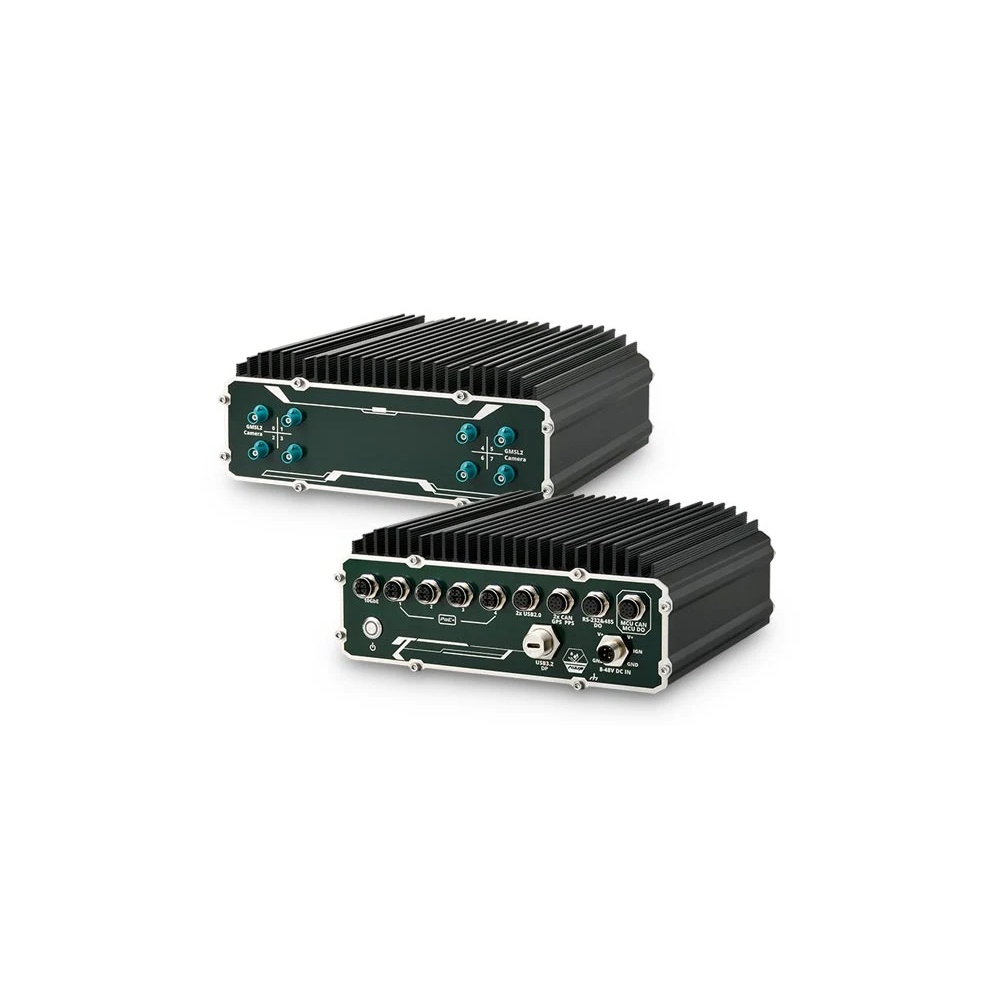
Jetson AGX Orin Industrial Extended Temperature Outdoor Computer with 4x PoE+
- AI
- 248 TOPS
- SOM
- NVIDIA Jetson AGX Orin Industrial 64 GB
- Ethernet
- 1× 10GbE, 4× GbE (4× PoE)
Orin systems compared
The facts below come from each product’s own specification.
| System | Module | Rated environment | Power input | Notable I/O |
|---|---|---|---|---|
| Advantech MIC-712-ON | Orin Nano 8GB or 4GB, up to 67 TOPS in Super mode | −25 °C to 70 °C with 0.7 m/s airflow | 19–36 V DC | Four USB 3.2 Gen 2, optional four-channel GMSL2 frame grabber |
| Sintrones IBOX-600-IP66-ONX16 | Orin NX 16GB | IP66 enclosure | 9–60 V DC with ignition management | M12 2.5GbE and GbE, CAN FD, M8 serial |
| Vecow NAC-1000-R32 | AGX Orin 32GB, up to 200 TOPS | IP66 | 9–50 V DC | Eight GMSL inputs, four M12 PoE+ ports, isolated CAN FD |
| Neousys NRU-240S-AWP-JAOi | AGX Orin Industrial, up to 248 TOPS | IP66, −40 °C to 70 °C in 35 W mode | 8–48 V DC with ignition control | Four M12 PoE+ ports, M12 10GbE |
We configure, image and test each system with the module, storage and JetPack release fitted, and set the power mode to suit the enclosure.
Reading a Jetson Orin spec sheet
Seven points that show what an Orin system will deliver in your application.
-
01
Module and mode
Which module is fitted, and is the TOPS figure quoted in a Super or MAXN mode the enclosure can sustain?
-
02
Sparse or dense
Orin TOPS are sparse INT8; dense throughput is about half.
-
03
Memory
Size and bandwidth, shared between the operating system, models and camera buffers.
-
04
Boot storage
eMMC on AGX Orin; NVMe on the carrier for Orin NX and Orin Nano.
-
05
Camera path
MIPI CSI-2 lanes, GMSL2 inputs or PoE ports, and how many cameras run at full rate.
-
06
Video encode
Orin Nano has none in hardware; count the streams you need to record.
-
07
Thermal rating
The operating range at the chosen power mode, with or without airflow.
Jetson Orin specs: common questions
Quick answers
What are the specs of Jetson AGX Orin?
Up to 275 TOPS from a 2,048-core Ampere GPU. The 64GB module has 12 Cortex-A78AE cores, 64 GB of LPDDR5 at 204.8 GB/s and 15–60 W; the 32GB module reaches 200 TOPS.
How many TOPS is Jetson Orin Nano?
Up to 67 TOPS on the 8GB module. The 4GB module reaches 34 TOPS; both figures are Super modes from JetPack 6.2, up from 40 and 20 TOPS.
What is the difference between Jetson Orin NX and Orin Nano?
Performance, memory and video encode. Orin NX reaches 157 TOPS with up to 16 GB and a hardware encoder; Orin Nano 67 TOPS with up to 8 GB and no encoder.
What is Jetson Orin Super mode?
Higher clocks and power from JetPack 6.2. It lifts Orin Nano and Orin NX AI performance by up to about 1.7× on the same module.
How much power does Jetson AGX Orin use?
15–60 W at the module. AGX Orin 32GB runs at 15–40 W and the Industrial module up to 75 W; system power is higher.
What is the Jetson AGX Orin Industrial?
A harsher-duty AGX Orin. It adds ECC memory, a −40 °C to 85 °C rating and a ten-year production life, at 248 TOPS.
Jetson Orin FAQs
-
What Is Jetson Super Mode?
Jetson Super Mode is a set of higher-power operating modes NVIDIA added for Jetson Orin Nano and Orin NX modules with JetPack 6.2. Raising clock speeds and power limits lifts AI performance substantially, for example to up to 67 TOPS on Orin Nano 8GB and up to 157 TOPS on Orin NX 16GB, on the same hardware.
-
Jetson Orin Nano vs Orin NX: What Is the Difference?
The Jetson Orin Nano delivers up to 67 TOPS in 7 to 25 W with 4 to 8 GB of memory, suited to entry-level, low-power vision. The Orin NX steps up to 157 TOPS in 10 to 40 W with 8 to 16 GB, adds deep learning accelerators and a hardware video encoder, and handles multi-camera, heavier inference.
-
Is the Jetson Orin Nano Super Worth It?
Yes, in almost every case, because the Super is a free software update rather than new hardware. JetPack lifts an existing Jetson Orin Nano from 40 to 67 TOPS by unlocking higher clocks and power, so deployed and new designs gain roughly 70 percent more AI performance at no hardware cost, provided the cooling handles 25 W.
-
What Does TOPS Mean in AI?
TOPS stands for tera operations per second: the number of trillion simple operations an AI processor can perform each second. It is the headline figure used to compare AI accelerators such as NVIDIA Jetson modules and the NPUs in Intel and AMD processors. It is usually quoted for 8-bit integer (INT8) maths, and sometimes with sparsity, which doubles the figure.
-
What Is a Teraflop (TFLOPS), and How Is It Different From TOPS?
A teraflop is one trillion floating-point operations per second, and TFLOPS counts them: a measure of how fast a processor handles decimal maths at a stated precision such as FP32. TOPS counts trillions of operations per second, usually integer maths at INT8. GPUs quote TFLOPS for graphics and general compute, while NPUs and AI accelerators quote TOPS for inference.
-
How Long Is NVIDIA Jetson Supported?
NVIDIA gives Jetson modules long, published production lifecycles, which is part of why they suit industrial designs. Current Orin modules run well into the 2030s, and Industrial variants carry a ten-year production life. The exception is the older LPDDR4 generation, Xavier and TX2, which NVIDIA has brought to early end-of-life, with last-time-buy orders closing on 1 July 2026.
-
What Is the Difference Between a Jetson Module and a Developer Kit?
An NVIDIA Jetson developer kit is a reference carrier board with a module fitted, meant for evaluation and prototyping. A production system uses the production module on a carrier board designed for your I/O, environment and lifecycle. The silicon and software are the same; the kit is not what you deploy.
Choosing the right Jetson Orin module?
Tell us your models, cameras, power budget and where the system has to run. We will recommend the Orin module and system that fit, then configure, image and test it before it ships.