
 US
Jetson Orin NX vs AGX Orin: Which Module to Choose
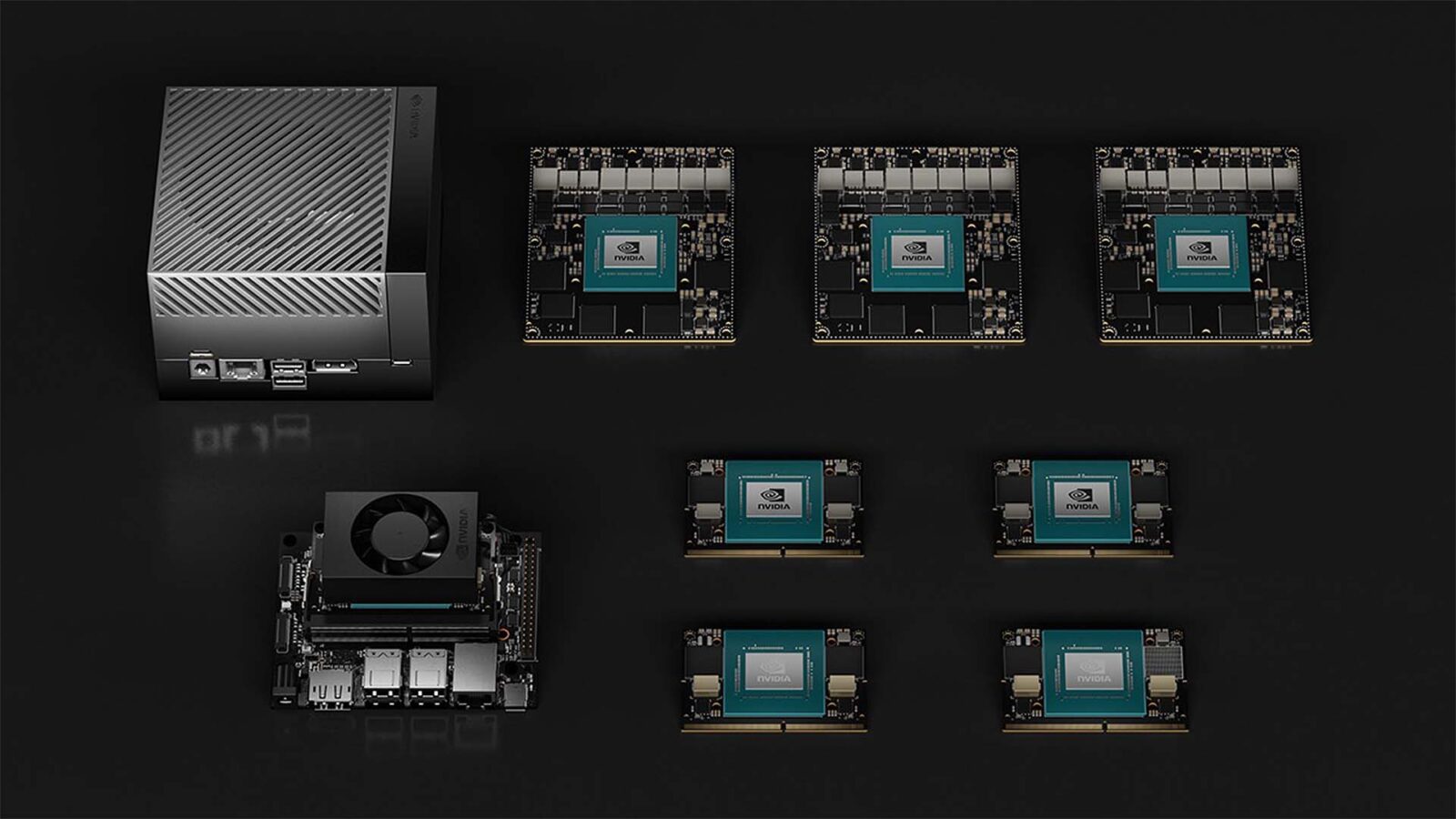
The Jetson Orin NX and AGX Orin are the mid-range and high-end of the Orin family. The Orin NX offers up to 157 TOPS in a compact, low-power module; the AGX Orin up to 275 TOPS with four times the memory and far more I/O. Here is how they differ, and which one fits.
Orin NX vs AGX Orin is the choice between the two upper tiers of NVIDIA’s Jetson Orin family: the Orin NX is a compact, low-power module rated at up to 157 TOPS, and the AGX Orin is the larger module rated at up to 275 TOPS, with four times the memory, twice the memory bandwidth and far more I/O. The right one is the smallest module that holds your models, sensors and frame rate at the power your enclosure can cool.
Both modules use the same Ampere GPU architecture, Arm Cortex-A78AE CPU cores and JetPack software, so the difference is scale, not generation. The Jetson Orin NX packs serious AI performance into a module the size of a laptop memory stick; the Jetson AGX Orin trades size and power for memory, bandwidth and interfaces.
This guide compares them side by side, explains where each one wins, sets the Orin NX 16GB against the AGX Orin 32GB, covers carriers, cooling and lifecycle, and finishes with worked examples and a decision table.
Key takeaways
- 01Same generation, different scale
- Both are Ampere and Cortex-A78AE on JetPack, so software moves between them; memory, bandwidth and I/O do not.
- 02Memory is usually the decider
- Orin NX tops out at 16 GB on a 128-bit bus; AGX Orin offers 32 or 64 GB on a 256-bit bus at 204.8 GB/s.
- 03I/O separates them next
- AGX Orin brings 16 camera lanes, 22 PCIe lanes and 10GbE from the module; Orin NX has 8 camera lanes and 7 PCIe lanes.
- 04The gap narrowed in 2026
- JetPack 7.2 added a Super mode that takes AGX Orin 32GB from 200 to 241 TOPS at up to 60 W.
- 05Not interchangeable
- Orin NX uses a 260-pin SO-DIMM connector shared with Orin Nano; AGX Orin uses a 699-pin connector.
Jetson Orin NX vs AGX Orin: side by side
The master table puts the four production modules next to each other. Orin NX figures are shown in their Super modes with the original rating in brackets.
| Specification | Orin NX 8GB | Orin NX 16GB | AGX Orin 32GB | AGX Orin 64GB |
|---|---|---|---|---|
| AI performance (sparse INT8) | 117 TOPS (70) | 157 TOPS (100) | 200 TOPS, or 241 in Super mode | 275 TOPS |
| GPU | 1,024-core Ampere, 32 Tensor Cores | 1,024-core Ampere, 32 Tensor Cores | 1,792-core Ampere, 56 Tensor Cores | 2,048-core Ampere, 64 Tensor Cores |
| CPU | 6-core Cortex-A78AE | 8-core Cortex-A78AE | 8-core Cortex-A78AE | 12-core Cortex-A78AE |
| Deep learning accelerators | 1× NVDLA v2 | 2× NVDLA v2 | 2× NVDLA v2 | 2× NVDLA v2 |
| Memory | 8 GB 128-bit LPDDR5 | 16 GB 128-bit LPDDR5 | 32 GB 256-bit LPDDR5 | 64 GB 256-bit LPDDR5 |
| Memory bandwidth | 102.4 GB/s | 102.4 GB/s | 204.8 GB/s | 204.8 GB/s |
| Storage on module | None; NVMe on the carrier | None; NVMe on the carrier | 64 GB eMMC 5.1 | 64 GB eMMC 5.1 |
| Power range | 10–40 W | 10–40 W | 15–40 W, or up to 60 W | 15–60 W |
| Connector | 260-pin SO-DIMM | 260-pin SO-DIMM | 699-pin | 699-pin |
| Cooling interface | Bare module | Bare module | Integrated thermal transfer plate | Integrated thermal transfer plate |
On paper the AGX Orin 64GB has about 1.75× the AI performance of the Orin NX 16GB, but twice the bandwidth and four times the memory, which is why it often scales better than the TOPS ratio suggests on camera-heavy pipelines. TOPS here are sparse INT8; our answer on what TOPS means explains why dense throughput is about half. For every Orin module including Orin Nano and the Industrial version, see our Jetson Orin specs reference.
I/O: where the modules differ most
Interfaces often settle the choice faster than TOPS. These are module capabilities; the carrier board decides which of them reach a connector.
| Interface | Orin NX | AGX Orin |
|---|---|---|
| PCIe | Gen 4, 1× x4 and 3× x1 (7 lanes) | Gen 4, up to 2× x8, 1× x4 and 2× x1 (22 lanes) |
| Camera | Up to 4 cameras (8 with virtual channels), 8 lanes MIPI CSI-2 | Up to 6 cameras (16 with virtual channels), 16 lanes MIPI CSI-2 |
| Video encode (H.265) | 1× 4K60 or 3× 4K30 | 2× 4K60 on 64GB; 1× 4K60 on 32GB |
| Video decode (H.265) | 1× 8K30 or 2× 4K60 | 1× 8K30 or 3× 4K60 on 64GB |
| Networking from the module | 1× GbE | 1× GbE plus 10GbE |
| Display | 1× 8K30 DisplayPort 1.4a or HDMI 2.1 | 1× 8K60 DisplayPort 1.4a or HDMI 2.1 |
Three of these drive most decisions. Camera lanes set how many GMSL2 or MIPI cameras the module can take before you need virtual channels or a second computer. PCIe lanes set whether a 10GbE NIC, a capture card and NVMe storage can all run at full speed. And 10GbE from the module lets an AGX Orin take lidar or high-resolution GigE cameras without an add-in card.
Where the AGX Orin pulls ahead
| Need | Why AGX Orin | Typical application |
|---|---|---|
| Larger models | 32 or 64 GB holds bigger networks, or several at once, in one shared memory pool | Vision language models, multi-model perception |
| Many cameras | 16 camera lanes and 204.8 GB/s for the frame buffers | Surround-view vehicles, multi-angle inspection |
| High-speed I/O | 22 PCIe lanes and 10GbE from the module | Lidar, 10GbE cameras, capture cards |
| Encode headroom | Two 4K60 encodes on the 64GB module | Recording and streaming several high-resolution feeds |
| Industrial rating | The AGX Orin Industrial version adds ECC and −40 °C to 85 °C | Rail, defense and outdoor systems |
The Industrial version is the one AGX advantage with no Orin NX equivalent. If the system needs ECC memory or a module rated for the full industrial temperature range, the choice is made before performance comes into it. Our answer on the industrial temperature range explains what such ratings cover.
When the Orin NX is the right choice
More performance is not automatically better; it costs size, power, heat and money. For a great many edge AI products, such as one to four cameras, one or two models running in real time and a compact or power-conscious enclosure, the Orin NX has performance to spare and the AGX Orin would be over-specified.
| Constraint | Why Orin NX fits |
|---|---|
| Size and weight | The SO-DIMM module and smaller carriers suit drones, handheld and small robots |
| Power budget | Runs at 10–25 W for most vision work, which suits batteries and PoE-powered systems |
| Fanless cooling | A 25 W heat load is easy to shed through a fanless chassis |
| Scaling a range | Shares a connector with Orin Nano, so one carrier can span the entry and mid tiers |
| Cost | A lower module cost and simpler carrier, multiplied across a fleet |
The NX is also the easier module to cool and to fit. The right question is not which is more powerful, but whether the workload needs what the AGX Orin adds. Our answer on Orin Nano vs Orin NX covers the step below, where the deciding factor is often the hardware video encoder. Our guide to choosing a Jetson module walks the whole range, and the Orin Nano Super white paper covers what Super mode did for the smaller modules.
Orin NX 16GB vs AGX Orin 32GB: the close call
The real decision is often between the largest Orin NX and the smallest AGX Orin, and JetPack 7.2 moved the line. NVIDIA added a MAXN SUPER mode for the AGX Orin 32GB that raises the GPU clock from 930 MHz to 1.3 GHz and lifts it from 200 to 241 TOPS, at up to 60 W.
| Orin NX 16GB (Super) | AGX Orin 32GB (Super) | |
|---|---|---|
| AI performance | 157 TOPS | 241 TOPS |
| Memory and bandwidth | 16 GB, 102.4 GB/s | 32 GB, 204.8 GB/s |
| Top power mode | 40 W | 60 W |
| Software for the top mode | JetPack 6.2 or later | JetPack 7.2 or later |
| Camera lanes and PCIe | 8 lanes; 7 PCIe lanes | 16 lanes; 22 PCIe lanes |
| Cooling | Heatsink on a bare module | Heatsink or spreader on the thermal transfer plate |
If a pipeline fits in 16 GB with headroom and needs no more than four cameras, the Orin NX 16GB is the leaner build. If memory use is above about 12 GB, the camera count is rising, or a language model is on the roadmap, the AGX Orin 32GB gives room to grow without the cost of the 64GB module. Measure memory with tegrastats on the real application before deciding, and remember that a Super mode is only useful if the enclosure can hold it; our guide to Jetson cooling covers the heat side.
Worked examples
| Application | Load | Choice | Reason |
|---|---|---|---|
| Inspection cell | Two cameras, one detector at 30 fps, results logged | Orin NX 8GB | Encoder and memory to spare at 15–25 W |
| Mobile robot | Two stereo cameras, tracking, person detection | Orin NX 16GB | Fits in 16 GB; compact, fanless at 25 W |
| Traffic analytics | Eight 1080p streams decoded and analyzed | AGX Orin 32GB | Decode capacity and bandwidth for eight streams |
| Autonomous vehicle | Six GMSL2 cameras, lidar on 10GbE, planning | AGX Orin 64GB | Camera lanes, 10GbE and memory for the full stack |
| Rail or outdoor defense | Multi-camera ISR at −40 °C | AGX Orin Industrial | ECC and the module’s industrial temperature range |
A closer look at the robot. Two stereo depth streams, positional tracking and a person detector use roughly half the GPU of an Orin NX 16GB and about 8–10 GB of memory, which leaves the module in a 25 W mode with headroom. Adding spatial mapping and a second detector pushes memory past 12 GB and the GPU near its limit, and that is the point to move to the AGX Orin 32GB rather than chase a higher power mode. These figures are planning estimates; resolution, model size and quantisation move them a long way.
Carriers, connectors and moving between tiers
The two modules are not drop-in replacements for each other. The Orin NX uses the smaller 260-pin connector it shares with the Orin Nano, while the AGX Orin uses a 699-pin connector, so each needs a Jetson carrier board designed for it. Moving between the two tiers is a board change, not a swap, which is worth knowing before a design commits to one.
| Orin NX | AGX Orin | |
|---|---|---|
| Carrier boards | Orin NX carrier boards, shared with Orin Nano | AGX Orin carrier boards, shared with AGX Orin Industrial |
| Upgrade path in place | Orin Nano to Orin NX on the same carrier | AGX Orin 32GB to 64GB or Industrial on the same carrier |
| Next generation | Not pin-compatible with Thor | Thor uses a new carrier |
| Production life | Orin family into the early 2030s | AGX Orin 64GB listed to January 2032; Industrial to July 2033 |
The upside of the split is that each pair scales inside its connector. A product line can use Orin Nano and Orin NX on one carrier, and AGX Orin 32GB, 64GB and Industrial on another. Our guide to choosing a Jetson carrier board covers what to check, and our comparison of Jetson Orin vs Xavier covers the move from the previous AGX generation.
Power modes and thermal design
Neither module runs at its peak figure all the time. Each has several NVIDIA power modes, set in software, that cap the clocks and the module power: the Orin NX at 10, 15, 25 W and up to 40 W in Super mode, and the AGX Orin at 15, 30 and 50 W and up to 60 W. The mode a system can sustain depends on the heatsink, the enclosure and the ambient temperature at the site.
In practice this matters more than the headline TOPS. An AGX Orin held to 30 W in a small sealed box may deliver less than its datasheet suggests, while an Orin NX at 25 W in a well-designed fanless enclosure can run flat out all day. Size the thermal design for the mode the workload needs, at the highest ambient temperature the system will see, and check it under load before the design is fixed. Our Jetson Super mode explainer covers what the higher power modes change and what they cost in heat.
Orin NX and AGX Orin in our range
Categories in our range for each module and its carriers.

Jetson Orin
All Orin systems, from Orin Nano to AGX Orin.
View range
Rugged Jetson computers
Jetson systems for vibration, wide temperature and vehicle power.
View range
Jetson PoE systems
Orin computers that power IP cameras over Ethernet.
View range
Jetson Thor
The next tier above AGX Orin, on a new carrier.
View range
Edge AI computers
AI computers across Jetson, x86 and accelerator cards.
View range
GMSL2 cameras
Cameras on locking coax for multi-camera Orin systems.
View rangeOrin NX and AGX Orin systems
Two Orin NX computers and two AGX Orin computers from our range, from a compact single-camera system to an IP66 vehicle computer.
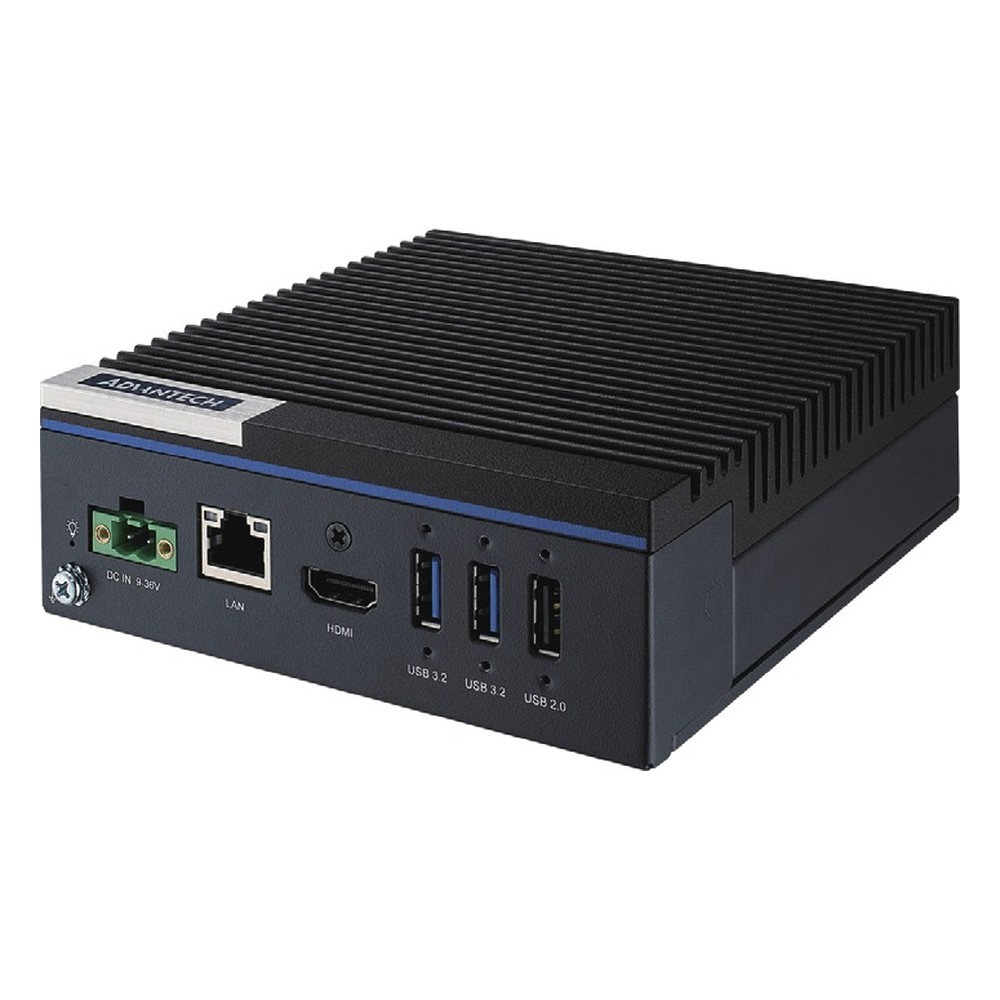
NVIDIA Jetson Orin NX 8GB or 16GB Compact Industrial PC with mPCIe, M.2 5G Slot and 9-36V DC Input
- AI
- 70–100 TOPS
- SOM
- NVIDIA Jetson Orin NX 16 GB
- Ethernet
- 1× GbE
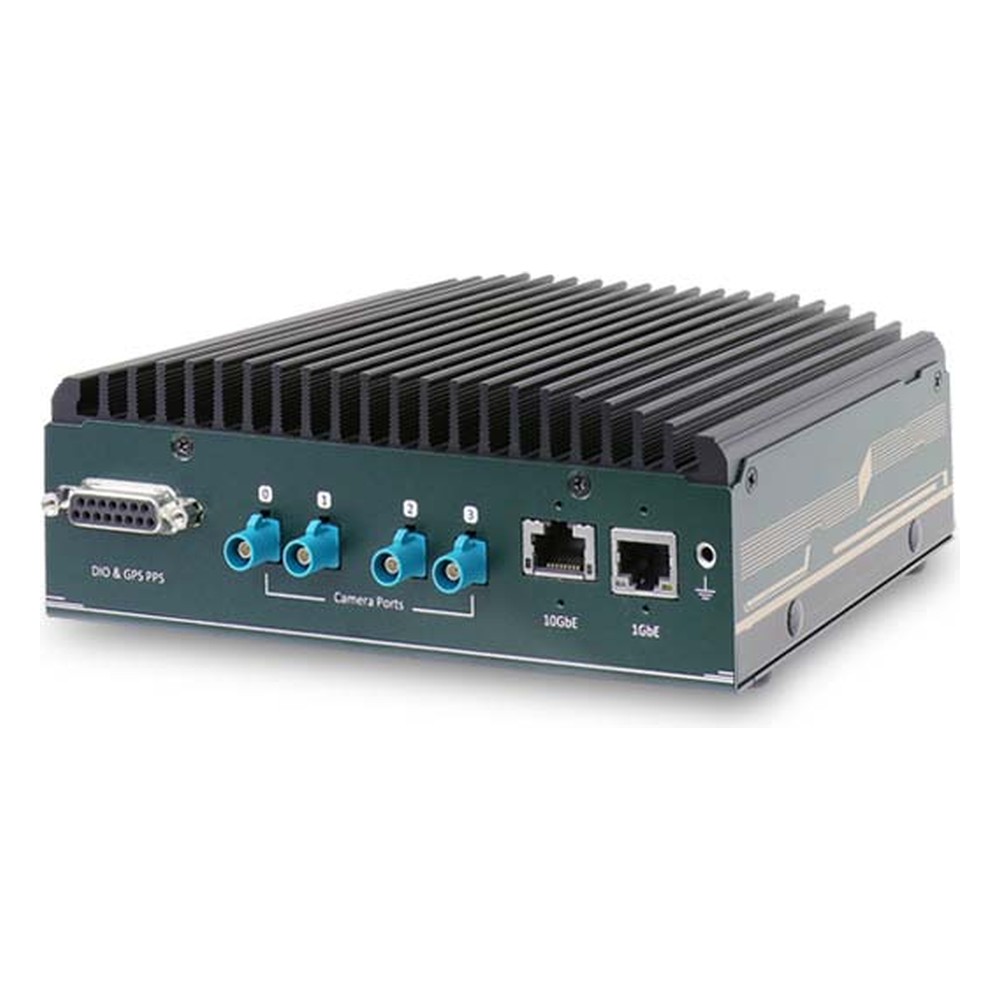
NVIDIA Jetson Orin NX or Orin Nano Rugged Embedded Computer with 4x GMSL2 Cameras and 10GbE
- AI
- 20–100 TOPS
- SOM
- NVIDIA Jetson Orin NX 16 GB
- Cameras
- 4× GMSL
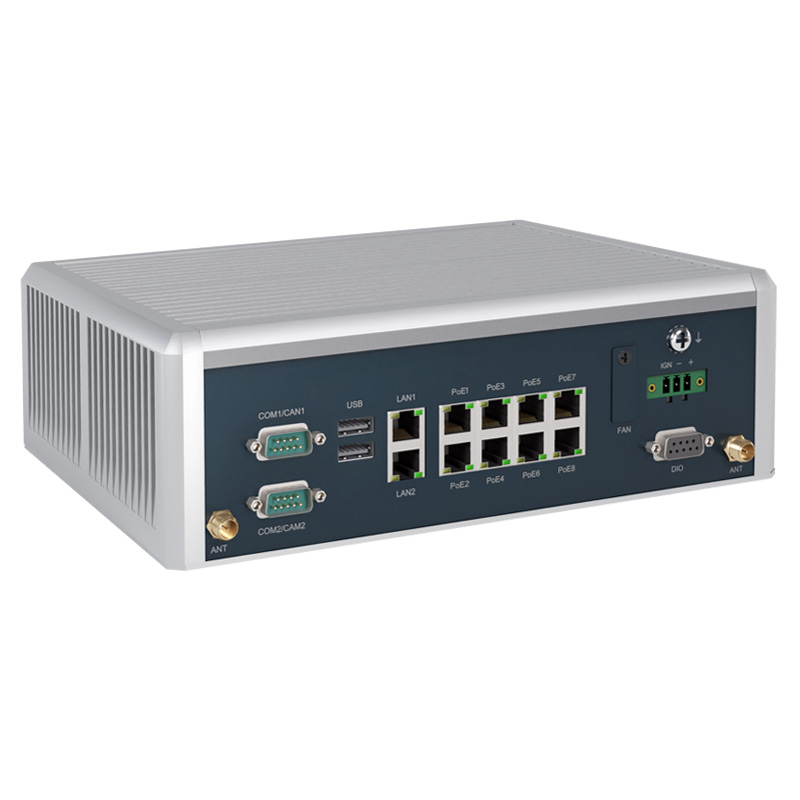
NVIDIA Jetson AGX Orin 32GB Fanless Robotics Computer with 8x PoE and 2x 2.5GbE
- AI
- 200 TOPS
- SOM
- NVIDIA Jetson AGX Orin 32 GB
- Ethernet
- 2× 2.5GbE, 8× GbE (8× PoE)
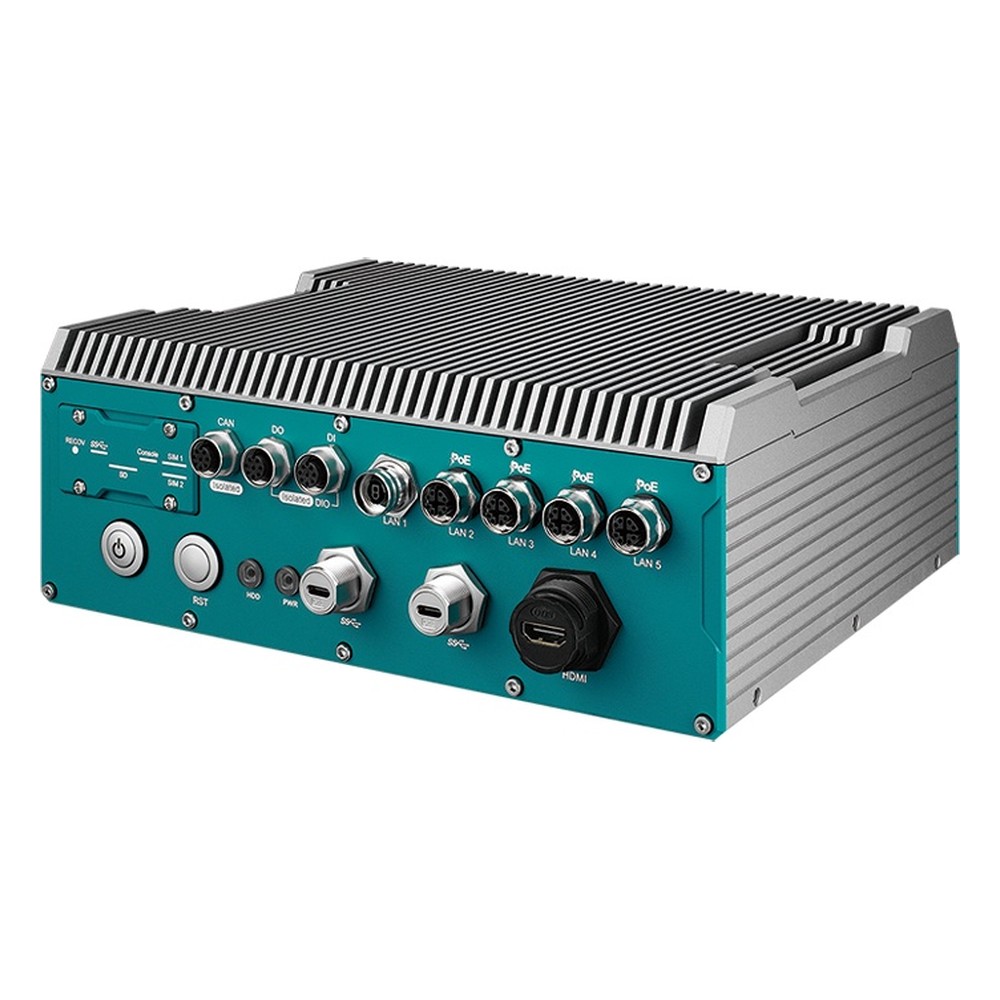
NVIDIA Jetson AGX Orin 64GB IP66 Rugged Computer with 275 TOPS, Isolated CAN FD and -25 to 75 °C
- AI
- 275 TOPS
- SOM
- NVIDIA Jetson AGX Orin 64 GB
- Cameras
- 8× GMSL
The systems above compared
| System | Module | Key facts from the product page |
|---|---|---|
| Advantech MIC-711-OX | Orin NX 8GB or 16GB | Up to 157 TOPS in Super mode; GbE, mPCIe and M.2 5G slot; 9–36 V DC |
| Neousys NRU-51V+ | Orin NX or Orin Nano | 4× synchronized GMSL2, 10GBASE-T, fanless −25 °C to 60 °C at 15 W |
| Axiomtek AIE900A-AO-2L8P | AGX Orin 32GB | 8× PoE, 2× 2.5GbE, optional 8-channel GMSL; fanless −25 °C to 60 °C |
| Vecow NAC-1000-R64 | AGX Orin 64GB | 8× GMSL inputs, 4× PoE+ on M12, IP66, −25 °C to 75 °C |
We fit the module, storage and JetPack image, set the power mode the enclosure can hold and test each system before it ships.
Orin NX vs AGX Orin: common questions
Quick answers
Is AGX Orin faster than Orin NX?
Yes, by about 1.75× in TOPS. AGX Orin 64GB is rated at 275 TOPS against 157 for Orin NX 16GB, with twice the memory bandwidth.
Can I swap an Orin NX for an AGX Orin?
No. They use different connectors, 260-pin and 699-pin, so moving between them needs a different carrier board.
How much memory do Orin NX and AGX Orin have?
Up to 16 GB and up to 64 GB. Orin NX comes in 8 or 16 GB; AGX Orin in 32 or 64 GB, with an Industrial 64GB version.
Does AGX Orin 32GB have a Super mode?
Yes, from JetPack 7.2. It raises the module from 200 to 241 TOPS at up to 60 W.
Which is better for a drone?
Usually the Orin NX. Its size, weight and 10–25 W power suit airframes; AGX Orin suits larger aircraft with more sensors.
Do both run the same software?
Yes. Both run JetPack with CUDA and TensorRT, though TensorRT engines are rebuilt for each module.
Jetson Orin FAQs
-
Jetson Orin Nano vs Orin NX: What Is the Difference?
The Jetson Orin Nano delivers up to 67 TOPS in 7 to 25 W with 4 to 8 GB of memory, suited to entry-level, low-power vision. The Orin NX steps up to 157 TOPS in 10 to 40 W with 8 to 16 GB, adds deep learning accelerators and a hardware video encoder, and handles multi-camera, heavier inference.
-
What Is Jetson Super Mode?
Jetson Super Mode is a set of higher-power operating modes NVIDIA added for Jetson Orin Nano and Orin NX modules with JetPack 6.2. Raising clock speeds and power limits lifts AI performance substantially, for example to up to 67 TOPS on Orin Nano 8GB and up to 157 TOPS on Orin NX 16GB, on the same hardware.
-
What Does TOPS Mean in AI?
TOPS stands for tera operations per second: the number of trillion simple operations an AI processor can perform each second. It is the headline figure used to compare AI accelerators such as NVIDIA Jetson modules and the NPUs in Intel and AMD processors. It is usually quoted for 8-bit integer (INT8) maths, and sometimes with sparsity, which doubles the figure.
-
What Is the Difference Between a Jetson Module and a Developer Kit?
An NVIDIA Jetson developer kit is a reference carrier board with a module fitted, meant for evaluation and prototyping. A production system uses the production module on a carrier board designed for your I/O, environment and lifecycle. The silicon and software are the same; the kit is not what you deploy.
-
How Long Is NVIDIA Jetson Supported?
NVIDIA gives Jetson modules long, published production lifecycles, which is part of why they suit industrial designs. Current Orin modules run well into the 2030s, and Industrial variants carry a ten-year production life. The exception is the older LPDDR4 generation, Xavier and TX2, which NVIDIA has brought to early end-of-life, with last-time-buy orders closing on 1 July 2026.
-
CUDA Cores vs Tensor Cores: What Is the Difference?
CUDA cores are the general-purpose parallel processors in an NVIDIA GPU, each handling one floating-point or integer operation at a time. Tensor Cores are specialized blocks that multiply small matrices in a single step at reduced precision, which is the core maths of AI. A GPU uses CUDA cores for graphics and general compute, and Tensor Cores for AI.
Choosing between Orin NX and AGX Orin?
Tell us the models, the sensors and the enclosure. We will recommend the Orin module that fits, then configure, image and test the system before it ships.