
 US
US Form factor and footprint
PC/104 or a compact board-level module — match it to the host system’s stack and the space available.
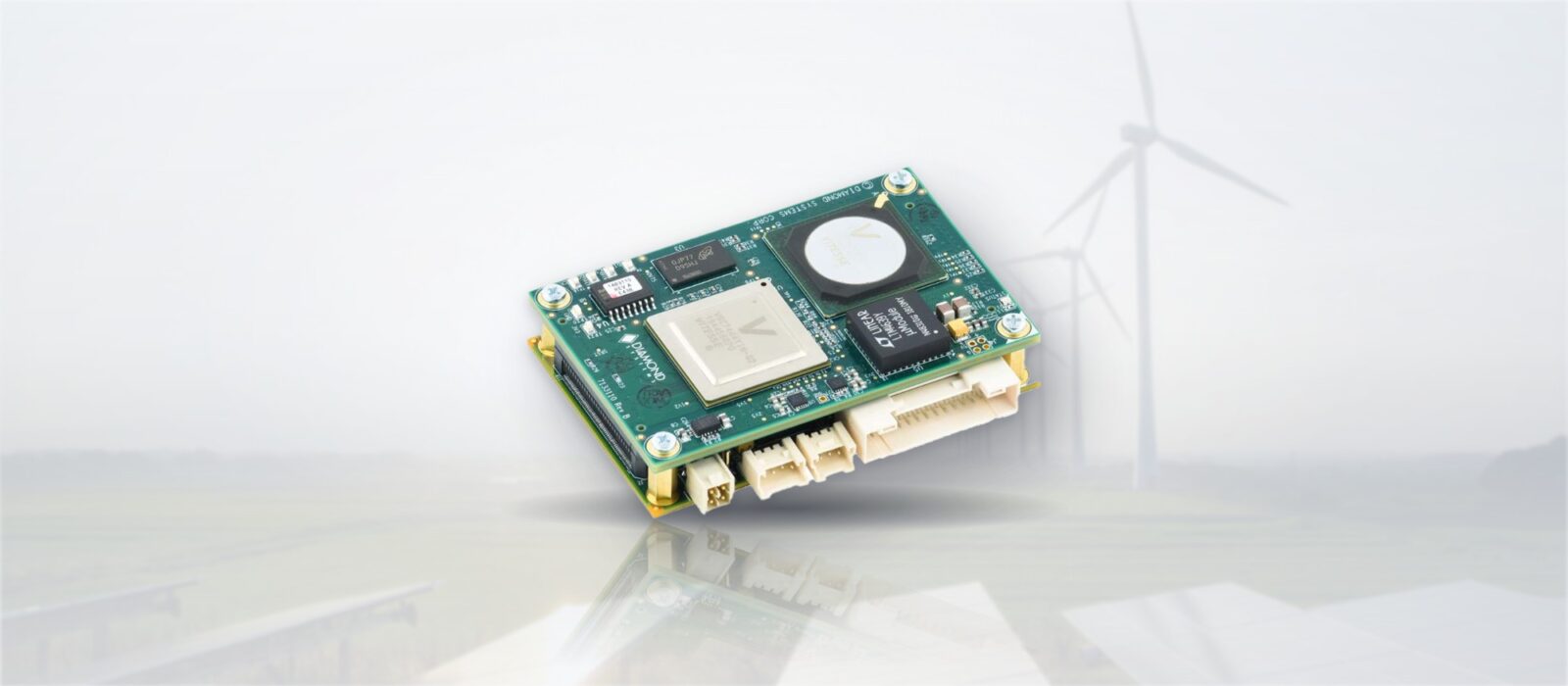
A board-level switch puts managed switching on a module you integrate into your system, instead of a separate box. This guide covers what they are, why you would integrate at board level, what to look for, and where a boxed switch is the better call.
Most network switches are boxes: a sealed enclosure with ports on the front. An embedded, or board-level, Ethernet switch is the switch without the box — the same managed switching silicon on a module that mounts inside your system. For an embedded or rugged design where space, weight and integration matter, that distinction is the difference between bolting a separate switch (and its cabling) onto the platform and building the switching into it.
A board-level switch module is a fully-functional managed switch built as a board rather than an appliance — typically on a standard embedded footprint such as PC/104, or a compact board-level module. It carries the switch chip, the management firmware and the physical-layer interfaces, and it is designed to be integrated onto a carrier or stacked into a host system. It does everything a boxed managed switch does — VLANs, QoS, redundancy, Layer 2+ switching and Layer 3 routing — it simply leaves the enclosure, connectors and power to the system it goes into.
The reason is integration. Building switching in at board level removes a separate enclosure, its mounting and the inter-unit cabling, which saves size, weight and points of failure — the SWaP argument that drives most embedded and vehicle designs. It also lets the port layout, connectors and power match the host system exactly, rather than adapting to an off-the-shelf box. And because the module is a proven building block, a custom switch configuration can be created quickly and at low risk by integrating it onto a carrier board, instead of designing switch silicon from scratch.
PC/104 or a compact board-level module — match it to the host system’s stack and the space available.
1G and 10G, copper or SFP (with breakout to either via transceivers) — enough ports for the cameras, sensors and compute on the platform.
VLANs, QoS, RSTP/MSTP redundancy and Layer 3 routing — the same control as a boxed switch, and TSN/PTP where the network must be deterministic.
A wide operating range (−40 to +85 °C), a thicker PCB for vibration, heat-spreader cooling and latching I/O connectors for reliability.
A low-voltage DC input, and the option to pair the module with a board-level MIL power supply to add MIL-STD-461/704/1275 isolation and input filtering.
Room to grow — some modules add ports via an expansion daughterboard rather than a second switch.
Board-level is not always the answer. If the switch sits in a rack or a cabinet, a boxed switch is simpler to deploy, service and replace, and you are not taking on the integration. Board-level wins when the switch has to live inside a constrained system — a vehicle, a sealed chassis, an airborne or man-portable platform — where every cubic centimeter and gram counts and a separate box is one enclosure too many. Because the board-level module and the rugged boxed switch can share the same switching core, the choice is about packaging, not capability: you can integrate the module now and move to a boxed build later (or the reverse) without changing the network design.
Board-level switching comes three ways, depending on how much hardware you want to design. Diamond Systems builds all three; Things Embedded supplies them and helps you choose the route.
Take the switch module and design your own carrier board around it. Building on a proven module cuts development time and risk against designing switch silicon from scratch, and lets you place ports, power and connectors exactly where your system needs them.
A ready-built carrier board or boxed switch, with the switching, power and enclosure already integrated, for when you would rather not design any hardware.
A bespoke build where the application needs something beyond the standard range — a different port mix, connectors, power input or form factor.
Our Diamond Systems range is built on exactly this model: board-level managed switch modules (PC/104 and compact board-level) with 1G and 10G ports, Layer 2+ and Layer 3, that integrate onto a customer board — and the same technology packaged as fully-built rugged switches. The EPS-9600 module adds TSN capability and IEEE-1588 PTP at board level. All of it pairs with board-level MIL power supplies for isolation and filtering. Things Embedded supplies the range and helps you specify the right module for your design. Browse our industrial Ethernet switches, or tell us the system you are designing.
Tell us the host system, the ports you need and the environment, and we will recommend a board-level switch module — with matched power and isolation — to suit your design.