
 US
NVIDIA Jetson for Drones: Choosing an AI Companion Computer
A Jetson drone computer is the AI companion computer that flies beside the flight controller, turning camera and sensor data into autonomy. Here is which Jetson module suits which aircraft, the SWaP budget, the flight-controller link and the systems that fly.
A Jetson drone computer, or UAV companion computer, is an NVIDIA Jetson module on a light carrier board that flies alongside a UAV’s flight controller as its AI companion computer, turning camera and sensor data into navigation, obstacle avoidance and target detection. The flight controller keeps the aircraft stable and flying; the Jetson decides where it should go and what it is looking at.
Our explainer on the drone companion computer covers the idea itself. This guide is the engineering view: which NVIDIA Jetson Orin or Thor module suits which aircraft, the size, weight and power budget, how the Jetson links to the flight controller, the camera and sensor inputs, power, vibration and heat on an airframe, and the drone computers in our range.
The short answer for most projects is a Jetson Orin NX, which balances AI performance, weight and power for multi-camera vision on small and medium UAVs. The Orin Nano suits lighter workloads where every gram counts, and AGX Orin and Thor belong on large aircraft with heavy sensor payloads.
Key takeaways
- 01Two computers, two jobs
- The flight controller runs the real-time flight loop; the Jetson runs vision, AI and autonomy and sends commands over MAVLink or DDS.
- 02Orin NX is the usual choice
- Up to 157 TOPS in Super mode within 10–40 W, in systems from about 300 g.
- 03Every gram and watt costs flight time
- The computer’s weight and power draw come straight out of payload and endurance.
- 04Battery power, direct
- Drone computers in our range run from 3S or 4S up to 14S packs with no separate supply.
- 05Heat needs a path
- Fanless drone computers rely on a heat spreader bolted to the airframe or on airflow; ratings change with both.
Which Jetson is best for a drone?
The module sets the AI ceiling, the memory and the power draw. The table lists each current module with NVIDIA’s published figures and the drone role it usually fits; system weights are for complete computers in our range, not bare modules.
| Module | AI performance | Module power | Memory | Typical complete system | Typical drone role |
|---|---|---|---|---|---|
| Orin Nano 4GB | 34 TOPS (Super) | 7–25 W | 4 GB | Compact carrier or light enclosed computer | Single camera, simple detection, small multirotors |
| Orin Nano 8GB | 67 TOPS (Super) | 7–25 W | 8 GB | Drone computers from about 340 g | Single-camera detection and tracking |
| Orin NX 8GB | 117 TOPS (Super) | 10–40 W | 8 GB | Board-level computers from about 300 g | Multi-camera vision and obstacle avoidance |
| Orin NX 16GB | 157 TOPS (Super) | 10–40 W | 16 GB | About 300–350 g, or about 2 kg sealed | Mapping, ISR payloads, several models at once |
| AGX Orin 32GB and 64GB | 200 and 275 TOPS | 15–60 W | 32 or 64 GB | Sealed mission computers of a few kilograms | Large fixed-wing and VTOL aircraft with many sensors |
| Jetson T4000 and T5000 | 1,200 and 2,070 FP4 TFLOPS | 40–130 W | 64 or 128 GB | Rugged mission computers | Heaviest sensor fusion and on-board language or vision language models |
Without Super mode, the Orin Nano 8GB is rated at 40 TOPS and the Orin NX 16GB at 100 TOPS. Our Jetson Super mode explainer covers what the higher modes change and what they cost in heat and battery. Drone computer makers often quote the original figures for their systems, so check which mode a datasheet assumes.
Three things set the choice. The AI workload, meaning how many cameras and how heavy the models, sets the minimum performance. The weight budget matters because every gram on the computer is a gram off payload or flight time. And the power drawn from the battery reduces endurance. The Orin NX balances all three for most UAV work; the Orin Nano wins where the workload is light and weight is critical.
Large fixed-wing and VTOL aircraft carrying radar, several high-resolution cameras or a gimballed EO/IR payload can justify an AGX Orin, which quadruples the memory of the Orin NX 16GB and adds 10GbE. For the heaviest sensor fusion and on-board language models, Jetson Thor is NVIDIA’s newest step, though its power draw limits it to large platforms. Our guide to choosing a Jetson module compares the whole range. All current Orin modules run the same JetPack software, so a project can move up or down without rewriting the application.
Size, weight and power: the SWaP budget
On a drone, every gram and every watt is taken from flight time and payload. This is the SWaP constraint, size, weight and power, often extended to SWaP-C to include cost, and it is what separates a drone computer from an ordinary edge computer. Our explainer on SWaP-C covers the term; the table shows how the systems in our range trade weight for protection.
| System | Jetson module | Weight | Power input | Operating temperature |
|---|---|---|---|---|
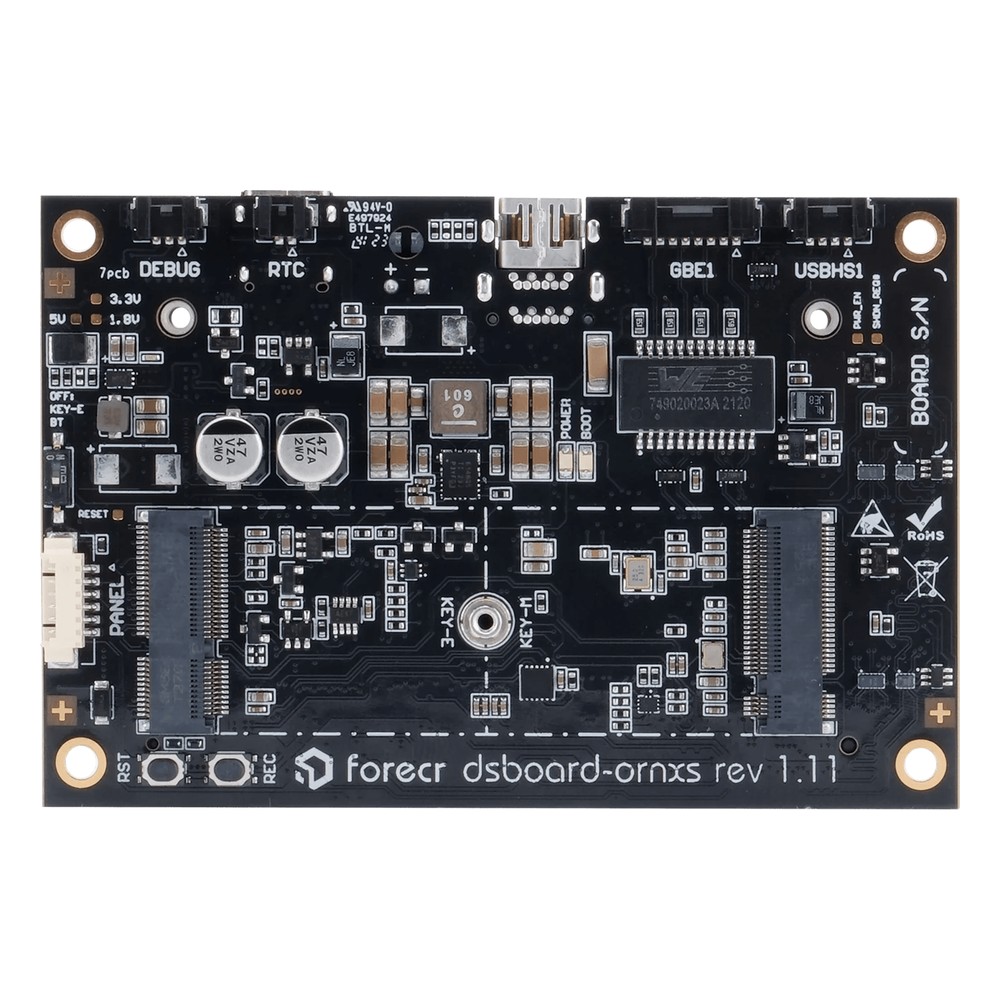
| Forecr DSBOARD‑ORNXS | Orin NX or Orin Nano | Carrier board 43 g, before module and cooling | 9–28 V DC | −25 °C to 85 °C (board rating) |
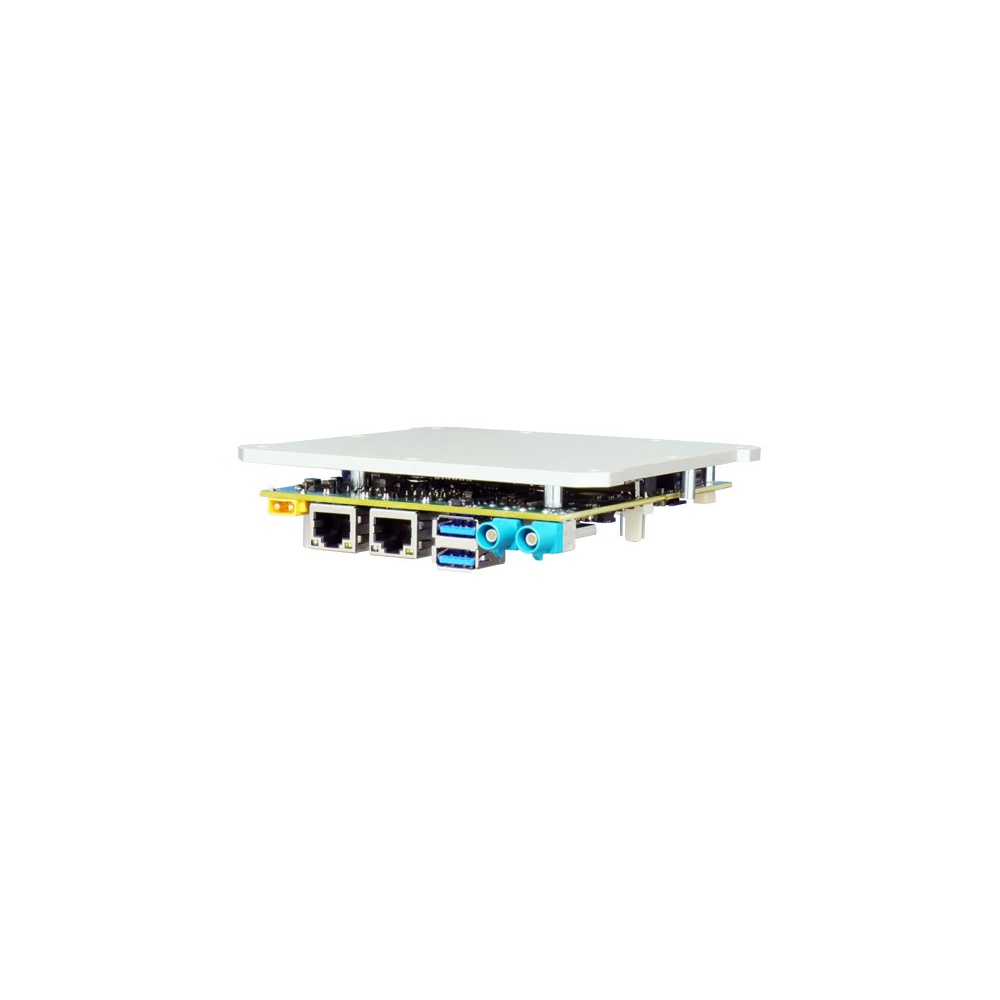
| Neousys FLYC-300 | Orin NX 8GB or 16GB | 297 g board-level on its heat spreader; 345 g enclosed | 12–60 V DC (4S–14S) | −25 °C to 40 °C free-standing, to 60 °C with the heat spreader on an aluminum surface |
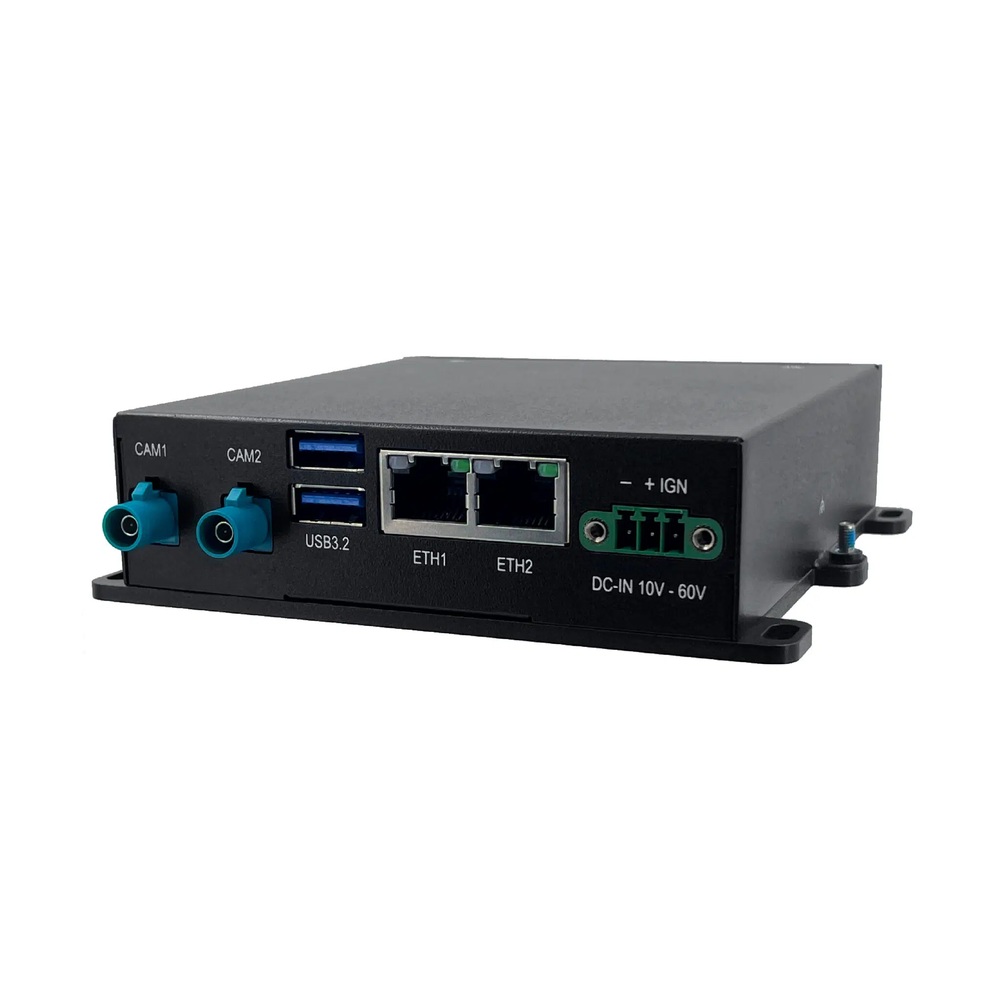
| Sintrones IBOX-604-G2 | Orin NX 8GB or 16GB, Orin Nano 8GB | Under 339 g | 10–60 V DC (3S–14S) | −25 °C to 50 °C with 0.6 m/s airflow on the 16GB model; 55 °C on 8GB models |
| Forecr MILBOX‑ORNX | Orin NX or Orin Nano | 1.9 kg sealed | 9–40 V DC, 28 V nominal | −25 °C to 85 °C, designed to meet IP67 |
A worked example
Take an illustrative 6 kg hexacopter that hovers at about 900 W. Hover power rises roughly in proportion to all-up weight, so a 350 g companion computer adds about 50 W of lift power, and the computer itself draws perhaps 20–25 W in a mid power mode. Together that is around 8 percent of the hover budget, or several minutes from a 30-minute flight. Moving to a 2 kg sealed computer would cost far more, which is why sealed mission computers belong on large aircraft and ground vehicles.
The same arithmetic favours the lowest power mode that meets the workload. Running an Orin NX at 25 W rather than 40 W saves 15 W directly and reduces the heat the airframe has to shed, at the cost of some peak throughput.
How do you connect a Jetson to a Pixhawk?
The Jetson and the flight controller talk over a serial UART, Ethernet or CAN link, usually speaking MAVLink. The Jetson sends velocity commands, waypoints or a position estimate from visual odometry; the flight controller flies the aircraft and returns telemetry. Our explainer on how a Jetson connects to a flight controller walks through the wiring; this is the summary.
| Link | Protocol | Typical rate | Best for | Watch for |
|---|---|---|---|---|
| UART (TELEM2 port) | MAVLink or uXRCE-DDS | Typically 921,600 baud for a companion computer | Commands, telemetry and position estimates | Matching baud rates and 3.3 V logic levels |
| Ethernet | MAVLink over UDP, or DDS | 100 Mb/s and up | ROS 2 stacks and high-rate telemetry | Needs a flight controller with an Ethernet port |
| CAN | DroneCAN or vehicle CAN messages | Up to 1 Mb/s on classic CAN | GNSS, ESCs and payload control on the same bus | Termination and bus loading |
| USB | MAVLink | Full speed and up | Bench set-up and log download | Connectors loosening under vibration |
What is MAVLink?
MAVLink is a lightweight message protocol for drones. Each message, such as a heartbeat, an attitude report or a position target, is a small packet with a message ID, so it runs well over a slow serial line. ArduPilot and PX4 both speak it, so the same Jetson software can talk to either autopilot. MAVLink 2 supports message signing to authenticate traffic, but not encryption.
MAVSDK, MAVROS and ROS 2
On the Jetson side, developers reach MAVLink through MAVSDK, pymavlink or MAVROS, and a router such as mavlink-router can share one flight-controller link between several programs and a ground station. Teams working in ROS 2 increasingly use DDS instead: PX4 exposes its internal topics through the uXRCE-DDS bridge, and recent ArduPilot releases add DDS support, so vehicle state arrives as ordinary ROS 2 topics. Both can run side by side, DDS for the autonomy stack and MAVLink for the ground station.
Where the drone also uses CAN for GNSS or ESCs, the Jetson can join the bus through its own controller using SocketCAN on Linux. The drone computers in our range expose these links for exactly this job: the FLYC-300 provides UART, CAN 2.0 and Ethernet, and the IBOX-604-G2 adds CAN FD, RS-232/422/485 and a 3.3 V UART. Never wire an RS-232 port straight to a 3.3 V UART; the voltage levels differ.
Camera and sensor inputs for UAV AI
Autonomy is only as good as what the drone can sense. The camera and sensor path decides latency, cable weight and how well the system survives vibration.
| Input | What it carries | Why it suits a drone | Trade-off |
|---|---|---|---|
| GMSL2 | Automotive-style cameras over coax | Long, light, vibration-tolerant cable runs with power over coax and hardware sync | Needs a carrier or frame grabber with deserialisers |
| MIPI CSI-2 | Camera modules on short ribbon cables | Lightest option; native to the module | Cable length is limited, so the camera sits next to the computer |
| USB 3 | Depth cameras and development cameras | Simple to add | Connectors can work loose under vibration |
| Ethernet | IP cameras, lidar, radar and gimbal payloads | Standard for lidar and many EO/IR gimbals | Adds switch or port count and some latency |
| UART and CAN | GNSS, rangefinders and the flight controller | Low bandwidth, simple wiring | Not for video |
Both drone computers in our range carry two GMSL2 camera inputs for long-cable, high-resolution, hardware-synchronised cameras, including stereo cameras such as the Stereolabs ZED X for depth and obstacle avoidance. The FLYC-300 takes two 1920 × 1080 cameras at 60 FPS or two 2880 × 1860 cameras at 30 FPS on its FAKRA Z inputs. Our explainers on lidar and EO/IR cameras cover the other common payloads.
That mix covers the usual UAV workloads: mapping and survey, infrastructure and environmental monitoring, search and rescue, and detect-and-track. GNSS modules and 4G or 5G connectivity fit over M.2 for positioning and a real-time downlink, and RTK GPS adds centimetre-level positioning for survey work.
Power, vibration and heat on a drone
A drone computer runs straight from the flight battery, sits on a vibrating frame and has to shed heat without a heavy heatsink. Each of those shapes the system.
Battery input
Lithium polymer and lithium-ion packs are described by their cell count in series. The input range has to cover the pack from full charge down to its cut-off, plus transients from the motors.
| Pack | Nominal voltage | Fully charged | Covered by |
|---|---|---|---|
| 3S | 11.1 V | 12.6 V | IBOX-604-G2 (10–60 V) |
| 4S | 14.8 V | 16.8 V | FLYC-300 (12–60 V) and IBOX-604-G2 |
| 6S | 22.2 V | 25.2 V | Both |
| 12S | 44.4 V | 50.4 V | Both |
| 14S | 51.8 V | 58.8 V | Both |
Vibration and shock
Both drone computers are tested to MIL-STD-810H for shock and vibration, and the IBOX-604-G2 also to IEC 60068-2-64. On the airframe, soft mounts or isolators keep motor vibration away from the board, locking connectors stop links dropping out, and conformal coating protects boards from condensation and spray where the payload bay is open.
Heat
Fanless drone computers rely on conduction or airflow, and their ratings say so. Neousys rates the FLYC-300 from −25 °C to 40 °C free-standing, to 60 °C with its heat spreader secured to an aluminum surface, and to 70 °C on that mount with 4S to 6S packs; Sintrones rates the IBOX-604-G2 16GB model to 50 °C with 0.6 m/s of airflow. Plan the mount and the airflow with the airframe, and treat the payload bay, not the outside air, as the ambient. Our Jetson thermal design guide covers sizing the thermal path for a given power mode.
Jetson vs Raspberry Pi and other companion computers
Not every drone needs a Jetson. The companion computer should match the job, and lighter options exist for lighter work.
| Option | AI capability | Typical power | Suits |
|---|---|---|---|
| Flight controller only | None beyond the autopilot | A few watts | Manual and waypoint flight with no on-board perception |
| Raspberry Pi-class SBC | Light vision; little real-time AI without an accelerator | A few watts | Telemetry, logging, simple scripted missions |
| SBC with an M.2 AI accelerator | Fixed-function inference on one or two cameras | Under 10 W for the accelerator | Single-model detection where the model is stable |
| Jetson Orin Nano or Orin NX | 34–157 TOPS with CUDA and TensorRT | 7–40 W | Multi-camera vision, obstacle avoidance and autonomy on most UAVs |
| Jetson AGX Orin or Thor | Up to 275 TOPS, or up to 2,070 FP4 TFLOPS on Thor | 15–130 W | Large aircraft, heavy sensor fusion, language models on board |
| x86 mini PC | Depends on the processor and any GPU | Typically higher than Jetson for the same AI | Software that must run on x86 or Windows |
A Raspberry Pi is a good companion for telemetry, logging and simple vision. Real-time AI on several cameras usually needs a GPU module such as Jetson Orin, which carries the CUDA and TensorRT stack used on the ground. Our explainer on AI accelerators covers the add-on route, and what NVIDIA Jetson is explains the platform.
FLYC-300 vs IBOX-604-G2 vs MILBOX‑ORNX
Our three Orin drone computers overlap, so the choice comes down to the detail of the payload and the airframe. The table uses the manufacturers’ published specifications.
| Specification | Neousys FLYC-300 | Sintrones IBOX-604-G2 | Forecr MILBOX‑ORNX |
|---|---|---|---|
| Jetson module | Orin NX 8GB or 16GB | Orin NX 8GB or 16GB, Orin Nano 8GB | Orin NX 8GB or 16GB, Orin Nano 4GB or 8GB |
| AI performance | Up to 100 TOPS (Neousys rating) | Set by the module; runs JetPack 6.2 or later | Up to 157 TOPS with Super Mode |
| Weight | 297 g board-level, 345 g enclosed | Under 339 g | 1.9 kg |
| Camera inputs | 2× GMSL2 (FAKRA Z) | 2× GMSL2 (FAKRA), ZED X supported | CSI expansion; optional 4× GMSL2 |
| Ethernet | 1× GbE, 1× 2.5GbE | 1× GbE, 1× 2.5GbE | 2× GbE |
| Flight-controller I/O | UART, CAN 2.0, I2C, isolated DIO | CAN FD, RS-232/422/485, 3.3 V UART | 2× CAN, 2× RS-232/422/485 |
| Battery or power input | 4S–14S (12–60 V) | 3S–14S (10–60 V) with ignition detection | 9–40 V DC with military filter |
| Environmental | MIL-STD-810H vibration and shock | MIL-STD-810H, IEC 60068-2-64, built-in accelerometer | Designed to meet MIL-STD-461G, MIL-STD-1275E, MIL-STD-704F, DO-160G and IP67 |
The FLYC-300 leans into small UAV use with its 297 g board-level build and a heat spreader for airframe mounting. The IBOX-604-G2 adds an on-board accelerometer, CAN FD and a Taiwan country of origin that helps where TAA compliance matters. The MILBOX‑ORNX is the sealed option for larger UAVs, aircraft payloads and ground vehicles, where its weight is acceptable. For an airborne ISR example, our Airbus ISR drone case study shows a rugged AGX Orin in an airborne video role, and our explainer on ISR covers the term.
What Jetson drones are used for
Most drone AI falls into a handful of jobs, and each sets a different camera and compute load. The table maps common UAV applications to the payload and module that usually fit.
| Application | Typical sensors | On-board AI | Module that usually fits |
|---|---|---|---|
| Mapping and survey | RGB mapping camera, RTK GNSS, sometimes lidar | Image tagging, quality checks, change detection | Orin Nano or Orin NX |
| Infrastructure inspection | Zoom and thermal cameras, stereo depth for stand-off | Defect detection, obstacle avoidance near structures | Orin NX |
| Search and rescue | Thermal and RGB cameras | Person detection and geolocation in real time | Orin NX |
| ISR and security | Gimballed EO/IR payload, sometimes radar | Detect, classify and track; video encoding for the downlink | Orin NX 16GB or AGX Orin |
| Precision agriculture | Multispectral and RGB cameras | Crop and weed maps, spray targeting | Orin Nano to AGX Orin |
| Autonomous navigation without GNSS | Stereo cameras, IMU, downward camera | Visual odometry and obstacle maps | Orin NX |
Detect-and-track work leans on object tracking as much as detection, and navigation without GNSS combines camera and IMU data through sensor fusion. For farming payloads, our explainer on precision agriculture covers the wider context.
Our news pieces on the Neousys FLYC-300 drone mission computer, the Sintrones IBOX-604-G2 drone computer and the Forecr MILBOX‑ORNX rugged drone computer go into each system in more detail.
Software on the companion computer
A typical Jetson drone stack runs JetPack and Jetson Linux at the base, camera drivers for the GMSL2 or CSI cameras, a perception layer built with TensorRT-optimised models, and an autonomy layer, often on ROS 2, that turns detections and depth into commands. Stereo cameras usually bring their own SDK for depth and visual odometry, and a MAVLink router or DDS bridge carries the results to the flight controller. Keeping that stack in a locked, tested image is what makes a fleet of drones behave the same way every flight.
Where Jetson drone computers sit in our range
Drone builds draw on these categories, from bare carrier boards to sealed mission computers.

Jetson Orin NX carrier boards
Compact carriers for the Orin NX and Orin Nano, for integration inside the airframe.
View range
GMSL cameras
Automotive-style cameras over light, vibration-tolerant coax links.
View range
GMSL frame grabbers
Add GMSL2 camera inputs to a Jetson or x86 system.
View range
Rugged Jetson computers
Shock- and vibration-tested Jetson systems for vehicles and aircraft.
View range
Mission computers
Sealed computers built to military standards for aircraft and vehicles.
View range
Edge AI computers
The wider range of AI computers, from Jetson to x86 with GPUs and NPUs.
View rangeJetson drone computers
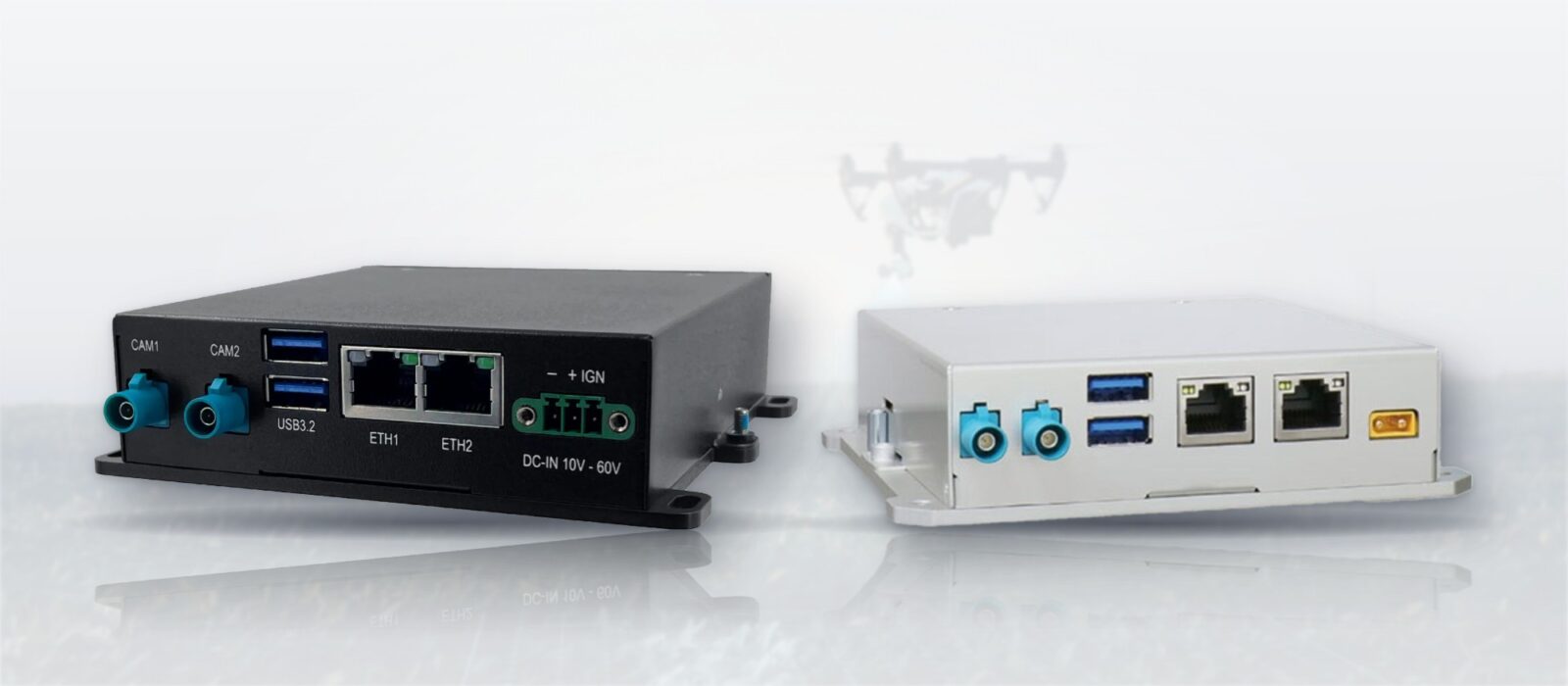
Four Orin NX 16GB builds from light to sealed: the FLYC-300 board-level companion computer, the IBOX-604-G2, the compact DSBOARD-ORNXS carrier and the IP67 MILBOX-ORNX.
NVIDIA Jetson Orin NX 16GB Board-Level Drone Companion Computer with 2x GMSL2
- AI
- 100 TOPS
- SOM
- NVIDIA Jetson Orin NX 16 GB
- Cameras
- 2× GMSL
NVIDIA Jetson Orin NX 16GB Drone Computer with 2x GMSL
- AI
- 100 TOPS
- SOM
- NVIDIA Jetson Orin NX 16 GB
- Cameras
- 2× GMSL
NVIDIA Jetson Orin NX 16GB Compact Carrier Board with Two 4-Lane MIPI CSI-2 Cameras
- AI
- 100 TOPS
- SOM
- NVIDIA Jetson Orin NX 16 GB
- Ethernet
- 2× GbE
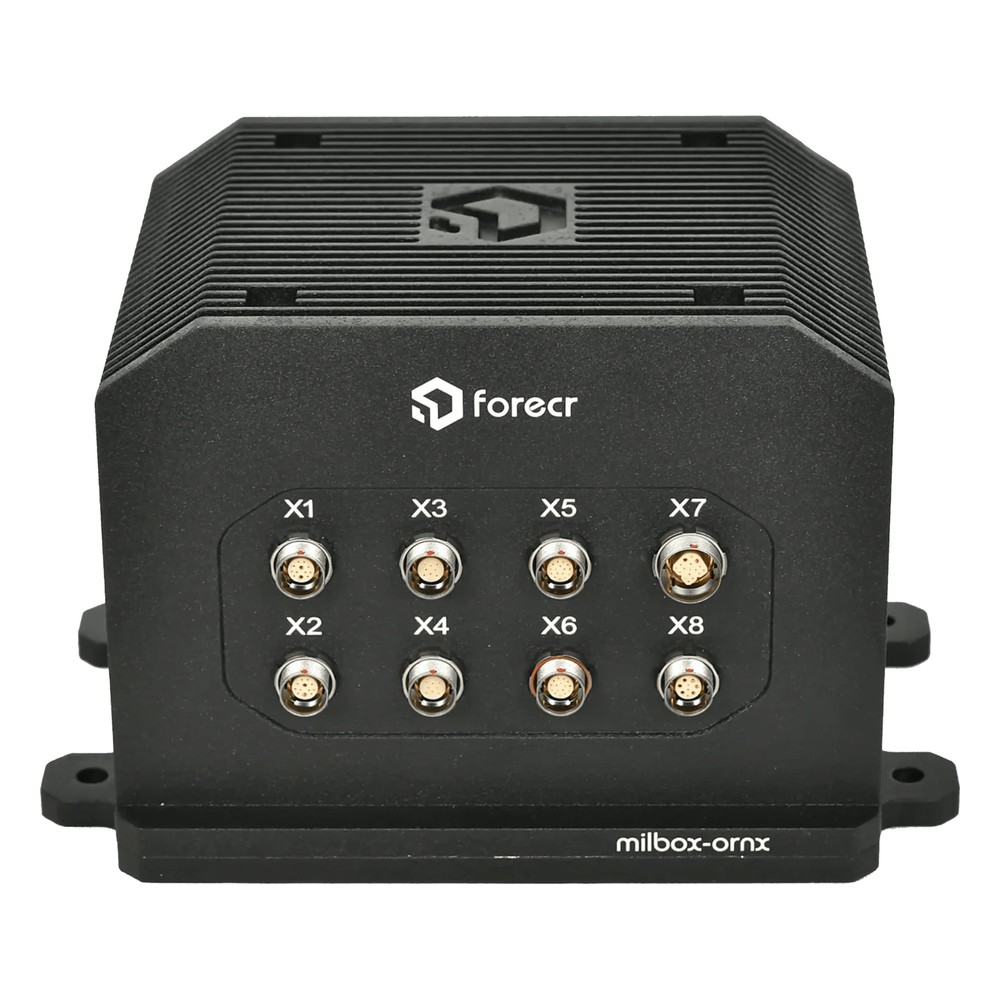
NVIDIA Jetson Orin NX 16GB Rugged Military Computer with IP67 Sealing
- AI
- 100 TOPS
- SOM
- NVIDIA Jetson Orin NX 16 GB
- Ethernet
- 2× GbE
How we build a Jetson drone computer
Four stages take a drone computer from a specification to a system ready to mount on the airframe.
-
Scope
Payload and airframeWe start from the cameras, sensors, autonomy software, battery and weight budget, then choose the module and system that fit them.
-
Configure
Module and storageWe fit the Jetson module, NVMe storage and any 4G, 5G or GNSS module, and set the power mode to suit the payload bay’s cooling.
-
Image
JetPack and stackWe flash the JetPack release and board support package, with drivers for the chosen GMSL2 cameras and the serial and CAN ports set up for the flight controller.
-
Test
Before it shipsWe test the system with its cameras and interfaces under load, so what you mount on the airframe is a working computer, not a board to wire up.
Jetson drone computers: common questions
Quick answers
What is a drone companion computer?
The computer that runs AI beside the flight controller. The flight controller flies the aircraft; the companion computer runs vision and autonomy and sends it commands, usually over MAVLink.
Which Jetson is best for a drone?
Usually the Orin NX. It balances AI performance, weight and power for multi-camera vision. The Orin Nano suits light workloads; AGX Orin and Thor suit large aircraft.
How do you connect a Jetson to a Pixhawk?
Over a serial UART, Ethernet or CAN link. The usual first build uses the TELEM2 port at a matched baud rate, with MAVLink or uXRCE-DDS on top.
Can a Jetson Orin Nano run on a drone?
Yes, for lighter workloads. An Orin Nano 8GB handles single-camera detection and tracking at 7–25 W, and suits small multirotors where weight is critical.
How much does a Jetson drone computer weigh?
From about 300 g complete. In our range, a compact carrier board weighs 43 g before module and cooling, board-level and enclosed drone computers about 300–350 g, and sealed mission computers about 2 kg.
What is MAVLink?
A lightweight message protocol for drones. ArduPilot and PX4 both use it for commands and telemetry between the autopilot, companion computers and ground stations.
Jetson vs Raspberry Pi for drones?
It depends on the AI workload. A Raspberry Pi suits telemetry and simple tasks; real-time AI on several cameras usually needs a Jetson with GPU acceleration.
Drone computer FAQs
-
What Is a Drone Companion Computer?
A drone companion computer is a small AI computer that runs alongside the flight controller on a UAV. The flight controller flies the aircraft; the companion computer runs computer vision and AI to give the drone autonomy, such as obstacle avoidance, navigation and object detection. NVIDIA Jetson is a common choice for its AI performance per gram and per watt.
-
How Does a Jetson Connect to a Flight Controller?
An NVIDIA Jetson connects to a drone flight controller such as a Pixhawk over a serial UART or Ethernet, and sometimes CAN, usually speaking MAVLink. The Jetson runs the AI and autonomy as the companion computer and sends commands, waypoints and position estimates; the flight controller flies the aircraft and returns telemetry.
-
What Is Jetson Super Mode?
Jetson Super Mode is a set of higher-power operating modes NVIDIA added for Jetson Orin Nano and Orin NX modules with JetPack 6.2. Raising clock speeds and power limits lifts AI performance substantially, for example to up to 67 TOPS on Orin Nano 8GB and up to 157 TOPS on Orin NX 16GB, on the same hardware.
-
What Is SWaP-C?
SWaP-C stands for size, weight, power and cost. It is the design trade-off used in defense and aerospace to judge equipment for platforms with tight limits, such as drones and vehicles, where every gram, watt and pound spent reduces endurance, payload or budget.
-
What Is GMSL2?
GMSL2 (Gigabit Multimedia Serial Link 2) is a high-speed serial link that carries uncompressed camera video, power and control data over one coaxial cable of up to around 15 meters. Developed for automotive cameras, it is now widely used on robots, autonomous machines and drones with NVIDIA Jetson computers.
-
What Is a Stereo Camera?
A stereo camera is a camera with two image sensors a fixed distance apart, like a pair of eyes. By finding the same point in both images and measuring how far it shifts between them, it calculates the distance to every pixel, so one device gives a robot or vehicle a 3D depth map as well as a color image.
-
What Is ROS (Robot Operating System)?
ROS (Robot Operating System) is a free, open-source set of software libraries and tools for building robot applications. Despite the name, it is not an operating system: it runs on Linux and handles communication between the parts of a robot, such as sensors, navigation and motor control. ROS 2 is the current version.
Putting AI on a drone?
Tell us the airframe, the payload, the battery and the autonomy software. We will recommend the Jetson companion computer, then configure, image and test it with your cameras and flight-controller link before it ships.