
 US
US 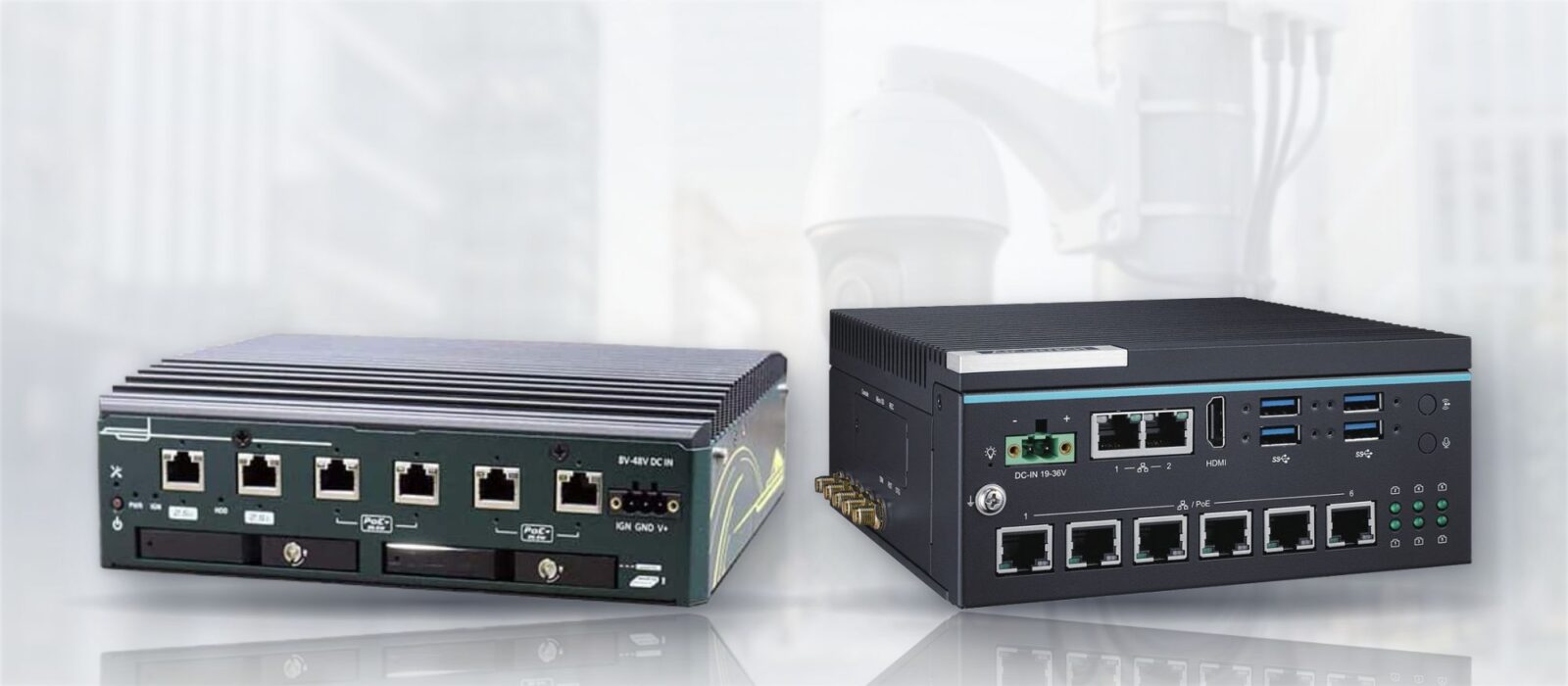
PoE Power Budgeting for Multi-Camera Edge AI
When one edge computer powers several cameras over PoE, the power budget decides how many it can drive. This guide explains per-port classes, the total source budget and cable loss, with a worked example.
A common edge build puts one computer at the heart of a camera cluster: it powers each camera over PoE and runs the inference on the footage in the same box. It is a tidy, single-cable design, but it only holds together if the PoE power budget is right. Under-size it and cameras drop off the line under load; over-size it and you pay for capacity that never gets used. The budget is mostly arithmetic, but it is arithmetic that is easy to skip.
What Counts in a PoE Power Budget
Two numbers decide everything. The first is the class per port: 802.3af supplies about 15 W, 802.3at (PoE+) about 30 W, and 802.3bt (PoE++) 60 W or 90 W. The second is the total source budget, the amount the source can deliver across all ports at once, which is usually well below the per-port figure multiplied by the number of ports. A unit with four PoE+ ports may advertise 30 W each but cap the total at, say, 100 W rather than 120 W. Read both figures from the datasheet, not just the per-port one.
A Worked Example
- 01Four PoE+ cameras
- At about 25 W each at the device, that is roughly 100 W of demand.
- 02Total source budget
- The source needs a total PoE budget above that demand, with headroom, not just 30 W per port.
- 03Cable loss
- Longer runs lose more in the cable, so size for the worst-case run, not the average.
- 04Peak draw
- Leave margin for a heater, IR illuminator or PTZ motor that pulls more at peak than at idle.
PoE+ or PoE++ for Your Cameras
Match the class to the most demanding camera on the link. A fixed dome or bullet camera is usually happy on 802.3af or PoE+. A PTZ camera with a motor, or a camera with a built-in heater and IR illuminator for cold or dark sites, can need PoE++ at peak even if it idles lower. Specify for the peak, because that is when a camera resets if the budget is short, usually the worst possible moment. For the recording and storage side of a camera system, how PoE cameras, NVRs and edge AI computers fit together in surveillance covers the rest of the build.
Cable Length and Loss
PoE is rated to 100 meters, but the power available at the far end falls with distance and with thinner cable. A camera at the end of a long run sees less than the source supplies, so the device-side figure, not the source figure, is the one to plan against. Where a run is long or the cable is thin, budget more headroom or shorten the run.
When One Box Isn't Enough
If total demand exceeds what a single computer can source, there are two options: move to a unit with a larger PoE budget, or add a dedicated PoE switch to share the load and let the computer concentrate on compute. Either works; the choice comes down to cabinet space, cost, and how much you want in one box.
Sizing the Computer
The computer is the PoE source, so its port count, per-port class and total budget set the ceiling. Our PoE-powered computers list both the per-port class and the total budget, and the range runs from compact PoE mini PCs to higher-port models. Match them to the demand above, and see our guide to industrial Power over Ethernet for the underlying standards.
Power over Ethernet FAQs
-
How Much Power Does PoE Deliver?
PoE delivers up to about 15 W per port (802.3af), PoE+ up to about 30 W (802.3at), and PoE++ up to 60 W or 90 W (802.3bt), at around 48 V DC. Some power is lost in the cable, so the figure available at the device is a little lower than at the source.
-
PoE vs PoE+ vs PoE++: The 802.3af, 802.3at and 802.3bt Standards
802.3af (PoE), 802.3at (PoE+) and 802.3bt (PoE++) are the three IEEE Power over Ethernet standards. They differ mainly in power per port, roughly 15 W, 30 W, and up to 60 to 90 W, with the higher tiers using all four pairs of the cable.
-
Can a Computer Be Powered by PoE?
Yes. A PoE-powered computer draws its power as a PD over the Ethernet cable, removing the need for a separate power supply at the installation point. It suits compact or hard-to-wire locations where one cable carries both data and power.
Sizing a Multi-Camera PoE Build?
Tell us the camera count, the class per camera and the run lengths, and we'll recommend a PoE computer with the right port count and power budget.