
 US
Single Pair Ethernet (SPE) in Industrial and Edge AI Computing
Single pair Ethernet runs Ethernet over one twisted pair, from 10BASE-T1L at up to 1,000 m to multi-gigabit T1 links in vehicles. This guide covers the standards, PoDL, connectors, Ethernet-APL and SPE on edge AI computers.
Single pair Ethernet (SPE) is Ethernet over one twisted pair of wires, instead of the two pairs used by 100BASE-TX or the four used by 1000BASE-T. IEEE 802.3 defines it as a family of physical layers whose names end in T1, for one pair: 100BASE-T1 (IEEE 802.3bw), 1000BASE-T1 (802.3bp), 10BASE-T1L and 10BASE-T1S (802.3cg) and the multi-gigabit 2.5G, 5G and 10GBASE-T1 (802.3ch). Above the physical layer nothing changes: frames, MAC addresses, VLANs, IP and industrial protocols work exactly as they do on any other Ethernet link.
SPE grew from two directions. In vehicles, it replaces heavy multi-pair harnesses with light cabling between cameras, radar, displays and zonal controllers, which is where 100BASE-T1 and 1000BASE-T1 began. In factories and process plants, 10BASE-T1L brings Ethernet over a single pair to field instruments up to 1,000 m away, the job that 4–20 mA loops and fieldbuses such as PROFIBUS PA and HART have done for decades, and Ethernet-APL builds on it for hazardous areas. Power can travel on the same pair using Power over Data Lines (PoDL, IEEE 802.3bu), the single-pair counterpart of PoE.
This guide builds on that definition. It compares the T1 standards, explains the difference between 10BASE-T1L and 10BASE-T1S, sets out how Power over Data Lines works and which connectors are used, covers Ethernet-APL for process plants and automotive-grade SPE on edge AI computers, and compares SPE with standard Ethernet and fieldbus. It ends with a checklist, products from our range and answers to the questions engineers ask most.
Key takeaways
- 01One pair, same Ethernet
- SPE changes only the physical layer; frames, IP, VLANs and industrial protocols are unchanged.
- 02Reach or speed, not both
- 10BASE-T1L reaches up to 1,000 m at 10 Mbit/s; 1000BASE-T1 and faster run up to 15 or 40 m.
- 03Power on the same pair
- PoDL (IEEE 802.3bu, extended by 802.3cg) is the single-pair counterpart of PoE.
- 04The variants do not interwork
- A 1000BASE-T1 port will not link to a 10BASE-T1L device or an RJ45 port without a switch or converter.
- 05Connectors differ by sector
- Vehicles use H-MTD and MATEnet; industry uses the IEC 63171 family, including IP67 M8 and M12 versions.
Single pair Ethernet standards compared
The T1 standards differ in speed, reach and whether several devices can share one pair. Reach figures are the IEEE link segment lengths; real installations depend on the cable and connectors.
| Standard | IEEE | Speed | Reach | Topology | Typical use |
|---|---|---|---|---|---|
| 10BASE-T1L | 802.3cg | 10 Mbit/s | Up to 1,000 m | Point to point | Process instruments, Ethernet-APL, building sensors |
| 10BASE-T1S | 802.3cg | 10 Mbit/s | Around 15 m point to point, 25 m or more multidrop | Point to point or multidrop (8 or more nodes) | In-vehicle and machine sensor buses |
| 100BASE-T1 | 802.3bw | 100 Mbit/s | 15 m | Point to point | Vehicle controllers, sensors, cameras |
| 1000BASE-T1 | 802.3bp | 1 Gbit/s | 15 m (type A) or 40 m (type B) | Point to point | Cameras, zonal controllers, ADAS, mobile machines |
| 2.5G/5G/10GBASE-T1 | 802.3ch | 2.5–10 Gbit/s | 15 m | Point to point | High-resolution cameras, vehicle backbones |
Connectors are standardized separately. Vehicles use automotive connectors such as H-MTD and MATEnet, while industrial equipment uses the IEC 63171 family, with IEC 63171-6 in M8 and M12 housings for IP67 field connections. The variants do not interwork: a 1000BASE-T1 port will not link to a 10BASE-T1L instrument, and neither plugs into an RJ45 port without a converter or a switch with matching ports.
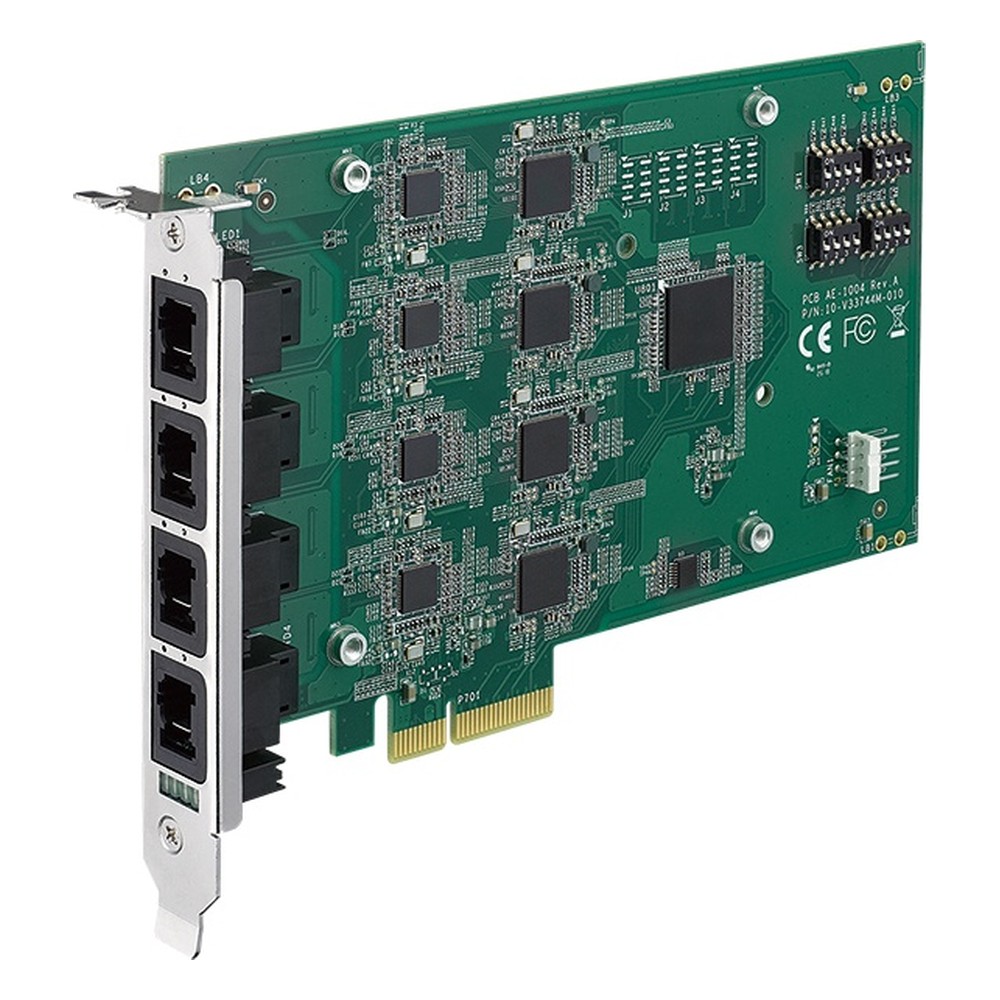
To bring automotive Ethernet into an industrial computer, we supply PCIe cards such as the Neousys PCIe-AE304bp, with four 100/1000BASE-T1 ports on H-MTD connectors, and the Vecow AE-1004, with four 1000BASE-T1 ports on MATEnet, as well as in-vehicle edge AI computers with a built-in 100/1000BASE-T1 port, such as the Sintrones IBOX-650P-T1 series.
What is the difference between 10BASE-T1L and 10BASE-T1S?
Both run at 10 Mbit/s and both are defined in IEEE 802.3cg, but they solve opposite problems. 10BASE-T1L, the L for long reach, takes Ethernet a long way to one device. 10BASE-T1S, the S for short reach, connects several devices along a short shared cable.
| 10BASE-T1L | 10BASE-T1S | |
|---|---|---|
| Reach | Up to 1,000 m | About 15 m point to point; at least 25 m as a multidrop bus |
| Topology | Point to point | Point to point or multidrop with at least 8 nodes on one pair |
| Media access | Full duplex | Half duplex; PLCA (physical layer collision avoidance) shares the bus in turn |
| Power | PoDL classes for 10 Mbit/s links | PoDL on point-to-point links |
| Typical use | Process instruments, Ethernet-APL, building automation sensors | In-vehicle zonal networks, machine sensor buses |
| Replaces | 4–20 mA, HART and PROFIBUS PA | CAN and other low-speed sensor buses |
10BASE-T1S takes over much of the role that CAN bus plays today: many small nodes on one cable, but with Ethernet addressing and no gateway between the sensor network and the rest of the system. Multidrop wiring is a form of bus topology, which is unusual for Ethernet and is what PLCA makes deterministic.
Can single pair Ethernet carry power?
Yes. Power over Data Lines (PoDL) puts DC power on the same pair that carries the data, which is the single-pair counterpart of Power over Ethernet. PoE uses two or four pairs and separates power from data with transformers; PoDL couples the DC onto the single data pair with inductors and filters it off at the far end.
| PoE | PoDL | |
|---|---|---|
| Standards | IEEE 802.3af, 802.3at, 802.3bt | IEEE 802.3bu for 100BASE-T1 and 1000BASE-T1; IEEE 802.3cg adds classes for 10 Mbit/s links |
| Pairs used | Two or four | One |
| Power classes | Classes 0–8 | Ten classes (0–9) in 802.3bu across 12, 24 and 48 V supplies; 802.3cg adds classes 10–15 |
| Maximum power at the device | 71.3 W (802.3bt Type 4) | Up to about 50 W in the highest classes |
| Detection and classification | Signature resistance and classification current | A serial classification protocol before power is applied |
| Typical loads | Cameras, access points, panel PCs | Sensors, actuators, field instruments, vehicle modules |
The class tables in the standards set the exact voltage and power per class, so check them against the device. Like PoE, PoDL lets a sensor take power and data from one cable; our guide to industrial Power over Ethernet covers the multi-pair side.
What connector does single pair Ethernet use?
Connectors are standardized separately from the IEEE physical layers, and the vehicle and industrial worlds use different families. Two groups of companies promote different industrial connector designs: the SPE Industrial Partner Network around the IEC 63171-6 design, and the Single Pair Ethernet System Alliance around the IEC 63171-2 and IEC 63171-5 designs. Both are IEC standards; choose one family per installation and keep to it.
| Connector | Standard | Sealing | Typical use |
|---|---|---|---|
| H-MTD | Automotive, Rosenberger design | Vehicle grade | In-vehicle cameras and multi-gigabit links |
| MATEnet | Automotive, TE Connectivity design | Vehicle grade | In-vehicle networks |
| LC-style SPE | IEC 63171-1 | IP20 | Building and office cabling |
| IP20 industrial | IEC 63171-2 and IEC 63171-6 | IP20 | Cabinets and devices |
| M8 and M12 SPE | IEC 63171-5 and IEC 63171-6 | IP65 to IP67 | Field devices, machines, vehicles and outdoor equipment |
M12 is already the rugged connector for multi-pair industrial Ethernet, as our guide to M12 connectors explains, and SPE versions follow the same circular format. In our range, the Sintrones IBOX-650P-IP66-T1 uses a Phoenix Contact IEC 63171-5 connector for its SPE port, while the automotive Ethernet cards use H-MTD or MATEnet.
Ethernet-APL for process plants
Ethernet-APL (Advanced Physical Layer) is 10BASE-T1L adapted for process plants and hazardous areas. It carries Ethernet and power over the two-wire cable that instrument loops already use, with a trunk of up to 1,000 m and spurs of up to 200 m to each instrument. For hazardous areas it uses the 2-WISE concept, described in IEC TS 60079-47, so intrinsically safe instruments can be connected and checked without detailed loop calculations.
The aim is to replace 4–20 mA and HART at the instrument with full Ethernet: higher bandwidth for diagnostics and configuration, direct IP access to every device, and PROFINET, EtherNet/IP, HART-IP or OPC UA running end to end. Our FAQs on ATEX and intrinsically safe vs non-incendive protection explain the hazardous-area rules that APL is designed around. Power on intrinsically safe spurs is limited, typically to well under a watt per instrument.
Automotive-grade SPE on edge AI computers
Single pair Ethernet was first standardized through work promoted by the OPEN Alliance, a group of automotive makers and semiconductor vendors set up to make in-vehicle Ethernet interoperable. That work led to 100BASE-T1 and 1000BASE-T1, and IEEE has since added the multi-gigabit 802.3ch and faster automotive standards. To take SPE beyond vehicles, the SPE Industrial Partner Network brought together connector, cable and system makers focused on industrial use.
In vehicles and mobile machines, LiDAR, radar, cameras and zonal controllers increasingly connect over 100BASE-T1 or 1000BASE-T1. An AI computer that has to join that network needs a matching port, or a card or media converter for each link. For rugged box PCs and edge AI computers, a growing industrial supplier base means SPE is available with IP-rated connectors, long-lifecycle supply and the reliability needed in factory, energy and transport environments.
| Approach | How it works | Example from our range |
|---|---|---|
| Built-in T1 port | The computer has a native 100/1000BASE-T1 port on an automotive connector | Sintrones IBOX-650P-T1 series with an H-CMTD connector |
| PCIe card with T1 ports | Four native T1 ports added to an industrial computer | Neousys PCIe-AE304bp, Vecow AE-1004 |
| Switch with T1 ports | A vehicle or industrial switch bridges T1 devices to standard Ethernet | Chosen per project |
| Media converter | One converter per link between a T1 device and an RJ45 port | Suitable for test rigs and small numbers of sensors |
The PCIe-AE304bp also provides hardware timestamping for IEEE 1588 and 802.1AS, so LiDAR points, radar returns and camera frames can be lined up in time. The IBOX-650P-T1 computers run on NVIDIA Jetson AGX Orin. We fit and test the cards in the host and install the drivers before shipping.
Where SPE links carry time-critical control or sensor traffic, how Time-Sensitive Networking bounds latency on standard Ethernet is the companion topic. Cameras with very high data rates often use GMSL rather than Ethernet; our guide to GMSL technology compares the approach.
Worked example: connecting an autonomous mobile robot
Take an autonomous mobile robot with two LiDAR sensors and two radars on 1000BASE-T1 and 100BASE-T1, a 10BASE-T1S bus linking six bumper, door and lamp controllers, and four cameras on standard Gigabit Ethernet. The robot’s AI computer has to receive all of it, keep it time-aligned and act on it. The device mix is illustrative; check each sensor’s interface and data rate.
| Device group | Interface | Links | How it reaches the computer |
|---|---|---|---|
| 2 LiDAR sensors | 1000BASE-T1 | 2 point-to-point links | Two ports on a four-port T1 PCIe card |
| 2 radars | 100BASE-T1 | 2 point-to-point links | The other two ports on the same card, set to 100 Mbit/s |
| 6 body controllers | 10BASE-T1S multidrop | 1 shared pair | A T1S port on a zonal switch or controller, bridged to the computer |
| 4 cameras | 1000BASE-T with PoE+ | 4 RJ45 or M12 links | Onboard PoE ports or a PoE card |
| Time reference | IEEE 802.1AS or 1588 | On every link | Hardware timestamping on the T1 card and the network ports |
The T1 card replaces four media converters and their power supplies, and the shared clock lets LiDAR points, radar returns and camera frames be fused at the right instant. Our robot computer guide covers the rest of the onboard compute decision.
How far can single pair Ethernet run?
Each T1 standard defines a link segment: the cable, connectors and inline connections that the physical layer must work across. The reach figures below are those link segments. Real links depend on cable gauge, the number of inline connectors and the electrical noise along the route.
| Standard | Defined reach | Cable notes |
|---|---|---|
| 10BASE-T1L | Up to 1,000 m | Heavier gauge cable for the full 1,000 m; existing fieldbus cable can often be reused, subject to testing |
| 10BASE-T1S | 15 m point to point; at least 25 m multidrop | Short, light automotive or machine cabling with short stubs to each node |
| 100BASE-T1 | 15 m | Unshielded twisted pair in vehicles |
| 1000BASE-T1 | 15 m type A; 40 m type B | Type B targets industrial and building use |
| 2.5G, 5G and 10GBASE-T1 | 15 m | Shielded cable for multi-gigabit |
Where a run is longer than the T1 reach, a switch extends it, or the link changes to fiber between switches. For field instruments the 1,000 m reach of 10BASE-T1L is usually enough to reach the control room or a field junction box directly.
SPE vs standard Ethernet vs fieldbus
SPE sits between the multi-pair Ethernet used for computers and cameras and the fieldbuses and analog loops used for instruments and sensors.
| Standard Ethernet (100BASE-TX, 1000BASE-T) | Single pair Ethernet | Fieldbus and 4–20 mA | |
|---|---|---|---|
| Pairs | Two or four | One | One pair, or two wires |
| Speed | 100 Mbit/s to 10 Gbit/s | 10 Mbit/s to 10 Gbit/s by variant | Kilobits to a few megabits per second |
| Reach per segment | 100 m | 15–40 m at high speed; up to 1,000 m at 10 Mbit/s | Up to about 1,900 m depending on the bus |
| Power on the cable | PoE, up to 71.3 W at the device | PoDL | Loop power, typically milliwatts |
| Protocols | IP and every Ethernet protocol | IP and every Ethernet protocol | The fieldbus’s own protocol |
| Gateways to IT | None needed | None needed | Needed at the boundary |
| Determinism | With TSN | With TSN; PLCA on 10BASE-T1S | Built into the fieldbus |
EtherNet/IP and OPC UA are two of the protocols that run unchanged over it.
Is SPE replacing fieldbus?
Over time, at new installations. 10BASE-T1L and Ethernet-APL let new process instruments use Ethernet directly, and 10BASE-T1S offers an Ethernet alternative to low-speed sensor buses. Installed fieldbus networks will run for many years, and gateways will connect the two. The practical gain is one protocol stack from the sensor to the cloud, without translation at every layer.
Advantages of single pair Ethernet
Compared with multi-pair Ethernet, SPE is optimized for weight, distance and connecting small devices.
| Advantage | What it means in practice |
|---|---|
| Lighter, thinner cabling | One pair instead of two or four saves weight and space, which matters in vehicles, robot arms and crowded enclosures |
| Power and data together | PoDL powers sensors, cameras and controllers over the same single pair |
| Bandwidth for edge AI | 1000BASE-T1 and multi-gigabit T1 links carry camera and sensor streams to AI computers |
| Long reach at low speed | 10BASE-T1L reaches up to 1,000 m without repeaters, against 100 m for standard Ethernet |
| Built for harsh environments | Automotive-grade parts are designed for shock, vibration, wide temperature and EMC |
| One network to the sensor | IP addressing reaches every device, so no protocol gateways are needed |
Where multi-gigabit links are needed between cameras and AI computers, our white paper on 10 Gigabit Ethernet for edge AI covers the multi-pair side.
Single pair Ethernet applications for edge AI and industrial computing
SPE is moving into the same places as industrial and edge AI computers.
-
01

Machine vision and robotics
Light, low-latency links between sensors, cameras and computers on robot arms and production lines, with less cable bulk.
-
02

Autonomous vehicles and AGVs
High-bandwidth links for sensor fusion, navigation and safety on AGVs, AMRs, heavy transport and off-highway machines.
View range -
03
Factory automation
Ethernet to PLCs, sensors and actuators across large sites, with PoDL powering distributed devices.
-
04

Energy and utilities
Long-reach links for remote monitoring in substations, grids and renewable sites.
-
05
Transportation and rail
Lighter, vibration-resistant links for onboard systems, connected to rugged switches and computers.
View range -
06

Smart infrastructure and IoT
Compact connections for dense sensor deployments in smart cities and critical infrastructure.

SPE products compared
Products from our catalog with single pair Ethernet ports. Figures are from each product’s page.
| Product | Type | SPE ports | Other networking | Rating |
|---|---|---|---|---|
| Neousys PCIe-AE304bp | PCIe card | 4× 100/1000BASE-T1 on H-MTD, up to 15 m | IEEE 1588 and 802.1AS hardware timestamping | −25 to 70 °C |
| Vecow AE-1004 | PCIe x4 card | 4× 1000BASE-T1 on MATEnet, H-MTD by request | Data only, no PoE | −40 to 70 °C with airflow |
| Sintrones IBOX-650P-T1-JAO64-LE | Jetson AGX Orin 64GB vehicle computer | 1× 100/1000BASE-T1 on H-CMTD | 1× 10GbE, 2× 2.5GbE PoE+ on X-coded M12 | −25 to 70 °C |
| Sintrones IBOX-650P-IP66-T1-JAO64 | IP66 Jetson AGX Orin 64GB vehicle computer | 1× 100/1000BASE-T1 on IEC 63171-5 | 1× 10GbE, 2× 2.5GbE PoE on X-coded M12 | IP66 sealed |
Where single pair Ethernet fits across our range
SPE appears on cards, vehicle computers and the switches that connect them to the rest of the network.
Ethernet and PoE frame grabbers
PCIe cards, including automotive Ethernet cards with T1 ports.
View range
Rugged Jetson computers
Jetson vehicle computers with automotive Ethernet, CAN and ignition control.
View range
Edge AI computers
Computers that fuse camera, LiDAR and radar data on site.
View range
Rugged computers
Fanless computers for vibration, wide temperature and sealed enclosures.
View range
Rugged Ethernet switches
Sealed switches that bridge vehicle networks to computers and radios.
View range
Railway computers
EN 50155 computers for onboard networks on rolling stock.
View rangeSPE products to start from
Two PCIe cards that add automotive Ethernet to an industrial computer and two Jetson AGX Orin vehicle computers with a built-in T1 port.
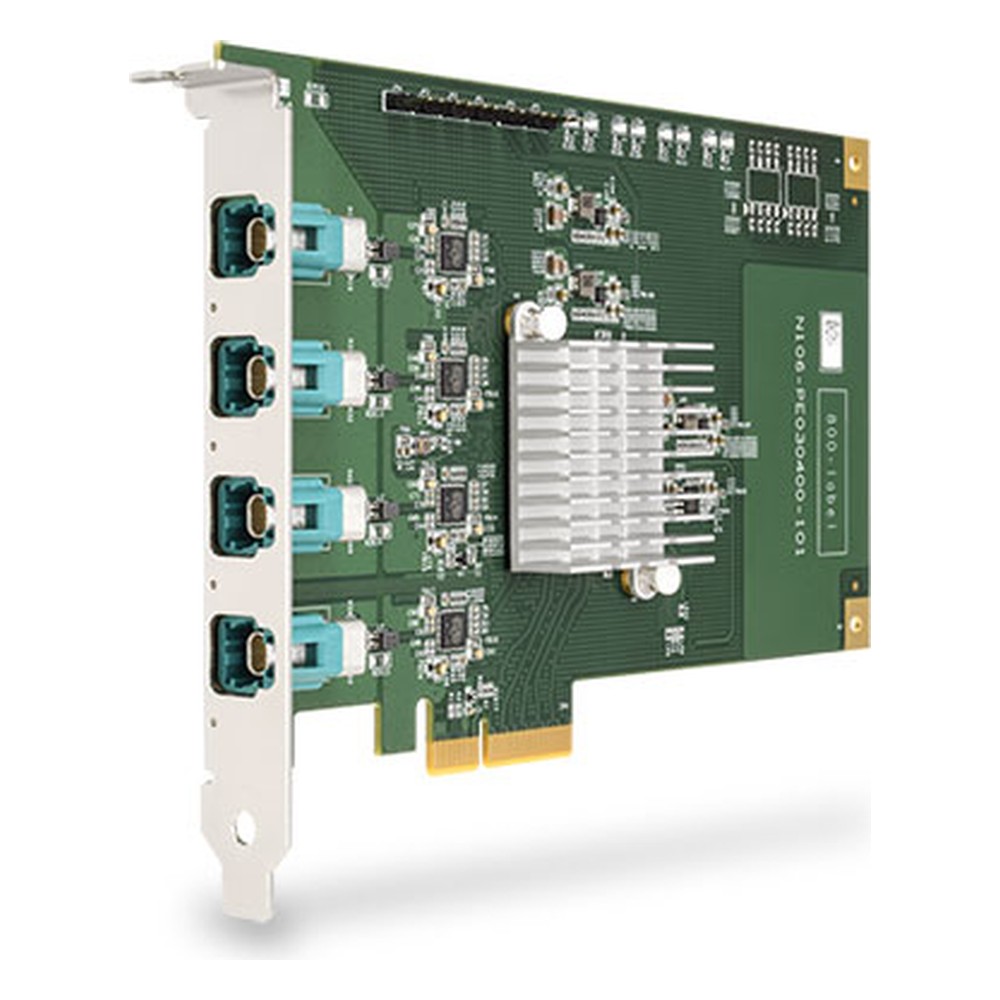
4-Port 100/1000BASE-T1 Automotive Ethernet PCIe Card with H-MTD Connectors and PTP
- Ethernet
- 4× GbE
- Temp
- −25 to +70 °C
Microchip LAN7431 4-Port 1000BASE-T1 MATEnet PCIe Expansion Card with Extended Temperature
- Ethernet
- 4× GbE
- Temp
- −40 to +70 °C
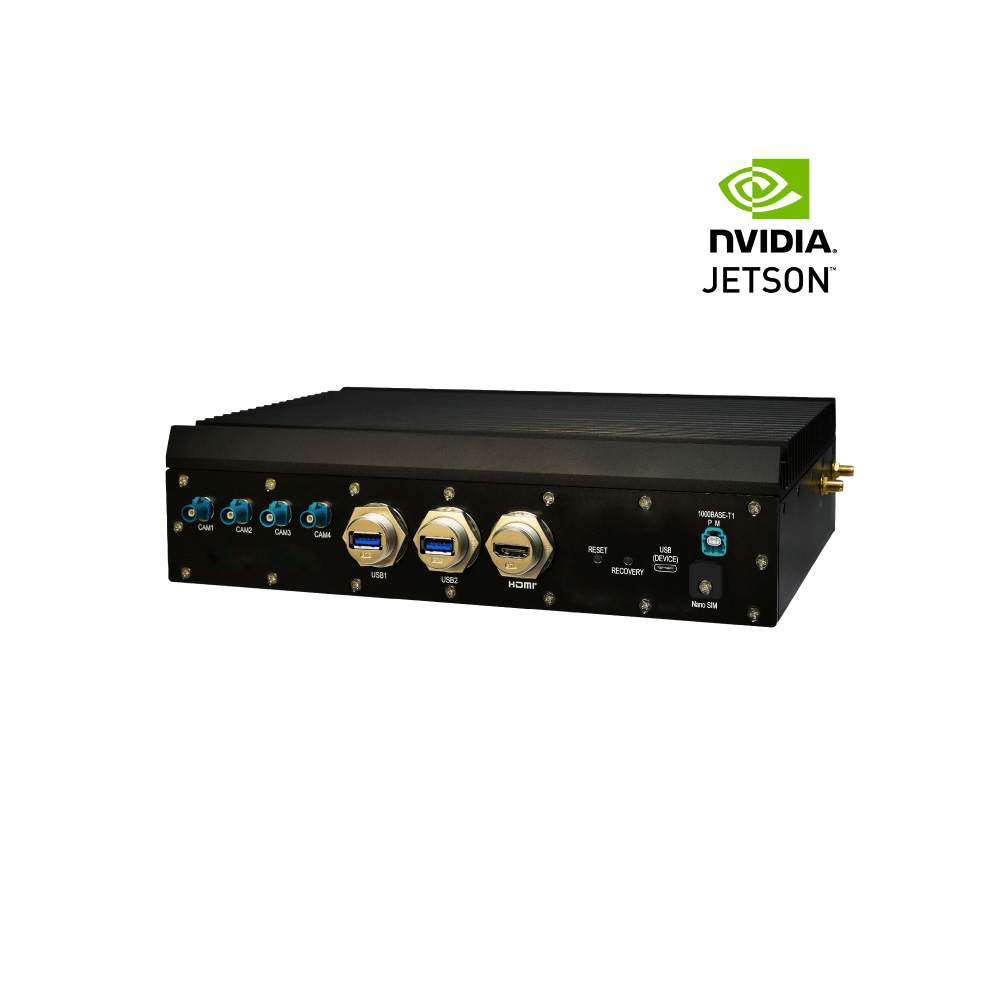
NVIDIA Jetson AGX Orin 64GB In-Vehicle Computer with 1000BASE-T1 and 10GbE
- AI
- 275 TOPS
- SOM
- NVIDIA Jetson AGX Orin 64 GB
- Ethernet
- 1× 10GbE, 2× 2.5GbE, 1× GbE (2× PoE)
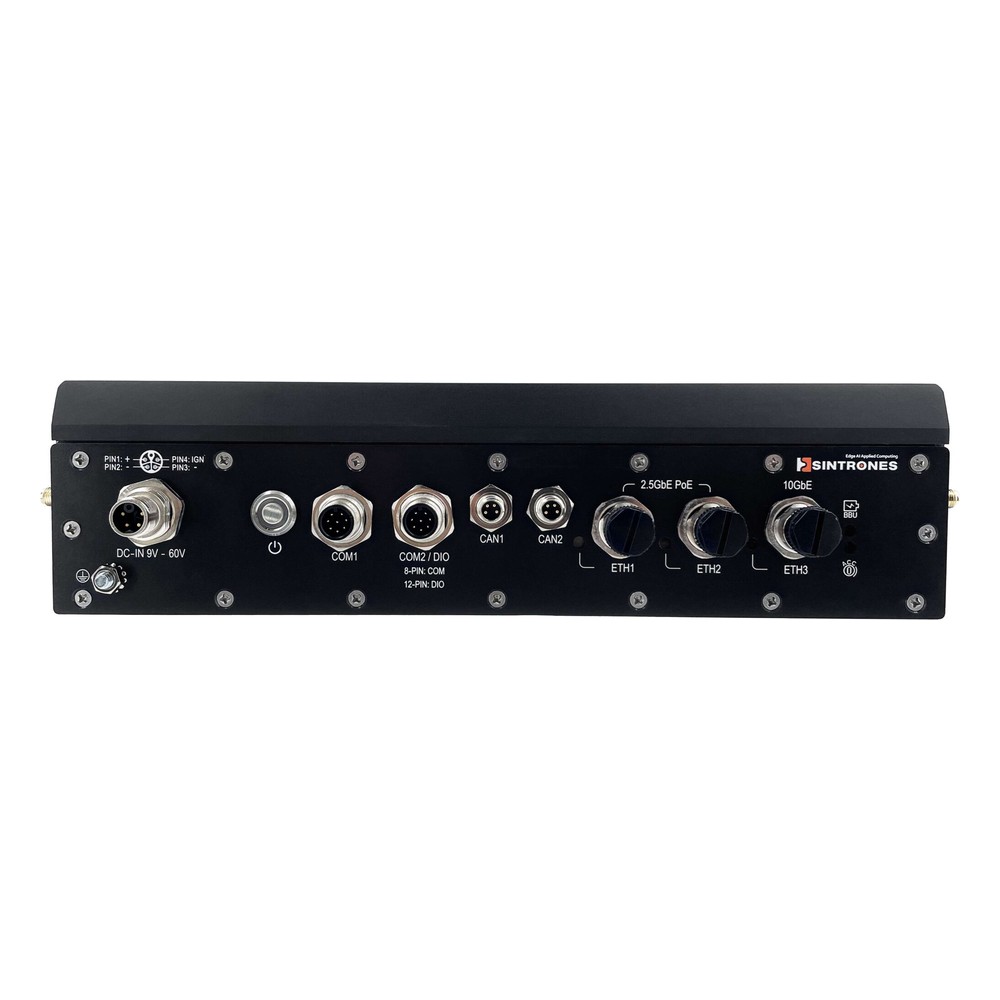
NVIDIA Jetson AGX Orin 64GB IP66 In-Vehicle Computer with 1000BASE-T1, 10GbE and M12 PoE
- AI
- 275 TOPS
- SOM
- NVIDIA Jetson AGX Orin 64 GB
- Cameras
- 4× GMSL
Specifying single pair Ethernet
Questions to answer before choosing SPE devices, cards and computers.
-
01
Variant
Match the variant to speed and reach: 10BASE-T1L, 10BASE-T1S, 100BASE-T1, 1000BASE-T1 or multi-gigabit.
-
02
Topology
Point to point, or a 10BASE-T1S multidrop bus with PLCA.
-
03
Power
Decide whether devices take PoDL power and check the class at each end.
-
04
Connectors
Choose one connector family, automotive or IEC 63171, and the sealing the site needs.
-
05
Host
Choose a computer with a built-in T1 port, a T1 card or a switch, and check drivers for the operating system.
-
06
Timing
If sensor data must be aligned, check for IEEE 1588 or 802.1AS hardware timestamping.
-
07
Environment
Match temperature range, ingress, vibration and approvals to the vehicle or plant.
Single pair Ethernet: common questions
Quick answers
What is single pair Ethernet?
Ethernet over one twisted pair. IEEE 802.3 defines it as the T1 family of physical layers, from 10 Mbit/s to 10 Gbit/s.
What is single pair Ethernet used for?
Vehicles, sensors and field instruments. In-vehicle networks, machine sensors, process instruments and building automation, where weight, reach or small devices matter.
What is the maximum distance for single pair Ethernet?
Up to 1,000 m with 10BASE-T1L. Faster variants run up to 15 m, or 40 m for 1000BASE-T1 type B cabling.
What is the difference between 10BASE-T1L and 10BASE-T1S?
Long reach vs short shared bus. T1L runs up to 1,000 m point to point; T1S connects several devices on one short pair.
Can single pair Ethernet carry power?
Yes, with PoDL. IEEE 802.3bu and 802.3cg define power classes for single-pair links.
What connector does single pair Ethernet use?
It depends on the sector. H-MTD and MATEnet in vehicles; the IEC 63171 family in industry, including IP67 M8 and M12 versions.
Is single pair Ethernet the same as T1?
T1 is part of the standard names. The T1 suffix means one pair; it is unrelated to the old T1 telecom line.
Industrial networking FAQs
-
What Is Fieldbus?
Fieldbus is the family of industrial digital networks that connect controllers such as PLCs to field devices: sensors, actuators, drives and valves. One shared cable replaces a separate wire pair per signal. PROFIBUS, Foundation Fieldbus, Modbus RTU, CANopen and DeviceNet are fieldbuses, standardized internationally in IEC 61158 and IEC 61784.
-
What Is a 4–20 mA Current Loop?
4–20 mA is the standard analog signal for sending a measurement from a field instrument to a controller as a DC current. 4 mA represents the bottom of the range and 20 mA the top, so a broken wire reads 0 mA and is easy to spot. Current is unaffected by cable resistance, so loops run reliably over long distances.
-
What Is CAN Bus?
CAN bus (Controller Area Network) is a two-wire network that lets controllers, sensors and actuators share short messages without a central computer. Developed by Bosch for vehicles, it uses a noise-resistant differential signal and gives every message a priority, so critical data gets through first. It is now standard in vehicles, machinery and remote equipment.
-
What Is PoE?
PoE, or Power over Ethernet, sends electrical power and network data down the same Ethernet cable. A powered port on a switch, injector or computer supplies DC power, at around 48 V, to a device such as an IP camera, access point or sensor, so that device needs no separate power supply or mains socket where it is mounted.
-
What Is EtherNet/IP?
EtherNet/IP (Ethernet Industrial Protocol) is an industrial network protocol that carries the Common Industrial Protocol (CIP) over standard Ethernet and TCP/IP. Managed by ODVA, it links PLCs, remote I/O, drives and HMIs, using TCP for configuration and UDP for real-time I/O. The IP means Industrial Protocol, not Internet Protocol.
-
What Is OPC UA?
OPC UA (OPC Unified Architecture) is an open standard, IEC 62541, for exchanging data securely between industrial machines, controllers and software on any operating system. Servers publish a browsable information model that describes what each value means, and clients read, write or subscribe to it, with certificates and encryption built in.
Need an SPE-enabled industrial computer?
Tell us which T1 variant your sensors use and where the system will run. We will recommend a computer with a built-in T1 port or the right card, and configure, image and test it before it ships.