
 UK
UK 
304 vs 316 Stainless Steel: Differences, Uses and Which to Choose
304 and 316 look identical, but one extra alloying element decides how long a stainless steel enclosure lasts near salt, sanitisers and acids. Here is how the two grades differ, where each one fits and what to specify for industrial equipment.
The Short Answer
The difference between 304 and 316 stainless steel is molybdenum. Grade 304 contains about 18% chromium and 8% nickel; grade 316 contains slightly less chromium, more nickel and 2 to 3% molybdenum, which gives it much better resistance to pitting from salt, chlorides and acids. 304 is cheaper and suits most indoor and food applications; 316 is the choice for coastal and marine sites, chlorinated cleaning and chemical exposure.
Key Takeaways
- 01Molybdenum is the difference
- 316 adds 2 to 3% molybdenum, which strengthens the protective surface layer against chlorides.
- 02They look identical
- You cannot tell 304 from 316 by eye; the grade has to come from the specification or a test.
- 03316 for salt and chlorides
- Coastal air, brines and chlorinated sanitisers pit 304 far sooner than 316.
- 04Finish and care matter too
- A smooth finish, clean fabrication and regular rinsing decide how either grade performs.
What Is the Difference Between 304 and 316 Stainless Steel?
Both grades belong to the austenitic family, one of the five families of stainless steel alongside ferritic, martensitic, duplex and precipitation-hardening grades. Austenitic steels are non-magnetic when annealed, cannot be hardened by heat treatment and are easy to form and weld, which is why they dominate food, pharmaceutical and industrial equipment. The two grades look and machine almost identically; the difference is in the chemistry.
| Property | 304 | 316 |
|---|---|---|
| Also known as | 18/8, A2 (fasteners), 1.4301 | Marine grade, A4 (fasteners), 1.4401 |
| Chromium | 18 to 20% | 16 to 18% |
| Nickel | 8 to 10.5% | 10 to 14% |
| Molybdenum | None | 2 to 3% |
| Resistance to chlorides and pitting | Good | Much better |
| Typical pitting resistance number (PREN) | About 18 to 20 | About 23 to 25 |
| Cost | Lower | Higher, driven by nickel and molybdenum prices |
| Typical use | Indoor, food, general industry | Coastal, marine, chemical, chlorinated cleaning |
The pitting resistance equivalent number (PREN) is a rough guide to how well a stainless steel resists pitting in chloride environments; the higher the number, the better. Molybdenum counts heavily in the calculation, which is why 316 scores several points above 304 despite containing less chromium.
Why Molybdenum Matters
Stainless steel resists corrosion because chromium forms a thin, invisible oxide layer on the surface that repairs itself in air. Chlorides attack that layer at weak points, starting small pits that grow underneath the surface. Salt water, sea spray, road salt, brines and chlorine-based sanitisers all supply chlorides.
Molybdenum makes the passive layer far more resistant to that attack, and helps it recover when it is damaged. That is why 316 survives coastal air and daily chlorinated cleaning where 304 shows rust spots and pitting within months. It also improves resistance to some acids, such as the sulphuric and phosphoric acids used in descaling.
Which Grade Is Best for Your Application?
304 is the default for most equipment and the most widely used stainless steel in the world. Specify 316 when chlorides, acids or aggressive cleaning are part of the environment.
| Application | Recommended grade | Why |
|---|---|---|
| Indoor factory, dry goods, packaging | 304 | No significant chloride exposure |
| Bakery, confectionery, general food processing | 304 | Mild cleaning chemistry |
| Meat, poultry, fish and dairy processing | 316 | Brines and daily chlorinated sanitising |
| Pharmaceutical and cleanroom | 316 | Frequent disinfection and aggressive cleaning agents |
| Coastal sites and ports | 316 | Salt-laden air |
| Ships and offshore | 316 | Sea spray and salt water |
| Chemical processing | 316 | Acids and chlorides; check chemical compatibility |
The extra cost of 316 is small against the life of the equipment when chlorides are present: a 304 housing that pits in a salty environment has to be replaced, and pitted surfaces are harder to keep clean.
Stainless Steel Industrial Computing
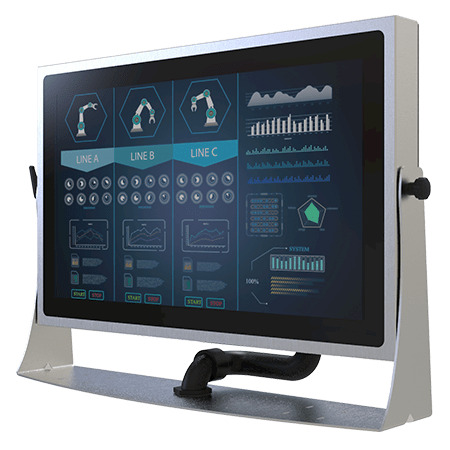
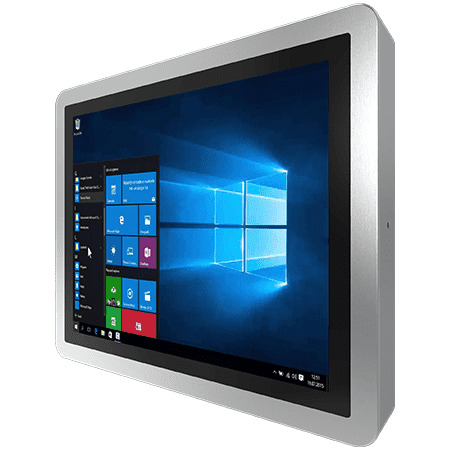
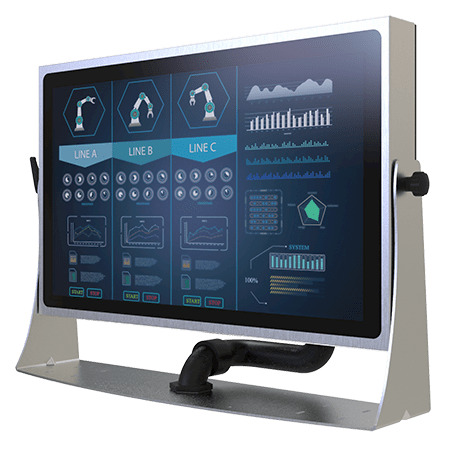
Stainless steel panel PCs, displays and computers in 304 or 316, depending on the model, with sealing up to IP69K. Ask us to confirm the grade for a specific model.
304 vs 304L and 316 vs 316L
The “L” grades are low-carbon versions: 304L and 316L contain no more than 0.03% carbon, against 0.08% for standard 304 and 316. Low carbon matters when the steel is welded. In standard grades, the heat of welding can draw chromium out of solution next to the weld, a problem called sensitisation, which leaves the area open to intergranular corrosion.
For welded enclosures and fabricated housings, 304L and 316L avoid that risk with no need for heat treatment after welding. Corrosion resistance is otherwise the same as the standard grade, and strength is slightly lower. Much stainless sheet is now dual-certified, for example as 316/316L, meeting both specifications at once.
Marine Grade and Food Grade Stainless Steel
“Marine grade” and “food grade” are descriptions rather than grades. Marine grade stainless steel almost always means 316 or 316L, chosen for its resistance to salt. Food grade stainless steel usually means 304 or 316, chosen because stainless is non-porous, corrosion resistant and easy to clean; compliance for food contact comes from the regulations of your market, not the label.
For fasteners, the same grades are sold as A2 (304) and A4 (316). A 316 enclosure held together with A2 bolts will show rust at the fixings first, so specify matching fasteners.
304 vs 316: Common Questions
Quick Answers
Is 304 or 316 Better?
316, where chlorides are present; otherwise 304 is enough. 316 resists salt, brines and chlorinated cleaners far better. In dry or mildly cleaned indoor environments, 304 performs well and costs less.
Is 316 More Expensive Than 304?
Yes. Its higher nickel content and added molybdenum make 316 cost more than 304, with the gap moving with nickel and molybdenum prices.
Does 304 Stainless Steel Rust?
It can, in the wrong environment. Chlorides from salt air, road salt or chlorinated sanitisers cause pitting and rust spots on 304, as does contamination from carbon-steel tools.
Does 316 Stainless Steel Rust?
Rarely, but it is not immune. Warm seawater, crevices that trap salt and neglect can still stain or pit 316; regular rinsing keeps it clean.
How Can You Tell 304 From 316?
Not by looking. The grades look and feel identical. Use the mill certificate or specification, a molybdenum test kit, or a handheld XRF analyser to confirm the grade.
Keeping Stainless Steel Corrosion-Free
Even the best grade can appear to rust if its surface is contaminated. Tools, wire brushes and grinding belts used on carbon steel leave iron particles embedded in stainless, and those particles rust within weeks, staining the surface as if the stainless itself were corroding. Good fabricators keep separate tools for stainless steel for this reason.
Passivation restores the protective layer after fabrication. The surface is treated with a mild acid, usually nitric or citric, that removes free iron and lets the chromium oxide layer re-form evenly. In service, rinse off salt and cleaning chemicals, use non-abrasive pads rather than steel wool, and follow the chemical concentrations your supplier recommends.
Stainless Steel Finishes for Equipment
The finish on a stainless surface affects how easily it cleans and how well it resists corrosion, whichever grade is used. 2B is the smooth, slightly reflective mill finish on cold-rolled sheet. No. 4 is the familiar brushed, satin finish on most enclosures and appliances, which hides handling marks. Electropolishing removes a thin surface layer electrochemically, leaving a brighter, smoother surface with fewer places for soil and bacteria to settle.
For hygienic equipment, a surface roughness of around Ra 0.8 µm or smoother is widely used as a target for easy cleaning. Whatever the finish, the grain on brushed surfaces should run so that water drains off rather than collecting in the lines.
Stainless Steel in Industrial Computing
For panel PCs and displays in food plants, pharmaceutical sites and marine environments, the stainless housing is only part of the specification. The bezel, fasteners, seals and connectors all need to match the environment, and the unit needs an ingress rating, usually IP66 or IP69K, that survives the cleaning regime. Our guide to hygienic design and IP rating chart cover those choices.
Our stainless steel panel PCs and stainless steel monitors are built in 304 or 316 depending on the model. If the environment calls for 316, tell us and we will confirm the grade before recommending a unit.
How to Choose Between 304 and 316
- 01Chlorides
- Salt air, brines, marinades or chlorine-based sanitisers point to 316.
- 02Cleaning chemistry
- Daily aggressive or acidic cleaning points to 316; mild detergents and wipe-downs suit 304.
- 03Location
- Within a few miles of the coast, on ships or offshore, specify 316 throughout, including fasteners.
- 04Budget and lifecycle
- Where none of the above applies, 304 gives the same service life for less; where they do, 316 is the cheaper choice over the life of the equipment.
Frequently Asked Questions
-
What Is Marine Grade Stainless Steel?
Marine grade stainless steel usually means grade 316 or 316L: austenitic stainless steel with 2 to 3% molybdenum, which resists pitting from salt water and sea spray far better than 304. It is a trade description rather than a formal standard, so always check the actual grade on the specification.
-
What Is Food Grade Stainless Steel?
Food grade stainless steel is stainless steel suitable for contact with food, most commonly grade 304 (18/8) and grade 316. Both are corrosion resistant, non-porous and easy to clean. "Food grade" is a description rather than a single standard: compliance comes from the food-contact regulations of your market.
-
What does IP69K mean?
IP69K means an enclosure is dust-tight and protected against high-pressure, high-temperature water jets per DIN 40050-9 — 80°C water at 8—10 MPa from close range. It is the food and beverage industry standard for sanitary wash-down on both sides of the Atlantic — and it does NOT imply submersion protection.
Specifying Stainless Steel Equipment?
Tell us where the equipment will be installed, how it is cleaned and what it will be exposed to. We will recommend panel PCs and displays in the right stainless grade and sealing, and build them into a system ready to install.