
 UK
Edge AI Computers
Edge AI Computers for Vision, Robotics and On-Site Inference
An edge AI computer is a computer that runs trained AI models on site, next to the cameras and sensors that feed it, so detection, inspection and guidance decisions happen in milliseconds without sending video to the cloud. Edge AI computers range from small fanless box PCs for a single camera to GPU systems that run several models across many streams.
Options include NVIDIA Jetson systems, computers with a discrete NVIDIA GPU, Hailo accelerators and Intel Core Ultra or AMD Ryzen AI processors with a built-in NPU, suited to machine vision, robots, vehicles and smart city cameras where a round trip to the cloud is too slow or too costly.
Speak to an edge AI computer specialist to match the accelerator, camera inputs and mounting to your model.


Browse Our Edge AI Box PCs
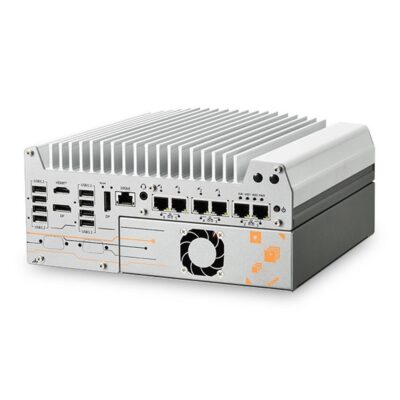
- CPU: Intel Core Ultra Series 2 Arrow Lake-S
- GPU / AI Accelerator: Discrete GPU (PCIe)
- AI Performance: 13 TOPS
- Memory: 2x DDR5 6400MHz SO-DIMM Slot, 64GB
- OS: Linux, Windows 10, Windows 11
- Display Outputs: 1x HDMI, 2x Display Port
- Ethernet: 1x GbE LAN [RJ45], 5x 2.5 GbE LAN [RJ45]
- USB: 1x USB 2.0 [Type A], 8x USB 3.2 Gen 2 [Type A]
- Serial: 2x RS232 [DB9], 2x RS232/422/485 [DB9]
- M.2: 1x M.2 M-Key [PCIe x4 Gen5] [2280]
- mPCIe: 2x mPCIe [PCIe/USB]
- PCIe: 1x PCIe [x16 Slot] [1x16 Signal or 2x8 Signal] [Gen4]
- Storage: 1x M.2 SSD [PCIe], 2x 2.5" HDD/SSD [SATA]
- RAID: RAID 0, RAID 1
- Power: 8-48V DC [Terminal Block]
- Temp: -25°C to 60°C [-13°F to 140°F]
- Certification: CE, EN55032, FCC
- Mounting Options: Wall Mount
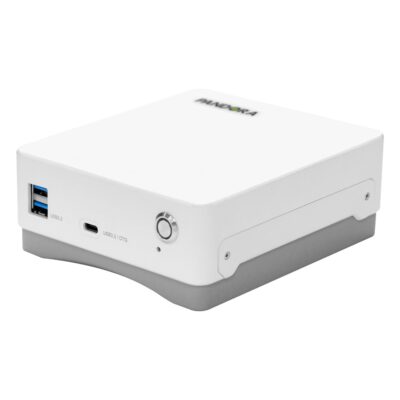
- AI Performance: 70–100 TOPS
- SOM: NVIDIA Jetson Orin NX 16GB, NVIDIA Jetson Orin NX 8GB
- Memory: 16GB Soldered On-board, 8GB Soldered On-board
- OS: Linux, Linux Ubuntu 22.04
- Display Outputs: 1x HDMI
- Ethernet: 2x GbE LAN [RJ45]
- USB: 1x USB 3.2 Gen 2 [Type C], 2x USB 2.0 [Type A], 2x USB 3.2 Gen 2 [Type A]
- CANbus: 1x CANbus [Board]
- Simultaneous Video Inputs: 4
- Video Input: 4x SDI
- M.2: 1x M.2 B-Key [USB] [3042/3052], 1x M.2 E-Key [PCIe x1 Gen4/USB 2.0] [2230], 1x M.2 M-Key [PCIe x2 Gen4] [2280]
- Storage: 1x M.2 SSD
- Power: 12-36V DC [Barrel Connector]
- Temp: 0°C to 60°C [32°F to 140°F]
-
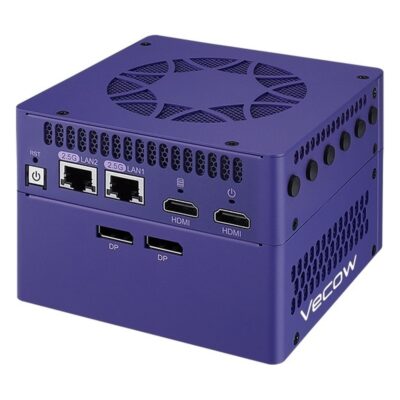
TGS-2500F-386H
TGS-2500F-386H with Core Ultra 9 386H, optional MXM GPU, three DisplayPort and 24V DC -
TGS-2000-336H
TGS-2000-336H with Core Ultra 5 336H, fanless heatsink, dual 2.5GbE and 12-24V DC -
TGS-2000-386H
TGS-2000-386H with Core Ultra 9 386H, fanless heatsink, 50 TOPS NPU and dual 2.5GbE -
TGS-2000F-336H
TGS-2000F-336H with Core Ultra 5 336H, fan cooling, dual 2.5GbE and -25 to 55 °C -
TGS-2000F-368H
TGS-2000F-368H with Core Ultra X7 368H, Arc B390 GPU, 50 TOPS NPU and dual 2.5GbE -
TGS-2000F-386H
TGS-2000F-386H with Core Ultra 9 386H, fan cooling, 50 TOPS NPU and M.2 5G slot
- CPU: Intel Core Ultra Series 3 Panther Lake
- Memory: 2x DDR5 7200MHz SO-DIMM Slot, 128GB
- OS: Linux, Windows 11
- Ethernet: 2x 2.5 GbE LAN [RJ45]
- USB: 1x USB 3.2 Gen 2x2 [Type C], 2x USB 2.0 [Type A], 2x USB 3.2 Gen 2 [Type A]
- M.2: 1x M.2 B-Key [PCIe x2 Gen4/USB 2.0/SIM] [3042/3052], 1x M.2 E-Key [PCIe x1 Gen4/USB 2.0] [2230], 1x M.2 M-Key [PCIe x4 Gen4] [2280]
- Storage: 1x M.2 SSD
- Certification: CE, EN50121-3-2, EN50155, FCC, IC (ICES-003), RoHS
- Mounting Options: DIN Mount, VESA Mount, Wall Mount
- GPU / AI Accelerator: Intel NPU, Discrete GPU (MXM)
- AI Performance: 50 TOPS
- Display Outputs: 1x USB Type C, 2x Display Port, 2x HDMI
- Power: 24V DC [Terminal Block]
- Temp: -25°C to 55°C [-13°F to 131°F]
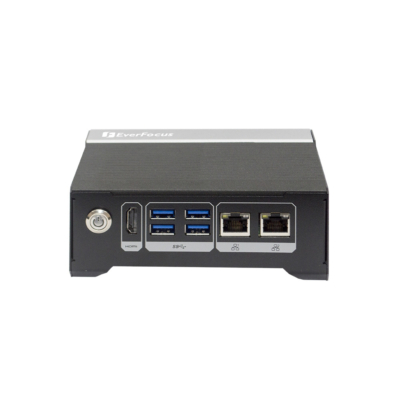
- OS: Linux
- Display Outputs: 1x HDMI
- Ethernet: 2x GbE LAN [RJ45]
- USB: 4x USB 3.1 Gen 1 [Type A]
- Serial: 1x RS485 [Terminal Block]
- CANbus: 1x CANbus [Terminal Block]
- M.2: 1x M.2 B-Key [USB] [3042/3052], 1x M.2 E-Key [PCIe x1/USB 2.0] [2230], 1x M.2 M-Key [PCIe x4] [2280]
- Storage: 1x M.2 SSD, 1x Micro SD
- Power: 9-36V DC Input [Terminal Block]
- Temp: -20°C to 60°C [-4°F to 140°F]
- Certification: CE, FCC
- Mounting Options: DIN Mount, VESA Mount, Wall Mount
- AI Performance: 40 TOPS
- SOM: NVIDIA Jetson Orin Nano 8GB
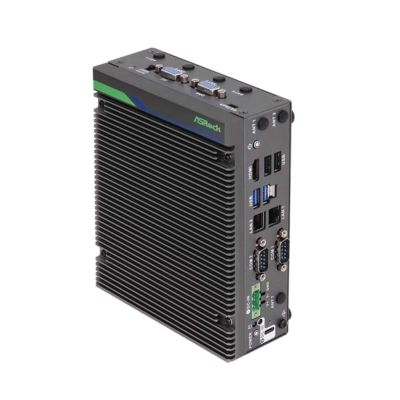
- AI Performance: 100 TOPS
- SOM: NVIDIA Jetson Orin NX 16GB
- Memory: 16GB Soldered On-board
- OS: Linux, Linux Ubuntu 20.04
- Display Outputs: 1x HDMI
- USB: 2x USB 2.0 [Type A], 2x USB 3.2 Gen 2 [Type A]
- Serial: 1x RS232 [DB9], 1x RS232/422/485 [DB9]
- CANbus: 1x CANbus [DB15]
- Storage: 1x Micro SD, 2x M.2 SSD
- Power: 12-36V DC Input [Terminal Block], 20V [USB-C]
- Temp: -25°C to 60°C [-13°F to 140°F]
- Certification: CE, FCC, LVD
- Ethernet: 2x GbE LAN [RJ45]
- M.2: 1x M.2 B-Key [PCIe x1 Gen3/USB 3.2 Gen 2] [2280/3042/3052], 1x M.2 E-Key [PCIe x1/USB 2.0] [2230], 2x M.2 M-Key [PCIe x4/SATA] [2280]
- Mounting Options: DIN Mount, Wall Mount
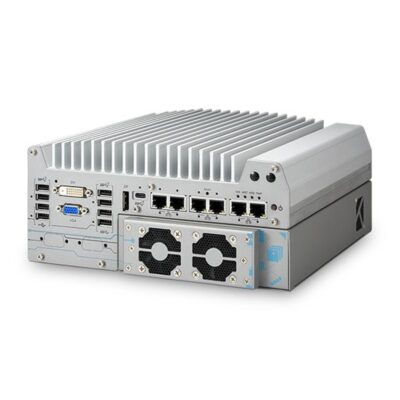
- CPU: Intel Pentium G Series Alder Lake, Intel Core 12th Gen Alder Lake, Intel Core 13th Gen Raptor Lake, Intel Celeron G Series Alder Lake
- GPU / AI Accelerator: Discrete GPU (PCIe)
- GPU: NVIDIA L4
- AI Performance: 485 TOPS
- Memory: 2x DDR5 4800MHz SO-DIMM Slot, 64GB
- OS: Linux, Windows 10, Windows 11
- Display Outputs: 1x Display Port, 1x DVI, 1x VGA
- Ethernet: 1x GbE LAN [RJ45], 5x 2.5 GbE LAN [RJ45]
- USB: 1x USB 3.2 Gen 2x2 [Type C], 2x USB 2.0 [Type A], 2x USB 3.2 Gen 1 [Type A], 4x USB 3.2 Gen 2 [Type A]
- Serial: 2x RS232 [DB9], 2x RS232/422/485 [DB9]
- M.2: 1x M.2 B-Key [PCIe x1/USB/SIM] [3042/3052], 1x M.2 M-Key [PCIe x4 Gen4] [2280]
- mPCIe: 1x mPCIe [PCIe/USB]
- PCIe: 2x PCIe [x16 Slot] [x8 Signal] [Gen3] [Cassette]
- Storage: 1x M.2 SSD [M-Key 2280, PCIe Gen 4 x4], 2x 2.5" HDD/SSD [SATA]
- RAID: RAID 0, RAID 1
- Power: 8-48V DC [Terminal Block]
- Temp: -25°C to 60°C [-13°F to 140°F]
- Mounting Options: Wall Mount
- Certification: IEC 62368-1, CE, FCC, UL 62368-1
-
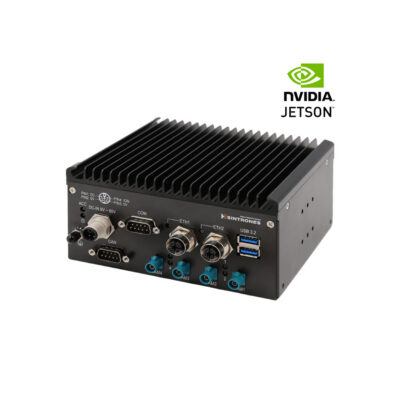
IBOX-601-G2-ON4
IBOX-601-G2 with Jetson Orin Nano 4GB module and 4x GMSL-2 camera inputs -
IBOX-601-G2-ON8
IBOX-601-G2 with Jetson Orin Nano 8GB module and 4x GMSL-2 camera inputs -
IBOX-601-G2-ONX16
IBOX-601-G2 with Jetson Orin NX 16GB module, 4x GMSL-2 camera inputs, CAN FD -
IBOX-601-G2-ONX8
IBOX-601-G2 with Jetson Orin NX 8GB module, 4x GMSL-2 camera inputs, CAN FD
- Display Outputs: 1x HDMI
- Ethernet: 1x 2.5 GbE LAN [M12], 1x GbE LAN [M12]
- USB: 2x USB 3.2 Gen 1 [Type A]
- Serial: 1x RS232/422/485 [DB9]
- CANbus: 1x CANbus, DB9
- M.2: 1x M.2 B-Key [USB] [3042/3052], 1x M.2 E-Key [USB] [2230]
- mPCIe: 1x mPCIe [USB]
- Storage: 1x M.2 SSD
- Power: 9-60V DC Input [M12]
- Ignition Sensing: Supports Ignition Control
- Temp: -25°C to 70°C [-13°F to 158°F]
- Certification: CE, E-Mark, EN50155, FCC
- AI Performance: 20 TOPS
- SOM: NVIDIA Jetson Orin Nano 4GB
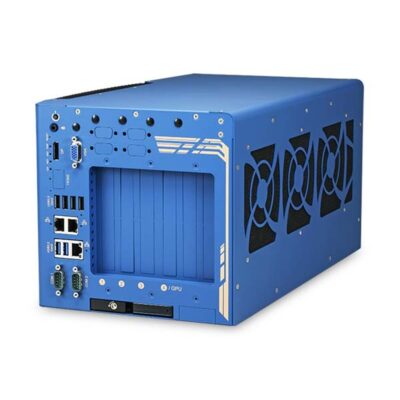
- CPU: Intel Pentium G Series Alder Lake, Intel Core 12th Gen Alder Lake, Intel Core 13th Gen Raptor Lake, Intel Celeron G Series Alder Lake
- GPU / AI Accelerator: Discrete GPU (PCIe)
- GPU: NVIDIA RTX PRO 6000 Blackwell Workstation
- AI Performance: 4,000 TOPS
- Memory: 2x DDR5 4800MHz SO-DIMM Slot, 64GB
- OS: Linux, Windows 10, Windows 11
- Display Outputs: 1x Display Port, 1x VGA
- Ethernet: 1x 10 GbE LAN [RJ45], 1x GbE LAN [RJ45], 2x 2.5 GbE LAN [RJ45]
- USB: 1x USB 2.0 [Type A], 6x USB 3.2 Gen 2 [Type A]
- Serial: 2x RS232/422/485 [DB9]
- M.2: 1x M.2 B-Key [PCIe x1/USB/SIM] [2242/3052], 1x M.2 M-Key [PCIe x4] [2280]
- mPCIe: 2x mPCIe [PCIe/SIM/USB]
- PCIe: 1x PCIe [x16 Slot] [1x16 Signal or 2x8 Signal] [Gen4], 3x PCIe [x8 Slot][4-Lane Signal][Gen3]
- Storage: 1x 2.5" HDD/SSD [SATA], 1x M.2 SSD
- Front Accessible Storage: Front Accessible Storage
- Hot Swappable Storage: Hot Swappable SSD Support
- Power: 9-32V DC [Terminal Block]
- Ignition Sensing: Supports Ignition Control
- Temp: -25°C to 60°C [-13°F to 140°F]
- Certification: CE, EN55032, FCC
- Mounting Options: Wall Mount
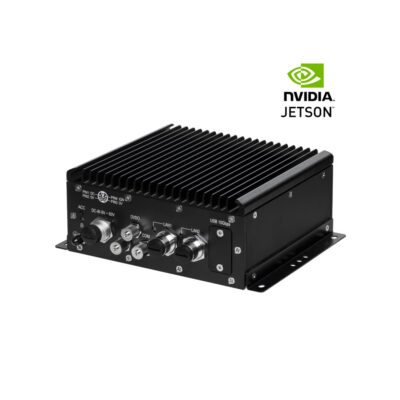
-
IBOX-600-IP66-ON4
IBOX-600-IP66 with NVIDIA Jetson Orin Nano 4GB and 512-core GPU -
IBOX-600-IP66-ON8
IBOX-600-IP66 with NVIDIA Jetson Orin Nano 8GB and 1024-core GPU -
IBOX-600-IP66-ONX16
IBOX-600-IP66 with NVIDIA Jetson Orin NX 16GB and dual NVDLA accelerators -
IBOX-600-IP66-ONX8
IBOX-600-IP66 with NVIDIA Jetson Orin NX 8GB and NVDLA accelerator
- Display Outputs: 1x HDMI
- Ethernet: 1x 2.5 GbE LAN [M12], 1x GbE LAN [M12]
- USB: 2x USB 3.2 Gen 1 [Type A]
- Serial: 1x RS232/422/485 [M8]
- CANbus: 1x CANbus, M8
- M.2: 1x M.2 B-Key [USB] [3042/3052], 1x M.2 E-Key [USB] [2230]
- mPCIe: 1x mPCIe [USB]
- Storage: 1x M.2 SSD
- Power: 9-60V DC Input [M12]
- Ignition Sensing: Supports Ignition Control
- Temp: -25°C to 70°C [-13°F to 158°F]
- IP Rating: IP66
- Certification: CE, E-Mark, EN50155, FCC
- AI Performance: 20 TOPS
- SOM: NVIDIA Jetson Orin Nano 4GB
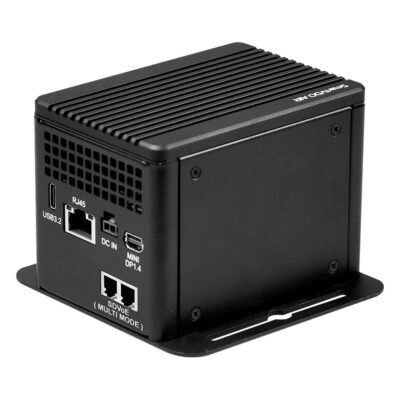
- AI Performance: 70–100 TOPS
- SOM: NVIDIA Jetson Orin NX 16GB, NVIDIA Jetson Orin NX 8GB
- Memory: 16GB Soldered On-board, 8GB Soldered On-board
- OS: Linux, Linux Ubuntu 22.04
- Display Outputs: 1x Mini Display Port
- Ethernet: 1x 10 GbE LAN [LC], 1x GbE LAN [RJ45]
- USB: 1x USB 3.2 Gen 2 [Type C]
- Simultaneous Video Inputs: 1
- Video Input: 1x LC (10G)
- M.2: 1x M.2 E-Key [PCIe] [2230], 1x M.2 M-Key [PCIe x2] [2230]
- Storage: 1x M.2 SSD
- Power: 12-36V DC [2-Pin]
- Temp: 0°C to 60°C [32°F to 140°F]
- Certification: CE, FCC
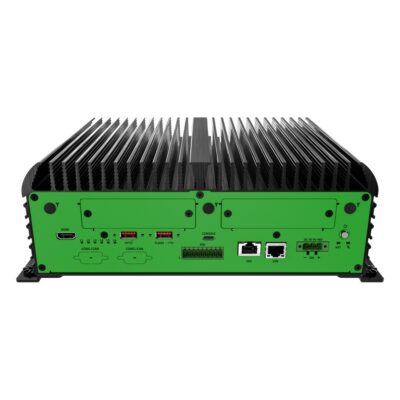
- AI Performance: 200–275 TOPS
- SOM: NVIDIA Jetson AGX Orin 32GB, NVIDIA Jetson AGX Orin 64GB
- Memory: 32GB Soldered On-board, 64GB Soldered On-board
- OS: Linux Ubuntu 24.04, Linux, Linux Ubuntu 22.04
- Display Outputs: 1x HDMI
- Ethernet: 1x 10 GbE LAN [RJ45], 1x GbE LAN [RJ45]
- USB: 1x USB 2.0 [Type A], 1x USB 3.2 Gen 2 [Type A]
- Serial: 2x RS232/422/485 [DB9]
- CANbus: 2x CANbus, DB9
- M.2: 1x M.2 B-Key [USB 3.2 Gen 2/USB 2.0/SIM] [3042/3052], 1x M.2 E-Key [PCIe x1/USB 2.0] [2230], 1x M.2 M-Key [PCIe x4] [2280]
- Storage: 1x M.2 SSD, 1x Micro SD, 64GB eMMC
- Power: 9-48V DC Input [Terminal Block]
- Ignition Sensing: Supports Ignition Control
- Temp: -20°C to 55°C [-4°F to 131°F]
- Certification: IEC 62368-1, CB, CE, E-Mark, EN50121-3-2, FCC, IC (ICES-003), UKCA, UL, UL 62368-1
- Mounting Options: DIN Mount, Wall Mount
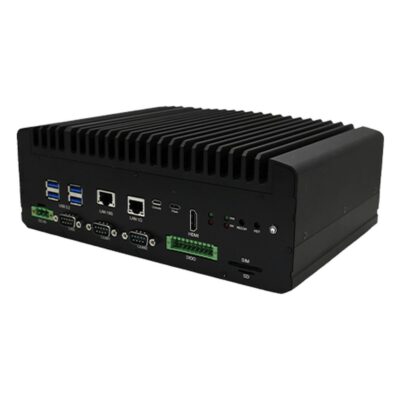
- AI Performance: 200–275 TOPS
- SOM: NVIDIA Jetson AGX Orin 32GB, NVIDIA Jetson AGX Orin 64GB
- Memory: 32GB Soldered On-board, 64GB Soldered On-board
- OS: Linux
- Display Outputs: 1x Optional HDMI
- Ethernet: 1x 10 GbE LAN [RJ45], 1x GbE LAN [RJ45]
- USB: 2x USB 2.0 [Board], 4x USB 3.2 Gen 2 [Type A]
- Serial: 2x RS232/422/485 [DB9]
- CANbus: 2x Isolated CAN FD [DB9]
- M.2: 1x M.2 B-Key [3042/3052], 1x M.2 E-Key [2230], 2x M.2 M-Key [PCIe] [2280]
- Storage: 1x 2.5" HDD/SSD, 1x Micro SD, 2x M.2 SSD, 64GB eMMC
- Power: 9-36V DC Input [Terminal Block]
- Temp: -25°C to 60°C [-13°F to 140°F]
- Certification: CE, FCC
- Mounting Options: Desktop
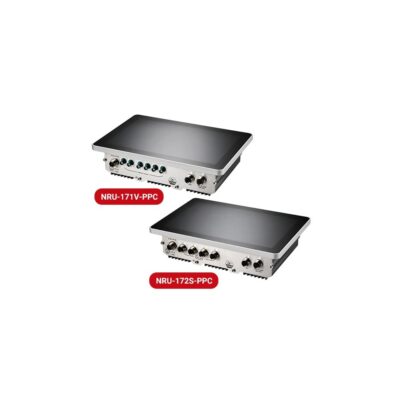
-
NRU-172S-PPC-JONX-8GB
NRU-172S-PPC with NVIDIA Jetson Orin NX 8GB -
NRU-171V-PPC-JONN-4GB
NRU-171V-PPC with NVIDIA Jetson Orin Nano 4GB -
NRU-171V-PPC-JONN-8GB
NRU-171V-PPC with NVIDIA Jetson Orin Nano 8GB -
NRU-171V-PPC-JONX-16GB
NRU-171V-PPC with NVIDIA Jetson Orin NX 16GB -
NRU-171V-PPC-JONX-8GB
NRU-171V-PPC with NVIDIA Jetson Orin NX 8GB -
NRU-172S-PPC-JONN-4GB
NRU-172S-PPC with NVIDIA Jetson Orin Nano 4GB -
NRU-172S-PPC-JONN-8GB
NRU-172S-PPC with NVIDIA Jetson Orin Nano 8GB -
NRU-172S-PPC-JONX-16GB
NRU-172S-PPC with NVIDIA Jetson Orin NX 16GB
- Display: 10.1"[8:5, 1920 x 1200, WUXGA]
- Brightness: 1000
- Format: Standard
- OS: Linux
- USB: 2x USB 2.0 [M12]
- Serial: 1x RS232 [M12]
- CANbus: 1x CAN FD [M12]
- M.2: 1x M.2 B-Key [PCIe x1/USB/SIM] [3042/3052], 1x M.2 M-Key [PCIe x1 Gen3] [2242]
- mPCIe: 1x mPCIe [PCIe/USB]
- Storage: 1x M.2 SSD
- Power: 8-35V DC [M12]
- Ignition Sensing: Supports Ignition Control
- Temp: -25°C to 60°C [-13°F to 140°F]
- IP Rating: IP66
- Certification: CE, FCC
- Mounting Options: VESA Mount
- AI Performance: 70 TOPS
- SOM: NVIDIA Jetson Orin NX 8GB
- Ethernet: 1x GbE LAN [M12], 4x GbE LAN [M12] [PoE]
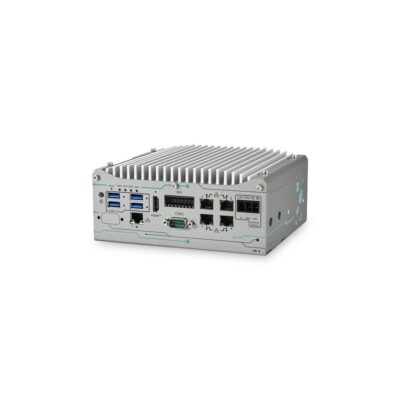
- CPU: AMD Ryzen PRO 8000 Series
- GPU / AI Accelerator: AMD Ryzen AI NPU
- GPU: NVIDIA RTX PRO 2000 Blackwell
- AI Performance: 16–545 TOPS
- Memory: 1x DDR5 5600MHz SO-DIMM Slot, 32GB
- OS: Linux, Windows 10, Windows 11
- Display Outputs: 1x HDMI
- USB: 4x USB 3.2 Gen 2 [Type A]
- Serial: 1x RS232/422/485 [DB9]
- M.2: 1x M.2 M-Key [PCIe x4 Gen3] [2280]
- mPCIe: 2x mPCIe [PCIe/SIM/USB]
- PCIe: 1x PCIe [x16 Slot] [x8 Signal] [Gen4]
- Storage: 1x M.2 SSD
- Power: 12-35V DC [Terminal Block]
- Ignition Sensing: Supports Ignition Control
- Temp: -25°C to 60°C [-13°F to 140°F]
- Certification: CE, FCC
- Mounting Options: Wall Mount
- Ethernet: 1x 2.5 GbE LAN [RJ45], 4x GbE LAN [RJ45] [PoE]
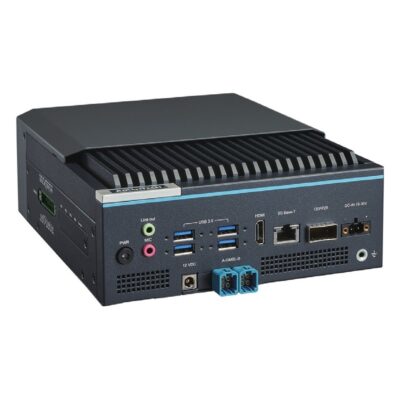
- OS: Linux Ubuntu 24.04, Linux
- Display Outputs: 1x HDMI
- USB: 4x USB 3.2 Gen 2 [Type A]
- M.2: 1x M.2 B-Key [USB] [3042/3052], 1x M.2 E-Key [PCIe x1/USB 2.0] [2230], 1x M.2 M-Key [PCIe x4] [2280]
- Storage: 1x M.2 SSD, 2x SATA Ports
- Power: 19-36V DC [Terminal Block]
- Temp: -10°C to 60°C [14°F to 140°F]
- Certification: BSMI, CCC, CE, FCC, KC, UL
- Mounting Options: DIN Mount, Wall Mount
- AI Performance: 1,200 TOPS
- SOM: NVIDIA Jetson T4000
- Memory: 64GB Soldered On-board
- Ethernet: 1x 5 GbE LAN [RJ45], 3x 25GbE LAN [QSFP28]
Beyond Edge AI Computers: Jetson, GPU, Hailo and NPU
 NVIDIA Jetson ComputersJetson Orin and Thor systems that run AI on the module’s own GPU, from single-camera boxes to robot controllers.
 Rugged Jetson ComputersSealed, MIL-STD and railway Jetson builds for vehicles, outdoor cabinets and defence.
 NVIDIA Jetson PoE SystemsJetson computers that power IP cameras over the same cable that carries the video.
 Industrial PCs with GPUIntel and AMD systems with a discrete NVIDIA card or MXM module for vision cells and inspection lines.
 Rugged GPU ComputersDiscrete GPU compute in sealed, shock-rated chassis for vehicles, rail and defence.
 MXM GPU ComputersEmbedded MXM graphics modules that fit GPU inference into a smaller chassis than a full-size card needs.
 Edge AI ServersMulti-GPU servers that run larger models, LLMs and video analytics on site.
 Hailo AI AcceleratorsHailo-8, Hailo-8L and Hailo-10H systems that add low-power inference to x86 and Arm computers.
 Intel Core Ultra ComputersCore Ultra systems with an on-chip NPU for light AI beside the main application.
 Edge AI Panel PCsTouch screen computers with Jetson or GPU inference for operator stations and kiosks.
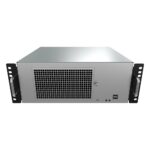 NVIDIA Embedded GPUsRTX Ada, RTX PRO Blackwell and Jetson platforms, with the systems built on each.
Edge AI Accelerators: Jetson vs GPU vs Hailo vs NPU
The accelerator decides how large a model an edge AI computer can run, how many camera streams it keeps up with and how much heat the chassis has to shed. Most systems use a Jetson module, a discrete NVIDIA GPU, a Hailo accelerator or the NPU in a recent Intel or AMD processor.
| Accelerator | NVIDIA Jetson | Discrete GPU | Hailo | CPU with NPU |
|---|---|---|---|---|
| AI performance | Up to 40 TOPS on Orin Nano, 100 TOPS on Orin NX and 275 TOPS on AGX Orin; Thor is rated at up to 2,070 FP4 TFLOPS |
Up to 485 TOPS (INT8) on an NVIDIA L4, and up to 682 AI TOPS (FP8) on an RTX 5000 Ada MXM module |
Up to 26 TOPS per Hailo-8 module, and up to 78 TOPS with three modules in one system |
Up to 50 TOPS from the NPU on Core Ultra Series 3 and Ryzen AI 300 processors |
| Power | From 5–10 W on Orin Nano 4GB to 60 W on AGX Orin 64GB |
Low-profile cards up to 70 W, and up to 350 W per card in expandable systems |
A few watts per module, on top of the host processor |
No extra power: the NPU works inside the processor’s own TDP |
| Cooling | Fanless on most systems, through a finned chassis |
Fan-assisted for full-size cards; MXM modules and passively cooled cards run in fanless chassis |
Fanless in most host systems |
Fanless, within the processor’s own cooling |
| Software | JetPack on Jetson Linux, with CUDA, TensorRT and DeepStream |
CUDA and TensorRT on Linux or Windows |
HailoRT, with models compiled from TensorFlow or ONNX |
OpenVINO on Intel; Ryzen AI Software on AMD |
| Camera inputs | PoE+ LAN, GMSL2 and MIPI CSI-2 on many systems |
Several PoE+ or 10GbE ports, plus capture cards in PCIe slots |
The host system’s LAN, PoE and USB ports |
USB and PoE LAN cameras on the host system |
| Choose it when | AI, cameras and I/O must fit one small, low-power computer. | The model is large or the stream count is high. | The host processor stays and inference is added at low power. | The model is light and no added accelerator is wanted. |
TOPS figures are the makers’ headline ratings at different precisions (INT8, FP8 or FP4), so compare them at the same precision and on your own model. Our guide to NPU vs GPU for edge AI covers the trade-offs between on-chip and discrete acceleration.
What to Specify in an Edge AI Device
Specify an edge AI device around the model it runs, the cameras it serves and the place it is installed.
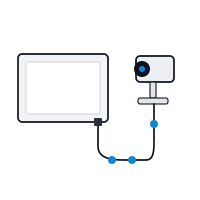
Camera Inputs
PoE+ powers IP cameras from the computer, GMSL2 suits low-latency cameras on robots and vehicles, and capture cards take SDI or HDMI.

Memory
On Jetson the model, video buffers and operating system share one memory pool, so larger models need the 16GB or 64GB modules.
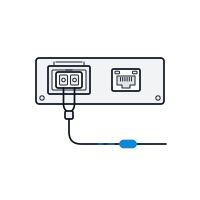
Networking
2.5GbE or 10GbE uplinks carry many streams back to a recorder, and 5G or 4G modules serve sites with no fixed line.

Power and Temperature
Check the supply and the hottest point of the install: wide DC input and −25 to 70 °C ratings suit roadside cabinets and vehicles.

Remote Management
Out-of-band management, a watchdog and over-the-air updates keep systems on remote sites running without a visit.
Industrial Edge Computer vs Edge AI Server and Cloud AI
An industrial edge computer runs inference where the data is created. An edge AI server does the same job for a whole site from a rack, and cloud AI sends the data away to be processed. Many projects use two of the three, with edge AI computers at the cameras and a server or the cloud for retraining and reporting.
| Where AI runs | This categoryEdge AI Computer | Edge AI Server | Cloud AI |
|---|---|---|---|
| Location | Beside the cameras: on the machine, in the vehicle or in a roadside cabinet |
In a site server room, control room or rack |
In a remote data centre |
| Latency | Milliseconds, with no network round trip |
Low, over the site network |
Depends on the connection, and often too slow for control |
| Bandwidth | Only results and alerts leave the site |
Video crosses the site network but stays on site |
Every stream is uploaded |
| Model size | Detection, classification and tracking models sized to one accelerator |
Larger models, several at once, and on-site LLMs |
The largest models, and training |
| Data privacy | Video can stay on the device |
Video stays on site |
Video leaves the site |
| Choose it when | Each camera or machine needs its own fast decision. | Many cameras feed one site and the models are large. | Latency does not matter and the data can leave the site. |
Our answer to edge AI vs cloud AI explains how latency, bandwidth and privacy decide where a model should run.
How to Choose an AI Edge Computer
Start from the model and the cameras, not the processor. Once you know what runs, how many streams feed it and where it is fitted, the accelerator and chassis follow.

Model and TOPS
Benchmark the model at the precision you will deploy, then size the accelerator with headroom for updates and a second model.

Cameras and Inputs
Count the streams, their resolution and frame rate, and how each camera connects: PoE, GMSL2, USB or a capture card.
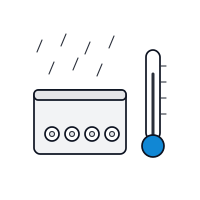
Environment
Note the temperature, dust, vibration and supply on site. That decides between a fanless PC, a sealed rugged build and a rack system.
Software and Lifecycle
Confirm the SDK your model needs, such as JetPack, CUDA, HailoRT or OpenVINO, and how long the module and system will stay in supply.
Tera operations per second, the headline AI rating. Compare figures at the same precision, such as INT8. What Does TOPS Mean in AI?
Edge AI Computer Manufacturers We Work With
We work with manufacturers that build edge AI computers on every accelerator in the table above, and the series below are our hand-picked selections from their ranges. Each card names the module or GPU that made it our choice, so you can compare Jetson, GPU and server options side by side or ask us for a shortlist.
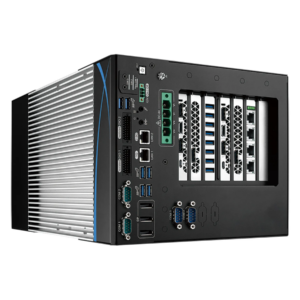
Neousys edge AI computers are designed and built by a Taipei manufacturer that specialises in rugged embedded computing for machine vision, vehicles and robotics. Its computers run on Intel, AMD, NVIDIA Jetson and Arm processors, with wide-temperature operation standard across the range.
Forecr AI edge computers are designed in Tallinn, Estonia, by a company that builds only on NVIDIA Jetson. The same Jetson module runs through its whole line-up, from a bare industrial carrier board to a sealed MIL-STD mission computer, with no change of software.
Vecow industrial edge computers are designed in Taiwan by a manufacturer of rugged edge AI and embedded computing for machine vision, robotics, rail and vehicles. Its wider range runs on Intel, AMD, NVIDIA Jetson, Qualcomm and NXP processors, with fanless, wide-temperature designs across much of it.
Premio edge AI systems are designed by a company that has built computers in Greater Los Angeles since 1989. Research and engineering for its rugged range sit in Taipei, where C&T Solution became Premio Taiwan in January 2026.
Advantech edge AI devices are designed by a company that has built industrial computers in Taipei since 1983, from embedded boards and industrial PCs to rackmount systems and GPU servers. Its range also covers NVIDIA GPU cards and fanless MIC edge AI systems.
ASRock Industrial edge AI box PCs are designed in Taipei by a company that began as ASRock’s industrial division and has run independently within the Pegatron group since 2018. Its range runs from NUC and Mini-ITX boards to fanless box PCs and Jetson Orin systems.
Sintrones edge AI computers are designed in Taiwan by a manufacturer that focuses on vehicles, rail and transport. Most of its range is designed to E-Mark, EN 50155 or EN 45545-2 requirements, with ignition sensing, wide DC input and M12 connector options.
Yuan AI edge computers are designed by a company that has built video capture hardware in Taiwan since 1990 and describes its business as image acquisition, conversion, streaming and analysis. Its range runs from capture cards and AV over IP to NVIDIA Jetson edge AI systems.
EverFocus industrial edge computers are designed in Taiwan by a company known for surveillance and edge AI vision platforms for transport, retail, fleets and mobile robots. Its range includes edge AI cameras, mobile video recorders and vision computing platforms on NVIDIA Jetson.
Axiomtek edge AI systems are designed by one of Taiwan’s major manufacturers of industrial and embedded computers. Its range spans fanless box PCs, panel PCs and HMIs, railway and in-vehicle computers, single board computers and edge AI systems on Intel, AMD and NVIDIA Jetson.
DFI edge AI box PCs are designed by a manufacturer that has built industrial motherboards and embedded computers in Taipei since 1981, now part of the Qisda and BenQ Group. DFI backs its boards and systems with up to 15 years of long-term support.
Winmate edge AI devices are designed and manufactured in New Taipei City by a company that has built rugged computers since 1996. Its range is built in Taiwan to IP, MIL-STD-810 and ATEX requirements for logistics, maritime, defence, healthcare and process industries.
Diamond Systems edge AI computers are designed and manufactured in Sunnyvale, California, by a specialist in rugged, I/O-rich embedded computing. Products are qualified across their full temperature range during design and backed by lifecycles of seven years or more.
Stereolabs AI edge computers are designed by a company that builds AI stereo and monocular cameras for robots, autonomous machines and spatial analytics. ZED cameras, ZED Link capture cards and ZED Box computers share the ZED SDK’s depth sensing, positional tracking and object detection.
Arestech industrial edge computers are designed and manufactured in Taiwan by a company that has built IP-rated panel PCs, touch monitors and fanless computers since 2011. Its range is organised by ingress protection, from front-sealed builds to full IP66 and IP69K stainless steel.
Syslogic edge AI systems are designed in Switzerland by a company that builds rugged embedded computers for mobile robotics, autonomous vehicles and transport. Its NVIDIA Jetson computers are engineered for functional safety and harsh-environment operation, with wide-temperature designs.
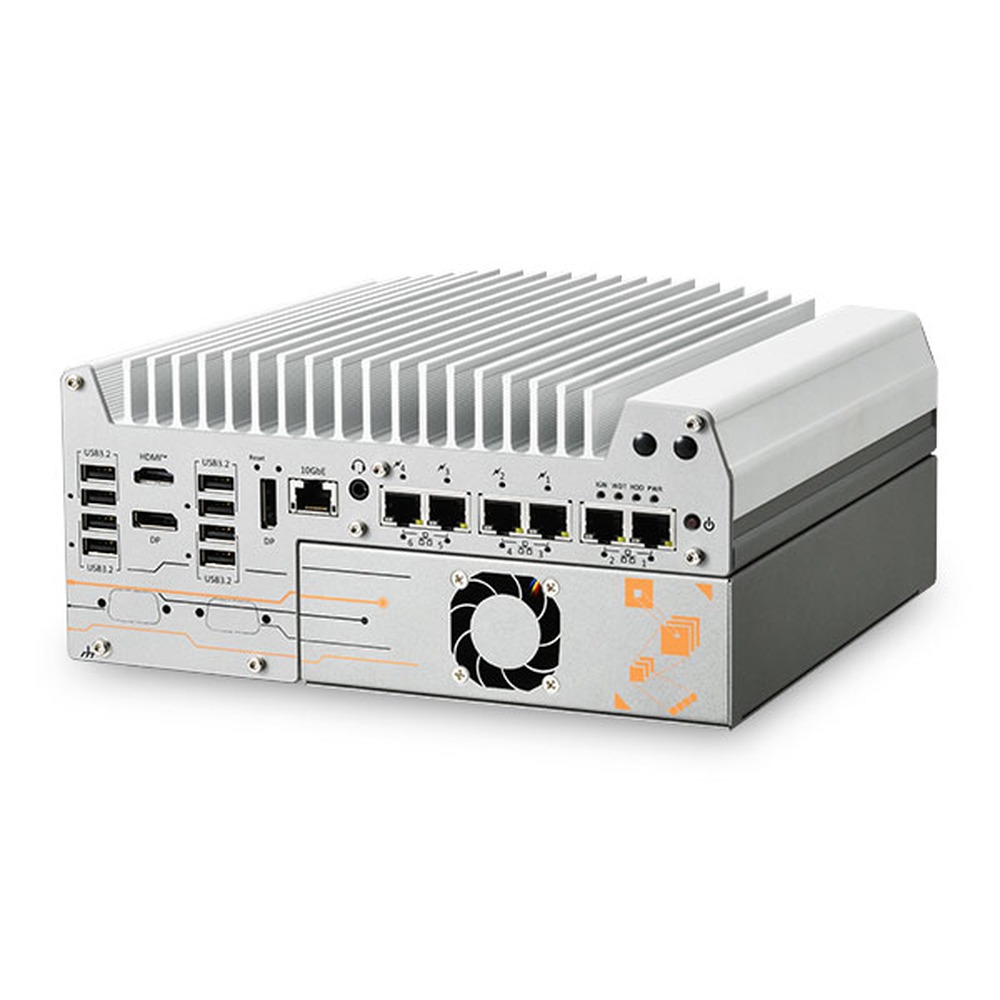
Nuvo-11160GC Neousys GPU Edge AI Computer
Our lead pick for GPU inference in a small rugged chassis, fitting an NVIDIA RTX card up to 150 W, including Blackwell cards, beside an Intel Core Ultra 200S processor.
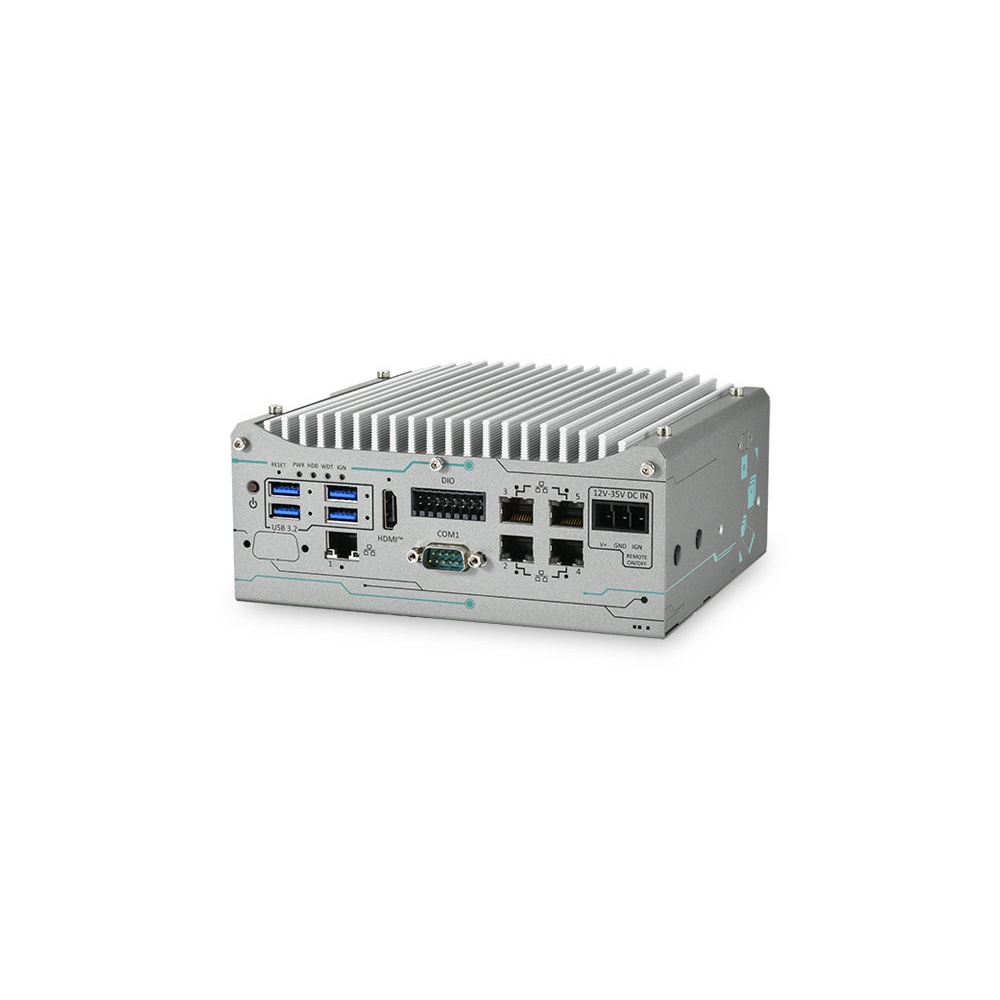
POC-960GC Neousys Edge AI Box PC
Chosen for robots and kiosks that split AI between NPU and GPU, pairing the Ryzen PRO 8640U and its 16 TOPS NPU with a low-profile PCIe x16 slot for a 70 W NVIDIA card.
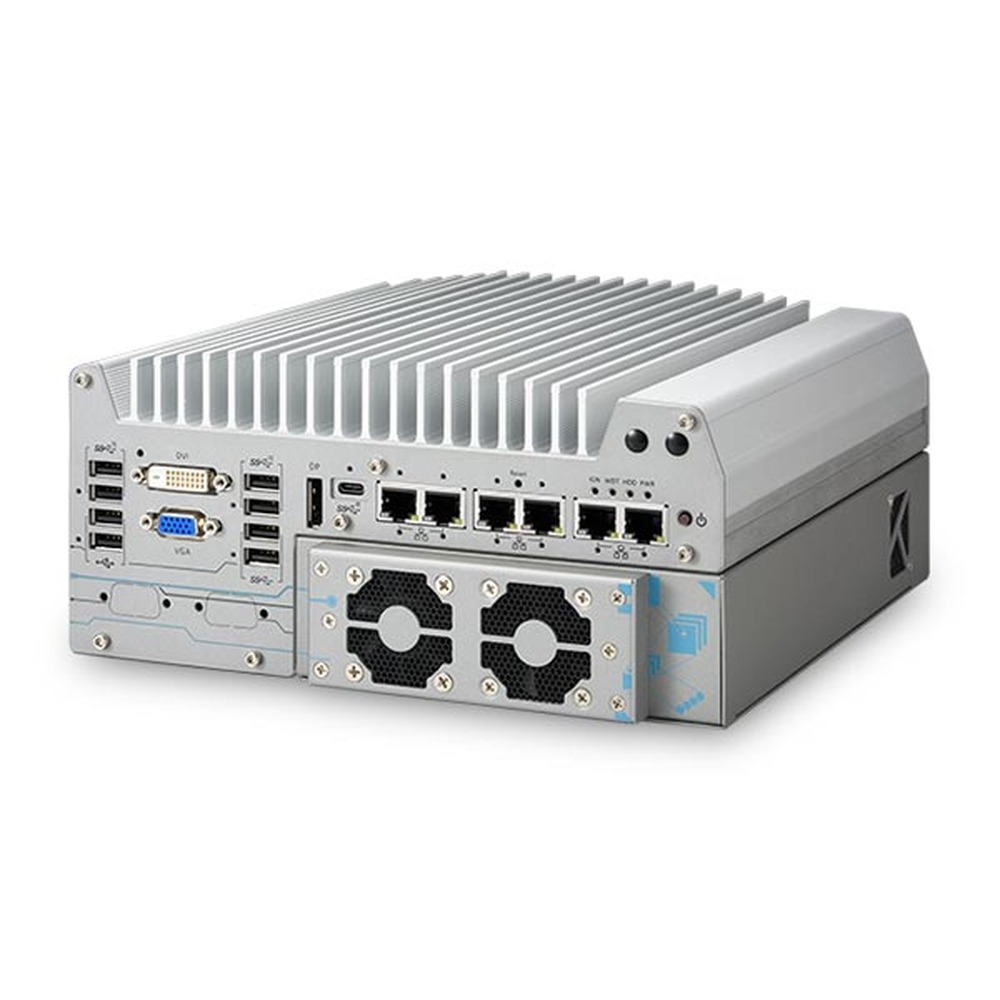
Nuvo-9166GC Neousys GPU Edge AI Computer
Our pick for inspection systems built into other makers’ machines: an NVIDIA L4 GPU rated at up to 485 TOPS, a second PCIe slot and a UL 62368-1 build.
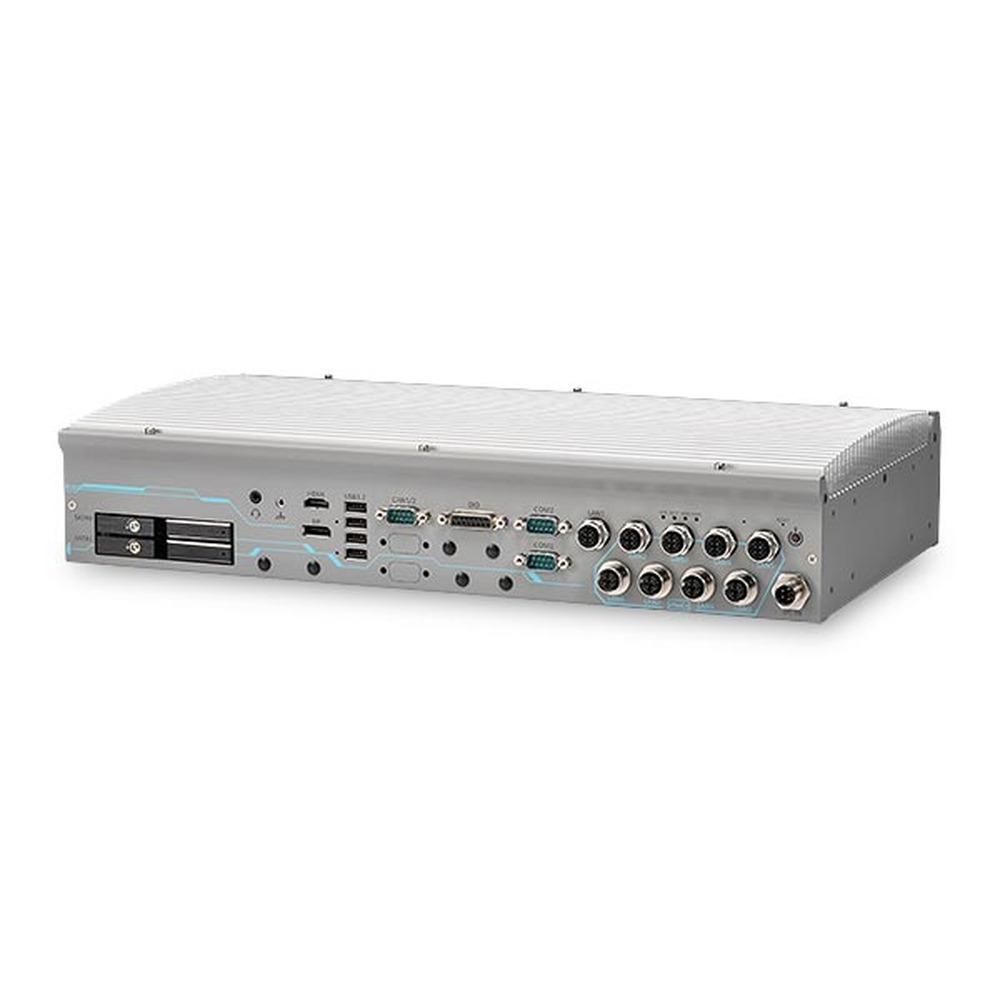
GT-92GC Neousys Rackmount GPU Computer
Chosen where GPU inference has to live in a 19-inch rack on a vehicle or in a dusty cell, cooling an RTX 2000 Ada card and a Core processor with no fans.
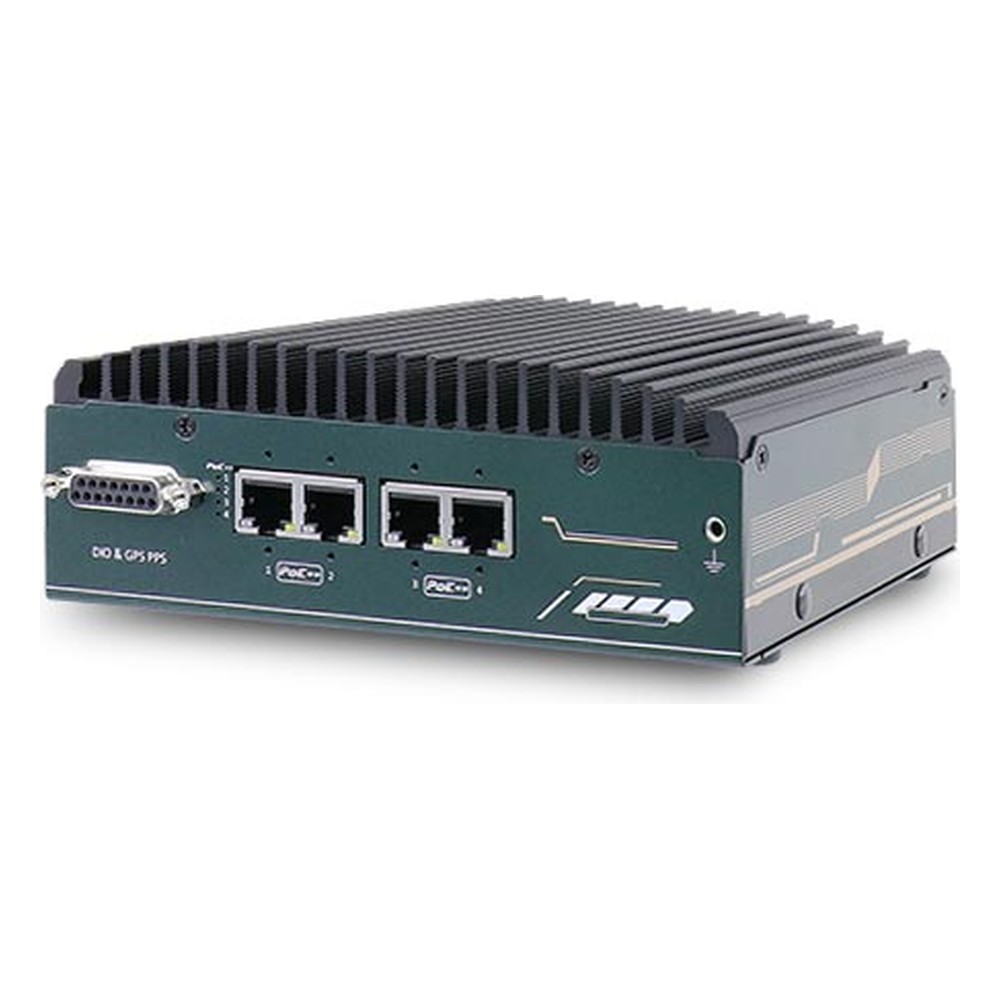
NRU-52S Neousys Jetson AI Edge Computer
Picked for camera analytics where each PTZ or heated camera needs real power, with four 802.3bt PoE++ ports of up to 90 W on Jetson Orin NX, isolated CAN and ignition control.
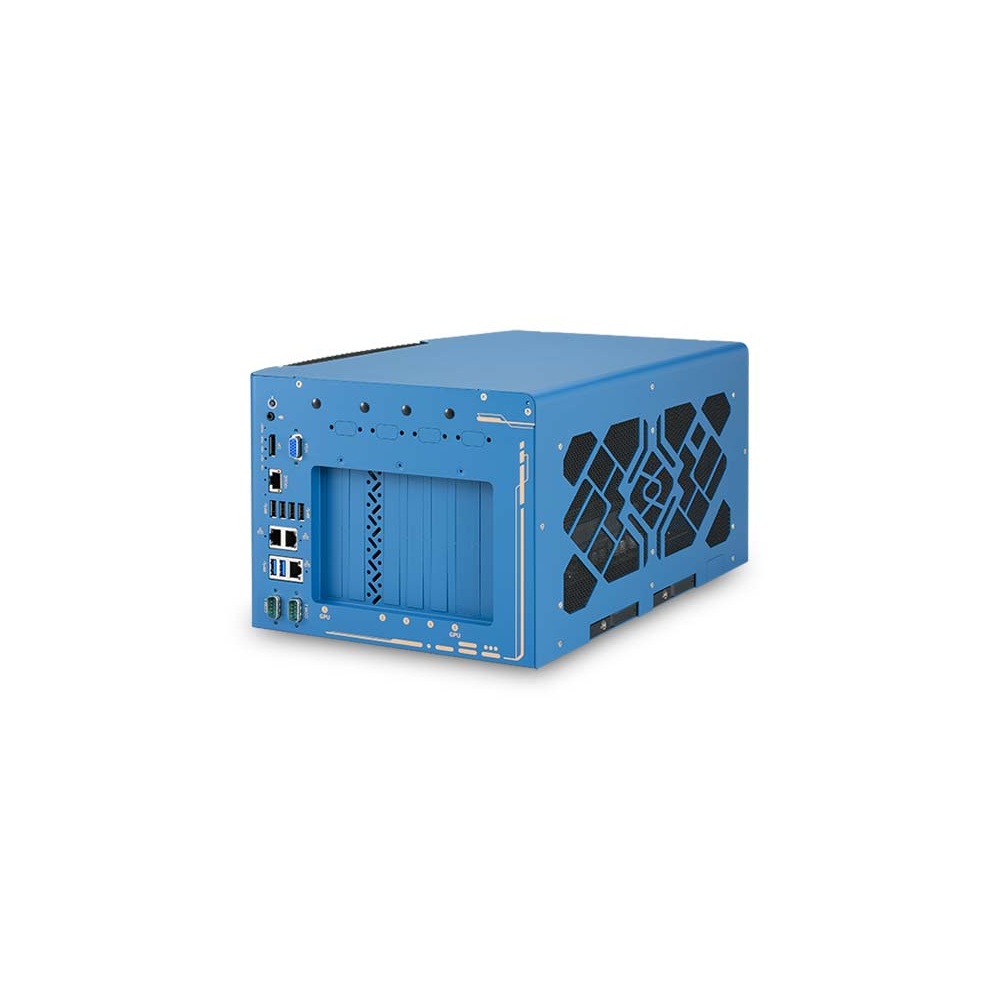
Nuvo-10208GC Neousys Dual GPU Edge AI Server
Chosen when inference needs two full-size graphics cards on site, with 12th to 14th Gen Core and room for two 350 W NVIDIA RTX GPUs in a rugged chassis.
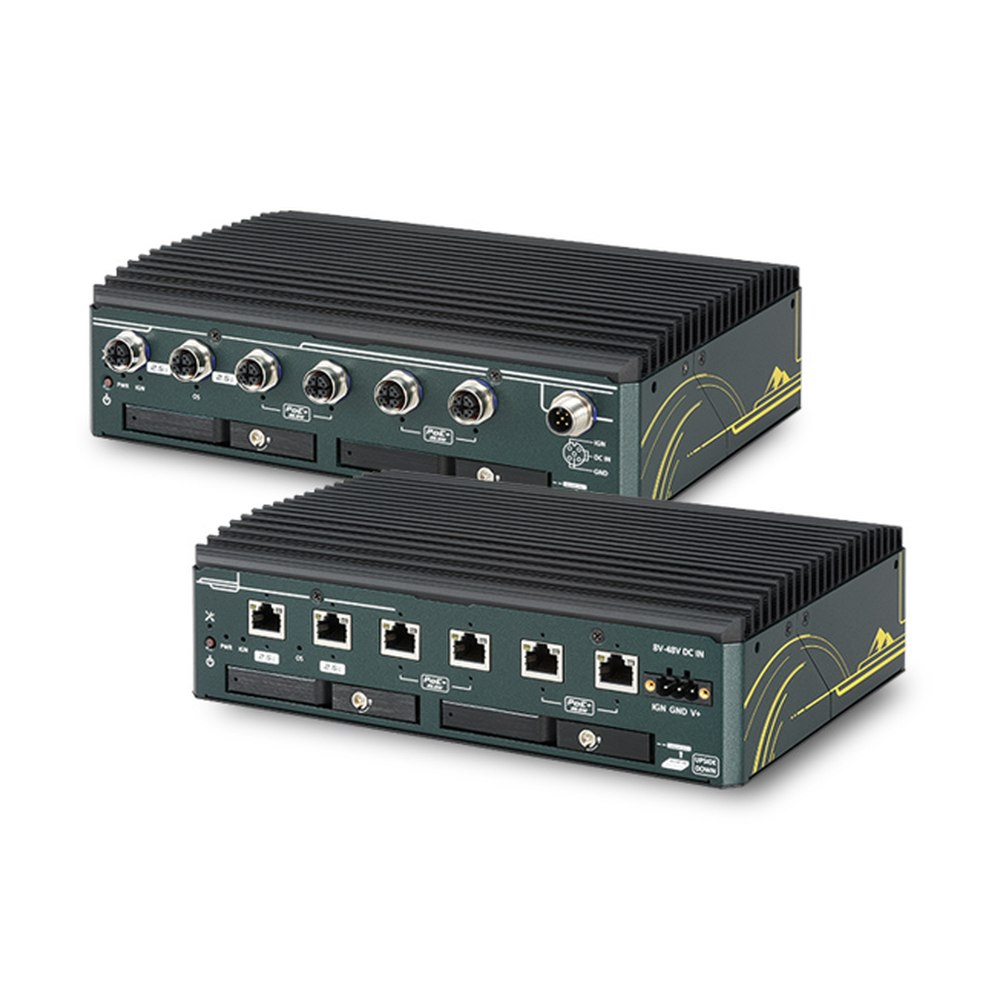
NRU-220S Neousys AGX Orin Edge AI System
Picked for video analytics that records as well, with Jetson AGX Orin up to 275 TOPS, transcoding of up to 22 1080p streams and four PoE+ ports.
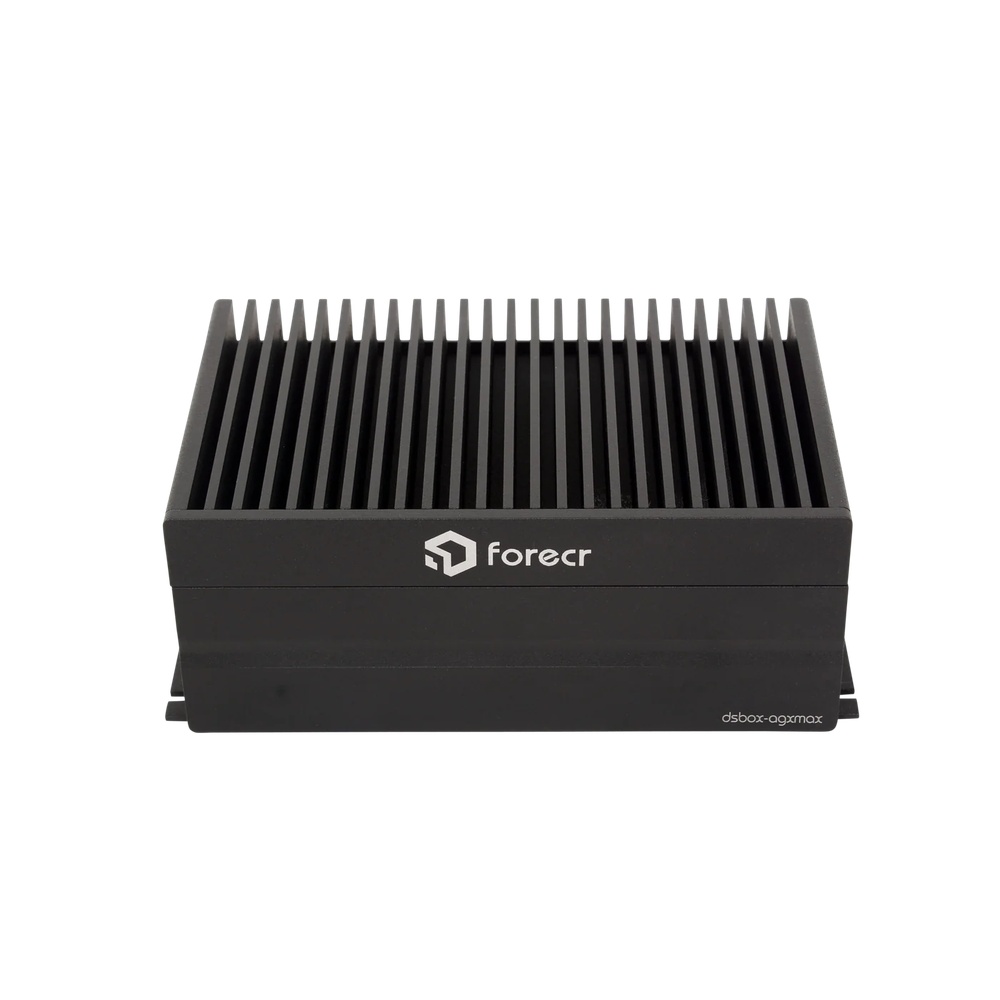
DSBOX-AGXMAX Forecr AGX Orin Edge AI Computer
Our lead pick for machine vision and autonomy on Jetson AGX Orin, rated up to 275 TOPS, with a 10G SFP+ port and an internal connector for eight GMSL2 cameras.
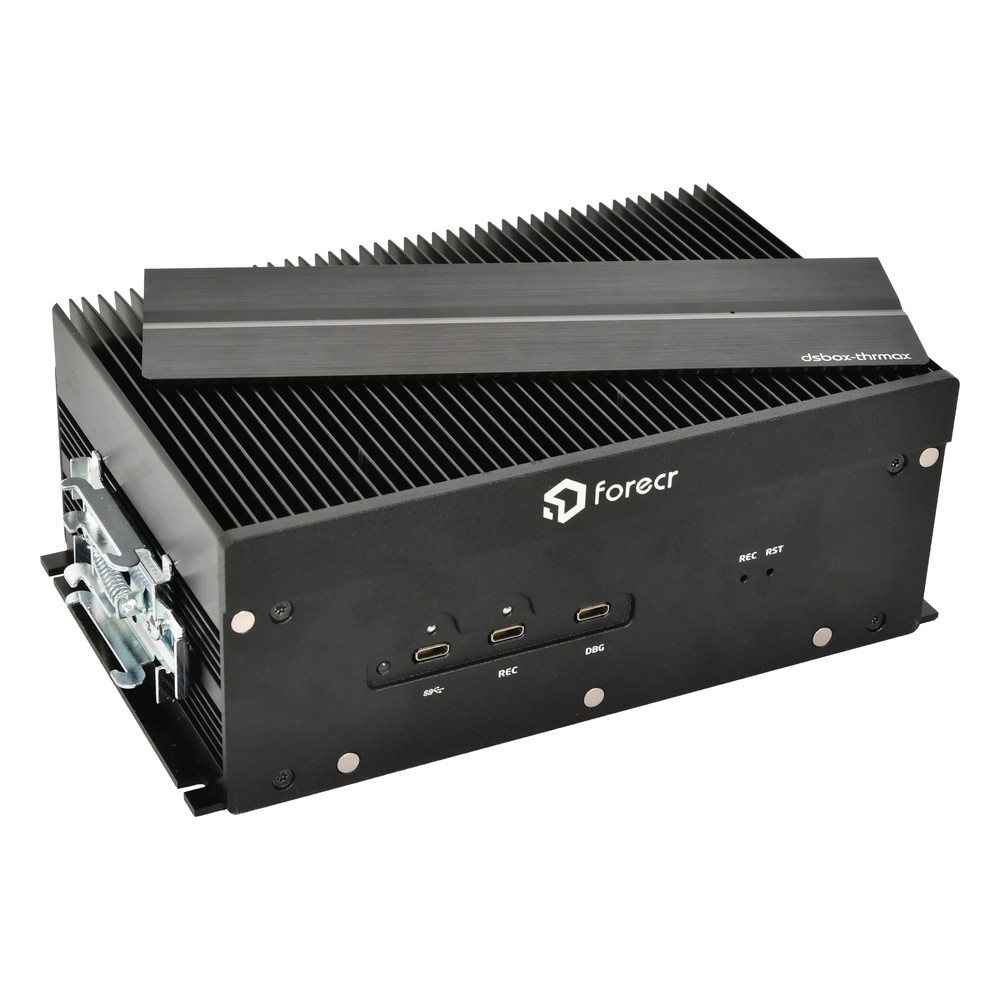
DSBOX-THRMAX Forecr Jetson Thor Edge AI Box PC
Chosen for robots and vision systems that need Jetson Thor bandwidth, with T5000 or T4000 modules, four 25GbE links on QSFP28 and PCIe Gen5 NVMe storage.
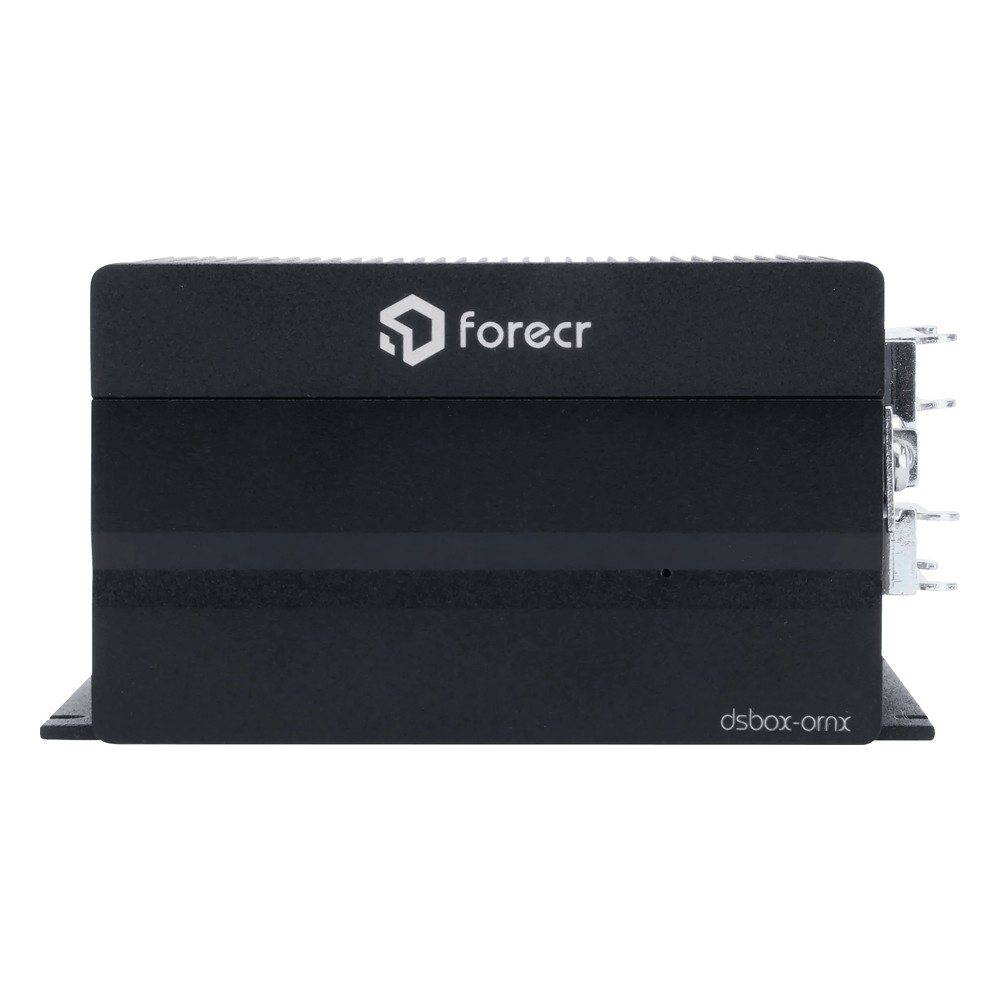
DSBOX-ORNX Forecr Edge AI Device
Picked for small Jetson deployments in robotics and transport, with Orin NX or Orin Nano up to 100 TOPS, LTE, 5G or Wi-Fi sockets with a SIM slot and CAN bus.
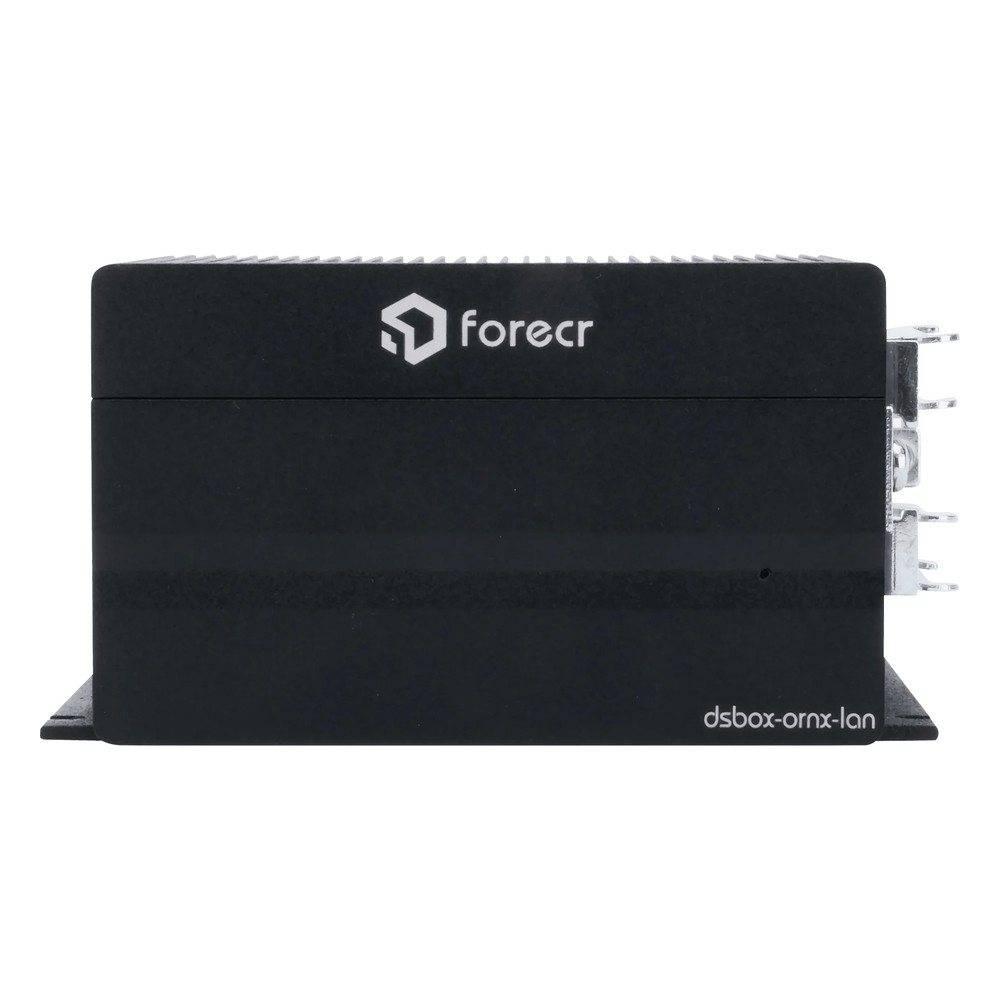
DSBOX-ORNX-LAN Forecr AI Edge Computer
Selected for Jetson AI on two networks, with Orin NX or Orin Nano up to 100 TOPS, dual Gigabit Ethernet, CAN and three M.2 sockets.
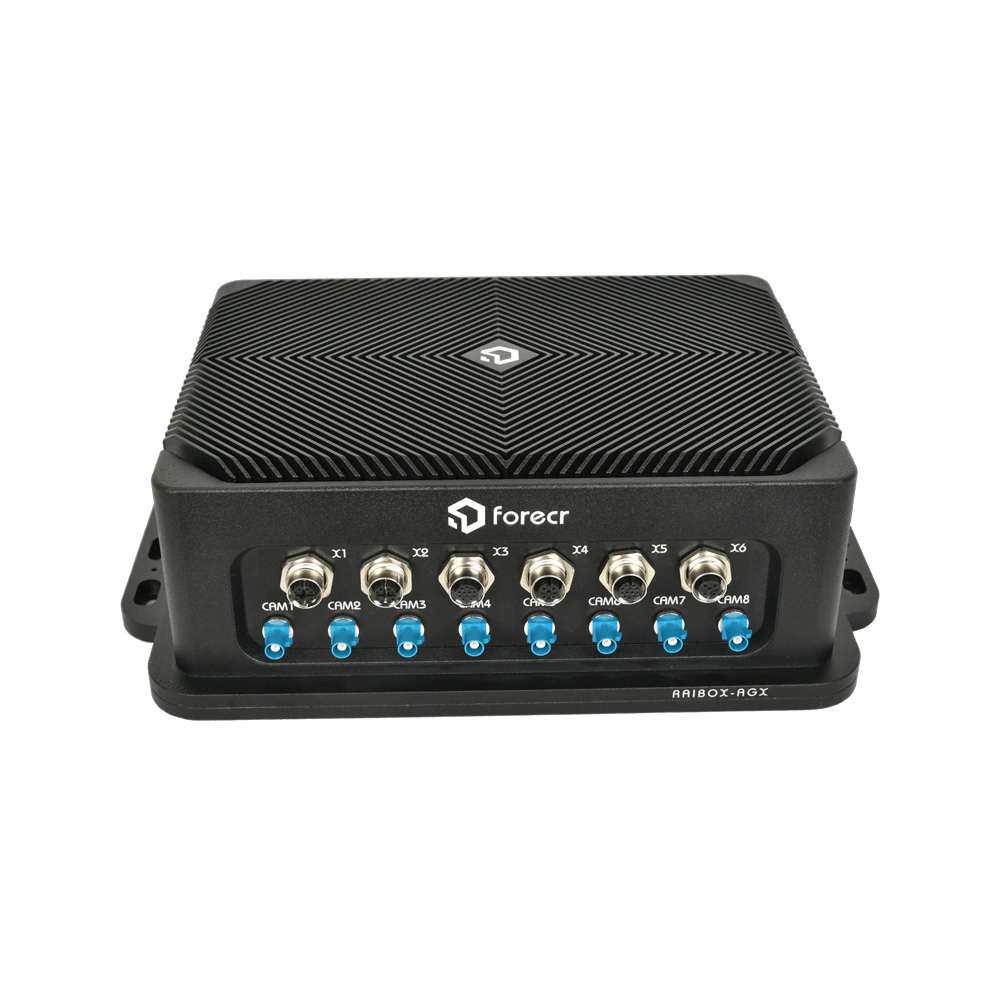
RAIBOX-AGX Forecr Railway Edge AI Computer
Chosen for railway AI on Jetson AGX Orin, with eight GMSL2 camera inputs, isolated CAN and M12 I/O in an IP67 enclosure designed to EN 50155.
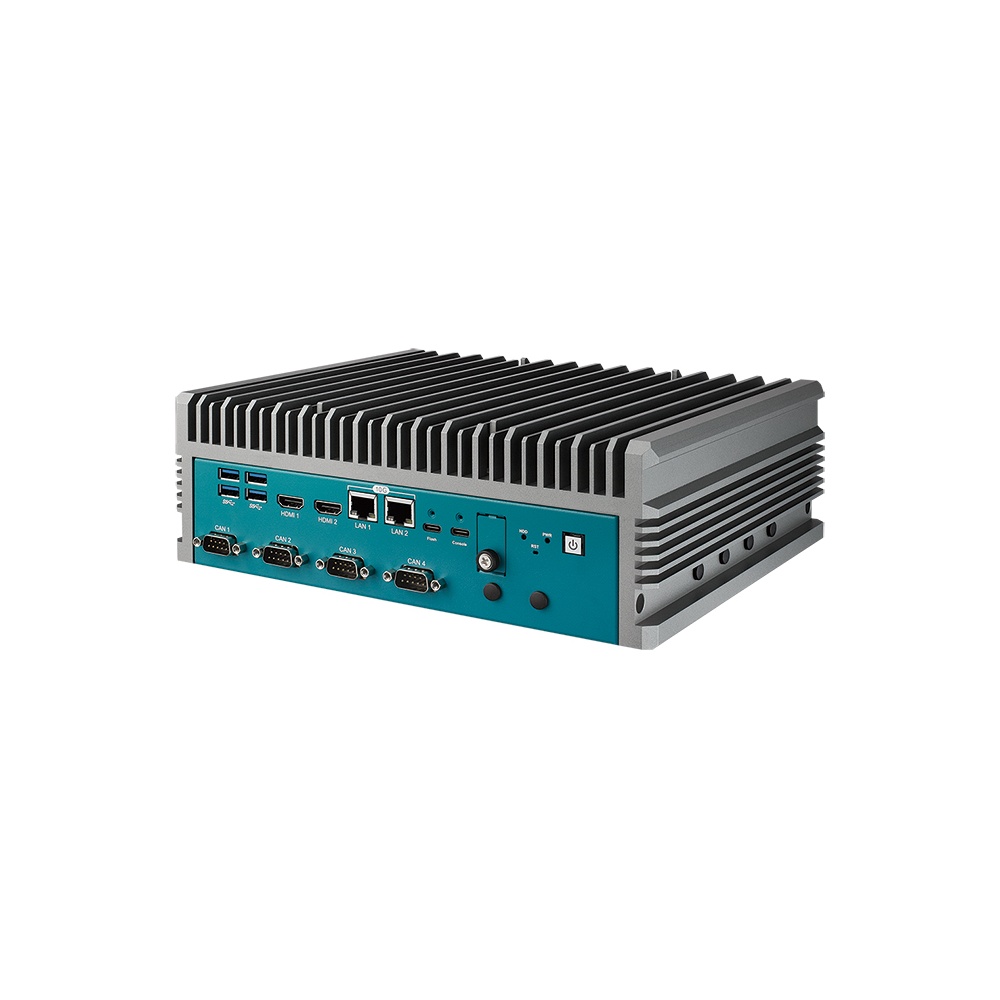
EAC-7000 Vecow Jetson Thor Edge AI Computer
Our lead Jetson Thor pick for humanoid robots and autonomous vehicles, with T5000 or T4000 modules, up to 128 GB LPDDR5X and up to 16 GMSL camera inputs.
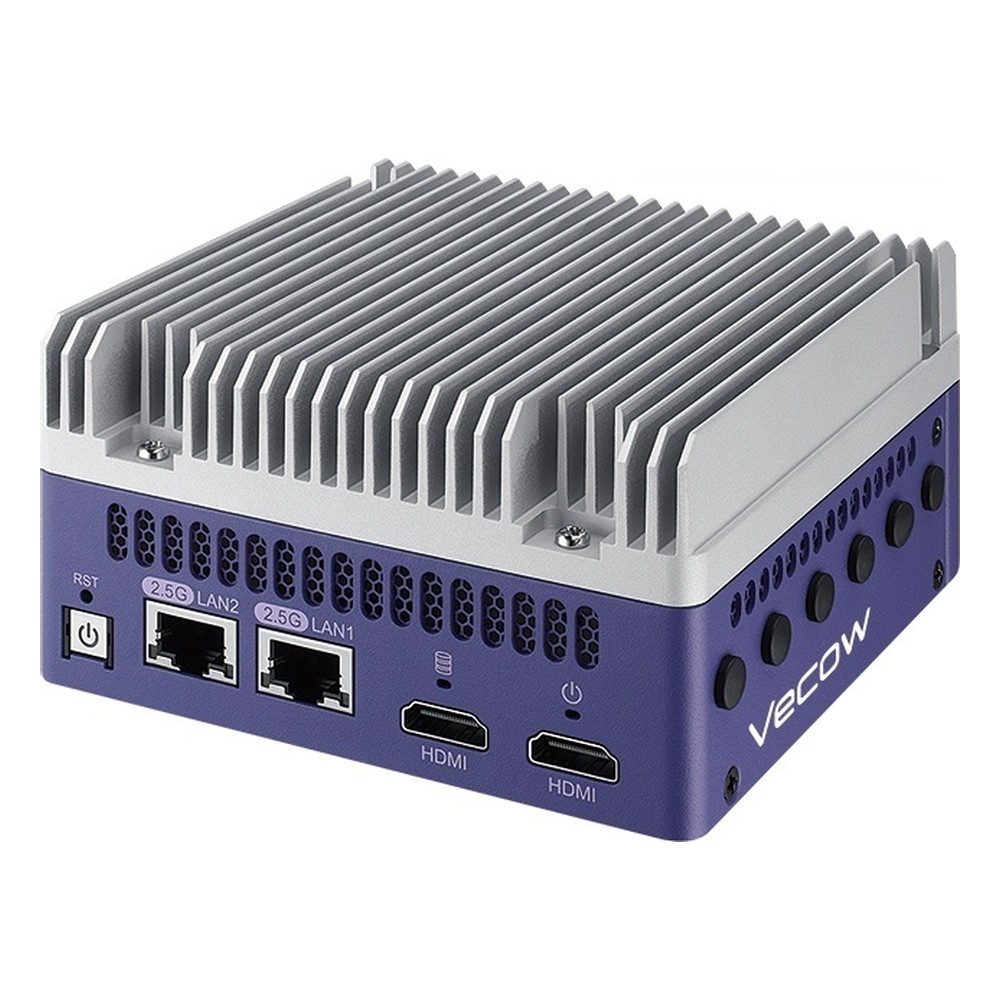
TGS-2000 Vecow AI Edge Computer
Chosen when the NPU carries the model, with Core Ultra Series 3 rated at 47 to 50 TOPS, up to 128 GB of DDR5 7200 and fanless, fan-cooled or MXM GPU builds.

EAC-5100 Vecow AGX Orin Edge AI Computer
Picked for mobile machines that run heavy video analytics, with AGX Orin at up to 275 TOPS, PoE+ camera ports, isolated CAN FD and an out-of-band management option.

EAC-6200 Vecow Jetson Machine Vision PC
A sensible choice for GigE camera cells, pairing a Jetson Orin NX at up to 100 TOPS with four PoE+ ports, so no separate PoE switch is needed.
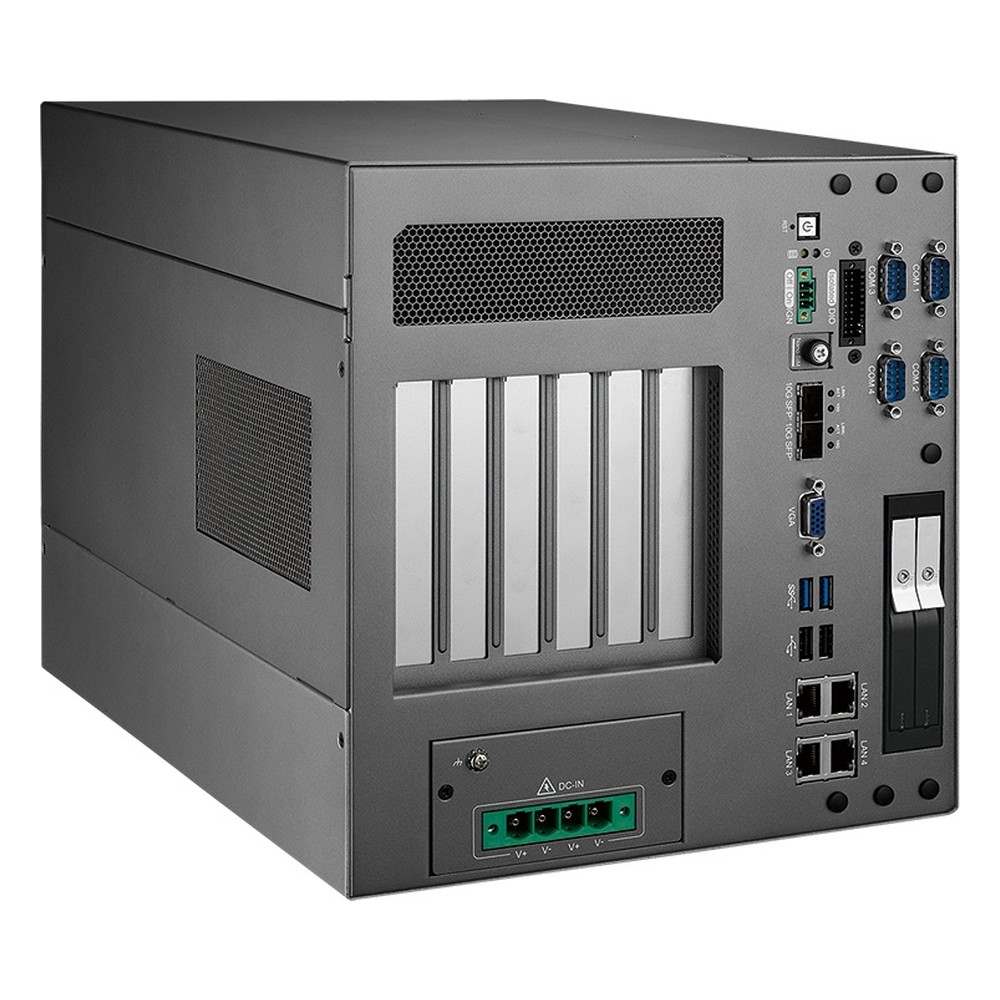
ICS-1000 Vecow GPU Edge Server
Our choice for control rooms that mix graphics, capture and network cards, with a Xeon D processor and six full-size PCIe slots behind one mains supply.
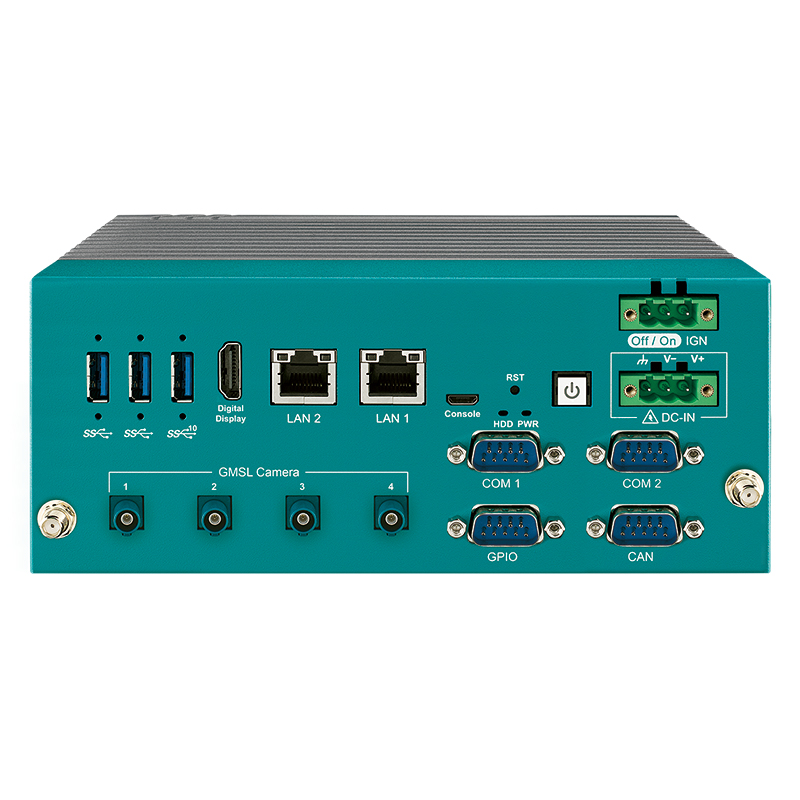
EAC-6100 Vecow GMSL Edge AI Computer
Selected for mobile robots and autonomous vehicles, taking four GMSL1 or GMSL2 cameras on Fakra-Z into a Jetson Orin NX, with CAN FD and dual SIM for 5G or 4G.
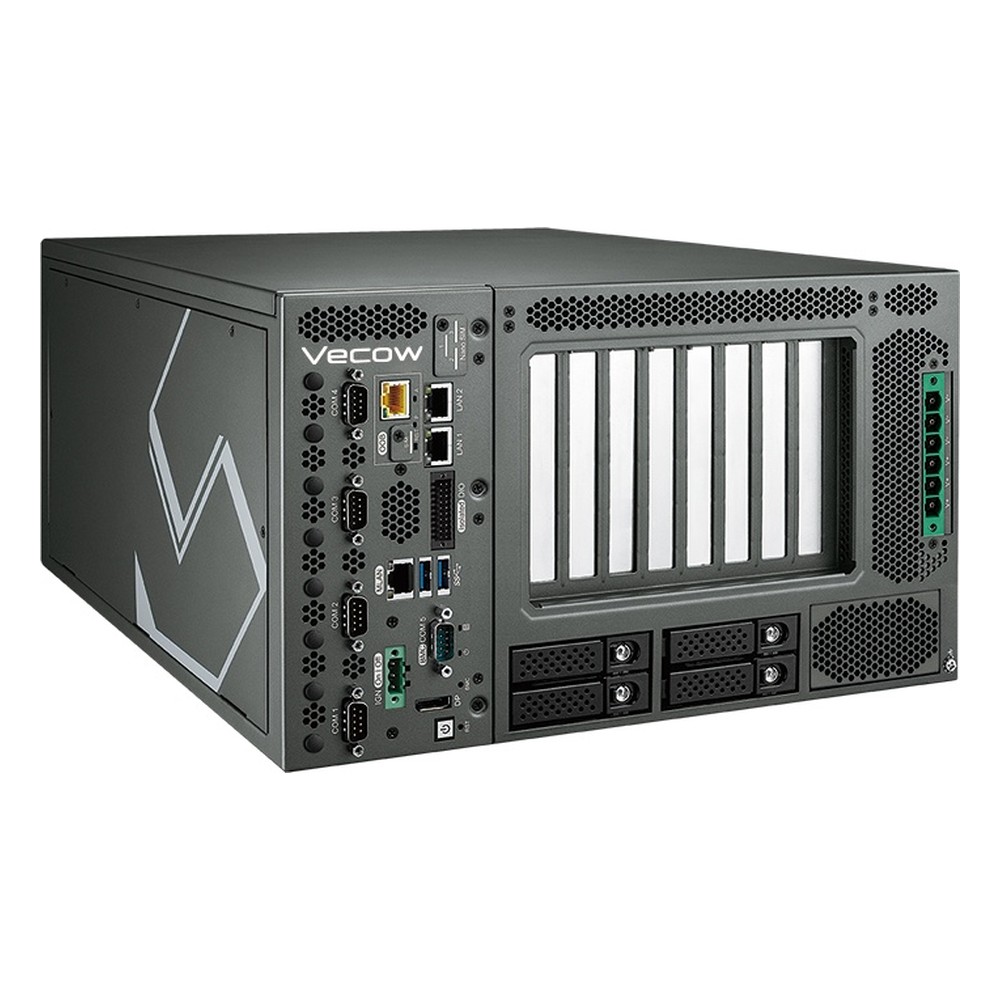
ICS-2000 Vecow EPYC Edge AI Server
Chosen for edge AI servers that need two GPUs and fast storage, with a 24-core AMD EPYC 8224P, two x16 PCIe 5.0 slots, up to 768 GB of DDR5 and four U.2 bays.
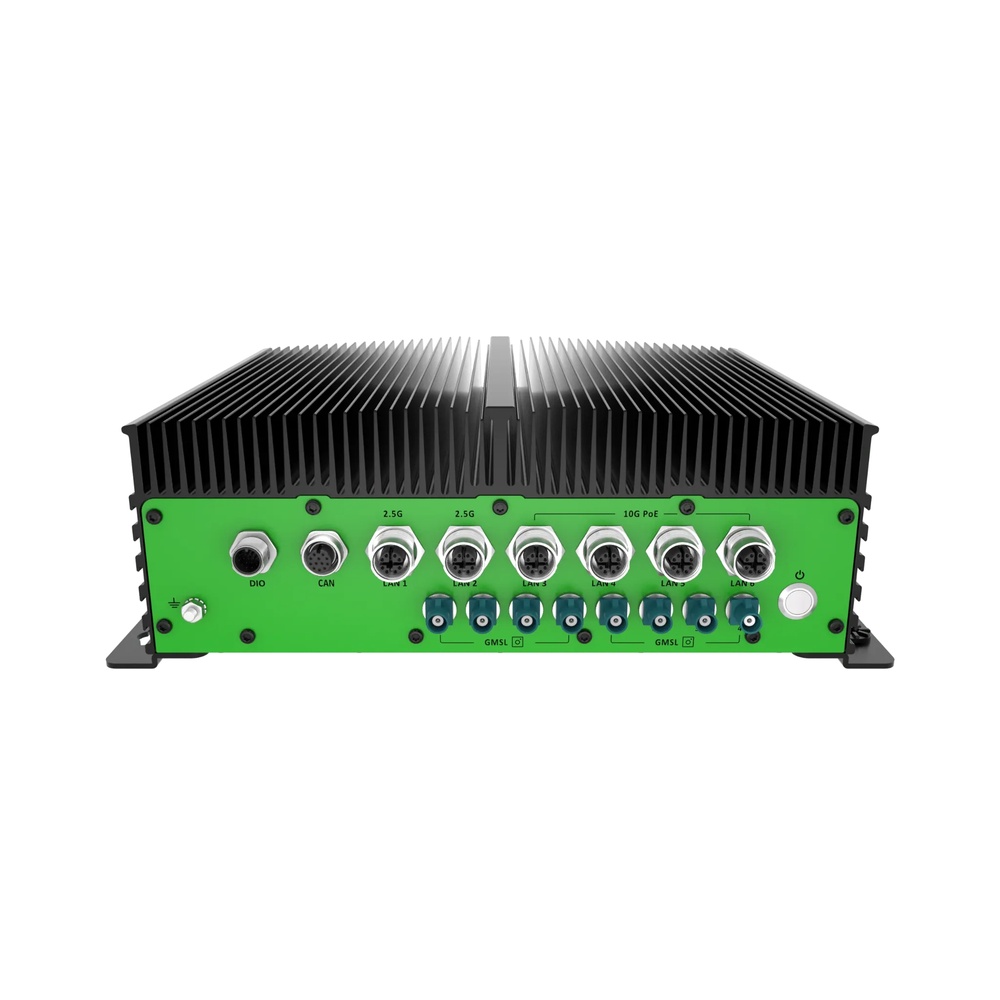
WCO-6000-THR-A Premio Jetson Thor AI Computer
Our lead pick for outdoor perception and rail-side vision on Jetson AGX Thor, sealed to IP66 with three or four M12 10GbE ports, PoE+ options and eight Fakra-Z GMSL2 inputs.
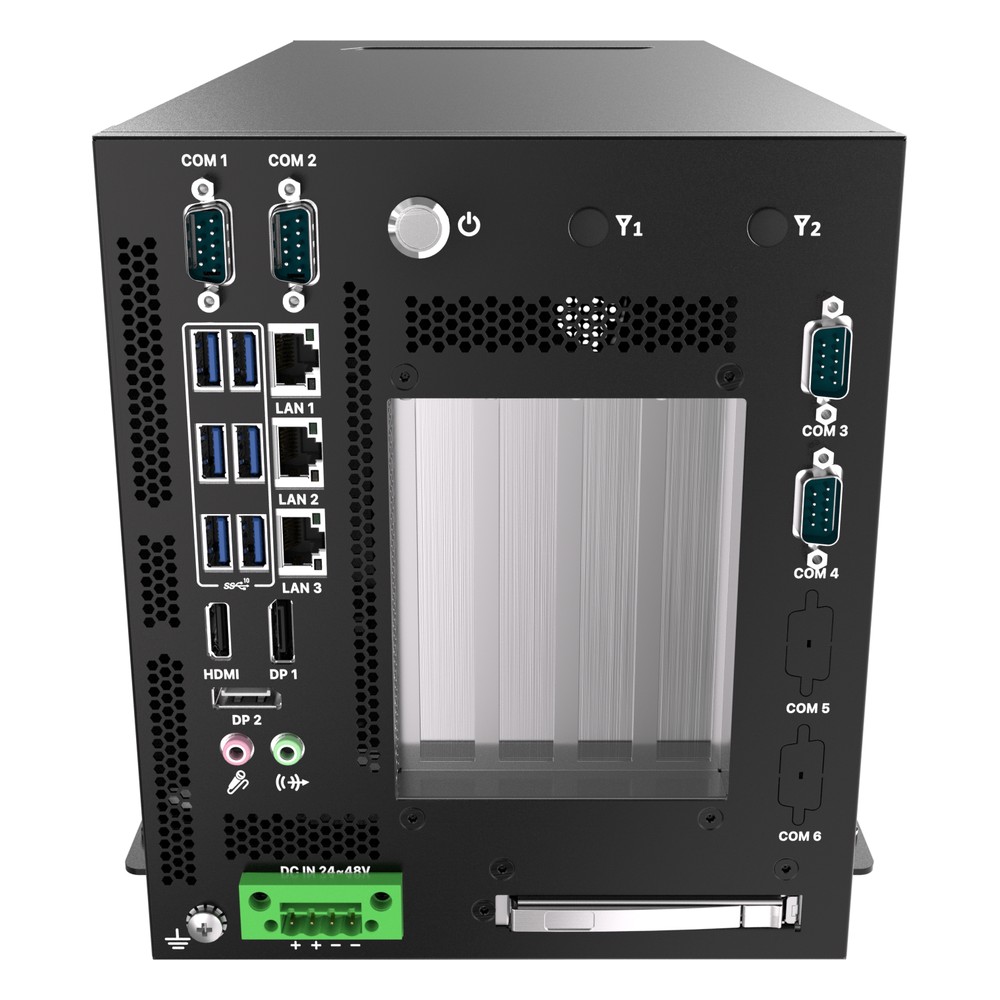
KCO-6000-ARL Premio Edge AI Workstation
Chosen when one model runs on the NPU and another on a graphics card, with Arrow Lake-S Core Ultra, PCIe Gen5 risers for a full-size GPU and triple 2.5GbE.
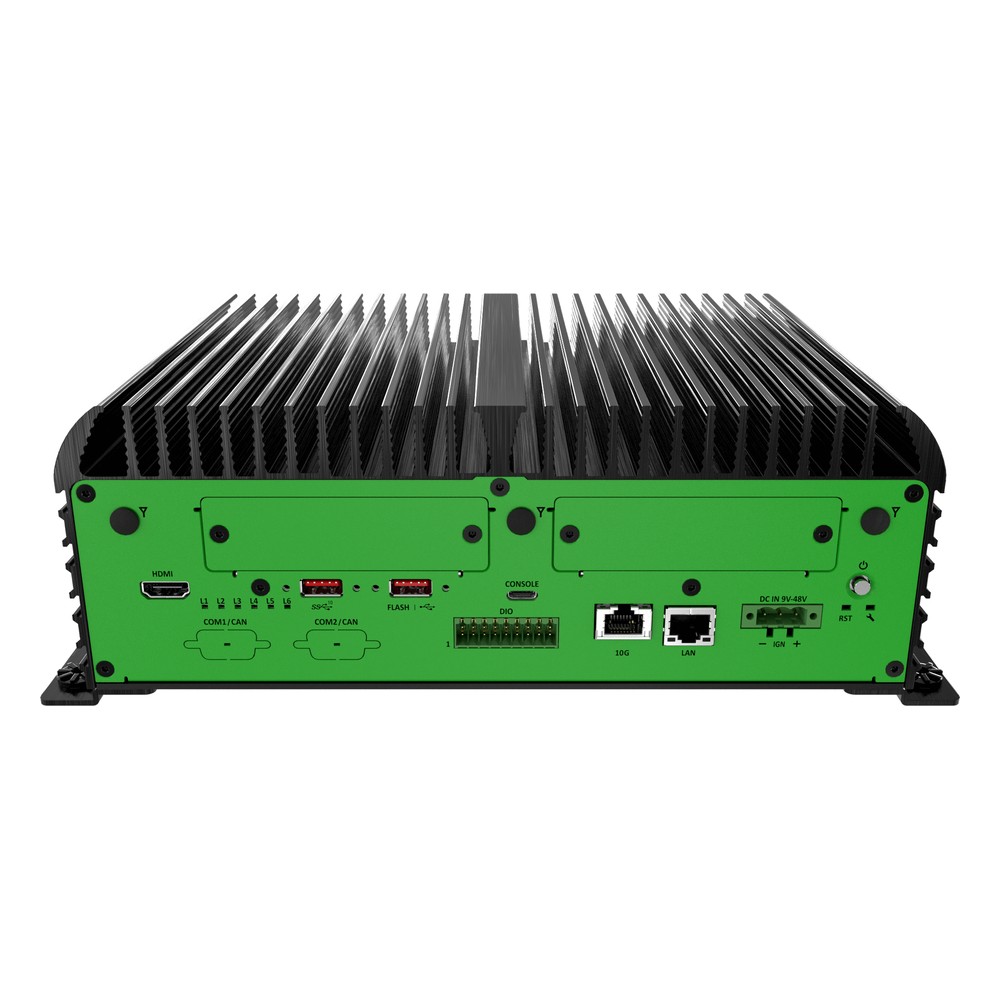
JCO-6000-ORN Premio Edge AI Box PC
Chosen for robots and transport systems with several camera streams: AGX Orin at up to 275 TOPS, 10GbE and two EDGEBoost I/O brackets for later additions.
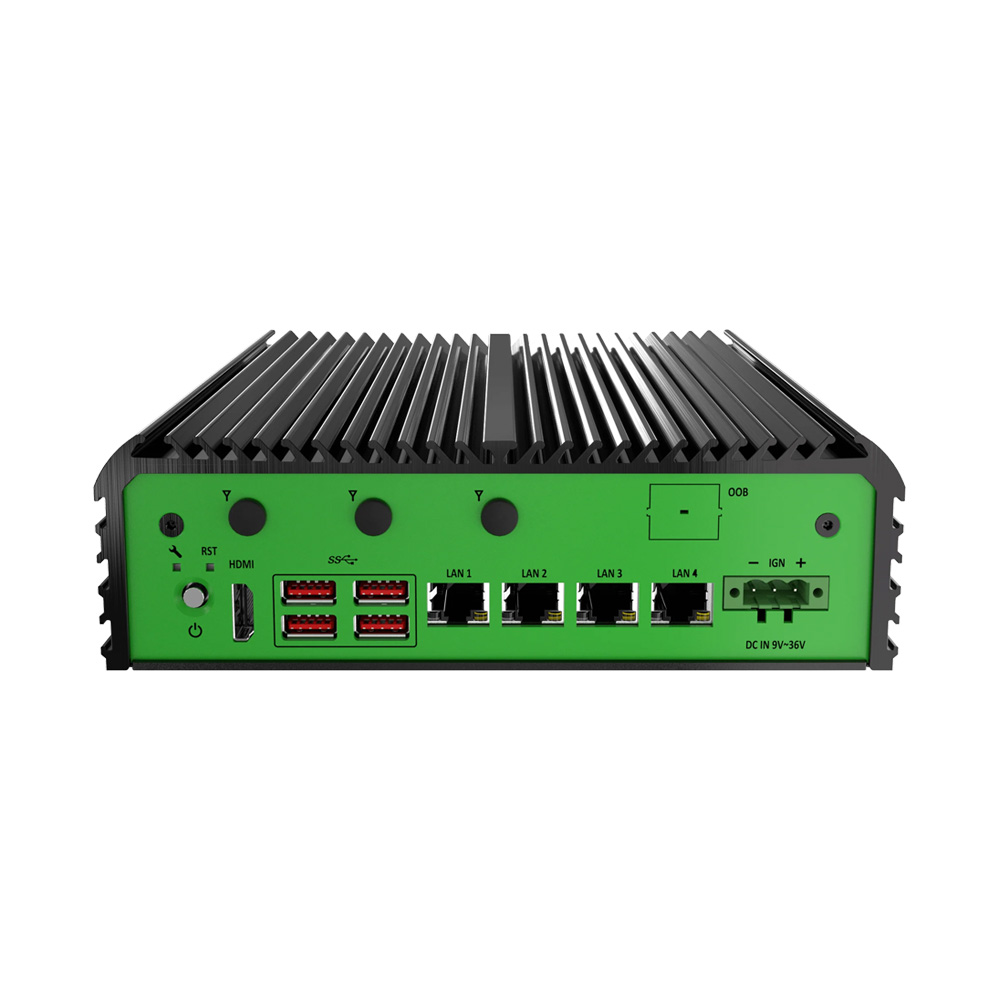
JCO-3000 Premio PoE Jetson Computer
A favourite for camera projects, powering four cameras from its own PoE+ ports, with the Orin NX or Orin Nano module chosen to suit the model.
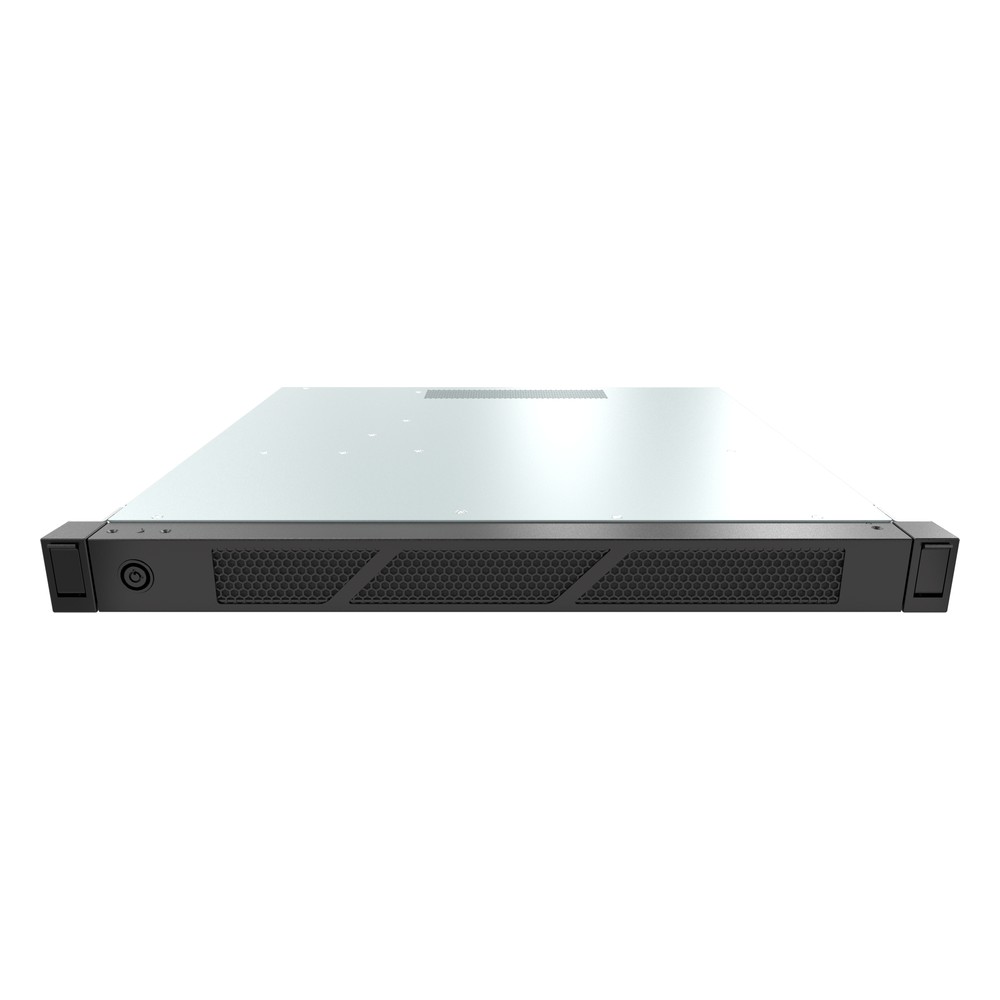
LLM-1U-RPL Premio 1U Edge AI Server
Picked for equipment rooms that need GPU inference in a 1U rack chassis, with two PCIe x8 slots for RTX cards and redundant AC or DC supplies.
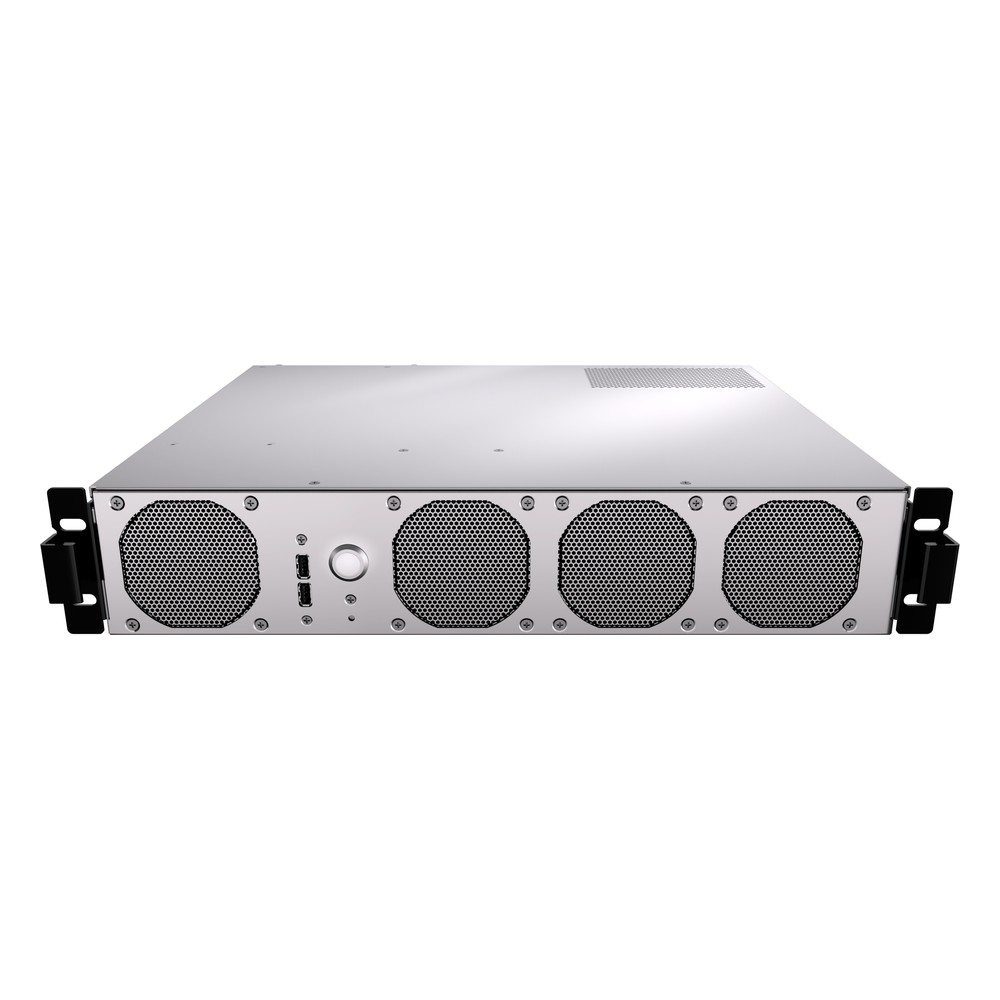
LLM-2U-AM5 Premio 2U Edge AI Server
Picked for compact AI servers in an equipment room or control centre, with Ryzen 9000 or EPYC 4005 processors, dual PCIe x16 slots for GPUs and 10GbE SFP+.
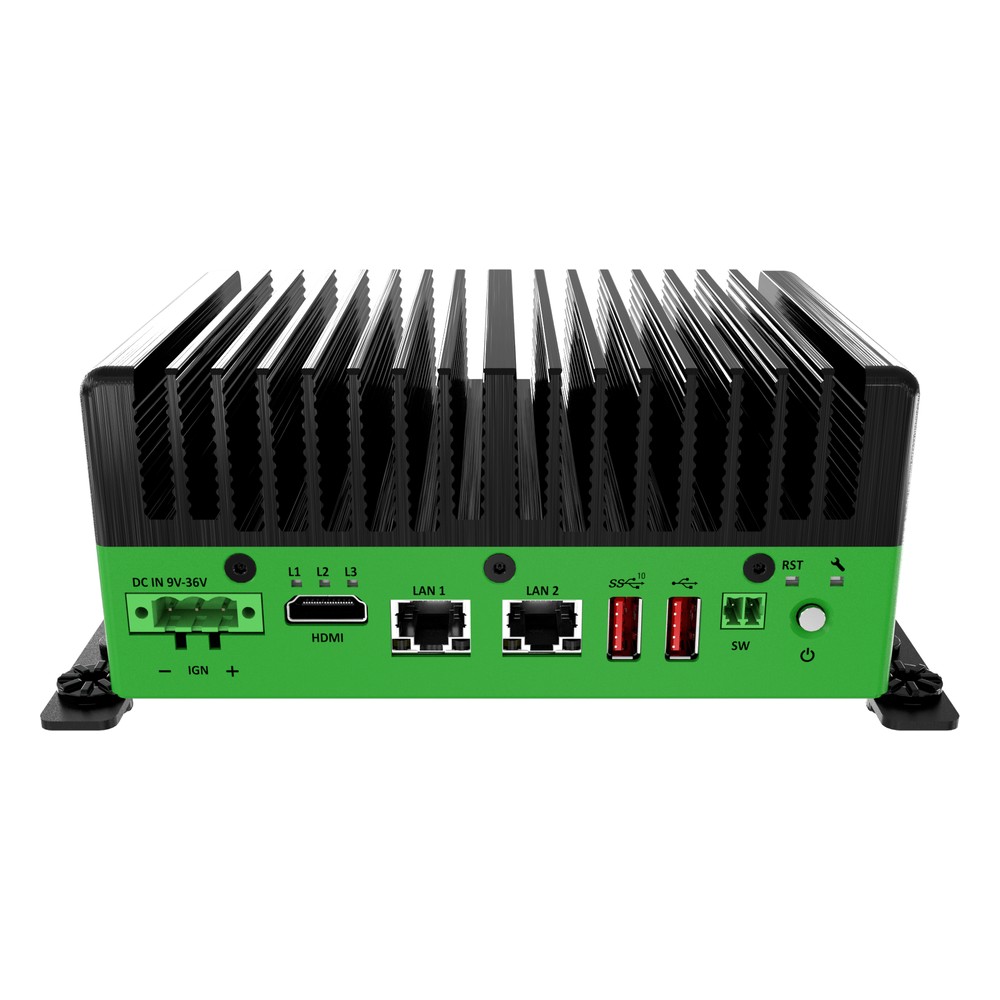
JCO-1000-ORN Premio Jetson Edge AI Device
Chosen for AI on vehicles and transport systems, with Jetson Orin NX or Orin Nano Super, M12 LAN builds, CAN and isolated DIO on a 9 to 36 V input with ignition management.
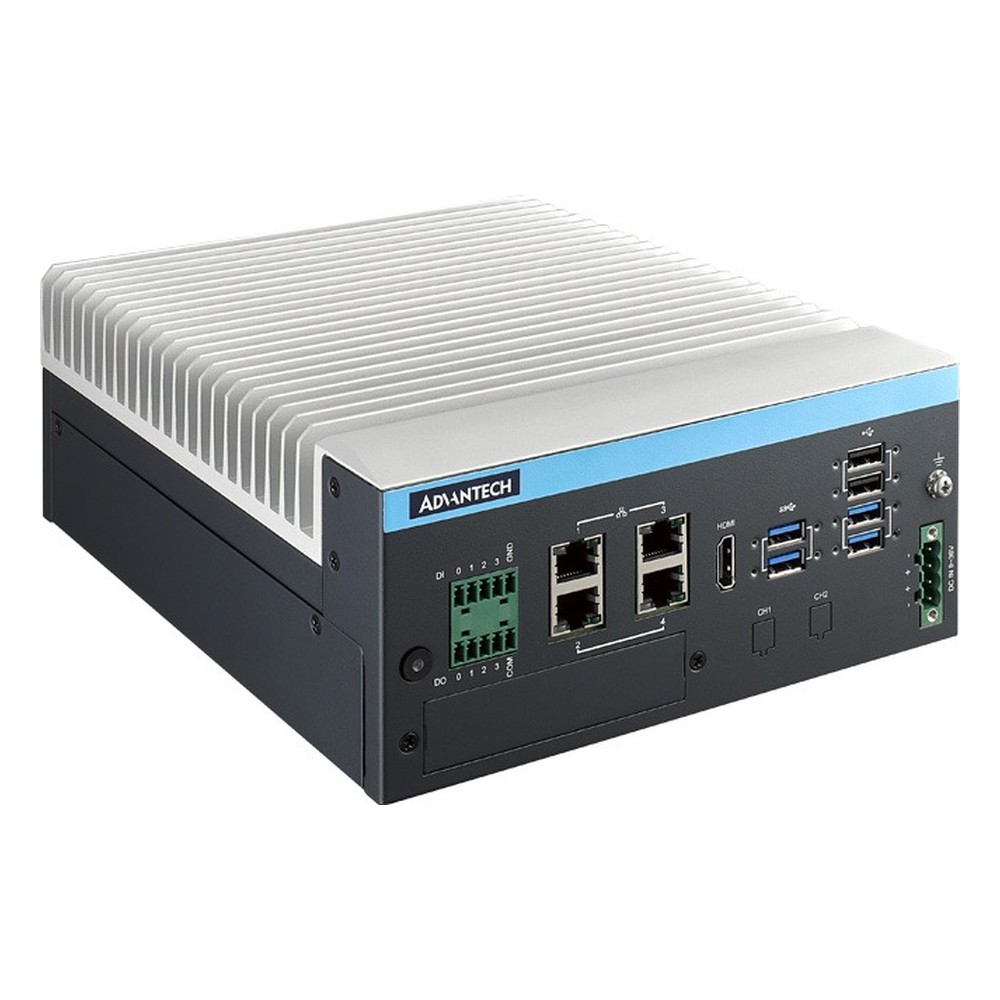
MIC-733-AO Advantech AI Edge Computer
Our pick for multi-camera inspection and robot guidance that needs AGX Orin at up to 275 TOPS, serial and digital I/O, plus a path to a full PCIe x8 slot.
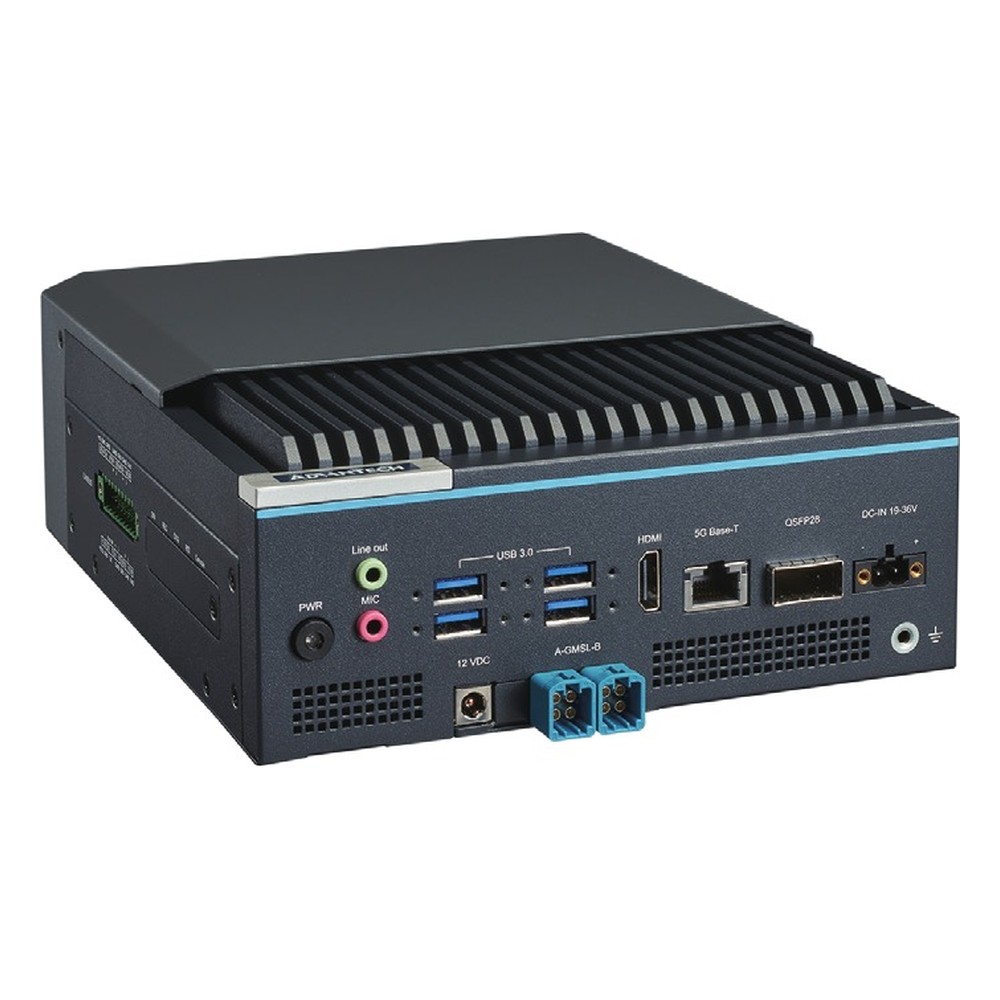
MIC-742-AT Advantech Thor Edge AI Computer
Chosen for autonomous machines and multi-camera inspection on Jetson Thor, with up to four 25GbE links on QSFP28, a 5GbE port and an optional eight-channel GMSL2 frame grabber.
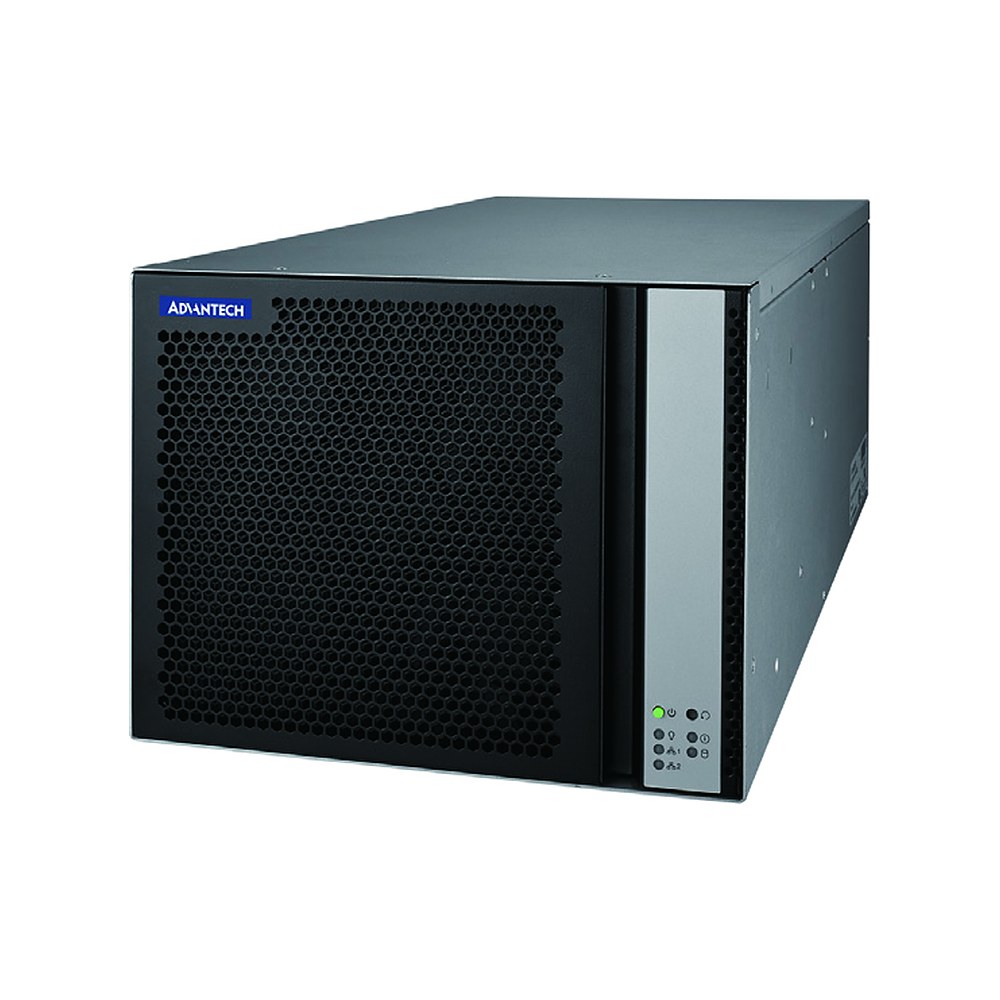
SKY-602E3 Advantech GPU Edge AI Server
Selected when edge AI needs several full-size GPUs on site, with an AMD EPYC Embedded 8004 processor, four double-width GPU slots and dual 10GbE in a mid-tower chassis.
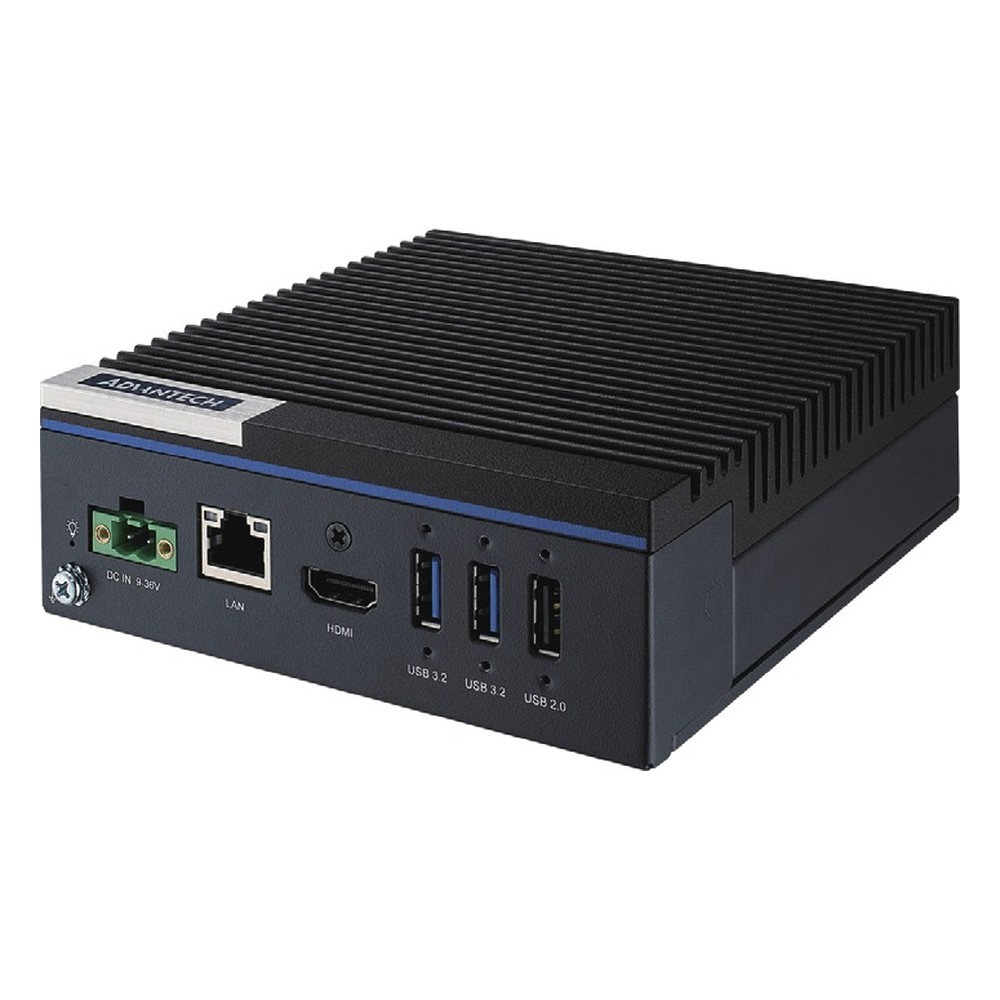
MIC-711-OX Advantech Small Edge AI PC
Chosen for kiosks and inspection stations with one camera and little space, running an Orin NX with an M.2 slot for a 5G modem.
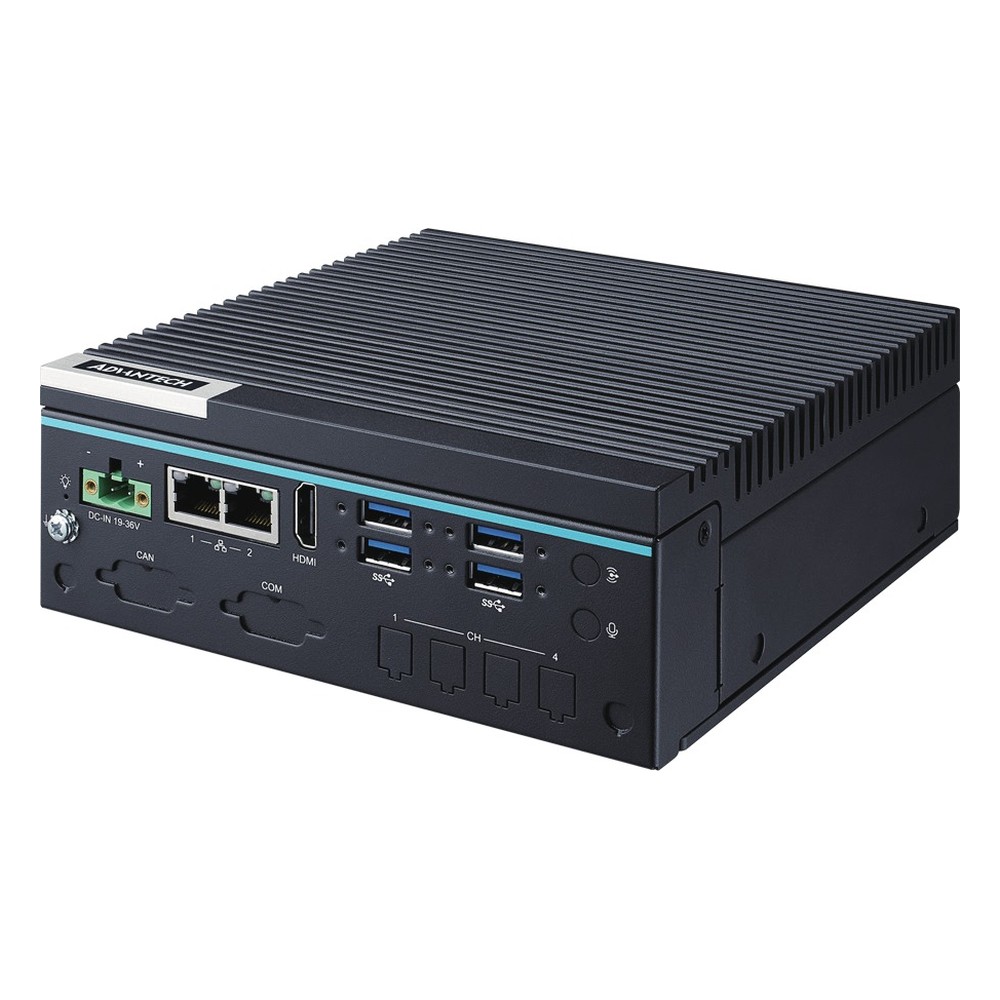
MIC-712 Advantech PoE Edge AI Computer
Chosen for multi-camera security AI, with Jetson Orin NX or Orin Nano and six PoE ports on P versions sharing a 150 W budget, plus out-of-band management.
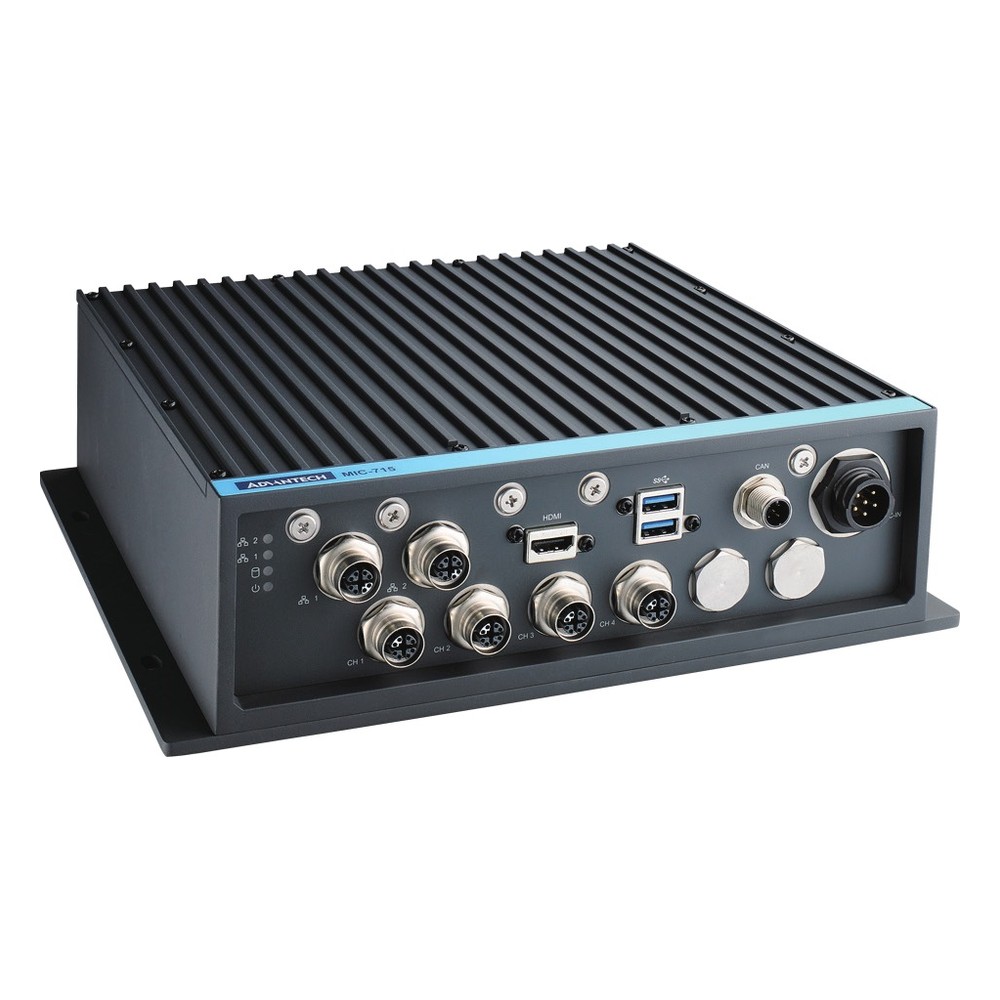
MIC-715-OX Advantech IP67 Edge AI System
Picked for vehicle AI mounted outside the cab, with a Jetson Orin NX 16GB in an IP67 housing, four M12 PoE ports and ignition control.
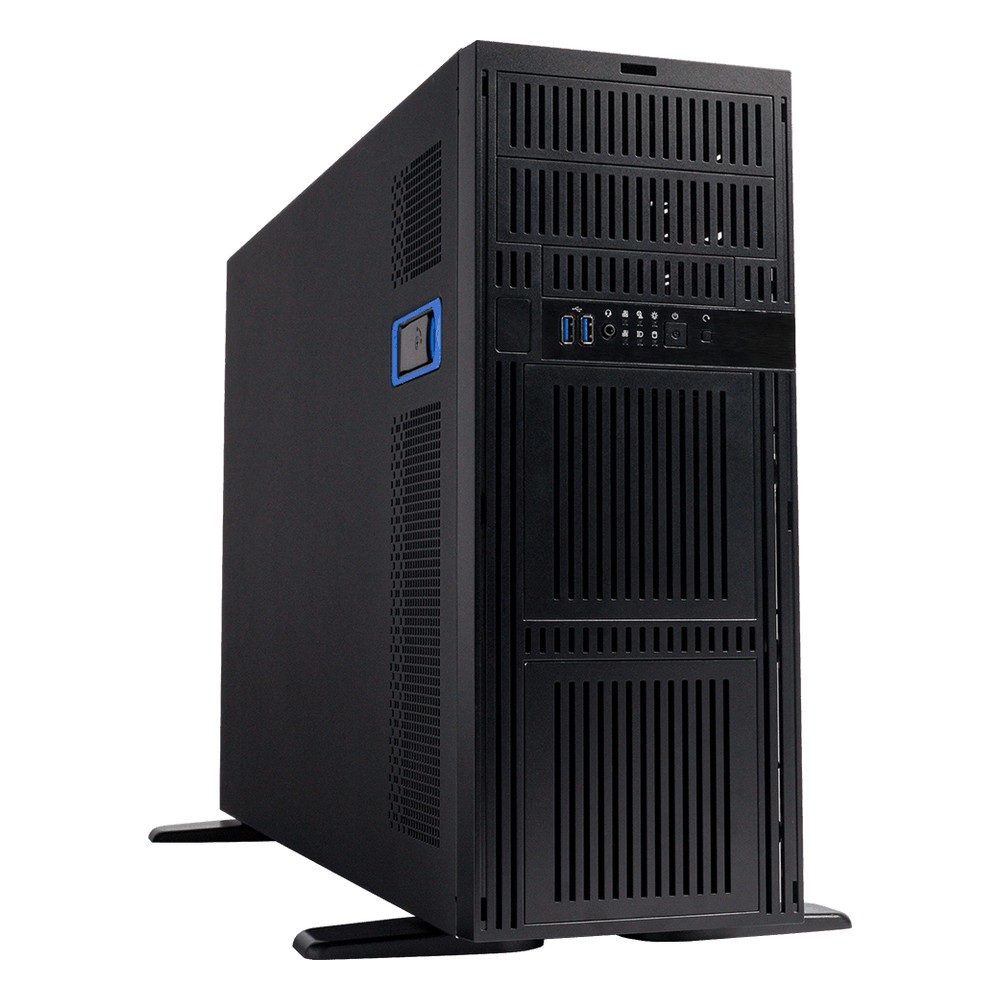
iEPF-11000S ASRock Industrial Quad GPU AI Computer
Our lead pick for large models run on site, taking up to four dual-width GPUs such as the RTX PRO 6000 Blackwell on Intel Xeon 600 and W890, with up to 2 TB of ECC memory.
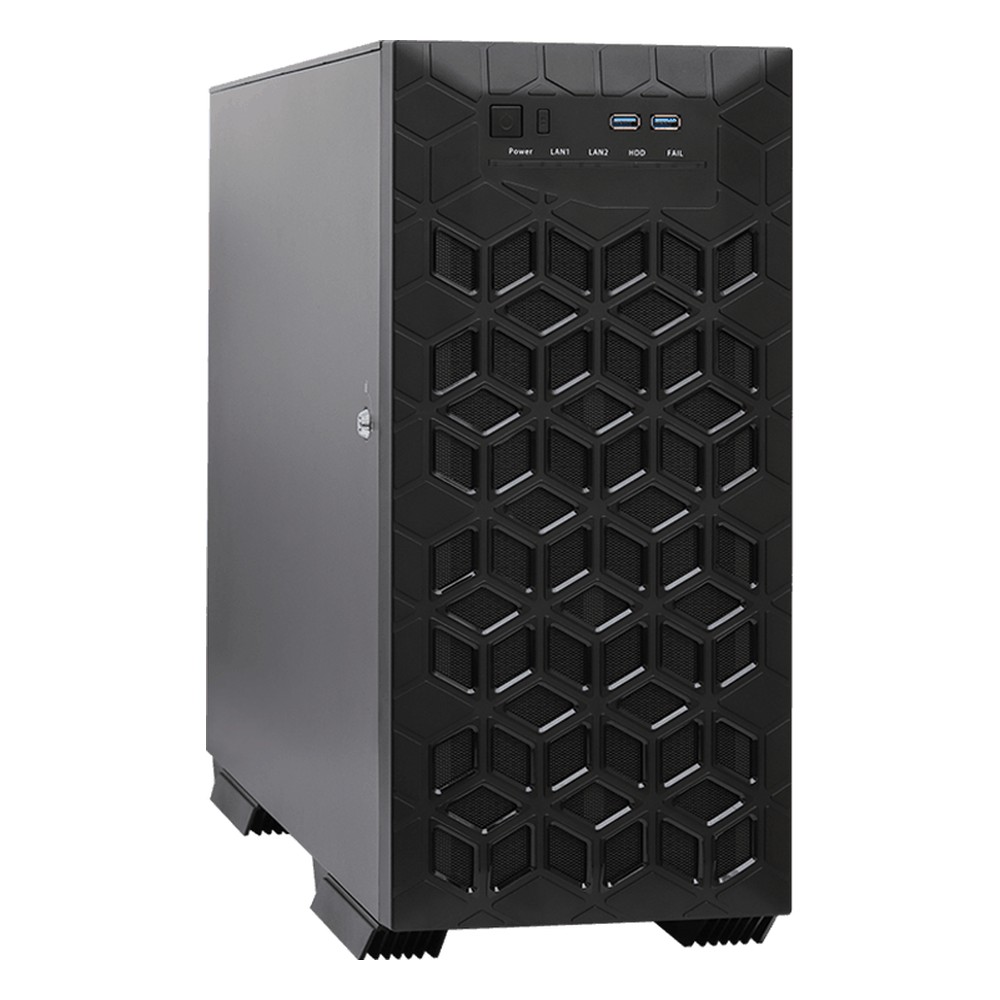
iEPF-10000S ASRock Industrial Dual GPU Computer
Picked when inference runs around the clock on large models, taking two full-size RTX PRO Blackwell cards, ECC memory and PoE+ 2.5GbE ports.
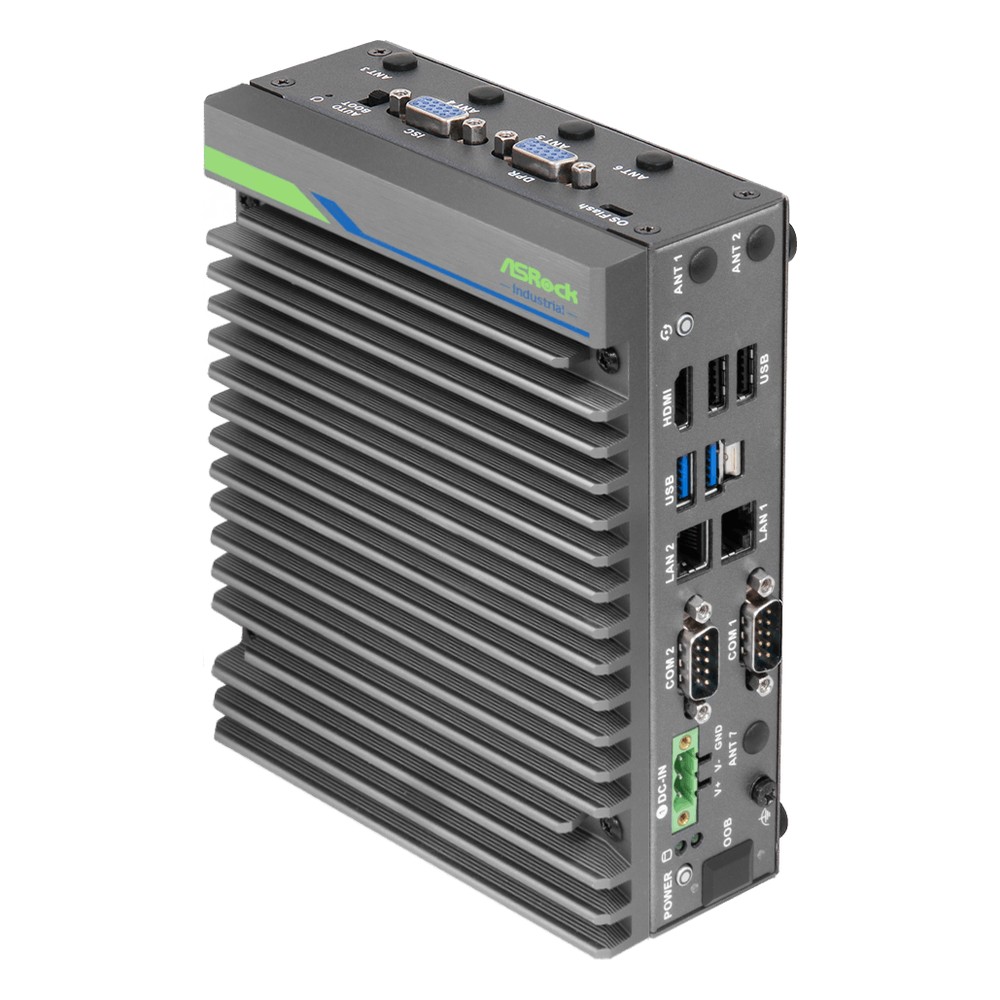
iEP-6020E ASRock Industrial Jetson Edge AI Device
Chosen for camera AI inside control cabinets, clipping a Jetson Orin NX 16GB rated up to 157 TOPS in Super Mode onto DIN rail, with two or four PoE builds or 5G.
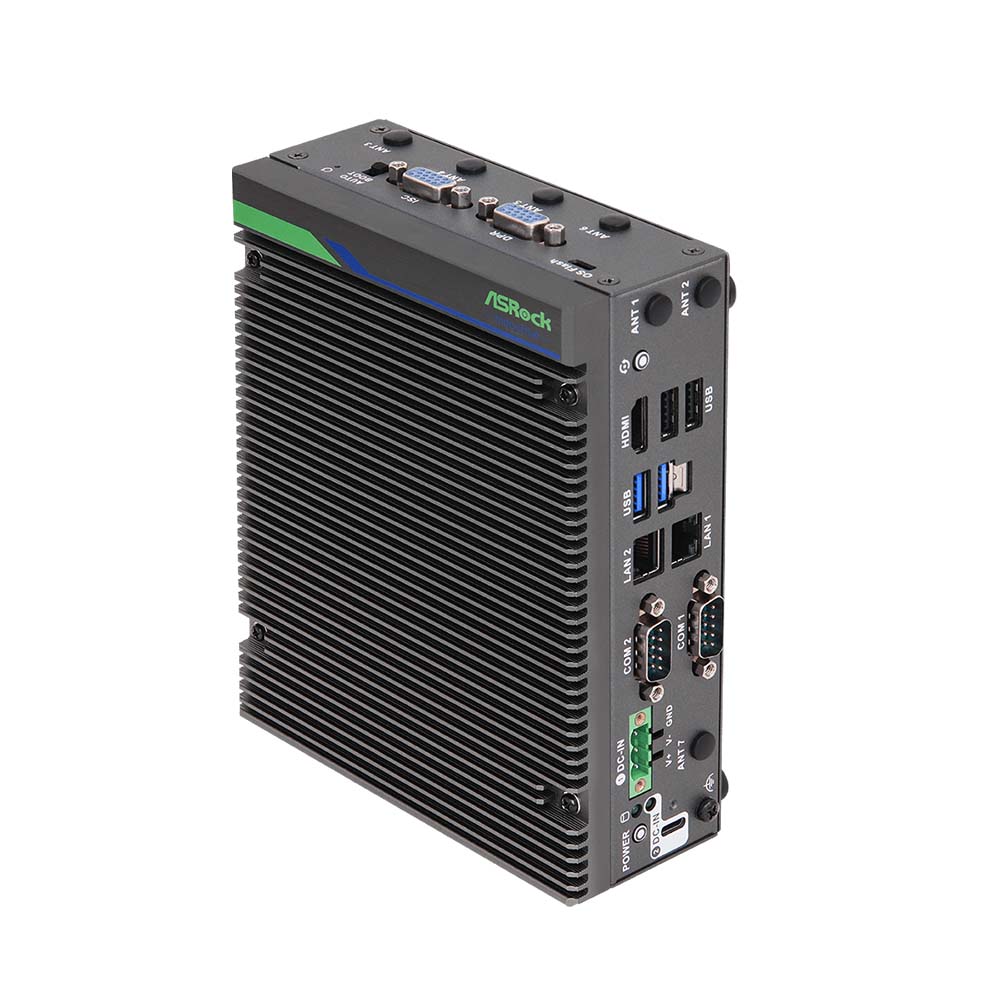
iEP-6010E ASRock Industrial 5G AI Edge Computer
A good fit for roadside cabinets and pumping stations with no fixed network, sending results by 5G or 4G from a fanless Orin NX system rated at up to 100 TOPS.
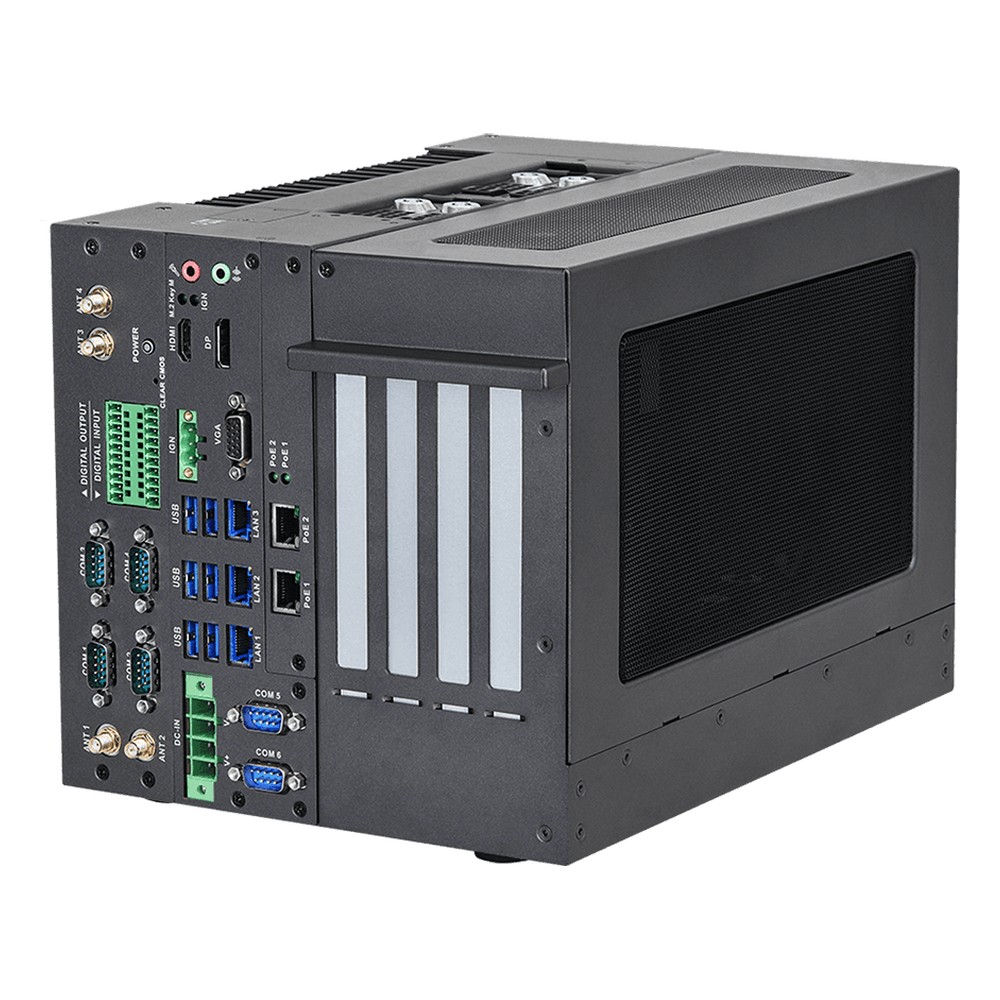
iEPF-9040S-EW4 ASRock Industrial GPU Edge AI Computer
Selected for edge AI that needs a full RTX Ada card beside socketed Bartlett Lake Core, with four PCIe slots, power cabling for the GPU and an internal fan.
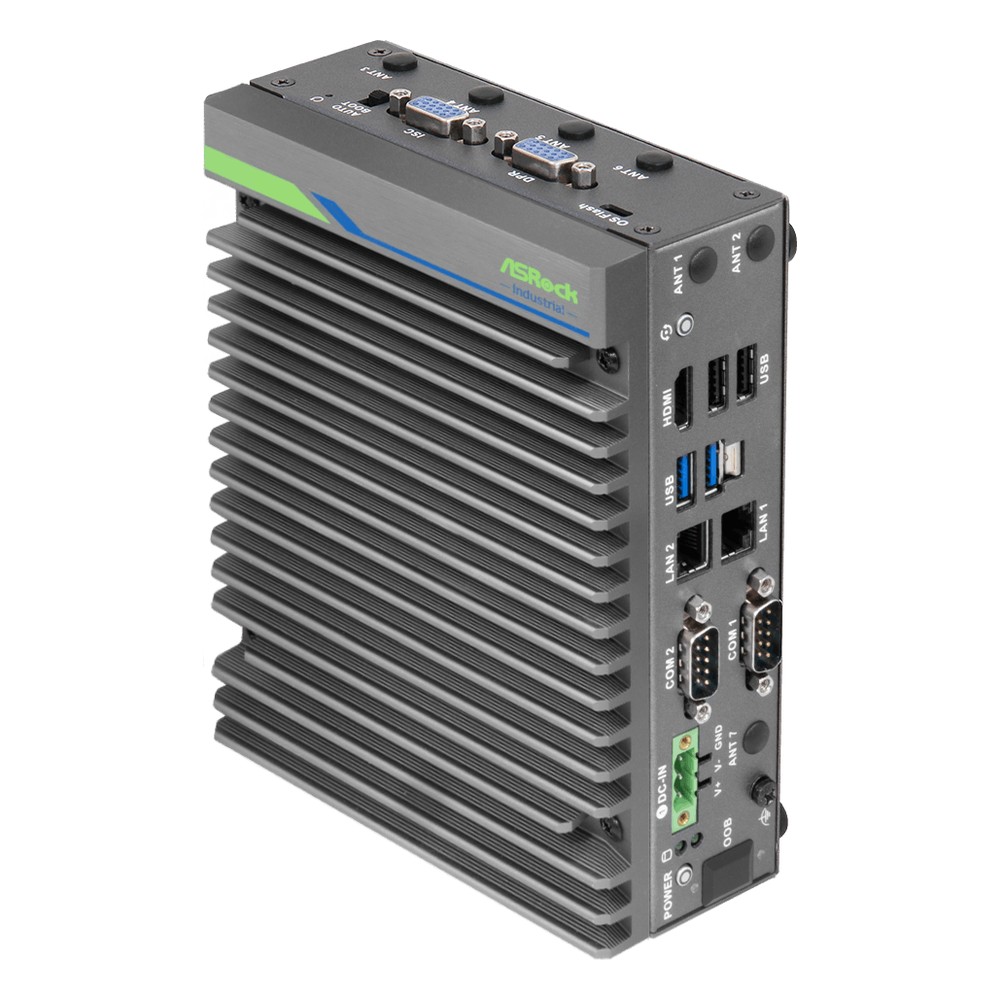
iEP-6022E ASRock Industrial Orin Nano AI Edge Computer
A lower-power Jetson pick for cabinets and remote sites, with an Orin Nano 8GB up to 67 TOPS in Super Mode and builds with PoE, 5G or 4G LTE.
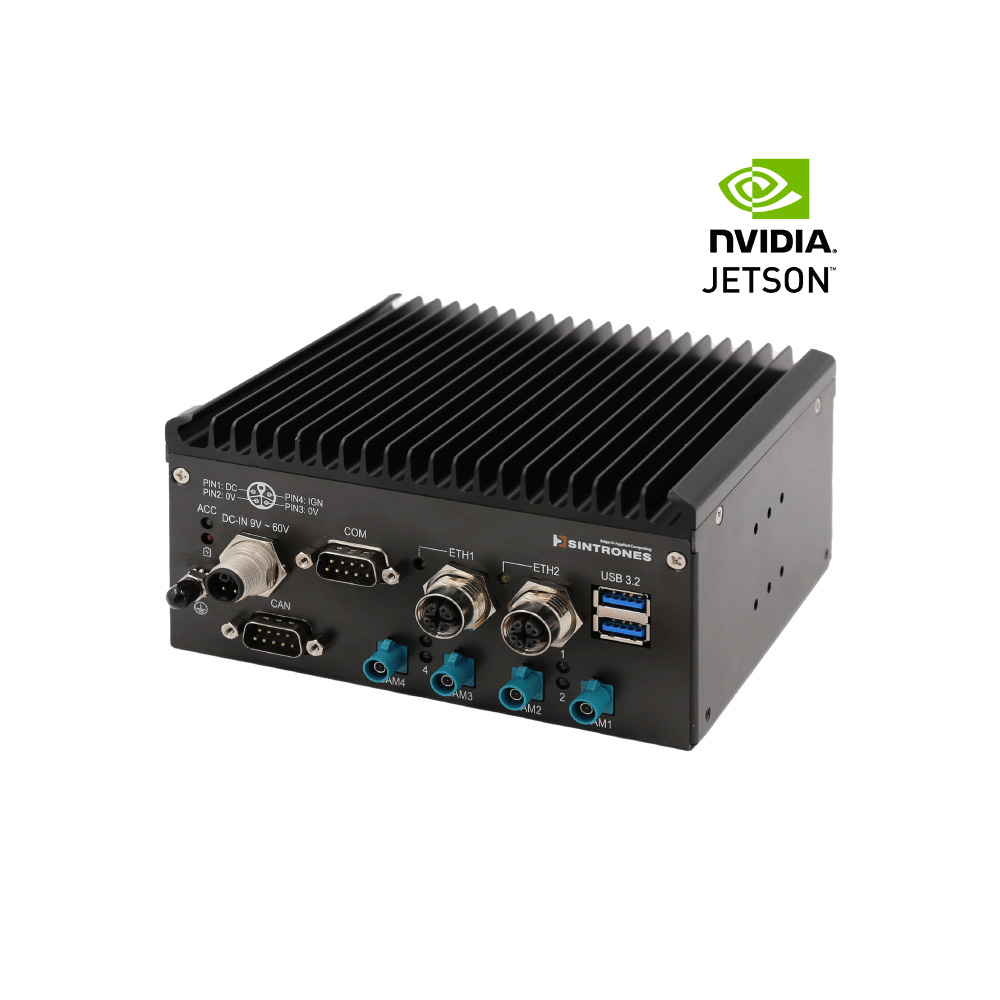
IBOX-601-G2 Sintrones GMSL Edge AI Computer
Our choice for vehicle vision pilots that need four GMSL2 camera inputs and the same I/O from the Orin Nano build to the production design.
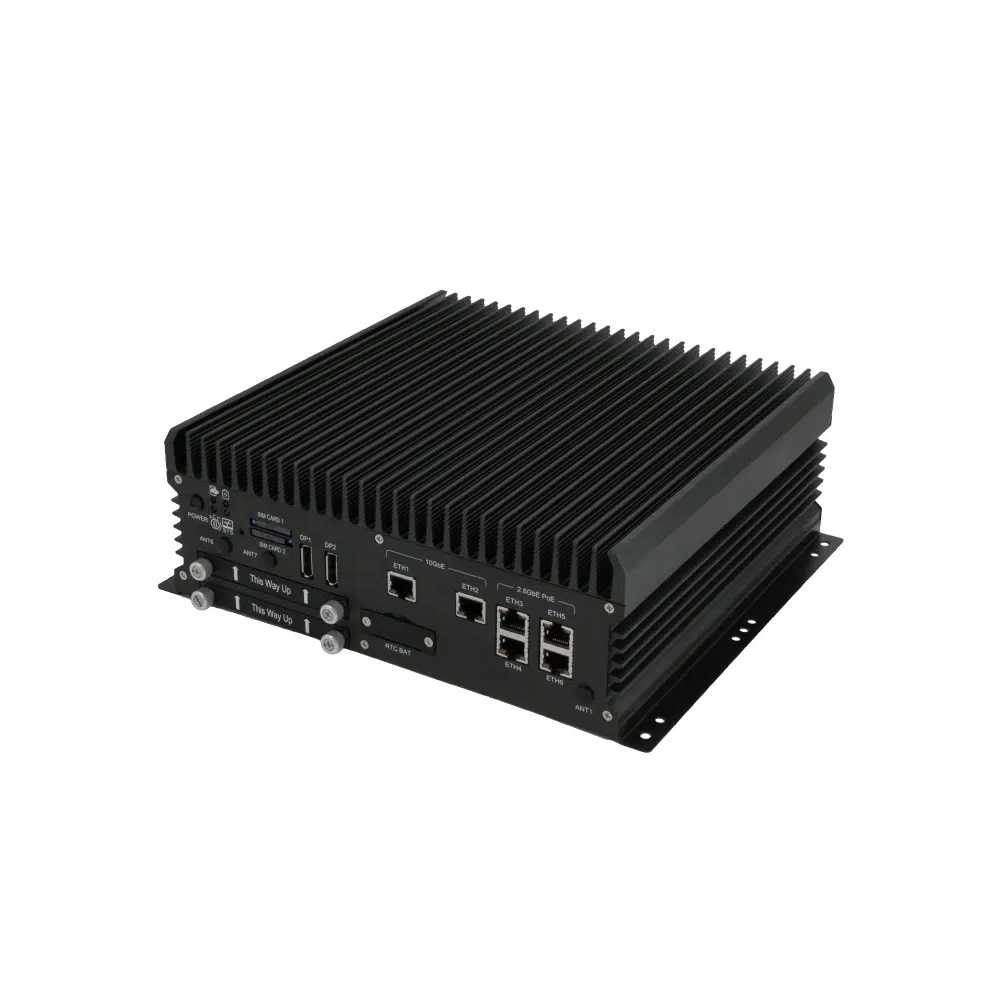
ABOX-5221 Sintrones GPU Edge AI Computer
Picked for multi-camera analytics that need a discrete GPU and fast uplinks, with 14th Gen Core up to the i9-14900T, two 10GbE ports and an MXM GPU up to the RTX 5000 Ada.
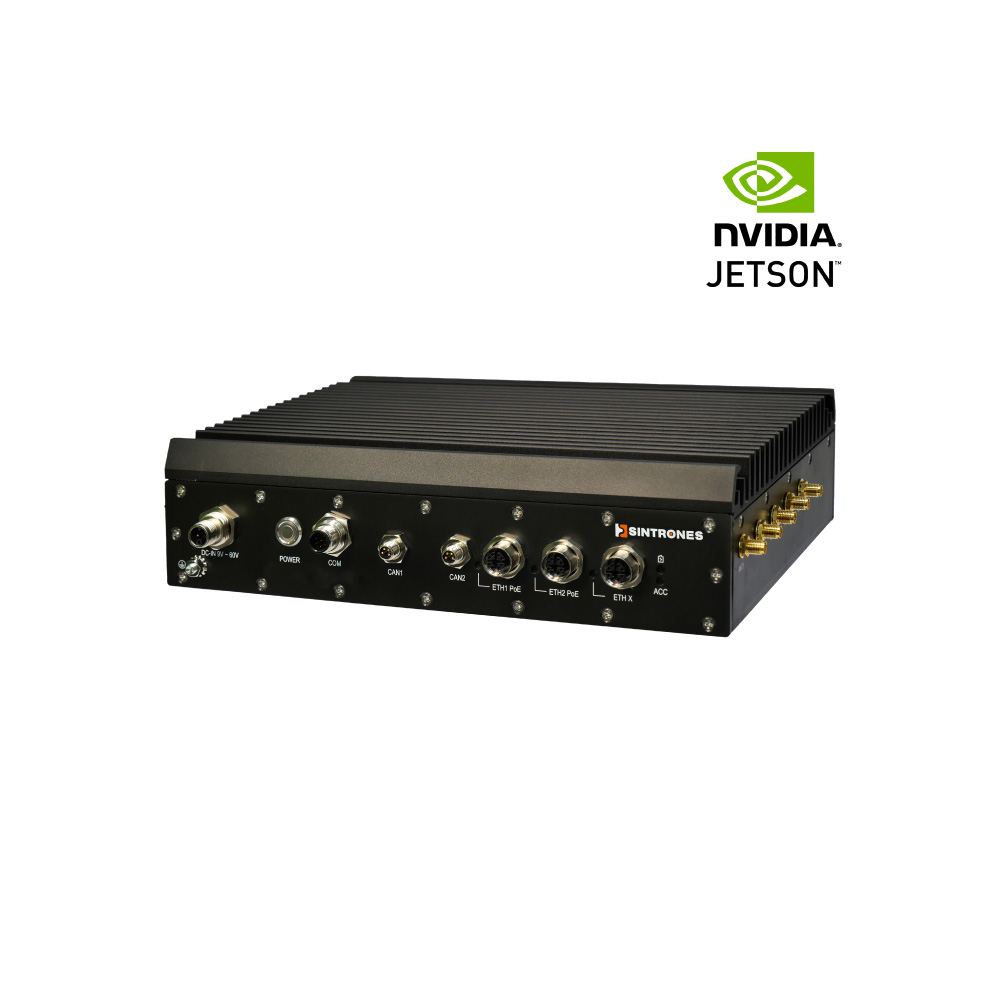
IBOX-650P-IP66 Sintrones AGX Orin Edge AI System
Selected for rail, road vehicle and outdoor AI on Jetson AGX Orin 32GB or 64GB, sealed to IP66 with M12 10GbE and PoE+ ports, two CAN FD ports and ignition detection.
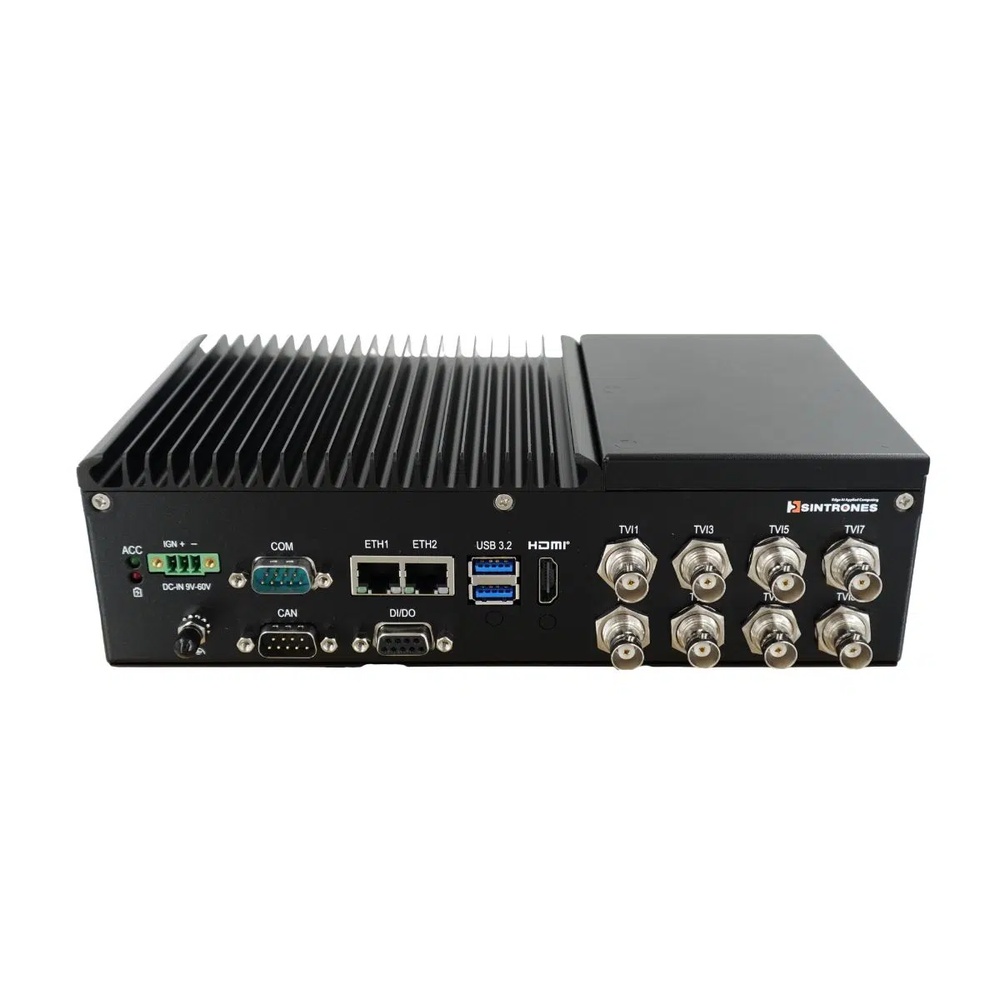
IBOX-601-TVI8 Sintrones AI Edge Computer
A good fit for buses, fleets and depots keeping their analogue cameras, taking eight TVI or AHD inputs on BNC into a Jetson Orin NX or Orin Nano with CAN FD.
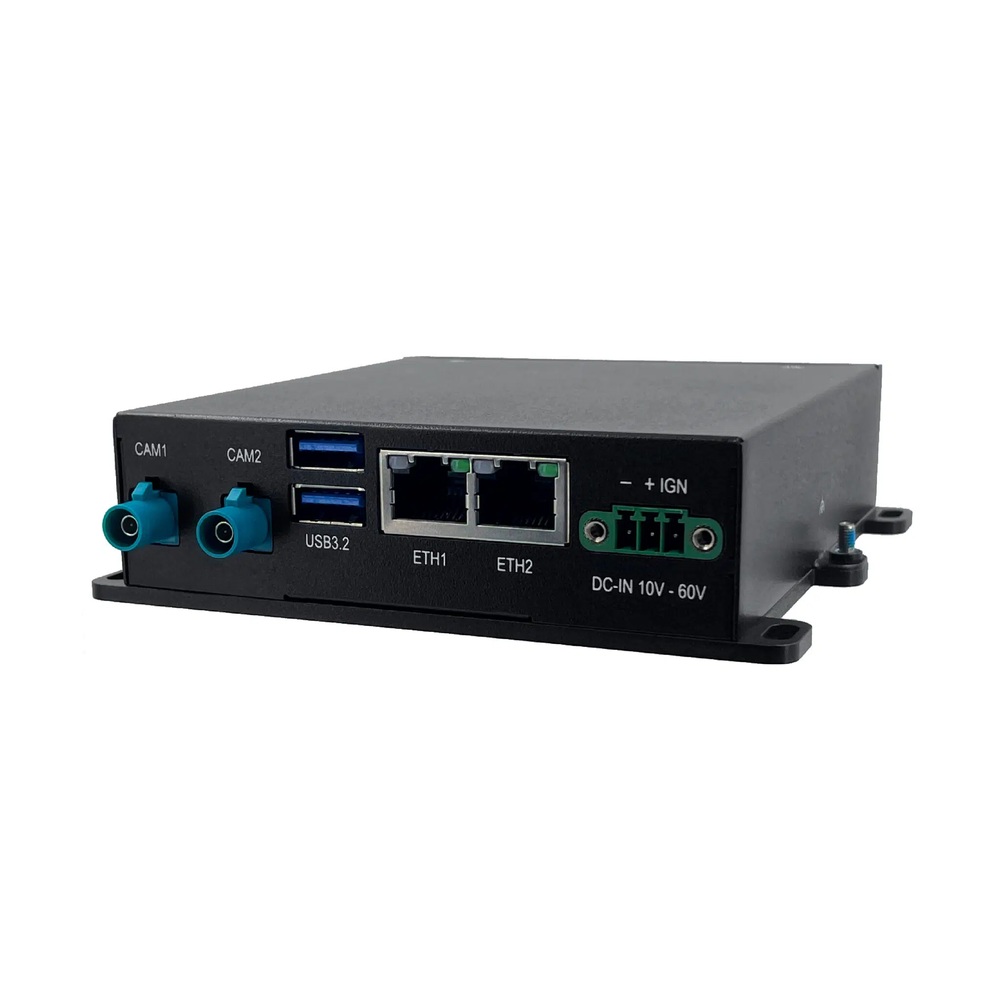
IBOX-604-G2 Sintrones Jetson Drone Computer
Chosen for drones and ground robots where weight and power matter, with Jetson Orin Nano or Orin NX and two GMSL camera inputs in a light aluminium case.
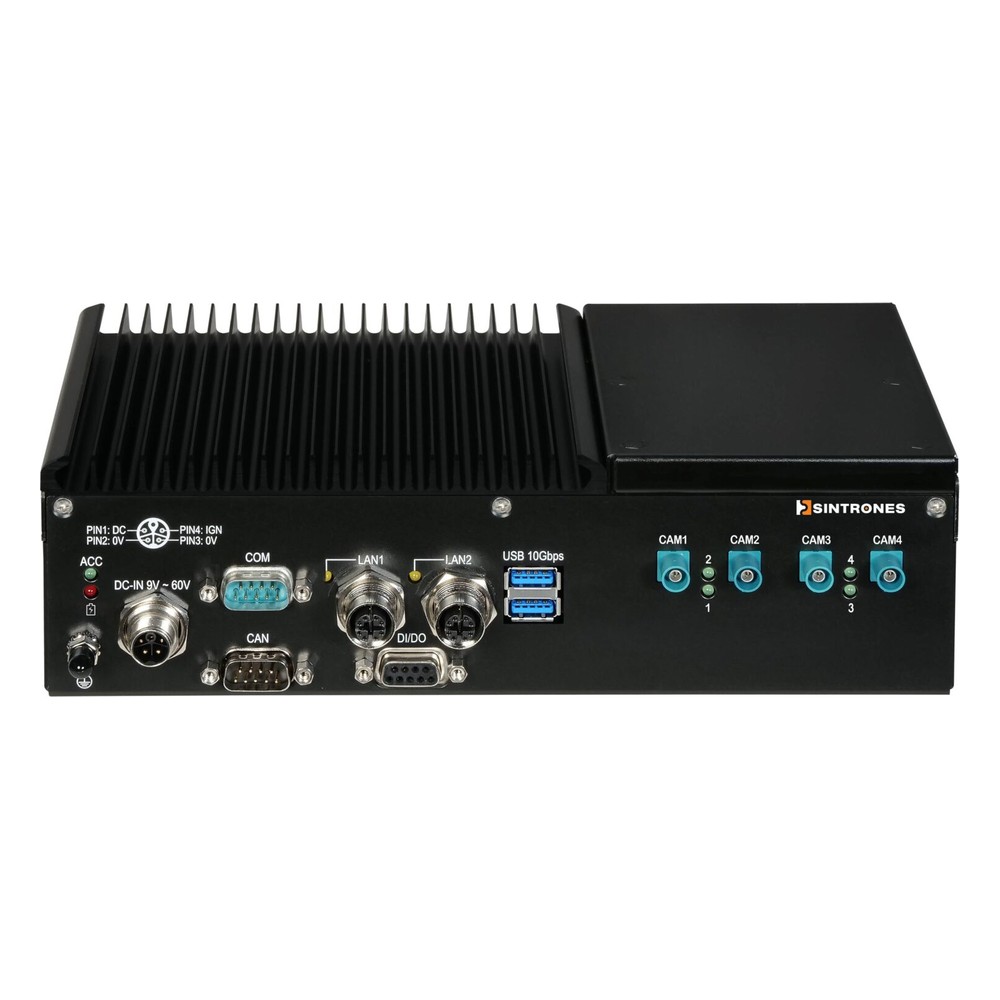
IBOX-601-M12X Sintrones Railway Edge AI Computer
Chosen for rolling stock and bus camera AI, with Jetson Orin NX, four GMSL-2 inputs on FAKRA-Z and M12 X-coded 2.5GbE on a 9 to 60 V input.
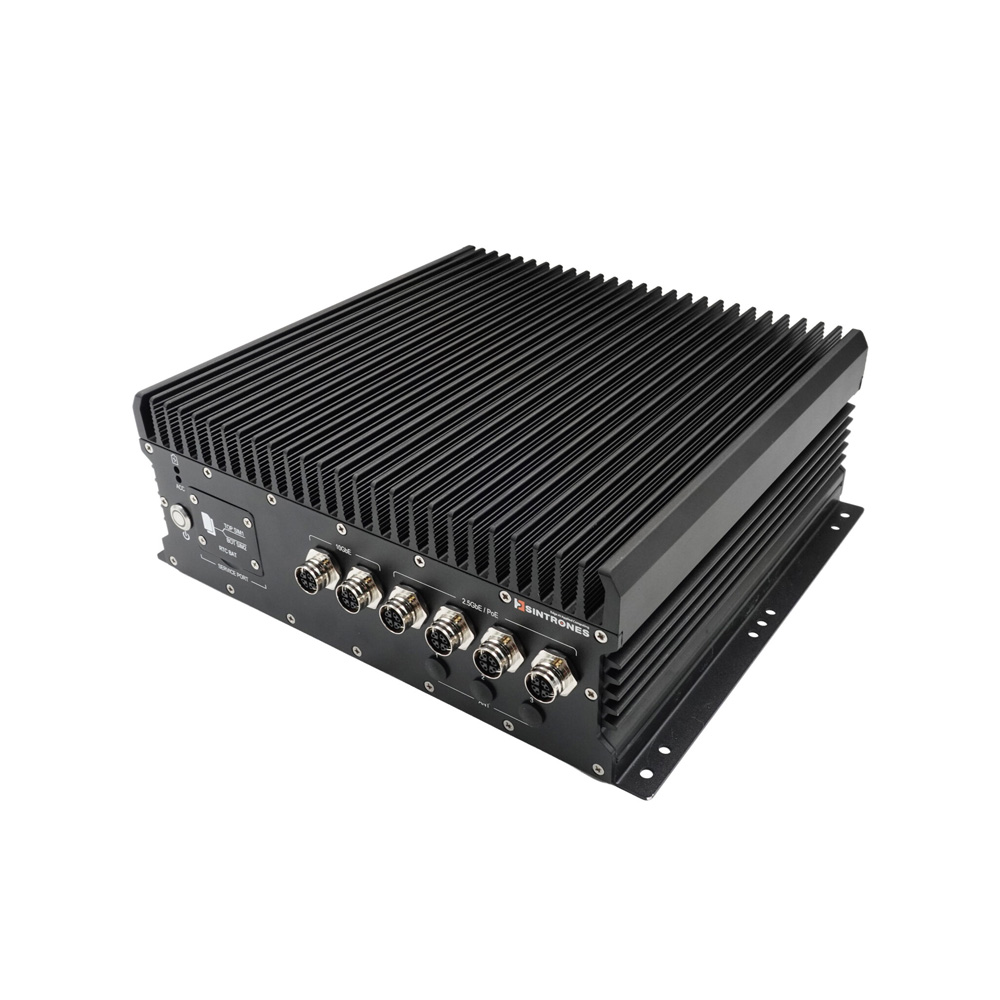
ABOX-5221-IP66 Sintrones IP66 GPU AI Computer
Selected for roadside and port analytics that need a discrete GPU without a cabinet, with Bartlett Lake Core, an MXM GPU and four M12 2.5GbE ports with PoE+ options.
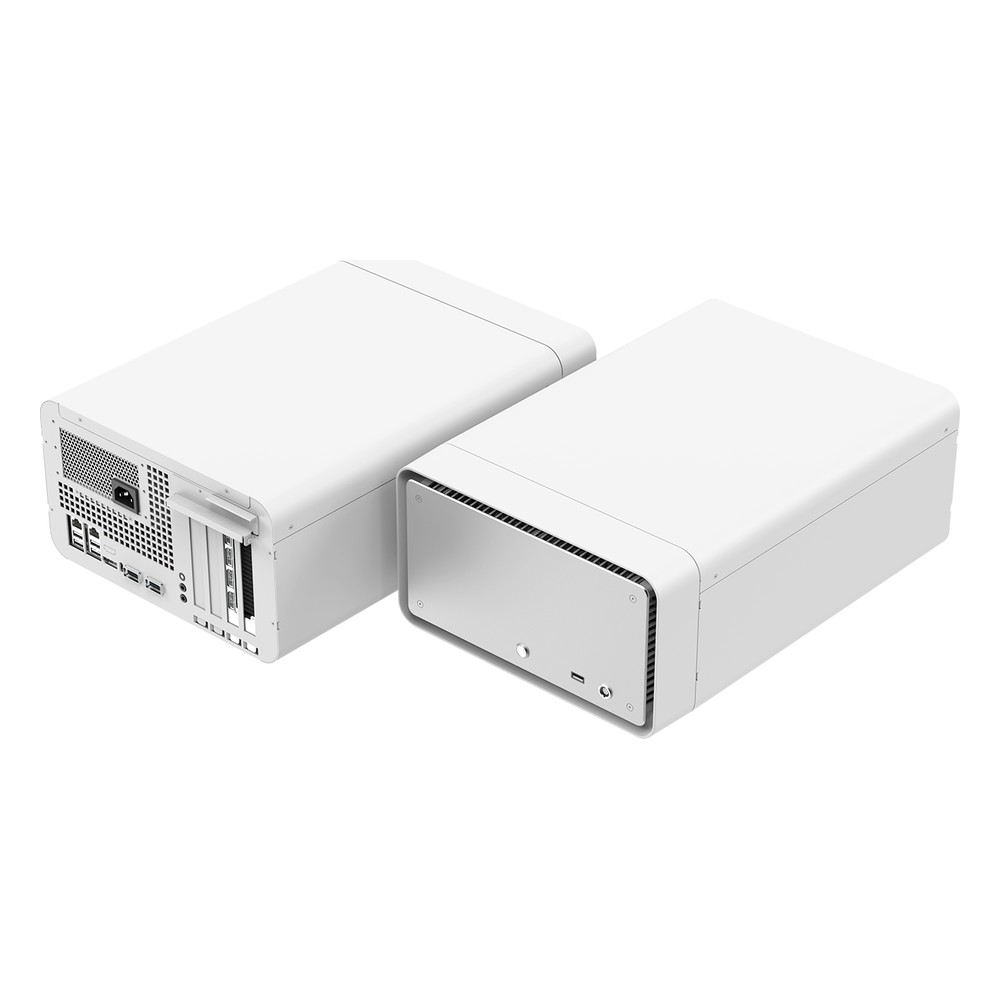
NEAR T7X Yuan IGX Thor Edge AI Computer
Our lead pick for edge AI that ingests more sensor and video data than a module computer can, built on the NVIDIA IGX Thor T7000 with an optional RTX PRO 6000 Blackwell GPU.
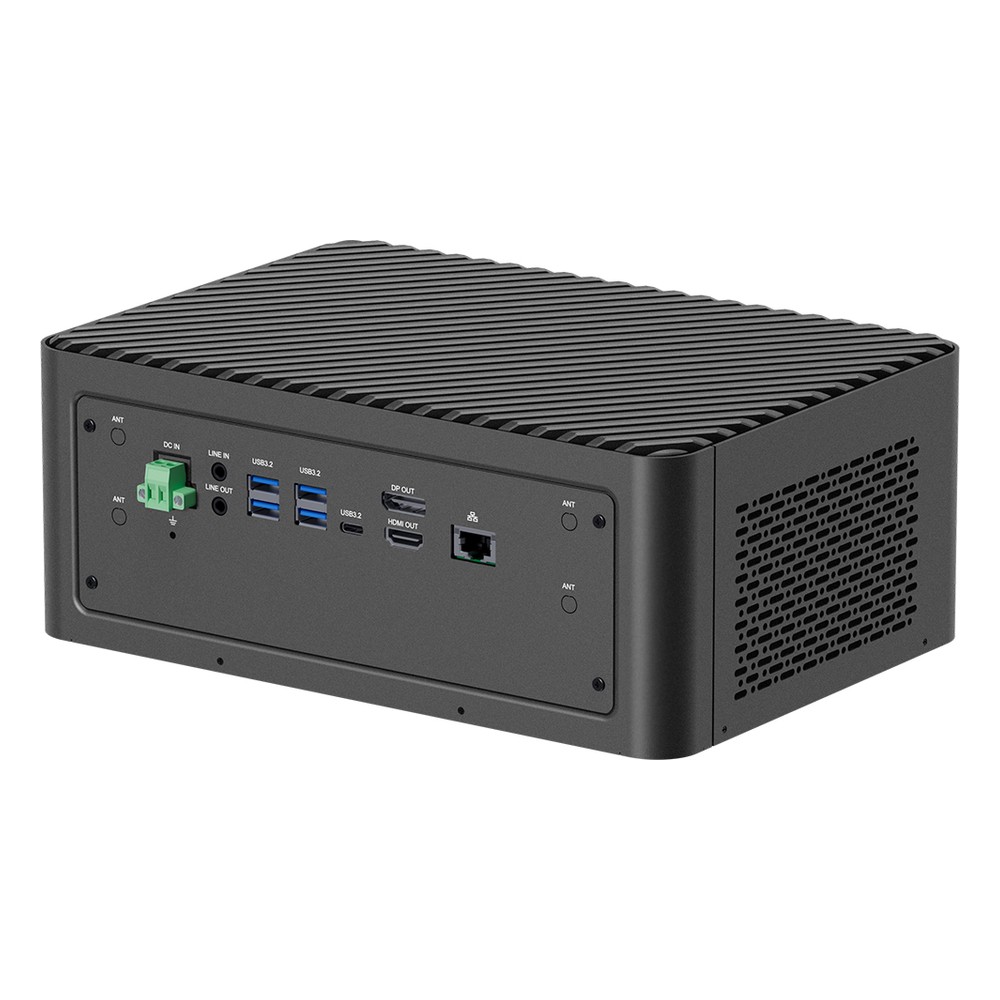
EDG6N0-S T5X Yuan Edge AI Box PC
Selected for Jetson Thor analytics that need fast sensor ingest, using QSFP28 for high-bandwidth camera or storage links plus 5GbE, with T5000 or T4000 modules.
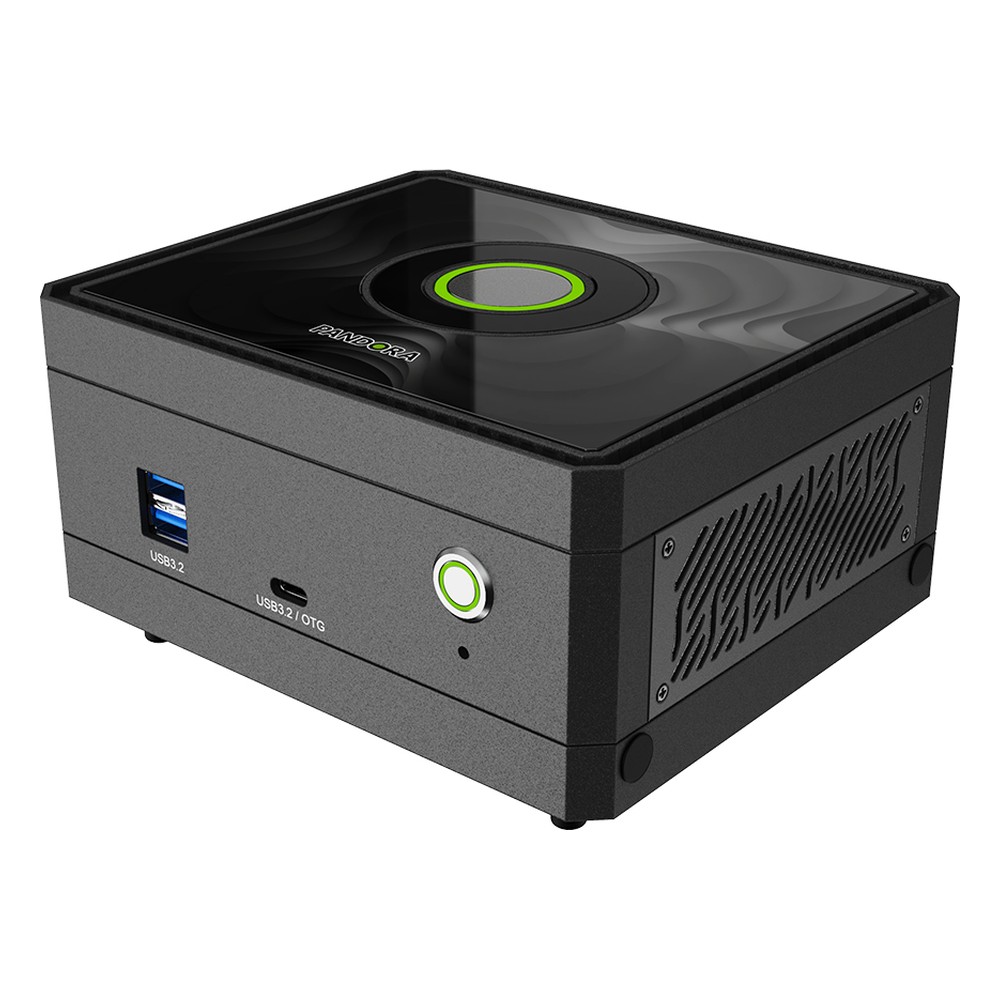
Pandora NX 16GB Yuan AI Edge Computer
Chosen for compact generative AI and vision prototypes that go straight to deployment, on Orin NX 16GB in Super mode with an SSD fitted and M.2 room for 5G or more storage.
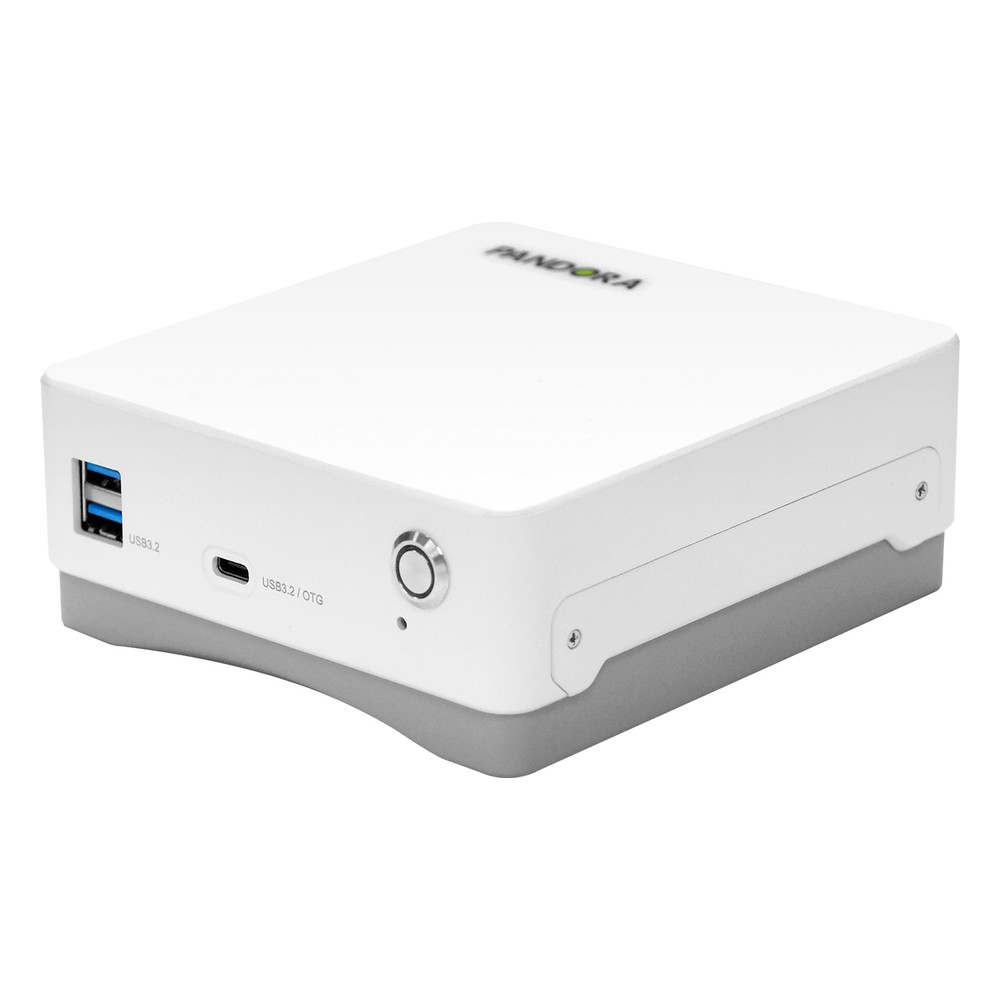
Pandora Health NX Yuan Medical Edge AI System
Selected for imaging rooms and production chains that carry video over SDI, adding AI to the feed with SDI capture and SDI loop-out on a Jetson Orin NX Super.
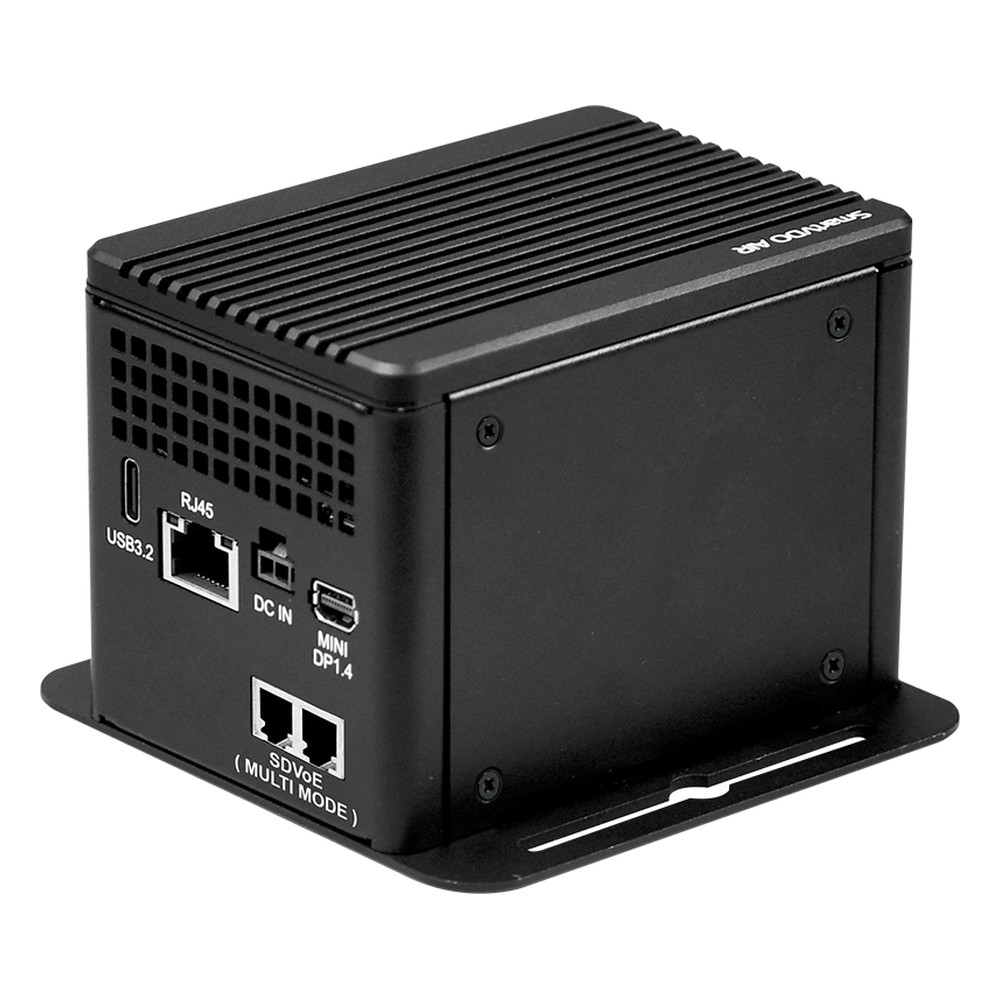
AIR6N0-C Yuan SDVoE Edge AI Device
A good fit for analytics on AV feeds already on SDVoE fibre, taking the multi-mode stream straight into a Jetson Orin NX Super for detection, OCR or plate recognition.
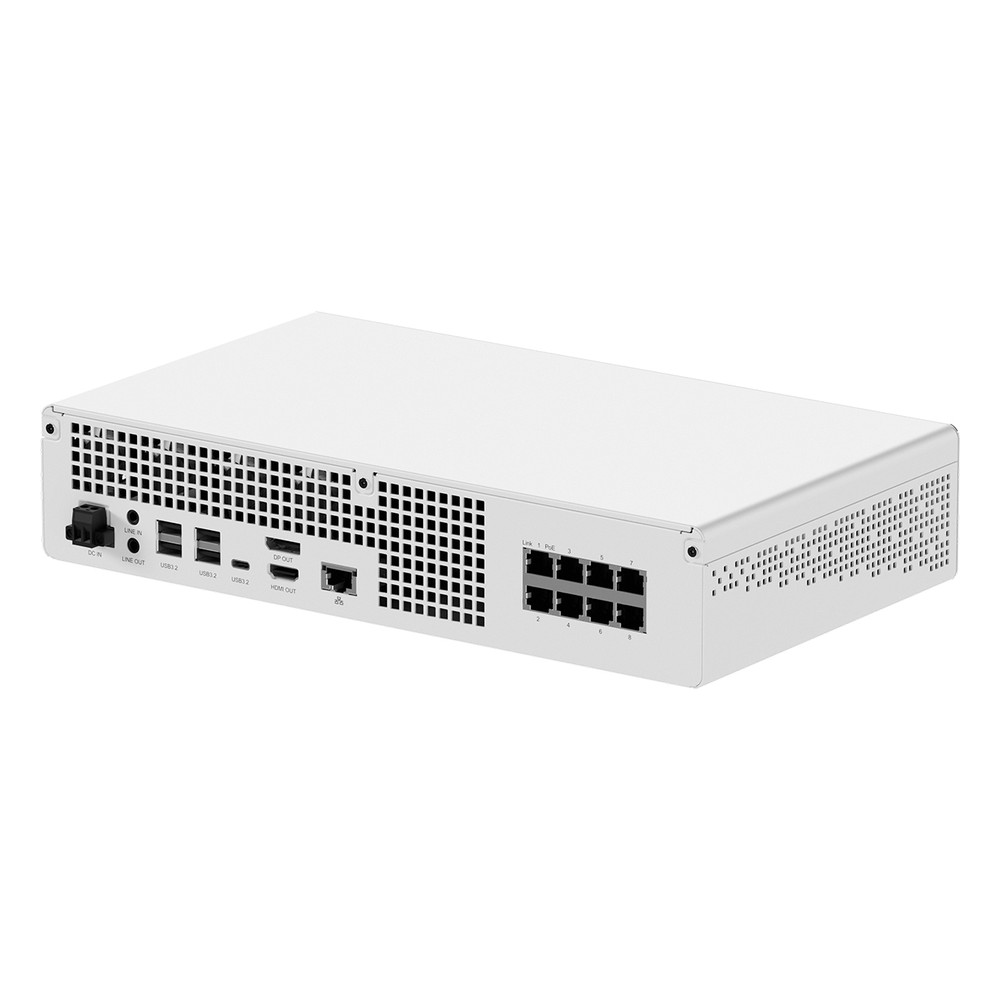
EDG6N0-S T5X NVR Yuan AI NVR Edge Computer
Picked for video analytics sites that need camera power, AI and storage in one box, with Jetson Thor T5000 or T4000, eight PoE ports and two SATA bays.
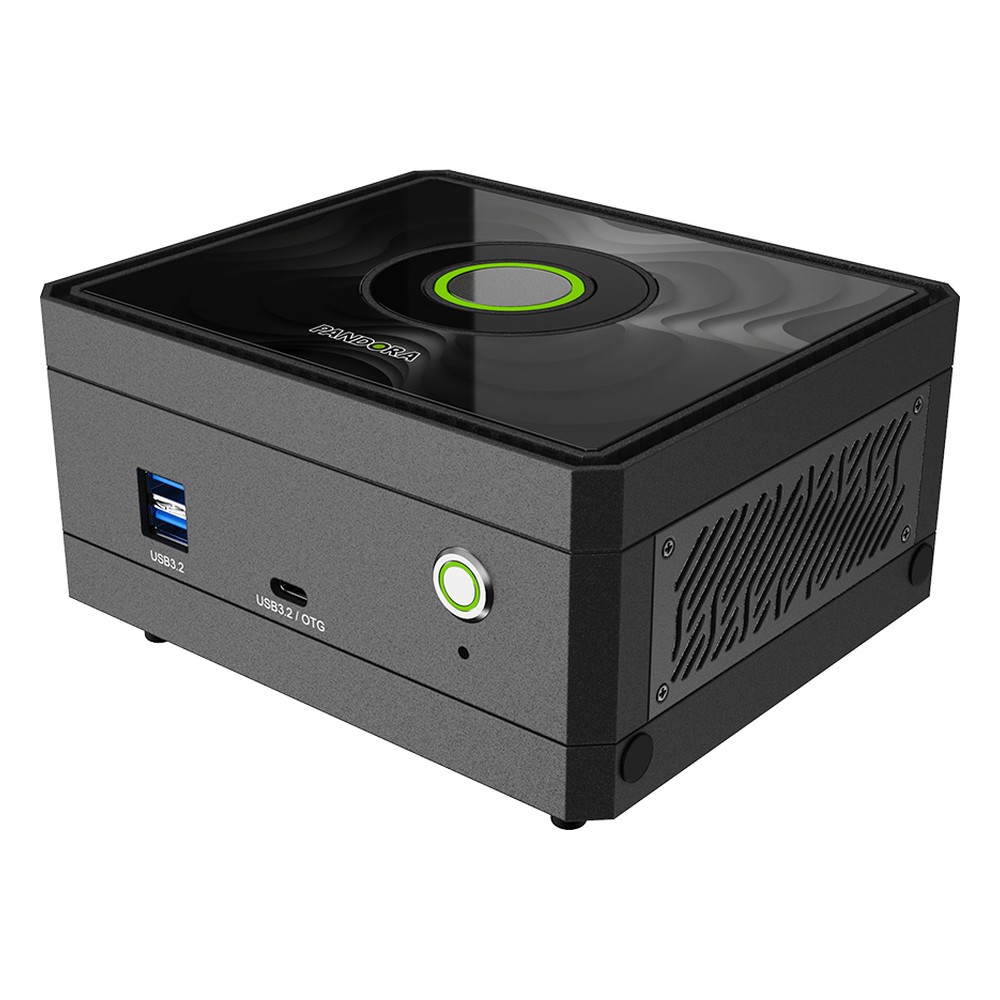
Pandora Nano 8GB Yuan Edge AI Device
Picked for entry Jetson AI where power draw matters, with the Orin Nano 8GB Super module running small vision models and four M.2 slots for storage or wireless.
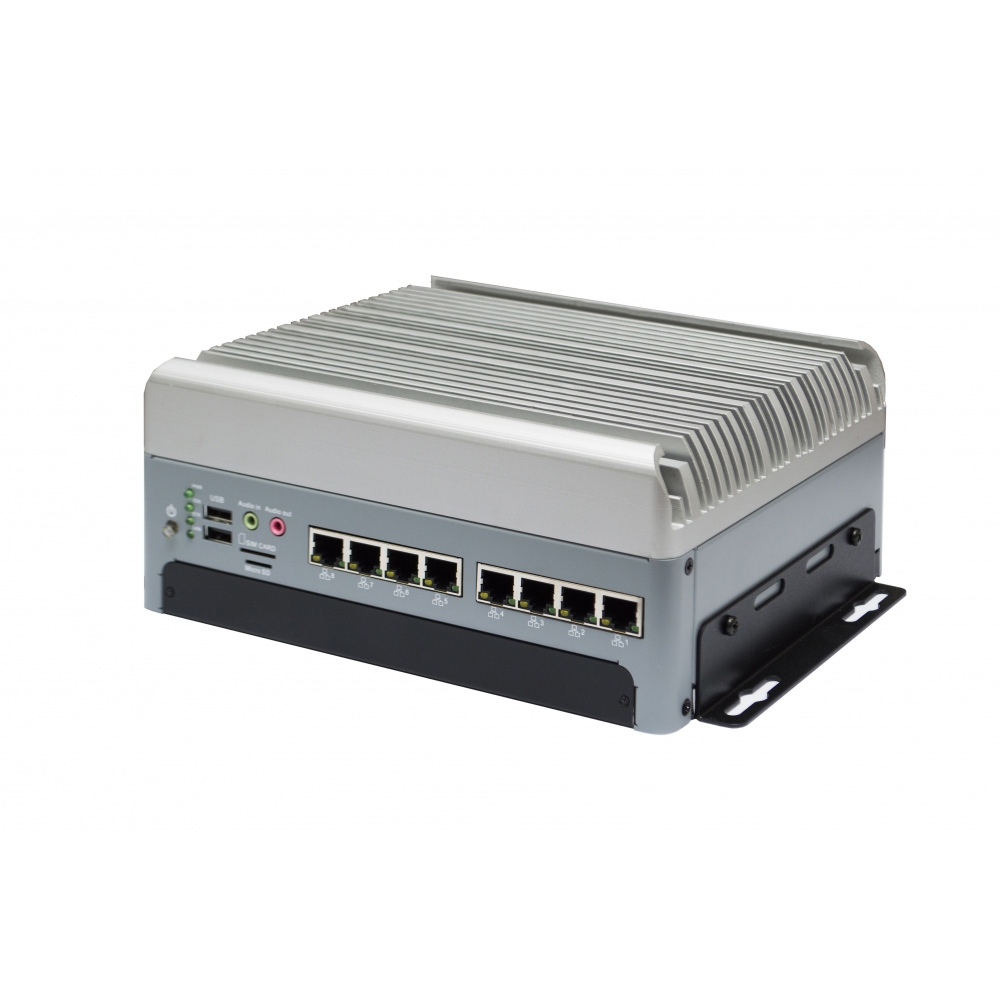
eNVP-JAO-AI EverFocus AGX Orin Edge AI Computer
Our lead pick for eight-camera junctions and depots, analysing every stream on Jetson AGX Orin at the edge rather than sending video back, with a 10GbE uplink.
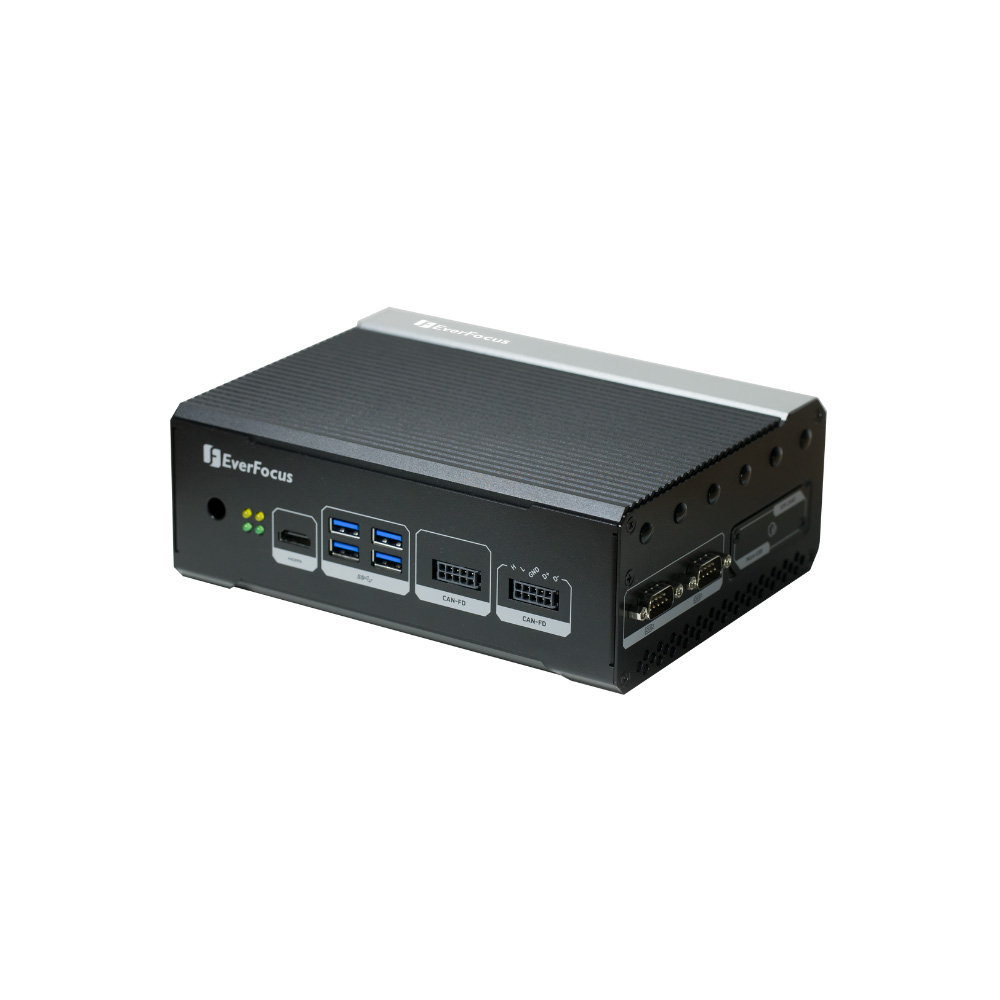
eNVP-JOX-IV EverFocus PoE Edge AI Box PC
Chosen for roadside and car park analytics, on Jetson Orin NX with PoE camera ports, a PoE-PD input or a 9 to 48 V DC supply, two CAN bus ports and eight alarm I/O.
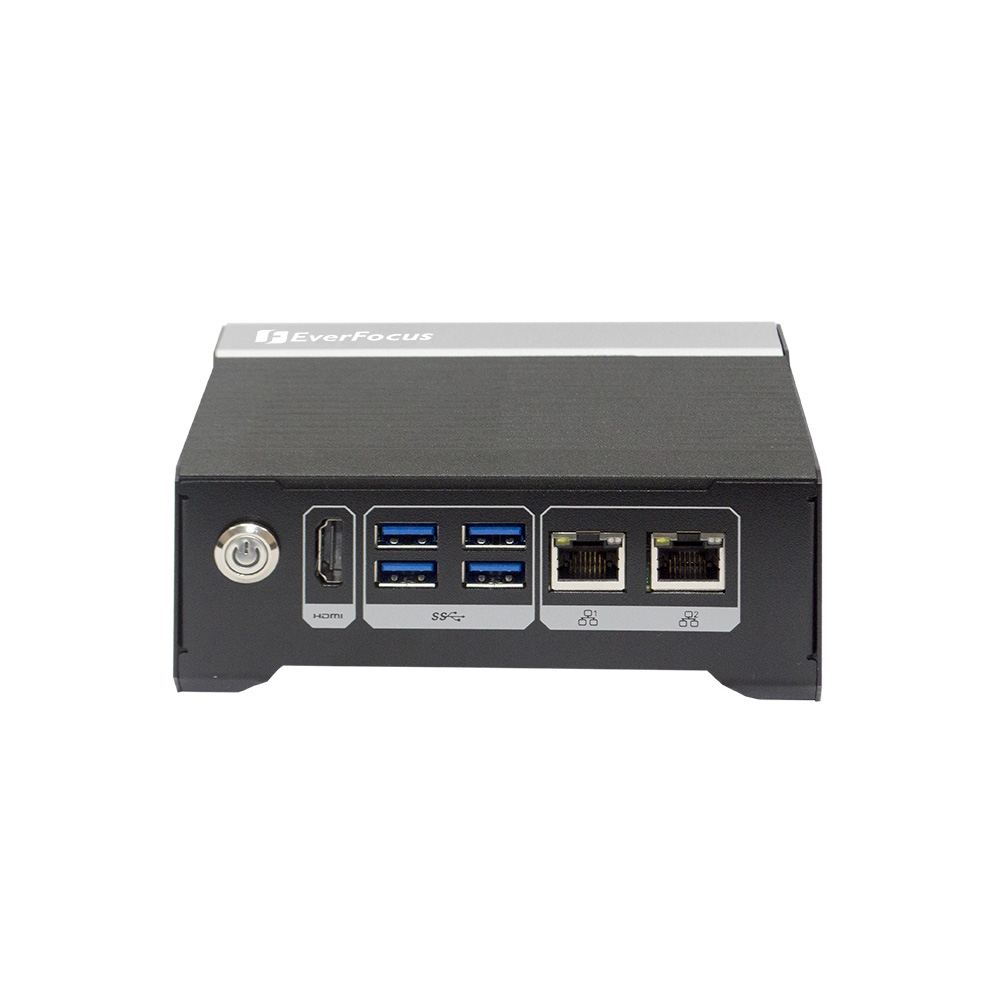
eNVP-JON-AI EverFocus Edge AI Device
Picked for entry Jetson projects in factories and smart buildings, on Orin Nano 4GB or 8GB with CAN FD and RS-485 terminal blocks and two Gigabit LAN ports.
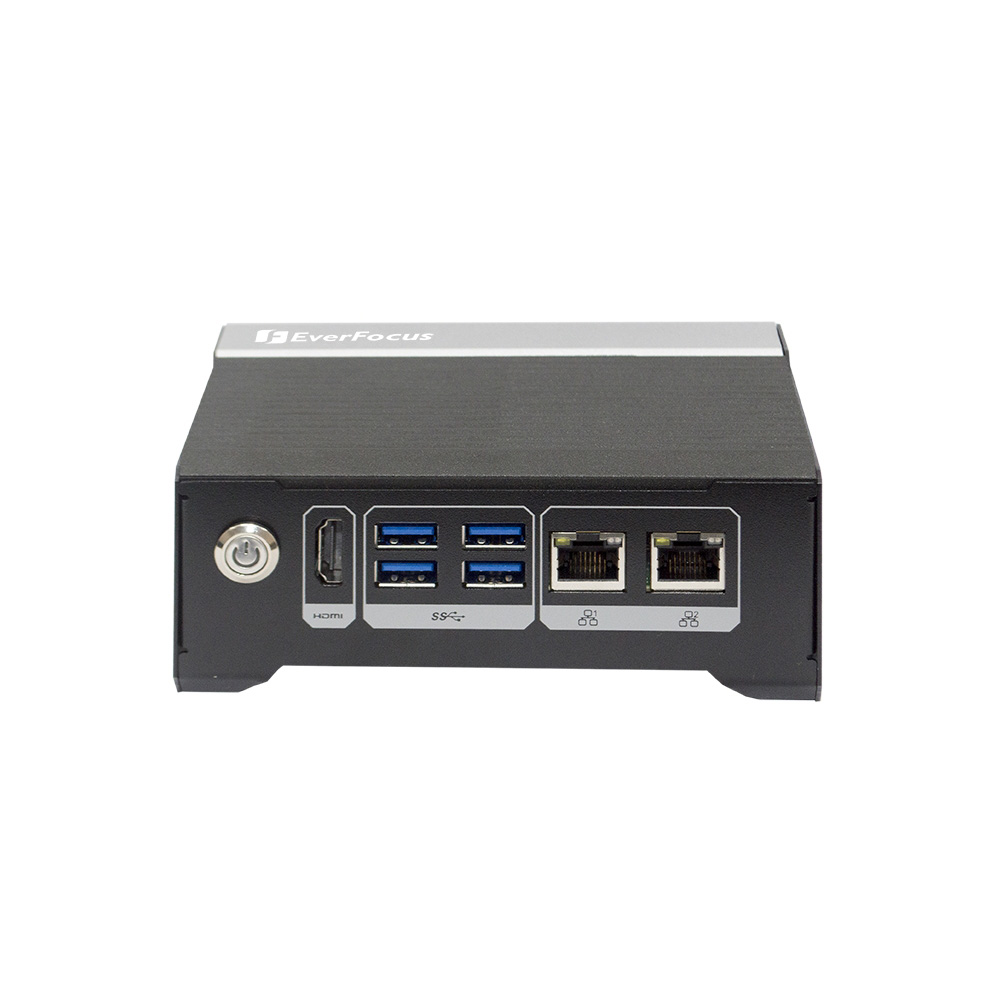
eNVP-JOX-AI EverFocus Edge AI Computer
Chosen for vision cells that need Orin NX inference on DIN rail, with 8GB or 16GB of LPDDR5, four USB 3.1 ports for cameras and two Gigabit LAN ports.

eNVP-JOX-UB EverFocus LTE Edge AI Box PC
Chosen for control panels and transport AI on a 12 V supply, with Jetson Orin NX 8GB or 16GB, CAN bus, HDMI 2.0 and an optional 4G LTE kit.
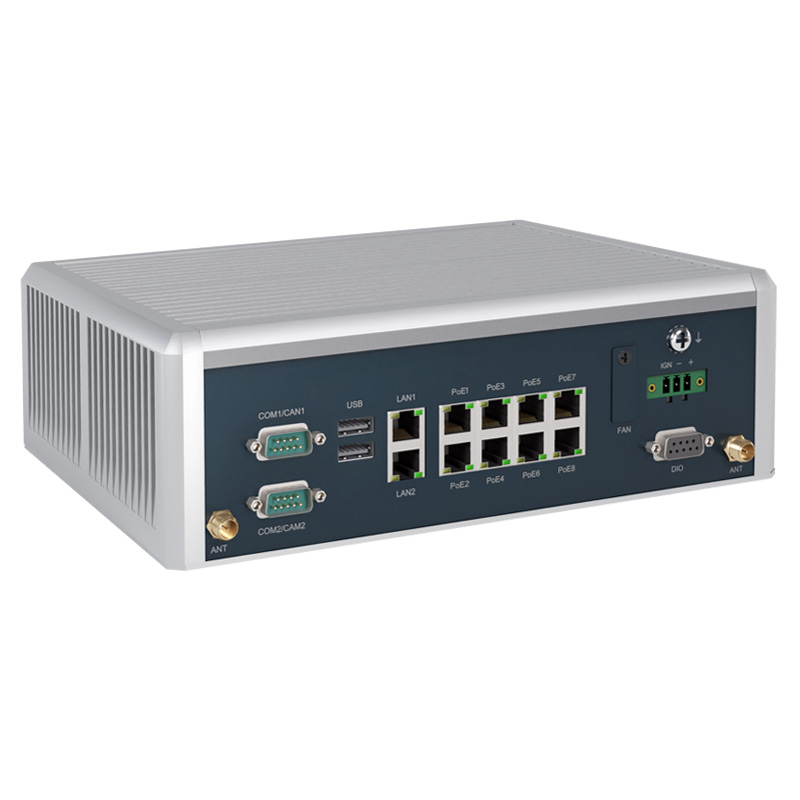
AIE900A Axiomtek AGX Orin Edge AI Computer
Our lead pick for large autonomous machines with many sensors, powering cameras from eight PoE ports on Jetson AGX Orin 32GB, with two 2.5GbE ports, fanless.
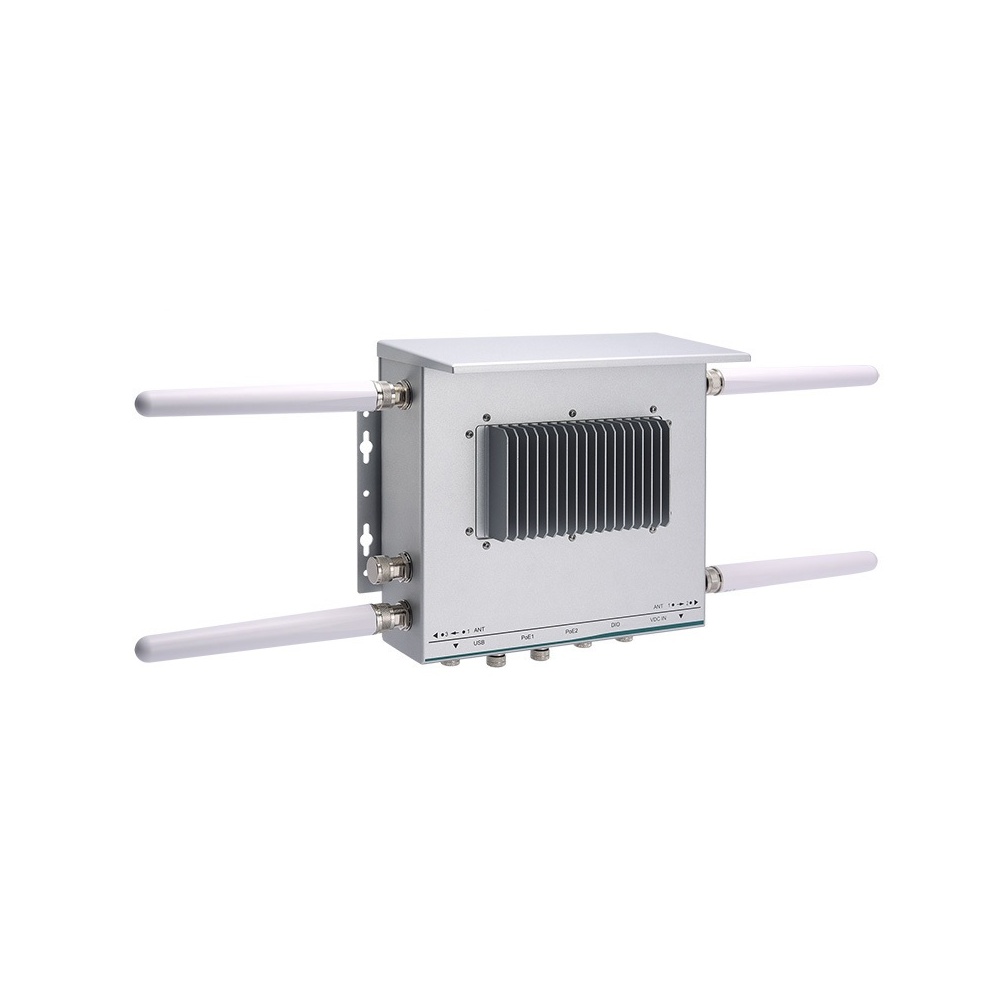
AIE810-ONX Axiomtek IP67 Edge AI System
Chosen for AI that mounts beside the cameras rather than in a cabinet, sealing a Jetson Orin NX 16GB to IP67 with M12 connectors throughout and PoE+.
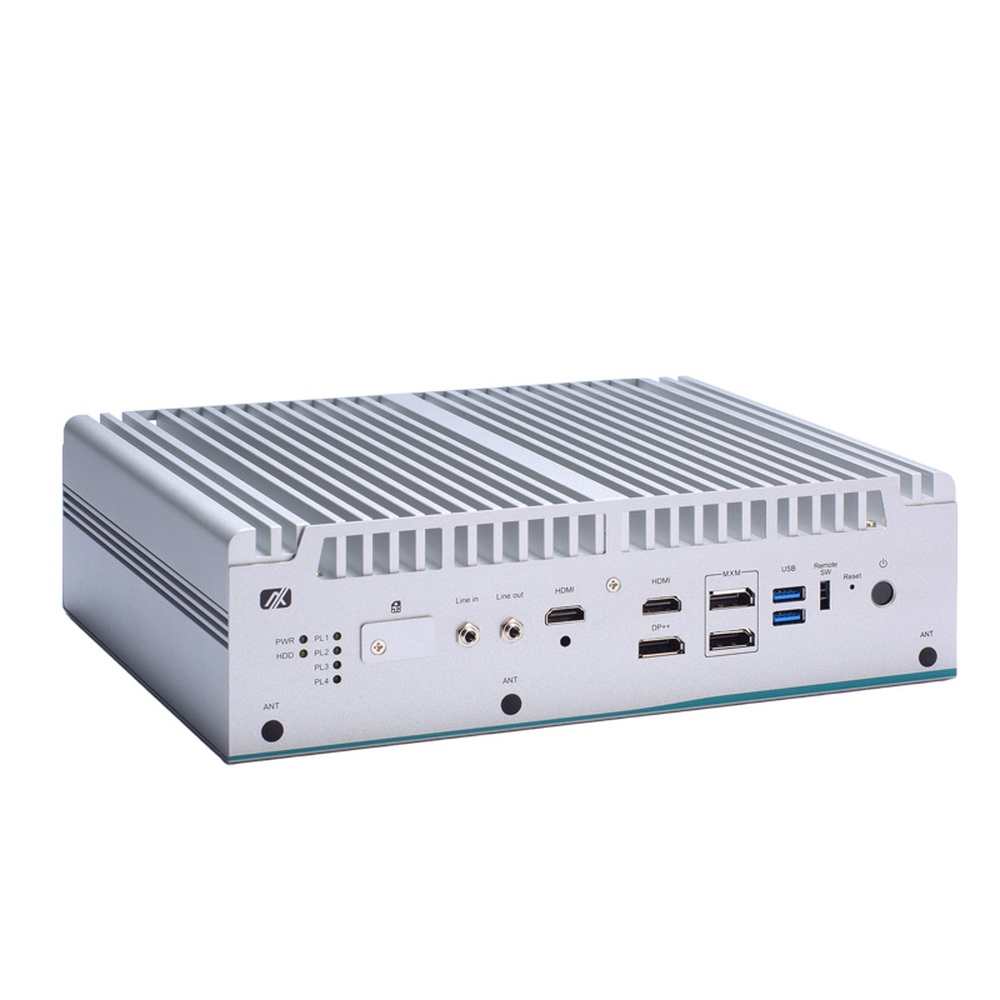
eBOX671B Axiomtek MXM GPU Edge AI Computer
Chosen for AI inspection that needs CUDA performance in a dusty cell, swapping a desktop graphics card for an MXM 3.1 module, with socketed 12th to 14th Gen Core.
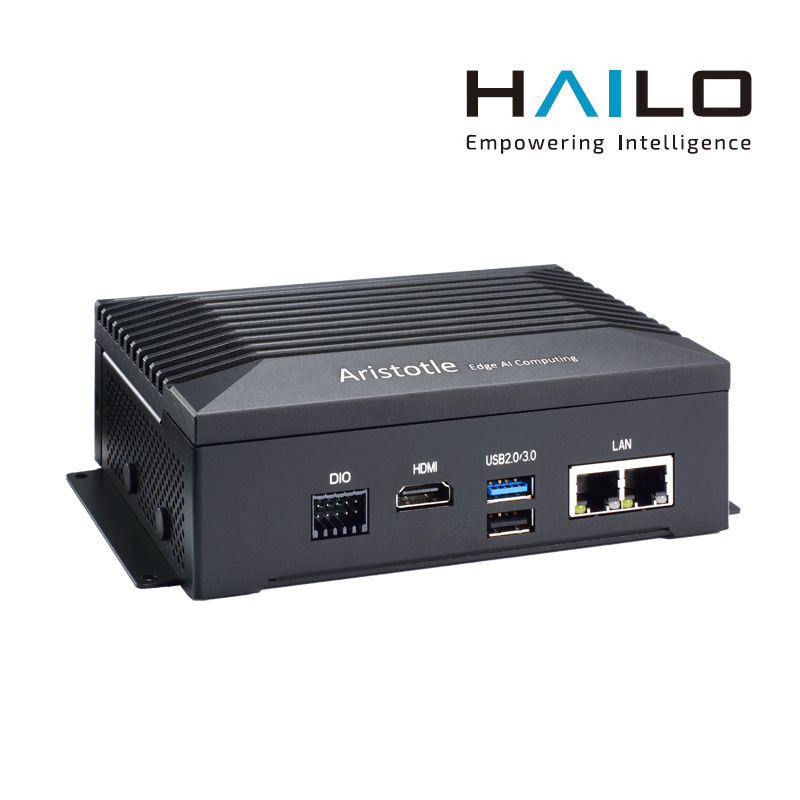
RSC101 Axiomtek Hailo Edge AI Box PC
Chosen for street-cabinet and shop-window analytics on a small budget of watts, with the Hailo-8 doing inference beside an Elkhart Lake Celeron J6413 and a tall-heatsink build for heat.
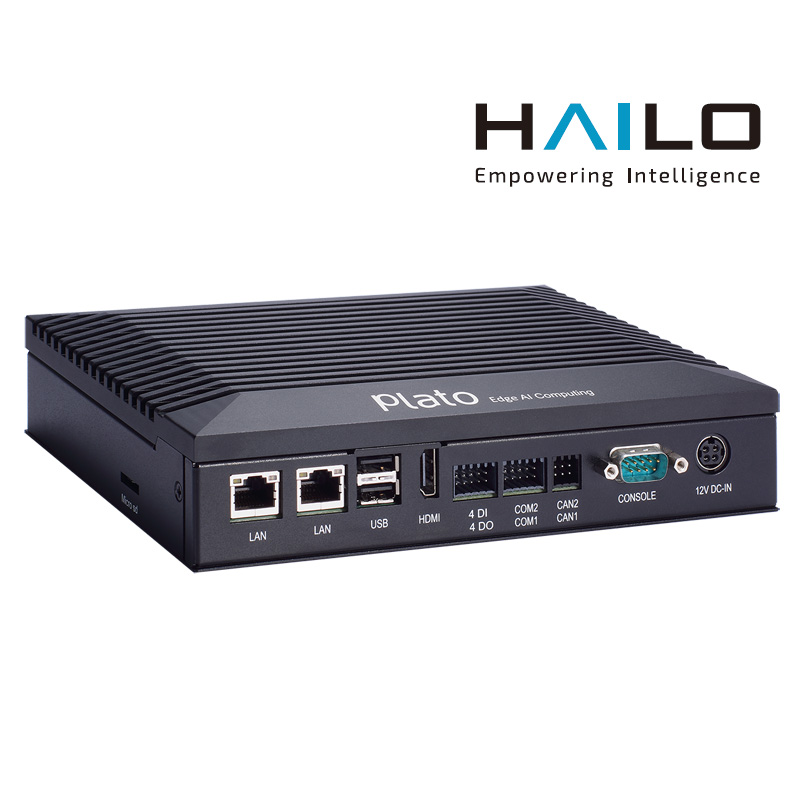
RSC100 Axiomtek Arm Edge AI Computer
Selected when vision AI has to share a low-power Arm board with vehicle networks, as the Hailo-8 runs the model at up to 26 TOPS while the i.MX 8QuadMax handles CAN and serial traffic.
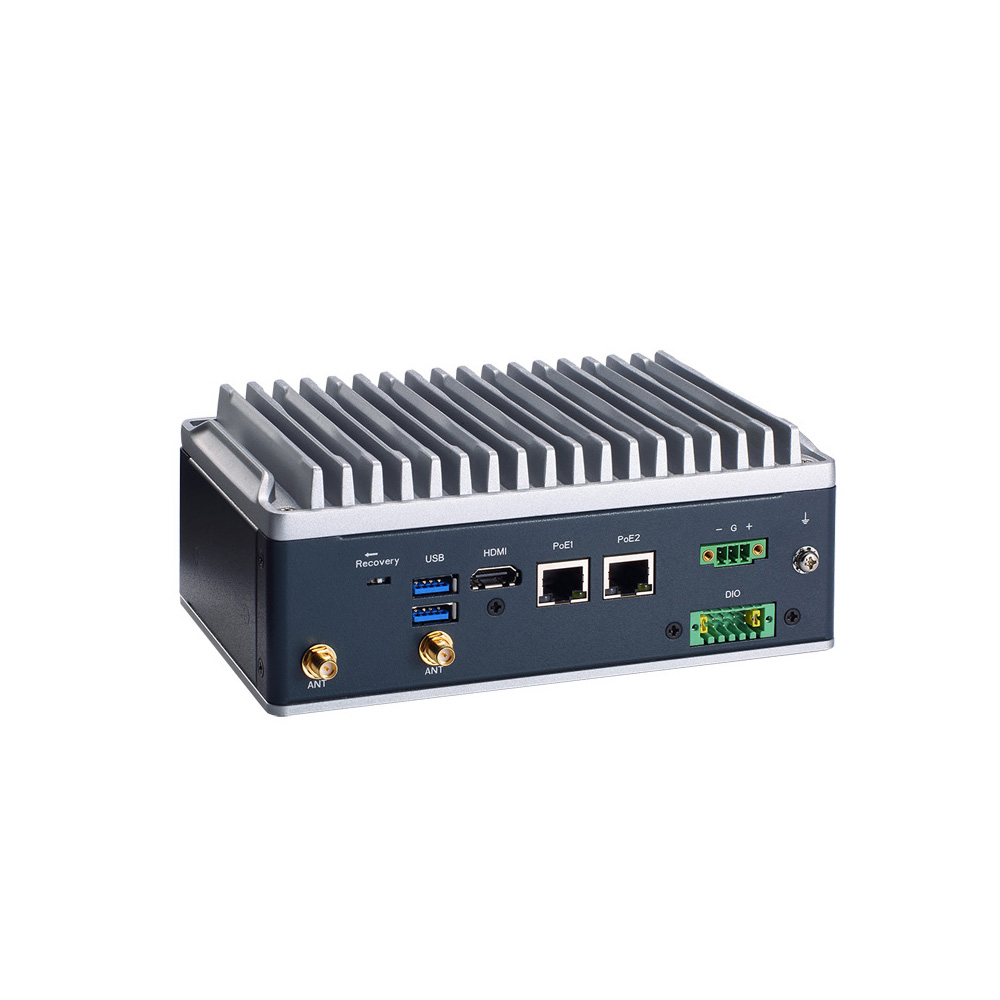
AIE510-ONX Axiomtek Edge AI Box PC
Picked for robots and vehicles, with a Jetson Orin NX 16GB, a PoE GbE port for a camera, a CAN link and an ignition-aware supply in a fanless box.
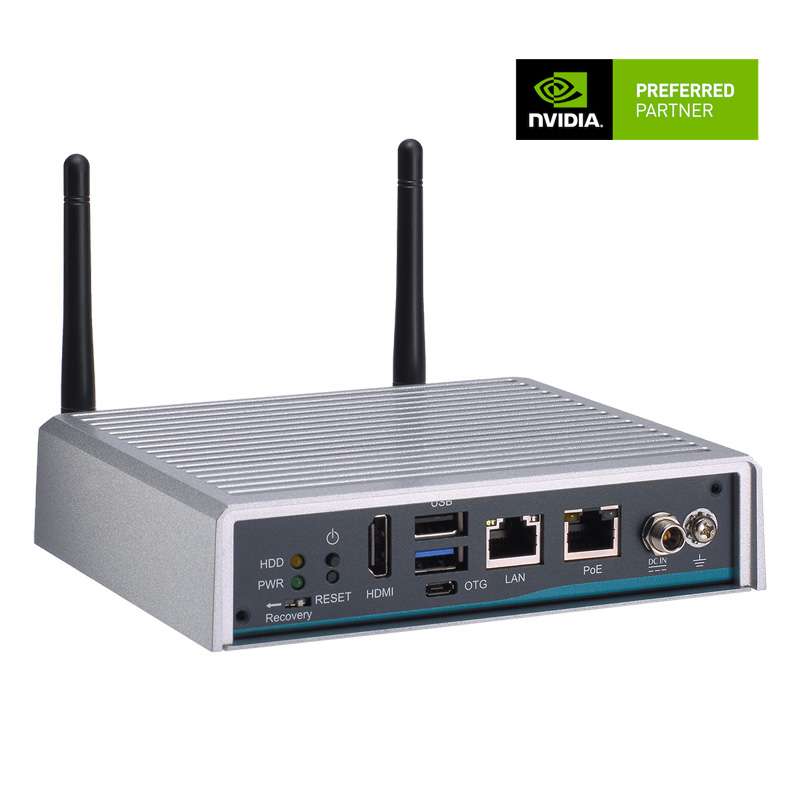
AIE100A-ONX Axiomtek PoE Edge AI Computer
A small Jetson Orin NX system for smart city and outdoor analytics, rated 70 or 100 TOPS, with a 15 W PoE port for a camera and −30 to 50 °C operation.
X6a-AGX DFI AGX Orin Edge AI Computer
Our lead DFI pick for multi-camera AI on Jetson AGX Orin 32GB or 64GB, running fanless with 10GbE and a 12 to 54 V DC input.
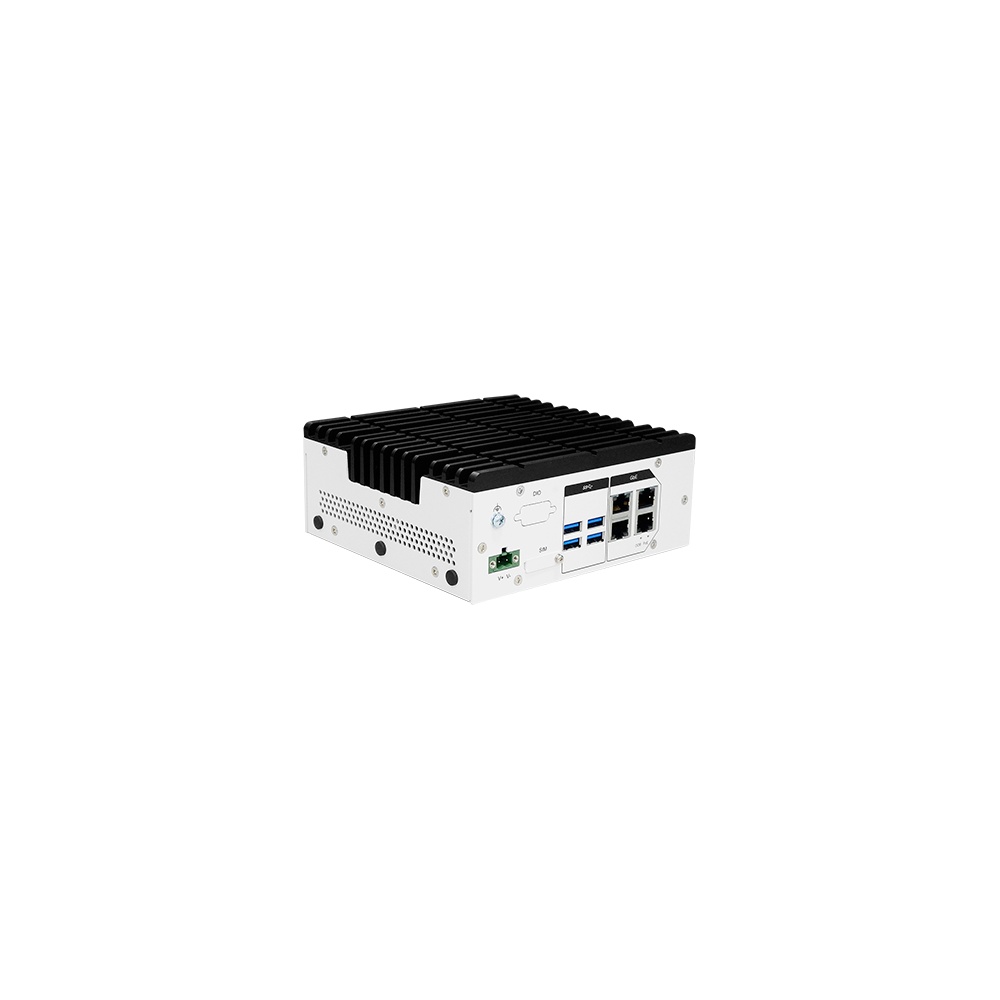
X6-ORN-GMSL DFI GMSL Edge AI Box PC
Chosen for mobile robots and vehicle vision, taking two GMSL2 cameras on FAKRA into a Jetson Orin NX or Orin Nano, with four Intel GbE ports and PoE on two.
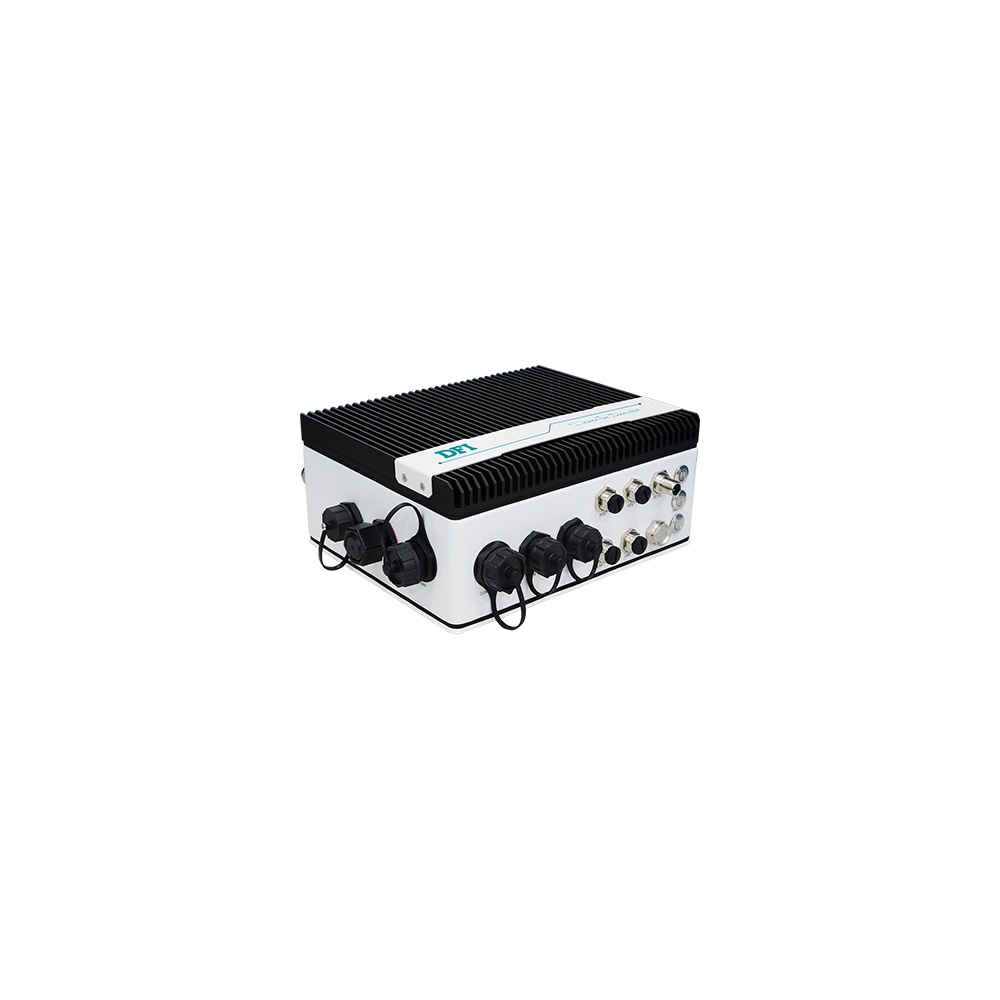
X6X-ORN DFI IP67 Edge AI Device
Picked for AI at the pole or on the vehicle, sealing a Jetson Orin NX or Orin Nano to IP67 with M12 PoE ports, all fanless.
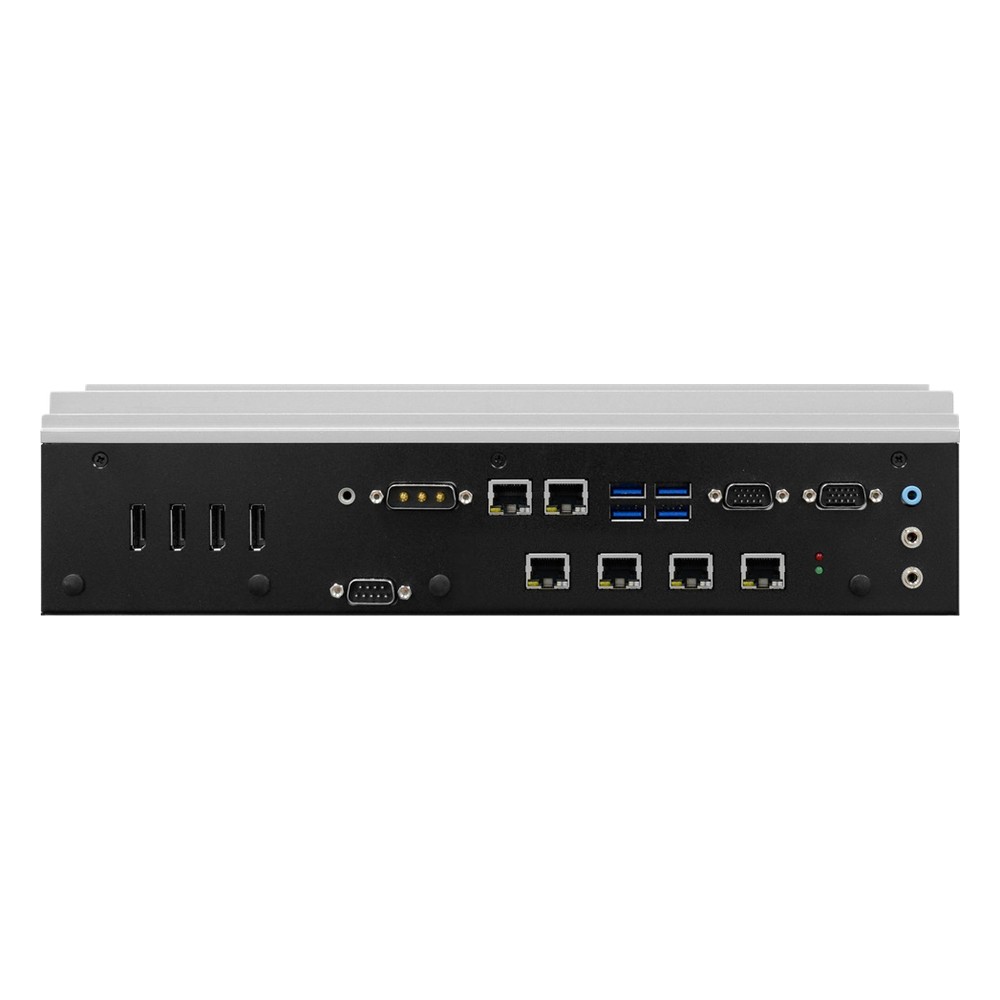
VC500-CMS-MXM DFI MXM GPU AI Computer
Selected for vehicle analytics and mapping that need a fixed GPU, pairing 10th Gen Core with an MXM Type A or B module, four PoE ports or two 10G SFP+.
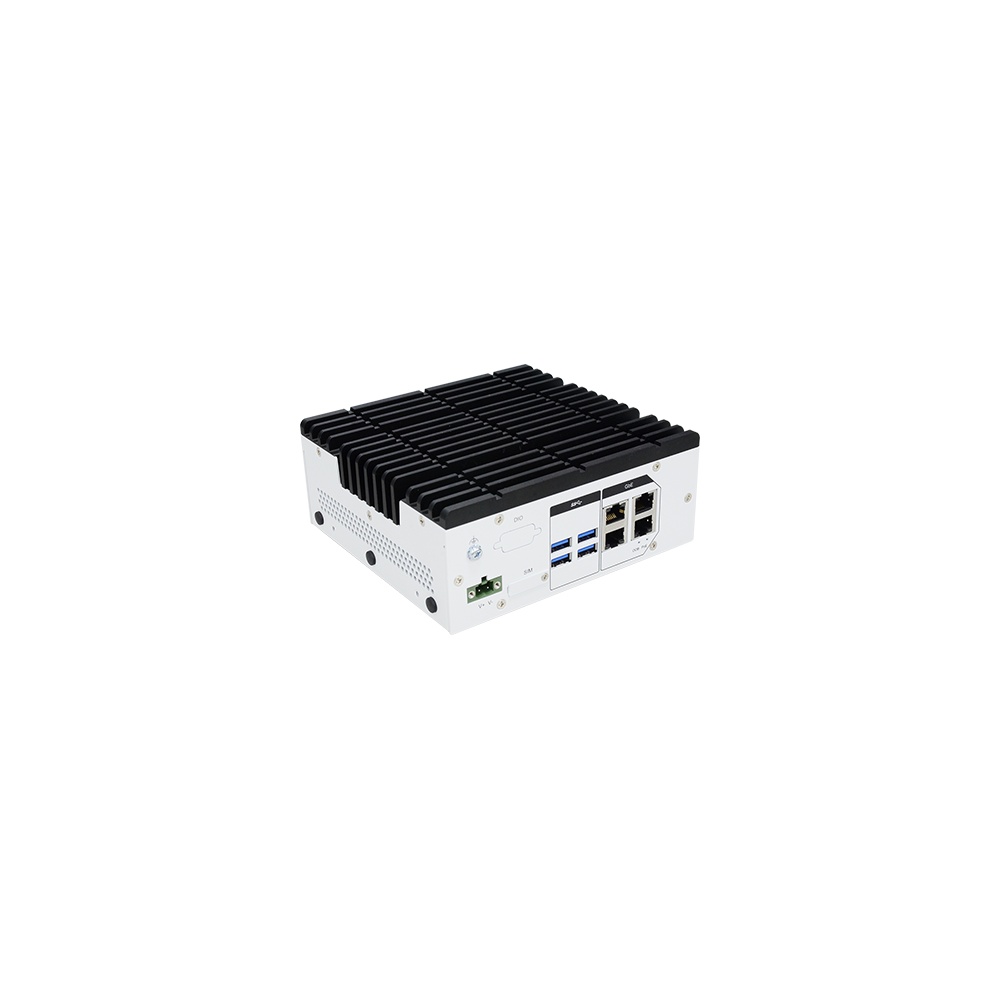
X6-ORN DFI Edge AI Box PC
Selected for cabinet-mounted vision and smart retail, with Jetson Orin NX or Orin Nano, four Intel GbE ports with 15 W PoE on two and three M.2 slots.
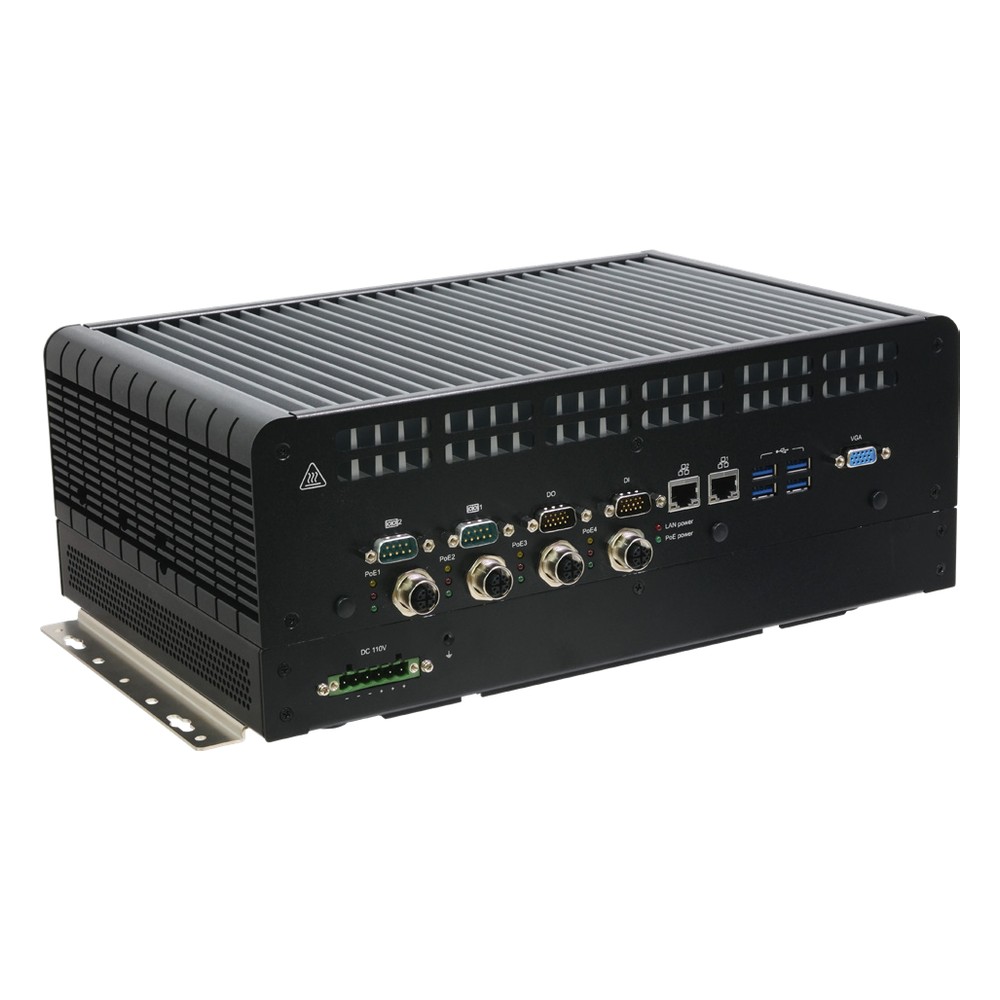
RC300-CS DFI Railway GPU AI Computer
Chosen for onboard rail video analytics, with a Core i7-9700TE, an MXM GPU slot, four M12 PoE ports and swappable SSD bays, designed to EN 50155.
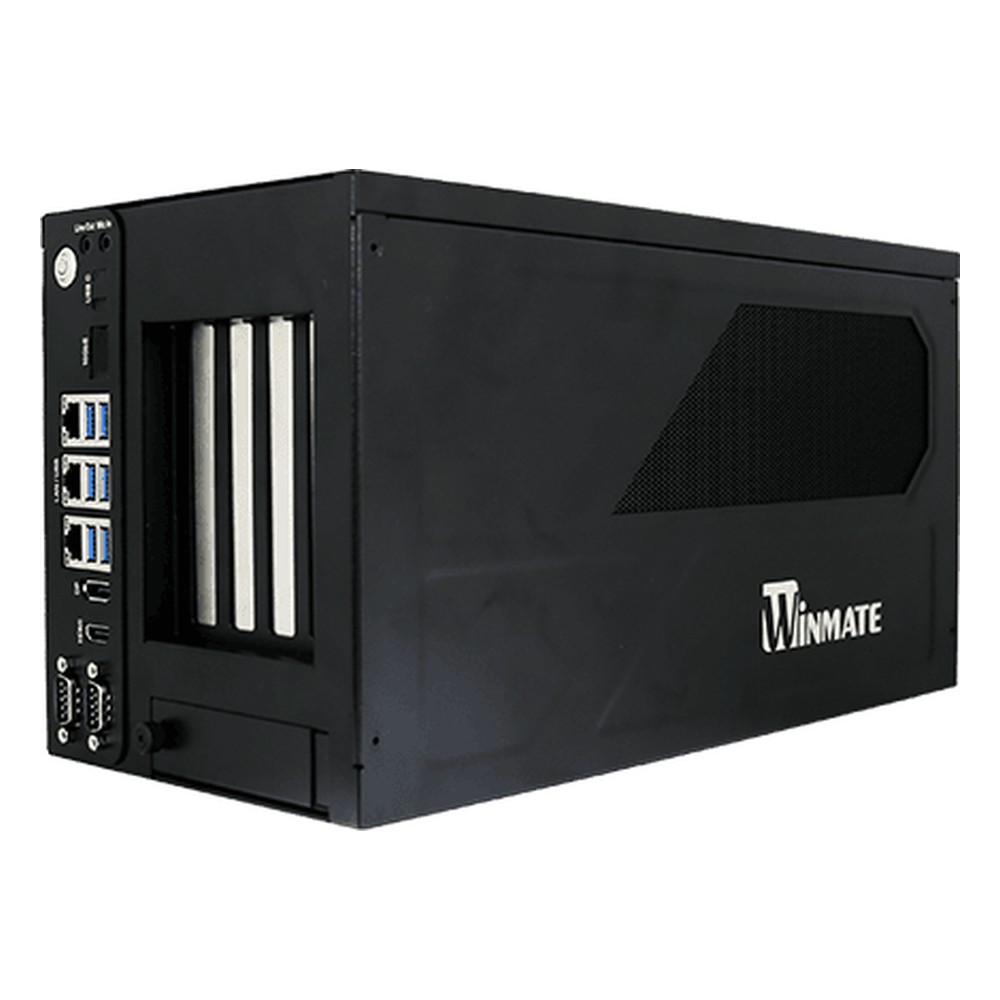
WNAI-E800 Winmate GPU Edge AI Box PC
Our lead Winmate pick for defect inspection and robotics needing a full-size GPU, with 14th Gen Core i9 or i7, a PCIe x16 slot for an NVIDIA RTX PRO card and DC or AC power.
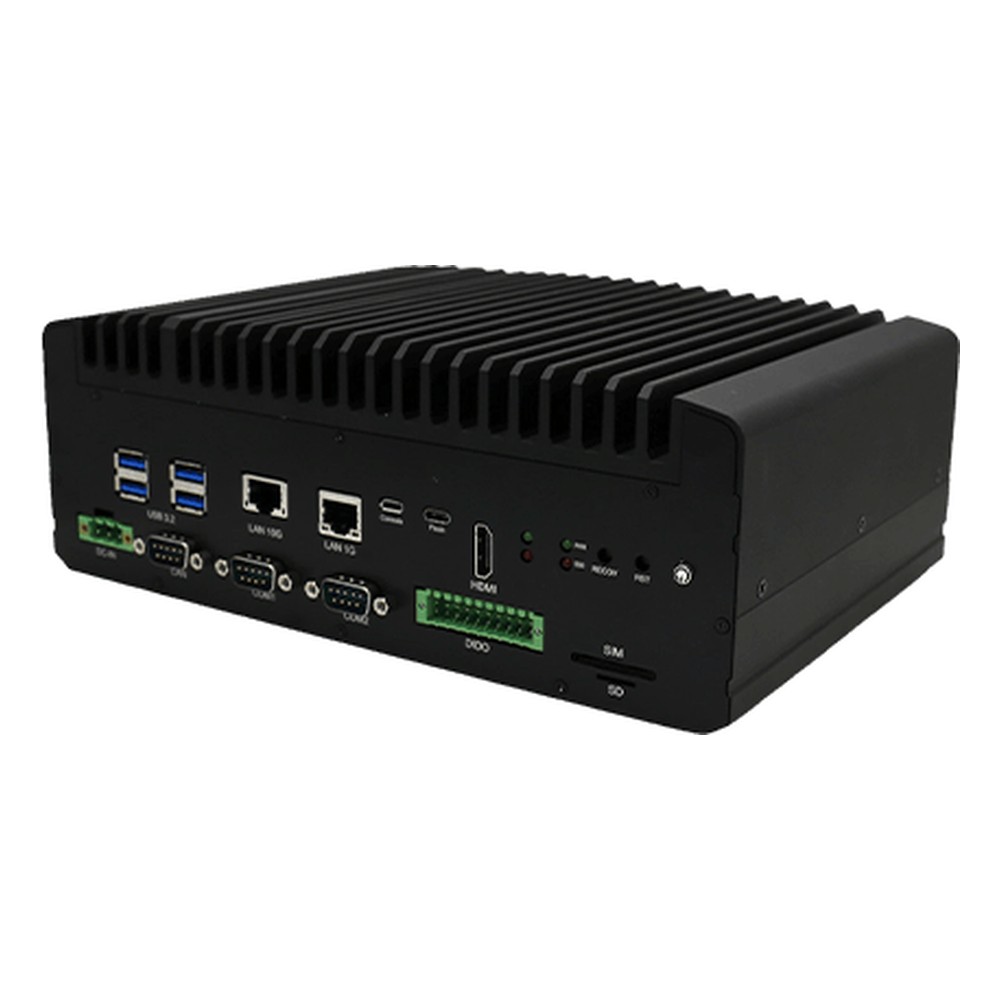
WNAI-E600 Winmate AGX Orin Edge AI Computer
Picked for perception systems on mobile equipment and vehicle test rigs, with the AGX Orin module running up to 275 TOPS, a 9 to 36 V DC input and wide-temperature operation.
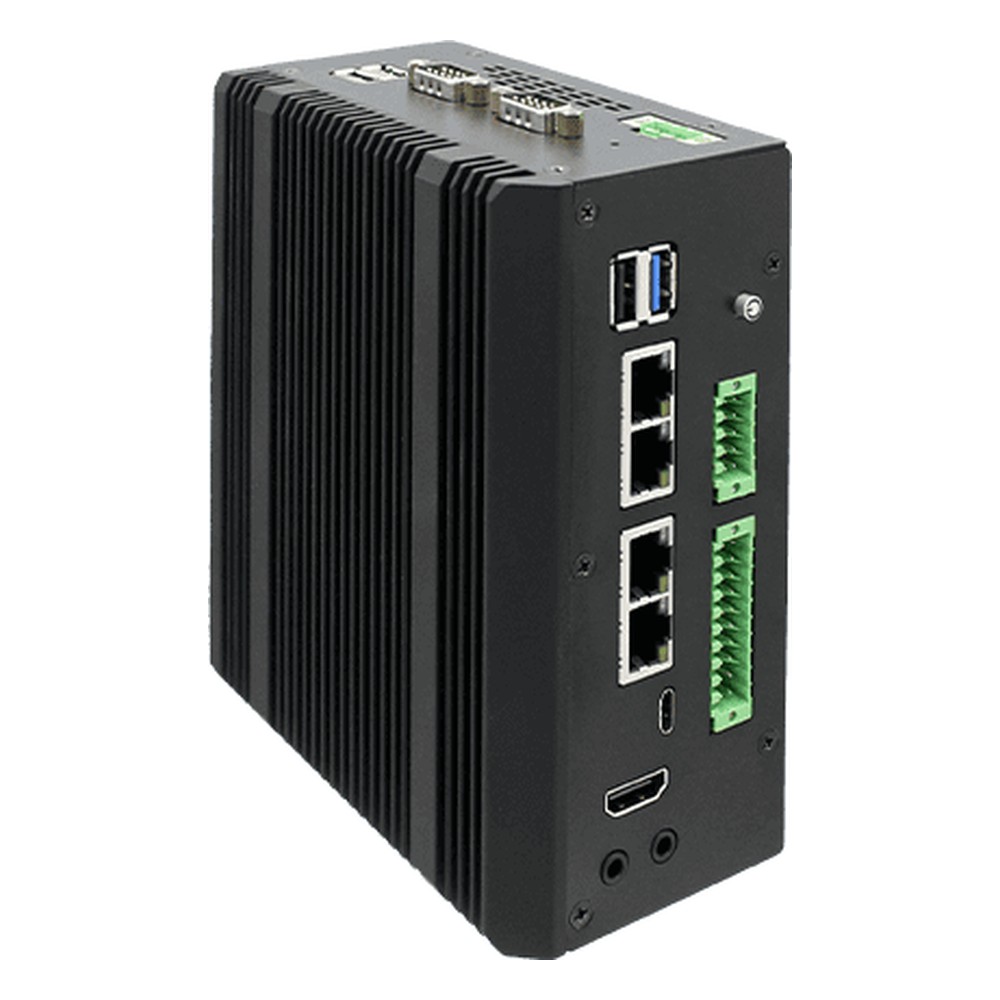
NTDRW100 Winmate Jetson Edge AI Device
A compact cabinet AI pick, with a Jetson Orin Nano 8GB carrying 8 GB of LPDDR5, a PoE+ port that powers one camera and a 9 to 36 V DC input for DIN rail sites.
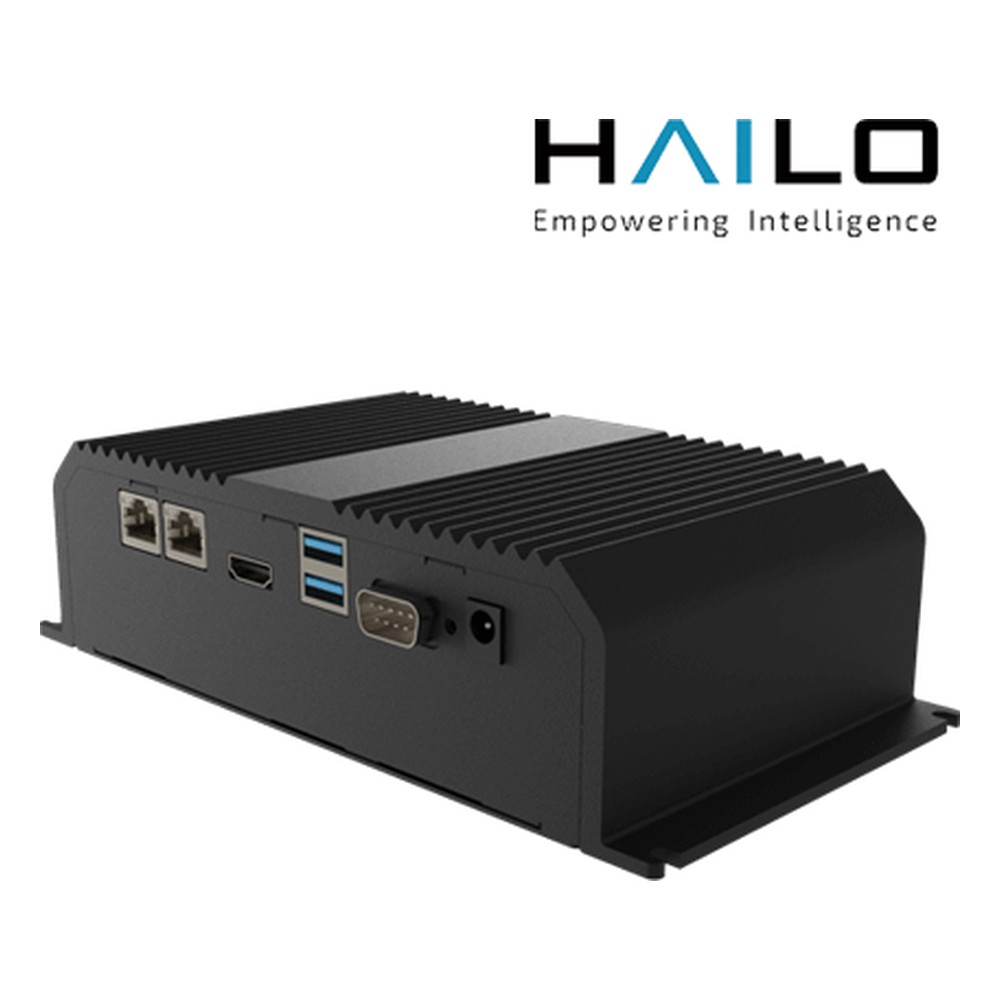
IE32SB3-101AI Winmate Hailo Edge AI Box PC
A low-power AI box for retail counting and occupancy work, where the integrated Hailo-8 takes the neural network and an Atom x6413E runs the application, all in a slim fanless case.
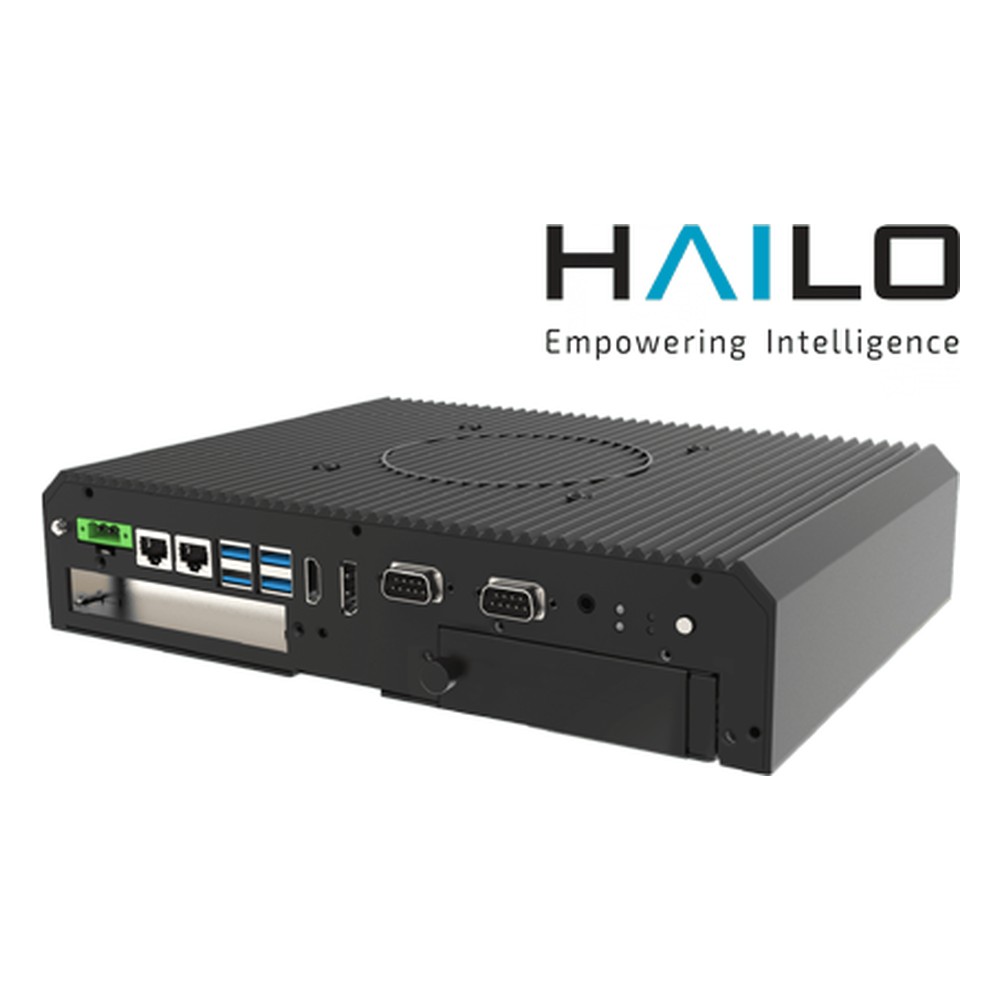
ITMH100-AI Winmate AI Edge Computer
A good fit for adding AI to an existing Windows or Linux application, running it on an 11th Gen Core i5-1135G7 with an integrated Hailo-8 module of up to 26 TOPS for the model.
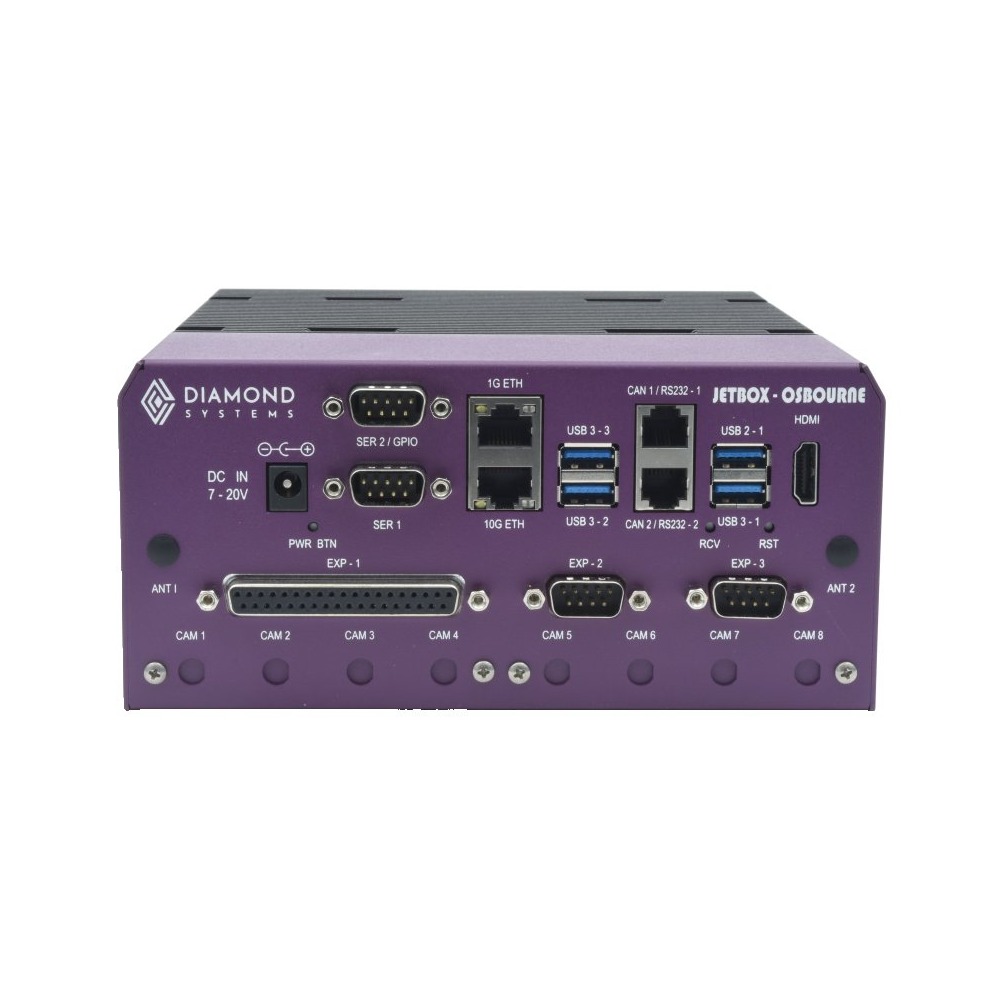
JETBOX-OSBOURNE Diamond Systems AGX Orin Edge AI Computer
Our lead Diamond pick for AGX Orin inference rated up to 275 TOPS, built on the Osbourne carrier with 10GbE for camera or lidar feeds and JetPack Linux ready on the NVMe SSD.
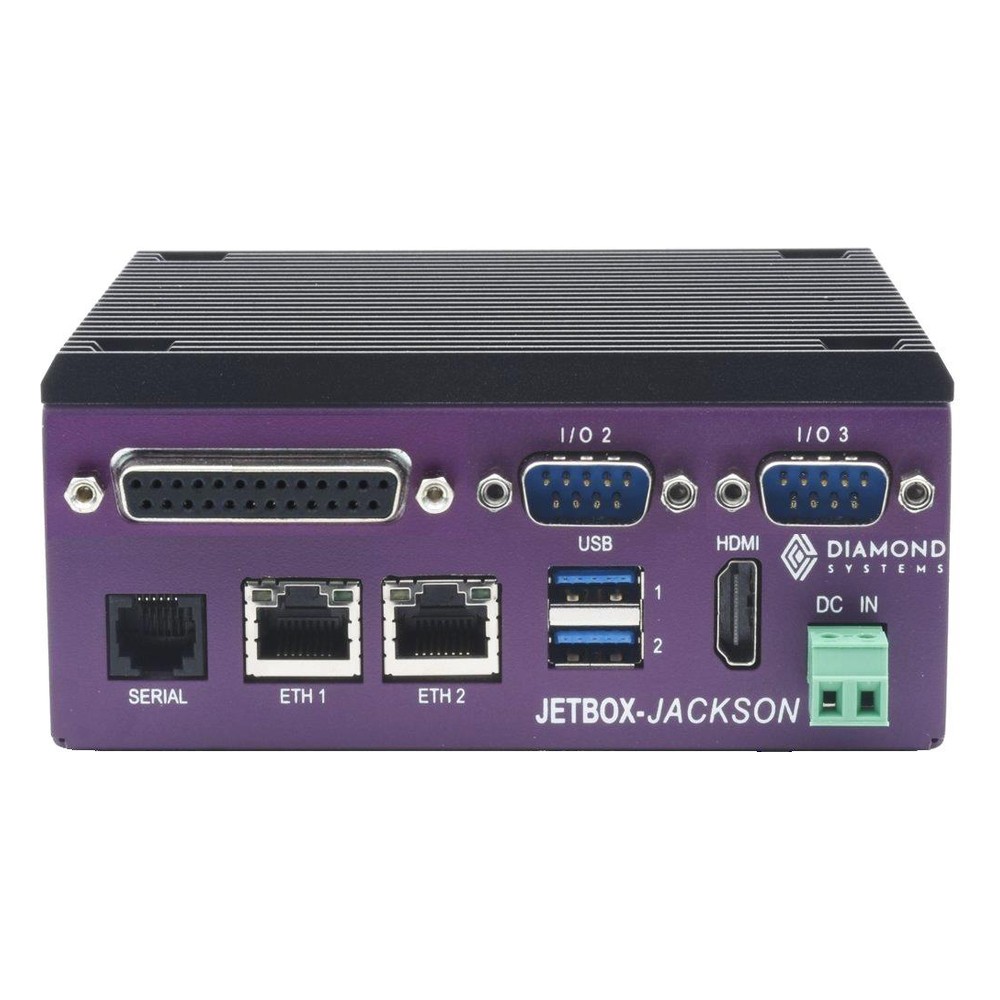
JETBOX-JACKSON Diamond Systems Jetson Edge AI Device
Chosen for AI in smart cabinets, with a Jetson Orin NX or Orin Nano on DIN rail, JetPack Linux on a 1 TB NVMe SSD and 16 GPIO.
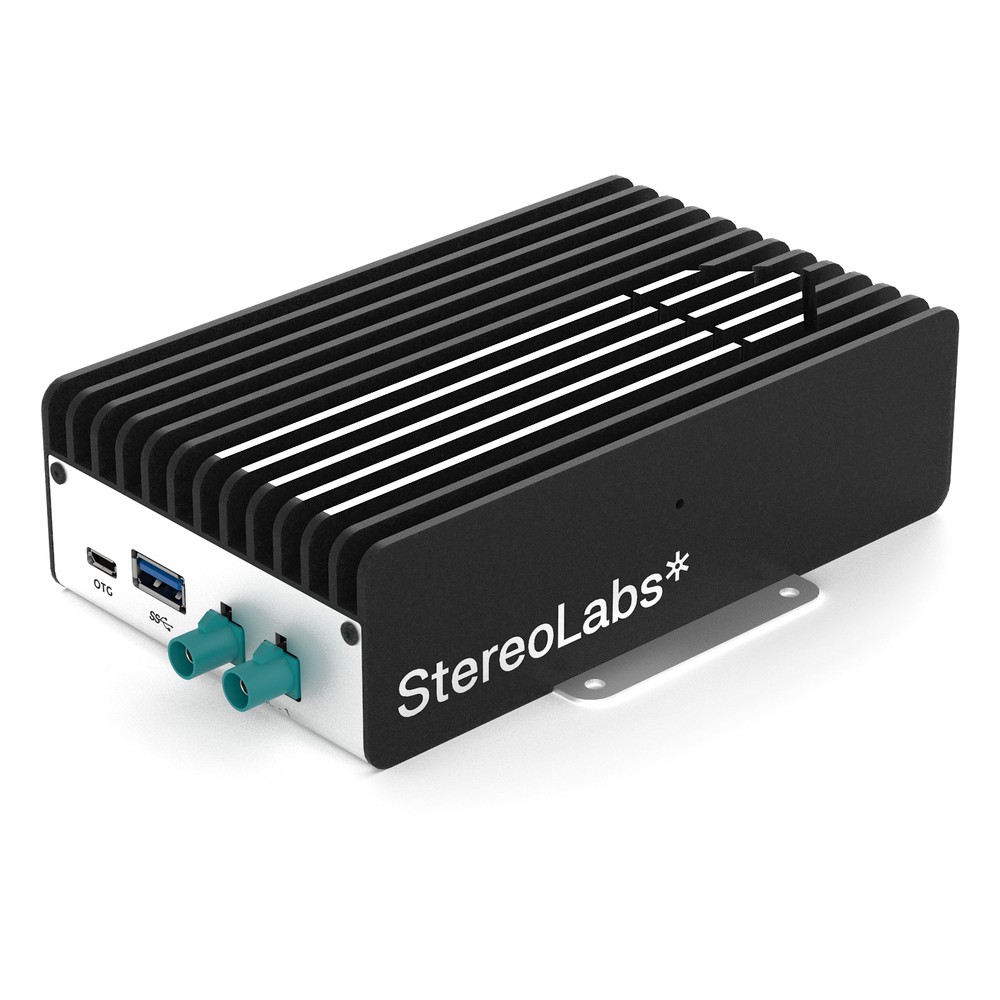
ZED-BOX-MINI Stereolabs GMSL Edge AI Computer
Selected for spatial AI fleets that pair with ZED cameras, scaling from Orin Nano 4GB at 20 TOPS to Orin NX 16GB at 100 TOPS on the same two GMSL2 inputs.
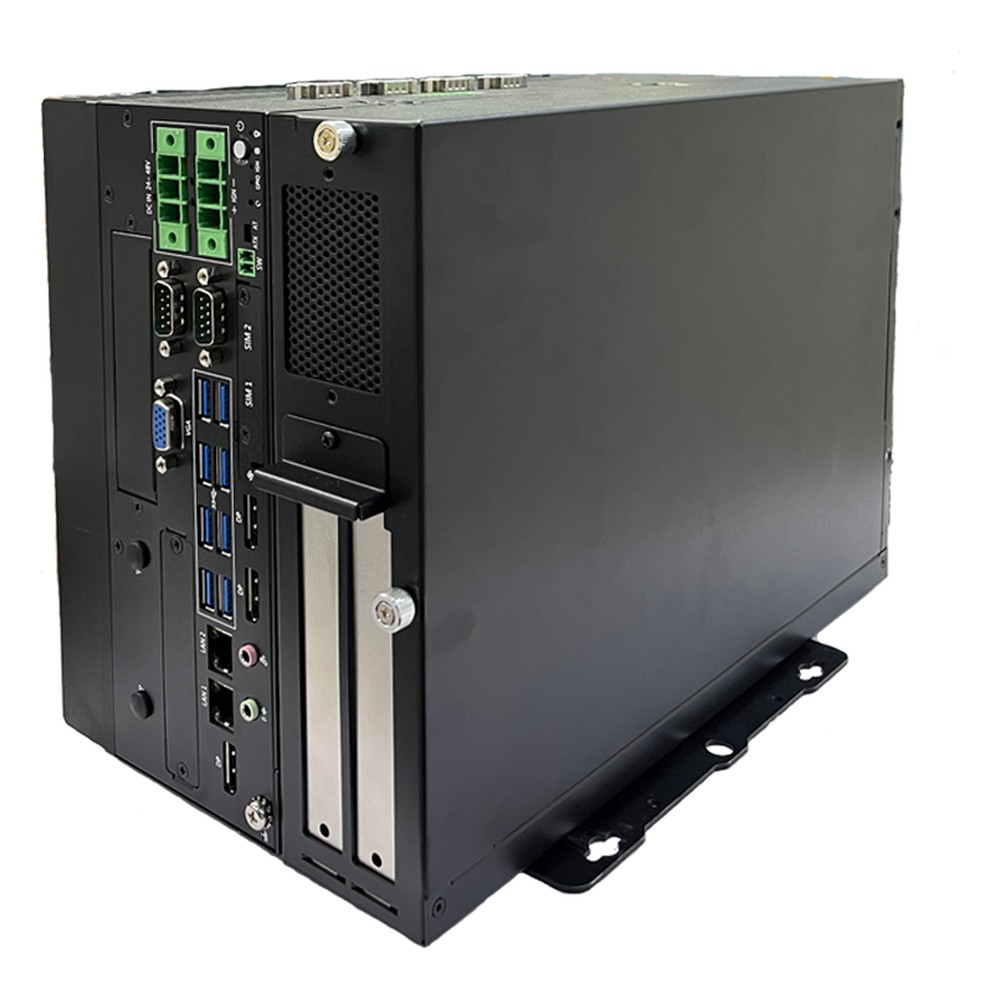
SE-5010 Arestech GPU Edge AI Computer
Selected for vision and in-vehicle AI that needs a full graphics card, with socketed 14th Gen Core on R680E, a PCIe x16 GPU slot and ignition control on a 9 to 48 V DC input.
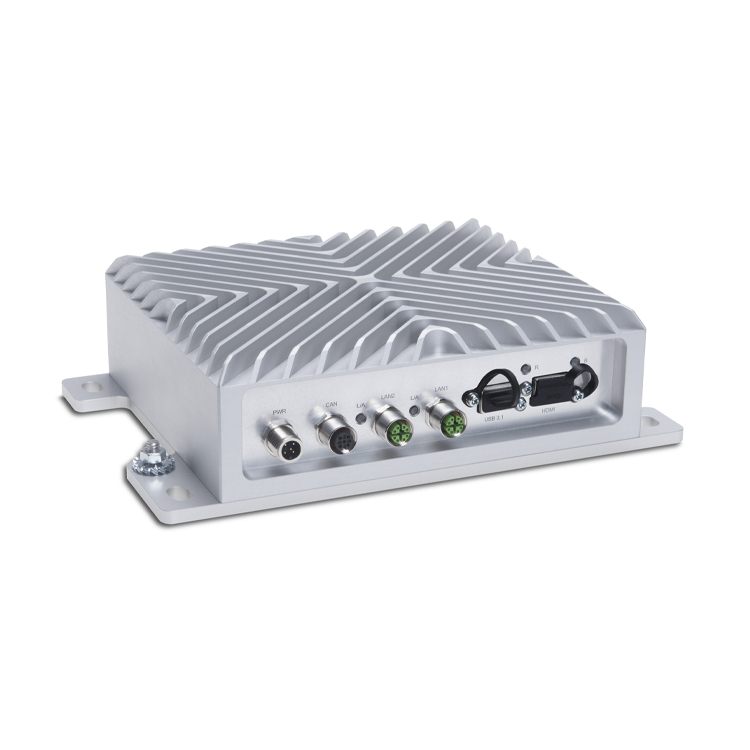
RPC Compact A2N Syslogic Jetson Edge AI System
Chosen for mobile robots and off-highway vehicles, with a Jetson TX2 NX sealed to IP67, isolated CAN FD on M12 and ignition control on a 9 to 45 V DC input.
Not sure which range fits? Tell us the application and we will recommend the right model.
Edge AI Innovation & Autonomous Systems Insights

















Edge AI Computer FAQs
What is an edge AI computer?
An edge AI computer runs trained AI models on site, beside the cameras, sensors and machines that produce the data. It returns a result in milliseconds and sends only results or alerts over the network. Most use an NVIDIA Jetson module, a discrete GPU, a Hailo accelerator or a processor with a built-in NPU.
What is edge AI?What is the difference between edge AI and cloud AI?
Edge AI runs the model where the data is created, so decisions arrive in milliseconds and video stays on site. Cloud AI uploads the data to a data centre, which suits training, reporting and models too large for local hardware. Many systems use both, with inference at the edge and retraining in the cloud.
Edge AI vs cloud AIHow many TOPS does an edge AI computer need?
It depends on the model, its precision and the number of streams, so benchmark rather than guess. As a guide, a single-camera detector often runs on a Hailo-8 at up to 26 TOPS or an Orin Nano at up to 40 TOPS, while multi-camera robots and vehicles move to AGX Orin at up to 275 TOPS or a discrete GPU.
What does TOPS mean?Should I choose NVIDIA Jetson, a GPU or Hailo?
Jetson suits compact builds where one module handles the cameras, the AI model and the I/O together. A discrete GPU makes sense for large models, many streams or on-site LLMs. Hailo adds low-power inference to an x86 or Arm system you already use, and an NPU covers light models running beside other software, with no extra hardware. Our guide to GPU edge computing compares Jetson and discrete GPUs in more detail.
NPU vs GPU for edge AICan an edge AI computer be fanless?
Yes. Most Jetson, Hailo and NPU systems are fanless, cooled through a finned chassis, which keeps dust out and removes a moving part. Fanless GPU computers exist too, using modules in an MXM slot or passively cooled cards. Full-size, high-power GPUs need managed airflow.
Can edge AI computers run in vehicles or outdoors?
Yes, with the right build. Vehicle systems add ignition control, wide-range DC input and E-Mark or EN 50155 approvals, and outdoor systems are sealed to IP66 or IP67 with M12 connectors. Many run from −25 to 70 °C. Rugged Jetson and rugged GPU computers are designed against vehicle shock and vibration profiles.
Which software runs on an edge AI computer?
Each accelerator has its own toolchain: JetPack for Jetson, CUDA and TensorRT for NVIDIA GPUs, HailoRT for Hailo and OpenVINO or Ryzen AI Software for processor NPUs. Train in a common framework such as PyTorch or TensorFlow, export to ONNX and compile for the target. Containers let the same model move between systems as a project grows. On camera projects, the detections usually pass to a video management system (VMS) that records and displays them.
What is NVIDIA JetPack?What is an edge AI device?
An edge AI device is any hardware that runs inference locally: a smart camera, an AI-enabled gateway, an edge AI box PC or a rugged computer on a vehicle. The term is broad, and AI is only one job an edge device can do, so specify it by the model, the inputs and the environment rather than the label.
What is AI inference?Do you offer TAA and NDAA compliant edge AI computers?
Yes, where the manufacturer declares it. Several Jetson and GPU ranges carry TAA or NDAA declarations from their makers. We can’t offer Buy American Act compliance or US manufacture on any system. Name the declaration your contract asks for and we’ll confirm it from the maker’s datasheet.
What is TAA compliance?Can you supply edge AI computers configured and tested?
Yes. Integration is standard: every edge AI computer we supply is configured and tested before it ships. We fit the memory, storage and 5G or 4G modules, install JetPack, Linux or Windows with the drivers and AI frameworks you use, and set the power mode and BIOS for your installation before the system leaves us.
Speak to an Edge AI Specialist.
Tell us the model you run, the cameras that feed it and where the system will be installed. We will recommend the right edge AI computer for the accelerator, inputs and environment.