
 UK
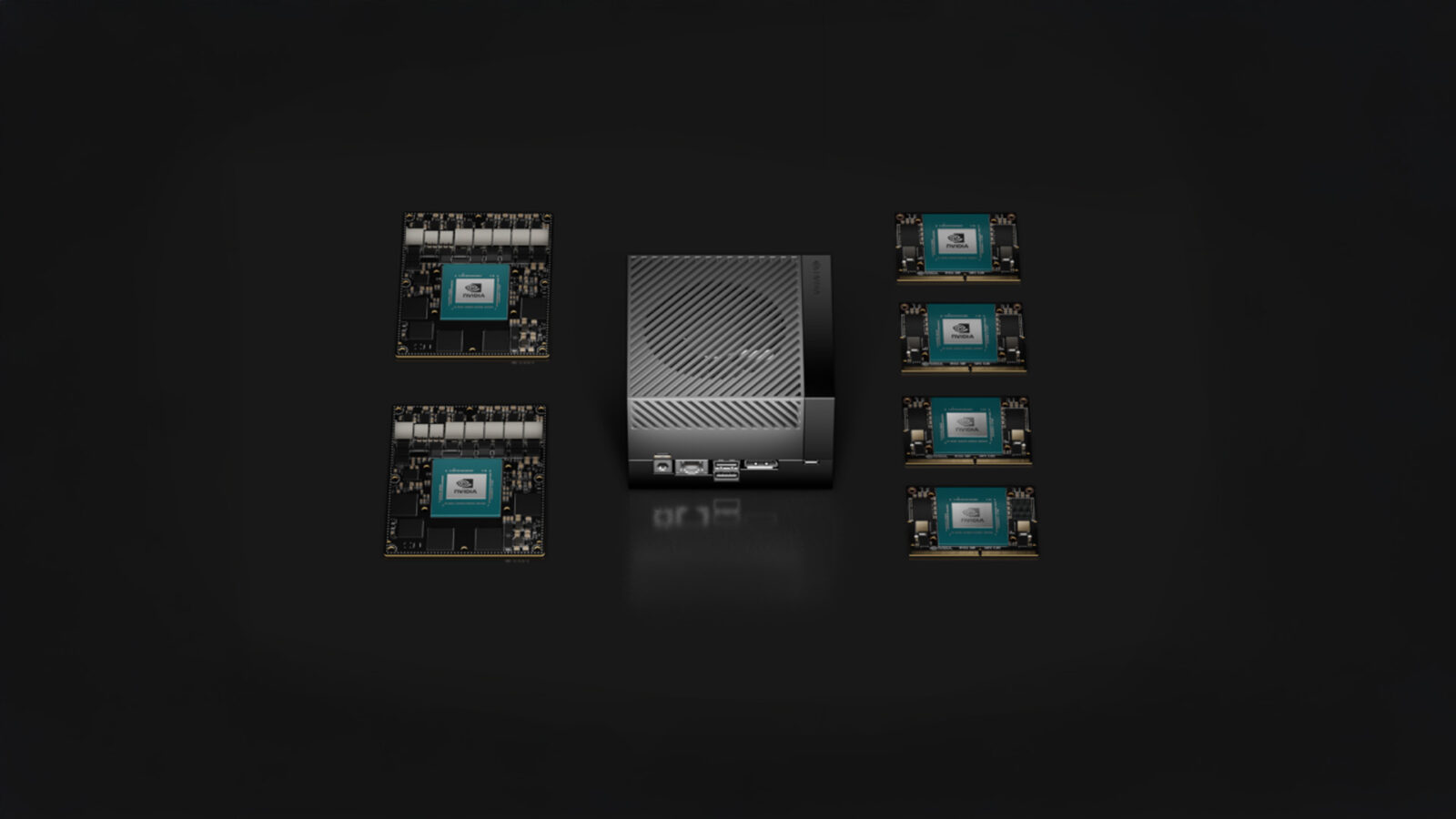
NVIDIA Jetson Modules Compared: Orin Nano vs Orin NX vs AGX Orin vs Thor
Jetson modules run from the 7 W Orin Nano to the 130 W Jetson T5000. Choosing well means matching the module to the workload, memory, power budget and lifecycle, not chasing the biggest number.
NVIDIA Jetson modules are the system-on-modules at the heart of every Jetson computer, and the current range runs from the 7 W Orin Nano to the Jetson T5000 at up to 130 W. The right module is the smallest one that covers your AI workload inside your power, I/O and lifecycle budget, not the one with the biggest number.
In short: choose the Jetson Orin Nano for entry-level, low-power vision on one or two cameras; the Jetson Orin NX for multi-camera AI and heavier inference; the Jetson AGX Orin for demanding multi-sensor workloads; and Jetson Thor for generative and physical AI on humanoids and autonomous machines.
This guide compares all nine current modules side by side with NVIDIA’s published figures, then walks through how to size a module, how Thor compares with AGX Orin, which modules share a carrier board, how industrial and commercial modules differ, and what we have shipped. For the platform itself, start with what NVIDIA Jetson is.
Key takeaways
- 01Nine current modules
- Orin Nano 4GB and 8GB, Orin NX 8GB and 16GB, AGX Orin 32GB, 64GB and Industrial, and Jetson T4000 and T5000.
- 02Memory often decides
- From 4 GB to 128 GB; large language and vision language models need the larger modules before they need more TOPS.
- 03Connectors set the upgrade path
- Orin Nano and Orin NX share a 260-pin SO-DIMM; AGX Orin uses 699 pins; Thor needs its own carrier.
- 04Thor is a platform change
- Blackwell GPU, up to 2,070 FP4 TFLOPS and 128 GB, but a new carrier, power design and JetPack 7.
- 05Industrial is a separate module
- AGX Orin Industrial is rated from −40 °C to 85 °C with ECC memory and a longer production life.
Jetson modules compared: compute and memory
The table lists every current module with NVIDIA’s published figures. Orin Nano and Orin NX are shown in their Super modes from JetPack 6.2.
| Module | AI performance | GPU | CPU | Deep learning accelerators | Memory and bandwidth | Power range |
|---|---|---|---|---|---|---|
| Orin Nano 4GB | 34 TOPS | 512-core Ampere, 16 Tensor Cores | 6-core Cortex-A78AE | None | 4 GB LPDDR5, 51 GB/s | 7–25 W |
| Orin Nano 8GB | 67 TOPS | 1,024-core Ampere, 32 Tensor Cores | 6-core Cortex-A78AE | None | 8 GB LPDDR5, 102 GB/s | 7–25 W |
| Orin NX 8GB | 117 TOPS | 1,024-core Ampere, 32 Tensor Cores | 6-core Cortex-A78AE | 1 | 8 GB LPDDR5, 102 GB/s | 10–40 W |
| Orin NX 16GB | 157 TOPS | 1,024-core Ampere, 32 Tensor Cores | 8-core Cortex-A78AE | 2 | 16 GB LPDDR5, 102 GB/s | 10–40 W |
| AGX Orin 32GB | 200 TOPS | 1,792-core Ampere, 56 Tensor Cores | 8-core Cortex-A78AE | 2 | 32 GB LPDDR5, 204.8 GB/s | 15–40 W |
| AGX Orin 64GB | 275 TOPS | 2,048-core Ampere, 64 Tensor Cores | 12-core Cortex-A78AE | 2 | 64 GB LPDDR5, 204.8 GB/s | 15–60 W |
| AGX Orin Industrial | 248 TOPS | 2,048-core Ampere, 64 Tensor Cores | 12-core Cortex-A78AE | 2 | 64 GB LPDDR5 with ECC, 204.8 GB/s | 15–75 W |
| Jetson T4000 | 1,200 FP4 TFLOPS | 1,536-core Blackwell, 64 Tensor Cores | 12-core Neoverse-V3AE | None (Blackwell Tensor Cores) | 64 GB LPDDR5X, 273 GB/s | 40–70 W |
| Jetson T5000 | 2,070 FP4 TFLOPS | 2,560-core Blackwell, 96 Tensor Cores | 14-core Neoverse-V3AE | None (Blackwell Tensor Cores) | 128 GB LPDDR5X, 273 GB/s | 40–130 W |
Orin figures are sparse INT8 TOPS and Thor figures are sparse FP4 TFLOPS, so the columns are not directly comparable; NVIDIA rates Thor at up to 7.5 times the AI compute of AGX Orin. Our explainer on TFLOPS and TOPS covers why precision changes the figure, and the Orin Nano Super paper explains the Super modes behind the Orin Nano and Orin NX ratings.
Across the Orin family the range is roughly eightfold, from 34 to 275 TOPS, on one architecture and one software stack. That is why a project can often prototype on one Orin module and ship on another. Our earlier comparison of NVIDIA Orin for edge AI performance looks at the Orin modules in more depth.
Jetson modules compared: I/O and connectors
Interfaces often decide the module as much as the AI figure. These are module capabilities; the carrier board decides which reach a connector.
| Module | PCIe | Camera interface | Hardware video encode | Ethernet from the module | Connector |
|---|---|---|---|---|---|
| Orin Nano 4GB and 8GB | Gen 3, one ×4 and three ×1 | 8 lanes MIPI CSI-2 | None (CPU encode) | 1× GbE | 260-pin SO-DIMM |
| Orin NX 8GB and 16GB | Gen 4, one ×4 and three ×1 | 8 lanes MIPI CSI-2 | 1× 4K60 H.265 | 1× GbE | 260-pin SO-DIMM |
| AGX Orin 32GB | Gen 4, up to 22 lanes | 16 lanes MIPI CSI-2 | 1× 4K60 H.265 | 1× GbE plus 10GbE | 699-pin |
| AGX Orin 64GB and Industrial | Gen 4, up to 22 lanes | 16 lanes MIPI CSI-2 | 2× 4K60 H.265 | 1× GbE plus 10GbE | 699-pin |
| Jetson T4000 and T5000 | Gen 5 | MIPI CSI-2, plus sensor bridges over Ethernet | Multi-stream 4K in hardware | Multi-gigabit, up to 25GbE | Thor module connector |
Two points stand out. The Orin Nano has no hardware encoder, so recorders and video gateways usually start at Orin NX; our Orin Nano vs Orin NX explainer covers that in detail. And Thor moves camera-heavy designs towards Ethernet: its multi-gigabit links and NVIDIA’s Holoscan sensor bridge stream sensor data straight into GPU memory. Interface counts differ between T4000 and T5000, so check NVIDIA’s published specifications for each Jetson module for exact figures.
Which Jetson module is right for your workload?
Start from the workload, then check memory, power and interfaces. The table is a first pass; benchmarks on the real model settle the choice.
| If the system has… | Usually fits | Why |
|---|---|---|
| One or two cameras, one detection model, 15 W or less | Orin Nano 4GB or 8GB | Enough for YOLO-class models; lowest power and heat |
| Two to four cameras, several models or video recording | Orin NX 8GB or 16GB | More TOPS, DLAs and a hardware encoder on the same footprint |
| Small language or vision language models alongside vision | Orin NX 16GB or AGX Orin | 16 GB or more for weights, context and the camera pipeline |
| Six or more cameras, lidar and sensor fusion | AGX Orin 32GB or 64GB | 16 camera lanes, 10GbE and up to 64 GB |
| −40 °C cold starts or a defence or rail programme | AGX Orin Industrial | Module rated −40 °C to 85 °C with ECC memory |
| Humanoid or mobile manipulator with large models | Jetson T5000 | 128 GB and up to 2,070 FP4 TFLOPS for several large models at once |
| Generative AI with a tighter power budget | Jetson T4000 | Blackwell performance in 40–70 W where the model fits 64 GB |
Four worked examples
A sealed outdoor sensor running a single detection model needs little compute and no fan: an Orin Nano at 10 to 15 W fits a passively cooled, sealed enclosure, with Super headroom where the cooling allows.
A four-camera autonomous mobile robot fusing vision and navigation in real time is an Orin NX job: enough headroom for several concurrent pipelines without the size, power and cost of the largest module.
An agricultural vehicle with eight cameras detecting crops and weeds at speed suits an AGX Orin 64GB, with 16 camera lanes, two video encoders and the memory to hold several models.
A humanoid robot running perception, planning and a vision language action model together is where Jetson Thor earns its place. Each step up the range adds heat to remove, so keeping a Jetson module inside its thermal limits is part of the sizing decision rather than an afterthought.
Power and cooling by Jetson module
Every module has a set of NVIDIA power modes, and the mode you ship decides the cooling, the power supply and the temperature the system can run at. Catalogue ratings show how much the mode matters.
| Module | NVIDIA power modes (examples) | Typical cooling in a system | From our range |
|---|---|---|---|
| Orin Nano | 7 W, 15 W, 25 W, MAXN SUPER | Fanless in a compact sealed case | Fanless Orin Nano systems are commonly rated from −25 °C to 60–80 °C |
| Orin NX | 10 W, 15 W, 25 W, 40 W, MAXN SUPER | Fanless at 25 W; a larger heatsink or fan for 40 W | Premio rates the JCO-1000-ORN to 55 °C at 15 or 25 W and to 35 °C at 40 W |
| AGX Orin | 15 W, 30 W, 50 W and MAXN on the 64GB module | Large fanless heatsink or conduction to the enclosure | Forecr rates its sealed IP67 MILBOX‑AGX from −25 °C to 70 °C |
| Jetson T4000 | Modes within 40–70 W | Fanless at lower modes; fan sink for the top mode | Vecow rates the EAC-7000-T4000 fanless to 45 °C in its 77 W system mode, or to 70 °C with a fan sink |
| Jetson T5000 | Modes within 40–130 W | Active cooling for sustained full power | Forecr gives a draw of 164 W at 24 V for the DSBOX‑THRMAX‑T5000 at MAXN |
System power is always above module power, because the carrier, storage, cameras and USB devices draw on top. Size the supply for the top mode plus everything else, then confirm under the real workload at the hottest ambient that the module holds its clocks. The Premio JCO-1000-ORN figures show the trade clearly: the same fanless chassis gives up 20 °C of operating range when the Orin NX moves from 25 W to 40 W.
For batteries and vehicles, the lower fixed modes are often the better choice. They keep power predictable, extend run time and leave thermal margin, at the cost of some peak throughput; our guide to thermal throttling explains what happens when a module runs out of margin instead.
Which Jetson module is best for robotics?
It depends on the robot. Small AMRs, delivery robots and research platforms with two to four cameras usually run well on Orin NX, which balances compute, memory and power for a battery-powered base. Outdoor robots and agricultural machines with six or more cameras and lidar move to AGX Orin. Humanoids and mobile manipulators running vision language action models move to Thor. Our robot computer guide sizes the compute by robot class and covers the real-time and safety controllers around it.
How we size a Jetson module
Five checks, in the order we work through them with customers, from the model to the programme lifecycle.
-
Workload
Models and camerasMatch the compute to the models you actually run, at the frame rate and resolution you need, with every model that runs at once counted.
-
Memory
Weights and buffersModel size is bounded by memory. 4 to 8 GB suits classic vision; language and generative models need 16 GB and above, often far more.
-
Power
Heat to removeThe module sets the cooling job. A 7 W Orin Nano can run fanless in a sealed box; a 130 W T5000 needs a substantial thermal design and power supply.
-
Interfaces
Cameras and networksCamera count and interface, networking, CAN and expansion vary by module and carrier, and often narrow the shortlist before TOPS do.
-
Lifecycle
Programme lengthCheck the module’s published lifecycle and the carrier vendor’s software support against how long the product will be built and supported.
How Jetson Thor compares with AGX Orin
Jetson Thor is the generation after Orin, and its two modules sit well above AGX Orin. Our white paper on how Jetson Thor advances edge AI beyond AGX Orin covers the architecture; this is the side-by-side.
| Specification | AGX Orin 64GB | Jetson T4000 | Jetson T5000 |
|---|---|---|---|
| GPU architecture | Ampere | Blackwell | Blackwell |
| AI performance | 275 TOPS (sparse INT8) | 1,200 FP4 TFLOPS (sparse) | 2,070 FP4 TFLOPS (sparse) |
| GPU | 2,048 cores, 64 Tensor Cores | 1,536 cores, 64 fifth-generation Tensor Cores | 2,560 cores, 96 fifth-generation Tensor Cores |
| CPU | 12-core Arm Cortex-A78AE | 12-core Arm Neoverse-V3AE | 14-core Arm Neoverse-V3AE |
| Memory | 64 GB LPDDR5 | 64 GB LPDDR5X | 128 GB LPDDR5X |
| Power range | 15–60 W | 40–70 W | 40–130 W |
| Software | JetPack 6, JetPack 7.2 | JetPack 7 | JetPack 7 |
| Carrier board | 699-pin AGX Orin carriers | Thor carriers | Thor carriers |
Thor is not a drop-in upgrade. It uses a new connector, a higher power envelope and new I/O, so it needs one of the Jetson Thor carrier boards rather than an AGX Orin board, and applications built on JetPack 6 are rebuilt for JetPack 7. For Orin fleets, what JetPack 7.2 and supported Yocto builds mean for production Orin fleets explains how the two software lines now meet. Our answer on whether Jetson Thor needs a new carrier board sets this out, and Jetson T5000 vs T4000 compares the two Thor modules.
The T4000 and T5000 share a form factor, so a Thor carrier is designed for both. Memory is usually what separates them: 128 GB on the T5000 allows larger models, longer context or several models side by side. NVIDIA also brings Multi-Instance GPU partitioning to Thor, which lets one module divide its GPU between isolated workloads. For classic detection and tracking on a few cameras, AGX Orin remains a lower-power and well-proven choice; our comparison of Orin NX vs AGX Orin covers the step below it.
Are Jetson modules pin compatible? Migration paths
Jetson modules fall into a few connector families, and moving within a family is far easier than moving between them. The usual migration paths:
| From | To | Carrier board | What to check |
|---|---|---|---|
| Orin Nano | Orin NX | Same 260-pin SO-DIMM; one carrier usually takes both | Power design and BSP support for the NX at 40 W |
| Xavier NX | Orin NX | Same SO-DIMM form factor | The carrier vendor’s JetPack 5 or 6 support and power rating |
| AGX Xavier | AGX Orin | Same 699-pin connector family | BSP, thermal design and any changed I/O |
| TX2 or TX2 NX | Orin Nano or Orin NX | TX2 NX shares the SO-DIMM form factor; TX2 needs a new carrier | Software moves from JetPack 4.6 to JetPack 6 |
| Original Jetson Nano | Orin Nano | Same SO-DIMM form factor, but check the carrier | Software moves from JetPack 4.6 to JetPack 6 |
| AGX Orin | Jetson T4000 or T5000 | New Thor carrier required | Power, cooling and a rebuild for JetPack 7 |
The previous generation is still in many fielded systems. The Jetson Xavier family and the older TX2 have reached an accelerated end of life, and our guide to Xavier and TX2 end-of-life and migration to Orin covers last-time-buy and refresh planning. For the AGX step specifically, AGX Orin vs AGX Xavier sets out the generational gain. The software stack carries across, so the application generally moves with it after a rebuild.
Shared footprints only help if the carrier’s power and software keep up. Our guide to choosing a Jetson carrier board covers what to look for, and the explainer on SO-DIMM covers the connector the smaller modules use.
Industrial vs commercial Jetson modules and lifecycle
Most Jetson modules are commercial-grade parts, with the system’s temperature rating set by its carrier, cooling and enclosure. The AGX Orin Industrial is built for harsher duty at the module itself.
| AGX Orin 64GB (commercial) | AGX Orin Industrial | |
|---|---|---|
| AI performance | 275 TOPS | 248 TOPS |
| Memory | 64 GB LPDDR5 | 64 GB LPDDR5 with ECC |
| Module operating temperature | Commercial range | −40 °C to 85 °C |
| Power range | 15–60 W | 15–75 W |
| Production life | Into the early 2030s | Ten-year production life |
| Typical use | Robots, vision and industrial AI | Rail, defence, outdoor and safety-related systems |
ECC memory detects and corrects single-bit errors, which matters where a corrupted value in a long-running system has consequences; our guide to ECC memory explains how it works. Carriers such as the Forecr DSBOARD‑AGXS are offered with the Industrial module and rated from −40 °C to 85 °C.
On lifecycle, NVIDIA publishes a production lifecycle for every module. The Orin family is listed into the early 2030s, Thor is the newest generation from 2025, and Xavier and TX2 are at end of life. Our answer on how long NVIDIA Jetson is supported sets out the position, and dates move, so confirm against NVIDIA’s lifecycle page before committing a programme.
What we ship, and where
Specifications only take the decision so far; the rest comes from building these systems. In our own deployments, AGX Orin powers autonomous spot-spraying for agriculture and AI surveillance for transit; Orin NX runs vision-based human-robot safety on the factory floor; and the previous-generation AGX Xavier still ships in counter-drone optical tracking and IP67 waterproof aquaculture systems.
In each case the module followed the application: the camera count, the environment, the power budget and the lifecycle decided it, not the headline figure. The systems below show one example per module family from our range.
| Module family | Example from our range | What it is built for |
|---|---|---|
| Orin Nano or Orin NX | DFI X6X-ORN | IP67 fanless computer with every connector on a sealed M12, M20 or M23 fitting, two GMSL2 inputs and PoE |
| Orin NX or Orin Nano | Neousys NRU-160-FT | Robotics computer with six GMSL2 camera inputs and a flattop heatsink for closed bodies |
| AGX Orin 64GB | Forecr MILBOX‑AGX | IP67 military computer designed to meet MIL-STD-810, MIL-STD-461 and MIL-STD-1275/704 |
| Jetson T4000 or T5000 | Vecow EAC-7000 | Robot computers on Jetson Thor with isolated DIO and serial, with GMSL and CAN FD options |
We configure, image and test every one with the module, storage and JetPack release fitted, and set the power mode to suit the enclosure, so the module you chose delivers its rating on site.
Jetson module families in our range
Each module family has its own carrier boards and systems in our range.

Jetson Orin Nano carrier boards
Carriers for the Orin Nano, from compact boards for drones to I/O-rich industrial designs.
View range
Jetson Orin NX carrier boards
Carriers for the Orin NX that usually take the Orin Nano too.
View range
Jetson AGX Orin carrier boards
699-pin carriers for multi-camera, multi-sensor AGX Orin systems.
View range
Edge AI computers
Complete AI systems, from Jetson to x86 with GPUs and NPUs.
View range
Rugged Jetson computers
Jetson systems built for vibration, wide temperature and vehicle power.
View range
NVIDIA Jetson carrier boards
The full range of carrier boards across every Jetson family.
View rangeJetson systems by module family
Four systems from the table above, one per module family: an IP67 Orin Nano or NX computer, a six-camera Orin NX robotics computer, an AGX Orin military computer and a Jetson T4000 robot computer.
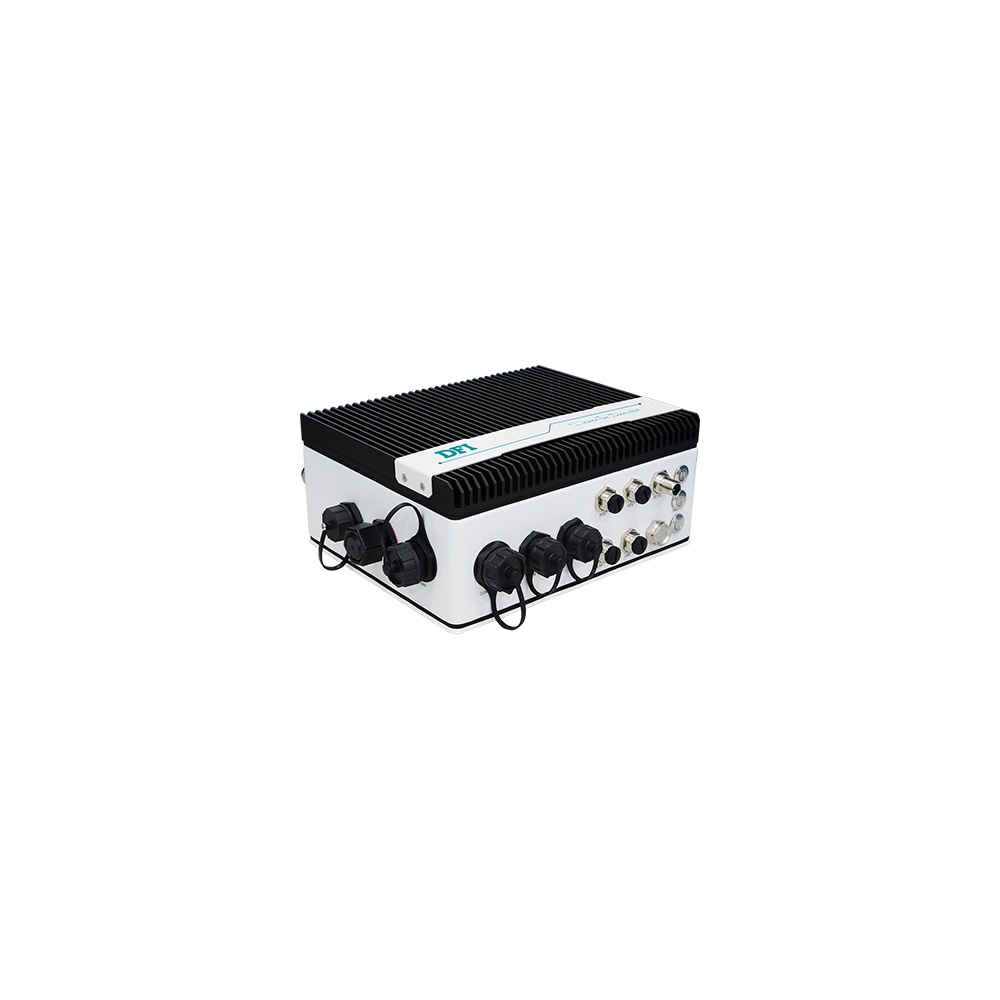
NVIDIA Jetson Orin NX or Orin Nano Fanless Edge AI IP67 Computer with M12 PoE
- AI
- 20–100 TOPS
- SOM
- NVIDIA Jetson Orin NX 16 GB
- Cameras
- 2× GMSL
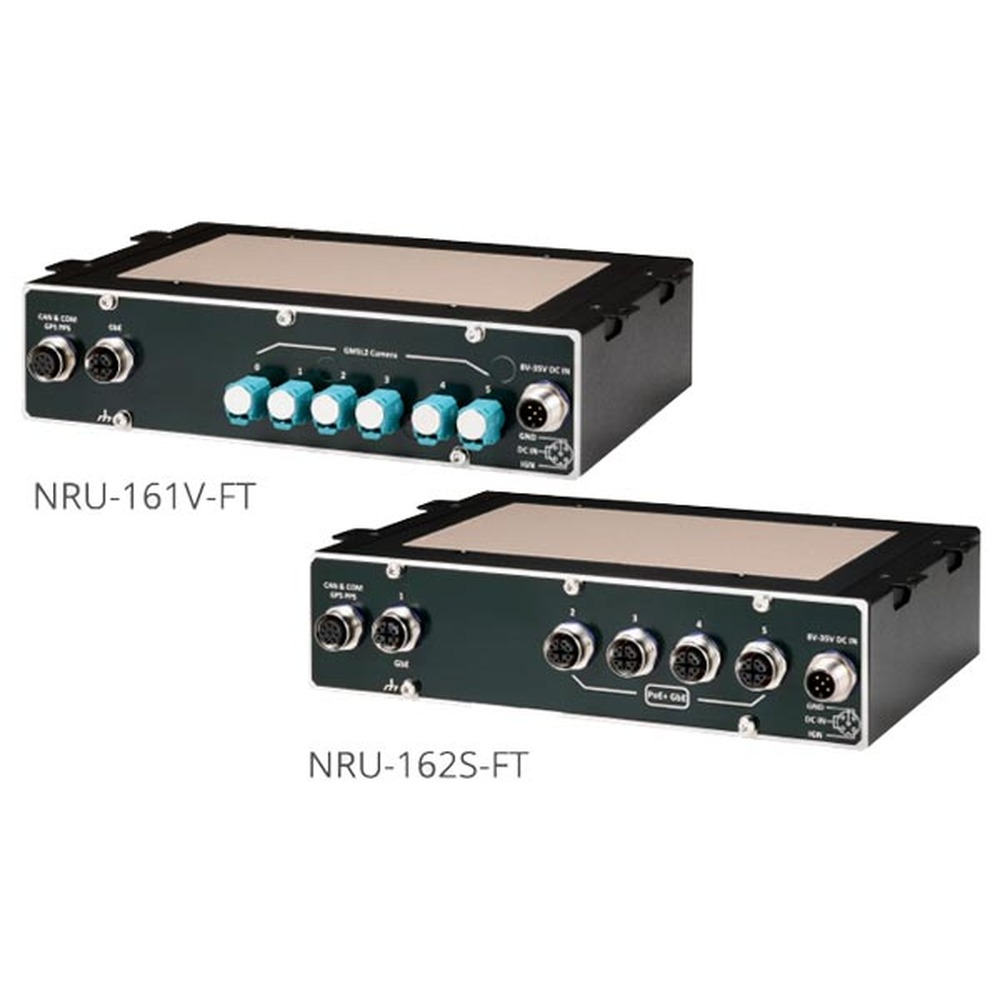
NVIDIA Jetson Orin NX or Nano Robotics Computer with 6x GMSL2 Cameras
- AI
- 20–100 TOPS
- SOM
- NVIDIA Jetson Orin NX 16 GB
- Cameras
- 6× GMSL
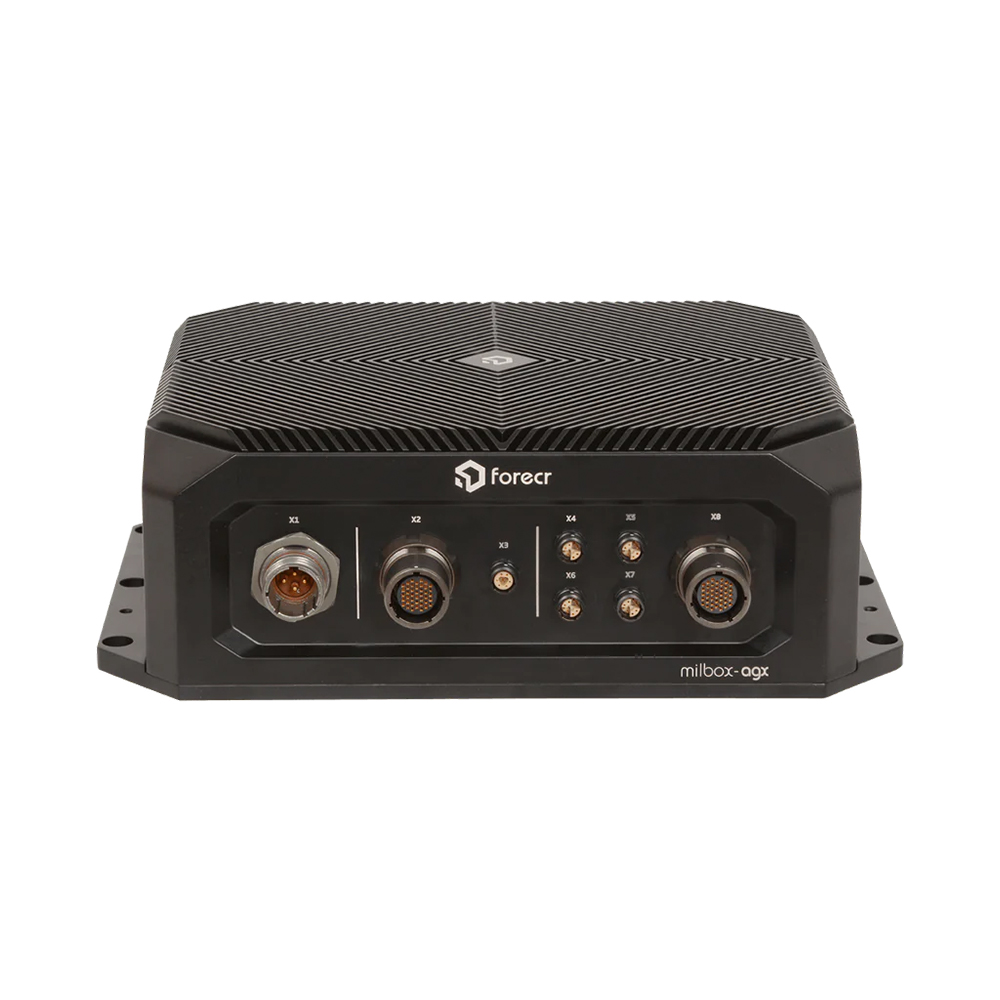
NVIDIA Jetson AGX Orin 64GB Military Computer with IP67 Sealing and MIL-STD-810
- AI
- 275 TOPS
- SOM
- NVIDIA Jetson AGX Orin 64 GB
- Ethernet
- 4× GbE
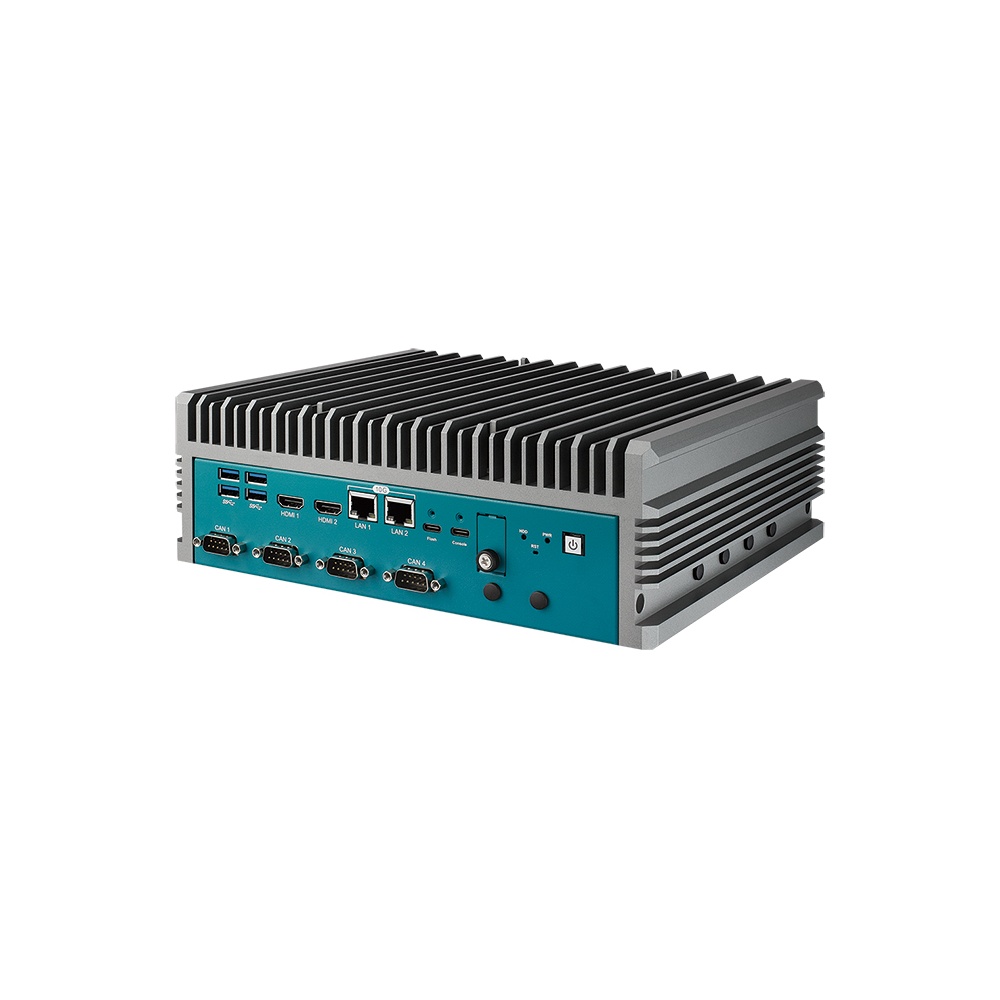
NVIDIA Jetson Thor T4000 Fanless Robot Computer
- AI
- 1,200 TOPS
- SOM
- NVIDIA Jetson T4000
- Ethernet
- 2× 2.5GbE
Reading a Jetson module or system datasheet
Seven points that show what a Jetson system will deliver in your application.
-
01
Module and mode
Which module is fitted, and is the AI figure quoted in a Super or MAXN mode the enclosure can sustain?
-
02
Precision behind the figure
Sparse INT8 TOPS for Orin, sparse FP4 TFLOPS for Thor; dense figures are about half.
-
03
Memory
Size and type, and whether it is shared with the operating system and camera buffers.
-
04
Camera path
MIPI CSI-2 lanes, GMSL2 inputs or PoE ports, and how many cameras the carrier supports at full rate.
-
05
Video encode
Whether the module has a hardware encoder, and how many streams it handles.
-
06
Thermal rating
The operating range at the chosen power mode, with or without airflow.
-
07
Software
The JetPack release and BSP version supported, and the vendor’s plan for later releases.
There is no single best Jetson module
The right module is the one that disappears into the application: enough compute for the workload, inside the power and thermal budget, with the I/O the system needs and a lifecycle that matches the programme. Over-specifying wastes power, budget and thermal headroom; under-specifying caps the application before it ships.
That sizing is part of every project we take on. Tell us what the system has to do and where it has to run, and we will recommend the module and the system around it, often starting from a carrier board or rugged computer already in our NVIDIA Jetson range.
Jetson modules: common questions
Quick answers
What are the different NVIDIA Jetson modules?
Nine current modules in two generations. Orin Nano 4GB and 8GB, Orin NX 8GB and 16GB, AGX Orin 32GB, 64GB and Industrial, and Jetson Thor T4000 and T5000.
What is the difference between Jetson Orin Nano and Orin NX?
Performance, memory and video encoding. Orin NX reaches 157 TOPS with up to 16 GB and a hardware encoder; Orin Nano reaches 67 TOPS with up to 8 GB and encodes on the CPU. They share a connector.
Is Jetson Thor compatible with AGX Orin carrier boards?
No. Thor uses a new connector, power envelope and I/O, so it needs a Thor carrier board. The T4000 and T5000 share one form factor.
Which Jetson module is best for robotics?
It depends on the robot. Orin NX or AGX Orin suits most AMRs and cobot cells; Jetson Thor suits humanoids and mobile manipulators running large models on board.
How many TOPS does each Jetson module have?
From 34 TOPS to 2,070 FP4 TFLOPS. Orin Nano 34 or 67, Orin NX 117 or 157, AGX Orin 200, 248 or 275 TOPS; Thor T4000 1,200 and T5000 2,070 FP4 TFLOPS.
Are Jetson Orin NX and Orin Nano pin compatible?
Yes. Both use the 260-pin SO-DIMM connector, so a carrier designed for both can take either, provided its power and BSP cover the module fitted.
How long will Jetson Orin be available?
Into the early 2030s. NVIDIA lists the Orin modules in production well into the next decade, with a ten-year production life for the AGX Orin Industrial.
Jetson module FAQs
-
Jetson Orin Nano vs Orin NX: What Is the Difference?
The Jetson Orin Nano delivers up to 67 TOPS in 7 to 25 W with 4 to 8 GB of memory, suited to entry-level, low-power vision. The Orin NX steps up to 157 TOPS in 10 to 40 W with 8 to 16 GB, adds deep learning accelerators and a hardware video encoder, and handles multi-camera, heavier inference.
-
Jetson T5000 vs T4000: What Is the Difference?
The Jetson T5000 and T4000 are the two NVIDIA Jetson Thor modules, both built on the Blackwell GPU. The T5000 is the top variant, with up to 2,070 FP4 TFLOPS, 128 GB of memory and up to 130 W. The T4000 is the lower-power variant, with up to 1,200 FP4 TFLOPS, 64 GB and up to 70 W.
-
Does Jetson Thor Need a New Carrier Board?
Yes. The NVIDIA Jetson Thor module uses a different connector, higher power (up to 130 W) and new I/O compared with AGX Orin, so it needs a carrier board designed for Thor rather than an Orin board. Moving from AGX Orin to Thor is a platform change, not a drop-in module swap.
-
What Is the Difference Between a Jetson Module and a Developer Kit?
An NVIDIA Jetson developer kit is a reference carrier board with a module fitted, meant for evaluation and prototyping. A production system uses the production module on a carrier board designed for your I/O, environment and lifecycle. The silicon and software are the same; the kit is not what you deploy.
-
How Long Is NVIDIA Jetson Supported?
NVIDIA gives Jetson modules long, published production lifecycles, which is part of why they suit industrial designs. Current Orin modules run well into the 2030s, and Industrial variants carry a ten-year production life. The exception is the older LPDDR4 generation, Xavier and TX2, which NVIDIA has brought to early end-of-life, with last-time-buy orders closing on 1 July 2026.
-
What Replaced the NVIDIA Jetson Xavier?
The NVIDIA Jetson Orin family replaced the Xavier generation. The Xavier NX maps to the Orin NX and the AGX Xavier to the AGX Orin, with a large jump in AI performance per watt and the same JetPack software stack. With Xavier now end-of-life and its last-time-buy closed, Orin is the migration path.
-
What Is a Teraflop (TFLOPS), and How Is It Different From TOPS?
A teraflop is one trillion floating-point operations per second, and TFLOPS counts them: a measure of how fast a processor handles decimal maths at a stated precision such as FP32. TOPS counts trillions of operations per second, usually integer maths at INT8. GPUs quote TFLOPS for graphics and general compute, while NPUs and AI accelerators quote TOPS for inference.
Not sure which Jetson module fits?
Tell us about your models, cameras, power budget and where the system has to run. We will recommend the module and the system around it, then configure, image and test it before it ships.