
 UK
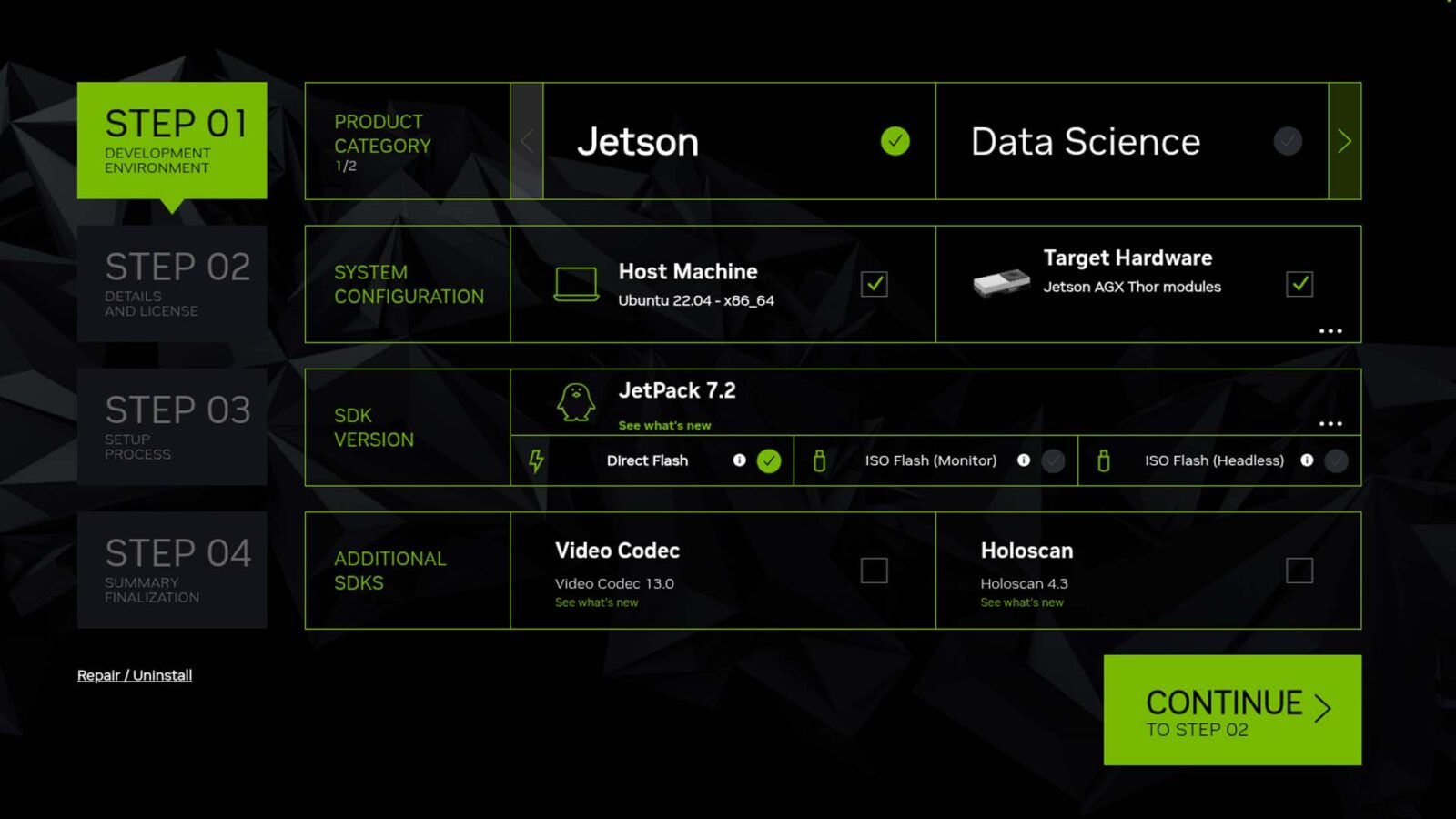
JetPack 7.2 and Yocto on Jetson
JetPack 7.2 brings Jetson Orin onto the same JetPack 7 base as Jetson Thor, with Ubuntu 24.04 and CUDA 13, and makes Yocto an officially supported path. Here is what is in the release, what changes from JetPack 6 and how to plan the move for a deployed fleet.
JetPack 7.2 is the NVIDIA Jetson software release, launched in June 2026, that brings Jetson AGX Orin, Orin NX and Orin Nano onto the same JetPack 7 foundation as Jetson Thor: Jetson Linux 39.2 with Ubuntu 24.04, Linux kernel 6.8 and CUDA 13. Alongside it, NVIDIA gave the Yocto Project formal, supported status as a way to build production images for Jetson.
When JetPack 7 first launched, it was built around the newest Jetson module, Jetson Thor. The Orin modules stayed on JetPack 6, a capable line but built on Ubuntu 22.04, whose standard support ends in 2027. For programmes planning five or more years in the field, that timeline matters.
JetPack 7.2 closes the gap. Strip away the version number and what is left is a longer supported life for hardware that is already deployed, one toolchain across Orin and Thor, and an officially backed route to a minimal, reproducible operating system. This guide covers what is in the release, what changes from JetPack 6, what the Yocto support means in practice, and how to plan the move for a fleet.
Key takeaways
- 01Orin joins JetPack 7
- Orin Nano, Orin NX and AGX Orin, including the Industrial module, run Jetson Linux 39.2 with Thor.
- 02A newer base
- Ubuntu 24.04, kernel 6.8 and CUDA 13 replace Ubuntu 22.04, kernel 5.15 and CUDA 12.6.
- 03Yocto is official
- NVIDIA-validated Yocto recipes for Jetson ship through the OE4T meta-tegra project.
- 04More from AGX Orin 32GB
- A new Super mode raises it from 200 to 241 TOPS at up to 60 W.
- 05A reflash, not a patch
- Moving from JetPack 6 changes the kernel, Ubuntu and bootloader, so plan it as a validated update.
What is in JetPack 7.2?
JetPack is NVIDIA’s software kit for Jetson: Jetson Linux, the board support package and operating system, plus the CUDA, cuDNN and TensorRT libraries and the developer tools. Our guide to the NVIDIA JetPack software stack explains each layer; this section covers what is specific to 7.2.
| Area | JetPack 7.2 | Notes |
|---|---|---|
| Jetson Linux | R39.2 | One release for Orin and Thor |
| Operating system | Ubuntu 24.04, Linux kernel 6.8 | A preemptible real-time kernel is available |
| Compute stack | CUDA 13 with matching cuDNN and TensorRT | Check the release notes for exact library versions |
| Modules | Orin Nano, Orin NX, AGX Orin, AGX Orin Industrial, Thor T4000 and T5000 | Orin Nano developer kit has no SD card image in this release |
| AGX Orin 32GB Super mode | MAXN SUPER: GPU 930 MHz to 1.3 GHz, 200 to 241 TOPS, up to 60 W | Needs cooling for the higher power |
| Multi-Instance GPU | Thor T5000 GPU split into two isolated partitions | A technology preview |
| Yocto | NVIDIA-validated recipes through OE4T, with prebuilt images for Orin and Thor developer kits | First official Yocto release followed on 1 July 2026 |
| Cameras | SIPL camera API 2.0 with a common framework for GMSL and camera over Ethernet | Carrier BSPs still decide which sensors work |
| AI tooling | Jetson agent skills for BSP customisation, memory tuning and benchmarking, and NemoClaw support | Developer aids rather than runtime changes |
Point releases follow the main release; carrier vendors in our range already list JetPack 7.2.1 support on some Orin systems. Always confirm the exact module list and library versions in NVIDIA’s release notes before fixing a version, and our answer on JetPack versions shows how to check which release a running system has.
What changes from JetPack 6.2 to 7.2 on Orin?
For an Orin system, the practical question is what changes if you move from the JetPack 6 line. The table sets out the main differences.
| JetPack 6.2 | JetPack 7.2 | |
|---|---|---|
| Jetson Linux | R36.4 | R39.2 |
| Ubuntu and kernel | 22.04, kernel 5.15 | 24.04, kernel 6.8 |
| CUDA | 12.6 | 13 |
| Modules | Orin family | Orin family and Thor |
| Super modes | Orin Nano and Orin NX | Adds AGX Orin 32GB |
| Yocto | Community meta-tegra layers | NVIDIA-validated recipes through OE4T |
| ROS 2 release on the Ubuntu base | Humble | Jazzy |
| Upgrade from the previous line | Reflash from JetPack 5 | Reflash from JetPack 6 |
JetPack 6 is not going away overnight, and for an Orin product already validated on it, staying on 6.2 can be the lower-risk path until the carrier vendor and your application are ready. Our answer on JetPack 6 covers that line in detail. The CUDA 13 step is the one most likely to touch application code, because every TensorRT engine has to be rebuilt and revalidated; our explainer on TensorRT covers why engines are tied to a release.
For robots on ROS 2, the Ubuntu change also moves the natural ROS 2 release from Humble to Jazzy. Our guide to the ZED ROS2 wrapper on Jetson shows how that ripples through a camera stack.
Investment protection, not just a point release
Jetson AGX Orin and Orin NX sit at the centre of a large installed base across robotics, industrial automation, intelligent transportation and precision agriculture. For programmes already shipping, or close to it, JetPack 7.2 is best read as investment protection for hardware you have already specified: the same module, carrier and enclosure can carry a newer, longer-supported software stack.
There is also a performance story on one module. The AGX Orin 32GB now reaches up to 241 TOPS in its Super mode, more than a 20% lift over its original 200 TOPS rating, with a higher GPU clock and power ceiling. NVIDIA says it narrows the gap to the 64GB module for workloads that fit in 32 GB. For vision and multi-model workloads that were compute-bound, that headroom can be the difference between one computer and two. Our comparison of Orin NX and AGX Orin covers where the 32GB module now sits, and our answer on Jetson Super mode explains the trade in heat.
Yocto Project gets a formal seat at the table
Alongside JetPack 7.2, NVIDIA gave the Yocto Project formal, supported status as an OS strategy for Jetson, with validated recipes and reference images contributed through the OpenEmbedded for Tegra (OE4T) community and its meta-tegra layer. NVIDIA’s first official release for JetPack 7.2 arrived on 1 July 2026, on the meta-tegra master branch and the Yocto 6.0 long-term support branch, with prebuilt Yocto images for the Orin and Thor developer kits. For anyone watching the embedded Linux space, that is a notable signal.
The trade-off between Ubuntu-based JetPack and Yocto has always been real. Ubuntu is the fast on-ramp: CUDA, TensorRT, DeepStream and Isaac come pre-integrated and ready to go. But Ubuntu images are mutable, and packages drift over time. When you are managing a fleet of 50 or 500 devices in the field, that variability becomes an operational risk.
Yocto answers that with deterministic, image-based builds: every device in the fleet runs the exact same validated image. The cost has been the effort to get there: custom BSP work, meta-layer maintenance and a team with embedded Linux depth to hold it together.
| Ubuntu-based JetPack | Yocto on meta-tegra | |
|---|---|---|
| Getting started | Fast; install and run | Slower; build the image first |
| Image | General-purpose and large | Only what the product needs |
| Reproducibility | Depends on package state at install | Built from pinned recipes, identical every time |
| Memory and boot | More services running | Smaller footprint and faster boot |
| Security surface | Larger | Smaller; fewer packages to patch |
| Skills needed | Familiar Ubuntu administration | Build-system and BSP experience |
| Best for | Development, pilots, low-volume systems | Fleets, long-life and security-sensitive products |
Our explainer on embedded Linux sets out why a minimal image matters on a deployed system.
NVIDIA formalising Yocto support in the JetPack 7 era is an acknowledgement that production edge AI needs a more controlled software foundation than a general-purpose Linux distribution can provide.
Who is building this way
The direction of travel is clear from who is adopting it. NVIDIA names software partners offering complete Yocto-based operating systems, container-based fleet management and engineering services around the release, and hardware makers across the Jetson carrier market are lining up behind it. Memory efficiency is a recurring theme: NVIDIA says minimal Yocto builds and its memory-tuning tools let more capable workloads run in lower memory configurations, which can mean a smaller module for the same job.
That is the practical case for Yocto in one line. It is not about purity over Ubuntu. It is about knowing, with certainty, what is running on every device in a fleet you may not be able to physically reach.
Where the hardware layer fits
A Jetson module handles demanding compute at the edge. A carrier board takes that compute and meets the physical demands of the installation: wide operating temperatures, shock and vibration, sealed enclosures, multi-camera capture over GMSL or FPD-Link, and expansion over M.2, PCIe and NVMe.
But hardware alone is not enough. A software release only reaches a deployed system through a board support package built for that specific board. The BSP is what makes JetPack 7.2 run correctly, including the camera sensors and imaging pipelines your application depends on, and carrier vendors typically follow NVIDIA’s releases by weeks or months. Our guide to Jetson carrier boards covers why the carrier decides which JetPack a system can run.
This is the work we do as your integrator. We are not tied to one carrier-board maker, so we select across the manufacturers serving this market and take on the BSP enablement, validation and lifecycle support for the build you settle on. The upgrade does not change your hardware, and getting it onto JetPack 7.2 is not something you have to project-manage across a vendor on your own.
What this means for your existing programme
The reassuring part of JetPack 7.2 is that it does not ask you to change your hardware. The work sits in the software layer, not the bill of materials. In practice, the right first move depends less on the headline features and more on where you sit in the programme. If the update is also prompting a hardware review, how to size a Jetson module from Nano to Thor walks the current range.
| Your position | Usually do | Why |
|---|---|---|
| OEM starting a new Orin design | Target JetPack 7.2 | The longer OS runway and the Yocto option are easier to design in than to retrofit |
| Fleet on JetPack 6, working well | Stay on 6.2 for now; plan the move | The trigger is OS support and security maintenance, not features |
| Fleet on JetPack 5 or Xavier | Plan a hardware and software migration | Xavier stops at JetPack 5.1; Orin on 7.2 is the destination |
| Mixed Orin and Thor products | Consolidate on JetPack 7.2 | One toolchain, one BSP approach and one validation process |
| Fleet-scale or security-sensitive product | Evaluate a Yocto image | Reproducibility, footprint and update control justify the engineering |
For fleets still on Xavier, our guide to Xavier and TX2 end of life sets out the dates and the Orin successor for each module.
Planning a move to JetPack 7.2
Seven steps that turn the update into a planned release rather than a scramble.
-
01
Confirm the BSP
Check the carrier vendor has a JetPack 7.2 BSP for your exact board and its release date.
-
02
Check the cameras
Validate every camera sensor and imaging pipeline on the new BSP before anything else.
-
03
Rebuild the engines
Rebuild every TensorRT engine on CUDA 13 and recheck accuracy, especially at INT8.
-
04
Rebase containers
Move container images to a Jetson Linux 39 base, and ROS 2 from Humble to Jazzy.
-
05
Set the power mode
Choose the mode, including any new Super mode, the enclosure can cool.
-
06
Decide Ubuntu or Yocto
Pick the image strategy for production before the first system ships.
-
07
Plan the reflash
Schedule the update as a reflash with a rollback path, and record every version.
The bigger picture
JetPack 7.2, the formal Yocto endorsement and the growing set of fleet-management and image-build tools around Jetson all point the same way. Edge AI deployment has moved well beyond prototype configurations. The questions on the table now are about lifecycle, reproducibility and support over years, which are exactly the questions we spend our time on.
Our priority is straightforward. The hardware layer should never be the thing holding a programme back. Whichever Jetson Orin module and carrier board you standardise on, we take on the BSP enablement and validation that carries the update, configure, image and test each system, and keep it supported through its life; our answer on how long Jetson is supported sets out NVIDIA’s dates.
Jetson systems for JetPack 7.2
Categories in our range that run the JetPack 7 line.

Jetson AGX Orin
AGX Orin systems, including the new 32GB Super mode.
View range
Jetson Orin NX
Orin NX systems moving from JetPack 6 to 7.2.
View range
Jetson Orin Nano
Entry Orin systems on the same software as Thor.
View range
Jetson Thor carrier boards
Carriers for Thor T4000 and T5000 on JetPack 7.
View range
Rugged Jetson computers
Jetson systems for vibration, wide temperature and vehicle power.
View range
Jetson Orin carrier boards
Orin carriers with vendor BSPs for each JetPack line.
View rangeSystems with JetPack 7.2 support
Four systems and boards from our range whose makers list JetPack 7.2 support: two Orin computers, an Orin NX carrier board and a Thor computer.
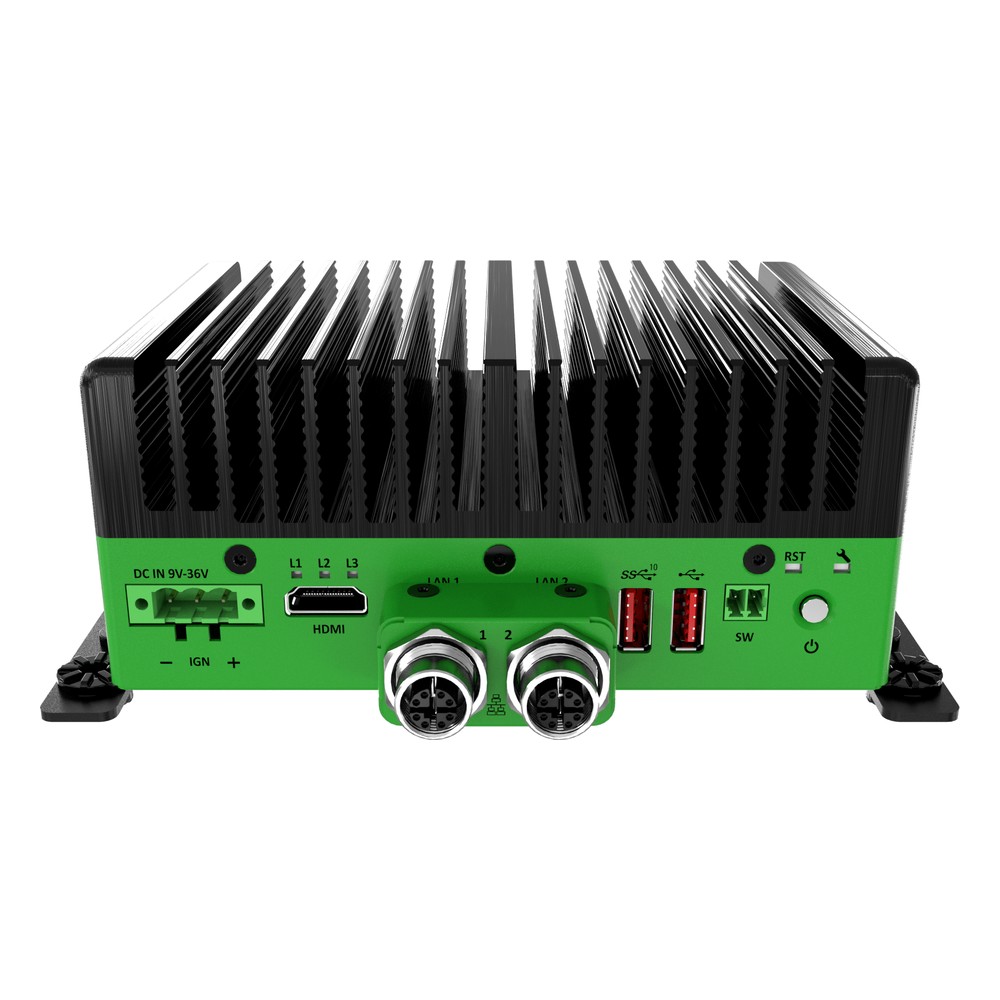
NVIDIA Jetson Orin NX or Nano Super Fanless Embedded Computer with M12 LAN and Ignition Control
- AI
- 20–100 TOPS
- SOM
- NVIDIA Jetson Orin NX 16 GB
- Ethernet
- 1× 2.5GbE, 1× GbE
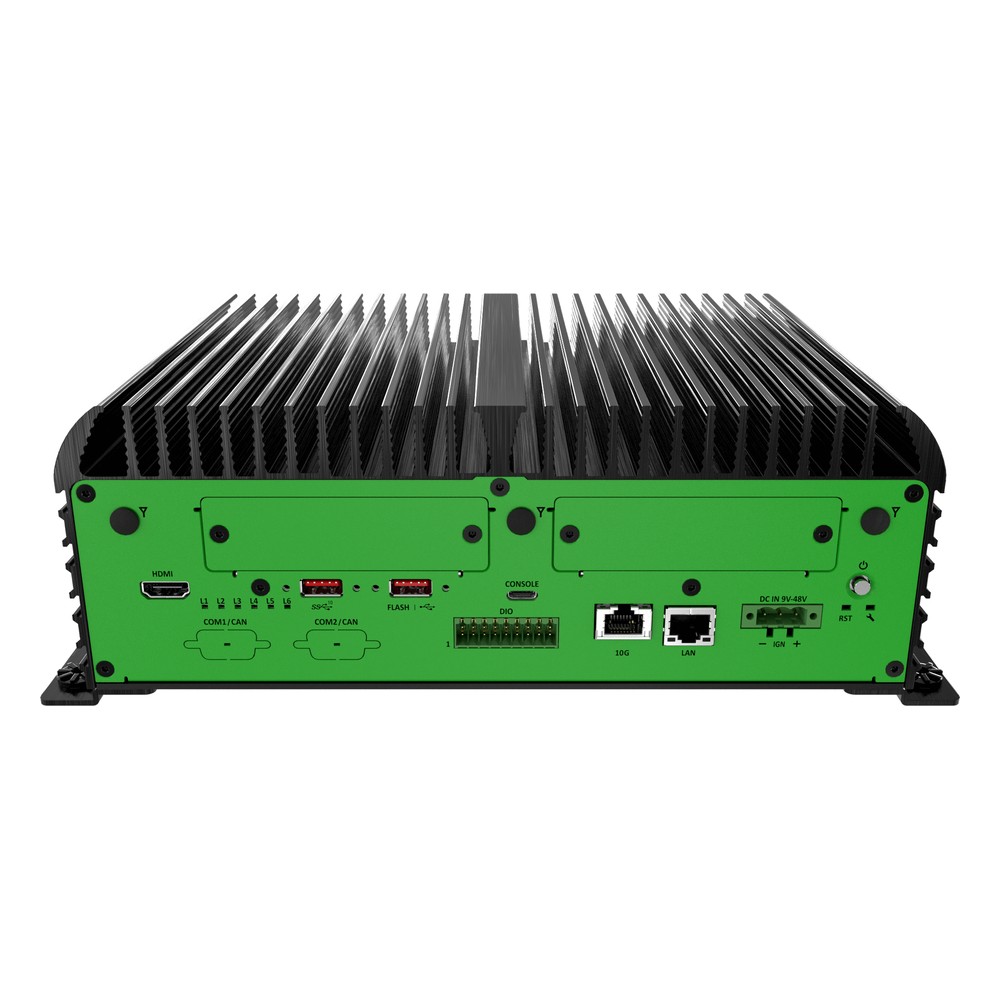
NVIDIA Jetson AGX Orin Rugged Edge AI Computer with 10GbE and 2x EDGEBoost I/O Slots
- AI
- 200–275 TOPS
- SOM
- NVIDIA Jetson AGX Orin 64 GB
- Ethernet
- 1× 10GbE, 1× GbE
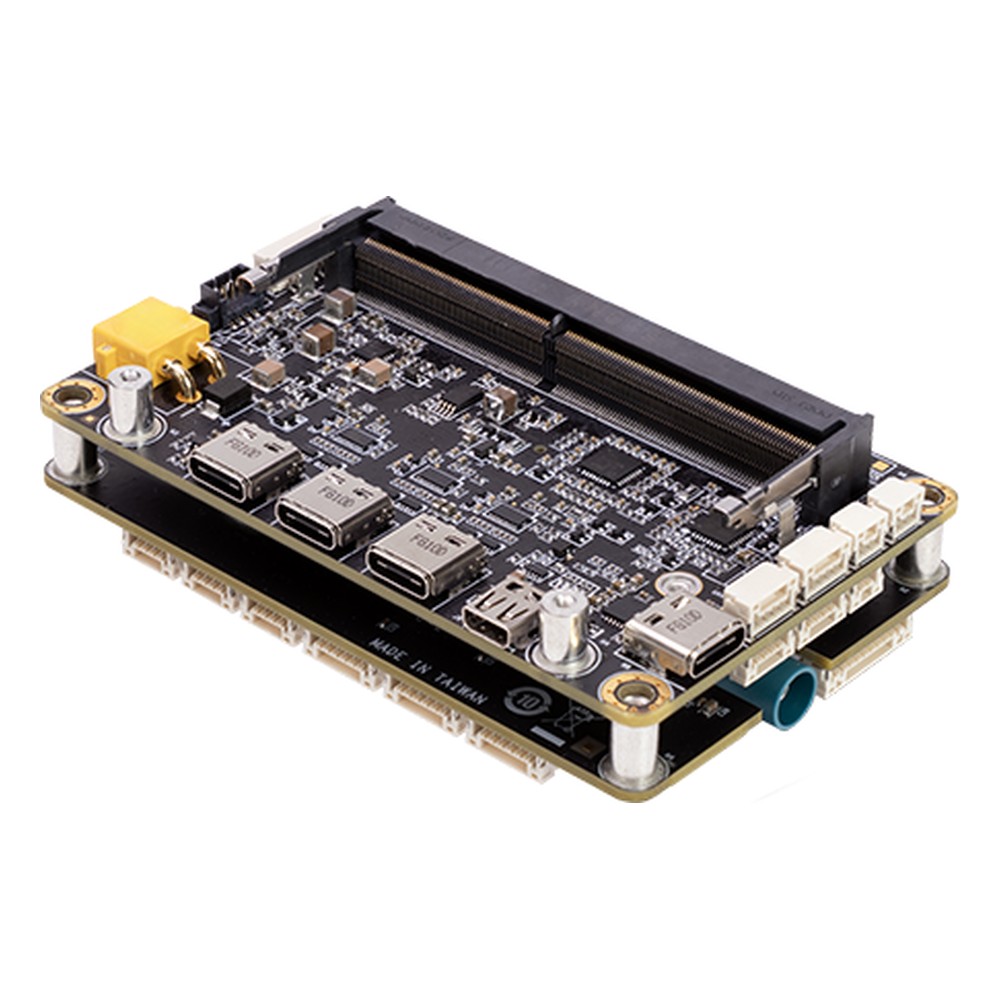
NVIDIA Jetson Orin NX and Orin Nano Rugged Carrier Board with MIPI or GMSL Cameras and 12-50V DC Input
- AI
- 20–100 TOPS
- SOM
- NVIDIA Jetson Orin NX 16 GB
- Cameras
- 2× GMSL
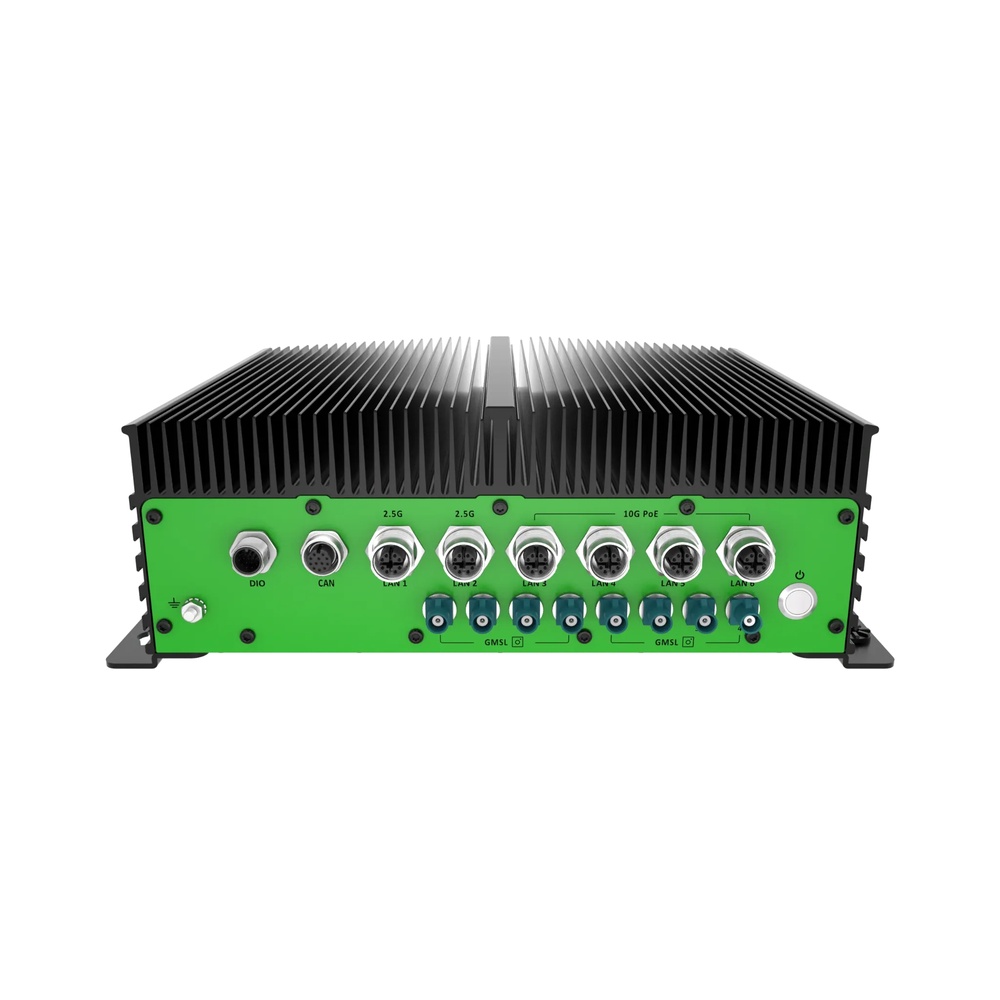
NVIDIA Jetson AGX Thor T5000 Wide Temperature IP66 Computer with 4x 10GbE M12
- AI
- 2,070 TOPS
- SOM
- NVIDIA Jetson T5000
- Cameras
- 8× GMSL
Software listed for the systems above
| System | Module | Software listed by the manufacturer |
|---|---|---|
| Premio JCO-1000-ORN-C-2M12 | Orin NX or Orin Nano | JetPack 6.2 on Ubuntu 22.04 or JetPack 7.2 on Ubuntu 24.04 |
| Premio JCO-6000-ORN-A-2EBIO | AGX Orin 32GB or 64GB | JetPack 6.2 on Ubuntu 22.04 or JetPack 7.2.1 on Ubuntu 24.04; AGX Orin 32GB up to 241 TOPS in Super mode |
| AVerMedia D137 | Orin NX or Orin Nano | JetPack 7.2.1 onward on Ubuntu 24.04 |
| Premio WCO-6000-THR-A-T5000 | Thor T5000 | Ubuntu 24.04 with JetPack 7.2 |
We flash each system with the JetPack release and BSP your application is validated on, set the power mode and test it before it ships.
JetPack 7.2: common questions
Quick answers
Which Jetson modules does JetPack 7.2 support?
Orin and Thor. Jetson Linux 39.2 lists Orin Nano, Orin NX, AGX Orin, AGX Orin Industrial and Thor T4000 and T5000.
What Ubuntu version does JetPack 7.2 use?
Ubuntu 24.04. It runs Linux kernel 6.8 with a CUDA 13 compute stack.
Can I upgrade from JetPack 6 to 7.2 with apt?
No. A major version change replaces the kernel, Ubuntu and bootloader, so it needs a reflash.
Does JetPack 7.2 support Yocto?
Yes, officially. NVIDIA provides validated Yocto recipes through the OE4T meta-tegra project, with prebuilt images for developer kits.
What is new for AGX Orin 32GB?
A Super mode. MAXN SUPER raises it from 200 to 241 TOPS at up to 60 W.
Should I move a working JetPack 6 fleet now?
Not necessarily. Plan it around OS support dates, BSP availability and a validated image rather than the features.
JetPack and Yocto FAQs
-
What Is JetPack 6?
JetPack 6 is NVIDIA’s Jetson software release line for the Jetson Orin family. Built on Jetson Linux 36 with Ubuntu 22.04 and Linux kernel 5.15, it introduced an upgradeable compute stack, so CUDA and TensorRT can be updated without reflashing the board support package. It runs from 6.0 to 6.2, and 6.2 added the Super modes.
-
What Is NVIDIA JetPack?
NVIDIA JetPack is the software development kit for the Jetson platform. It provides the operating system, Jetson Linux (also called Linux for Tegra, based on Ubuntu), plus the AI, computer vision and multimedia libraries, including CUDA, cuDNN and TensorRT, that let a Jetson run GPU-accelerated AI. Each JetPack version supports particular Jetson modules.
-
What Is the Yocto Project?
The Yocto Project is an open-source set of tools for building a custom Linux operating system for one embedded device. Instead of installing a ready-made distribution, you describe the hardware, software and settings you need in layers and recipes, and the BitBake build engine produces a small, repeatable image for that device.
-
What Is Embedded Linux?
Embedded Linux is the Linux kernel and a trimmed set of software built to run one dedicated device, such as an industrial controller, gateway, camera or edge AI computer, rather than a general-purpose PC. It is assembled for specific hardware, often an Arm processor, and usually boots straight into the device’s application.
-
What Is a Board Support Package (BSP)?
A board support package (BSP) is the low-level software that lets an operating system run on a particular board: the bootloader, kernel, device drivers and hardware description such as the device tree. For NVIDIA Jetson, the BSP is Jetson Linux, delivered as part of JetPack, and custom carrier boards need it adapted to their hardware.
-
What Is Linux for Tegra (L4T)?
Linux for Tegra, or L4T, is the NVIDIA operating system for Jetson edge AI modules: an Ubuntu-based Linux plus the board support package (bootloader, kernel and drivers) that makes Linux run on Jetson hardware. NVIDIA now calls it Jetson Linux, and it is the base layer of JetPack.
-
What Is Secure Boot?
Secure Boot is a UEFI firmware feature that lets a computer start only bootloaders, drivers and operating systems signed with a trusted key. It blocks bootkits and tampered boot files before the operating system loads. Windows 11 requires a Secure Boot capable system, and major Linux distributions also support it.
Planning a JetPack 7.2 or Yocto move?
Whether you are mapping an upgrade path for a deployed Orin fleet or scoping a new build around a Yocto image, our engineers will weigh the trade-offs against your hardware, lifecycle and support requirements.