
 UK
UK 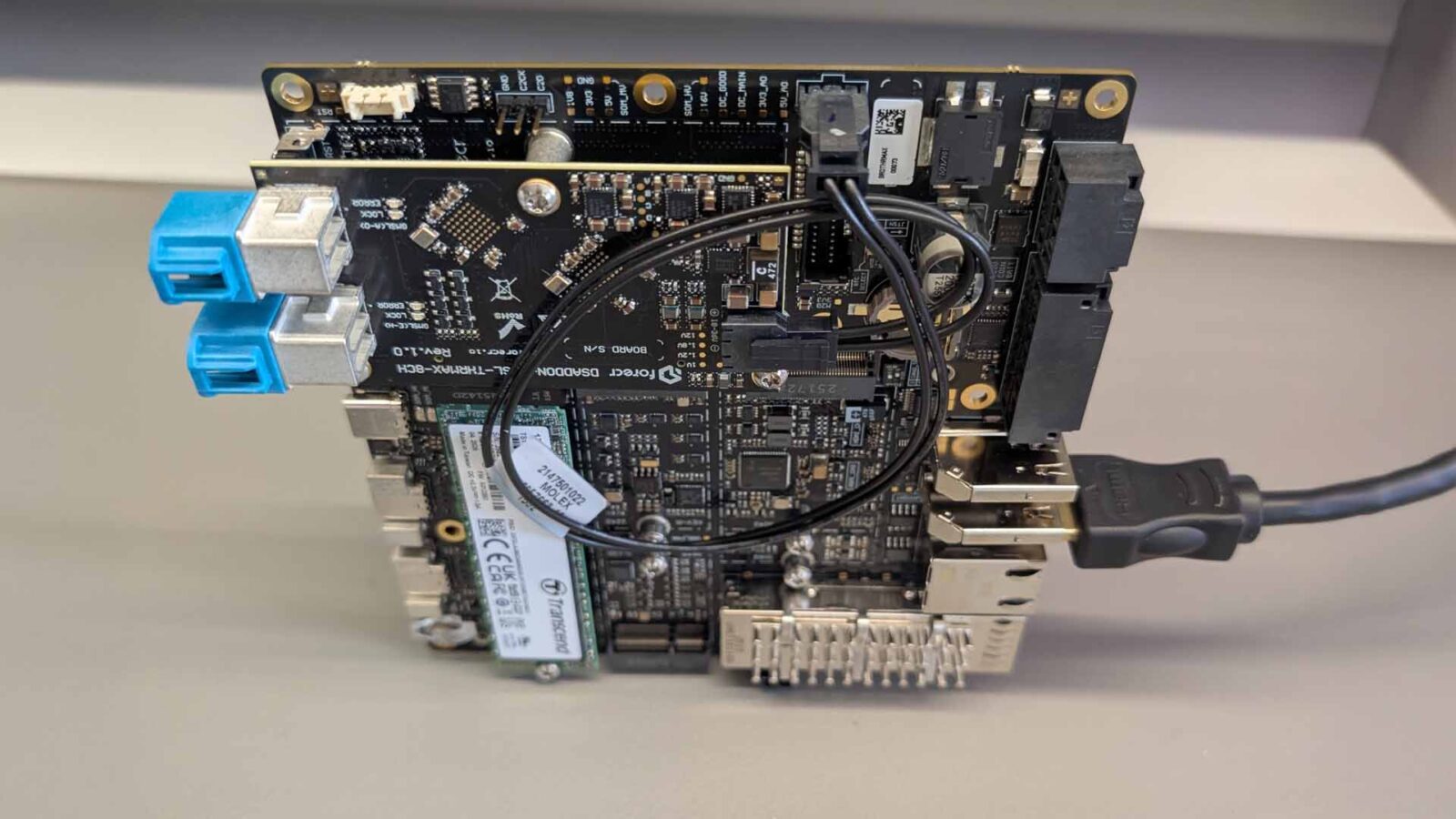
What Is a Jetson Carrier Board? How to Choose the Right One
A Jetson module only becomes a usable system when it sits on a carrier board. The carrier board provides the I/O, power, and form factor your product needs. Here is what a carrier board does, and how to choose or design the right one.
The Short Answer
A Jetson carrier board, sometimes called a baseboard, is the circuit board a Jetson module plugs into. The module carries the compute; the carrier board breaks its interfaces out into real connectors and gives the system its power, I/O, and form factor. A module on its own cannot be deployed — the carrier board is what turns it into a usable computer. You can use an off-the-shelf board, adapt one, or design a custom board for the exact requirement.
What a Carrier Board Does
The Jetson module connects to the carrier board through a high-density connector, and the board exposes the module’s interfaces as the physical ports a product needs: power, networking, cameras, storage, serial, and expansion. It also sets the form factor, the mounting, and the operating envelope.
Two systems built on the same module can be completely different products depending on their carrier board — one a sealed in-vehicle computer, the other an open development board. The module decides how much AI compute you have; the carrier board decides what you can connect it to, and where it can go. For the wider picture of the module, the JetPack software and where Jetson fits against other edge AI options, see what NVIDIA Jetson is and how the platform fits together.
What a Carrier Board Provides
- 01Cameras
- CSI lanes for MIPI cameras, or GMSL via a deserialiser for long-cable, multi-camera vision.
- 02Networking
- Gigabit and 10GbE Ethernet, often with rugged M12 connectors, plus M.2 slots for Wi-Fi or cellular.
- 03Storage and expansion
- M.2 NVMe storage, PCIe, and mini-PCIe or M.2 expansion slots.
- 04Industrial I/O
- RS-232/422/485 serial, CAN bus, and digital I/O for machines and vehicles.
- 05Power
- A wide-range DC input with the regulation the module needs, sometimes with ignition control for vehicles.
Developer Kits Are Reference Carrier Boards
A Jetson developer kit is itself a carrier board — NVIDIA’s reference design, with the module fitted and a generic set of ports for evaluation. It is the fastest way to bring up software and benchmark a module, but it is not built for any particular product: the I/O, form factor, and ruggedisation are generic.
That is why a deployed system rarely uses the developer kit board. Once the module is chosen, the kit is set aside and the module moves onto a carrier board built for the job. We cover the module versus a developer kit in full.
Off-the-Shelf vs Custom Carrier Boards
Most projects start with an off-the-shelf carrier board. A board from an established maker gives you a known-good design with a common set of I/O, available now, which is the right choice when the standard interfaces fit the product.
A custom carrier board makes sense when they do not — when the I/O, the form factor, or the environment is specific enough that no standard board fits. A custom design costs more and takes longer, but it produces exactly the board the product needs, with no unused connectors and the right mechanical fit. Between the two sits a middle path: adapting or modifying an existing board, which covers many requirements without a full custom design.
How to Choose a Carrier Board
- 01The module
- A carrier board is designed for a specific module family and connector — Orin Nano and Orin NX share one, AGX Orin another, and Thor a new one — so the board and module have to be a pair.
- 02The I/O
- List the cameras, networking, storage, serial, and expansion the product needs, and confirm the board provides them natively rather than through adapters.
- 03The environment
- Operating temperature, sealing, shock, and vibration decide whether a commercial board will do, or a rugged, wide-temperature board is needed.
- 04The lifecycle
- For a product that ships for years, board availability and the module’s production life matter as much as the spec.
A Worked Example
Take a rugged in-vehicle AI computer: an Orin NX module for multi-camera vision, four GMSL camera inputs, dual Gigabit Ethernet on M12 connectors, a CAN bus for the vehicle, an M.2 slot for cellular, and a 9 to 36 V ignition-controlled power input, in a sealed, wide-temperature enclosure.
No single requirement is unusual, but the combination narrows the field quickly. An off-the-shelf rugged carrier board may cover most of it; if the camera count, the connectors, or the form factor do not line up, a custom or adapted board closes the gap. The point of choosing the carrier board carefully is that it, not the module, is what makes the system fit the vehicle. Sealing the enclosure also changes how the module is cooled, and our guide to Jetson fans, heat sinks and conduction-cooled heat spreaders sets out the options.
From a Carrier Board to a Deployed System
We work across the whole range. We supply off-the-shelf Jetson carrier boards and Orin carrier boards, adapt existing boards, and design custom carrier boards when the requirement calls for it — as in our custom Jetson carrier-board build.
Whichever route, the board is only part of the job. We pair it with the module suited to the workload, build the rugged Jetson computer around it, and configure the software image, so what you receive is a finished, validated platform. If you are still choosing a module, our guide to the Jetson lineup walks the options.
Two recent launches show the off-the-shelf route: the Osbourne-ER rugged carrier board for Jetson AGX Orin, with latching I/O for shock and vibration, and the MILBOARD‑THR mil-grade carrier board for Jetson Thor, an open board for programmes building their own enclosure.
Frequently Asked Questions
-
What Is the Difference Between a Jetson Module and a Developer Kit?
A developer kit is a reference carrier board with a module fitted, meant for evaluation and prototyping. A production system uses the bare module on a carrier board designed for your I/O, environment, and lifecycle. The module is the same; the kit is not what you deploy.
-
Does Jetson Thor Need a New Carrier Board?
Yes. Jetson Thor uses a different connector, higher power (up to 130 W), and new I/O compared with AGX Orin, so it needs a carrier board designed for Thor rather than an Orin board. Moving from AGX Orin to Thor is a platform change, not a drop-in module swap.
Need a Jetson Carrier Board or a Custom Design?
Tell us your module, I/O, and environment. As your system integrator we will recommend an off-the-shelf carrier board, adapt one, or design a custom board, and build it into a deployable system.