
 UK
Embedded Systems with PoE Enable Smart Parking Efficiency
Our embedded systems with PoE (Power over Ethernet) play a crucial role in smart parking applications by simplifying the deployment and operation of various devices such as cameras, sensors, and displays.
Smart parking systems guide drivers straight to free spaces instead of leaving them to circle. Cameras and sensors track which bays are occupied, overhead displays and mobile apps share it in real time, and vehicles are recognised as they come and go. Behind all of it sits a computer at each site that collects the data and drives the signs.
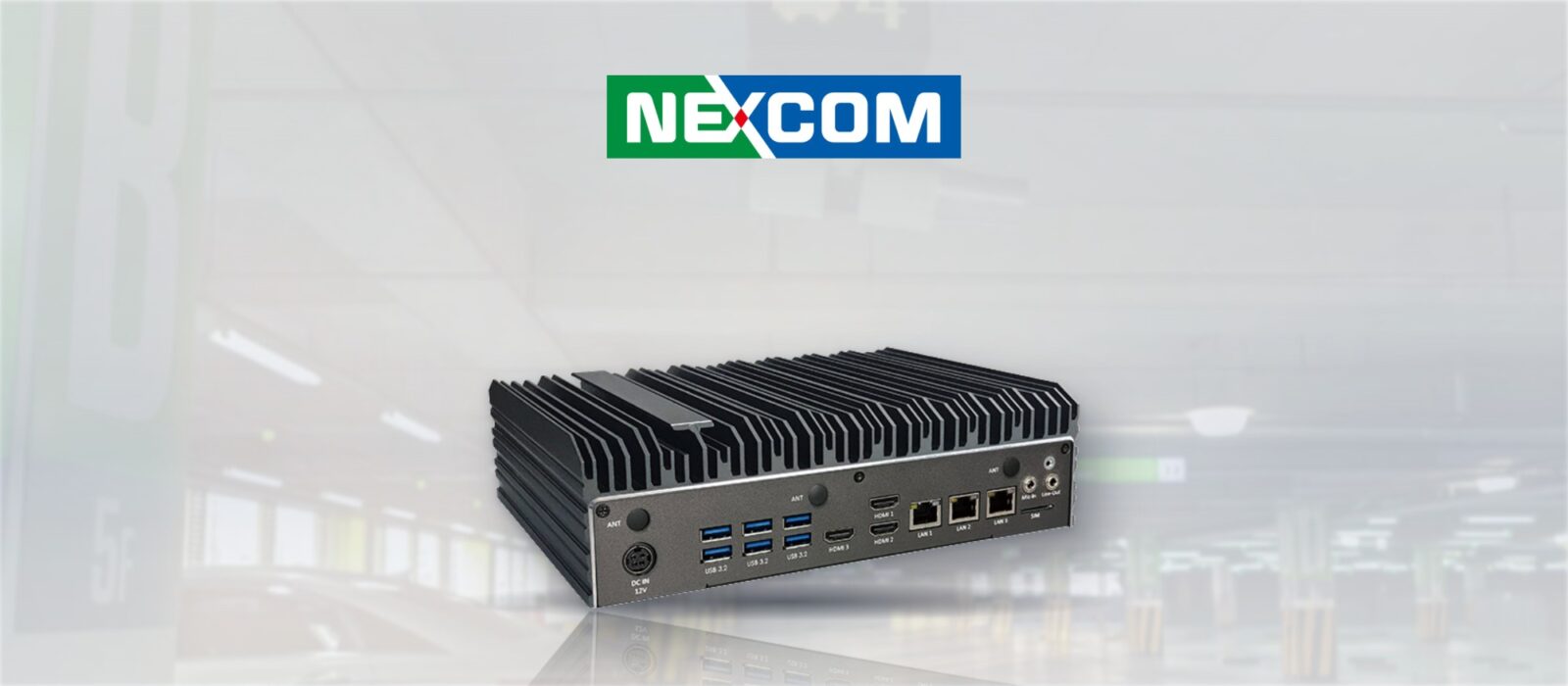
A smart parking operator asked us to upgrade the older embedded systems running its car parks. We supplied NEXCOM’s NDiS B561-PoE, an embedded PC with PoE that powers cameras and sensors over the same cable that carries their data. It is part of the infrastructure behind a smart city.
What the PoE computer does in a smart car park
- 01Powers cameras and sensors
- Two PoE ports run cameras and parking sensors over single Ethernet cables, with no separate power supplies.
- 02Recognises vehicles
- Processing power to identify vehicles by make, model and number plate as they enter and leave.
- 03Drives guidance signs
- Three independent 4K outputs run the large display boards that send drivers to free spaces.
- 04Connects ticketing and validation
- USB and COM ports link ticketing machines and validation devices on site.
- 05Shares live data
- Occupancy and payment updates go to the operator’s apps and back office in real time.
From parking bay to guidance sign
One embedded PC at each site turns sensor readings into directions for drivers.
-
Sense
Sensors and camerasOccupancy sensors and cameras, powered over Ethernet, report which bays are free and which vehicles are moving.
-
Process
12th Gen Intel CoreThe NDiS B561-PoE combines the readings, works out counts by area and recognises vehicles’ number plates.
-
Guide
Three 4K signsIts graphics drive the display boards of the parking guidance system, showing drivers where to go.
-
Share
Apps and back officeLive availability and payment data go to mobile apps and the operator’s systems, over wired or wireless links.
The NEXCOM NDiS B561-PoE
A compact embedded PC with 12th Gen Intel Core processors, two 2.5GbE PoE ports and three HDMI outputs.

NDiS B561‑PoE
Intel Core i3-12100TE to i9-12900TE Digital Signage Player with 2x 2.5GbE PoE
- Processor
- Intel Core 12th Gen (Alder Lake)
- Networking
- 2× 2.5GbE, 1× GbE (2× PoE)
- Operating temp
- 0 to +40 °C
- Power Input
- 12 V DC [Barrel Connector], Optional AC Power Supply
- Memory
- 2× DDR5-4800 SO-DIMM, up to 64 GB
Why the NDiS B561-PoE suited the job
- 0112th Gen Intel Core
- Socketed Core i3-12100TE to i9-12900TE processors with Intel UHD Graphics 770 handle recognition and signage together.
- 022× 2.5GbE PoE
- Both network ports supply PoE, so cameras and sensors run from the computer, cutting wiring and installation time.
- 033× 4K or 1× 8K
- HDMI 2.1 and two HDMI 2.0 outputs drive three independent 4K screens, or a single 8K display.
- 04USB and COM ports
- Up to eight USB 3.2 and four COM ports for ticketing machines and validation devices.
- 05Wi-Fi 6E and 5G options
- Expansion bays add wireless links for real-time updates and payments where cabling is not available.
Where the computers are installed
The NDiS B561-PoE is rated from 0 to 40 °C, so the computers are installed indoors or in sheltered enclosures, such as control rooms, pay stations and multi-storey car park plant areas, with PoE carrying power and data out to the cameras and sensors. Its fanless, industrial-grade design keeps maintenance low in dusty car park environments.
It is worth matching each sensor and camera’s power draw to the port’s PoE class; our guide to industrial PoE lists the power each IEEE standard can supply, and our ANPR barrier control case study shows the entrance and exit side of a car park.
The NDiS B561-PoE was the perfect upgrade for our parking lots, offering key advantages over older, less capable embedded systems. Its onboard PoE simplified installation and connectivity, while support for multiple high-resolution displays enabled clear parking signage. It handles complex tasks efficiently and integrates with our IoT devices, and its fanless design and industrial-grade components mean we do not have to worry about system failures or regular maintenance.
What the upgrade delivered
One embedded PC per site replaced older systems that could not keep up.
-
Outcome 01
Simpler installation
PoE powered cameras and sensors over their data cables, removing separate power lines.
-
Outcome 02
Clear guidance signage
Three 4K outputs drive large, readable boards that direct drivers to free spaces.
-
Outcome 03
Real-time information
Occupancy and vehicle data reach signs, apps and the back office as it happens.
-
Outcome 04
Low maintenance
Fanless, industrial-grade hardware removed worries about failures and regular servicing.
Smart parking FAQs
-
What Is Smart Parking?
Smart parking uses sensors, cameras and software to track which parking spaces are free in real time and share that with drivers through signs and apps. It often adds automated entry and payment with ANPR, so drivers find a space faster, operators fill more of their car park, and less time is spent circling.
-
What Is a Parking Guidance System?
A parking guidance system directs drivers to free spaces. Sensors detect which bays or zones are occupied, and electronic signs at the entrance, on each level and at junctions show how many spaces are available and where. Bay-level systems add a red or green light above each space, so drivers can see an empty bay from a distance.
-
What Are Parking Occupancy Sensors?
Parking occupancy sensors detect whether a parking space is free or taken. The main types are ultrasonic sensors mounted above bays indoors, magnetic or radar sensors set into the ground outdoors, and cameras that use AI to monitor several bays at once. Their data feeds guidance signs, apps and car park management systems.
-
What Is a Smart City?
A smart city uses connected sensors, cameras, data and digital services to run its infrastructure and public services more efficiently. Common examples include adaptive traffic lights, smart parking, connected street lighting, real-time public transport information, environmental monitoring and public safety systems, with much of the data processed by edge computers close to where it is collected.
-
What Is ANPR?
ANPR (automatic number plate recognition) is technology that reads vehicle number plates from camera images. A camera, usually with infrared lighting for night use, captures the vehicle; software finds the plate in the image and reads its characters; and the system checks the result against a list, such as permitted vehicles, payments or alerts.
-
What Is a Car Park Management System?
A car park management system controls and monitors a car park: who can enter and leave, how long they stay, what they pay and how many spaces are free. Modern systems use ANPR cameras instead of tickets, with barriers, payment points, space counting, signs and a back office linked by edge computers at each entrance and exit.
-
PoE vs PoE+ vs PoE++: The 802.3af, 802.3at and 802.3bt Standards
PoE, PoE+ and PoE++ are the three generations of IEEE Power over Ethernet. PoE (802.3af) supplies about 15 W per port, PoE+ (802.3at) about 30 W, and PoE++ (802.3bt) 60 W (Type 3) or 90 W (Type 4). PoE and PoE+ use two of the four cable pairs; PoE++ can use all four.
Upgrading the computers behind your car parks?
Tell us about your application and a member of the team will get right back to you.