
 UK
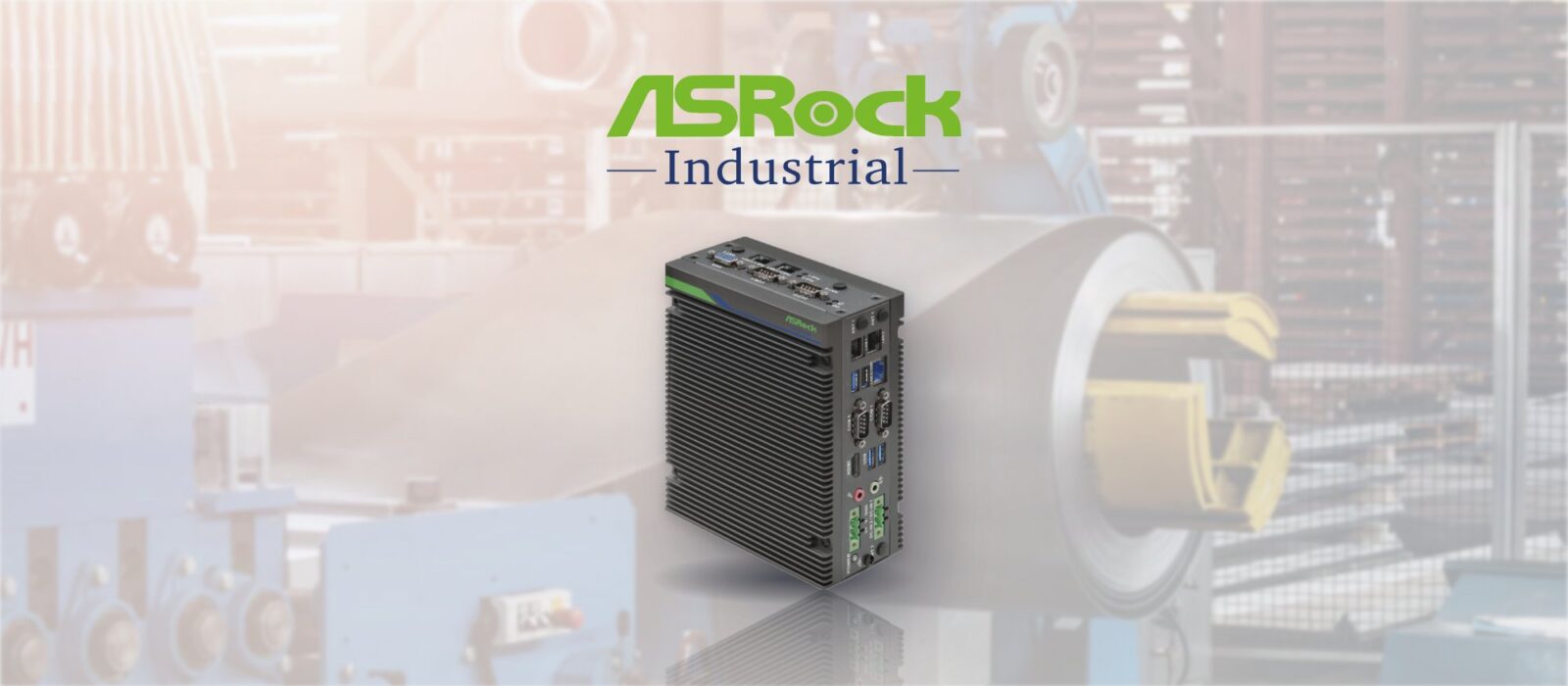
Industrial IoT Gateways Monitoring Manufacturing Machines for Predictive Maintenance
Powering Manufacturing 4.0 at the edge, the data our fanless Industrial IoT Gateways collect helps reduce downtime and maintenance costs whilst increasing reliability and equipment efficiency.
A software house that automates the capture, transformation and contextualisation of machine data came to us with a deployment problem. Its platform drives production monitoring, condition monitoring, predictive maintenance and process optimisation, but the hardware it ran on at each site was letting it down.
The job of that hardware is to act as an edge relay: take raw data from the machines, encrypt it, package it and send it to the cloud service for analysis. We recommended an IoT edge gateway built for the factory floor, and delivered it imaged with the customer’s software, ready to install. It is the kind of system we supply across manufacturing and factory automation.
Why tower PCs struggled on the factory floor
The customer had been building and deploying tower PCs from commercial off-the-shelf parts, the kind of hardware usually found in a server room. On a factory floor that meant keeping the PC cool without drawing in dust and particles, and finding room for a large case where installation space was limited.
| Factor | Tower PC (before) | IoT edge gateway (after) |
|---|---|---|
| Cooling | Fans and vents that draw in dust | Fanless, passively cooled |
| Moving parts | Fans and often spinning drives | None, for shock and vibration resistance |
| Size | Tower case needing floor or cabinet space | Compact, mounts on or near the machine |
| Power | Mains PSU | 6–36 V DC wide input |
| Temperature | Office conditions | Down to −40 °C and up to 70 °C (extended builds) |
| Machine I/O | Add-in cards and adapters | Serial, digital I/O and PoE built in |
The brief, and how the gateway met it
The customer wanted hardware intended for manufacturing environments, not adapted to them.
-
01
Compact and reliable in harsh environments
A small fanless chassis with no moving parts, extended-temperature builds rated −40 to 70 °C, and protection against the dust and debris of a machine shop.
-
02
Plug-and-play data collection from PLCs
Three configurable RS-232/422/485 serial ports and three Gigabit Ethernet ports for PLCs and industrial protocols such as Modbus.
-
03
Simple connection to external sensors
Four digital inputs and four digital outputs, two USB 3.2 ports and optional dual 802.3af PoE to power sensors and cameras.
-
04
Remote edge management
Spare Ethernet ports plus Wi-Fi 6 and 4G/5G expansion, so the team can diagnose issues and push updates without a site visit.
The ASRock Industrial iEP-5000G range
Four builds on the same Intel Atom x6425RE platform: DC jack or terminal block, two PoE ports or five LAN ports.
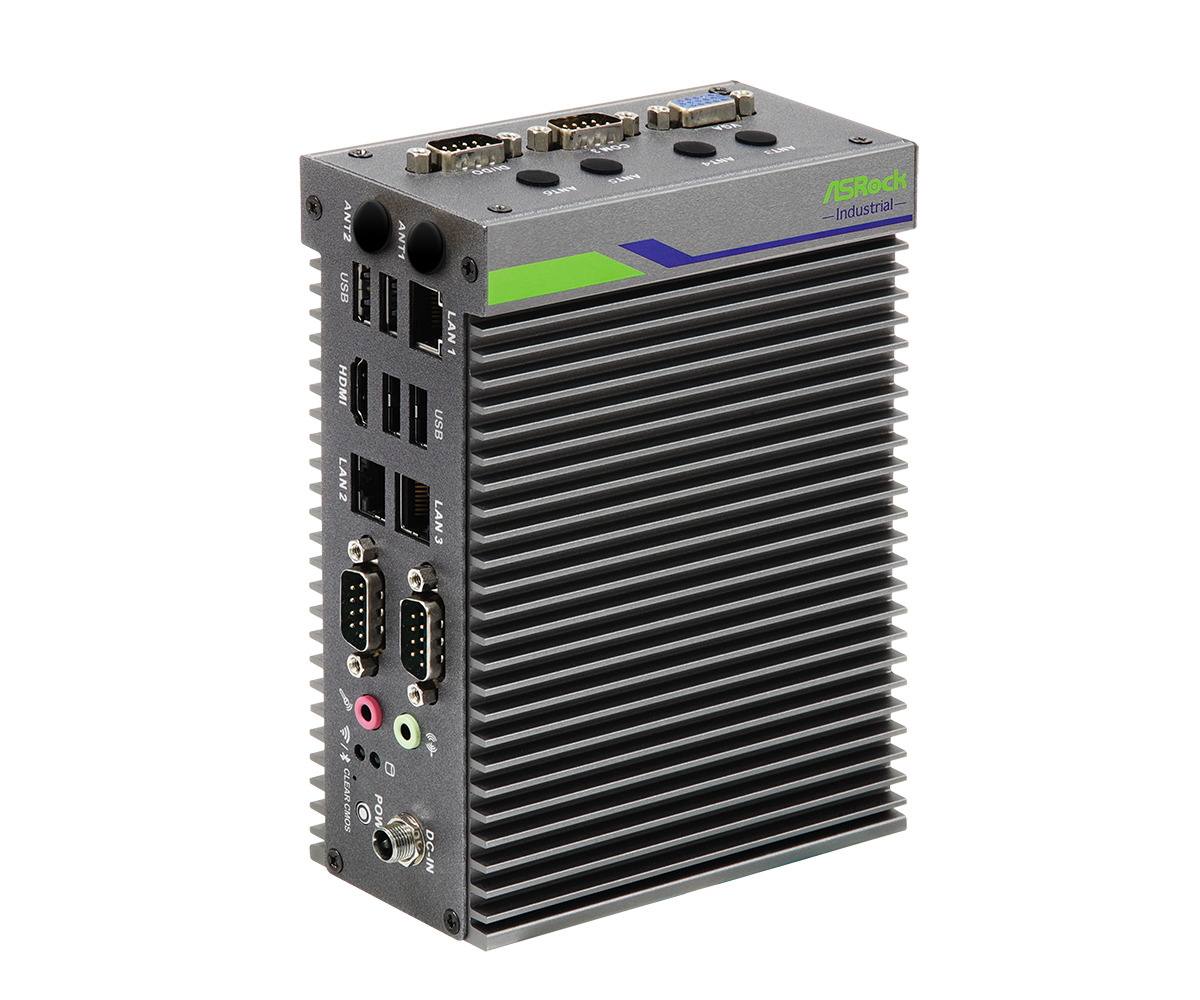
Intel Atom x6425RE Fanless Edge Gateway with 3x GbE and 6-36V DC Input
- CPU
- Intel Atom x6425RE (Elkhart Lake)
- Ethernet
- 3× GbE
- Temp
- −40 to +70 °C
Intel Atom x6425RE Extended Temperature Edge Gateway with 3x GbE and 6-36V Terminal Block
- CPU
- Intel Atom x6425RE (Elkhart Lake)
- Ethernet
- 3× GbE
- Temp
- −40 to +70 °C
Intel Atom x6425RE Elkhart Lake Edge Gateway with 2x PoE and 3x GbE
- CPU
- Intel Atom x6425RE (Elkhart Lake)
- Ethernet
- 5× GbE (2× PoE)
- Temp
- −40 to +50 °C
Intel Atom x6425RE Extended Temperature Edge Gateway with 5x GbE LAN
- CPU
- Intel Atom x6425RE (Elkhart Lake)
- Ethernet
- 5× GbE
- Temp
- −40 to +70 °C
Wiring it to the machines
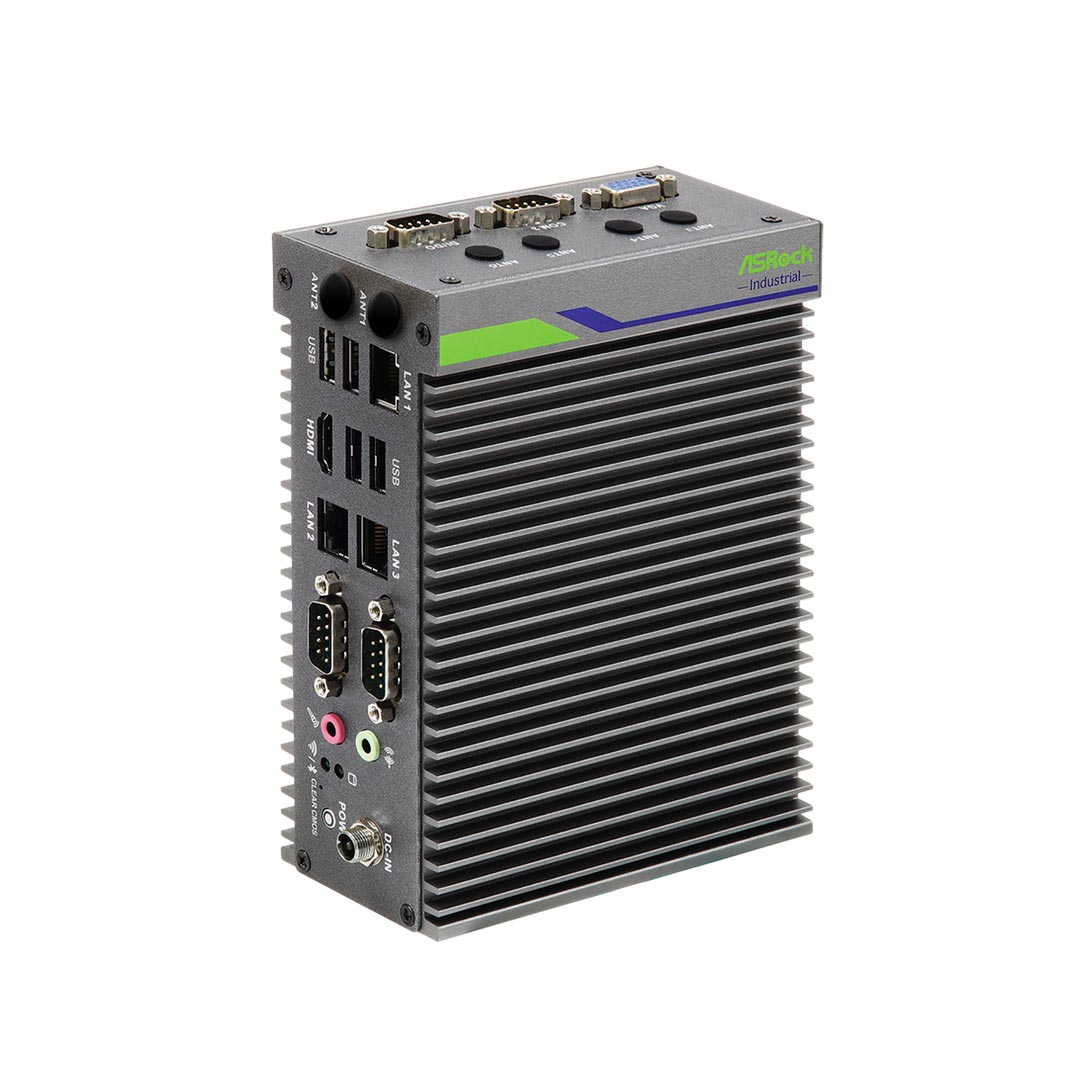
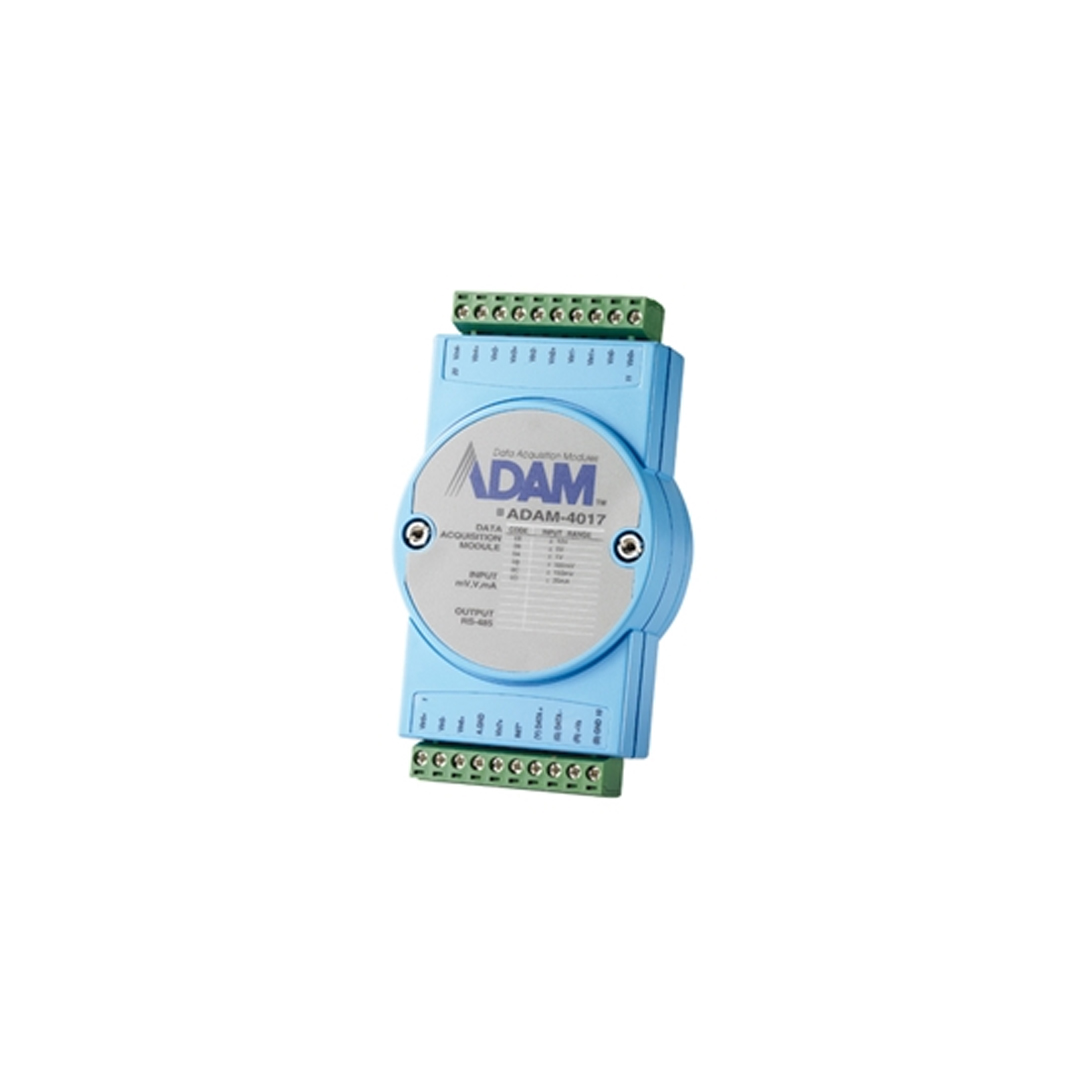
Deployed alongside remote I/O modules and industrial protocol gateways, the iEP-5000G connects to the sensors, actuators, machines and computers on a factory floor. Many PLCs and remote I/O modules speak Modbus, which our Modbus explainer covers, and for wiring the gateway’s digital inputs and outputs to machine signals, our DIO vs GPIO guide explains why isolation matters.
From machine data to the cloud
The gateway sits between the machines and the customer's cloud service, doing the work a server-room PC used to do.
-
Image
Before dispatchWe loaded Windows 10 IoT with the customer’s software stack and set the BIOS, so every gateway arrived ready to run.
-
Collect
PLCs and sensorsMachine data comes in over serial, Ethernet and digital inputs from PLCs, sensors and remote I/O modules.
-
Secure
Encrypt and packageThe gateway encrypts the raw data and packages it for transfer.
-
Relay
Ethernet, Wi-Fi or cellularPackaged data is sent to the cloud service for analysis, over whichever link the site has.
-
Manage
RemoteIssues are diagnosed and updates pushed to the gateway remotely, without a site visit.
An industrial IoT gateway runs silently in hot and cold environments with no fans, has no moving parts to fail under vibration, and keeps out the dust and debris that end a desktop’s life.
Installation simplified, hardware failures removed
The move from tower PCs to an IoT edge gateway changed how the customer deploys at every site.
-
Outcome 01
Out-of-box deployment
Gateways arrive imaged and configured, so installation is mounting, wiring and power.
-
Outcome 02
No more heat and dust failures
Fanless, sealed hardware replaced the tower PCs that struggled with cooling and particle ingress.
-
Outcome 03
Fits where the machines are
The compact chassis goes on or beside the machine instead of needing cabinet or floor space.
-
Outcome 04
Managed from anywhere
Remote diagnostics and updates replace site visits, wherever the customer's machines are.
IoT gateway FAQs
-
What Is Predictive Maintenance?
Predictive maintenance uses data from sensors on machines, such as vibration, temperature and current, to predict when a part is likely to fail, so it can be repaired just before it breaks. It avoids both unplanned breakdowns and the wasted cost of replacing parts on a fixed schedule.
-
What Is Condition Monitoring?
Condition monitoring is measuring a machine’s health continuously or at regular intervals, using parameters such as vibration, temperature, oil quality, sound and electrical current, to detect changes that point to a developing fault. It turns breakdowns into planned repairs and is the data foundation that predictive maintenance is built on.
-
What Is an IIoT Gateway?
An IIoT (Industrial Internet of Things) gateway is a rugged edge computer that connects industrial equipment, such as PLCs, sensors, meters and machines, to a network or the cloud. It collects their data, translates between industrial and IT protocols, processes and secures it at the edge, and forwards the results.
-
What Is Modbus?
Modbus is an open communication protocol that lets industrial devices such as PLCs, sensors, meters, drives and HMIs exchange data. First published by Modicon in 1979, it uses a simple request and response model: one device asks for or writes values, and another replies. It runs over serial lines as Modbus RTU and over Ethernet as Modbus TCP.
-
PoE vs PoE+ vs PoE++: The 802.3af, 802.3at and 802.3bt Standards
PoE, PoE+ and PoE++ are the three generations of IEEE Power over Ethernet. PoE (802.3af) supplies about 15 W per port, PoE+ (802.3at) about 30 W, and PoE++ (802.3bt) 60 W (Type 3) or 90 W (Type 4). PoE and PoE+ use two of the four cable pairs; PoE++ can use all four.
-
PoE PD vs PSE: What Is the Difference?
In a PoE link the PSE (power sourcing equipment) supplies the power and the PD (powered device) draws it. A PoE switch, injector or PoE computer acting as a source is the PSE; a camera, phone, access point or PoE-powered display is the PD. The IEEE 802.3 standards define how the two detect, classify and power each other.
-
What Are the Advantages of Fanless Computers?
Fanless computers cool themselves passively, through a finned heatsink chassis and heat pipes, instead of a fan. With no moving parts and no airflow drawing in dirt, they are more reliable in dusty or vibrating places, silent, low maintenance and easy to seal, which is why they are the standard choice for industrial and embedded use.
-
What Is the Industrial Temperature Range?
The industrial temperature range is −40 to 85 °C: the grade an electronic component must operate across to be called industrial, compared with 0 to 70 °C for commercial parts. Rugged computers built from industrial-grade components typically run from −25 or −40 °C up to 70 °C as a complete system.
Deploying software on the factory floor?
Tell us about your application and a member of our team will get right back to you.