
 UK
UK 
Screen size and format
Bigger screens make touch targets easier to hit and data easier to read at a distance. Widescreen full HD suits modern HMI software; 4:3 screens keep older applications drawn at 1024 x 768 edge to edge.

An industrial HMI is the screen your operators use to run a machine, a line or a vehicle. Here is how panel PCs, touch monitors and operator panels compare, and the specification choices that decide whether an HMI lasts in the field.
An industrial HMI (human-machine interface) is the touch screen and software an operator uses to monitor and control a machine or process. The hardware is usually a panel PC, a touch monitor connected to a computer, or a dedicated operator panel, built to survive the dust, water, temperature and vibration of the place it is installed and connected to the machine’s PLC over Ethernet or serial.
HMI stands for human-machine interface: what HMI means in practice is the screen through which a person sees what a machine is doing and tells it what to do next. An industrial HMI shows live values, alarms, trends and recipes, and sends the operator’s commands to the PLC that runs the machine.
HMIs sit at every level of an automated site: on the door of a machine, at the end of a packaging line, in a forklift cab and on the wall of a control room. At plant level they connect into a SCADA system, and the difference between HMI and SCADA is mostly one of scope: an HMI runs one machine, SCADA supervises many.
What makes an HMI industrial is where it has to work. A commercial all-in-one PC with a fan will not last long next to hot, humid, dusty or hosed-down machinery, so industrial HMIs are fanless, sealed at the front or all round, rated for wider temperatures and built for long availability. Our industrial panel PCs are built to that standard, from 7 to 24 inches.
There are three common ways to build an industrial HMI, and the right one depends on the software, the machine and how the site is likely to change.
| Operator panel | Panel PC | Touch monitor + computer | |
|---|---|---|---|
| What it is | Dedicated HMI terminal | Touch screen with a built-in industrial PC | Industrial touch monitor with a PC in the cabinet |
| Runs | The PLC maker’s own runtime | Windows or Linux | Windows or Linux on the separate PC |
| Software | One vendor’s HMI tools | Any HMI, SCADA, MES or vision software | Any HMI, SCADA, MES or vision software |
| Best for | Simple machines on one PLC family | Most machines and lines; one unit to mount | Hot or cramped fronts; upgrade the PC without the screen |
Panel PCs are the most flexible: one sealed unit on the machine that can run the HMI, log data, connect to MES and host a vision application at the same time. Where the front of the machine is too hot or too tight for a computer, a sealed industrial touch screen monitor on the door with the PC inside the cabinet does the same job.
For a recent example, Axiomtek’s rugged GOT321B and GOT315B touch panel PCs pair a PCAP touch screen with an IP65 front bezel and flush or VESA mounting.
Panel PCs, touch monitors and vehicle-mount HMIs, configured for the machine, the environment and the software your operators run.
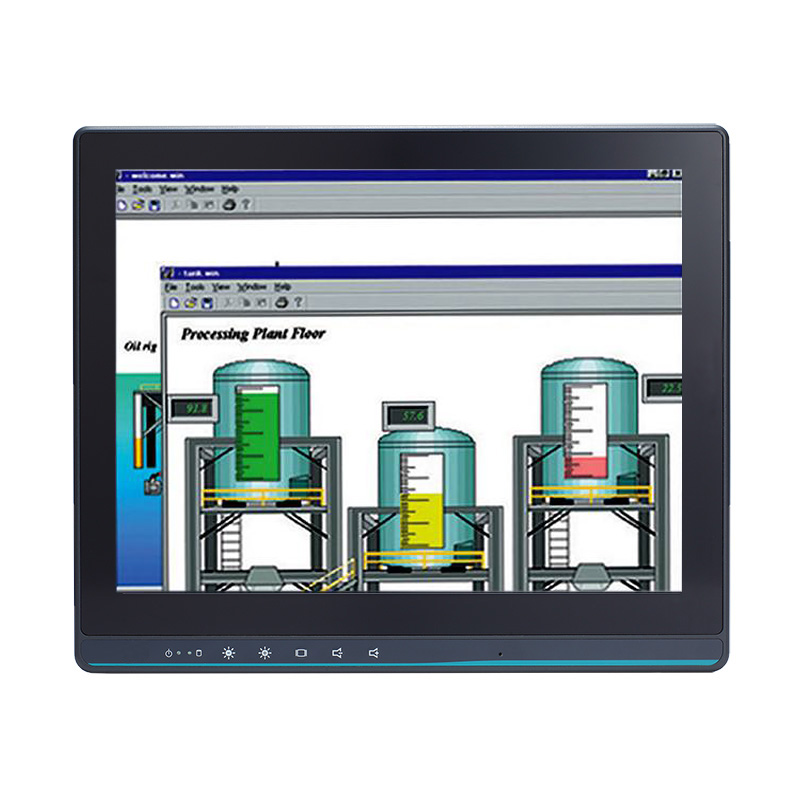
Fanless touch screen computers from 7 to 24 inches for machines and lines.
View range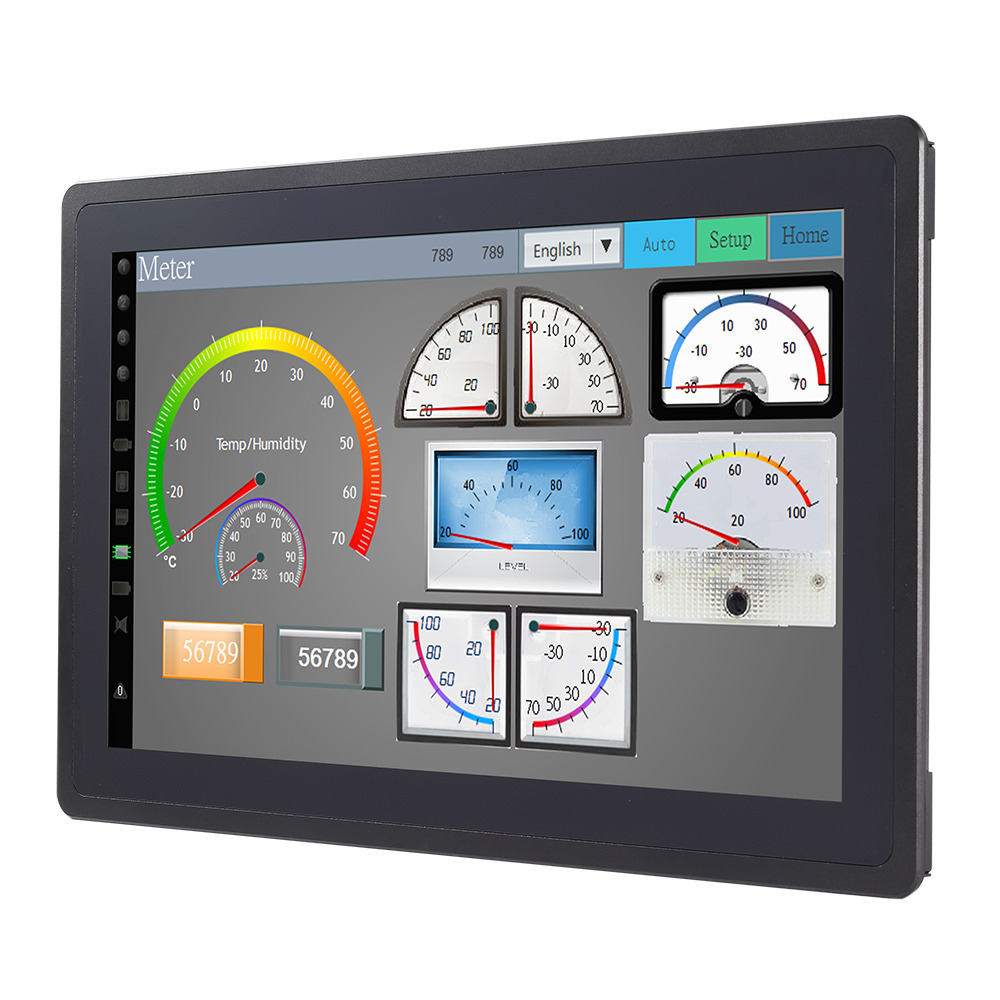
PCAP, resistive and SAW touch displays for HMIs driven by a cabinet PC.
View range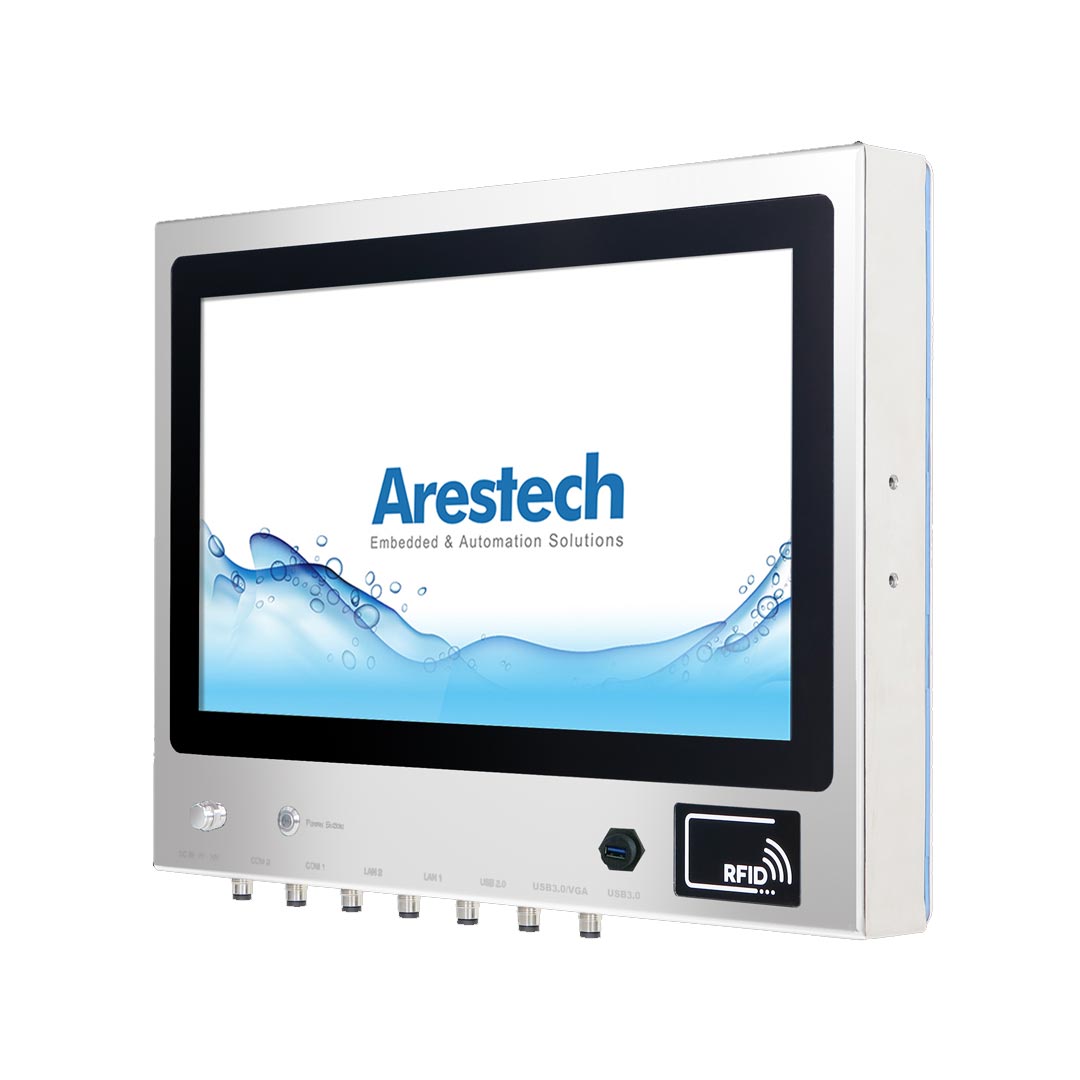
Stainless steel HMIs sealed for high-pressure, high-temperature cleaning.
View range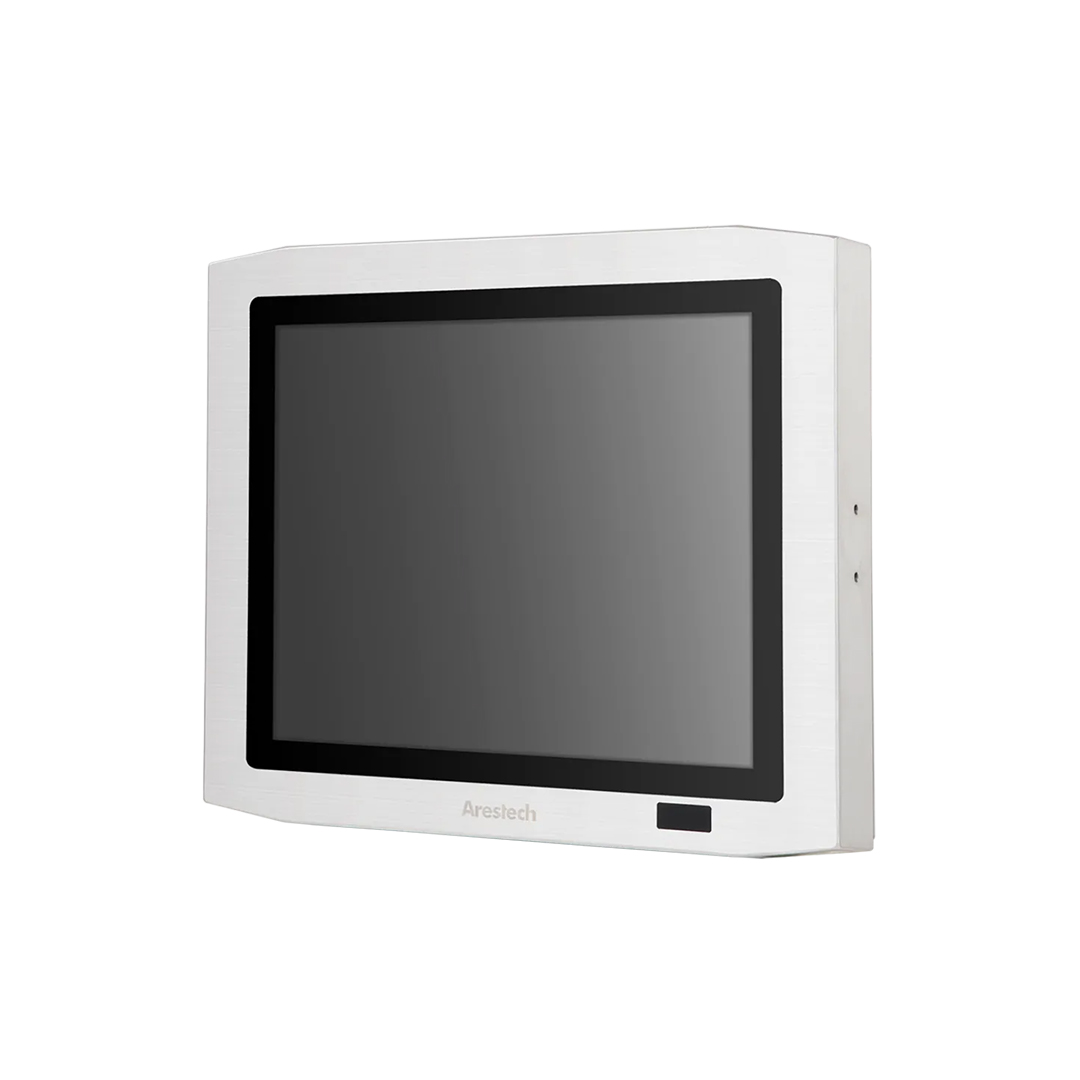
Stainless steel monitors sealed to IP66 or IP69K for hygienic areas.
View range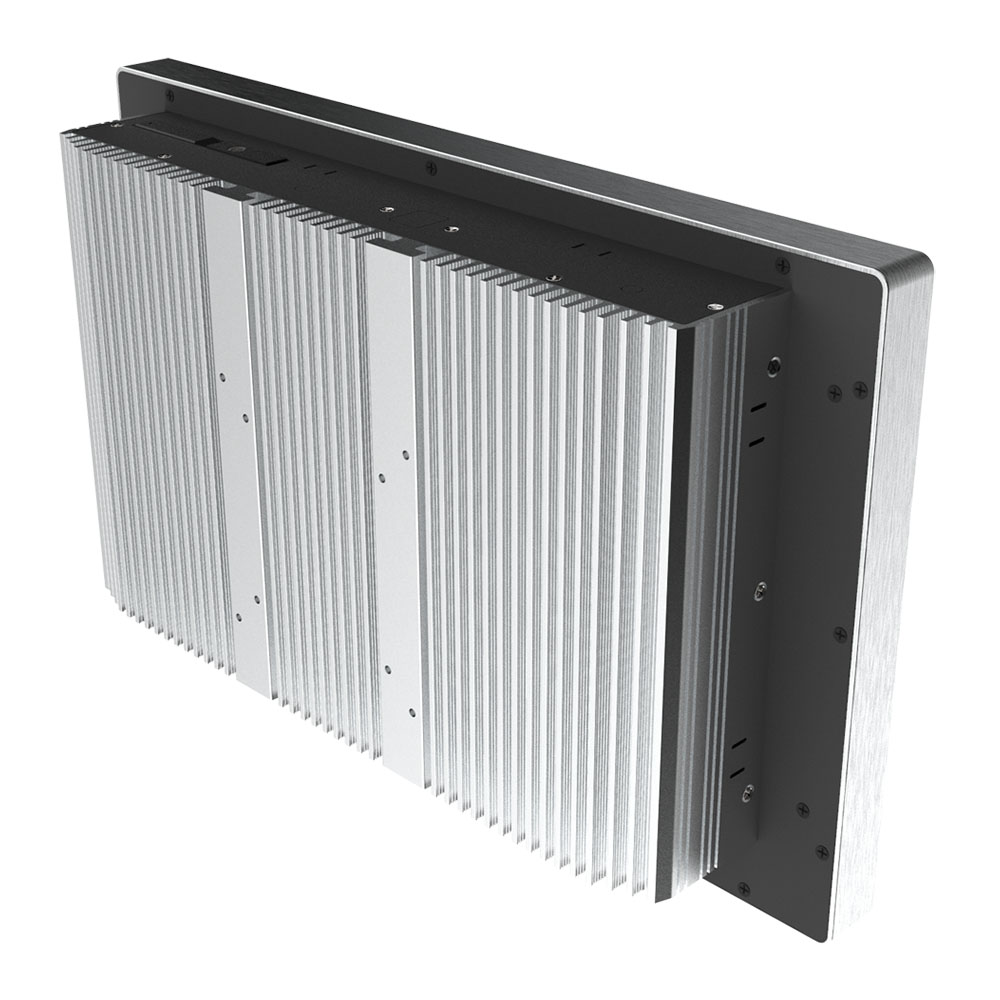
Wide-temperature, shock-resistant HMIs for heavy industry and outdoor sites.
View range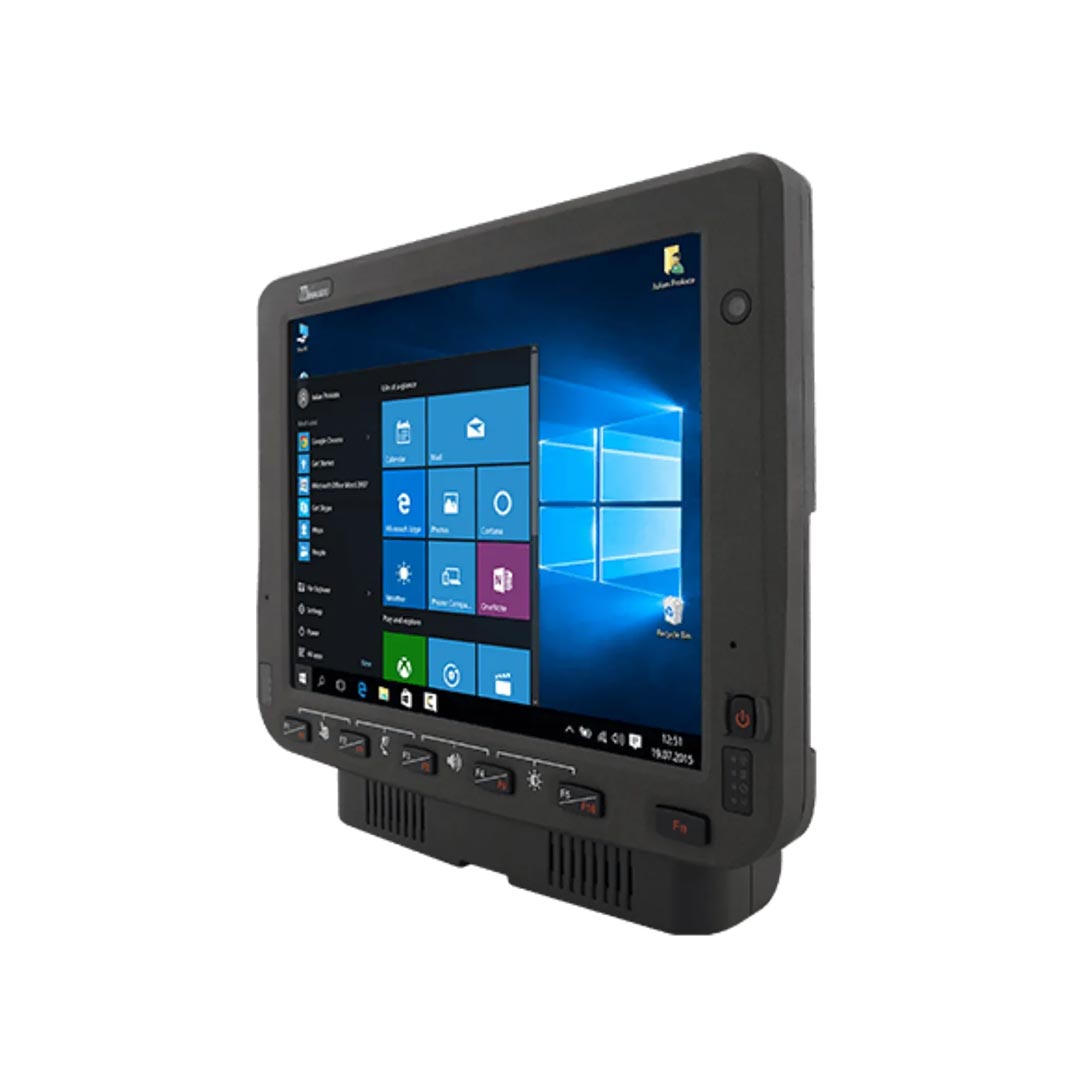
Rugged terminals for forklifts, cranes and mobile machinery.
View rangeThese are the choices that decide whether an HMI suits the machine and lasts in the field, and the ones we work through with you before recommending a unit.
Bigger screens make touch targets easier to hit and data easier to read at a distance. Widescreen full HD suits modern HMI software; 4:3 screens keep older applications drawn at 1024 x 768 edge to edge.

Projected capacitive (PCAP) gives a flush glass front and multi-touch; resistive works with thick gloves and ignores water. Our guide to touch technology compares every option.

Panel mount into a cabinet door, VESA on an arm or pole, open frame inside a machine enclosure, or rack mount in a 19 inch console.

Front IP65 is the usual minimum for a panel-mount HMI; IP66 all round for spray, and IP69K stainless steel where lines are hosed down every shift.
A fanless design has no vents to clog and no fan to fail, which is why nearly every industrial HMI is passively cooled.

Most HMIs are rated 0 to 50 °C. Cold stores, outdoor sites and vehicle cabs need wide-temperature models; check the datasheet rating against the coldest start and the hottest day.
Gigabit Ethernet for the PLC and SCADA, isolated serial for older devices, USB for scanners, and sealed M12 connectors or PoE where cabling is exposed or power is hard to reach.
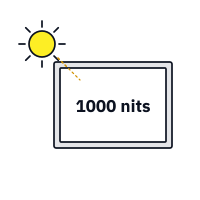
Standard screens wash out in daylight. Outdoor and in-cab HMIs need 1,000 nits or more, ideally with optical bonding to cut reflections.
Where an HMI is installed decides most of its specification. These are the environments we build for most often, and what each one asks of the screen.
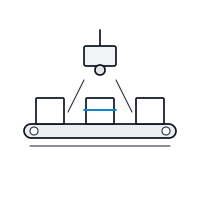
Front IP65 panel PCs mounted in a cabinet door or on a VESA arm beside the machine. Most use 15 to 21.5 inch PCAP screens, fanless cooling and Gigabit Ethernet to the PLC, chosen to fit the cut-out and the HMI software the line already runs.
View range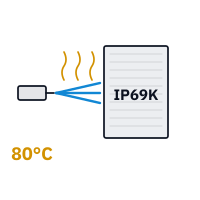
IP69K stainless steel HMIs that survive high-pressure, high-temperature washdown every shift. Look for 316 stainless where chlorinated sanitisers are used, a flush glass front, sealed M12 connectors and mounting that can be hosed behind.
Read guide
Fanless, vent-free panel PCs with smooth, sealed fronts that add no particles and tolerate daily wipe-downs with alcohol and hydrogen peroxide. Glove-ready PCAP touch and flush wall mounting keep the screen usable and easy to clean.
Read guide Sunlight readable panel PCs with 1,000 nit screens for yards, docks, fuel points and outdoor kiosks, where a standard screen washes out. Optical bonding cuts reflections and stops the glass fogging when the temperature changes.
View range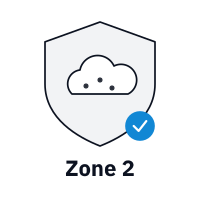
Intrinsically safe panel PCs for areas where flammable gas, vapour or dust may be present, certified for Class I, Division 2 locations, with ATEX and IECEx Zone 2 models. Match the marking on the HMI to the zone classification of the area.
View range
Marine panel PCs for bridges, engine rooms and decks, with IP66 or front IP66 sealing and 1,000 nit screens on many models for open bridges. Check the type approval each vessel needs, such as IEC 60945, against the datasheet of the model you choose.
View range
Railway panel PCs for driver desks and passenger areas, compliant with EN 50155 for rolling stock electronics. They take 24 to 110 V DC train supplies through sealed M12 connectors, and many run from -40 to 70 °C.
View rangeMost HMIs are fixed to the machine they control, but some have to move with the operator. How the HMI is mounted decides much of its specification.
Panel mount puts a sealed front flush in a cabinet door with the rear protected inside. VESA mounting puts the HMI on a swing arm, pole or wall where operators can reach it from more than one position. Open frame units build into a machine’s own enclosure, and rack mount displays fit 19 inch consoles in control rooms. Fixed HMIs usually run from the machine’s DC supply with a wired connection to the PLC.
Forklifts, reach trucks, cranes and agricultural machines use vehicle mount computers: rugged, fanless terminals that take a 10 to 60 V DC supply straight from the vehicle, use ignition control to start and shut down with the engine and run from -30 °C in cold stores. They mount on the vehicle frame, connect over Wi-Fi to warehouse management software and are sealed against dust and rain. See our logistics and warehousing solutions.

Where operators walk the line, inspect equipment or record readings and photos away from the machine, a rugged tablet or handheld computer is usually the right HMI. It trades screen size and wired connections for mobility and runs from a battery, so it suits inspection and maintenance rather than continuous machine control. We focus on fixed and vehicle-mounted HMIs, and can advise how a handheld device fits alongside them.
HMI stands for human-machine interface: the screen, software and controls through which a person monitors and operates a machine or process. In industry, an HMI is usually a touch screen panel PC or operator panel connected to a PLC, showing live values, alarms and controls for a machine, line or plant.
An HMI is the operator screen for one machine or process. SCADA (supervisory control and data acquisition) is a system that gathers data from many PLCs and sites, stores history, manages alarms and lets operators supervise a whole plant or network. SCADA software includes HMI screens, but an HMI does not need SCADA.
A PLC runs the control logic of a machine; the HMI is the screen operators use to see and change it. The HMI connects to the PLC over an industrial network, usually Ethernet with a protocol such as Modbus TCP, EtherNet/IP, PROFINET or OPC UA, or over RS-485 serial, reading values and writing setpoints and commands back.
Tell us about the machine, the software it runs and where the screen will be mounted. We will recommend the right panel PC or touch monitor, and build it into a system ready to install.