
 UK
UK 


Flush glass front
A true flat front with no bezel lip, so a wipe or a jet clears the whole screen.
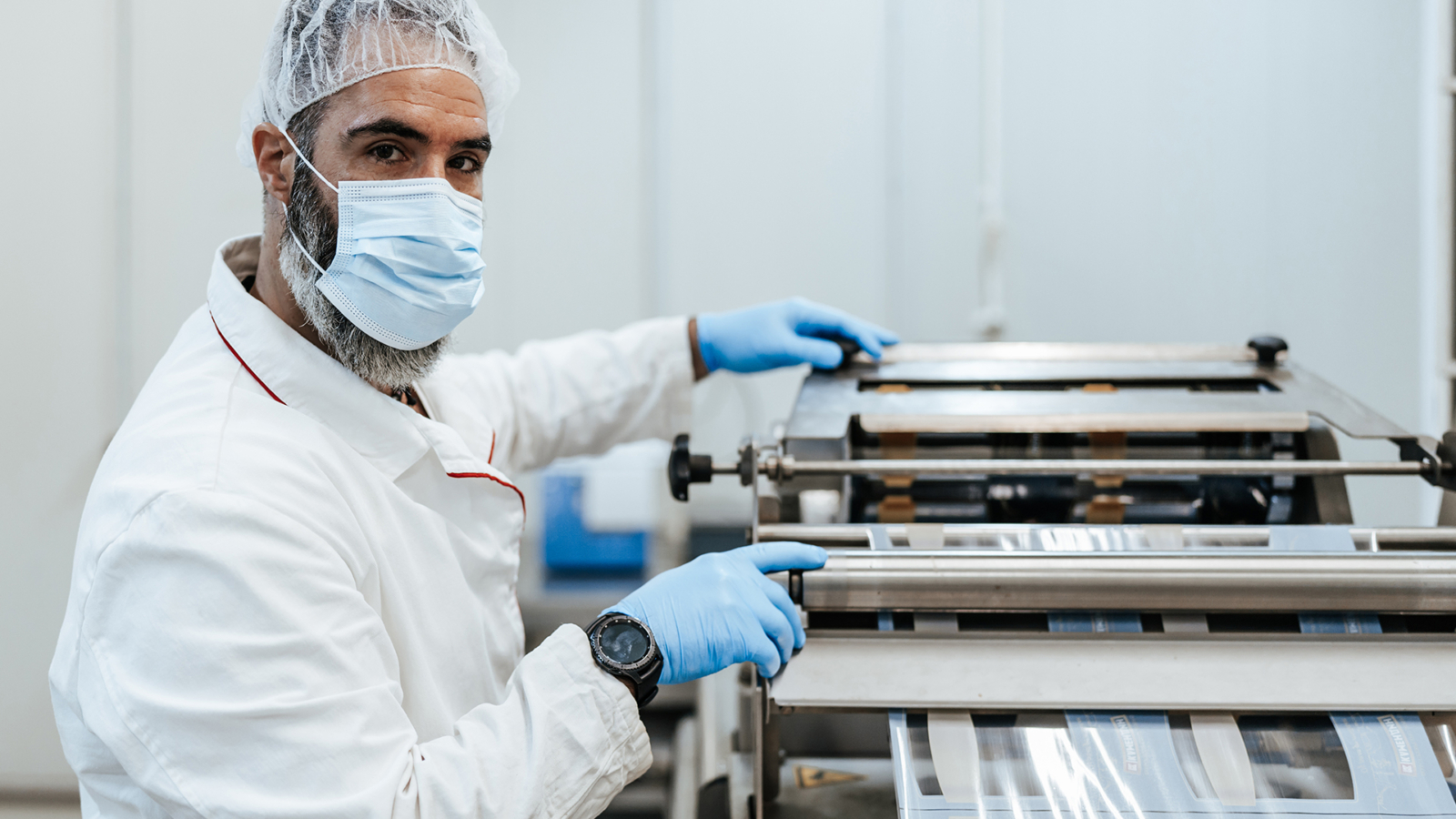
Washdown computers and monitors sit in the splash zone of a food plant, where they are foamed, hosed and sanitised every shift. Here is how hygienic design, IP69K sealing and the right stainless steel keep them clean and keep them working.
Hygienic design is the practice of building equipment so that it cannot harbour soil or bacteria and can be cleaned quickly and completely. For a washdown computer or monitor, that means a smooth, sealed stainless steel housing with no crevices, a flush glass front, sealed connectors and an ingress rating, usually IP69K, that survives high-pressure, high-temperature cleaning every shift.
Hygienic design, called sanitary design in North America, is a set of engineering principles for equipment used where food, drink or medicines are made. The aim is simple: every surface a hygiene team can reach should come clean in one pass, and no surface they cannot reach should be able to collect product, water or microbes.
In Europe the principles are set out in the guidelines of EHEDG, the European Hygienic Engineering and Design Group; in North America, 3-A Sanitary Standards and NSF cover similar ground. They share the same core rules: cleanable materials, smooth surfaces, no crevices or dead spaces, self-draining shapes, and seals and fasteners that do not trap soil.
Most of this guidance was written for product-contact equipment such as fillers, pipework and conveyors. A washdown computer or monitor usually sits in the splash zone instead: close enough to be sprayed, foamed and wiped with everything around it, but not touching the product. The same principles still apply, because anything that holds water or residue in the splash zone can drip back onto the line.
Washdown is the open-plant cleaning that happens at the end of a shift or a production run. A typical sequence, following the steps the NSF summarises for food plants, looks like this:
Every one of those steps lands on the HMI. The housing sees hot water, repeated thermal shock, caustic and acidic chemistry and, often, a pressure washer held a few centimetres from the seals. Enclosed process equipment is cleaned differently, by clean in place (CIP), where cleaning solutions are pumped through pipework and tanks without opening them. The HMI that runs a CIP cycle is still washed down on the outside.
Our stainless steel panel PCs and monitors are designed around the hygienic design principles in this guide: fanless, sealed and built to be hosed down.
An ingress protection rating tells you what an enclosure has been tested against. For washdown, three ratings matter:
IP69K is the only one of the three that matches a pressure washer in the hands of a cleaning crew, which is why it has become the default for HMIs on open food lines. Many washdown units carry IP66 and IP69K together, because the two tests cover different things. A front-only rating such as front IP65 protects a panel-mount display from the operator side only, so the rear must sit inside a sealed cabinet.
Our guide to IP ratings from IP65 to IP69K covers every level, and the IP69K FAQ summarises the test.
Stainless steel is the standard housing for washdown equipment because it resists corrosion, takes a smooth finish and tolerates the chemicals used in food plants. Two grades cover almost every washdown HMI. Grade 304 contains around 18% chromium and 8% nickel and suits most food, bakery and packaging areas. Grade 316 adds 2 to 3% molybdenum, which improves resistance to pitting from chlorides: the chlorine in sanitisers, brines and salt.
As a rule of thumb, choose 316 where chlorinated sanitisers are used every shift, in meat, poultry, fish and dairy processing, near brines and marinades, and anywhere salt air reaches the line. The extra cost is small against a housing that pits and harbours bacteria. Whichever grade you choose, keep the finish smooth: abrasive pads scratch the passive layer that protects the steel.
Our comparison of 304 and 316 stainless steel in industrial computing goes further into the differences.
The screen is the part of a washdown HMI that operators touch most and cleaners spray hardest. Projected capacitive (PCAP) touch sits behind a single sheet of flush glass, so there is no film or bezel edge to lift or trap residue, and controllers tuned for water rejection ignore droplets left after a rinse. Resistive touch still has a place where operators wear thick work gloves, and our guide to touch technology compares the two.
Hot rinses followed by cold production air can fog the inside of a display. Optically bonded screens fill the gap between the glass and the LCD, removing the air layer where condensation forms and improving readability under bright factory lighting. It also helps to give operators a cleaning lock on the screen, so a wipe-down does not register as a string of touches while the line software is running.
These are the design details we check on every washdown panel PC and monitor before recommending it for a food or beverage line.
A true flat front with no bezel lip, so a wipe or a jet clears the whole screen.

Water runs off instead of pooling on ledges and in sharp internal corners.

Fixings with no exposed threads and O-rings seated flush with the surface.
No vents or filters to collect moisture and residue, and nothing for water to be drawn into.
Locking circular connectors and sealed cable glands in place of open USB and LAN ports.

Yoke, swing-arm or stand mounts that leave a gap to hose, or panel mounting sealed flush to the cabinet.
Having supplied panel PCs and displays into washdown areas for many years, we see the same weak points again and again. Cable entries and standard connectors let water in long before a sealed housing does, which is why sealed M12 connectors matter as much as the rating on the front. Buttons, antenna housings and speaker grilles add seams; a flat antenna cover and a touch screen in place of buttons remove them.
Seals are the other wear item. Repeated thermal shock and strong chemicals harden gaskets over time, so check them at planned maintenance, follow the chemical concentrations your supplier recommends and avoid holding a pressure lance on a seal from point-blank range for longer than the clean needs.
Environment. Start with the cleaning regime: how often, how hot, what pressure and which chemicals. That sets the ingress rating, usually IP69K, and the steel grade.
Performance. Match the processor and screen to the software: a line HMI, a SCADA client, a recipe station or a vision system each need different compute and display sizes.
Expansion. List the devices the unit must connect to, from barcode scanners and scales to PLCs, and make sure every port is sealed, whether through M12 connectors, PoE or wireless behind a sealed antenna.
Lifecycle. Food lines run for years. Choose a platform with long availability and replaceable seals so a failed unit can be swapped like for like.
Browse our stainless steel panel PCs and stainless steel monitors, or see how we support food and beverage manufacturers. For particle-controlled production rather than wet cleaning, read our guide to clean room computers.
Clean in place (CIP) is a method of cleaning the inside of process equipment, such as pipework, tanks, heat exchangers and fillers, without taking it apart. Cleaning solutions are pumped through the closed system in a set sequence of rinses, a caustic wash, an acid wash and a sanitising step, run by an automated CIP set.
EHEDG, the European Hygienic Engineering and Design Group, is a consortium of equipment makers, food producers, research institutes and public health bodies, founded in 1989. It publishes guidelines on hygienic design for food processing equipment and certifies equipment designs that pass its cleanability tests.
IP69K means an enclosure is dust-tight and protected against high-pressure, high-temperature water jets per DIN 40050-9 — 80°C water at 8—10 MPa from close range. It is the food and beverage industry standard for sanitary wash-down on both sides of the Atlantic — and it does NOT imply submersion protection.
Tell us how the area is cleaned, the chemicals your hygiene team uses and where each screen will be mounted. We will recommend panel PCs and monitors with the right sealing and stainless steel grade, and build them into a system ready to install.