
 UK
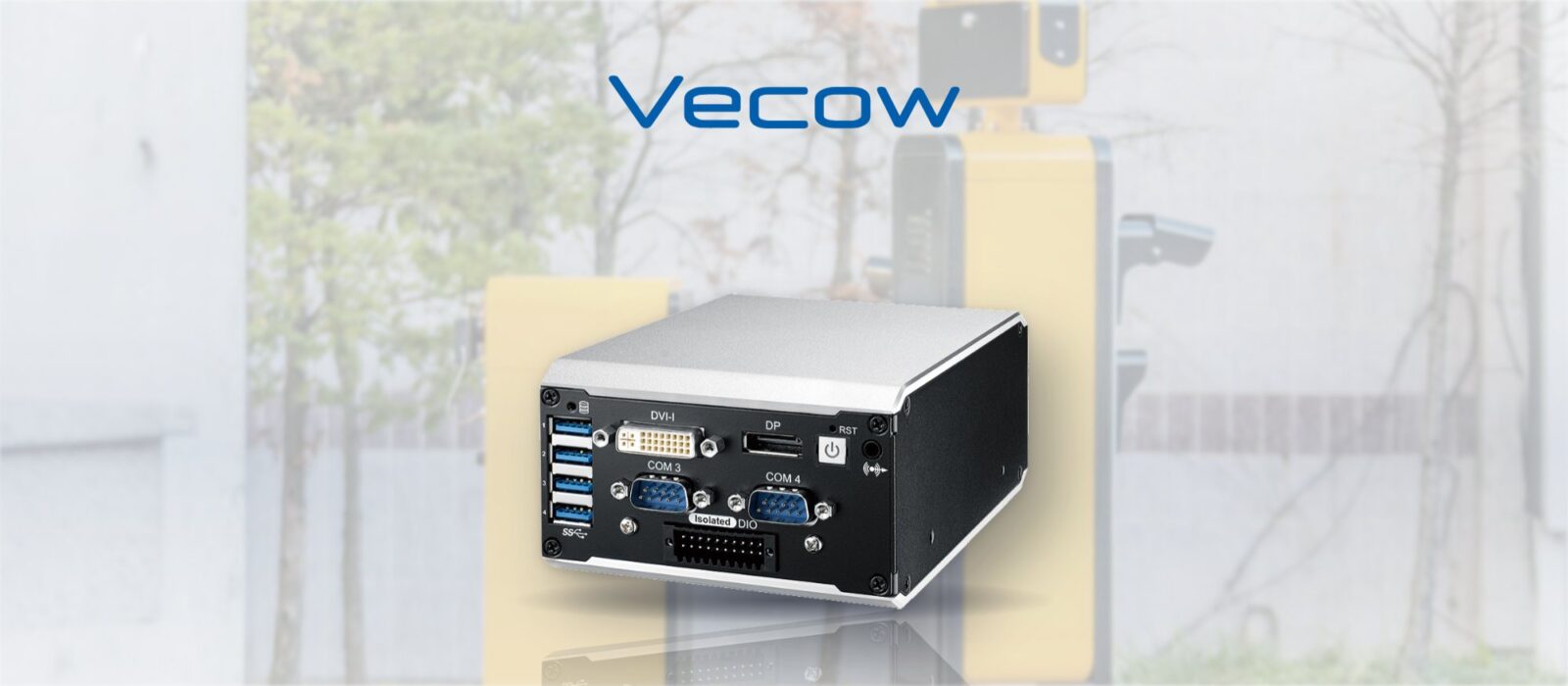
Industrial PoE Computers Provide Automated Barrier Control via ANPR
Low power industrial PoE computers with specialist software were configured for installation in outdoor cabinets throughout the UK to provide automated barrier control and improve parking lot management via ANPR.
Smart parking uses automatic number plate recognition to manage car parks without tickets: cameras read each vehicle’s plate as it arrives and leaves, and the system decides whether to let it in, how long it stayed and how many spaces are left. It makes parking quicker for drivers and gives operators far better control.
For a UK parking operator, we configured compact, fanless PoE computers with specialist software to run the ANPR system at each car park, installed in outdoor cabinets at the entrances and exits. It is the kind of system we supply for surveillance and video analytics.
What the ANPR system does
- 01Access control
- Recognised plates are matched against permits and bookings, and the barrier opens automatically.
- 02Vacancy count
- Entries and exits keep a live count of free spaces for signs and the back office.
- 03Time validation
- Entry and exit times are matched to each plate to check stays and payments.
From plate to barrier
The same sequence runs at every entrance and exit, day and night.
-
Capture
IR camerasIP cameras designed for ANPR capture each plate as the vehicle approaches, with infrared sensors and lighting giving clear images at any time of day or night.
-
Read
RecognitionThe computer’s software finds the plate in each image and reads its characters, at both the entrance and the exit.
-
Validate
RulesThe plate is checked against permits, bookings and stay times, and the result is shown on the lane displays.
-
Open
Barrier and lightsThe computer signals the barrier controller and traffic lights over serial to let the vehicle through.
The technology is the same whether it is called ANPR, as in the UK, or LPR, as in North America; our ANPR vs LPR FAQ explains the difference in naming, and our car park management system FAQ shows how the pieces fit together.
What an ANPR computer needs
A computer at each lane has to connect everything, and fit and survive inside a roadside cabinet.
-
01
Several camera inputs
Network ports for the ANPR cameras at each entrance and exit.
-
02
Power for the cameras
PoE+ to run cameras over one cable each, simplifying the cabinet wiring.
-
03
Sensors and displays
Connections for vehicle sensors and lane displays alongside the cameras.
-
04
Barrier and light control
Serial ports to drive barrier controllers and traffic lights.
-
05
Compact and low power
Small enough for narrow cabinets, with low heat output.
-
06
All-weather operation
Fanless, sealed against humidity, and rated for UK winters and summers in an outdoor cabinet.
Why the Vecow SPC-4600 was chosen
- 01Intel Atom x7-E3950
- A low-power quad-core Apollo Lake processor handles multiple camera, sensor and display inputs and outputs at both the entrance and exit.
- 022× GbE PoE+
- IEEE 802.3at PoE+ at up to 25.5 W per port powers a wide range of ANPR cameras, reducing installation time.
- 034× RS-232/422/485
- Selectable serial ports automate barrier control and traffic lights; see our RS-232 vs RS-485 FAQ.
- 04−40 to 85 °C, fanless
- A rugged, ultra-compact chassis resists humidity, shock and vibration for low-maintenance cabinet installs.
- 059–36 V DC, protected
- A wide-range terminal block input with overvoltage and reverse polarity protection reduces the risk of data loss.
- 06Dual display, wireless option
- DVI and DisplayPort for lane displays, plus mPCIe and SIM for Wi-Fi or cellular where there is no network.
PoE+ is defined in IEEE 802.3at; our industrial PoE guide shows how much power each class can deliver to a camera, and our PoE vs PoE+ vs PoE++ FAQ compares the standards. The same approach runs in our smart parking case study.
What changed at the car parks
One compact computer per lane runs recognition, barriers and displays.
-
Outcome 01
Automated barrier control
Plates are read and validated, and barriers and lights operate without staff.
-
Outcome 02
Simpler cabinets
PoE+ powers the cameras from the computer, cutting wiring and installation time.
-
Outcome 03
Low maintenance outdoors
Fanless, wide-temperature hardware copes with seasonal weather in roadside cabinets.
-
Outcome 04
Ready for remote sites
Wi-Fi and cellular options connect car parks with no wired network.
ANPR FAQs
-
What Is ANPR?
ANPR (automatic number plate recognition) is technology that reads vehicle number plates from camera images. A camera, usually with infrared lighting for night use, captures the vehicle; software finds the plate in the image and reads its characters; and the system checks the result against a list, such as permitted vehicles, payments or alerts.
-
ANPR vs LPR: What Is the Difference?
ANPR and LPR are two names for the same technology: reading vehicle plates automatically from camera images. ANPR (automatic number plate recognition) is the term used in the UK, Europe and Australia, while LPR (licence plate recognition) or ALPR is used in North America. The cameras, software and uses are essentially the same.
-
What Is a Car Park Management System?
A car park management system controls and monitors a car park: who can enter and leave, how long they stay, what they pay and how many spaces are free. Modern systems use ANPR cameras instead of tickets, with barriers, payment points, space counting, signs and a back office linked by edge computers at each entrance and exit.
-
How Do Car Park Barriers Work?
A car park barrier is a motorised arm controlled by a barrier controller. Sensors such as inductive loops in the road detect a vehicle, an access check (a ticket, card, intercom or ANPR match) authorises it, and the controller raises the arm. Safety loops or sensors stop the arm closing until the vehicle has cleared.
-
RS-232 vs RS-485: What Is the Difference?
RS-232 is a single-ended serial link between two devices over a short cable, typically up to about 15 m. RS-485 sends a differential signal over a twisted pair, so it resists electrical noise, runs up to about 1,200 m and lets many devices share one bus. RS-422 sits between them: differential, long distance, one sender to several receivers.
-
PoE vs PoE+ vs PoE++: The 802.3af, 802.3at and 802.3bt Standards
PoE, PoE+ and PoE++ are the three generations of IEEE Power over Ethernet. PoE (802.3af) supplies about 15 W per port, PoE+ (802.3at) about 30 W, and PoE++ (802.3bt) 60 W (Type 3) or 90 W (Type 4). PoE and PoE+ use two of the four cable pairs; PoE++ can use all four.
-
What Is Video Analytics?
Video analytics is software that analyses video automatically to detect, classify and track people, vehicles and events, so operators do not have to watch every screen. Modern systems use AI models and often run at the edge, on a computer beside the cameras, to react in real time and avoid sending every stream to the cloud.
Building an ANPR system for car parks?
Arrange a call to discuss your vision automation requirements.