
 UK
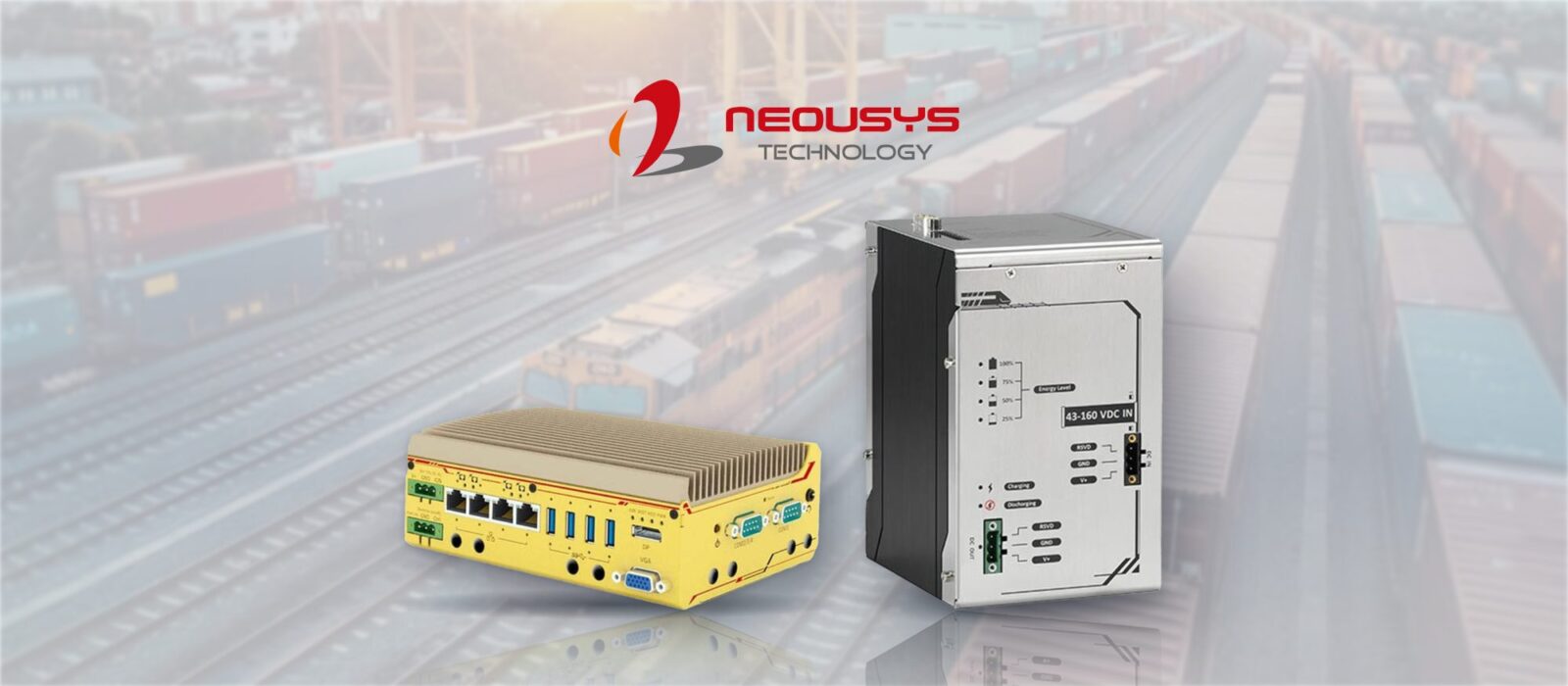
End of train device link with SuperCAP backup
An end of train device sits on the rear coupler of the last wagon of a freight train, measures brake pipe pressure and reports it by radio to a head-of-train device in the locomotive cab, so the driver knows the brakes are working along the whole train.
Both ends of that link need a computer that logs the data, talks to the train systems and copes with a supply that is anything but clean. Here we pair the Neousys POC-551VTC, a rugged embedded PC certified to EN 50155, EN 45545 and E-Mark, with Neousys supercapacitor UPS modules that keep it running through supply dips and shut it down cleanly when the power goes for good.
What an end of train device reports
- 01Brake pipe pressure
- The pressure at the rear of the train, which confirms the brake pipe is charged and continuous from the locomotive back.
- 02Movement at the rear
- Whether the last wagon is moving, so the cab can tell the whole train is under way or stopped.
- 03Marker light and battery
- The state of the rear marker light and of the device’s own power supply.
- 04Emergency brake command
- With a two-way link, the cab can tell the rear device to apply the brakes from the back of the train in an emergency.
Why the supply is the hard part
Rolling stock power is rarely clean. The supply can drop for a moment as a train passes a level crossing or a set of points, and an onboard computer that browns out can lose data or reboot just as the telemetry matters most. The rolling stock standard sets out the supply variations and interruptions onboard electronics must handle; our EN 50155 summary covers what it asks for.
What the telemetry computer has to handle
Each check below is answered by the POC-551VTC and the matching UPS module.
-
01
Ride through dips
A supercapacitor UPS sits between the supply and the computer, so short interruptions never reach it.
-
02
Shut down cleanly
When the supply does not return, the UPS presses the power button and confirms the PC is off before its stored energy runs out.
-
03
Rail certification
The POC-551VTC is certified to EN 50155 and EN 45545-2, with IEC 61373 Category 1 Class B shock and vibration.
-
04
Cold yards and hot cabs
The computer and the 110 V UPS are both rated from −40 to 70 °C, fanless.
-
05
Train and vehicle interfaces
An isolated CAN 2.0 port, 4-channel isolated DI and DO and five serial ports connect to brake, door and train management equipment.
-
06
A link off the train
Three mini PCIe sockets with SIM support and an M.2 B key socket take 4G or Wi-Fi modules for reporting back to base.
From train supply to safe shutdown
On the locomotive, the computer runs from the nominal 110 V battery line through a railway UPS.
-
Supply
110 V battery lineThe PB-9250J-110V accepts 43–160 V DC and feeds a regulated 24 V DC output at up to 120 W, well within the POC-551VTC’s 8–35 V input.
-
Store
SupercapacitorsEight 370 F supercapacitors hold 9250 W·s, carrying the computer from seconds to minutes depending on its load, with no battery to age in a hot cab.
-
Compute
Logging and reportingThe POC-551VTC runs the telemetry software on a four-core AMD Ryzen V1605B, reads the train over CAN bus and serial, and reports over a cellular module.
-
Shutdown
CAP energy managementThe UPS monitors stored energy and power draw, then signals a shutdown through its PWR_BTN# output and checks SYS_STAT to confirm the PC is off. A discharging alert lets the train systems see what is happening.
-
Configure
Our partWe image the operating system, fit the NVMe SSD and modem, set the BIOS power mode to match the UPS signals and wire the control terminal block, so the computer and UPS arrive working as a pair.
Two UPS modules for two kinds of supply
On the locomotive, the PB-9250J-110V runs straight from the train battery line. Where the equipment runs from a 12–35 V DC supply instead, the PB-9250J-SA stores the same energy and adds ignition control modes with user-set power-on and power-off delays. Both sit in our range of industrial UPS modules.
| Specification | Neousys PB-9250J-110V | Neousys PB-9250J-SA |
|---|---|---|
| Input | 43–160 V DC | 12–35 V DC |
| Output | 24 V DC, up to 120 W | 12 or 24 V DC, up to 180 W |
| Energy storage | 8× 370 F supercapacitors, 9250 W·s | 8× 370 F supercapacitors, 9250 W·s |
| Operating temperature | −40 to 70 °C | −25 to 65 °C |
| Rail standards | EN 50155:2017 (OT4), EN 45545-2 | EMC design to EN 50155 requirements |
| Shock and vibration | IEC 61373 Category 1 Class B | IEC 61373 Category 1 Class B |
| Control | Isolated RS-232, PWR_BTN#, AT power output, discharging alert, SYS_STAT | RS-232, PWR_BTN#, SYS_STAT |
| Ignition control | No | Yes, with power-on and power-off delays |
For a full rail installation, the 110 V module is the one designed to all mandatory sections of EN 50155; see our railway computers for other EN 50155 hosts.
Hardware in this example
The EN 50155 computer and the two supercapacitor UPS modules that protect it.
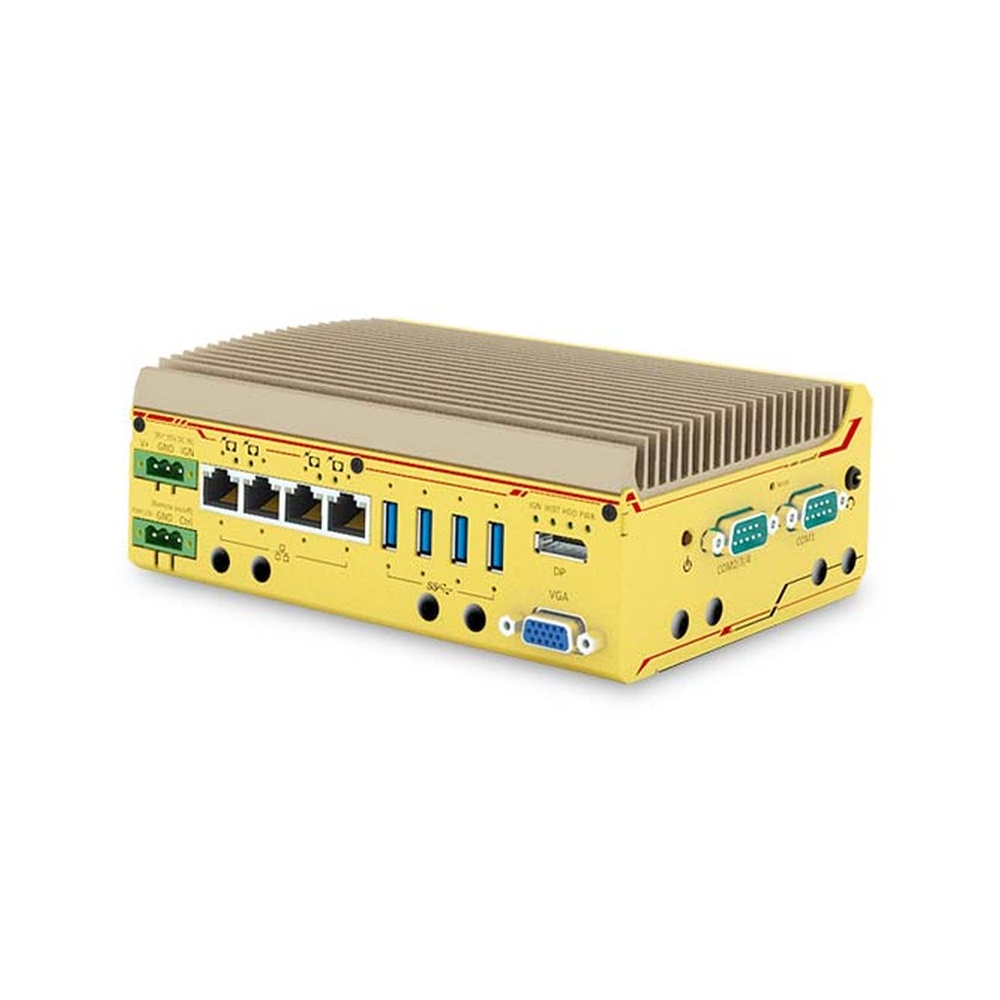
AMD Ryzen V1605B Ultra-Compact Vehicle Mount Computer with 4x PoE+ and Isolated CAN Bus
- CPU
- AMD Ryzen V-Series
- Ethernet
- 4× GbE (4× PoE)
- Temp
- −40 to +70 °C
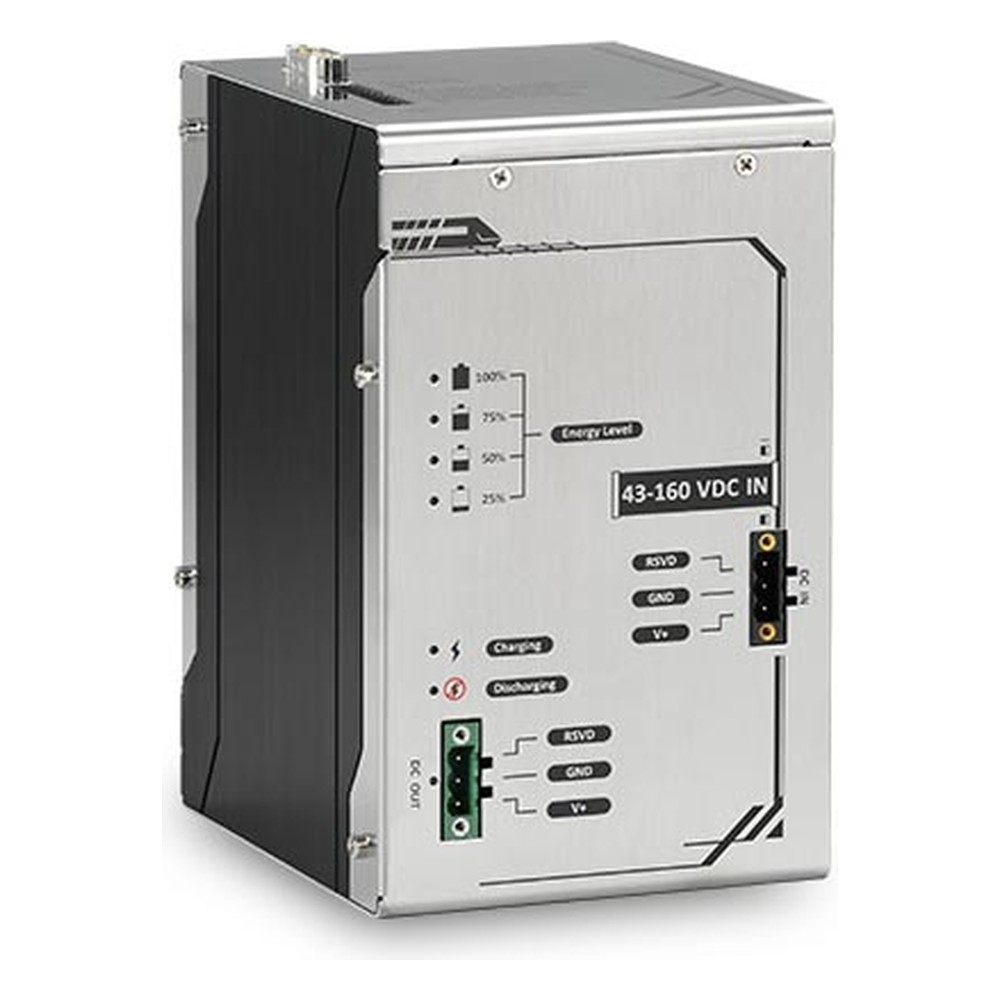
110 V DC Railway UPS with 9250 W·s Supercapacitor Storage, 24 V Output, EN 50155 and EN 45545-2
- Temp
- −40 to +70 °C
- Power
- 43–160 V DC [Terminal Block]
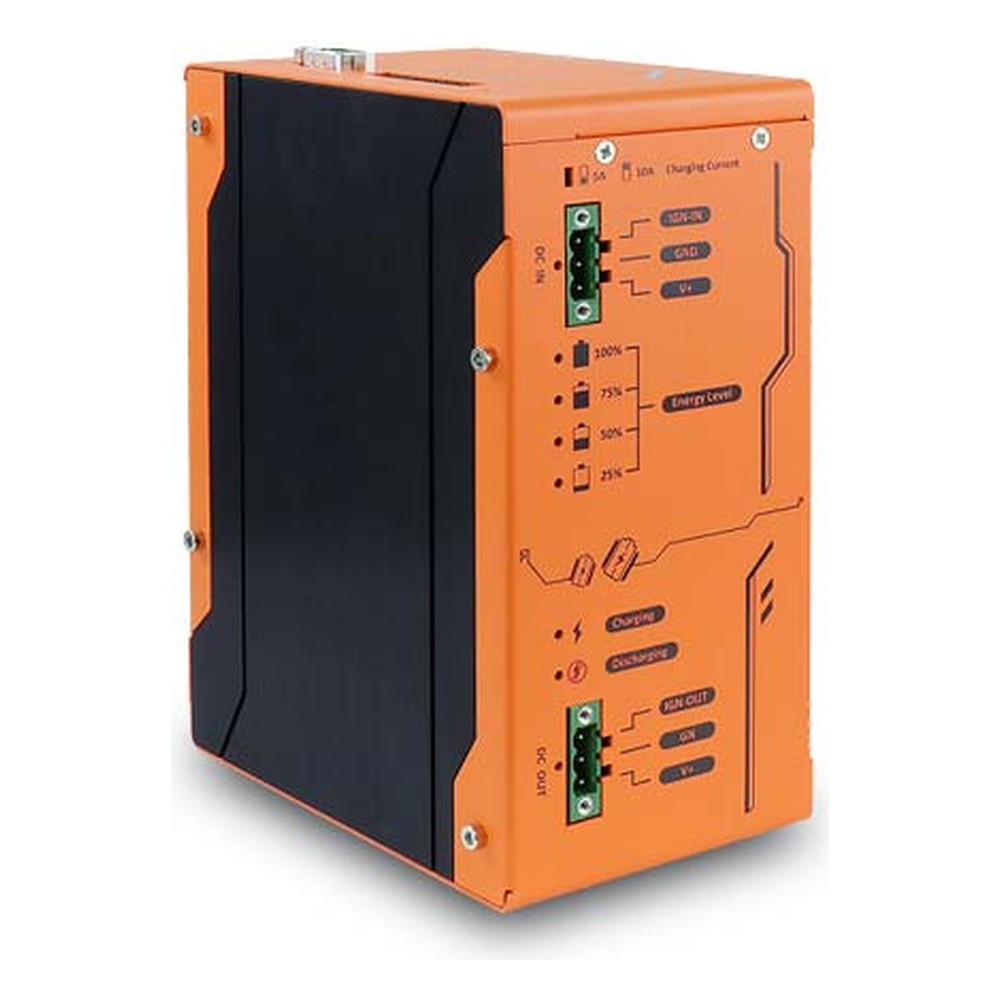
9250 W·s Supercapacitor DIN Rail UPS with 180 W Output, 12 to 35 V DC Input and Ignition Control
- Temp
- −25 to +65 °C
- Power
- 12–35 V DC [Terminal Block]
A closer look
-
01

POC-551VTC
The fanless EN 50155 computer, with four PoE+ ports, USB, DisplayPort and VGA.
-
02
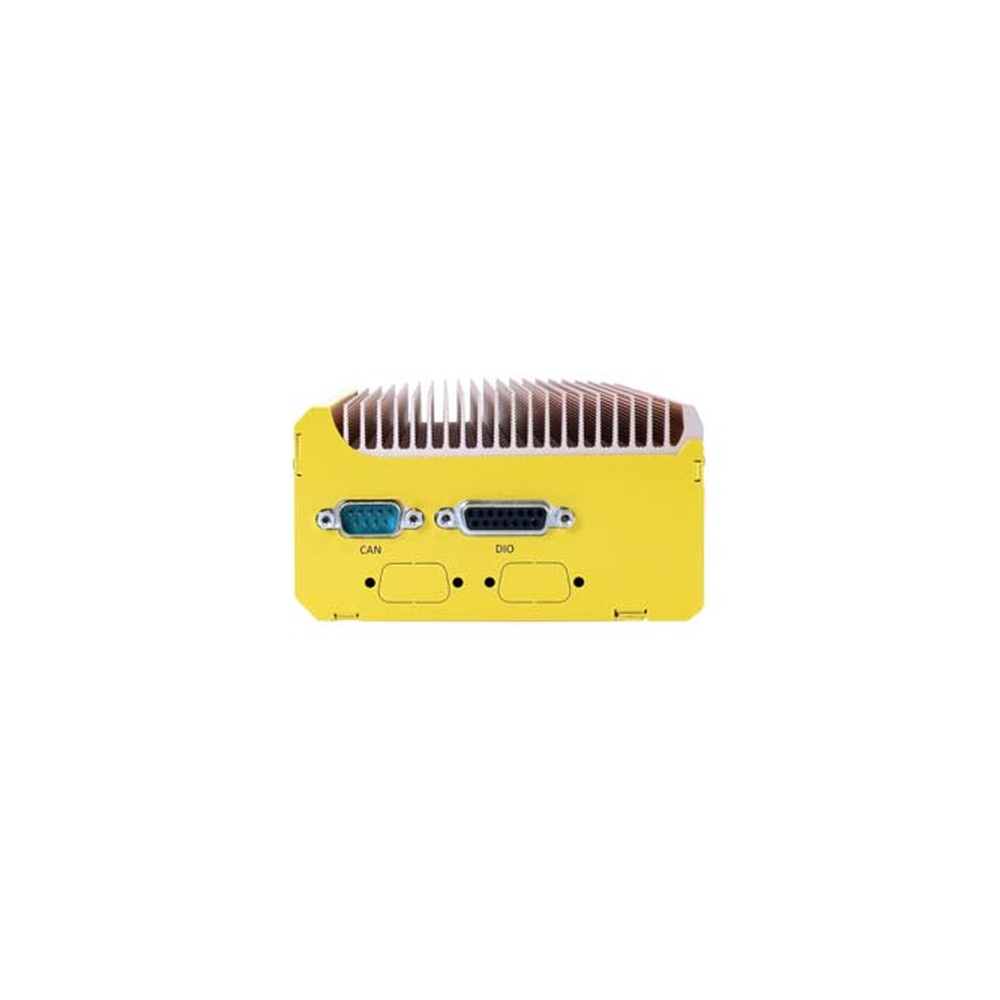
CAN and DIO side
Isolated CAN bus and digital I/O on D-sub connectors, for train systems.
-
03
PB-9250J-110V
The railway UPS, with 43–160 V DC input and 24 V output terminal blocks.
-
04
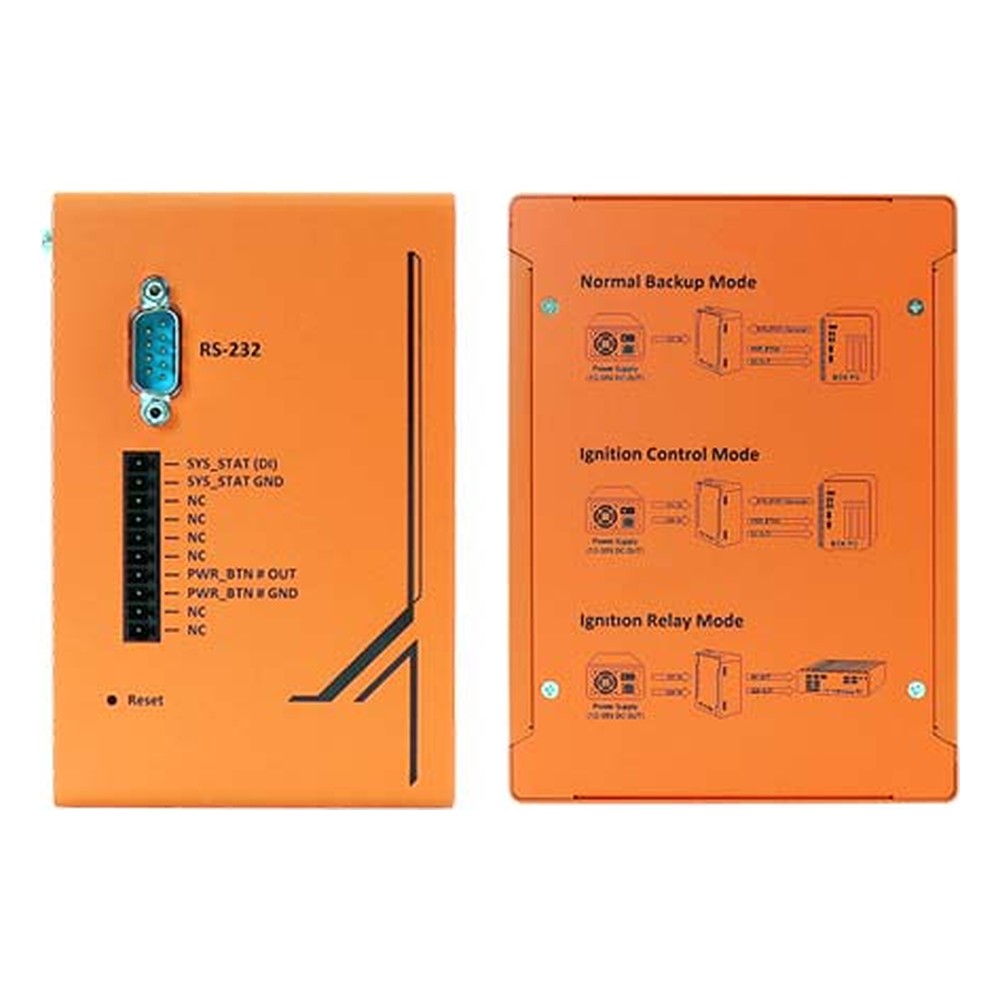
PB-9250J-SA control panel
RS-232 and the isolated terminal block that presses the PC's power button.
What this setup gives the operator
The gains come from treating the computer and its power as one system.
-
Outcome 01
Telemetry through supply dips
Short interruptions at crossings and points are bridged, so logging and reporting carry on.
-
Outcome 02
Intact logs and storage
When power is lost for good, the computer shuts down in order instead of losing data mid-write.
-
Outcome 03
No batteries to replace
Supercapacitors take the place of a battery pack, which suits hot cabs and cold yards alike.
-
Outcome 04
Power status on the train network
Discharge alerts and shutdown status can be passed to the train systems, so crews know what the equipment is doing.
End of train device FAQs
-
What Is Power Loss Protection in an SSD?
Power loss protection (PLP) is a feature in industrial and enterprise SSDs that keeps data safe if power is cut suddenly. On-board capacitors store enough energy to finish writing any data held in the drive’s cache to its flash memory, so files and the drive’s internal mapping are not corrupted when the supply drops without warning.
-
What Is CAN Bus?
CAN bus (Controller Area Network) is a two-wire network that lets controllers, sensors and actuators share short messages without a central computer. Developed by Bosch for vehicles, it uses a noise-resistant differential signal and gives every message a priority, so critical data gets through first. It is now standard in vehicles, machinery and remote equipment.
-
What Is Fleet Telematics?
Fleet telematics combines GPS location, data from the vehicle itself and mobile connectivity to monitor and manage a fleet. It shows where every vehicle is, how it is being driven and how it is performing, so operators can plan routes, dispatch jobs, cut fuel use, schedule maintenance and keep records for compliance.
-
What Is the Industrial Temperature Range?
The industrial temperature range is −40 to 85 °C: the grade an electronic component must operate across to be called industrial, compared with 0 to 70 °C for commercial parts. Rugged computers built from industrial-grade components typically run from −25 or −40 °C up to 70 °C as a complete system.
Need rail telemetry that rides through power dips?
Tell us the supply voltage, the train systems the computer talks to and how long it has to ride through. We configure the computer and UPS together as one system.