
 UK
Edge AI Gateways Boost Sales In Retail Stores
NEXCOM's Neu-X102 Edge AI Gateway stood out as an exceptional choice for retail stores due to its impressive technical specifications and suitability for processing data and providing real-time inference.
Physical retail competes with online shops on experience and on data. An edge AI gateway in the store closes part of that gap: it connects to the cameras, barcode scanners and digital displays already on the shop floor, and runs AI on their data on site, so the retailer gets live insight into customer behaviour, stock and staffing without sending every video stream to the cloud.
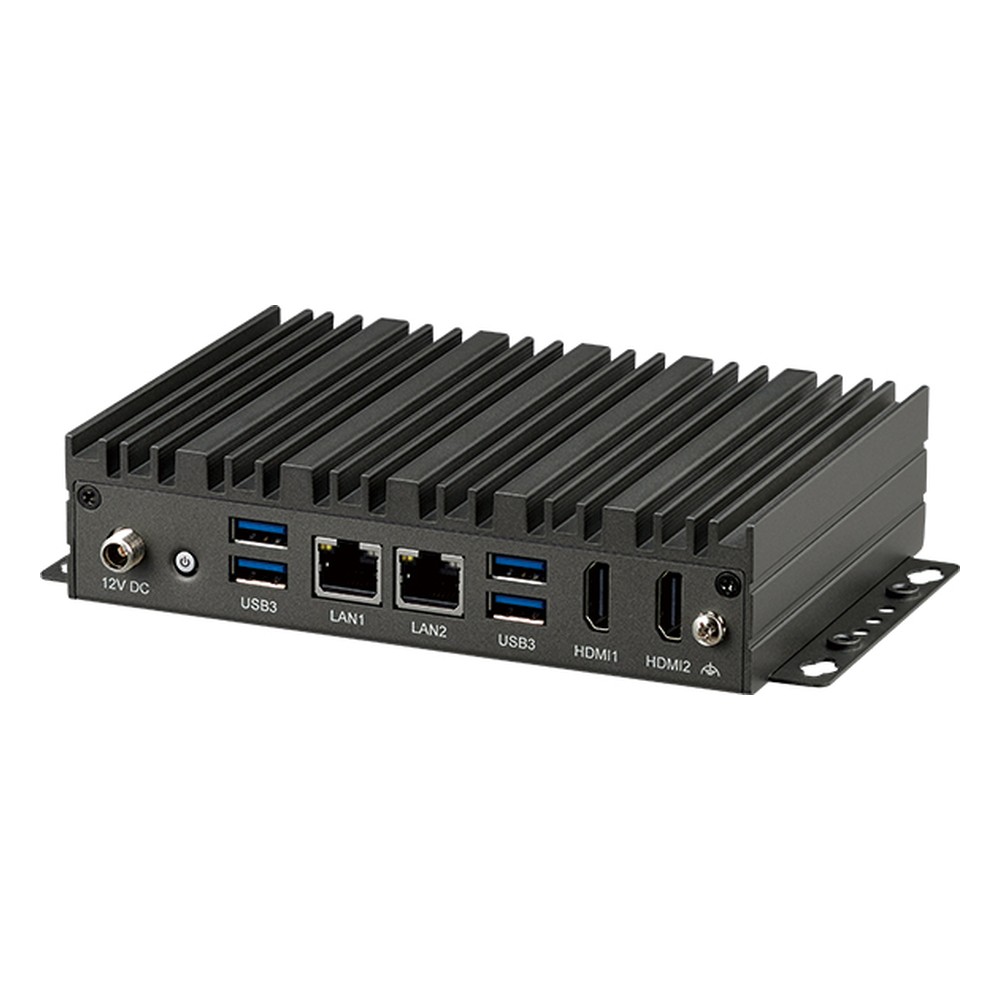
For this application we chose NEXCOM’s Neu-X102, a compact digital signage player that doubles as an edge AI gateway. It is the kind of system we configure for retail and self-service kiosks.
What an edge AI gateway does in a store
Processing data where it is created lets retailers act on it while the customer is still in the shop.
Retail analytics
AI on in-store camera feeds shows footfall, dwell time and how shoppers move, so layouts and promotions can be tuned.

Inventory management
Barcode scanner and shelf-camera data keep stock counts current and flag gaps before customers find them.

Asset tracking
Tagged stock and equipment are located on the shop floor and in the back room without manual checks.
Interactive signage
Content on in-store screens responds to what the gateway sees, with 4K playback on several displays.

Staff productivity
Live data on queues and stock lets staff go where they are needed instead of checking by hand.
Why process retail data in the store
Sending raw video from every store to the cloud is slow and costly. An edge AI gateway analyses it at the source and sends on only the results, which keeps response times short, cuts bandwidth and keeps shopper video in the building. Running inference beside the cameras rather than in the cloud is the core of AIoT, and our AI edge computing guide explains how edge computers are deployed for those workloads.
Why the Neu-X102 suited the job
- 01Intel N50 or N97
- Low-power Alder Lake-N processors built on efficient cores, quick at moving data between peripherals and processing transaction and customer data.
- 02Two 2.5GbE ports
- High-speed networking for camera images headed for AI inference, content transfer and database sync.
- 03Four USB 3.2 ports
- Room for barcode scanners, card readers and other point-of-sale peripherals.
- 04Integrated Intel UHD graphics
- 4K playback to multiple displays, so the same box drives the signage it informs.
- 05Compact signage form factor
- Small enough to sit behind a display or in a till area.
A signage player that acts as an edge AI gateway processes data close to the shoppers and devices, helping stores deliver real-time, relevant experiences that match what customers expect online.
What to check in a retail edge AI gateway
The same questions apply whichever system ends up behind the screen.
-
01
Camera bandwidth
Count the cameras and their resolution; 2.5GbE ports leave headroom for several streams into one gateway.
-
02
Peripherals
List the scanners, readers and sensors that will connect, and check there are enough USB and serial ports.
-
03
Displays
Check how many screens the gateway must drive and at what resolution, if it also runs the signage.
-
04
Processing headroom
Match the processor to the AI models; an N-series CPU suits lighter analytics, heavier vision needs more.
-
05
Space and cooling
Behind a display or in a till there is little airflow, so a compact fanless design avoids dust and noise.
-
06
Fleet management
Across many stores, plan how systems will be imaged, updated and monitored remotely.
The Neu-X102 range
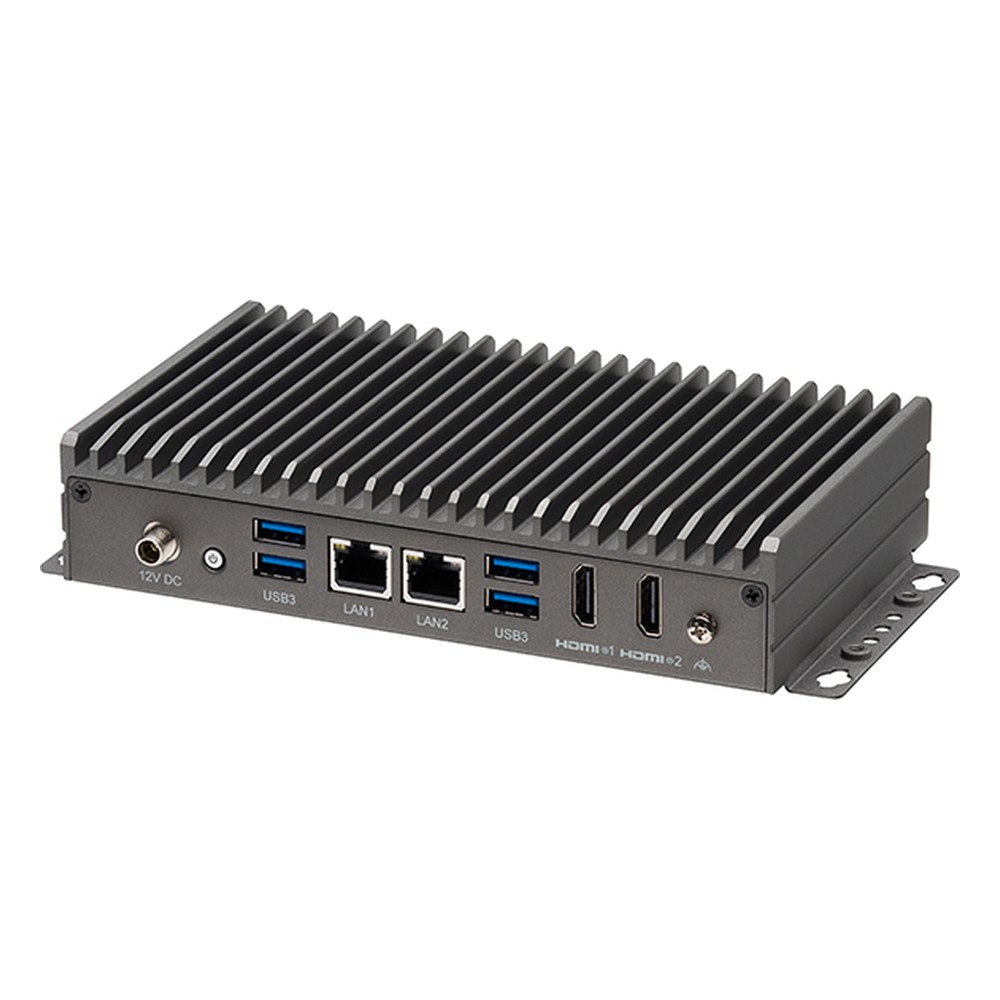
Three Neu-X102 builds on the same platform: Intel Processor N97, N50 or Core i3-N305, with a DDR5 Neu-X1025 version of each.
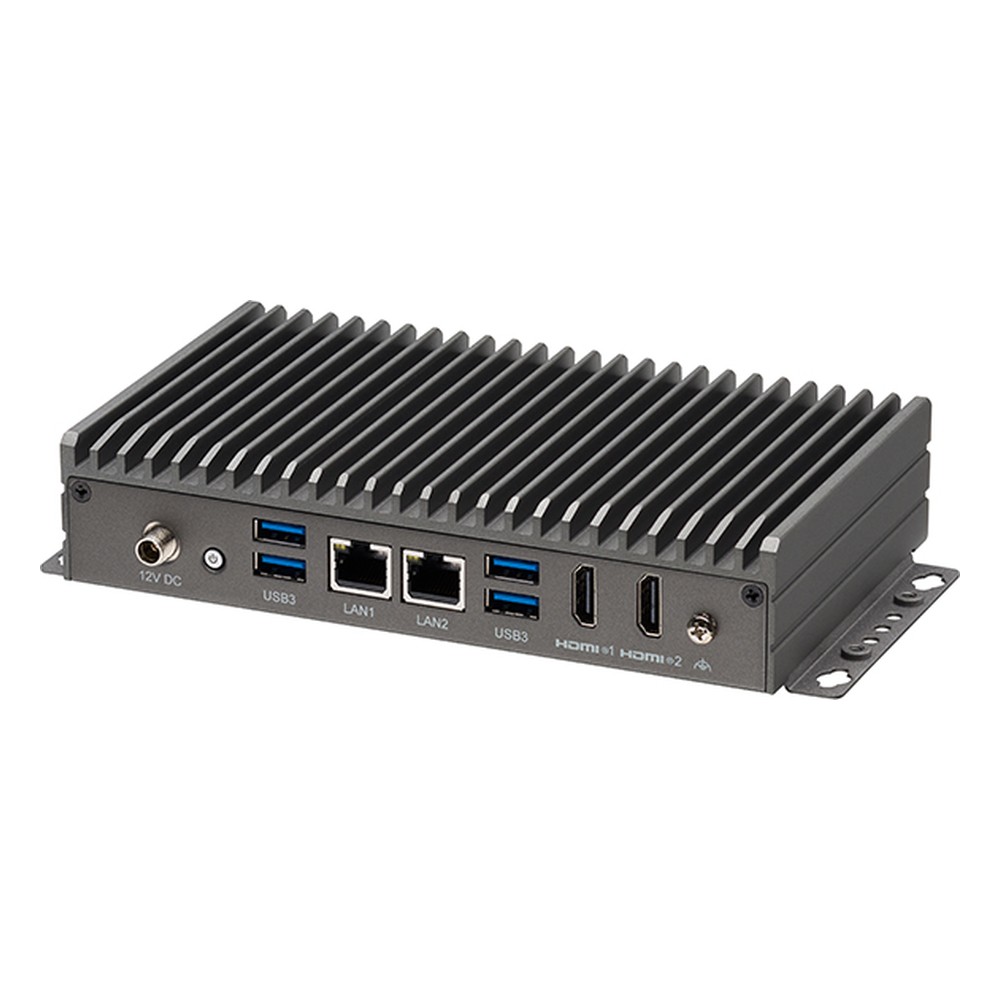
Intel N97 (Alder Lake-N) Fanless Digital Signage Player with Dual 4K HDMI and Dual 2.5GbE
- CPU
- Intel Processor N97 (Alder Lake)
- Ethernet
- 2× 2.5GbE
- Temp
- −5 to +50 °C
Dual-Core Intel Processor N50 Compact IoT Gateway PC with Dual 2.5GbE and LTE Option
- CPU
- Intel Processor N50 (Alder Lake)
- Ethernet
- 2× 2.5GbE
- Temp
- −5 to +50 °C
Intel Core i3-N305 8-Core Fanless Edge Computer with Dual 2.5GbE and Dual 4K HDMI
- CPU
- Intel Core i3-N305 (Alder Lake)
- Ethernet
- 2× 2.5GbE
- Temp
- −5 to +50 °C
Edge AI gateway FAQs
-
Edge AI vs Cloud AI: What Is the Difference?
Edge AI runs models on a computer beside the cameras or machines, so results arrive in milliseconds and the data stays on site. Cloud AI sends data to remote servers, which offer large scale but add delay, bandwidth costs and a dependence on the connection. Many systems combine both: they train in the cloud and infer at the edge.
-
What Is Retail Analytics?
Retail analytics is collecting and analysing data from a retail business, such as sales, footfall, dwell time, queues and stock levels, to make better decisions about layout, staffing, promotions and inventory. In physical stores, edge AI on camera feeds now adds live insight into how shoppers move, wait and buy.
-
What Is AIoT?
AIoT, the Artificial Intelligence of Things, is the combination of AI with IoT devices. Sensors and cameras collect data, and AI models analyse it, often on an edge computer close to the devices, so the system can recognise what is happening and act on its own instead of only reporting data.
-
Is 2.5GbE fast enough for edge AI?
For many edge AI systems, yes. 2.5GbE carries about 2.35 Gbit/s of real traffic over existing Cat5e cable, enough for single-camera inference, compressed multi-camera video and gateway aggregation. It usually falls short for uncompressed machine-vision cameras, multi-sensor fusion and multi-node inference clusters, where 10GbE with RDMA has become the practical baseline.
-
What Are the Advantages of Fanless Computers?
Fanless computers cool themselves passively, through a finned heatsink chassis and heat pipes, instead of a fan. With no moving parts and no airflow drawing in dirt, they are more reliable in dusty or vibrating places, silent, low maintenance and easy to seal, which is why they are the standard choice for industrial and embedded use.
-
Can a Computer Be Powered by PoE?
Yes. A PoE powered computer takes its power as a powered device (PD) from the same Ethernet cable that carries its data, so it needs no mains socket or local power supply. Low-power computers, gateways and thin clients run from PoE+ (802.3at); larger systems need PoE++ (802.3bt) at up to about 71 W at the device.
-
PoE vs PoE+ vs PoE++: The 802.3af, 802.3at and 802.3bt Standards
PoE, PoE+ and PoE++ are the three generations of IEEE Power over Ethernet. PoE (802.3af) supplies about 15 W per port, PoE+ (802.3at) about 30 W, and PoE++ (802.3bt) 60 W (Type 3) or 90 W (Type 4). PoE and PoE+ use two of the four cable pairs; PoE++ can use all four.
Planning edge AI for your stores?
Tell us about your application and a member of the team will get right back to you.