
 UK
UK 
Sintrones iBOX-604-G2: a lightweight Jetson Orin drone computer with GMSL
The Sintrones iBOX-604-G2 is a sub-339-gram NVIDIA Jetson Orin drone computer with two GMSL2 camera inputs, CAN FD and UART for the flight controller, and a choice of three Orin modules.
The Sintrones iBOX-604-G2 is built to put NVIDIA Jetson Orin AI onto a drone. At under 339 g in a compact aluminium enclosure, it delivers up to 100 TOPS in a package light enough to fly, with the camera and flight-controller interfaces a UAV needs. It is the companion computer that runs the AI while the flight controller flies the aircraft.
It comes with a choice of three Jetson Orin modules (Orin NX 16 GB, Orin NX 8 GB or Orin Nano 8 GB) in the same enclosure, with the same mounts and wiring, so the compute can be matched to the workload and the weight and power budget without redesigning the airframe.
What a drone companion computer needs
Six things decide whether a computer can fly as a drone's AI brain. Here is how the iBOX-604-G2 answers each one.
-
01
Light enough to fly
Every gram of computer is a gram less payload or flight time. The iBOX-604-G2 weighs under 339 g in an aluminium enclosure, with flanges for mounting to the airframe.
-
02
Power from the battery
A 10–60 V DC input covers 3S to 14S lithium packs, with ignition detection, smart power management and over-current, over-voltage, surge and reverse-polarity protection.
-
03
Camera inputs
Two GMSL2 inputs on FAKRA connectors take supported cameras from oToBrite, e-con Systems and Stereolabs, including the ZED X stereo cameras for depth.
-
04
A flight-controller link
CAN FD, a 3.3 V UART and an RS-232/422/485 port connect the flight controller, while 2.5GbE links the drone system and GbE serves LiDAR or a high-resolution sensor.
-
05
Thermal and shock margin
The fanless enclosure runs from −25 to 55 °C with 0.6 m/s airflow (to 50 °C on Orin NX 16 GB) and is tested to MIL-STD-810H shock and vibration.
-
06
Positioning and a downlink
Two USB 3.2 ports take a GNSS receiver, a built-in 3-axis accelerometer senses motion, and M.2 Key B with dual SIM carries a cellular link to the ground.
iBOX-604-G2 variants
Three variants in one enclosure: Orin NX 16 GB for larger models, Orin NX 8 GB for sized and tested vision work, and Orin Nano 8 GB for lighter jobs.
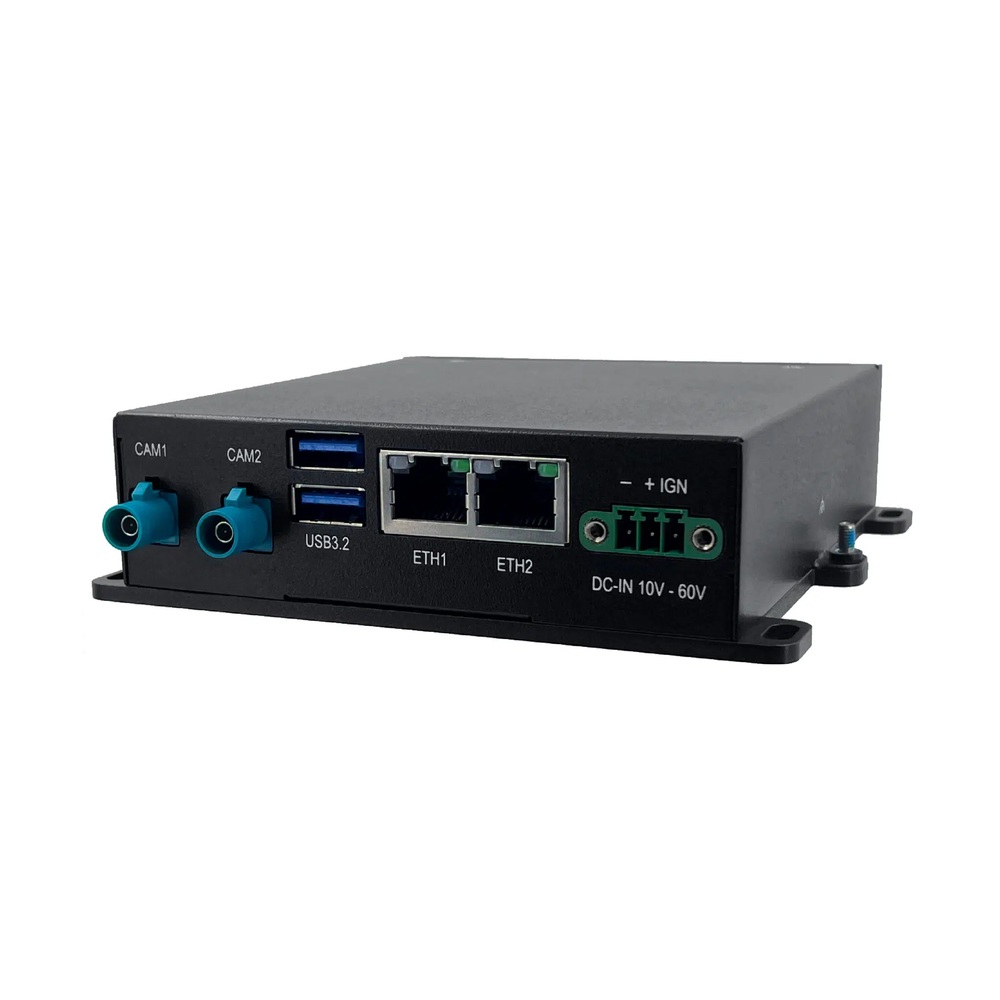
NVIDIA Jetson Orin NX 16GB Drone Computer with 2x GMSL
- AI
- 100 TOPS
- SOM
- NVIDIA Jetson Orin NX 16 GB
- Cameras
- 2× GMSL
NVIDIA Jetson Orin NX 8GB Drone Computer with 2x GMSL
- AI
- 70 TOPS
- SOM
- NVIDIA Jetson Orin NX 8 GB
- Cameras
- 2× GMSL
NVIDIA Jetson Orin Nano 8GB Drone Computer with 2x GMSL
- AI
- 40 TOPS
- SOM
- NVIDIA Jetson Orin Nano 8 GB
- Cameras
- 2× GMSL
Specification highlights
| Specification | Sintrones iBOX-604-G2 |
|---|---|
| Module | NVIDIA Jetson Orin NX 16 / 8 GB, Orin Nano 8 GB |
| AI performance | Up to 100 TOPS |
| Weight | Under 339 g, aluminium enclosure |
| Cameras | 2× GMSL2 on FAKRA |
| Networking | 1× 2.5GbE (Intel I226-IT), 1× GbE |
| Flight-controller link | CAN FD, 1× RS-232/422/485, 3.3 V UART |
| I/O | 2× USB 3.2, HDMI, USB Type-C recovery |
| Storage and wireless | M.2 2242 NVMe; M.2 Key B with dual SIM for WWAN; M.2 Key E for Wi-Fi and Bluetooth |
| Power | 10–60 V DC (3S to 14S), ignition detection, over-current, over-voltage, surge and reverse-polarity protection |
| Environment | −25 to 55 °C with 0.6 m/s airflow (−25 to 50 °C on Orin NX 16 GB); MIL-STD-810H shock and vibration |
| Software | JetPack 6.2 or later |
| Compliance | CE, FCC Class A, UKCA, IEC 62368-1 |
The Orin NX 16 GB build is rated to 50 °C, five degrees below the 8 GB models, so payload-bay temperatures are worth checking at the design stage.
A closer look
-
01

Lightweight drone computer
The iBOX-604-G2 in its compact aluminium enclosure, with flanges for mounting to the airframe.
-
02
Camera and power panel
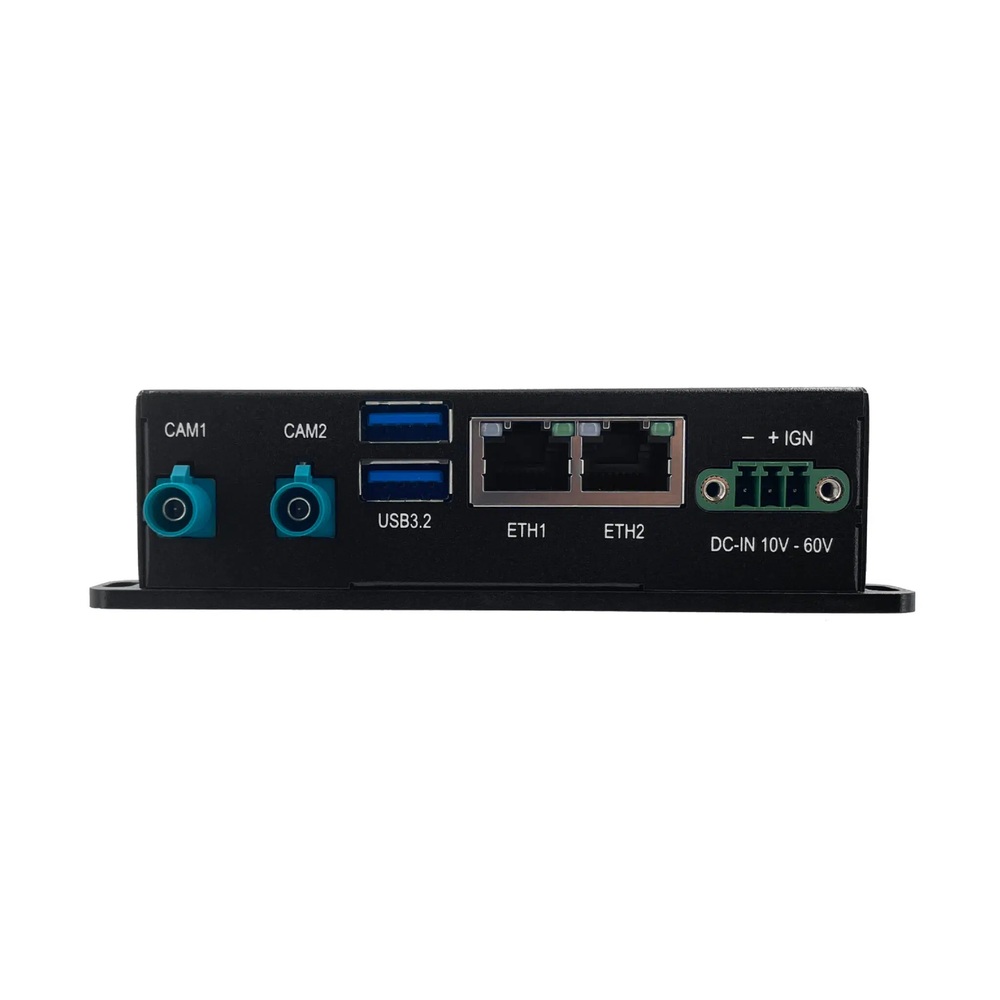
Two FAKRA GMSL2 camera inputs, two USB 3.2, two Ethernet ports and the 10–60 V DC input with ignition.
-
03
Flight-controller panel
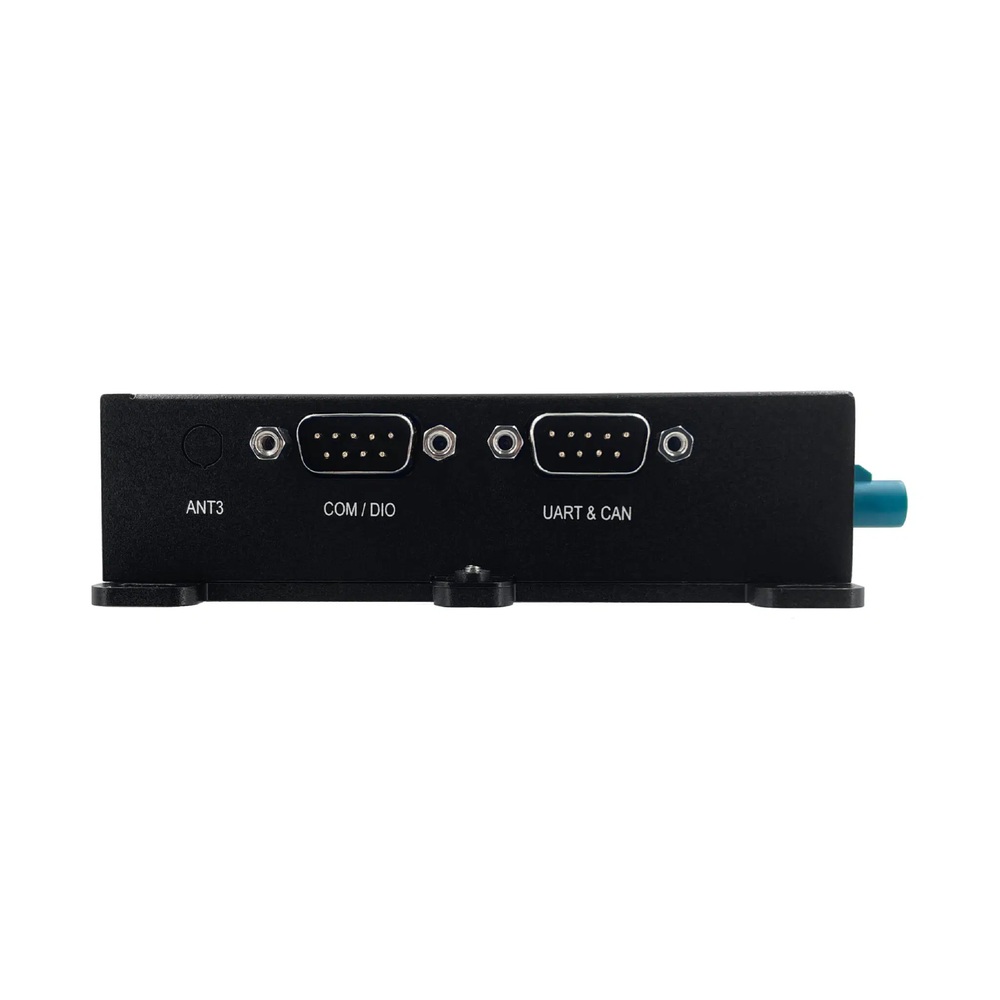
Serial and DIO, and a combined UART and CAN connector for the link to the flight controller.
-
04
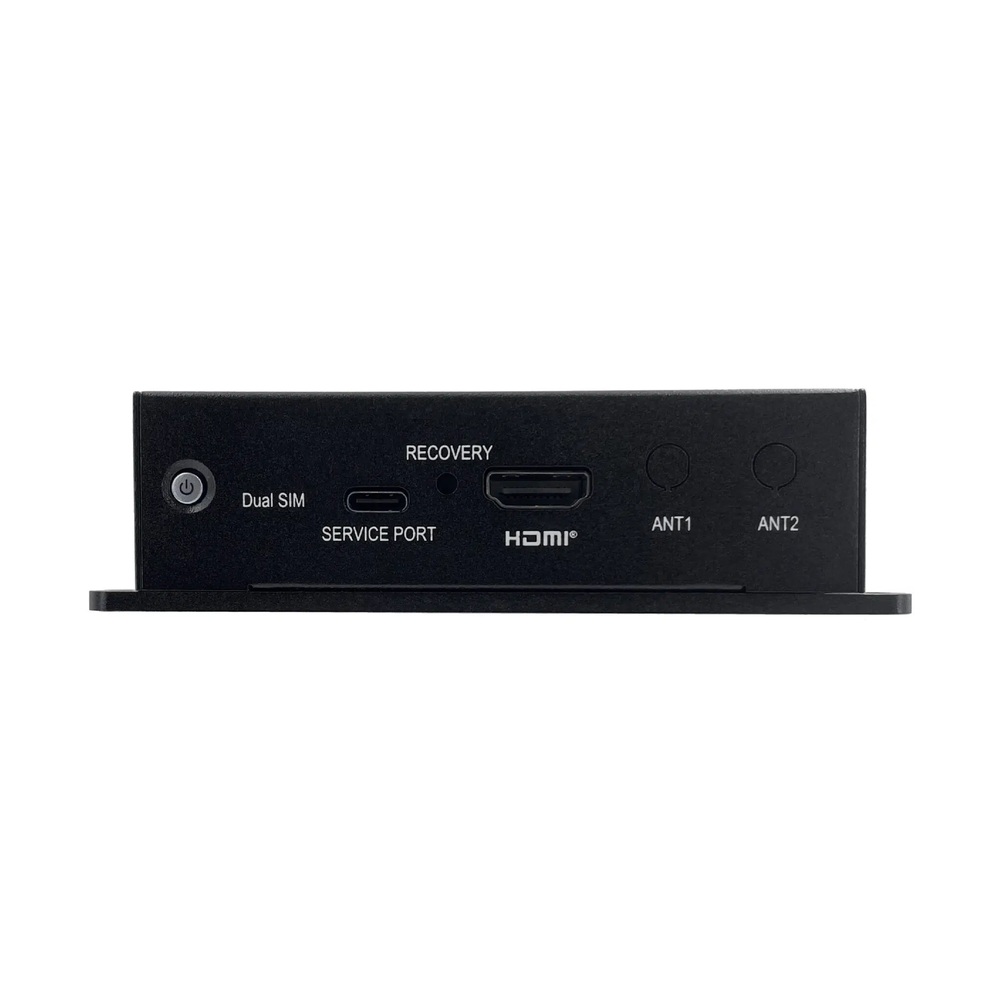
Service panel
Dual SIM, USB Type-C service port, recovery, HDMI and antenna connections.
Where the iBOX-604-G2 fits
Drones and mobile platforms that need to see and decide onboard, within a tight weight and power budget.

Survey and mapping
Survey, inspection and mapping drones running a sized vision model, with a GNSS receiver on USB.
Depth and avoidance
ZED X stereo cameras on GMSL2 for depth perception and obstacle avoidance.
Read answer
Detection and tracking
Onboard detection and tracking on two camera feeds, the core of many ISR payloads.
Read answer
Cellular data link
Dual-SIM WWAN over M.2 Key B to send results back to the ground.

Ground robots
The same I/O and battery input suit ground robots, with ignition detection for vehicle-style power.
Related reading
The two GMSL2 camera inputs carry the Stereolabs ZED X stereo cameras, and the iBOX-604-G2 is made in Taiwan, which helps where country of origin and TAA compliance matter. For the wider picture, see our guide to choosing a Jetson companion computer for drones and how a Jetson connects to a flight controller. Our other recent drone launch, the Neousys FLYC-300 drone mission computer, fills the same role on a Jetson Orin NX.
iBOX-604-G2 FAQs
-
What Is a Drone Companion Computer?
A drone companion computer is a small AI computer that runs alongside the flight controller on a UAV. The flight controller flies the aircraft; the companion computer does the thinking — running computer vision and AI to give the drone autonomy such as obstacle avoidance, navigation, and object detection. NVIDIA Jetson is the common choice because it delivers high AI performance at a weight light enough to fly.
-
How Does a Jetson Connect to a Flight Controller?
An NVIDIA Jetson connects to a drone flight controller over a serial UART or a CAN bus, usually speaking the MAVLink protocol. The Jetson runs the autonomy software (often ArduPilot or PX4 companion software) and sends commands, waypoints, and position estimates to the flight controller, which executes them and returns telemetry.
-
Which NVIDIA Jetson Is Best for a Drone?
For most drones the NVIDIA Jetson Orin NX is the sweet spot: up to 100 TOPS of AI in a low-power, lightweight module, enough for multi-camera vision and autonomy. The lighter Orin Nano suits simpler payloads. The choice ultimately depends on the AI workload, the weight budget, and the flight time.
-
What Is SWaP-C?
SWaP-C stands for size, weight, power and cost. It is the design trade-off used in defence and aerospace to judge equipment for platforms with tight limits, such as drones and vehicles, where every gram, watt and pound spent reduces endurance, payload or budget.
-
What Does ISR Mean in the Military?
In the military, ISR stands for intelligence, surveillance and reconnaissance: the collection, processing and analysis of information about an area or target to support decisions. It is carried out by satellites, aircraft, drones, ships and ground sensors.
-
Jetson Orin Nano vs Orin NX: What Is the Difference?
The Orin Nano delivers up to 67 TOPS in 7 to 25 W with 4 to 8 GB, suited to entry-level, low-power vision. The Orin NX steps up to 157 TOPS in 10 to 40 W with 8 to 16 GB, for multi-camera and heavier inference. Choose the NX when one camera or one model is not enough.
-
MIL-STD-810G vs MIL-STD-810H: What Is the Difference?
MIL-STD-810G (2008) and MIL-STD-810H (2019) are successive revisions of the US military environmental test standard. 810H is the current version; it refined and reorganised test methods and tightened guidance, but both define test methods rather than a pass or fail certificate.
Building a Jetson drone?
Tell us the airframe, the payload, and the autonomy software. We supply the iBOX-604-G2 and integrate it into a flight-ready Jetson platform.