
 UK
UK 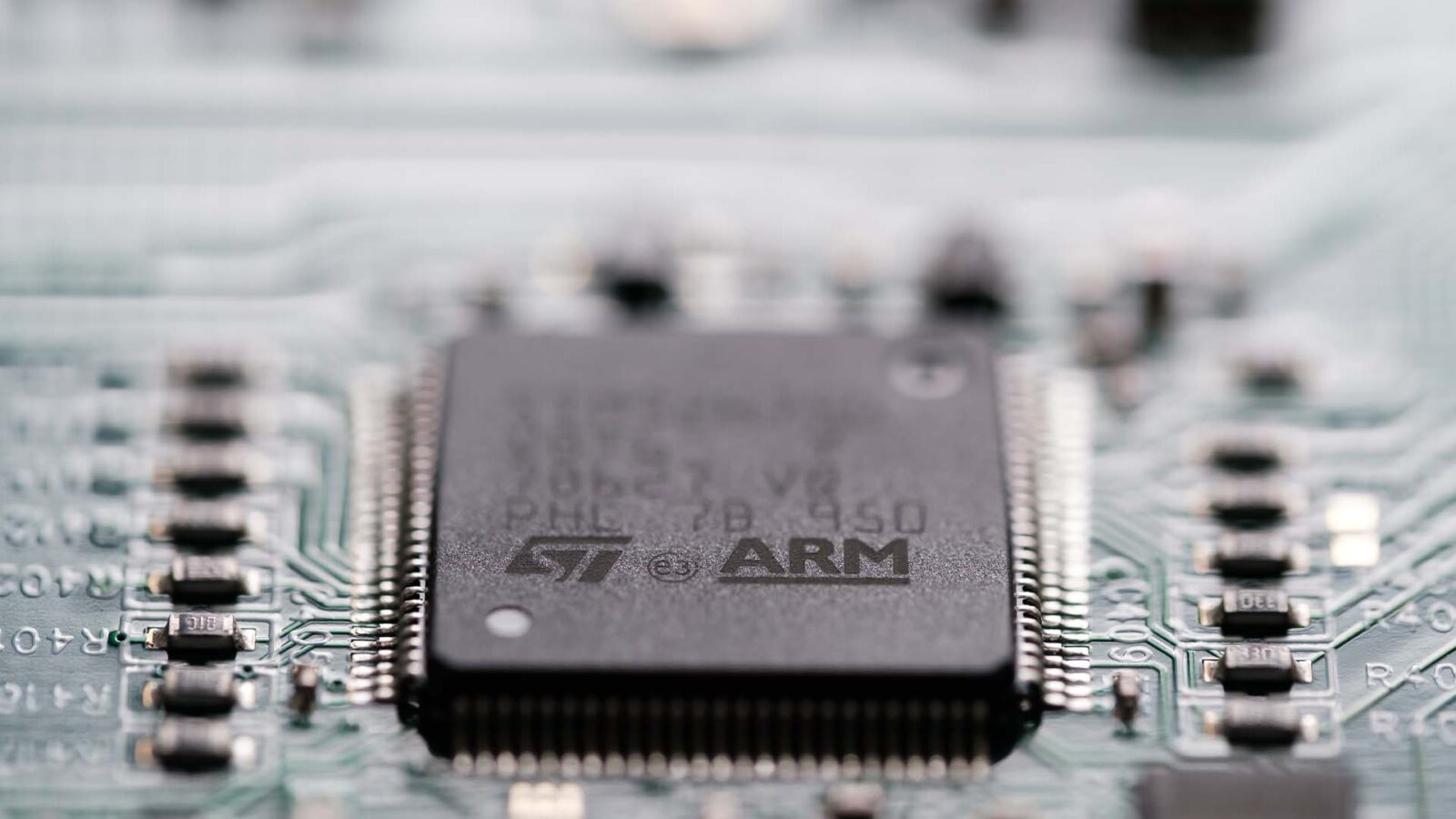
Arm Processors in Embedded and Industrial Systems
Arm is the architecture behind most low-power embedded computing — but "Arm" is not a chipmaker. This guide explains what Arm actually is, the Cortex profiles, why it suits embedded systems, and what to check when you specify one.
Arm is the processor architecture behind most low-power embedded computing — phones, gateways, controllers and a growing share of edge-AI hardware. But unlike Intel or AMD, Arm does not make chips. It is the first thing to understand about Arm, and it shapes everything else: how the processors are named, how they perform, and what you have to check before committing to one.
What "Arm" Actually Means
Arm Holdings designs CPU architectures and processor cores and licenses them to other companies — NXP, TI, Qualcomm, Rockchip, NVIDIA and many more — who build them into systems-on-chip (SoCs) alongside graphics, AI accelerators, memory controllers and I/O. So a finished “Arm processor” is really an SoC sold under a silicon vendor’s name, with an Arm core inside. Two Arm-based parts can therefore differ enormously in GPU, NPU, memory and I/O even though both are “Arm”.
The Cortex profiles
Arm cores come in three families, each aimed at a different job.

Cortex-A
Application processors that run rich operating systems such as Linux — the class used in single-board computers, gateways, HMIs and edge-AI modules.
Cortex-R
Real-time cores for deterministic, safety- and timing-critical tasks such as storage controllers and automotive systems.
Cortex-M
Microcontroller-class cores for low-power, bare-metal or RTOS embedded tasks — sensors, controllers and deeply embedded devices.
Why Arm Suits Embedded
Arm’s strength is efficiency and integration. The cores deliver strong performance per watt, so designs run cooler and can be fanless, sealed or battery-powered. Because the CPU, GPU, AI accelerator and I/O sit together on one SoC, Arm platforms are compact and highly integrated — ideal for space-constrained and power-constrained systems. That same integration is why edge-AI modules such as NVIDIA Jetson pair an Arm CPU with a GPU in a single module.
Arm vs x86, and What to Check
The choice between Arm and x86 usually comes down to power and integration (Arm) against software compatibility and raw performance (x86) — our guide to x86 vs Arm covers it in full. When you do specify an Arm platform, the SoC and its software support matter as much as the CPU core: check the SoC vendor, the CPU core family, the board support package and Linux or real-time OS support, the I/O, industrial temperature options and the lifecycle. A capable Arm SoC with poor long-term software support is a risk for a long-life design.
Where This Fits
Our NVIDIA Jetson range is the Arm platform we see most for industrial edge AI — an Arm CPU paired with an NVIDIA GPU and run through the JetPack software stack. For the wider picture of how Arm sits against the other families, see our guide to CPU generations and embedded processors. Tell us the workload, power budget and software, and we will recommend the right platform.
Considering an Arm Platform?
Tell us the workload, the power and size budget and the software it must run, and we will recommend an Arm or x86 platform to suit — and supply it.