
 UK
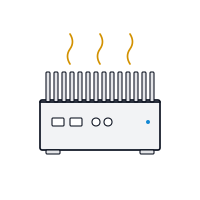
Rugged chassis with fanless cooling
A dustproof, fanless enclosure and solid-state design resist shock and vibration, with low power draw and reliable thermal management. Preventing collisions and minimising downtime keeps operating costs down.
Your Quote List ()

A leading provider of material handling equipment, from electric forklifts and pallet jacks to reach trucks and AGVs, asked us for a rugged fanless PC with built-in AI processing. Its vehicles serve retail, warehousing and distribution customers, and the next step was smarter, safer autonomy on the smart factory floor.
The computer had to run real-time AI for pedestrian avoidance and route navigation, on a vehicle, in a dusty building full of shock and vibration. It is the kind of system we supply for logistics and warehousing and factory automation.
Smart factories change layout and traffic constantly. Legacy detection systems struggle with that, raising false alarms or missing hazards, which costs time and creates risk. Autonomous vehicles need real-time AI inference to watch their surroundings, avoid collisions and adapt as conditions change.
A discrete GPU could provide the AI, but it brings high power draw and fans for cooling, and a vehicle exposes both to constant shock, vibration and dust. NVIDIA Jetson Orin NX offers another route, with up to 100 TOPS at 10–25 W in a module that runs inside a sealed, fanless chassis.
| Factor | Discrete GPU | Jetson Orin NX |
|---|---|---|
| Power draw | High, needs a large supply | 10–25 W |
| Cooling | Fans and airflow | Fanless, through the chassis |
| Shock, vibration and dust | Fans and slots are weak points | Solid-state, sealed design |
| AI performance | Very high, at a cost in power and heat | Up to 100 TOPS |
Without a fan, heat leaves through the chassis itself; our explainer on how a fanless PC works covers the thermal design.
A rugged fanless Jetson Orin NX computer from Premio (formerly C&T Solution); the 4× PoE+ build suits camera and LiDAR-equipped vehicles.
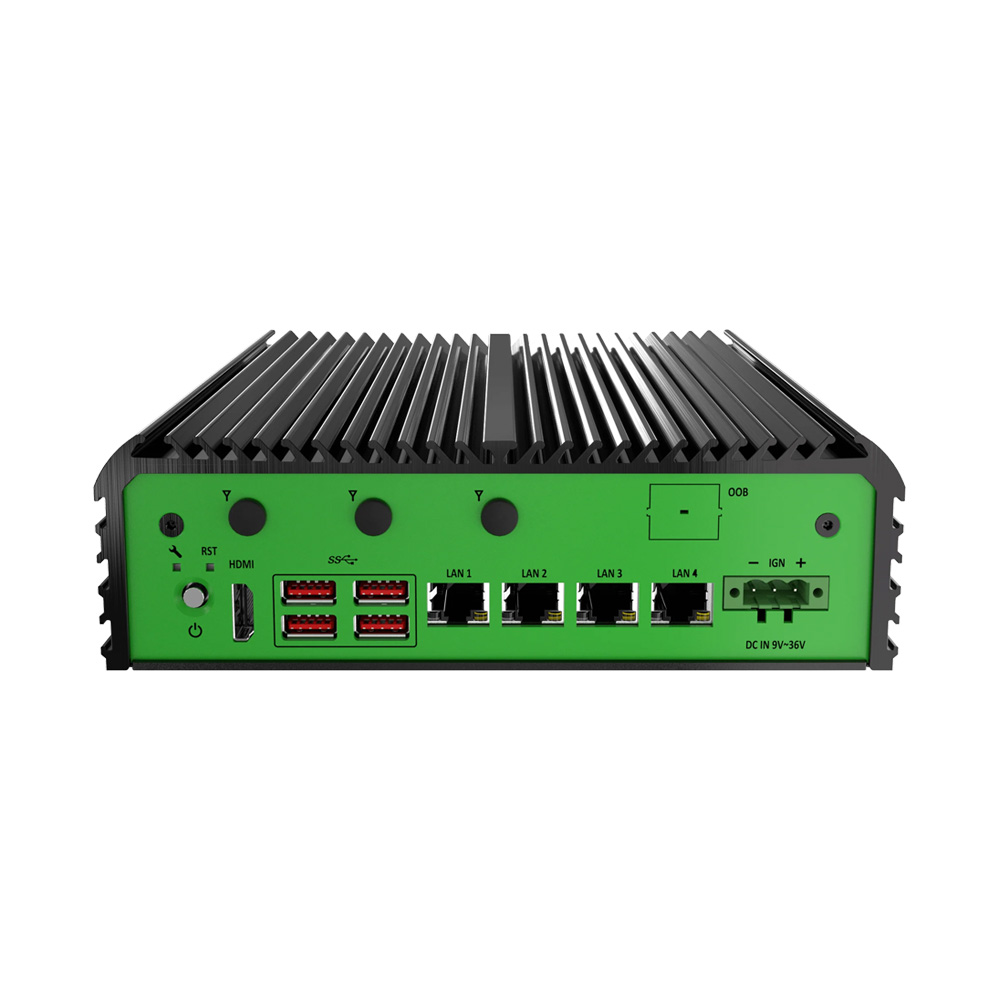
NVIDIA Jetson Orin NX/Nano Rugged Edge AI Computer with 4x PoE+ GbE
NVIDIA Jetson Orin NX or Orin Nano Fanless Edge AI Computer with 4x Gigabit LAN
Three features matched the customer’s criteria for deployment across its vehicle range.
A dustproof, fanless enclosure and solid-state design resist shock and vibration, with low power draw and reliable thermal management. Preventing collisions and minimising downtime keeps operating costs down.

Four Gigabit Ethernet ports with Power over Ethernet power and connect the cameras and LiDAR sensors on each vehicle over one cable, with the bandwidth for real-time processing.

Allxon out-of-band management lets administrators monitor, diagnose and recover systems remotely, even when the main system is offline, cutting site visits and downtime across distributed fleets.
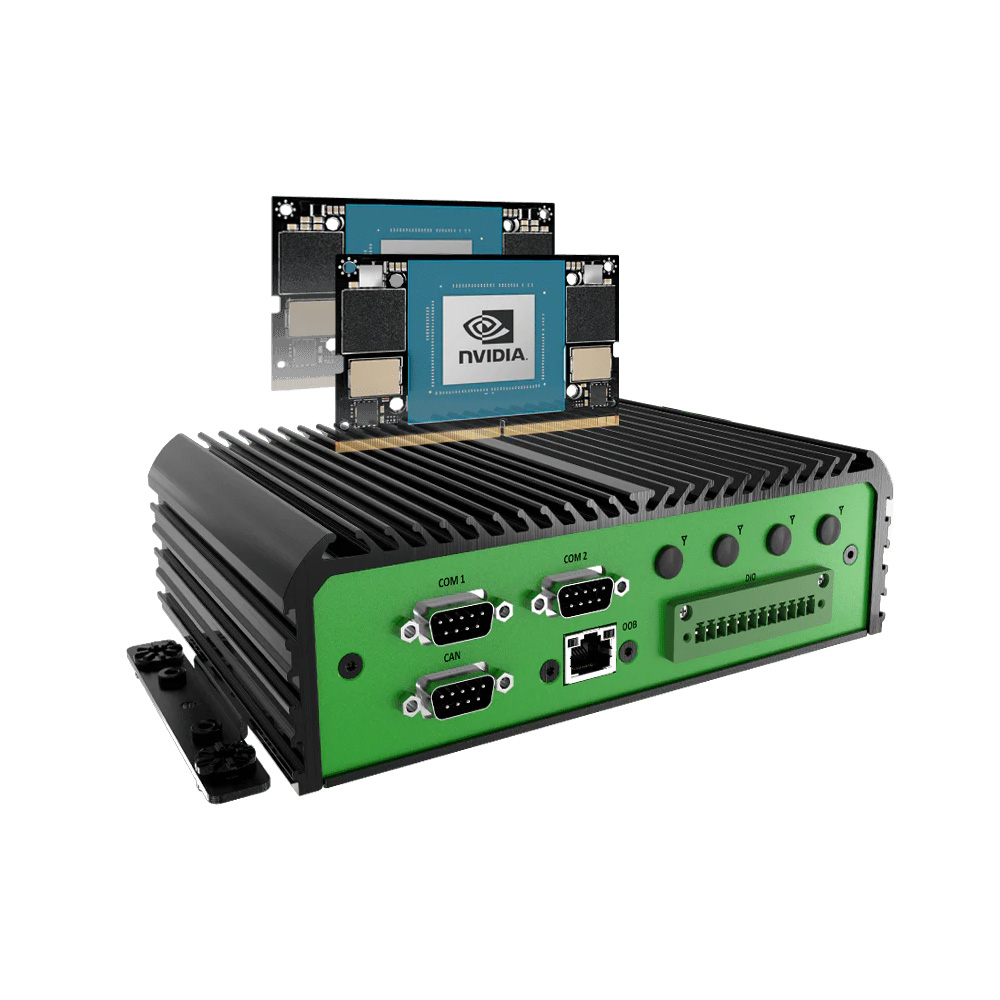
The Jetson Orin NX computer built for edge AI on vehicles.
View range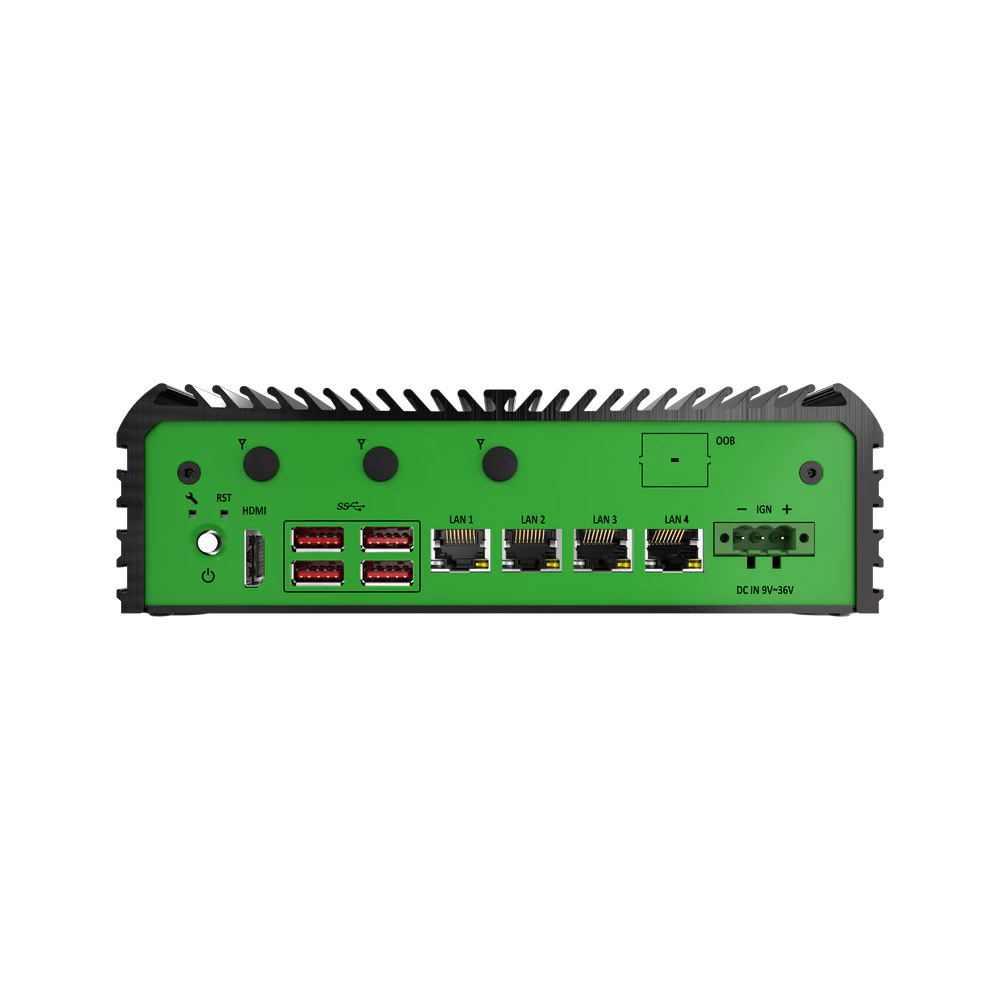
Power and data for cameras and LiDAR over single cables.

Remote monitoring and recovery for distributed systems.
View rangeWith the JCO-3000 onboard, the customer's autonomous vehicles see and adapt in real time.
AI object detection spots people around the vehicle as it moves, promoting workplace safety.
Imaging data processed on the vehicle lets it adapt to shifting layouts and traffic patterns.
Preventing collisions and minimising downtime reduces operating costs for the customer's clients.
Out-of-band management resolves issues without travelling to each site.
A pedestrian detection system uses sensors on a vehicle, such as AI cameras, radar, LiDAR or worker-worn tags, to spot people nearby and warn the operator or slow and stop the vehicle. In cars it supports automatic emergency braking. On forklifts and AGVs it reduces collisions in busy warehouses and factories.
An AGV (automated guided vehicle) follows fixed routes marked by magnetic tape, wires, reflectors or floor codes, and stops when something blocks its path. An AMR (autonomous mobile robot) builds a map of its surroundings with sensors and plans its own route, steering around people and obstacles. AGVs suit stable, repetitive routes; AMRs suit changing layouts.
An AGV (automated guided vehicle) is a driverless vehicle that moves materials around factories and warehouses along predefined routes, guided by wires, magnetic tape, lasers or floor markers. Common types include tow tractors, load carriers, automated forklifts and pallet jacks. AGVs take repetitive transport jobs off people and repeat the same route reliably, shift after shift.
Out-of-band (OOB) management is a way to control a device remotely through a separate channel that does not depend on its main operating system or network. It lets administrators power-cycle, monitor and recover a computer even when it has crashed or gone offline, without a site visit.
Fanless computers cool themselves passively, through a finned heatsink chassis and heat pipes, instead of a fan. With no moving parts and no airflow drawing in dirt, they are more reliable in dusty or vibrating places, silent, low maintenance and easy to seal, which is why they are the standard choice for industrial and embedded use.
The Jetson Orin Nano delivers up to 67 TOPS in 7 to 25 W with 4 to 8 GB of memory, suited to entry-level, low-power vision. The Orin NX steps up to 157 TOPS in 10 to 40 W with 8 to 16 GB, adds deep learning accelerators and a hardware video encoder, and handles multi-camera, heavier inference.
Tell us about your application and a member of the team will get right back to you.