
 UK
UK 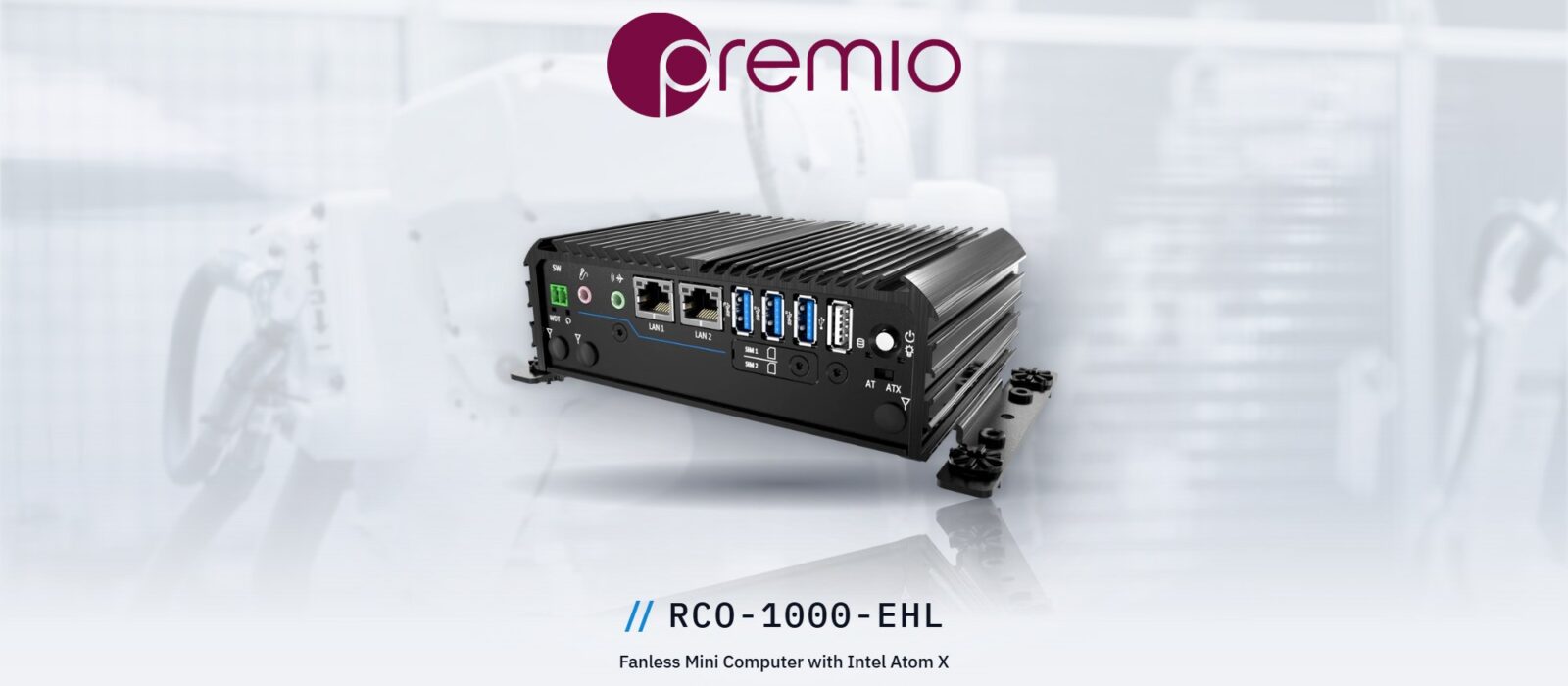
Premio RCO-1000-EHL: a rugged Intel Atom mini PC with modular I/O
Designed with rugged reliability at a competitive price point, the low-power Intel Atom mini PC is an outstanding choice for edge computing and IIoT deployments. From remote monitoring and automation to complex data processing, the RCO-1000-EHL series delivers the expandability and connectivity you need.
The Premio RCO-1000-EHL is a fanless rugged mini PC built on the Intel Atom x6425E, rated from −40 to 70 °C and designed to comply with MIL-STD-810H for shock and vibration. We supply it for industrial IoT and edge sites where a small computer has to run unattended in cabinets, kiosks and outdoor enclosures.
Premio (formerly C&T Solution) builds the RCO-1000-EHL series in three housings, with one, two or three EDGEBoost I/O brackets. The base I/O is the same across all three, so the choice comes down to how many extra serial, USB, display or digital I/O ports the project needs, now and later.
The step up from the Celeron J1900
The RCO-1000-EHL replaces the Intel Celeron J1900 used in the previous generation. The Elkhart Lake Atom x6425E moves from a 22 nm to a 10 nm process and gives up to 60% more overall performance within a 12 W TDP.
| Measure | Atom x6425E against the J1900 |
|---|---|
| Process | 10 nm against 22 nm |
| Single- and multi-threaded performance | Up to 2.3× faster |
| Graphics | Intel UHD Graphics, up to 5× faster rendering |
| Maximum memory | 32 GB DDR4, 4× the J1900 |
Intel’s IoT roadmap gives the processor a 15-year product lifecycle, which matters for deployments that need the same build for many years.
For a newer processor again, the RCO-1000-ASL series takes the same EDGEBoost approach with Intel Atom x7433RE and x7835RE (Amston Lake) processors, and our full range of rugged mini PCs covers other platforms.
RCO‑1000-EHL builds
Three housings on the same board: the -10 with one EDGEBoost bracket, the -20 with two and the -30 with three.
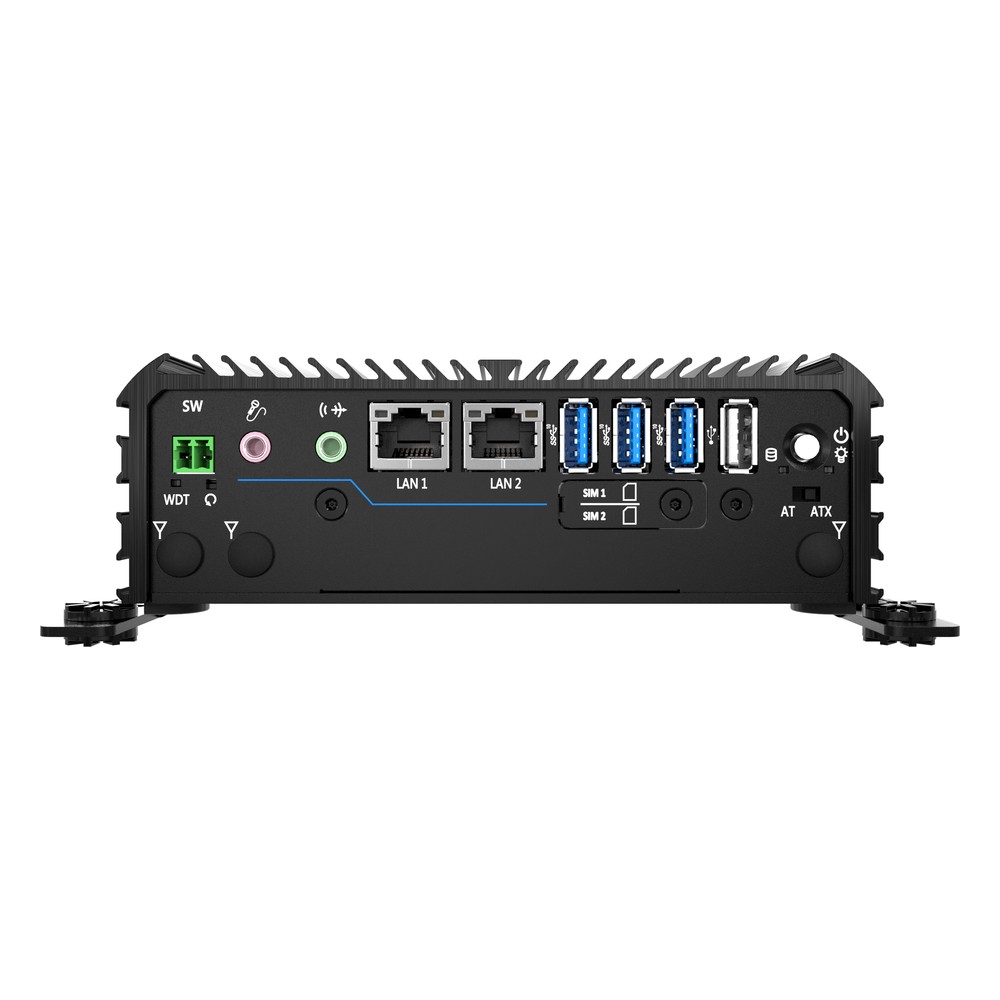
Intel Atom x6425E Rugged Mini PC with EDGEBoost I/O, 2.5GbE and -40 to 70 °C
- CPU
- Intel Atom x6425E (Elkhart Lake)
- Ethernet
- 1× 2.5GbE, 1× GbE
- Temp
- −40 to +70 °C
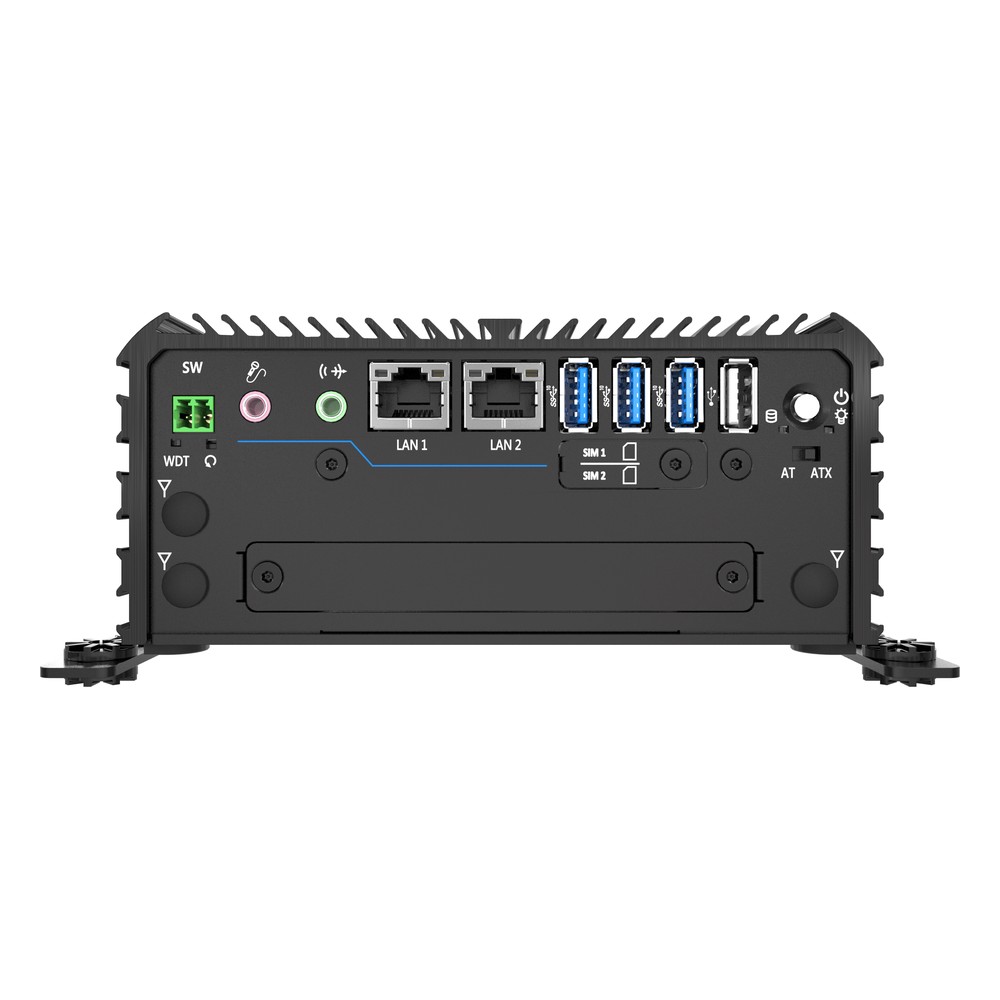
Intel Elkhart Lake Atom x6425E Rugged Mini PC with Expandable EDGEBoost I/O and Extended Temperature
- CPU
- Intel Atom x6425E (Elkhart Lake)
- Ethernet
- 1× 2.5GbE, 1× GbE
- Temp
- −40 to +70 °C
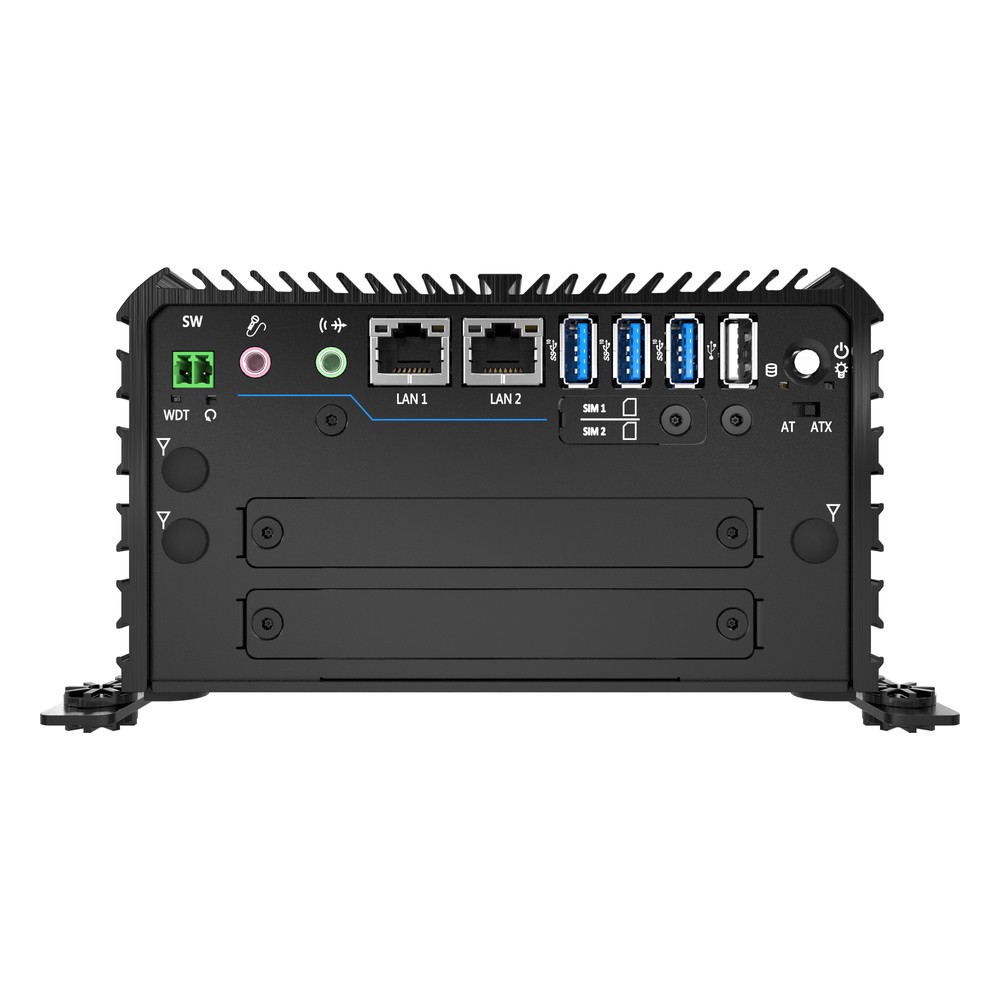
Intel Elkhart Lake Atom x6425E Rugged Mini PC with Multi-Module EDGEBoost I/O and CAN Bus
- CPU
- Intel Atom x6425E (Elkhart Lake)
- Ethernet
- 1× 2.5GbE, 1× GbE
- Temp
- −40 to +70 °C
What the RCO-1000-EHL brings
- 0112 W Elkhart Lake processor
- A quad-core Intel Atom x6425E with Intel UHD Graphics and up to 32 GB of DDR4 memory, cooled passively.
- 02EDGEBoost modular I/O
- One, two or three brackets for COM, USB, HDMI 2.0 or DisplayPort with isolated DIO modules.
- 03Wide temperature and power
- Rated −40 to 70 °C, with a 9–36 V DC input and over-voltage, over-current and reverse protection.
- 04Cellular ready
- An M.2 B key socket for an optional 4G or 5G module, with two external SIM sockets.
- 05Mixed networking and fieldbus
- 2.5GbE and GbE ports, two RS-232/422/485 ports and two CAN 2.0 A/B channels as standard.
Three housings, one board
-
01

RCO-1000-EHL-10
The most compact housing, with one EDGEBoost I/O bracket for an optional module.
View range -
02
RCO-1000-EHL-20
The mid-size housing, with two EDGEBoost brackets for extra COM, USB or display ports.
View range -
03
RCO-1000-EHL-30
The largest housing, with three EDGEBoost brackets for projects that mix serial, USB, display and digital I/O.
View range
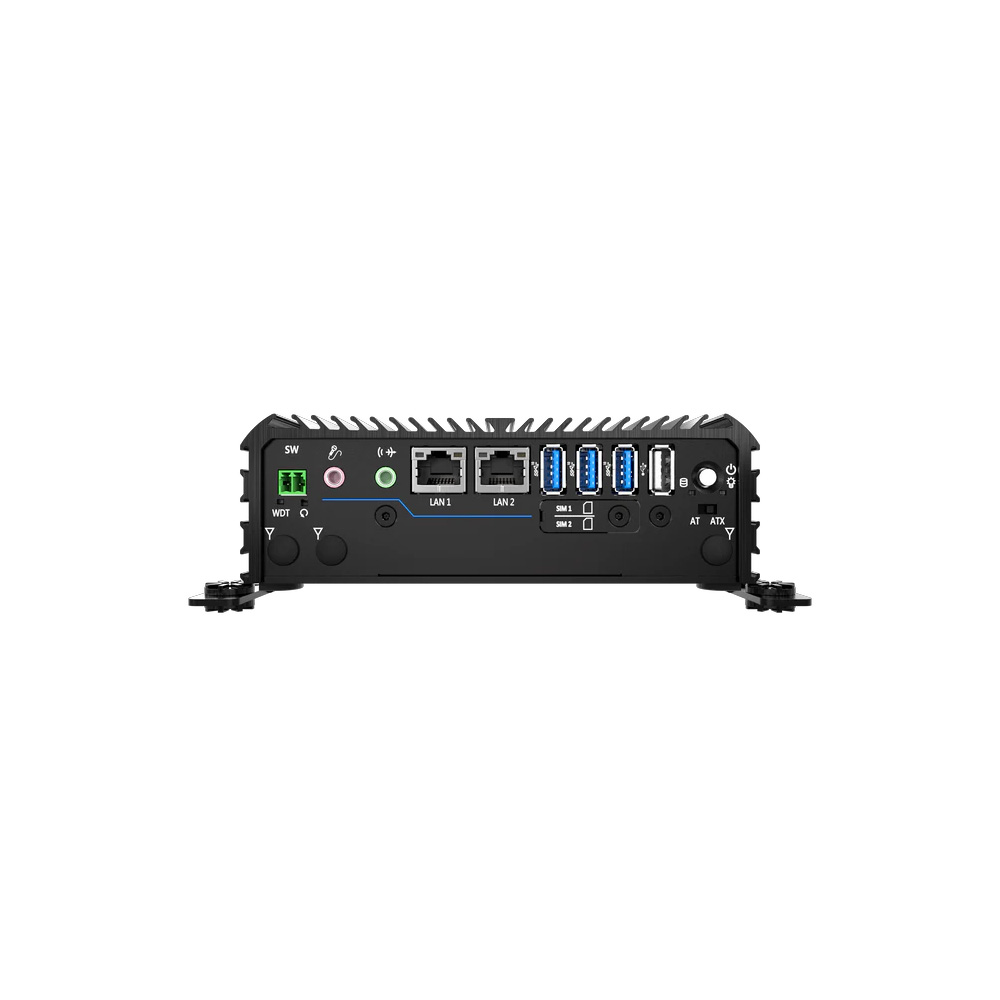
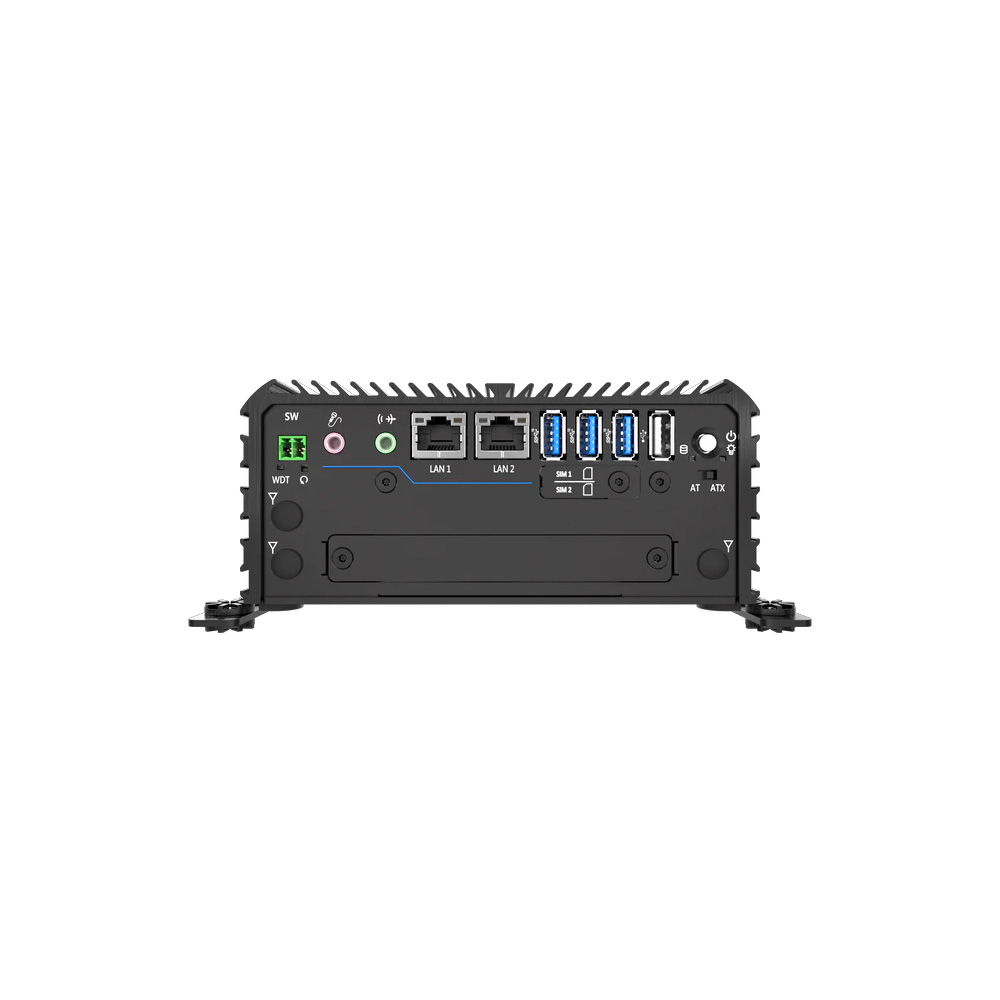
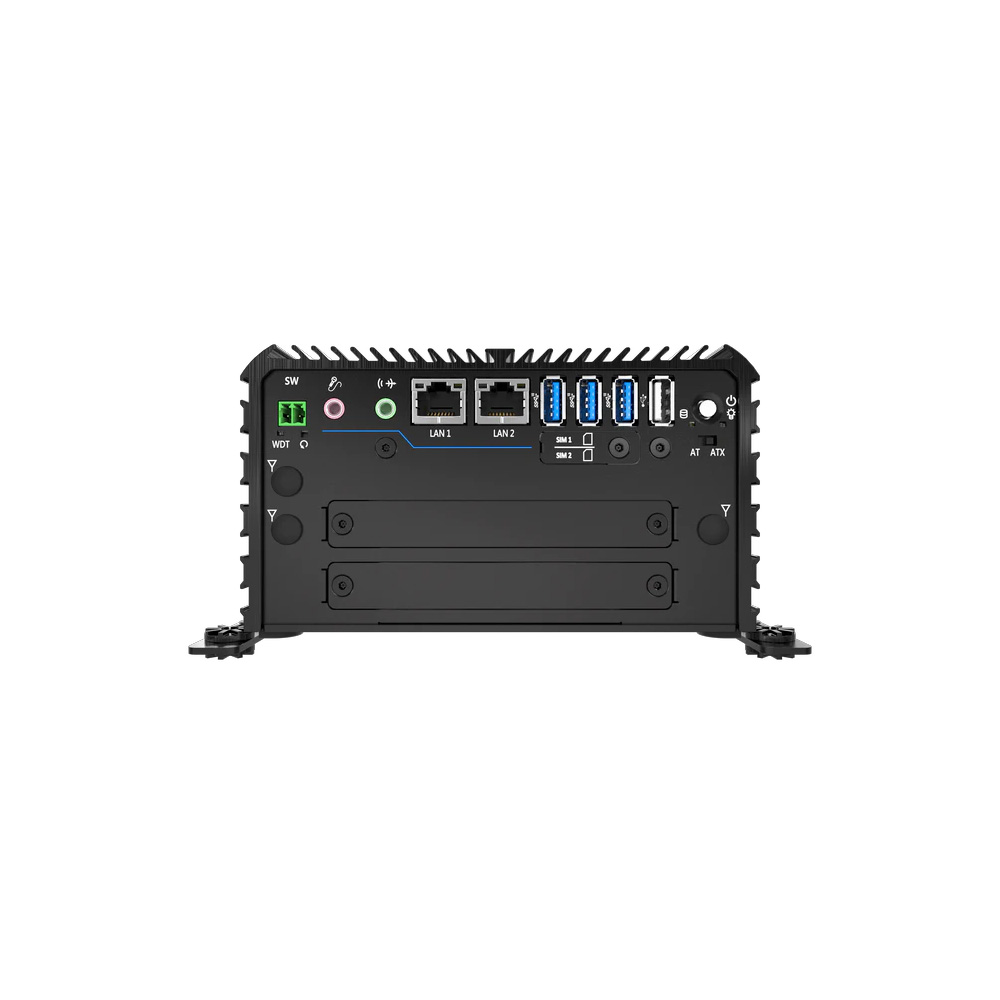
Expandable EDGEBoost I/O
EDGEBoost brackets sit on Premio’s PCIe 3.0-based expansion architecture. Each one takes a module: a two-port COM, a four-port USB, an HDMI 2.0 output, or a DisplayPort with isolated DIO. The -20 and -30 housings can take up to two COM modules, which is how the -20D and -30C builds reach six COM ports.
Pre-fitted builds cover the common combinations: the -10A adds a DisplayPort and DIO module, the -10B a COM module, and the RCO-1000-X6425E-30-2P adds two PoE ports. Adding I/O this way avoids a change of computer when a project grows from prototype to production.
Whichever housing you choose, a wall-mount kit comes in the box, with side, VESA and DIN rail kits available for cabinet and panel installations. We fit the modules, memory, storage and any 4G or 5G modem, load the Windows 11 or Linux image with the I/O drivers, and test each system before it ships.
Where the RCO-1000-EHL fits
Industrial IoT sites where a small, fanless computer has to collect, process and send data without maintenance.
Remote monitoring and telemetry
4G or 5G with two SIM sockets keeps data moving from remote and unmanned sites.
Read guide
Control cabinets
DIN rail mounting, CAN, serial and isolated DIO connect machines and controllers inside the cabinet.

Outdoor enclosures
Passive cooling and a −40 to 70 °C rating suit unheated kiosks, cabinets and roadside boxes.
Read guide
Mobile equipment
A 9–36 V DC input with optional ignition management and MIL-STD-810H shock and vibration design.
Dual 4K displays
Two DisplayPort 1.4 outputs at 4K 60 Hz for monitoring screens, analytics dashboards and signage.
Light edge AI
The -10 and -20 builds are ready for an optional Hailo-8 AI module for on-site inference.
Read guideRCO-1000-EHL FAQs
-
What Are the Advantages of Fanless Computers?
Fanless computers cool themselves passively, through a finned heatsink chassis and heat pipes, instead of a fan. With no moving parts and no airflow drawing in dirt, they are more reliable in dusty or vibrating places, completely silent, low maintenance and easy to seal, which is why they are the standard choice for industrial and embedded use.
-
What Is the Industrial Temperature Range?
The industrial temperature range is −40 to 85 °C: the grade an electronic component must operate across to be called industrial, compared with 0 to 70 °C for commercial parts. Rugged computers built from industrial-grade components typically run from −25 or −40 °C up to 70 °C as a complete system.
-
M.2 vs mSATA vs mPCIe — what’s the difference?
Three expansion formats sharing a similar look but with very different capabilities. M.2 has displaced both mSATA and mPCIe on new industrial designs — here's why, and what the trade-offs are.
-
Is 2.5GbE fast enough for edge AI?
Sufficient for lightweight workloads — single-camera inference, gateway aggregation — but usually insufficient for multi-camera analytics, multi-sensor fusion, or multi-node edge AI clusters.
-
MIL-STD-810G vs MIL-STD-810H: What Is the Difference?
MIL-STD-810G (2008) and MIL-STD-810H (2019) are successive revisions of the US military environmental test standard. 810H is the current version; it refined and reorganised test methods and tightened guidance, but both define test methods rather than a pass or fail certificate.
-
What is M.2 keying and why does it matter?
M.2 sockets carry up to 67 pins, but only certain interfaces are wired to certain pins. Physical key notches enforce which modules can install in which sockets — preventing electrical incompatibility before procurement.
Need a rugged Intel Atom mini PC?
Send us the application, the deployment environment, and the lifecycle expectation. We'll come back with a platform recommendation, a BOM, and a service stack matched to it.