
 UK
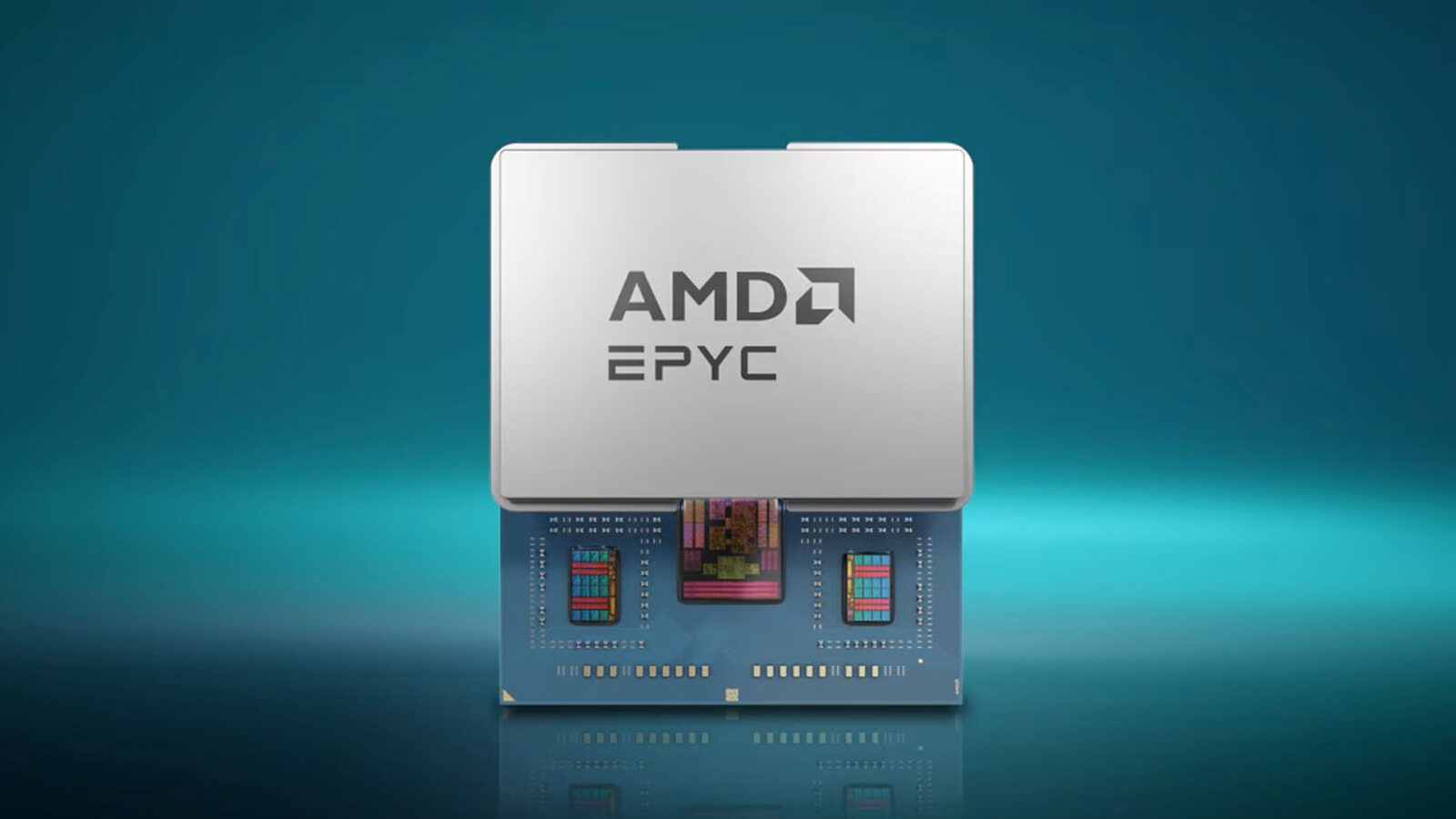
AMD EPYC 8004 for Edge Servers: EPYC Embedded 8004 (Siena) Explained
An edge server brings server compute out of the data centre and close to where data is created. AMD EPYC 8004, codenamed Siena, was built for that: up to 64 cores, six-channel DDR5 and 96 PCIe 5.0 lanes in a single-socket, power-efficient design.
EPYC 8004 is AMD’s single-socket server processor family, codenamed Siena, with up to 64 Zen 4c cores, six channels of DDR5 memory and 96 lanes of PCIe 5.0 in a power range that starts well below AMD’s full data-centre parts. AMD followed it with an EPYC Embedded 8004 series, which brings the same design to long-life industrial and edge systems, so the family has become a common choice for edge servers.
An edge server is a server installed close to where data is created, on the factory floor, in a vehicle depot, at a cell site or in a retail back room, rather than in a central data centre or the cloud. The same name is also used for the content delivery servers that cache web pages near users; this guide is about the on-site kind. Our explainer on what an edge server is and how it differs from an edge gateway covers the wider picture.
The challenge is delivering server compute within the space, power and thermal budget a site allows. This guide sets out the EPYC 8004 specification, what the embedded versions add, how it compares with EPYC 4004 and 9004, with Intel Xeon and with Ryzen Embedded, and how it is built into edge servers for AI, analytics and consolidation.
Key takeaways
- 01Built for power-limited sites
- Up to 64 dense Zen 4c cores at roughly 70 to 225 W, where the larger EPYC 9004 parts start around 200 W.
- 02Single socket, SP6
- One processor per board keeps the motherboard, cooling and power simpler than a dual-socket server.
- 03Room for GPUs
- 96 PCIe 5.0 lanes leave space for two or more GPUs, NVMe drives and fast networking.
- 04Six-channel DDR5 ECC
- Registered ECC memory, typically hundreds of gigabytes, for in-memory analytics and large models.
- 05Embedded versions for long life
- EPYC Embedded 8004 adds a longer availability commitment and embedded features.
EPYC 8004 at a glance
The table summarises the EPYC 8004 platform from AMD’s published specifications. Individual processors differ in core count, clocks and power.
| Feature | EPYC 8004 (Siena) |
|---|---|
| Cores | 8 to 64 Zen 4c cores, two threads each |
| Process | 5 nm core dies with a separate I/O die |
| Socket | SP6 (LGA 4844), single-socket only |
| Memory | Six channels of DDR5-4800 registered ECC (RDIMM) |
| PCIe | 96 lanes of PCIe 5.0, with CXL 1.1+ support on a subset |
| Power | About 70 to 225 W across the range, with configurable TDP on many parts |
| Versions | Standard P parts, PN parts for wider-temperature telecom and edge sites, and EPYC Embedded 8004 |
| Launched | Standard parts 2023; EPYC Embedded 8004 2024 |
Zen 4c is a compact version of AMD’s Zen 4 core. It runs the same instructions with the same features, including AVX-512, but uses less silicon and less power per core in return for lower peak clocks. That suits edge servers, where many threads at moderate speed are worth more than a few very fast ones. Our explainer on PCIe 5.0 explains what the lane count means for GPUs and NVMe drives.
What does EPYC Embedded 8004 add?
AMD’s embedded label on EPYC usually means the same silicon as the standard part with commitments that matter to equipment makers. The EPYC Embedded 8004 series has six models; ServeTheHome’s launch coverage noted a 12-core model that can be configured down to 70 W, which brings a 96-lane PCIe 5.0 processor into the power range of a compact, short-depth edge chassis.
| EPYC 8004 (P) | EPYC 8004 (PN) | EPYC Embedded 8004 | |
|---|---|---|---|
| Silicon | Siena, Zen 4c | Siena, Zen 4c | Siena, Zen 4c |
| Target | Cloud, enterprise and edge servers | Telecom and edge sites needing a wider temperature range | Networking, storage, industrial and edge equipment |
| Availability | Standard server lifecycle | Standard server lifecycle | Longer production availability for equipment makers |
| Embedded features | Standard | Standard | Features such as non-transparent bridging, DRAM flush to storage on power loss and dual SPI ROM, per AMD’s embedded product brief |
| Typical buyer | Server builders | Telecom equipment makers | OEMs who need a fixed design for many years |
For an edge project, the embedded version matters when the same server has to be built for several years, or certified once and supplied unchanged. Where the project is a single deployment, a standard 8004 part in a long-life edge chassis is often enough. How long computers last in the field is a separate question from how long a processor stays on sale, and both belong in the specification.
What makes an edge server different?
An edge server is not a shrunk data-centre rack. It has to deliver real server capability, with many cores, plenty of ECC memory and room for accelerators, within a footprint and power envelope that suits an industrial cabinet, a roadside enclosure or a small equipment room, often with limited cooling and with long-life availability. That rules out consumer parts and full data-centre processors alike.
| Data-centre server | Edge server | |
|---|---|---|
| Location | Cooled, filtered machine hall | Plant room, cabinet, depot, vehicle or cell site |
| Form factor | Full-depth 1U to 4U rack | Short-depth rack, wall-mount, mid-tower or rugged box |
| Power | Redundant AC, high per-rack budgets | Limited AC, or a DC supply from a vehicle or site battery |
| Temperature | Tightly controlled | Often 0 to 40 °C or wider, with dust and vibration |
| Management | Staffed on site | Remote, through a BMC with IPMI or Redfish |
| Lifecycle | Refreshed every few years | Expected to run unchanged for many years |
Remote management is not optional at an unstaffed site. A baseboard management controller lets an engineer power-cycle the server, update firmware and read sensors over the network, which is why every EPYC 8004 edge server in our range includes one.
What an edge server does
Bringing server compute to the edge unlocks workloads that a small edge device cannot handle and the cloud is too far away for.

Real-time analytics
Process data where it is generated, with low latency and no round trip to the cloud.
AI inference
Run several AI models, or heavier vision pipelines, on site rather than upstream.
Data aggregation
Collect, filter and store data from many edge devices before any of it goes to the cloud.

Consolidation
Run several workloads or virtual machines on one resilient server, replacing a rack of smaller ones.
EPYC 4004 vs 8004 vs 9004 for edge servers
AMD’s EPYC range spans three sockets. The 8004 sits between the desktop-socket 4004 and the full data-centre 9004, and that middle position is why it suits the edge.
| EPYC 4004 / 4005 | EPYC 8004 | EPYC 9004 / 9005 | |
|---|---|---|---|
| Socket | AM5 | SP6 | SP5 |
| Cores | Up to 16 | 8 to 64 (Zen 4c) | Up to 96 Zen 4, 128 Zen 4c; more on 9005 |
| Memory channels | 2 × DDR5 | 6 × DDR5 | 12 × DDR5 |
| PCIe 5.0 lanes | 28 | 96 | 128 |
| Power | About 65–170 W | About 70–225 W | About 200–400 W and above |
| Sockets per server | One | One | One or two |
| Typical edge role | Compact servers and appliances, one GPU | Edge AI servers with two or more GPUs, telecom and storage | Rugged HPC and large GPU servers |
The question people most often ask, EPYC 4004 or 8004, comes down to memory and lanes rather than cores. A 16-core EPYC 4004 or 4005 on an AM5 board is a good fit for a compact appliance with one GPU and moderate memory. Once the server needs two full GPUs, several NVMe drives, fast networking and hundreds of gigabytes of memory, the six channels and 96 lanes of the 8004 make the difference. Our AMD EPYC range covers all three sockets, from AM5 boards to dual-socket GPU servers.
AMD has since launched the EPYC 8005 series, codenamed Sorano, as the next step for this market, and EPYC 9005 (Turin) has replaced 9004 at the top. EPYC 8004 remains a current choice for edge designs, particularly in its embedded form.
Is EPYC 8004 better than Xeon for edge servers?
Neither is better in every case; they are designed with different balances. Intel’s edge server processors integrate more networking and acceleration on the chip, while EPYC 8004 offers more cores and PCIe lanes per socket. The table compares the families most often weighed against it.
| AMD EPYC 8004 | Intel Xeon D-2800 | Intel Xeon 6 SoC | Intel Xeon 6 with E-cores | |
|---|---|---|---|---|
| Cores | 8–64 Zen 4c | Up to 22 | P-cores; count varies by model | Many E-cores per socket |
| Memory | 6 × DDR5 | 4 × DDR4 | DDR5, several channels | 8 or 12 × DDR5 |
| Integrated extras | None beyond the CPU and I/O | Integrated Ethernet and crypto acceleration | Integrated Ethernet, media and vRAN acceleration | Focus on core density |
| Package | Socketed, SP6 | Soldered BGA | Soldered BGA | Socketed |
| Typical edge fit | GPU edge AI servers, consolidation | Compact network and security appliances | Telecom, vRAN and network edge | Dense cloud-style workloads |
In practice the choice is usually made by the rest of the system: whether the workload needs GPUs and memory bandwidth, which favours EPYC 8004, or integrated network and telecom acceleration in a small soldered-down package, which favours Xeon D or Xeon 6 SoC. Software licensed per core is another factor, as a 64-core part can raise licence costs.
EPYC vs Ryzen Embedded at the edge
AMD covers the edge with two embedded lines. Ryzen Embedded suits compact, graphics-capable edge devices and edge AI nodes, and the Ryzen Embedded 8000 parts add an NPU for on-device inference. EPYC Embedded steps up to server core counts, memory and reliability for heavier consolidation, virtualisation and multi-stream AI.
| Ryzen Embedded (V3000, 8000) | EPYC Embedded 8004 | |
|---|---|---|
| Cores | Up to 8 | Up to 64 |
| Memory | Two channels, SO-DIMM, up to 96 GB on current boards | Six channels, RDIMM, hundreds of gigabytes |
| Graphics and AI | Radeon graphics and an NPU on 8000; no graphics on V3000 | No integrated graphics; GPUs added in PCIe 5.0 slots |
| Power | About 10–54 W | About 70–225 W |
| Typical system | Fanless box PC, DIN rail PC, Mini-ITX board | Edge AI server, mid-tower or short-depth rack |
The rule of thumb: choose Ryzen Embedded for an edge device and EPYC for an edge server.
Edge AI and other EPYC 8004 workloads
The 96 PCIe 5.0 lanes are what make EPYC 8004 attractive for edge AI servers. Two GPUs at x16 each use only a third of them (our guide to PCIe generations sets out the bandwidth per lane), leaving lanes for U.2 or M.2 NVMe storage, 10GbE or faster network cards and capture cards. Typical uses include:
- Video analytics: decoding and analysing tens of camera streams on site, with a GPU such as the NVIDIA L4 for AI inference
- Local language models: running a local LLM or vision-language model on one or two large GPUs where data cannot leave the site
- Consolidation: replacing several PCs with virtual machines for SCADA, historians, MES and security tools on one server
- Telecom and private networks: core and edge functions for a private 5G network on site
- Data aggregation: collecting and filtering data from many edge devices before it is sent upstream
A worked example: a site running 32 camera streams through two inference GPUs needs CPU cores to decode, track and log the results, memory to buffer them, and storage for recordings. A 24-core EPYC 8224P with 192 GB of RDIMM memory, two GPUs and four U.2 drives fits that within one server, where an AM5 system would run short of lanes and memory channels.
Power, cooling and site requirements
EPYC 8004 makes server compute practical at the edge, but a 160 W processor plus two GPUs still needs planning.
| Requirement | What to check | Example from our range |
|---|---|---|
| Cooling | Processor and GPU power against the chassis airflow at the highest ambient | A standard heatsink for processors up to 180 W at 40 °C, with a larger cooler for higher-power parts |
| Power input | AC mains, or a DC supply on vehicles and remote sites; an industrial UPS to ride through outages | 16–50 V DC on one build and 90–240 V AC on its sibling |
| GPU power | Total budget for the cards, not just the slot count | An 1,800 W budget shared by two PCIe 5.0 x16 slots |
| Temperature | Operating range of the whole server, not the processor | A fan-cooled design rated −25 to 45 °C |
| Management | BMC with IPMI or Redfish for remote access | AST2600 BMC on a dedicated management port |
Memory is the other choice to make early. EPYC 8004 uses registered ECC RAM, so it is fitted in full-size DIMMs rather than the SO-DIMMs used in compact PCs; our explainer on DIMM vs SO-DIMM covers the difference. Filling all six channels gives the full memory bandwidth.
Edge server ranges
Server and GPU computer ranges for edge sites.
Rack mount servers
Short-depth and full-depth rack servers for edge rooms and cabinets.
View range
Industrial GPU computers
Box and tower systems with full-size GPU slots for AI and vision.
View range
Rugged GPU computers
Sealed and vibration-rated GPU systems for vehicles and harsh sites.
View range
Server motherboards
Boards for building EPYC and Xeon servers into your own chassis.
View range
Edge AI computers
Edge AI systems from compact NPU PCs to multi-GPU servers.
View range
AMD
Every AMD processor family we supply, from Ryzen Embedded to EPYC.
View rangeEPYC 8004 edge servers in our range
Two edge AI servers on the 24-core EPYC 8224P, in DC and AC builds, and a mid-tower GPU server for EPYC Embedded 8004 processors up to 64 cores.
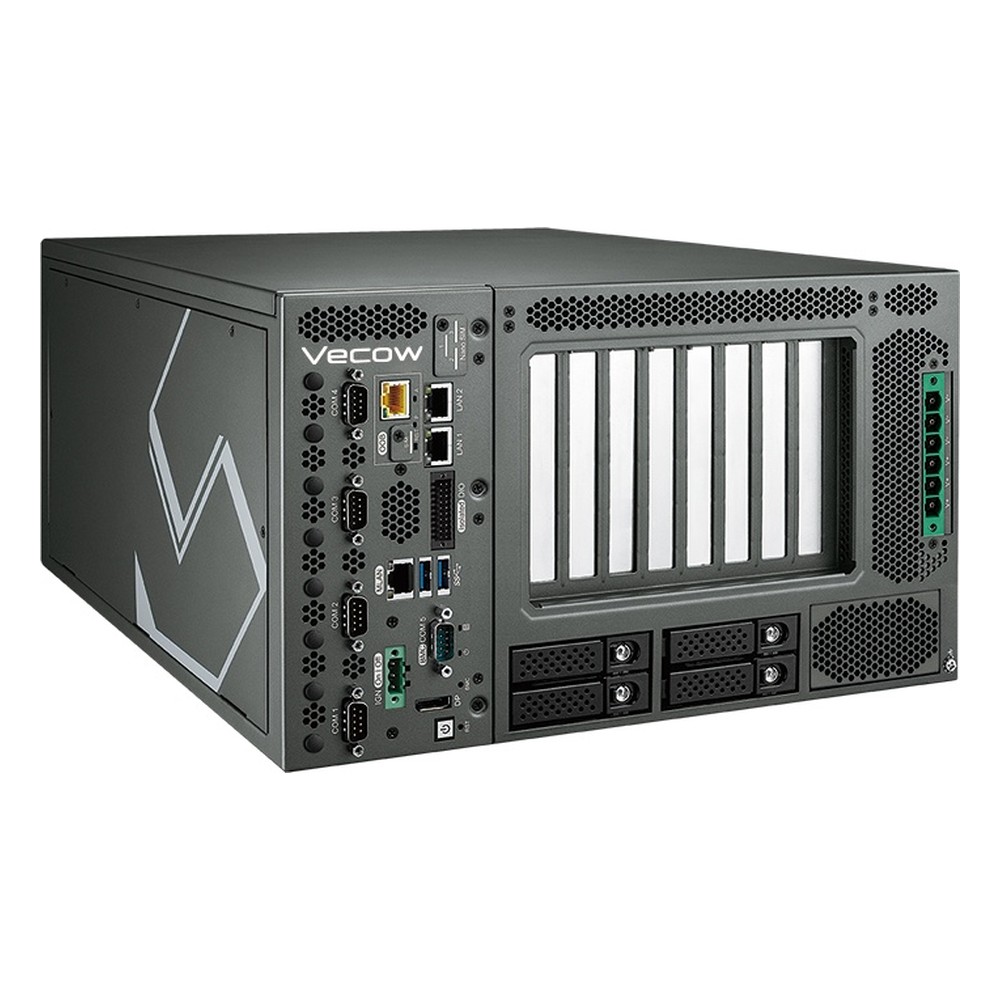
AMD EPYC 8224P Edge AI Server with Dual PCIe 5.0 x16, BMC Management and Wide Temperature
- CPU
- AMD EPYC 8004 (Siena)
- Ethernet
- 2× GbE
- Temp
- −25 to +45 °C
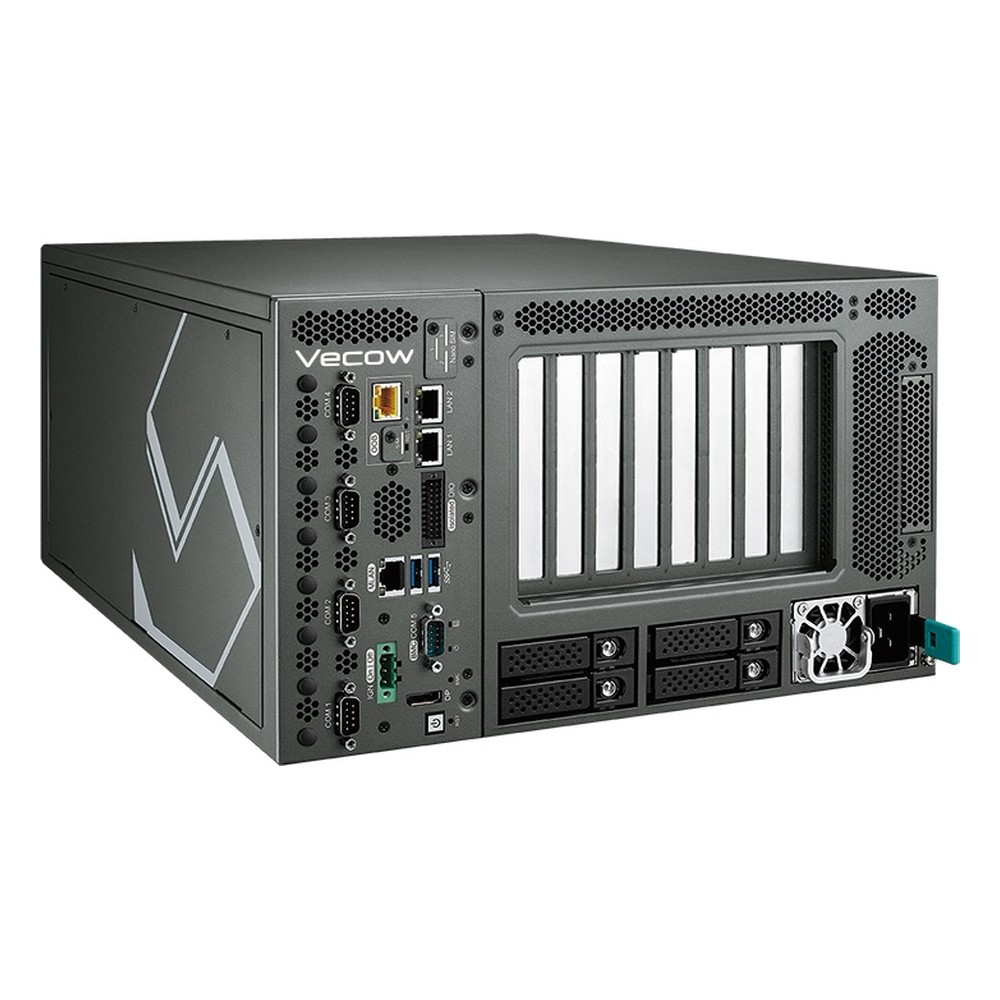
AMD EPYC 8004 Siena Edge AI Server with Dual PCIe 5.0 x16, Four U.2 Bays and 90-240V AC
- CPU
- AMD EPYC 8004 (Siena)
- Ethernet
- 2× GbE
- Temp
- −5 to +45 °C
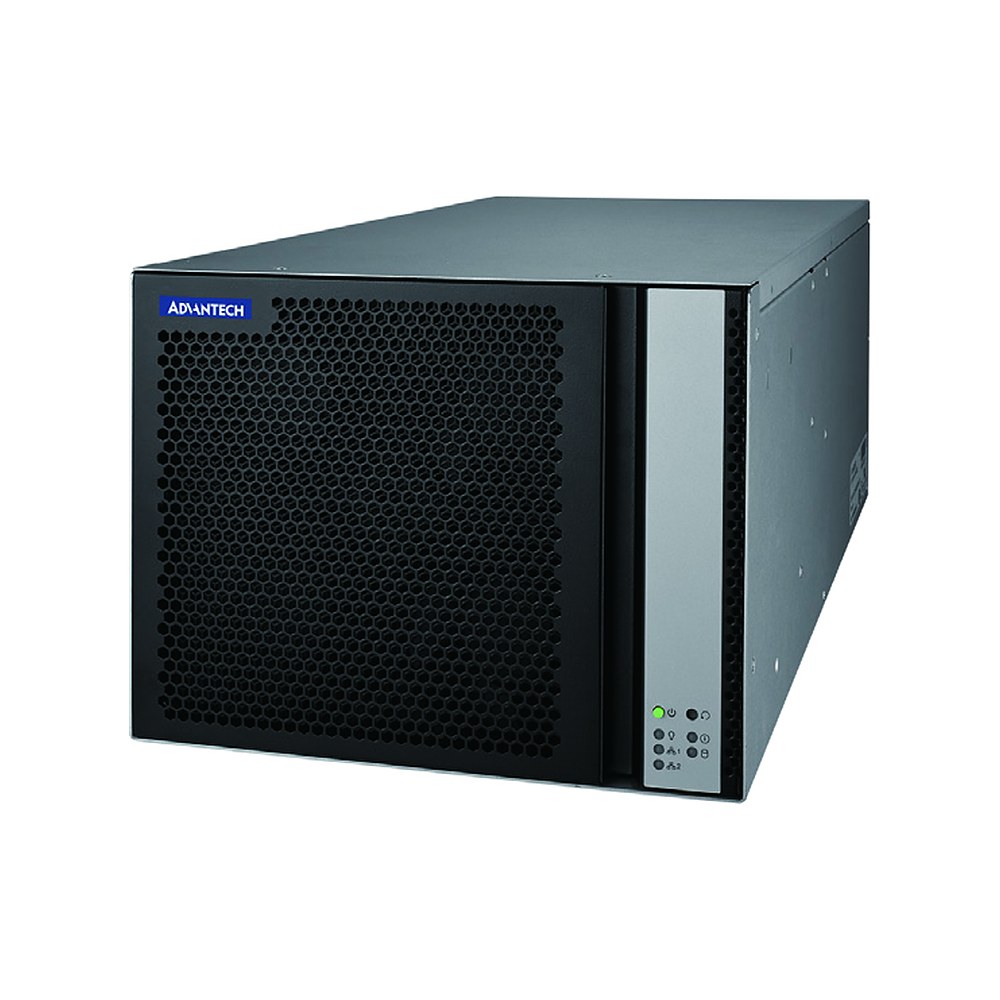
AMD EPYC Embedded 8004 Mid-Tower GPU Server with Four Double-Width GPU Slots and Dual 10GbE
- CPU
- AMD EPYC Embedded 8004 (Siena)
- GPU
- NVIDIA RTX PRO 2000 Blackwell
- AI
- 142–3,511 TOPS
Configured for the site
We build every EPYC edge server to its workload and its site: processor and memory sized to the models and streams, GPUs matched to the power budget, BMC set up for your network, and Linux or Windows Server imaged with the drivers, container runtime and your software. Each server is tested under load before it ships. Our guide to CPU generations and embedded processors covers the wider processor choice if you are still weighing the options.
Specifying an EPYC 8004 edge server
Seven questions that size the server.
-
01
Workload
Which models, streams, VMs or databases will it run, and how many at once?
-
02
GPUs
How many GPUs, of what power, and do they need full x16 links?
-
03
Memory
How much RDIMM memory, and will all six channels be filled?
-
04
Storage
How many NVMe drives, U.2 or M.2, and is RAID needed?
-
05
Power
AC or DC input, and what total budget is available at the site?
-
06
Environment
What is the highest ambient temperature, and is the room filtered?
-
07
Lifecycle
Must the same build be supplied for years, so that EPYC Embedded 8004 is the better fit?
EPYC 8004: common questions
Quick answers
What is AMD EPYC 8004?
AMD’s single-socket server processor family codenamed Siena. It has up to 64 Zen 4c cores, six DDR5 channels and 96 PCIe 5.0 lanes at roughly 70 to 225 W, aimed at edge, telecom and efficient servers.
What is the difference between EPYC 8004 and 9004?
Scale and power. EPYC 9004 uses the SP5 socket with up to 128 cores, 12 memory channels and 128 lanes at higher power; 8004 uses SP6 with up to 64 cores, six channels and 96 lanes.
What socket does EPYC 8004 use?
SP6. SP6 is an LGA 4844 socket for single-processor boards.
How many PCIe lanes does EPYC 8004 have?
96 lanes of PCIe 5.0. A subset supports CXL 1.1+ for memory expansion.
Is EPYC better than Xeon for edge servers?
It depends on the workload. EPYC 8004 offers more cores and lanes for GPU and memory-heavy work; Xeon D and Xeon 6 SoC integrate networking and telecom acceleration in smaller packages.
What is EPYC Embedded?
AMD’s EPYC processors for equipment makers. They match the standard parts but add longer availability and embedded features for networking, storage and industrial systems.
Edge server FAQs
-
What Is an Edge Server?
An edge server is a server installed close to where data is created or used, such as a factory, depot, shop or cell site, instead of in a central data centre or the cloud. It processes data locally for low latency and lower bandwidth. In web delivery, the term also means a CDN server that caches content near users.
-
What Is a Server?
A server is a computer, or a program running on one, that provides data, applications or services to other devices over a network. Server hardware is built to run around the clock, with error-correcting memory, redundant power and drives, and remote management, and comes in tower, rack, blade and edge form factors.
-
What Is a Baseboard Management Controller (BMC)?
A baseboard management controller (BMC) is a small, separate processor on a server or industrial motherboard that runs independently of the main CPU and operating system. Through its own network connection it lets administrators power-cycle, monitor, update and reinstall a computer remotely, even when the system has crashed or is switched off.
-
What Is a Rack Server?
A rack server is a server built in a flat, standard-width chassis that bolts into a 19-inch rack. Its height is given in multiples of the rack unit (U), where 1U is 44.45 mm, so 1U, 2U and 4U servers stack densely with shared power, cooling and cabling.
-
What Is PCIe 5.0?
PCIe 5.0 is the fifth generation of PCI Express, the link between a processor and its GPUs, NVMe SSDs and network cards. It runs at 32 gigatransfers per second per lane, about 3.9 GB/s in each direction, so an x16 slot carries roughly 63 GB/s each way. It is backwards compatible with earlier generations.
-
What Is the NVIDIA L4?
The NVIDIA L4 is a low-profile, single-slot GPU based on the Ada Lovelace architecture, with 24 GB of GDDR6 memory and a 72 W power rating. It is built for AI inference and video processing, and its low power and passive heatsink let it fit compact servers and rugged edge computers where larger GPUs will not.
-
DIMM vs SO-DIMM: What Is the Difference?
A DIMM is the full-size memory module used in desktops, servers and larger industrial boards. A SO-DIMM is the short version, about half the length, used in laptops, mini PCs and compact embedded boards. At the same DDR generation and speed they perform the same; they differ in size, pin count and slot, so they are not interchangeable.
Building an edge server?
Tell us the workload, the GPUs it needs and the site it will run in. We will recommend an EPYC or Ryzen edge system to suit, then configure, image and test it before it ships.