

PROCESSORS · AMD

Benefits of AMD Ryzen Embedded Motherboards, SBCs, and Industrial PCs

TypeWhite paper
Published5 Oct 2022
AuthorAndrew WhitehouseManaging Director
Reading time14 min

AMD has been investing heavily in the Ryzen Embedded computing sector for quite some time now. They have never lost sight of their unique “Zen” x86 SoC architecture and are using it as a foundation to drive both high-performance computing, but also low power solutions with applications across many industries including automotive, factory automation, industrial IoT, and medical.

The latest “Zen 2” x86 SoC architecture has been developed with 7nm process technology through a strategic partnership with a leader in semiconductor fabrication, Taiwan Semiconductor Manufacturing Company (TSMC). With double processing density, this has allowed for critical embedded processors that are higher performing and even more power efficient.

Intel’s decades-long success can be attributed to their in house developments but recent supply chain and demand issues slowed down innovation. AMDs strategic partnership with TSMC as one of the largest leaders in semiconductor manufacturing allowed them to develop the Zen architecture into what it is today, balancing both research and development, manufacturing at scale with rapid turnaround times, ultimately making themselves a serious competitor to Intel in the embedded market place.

With industrial-grade embedded computers, panel PCs, SBCs and motherboards incorporating the powerful AMD Ryzen Embedded processors, these chips can help deliver their potential to rugged edge applications.

Industrial Edge Platforms with Ryzen Embedded SoC

Benefits of AMD Ryzen Embedded Zen 2 SoC Architecture

Powerful Zen CPU & Vega GPU Architecture

The AMD Ryzen Embedded processors are powered by the Zen and Vega architecture. The 7nm x86 CPU, or core complex in these chips is what makes them power efficient while also delivering high performance processing for your embedded computer requirements. Additionally there’s a separate onboard GPU which provides extra graphics rendering capabilities when needed to drive up quality visuals without slowing down the PC. The SoC design combining the power of a CPU and GPU in one package offers OEMs and system integrators complete flexibility when it comes to creating their embedded applications. Whether you’re looking for more data processing or better display clarity, this feature ensures that all your needs can be met with just one System on Chip. The high-performance and power of the Ryzen Embedded processors requires less power than Intel alternatives, making them an ideal solution for harsh industrial deployment where operating temperatures are vital to system reliability. This provides embedded computer manufacturers the ability to design and manufacture powerful yet power-efficient platforms for many industrial applications at the edge.

Multi-Display Technology with UHD 4K Support

The latest AMD Ryzen Embedded SBCs can support multiple ultra-high definition 4K displays simultaneously with Radeon RX “Vega” graphics, providing an enhanced level of detail and clarity that is perfect for professional applications. This dedicated graphic performance is what sets them apart from Intel when it comes to supporting higher resolutions without sacrificing performance or requiring a dedicated graphics card. purpose-built for a variety of display-oriented applications. For many industrial applications, the display of an application can have a significant impact on how it is used. For example,  if you were viewing digital signage or casino gaming/gambling with multiple screens, optimal clarity would not be possible without high resolution graphics support.

The AMD Ryzen Embedded SBC provides a compelling solution for casino and gaming machines. Its integrated “Vega” GPU architecture enables it to display intensive 4K multimedia graphics in environments where downtime can mean the difference between lost sales or traffic, as well as power consumption savings by enabling greater processor efficiency compared with traditional CPUs alone – all without sacrificing performance.

Ruggedised for Edge Deployment

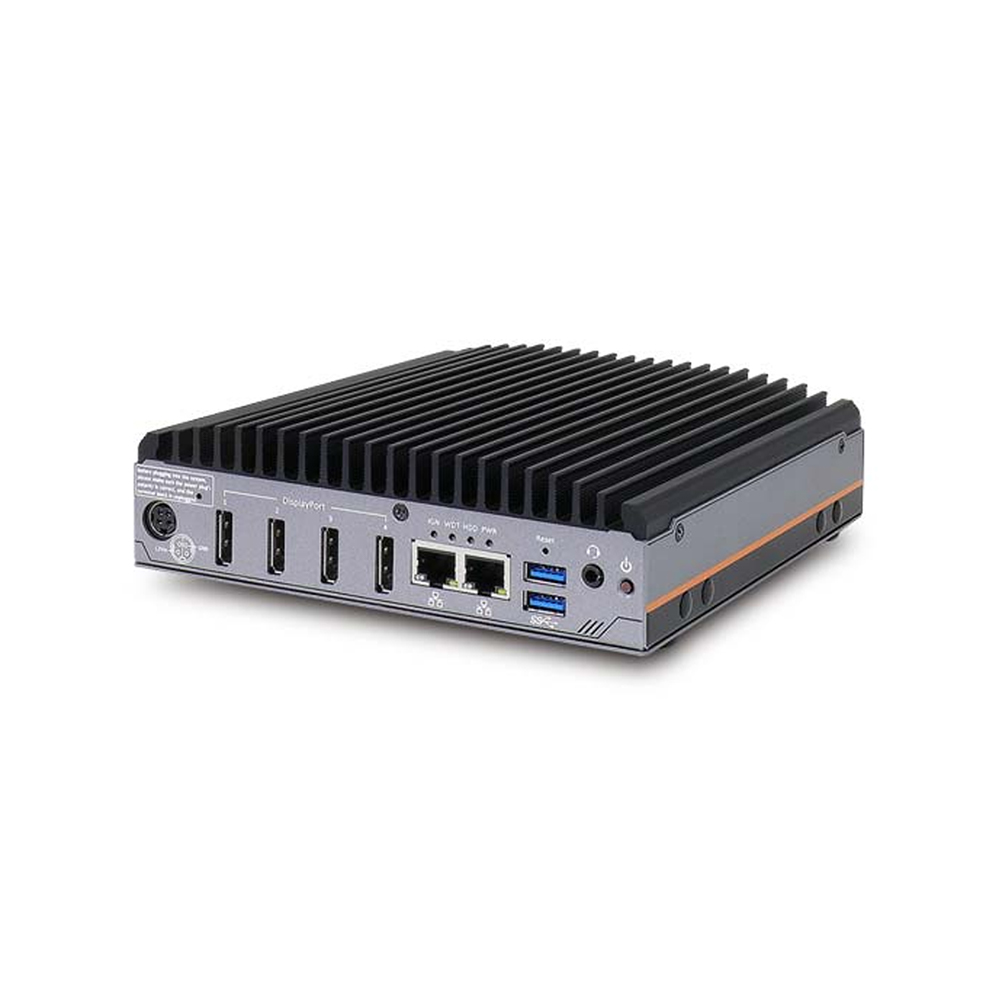
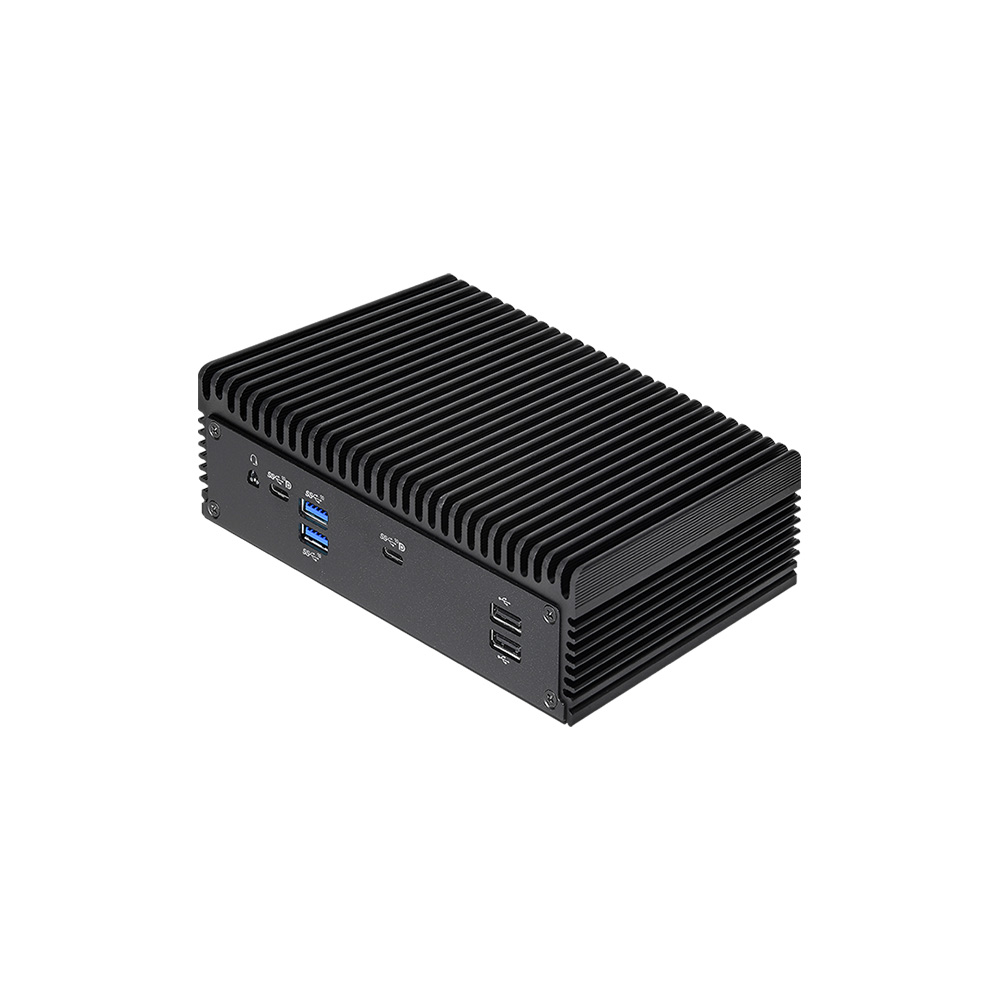
When deploying computers at the edge you face many environmental challenges such as temperature, shock and vibration which can lead to failure of mission-critical equipment. Industrial grade computers are purpose built for these harsh conditions and AMD supports their Ryzen Embedded SoCs with wide operating ranges capable of withstanding -40°C to 75 ° C. Industrial PC manufactures can choose to utilise a heatsink spreader that offers fanless passive cooling, a construction which ensures durability in even the most demanding conditions. Power protection is also included with OVP & OCP.

Embedded Roadmaps for Long Term Availability

The durability and longevity of the processor is crucial when deploying an embedded computer in the field and is something that AMD takes into consideration when designing their products. They have a 10-year lifecycle support roadmap for all embedded Ryzen processors which helps assure confidence in industrial grade deployments.

Rugged Edge Computing Built on AMD Ryzen Embedded SoC

AMD Ryzen Embedded SBCs: Single board computers have been around for years, but only recently have we seen the introduction of new technologies that make these systems more powerful and versatile in extreme compact form factors. The Zen and Zen 2 x86 SoC architecture from AMD is one such innovation as it allows designers to integrate the Ryzen compute platform into their designs with small form factor designs.

With the AMD Ryzen Embedded processors, SBC limitations have been pushed aside by higher performance in these smaller form factors. The most common of which is 3.5″ as it’s small enough to be deployed virtually anywhere with adequate space for mission-critical I/O that enables real time data processing and analysis.

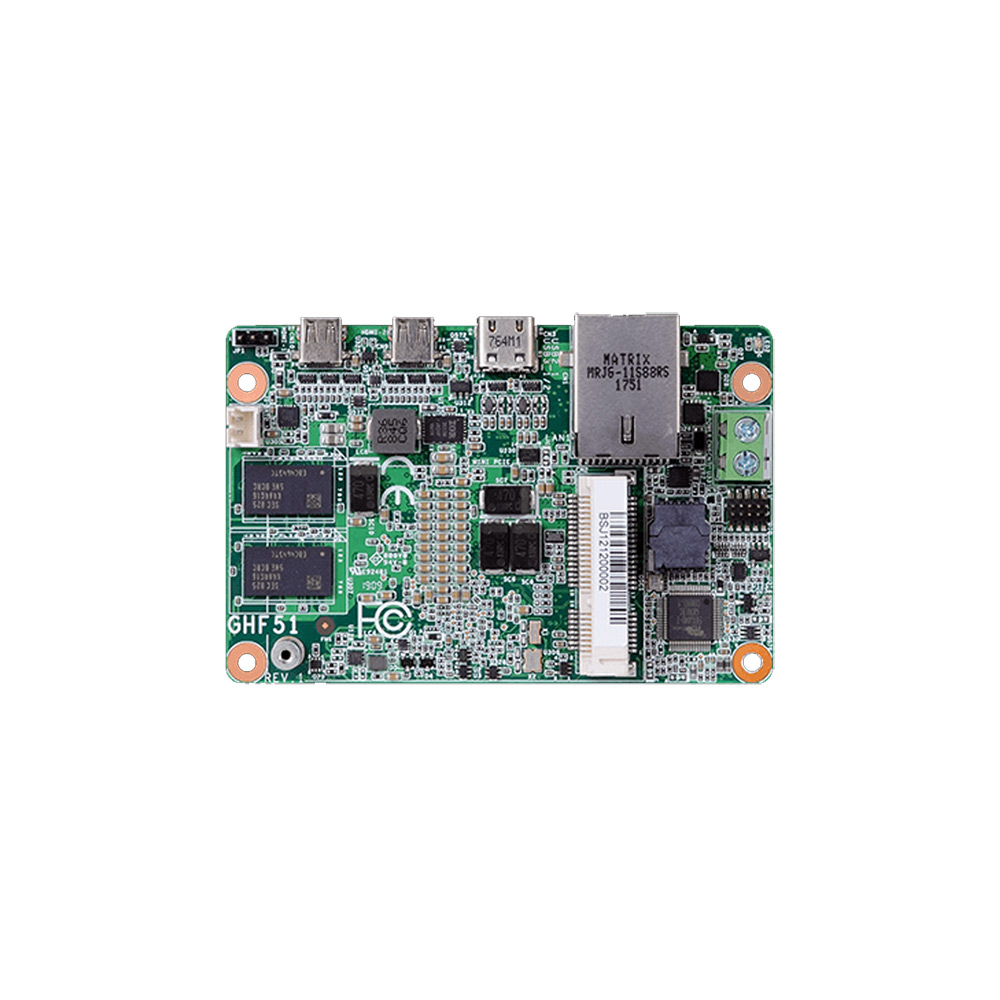
The most compact form factor is the small but mighty femto-ITX 1.8″ Single Board Computer. These tiny SBCs are perfect for the most space constrained designs, with their credit card size providing incredible compute power. They can even power two independent 4K displays and an mPCIe slot that allows you to expand your system’s capabilities in unimaginable ways.

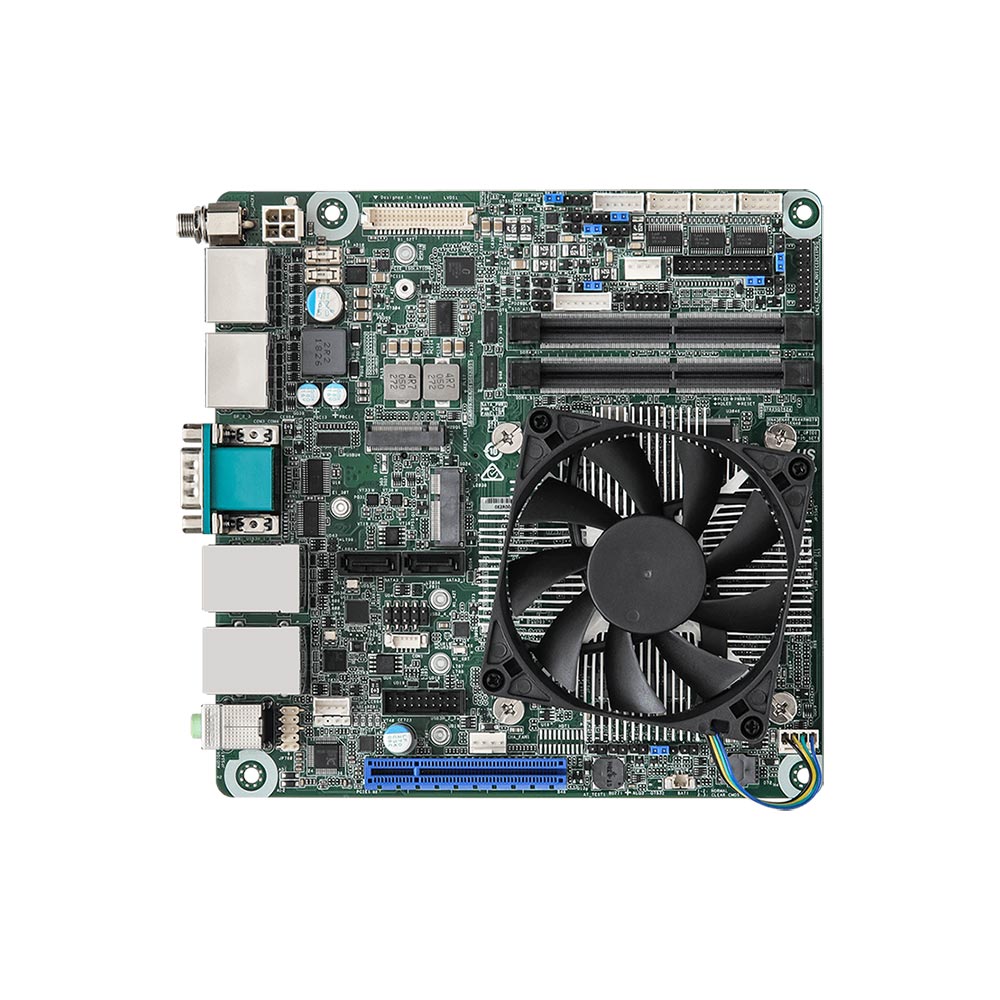
AMD Ryzen Embedded Motherboards: Industrial motherboards come in many formfactors, the most common being the Mini-ITX platform. Measuring 170mm x 170mm (6.7″ x 6.7″) the industrial Mini-ITX platform is ideal more most system integrators and OEMs to embed into their own designs. Also known for it’s low cost vs more compact SBCs, the range of industrial AMD Ryzen Mini-ITX motherboards are feature rich with the latest technologies in both I/O and expansion.

Points · 4

AMD Ryzen Embedded family

AMD’s embedded processors come available as V-Series CPUs and R-Series CPUs for added cost-to-performance efficiency.

Both processors use an integrated “Vega” GPU and provide an ample amount of computing power from dual-core to octa-core performance. The V2000 and R2000 series have updated the now legacy V1000 and R1000 series with Zen+ and Zen 2 architecture. R2000 Zen + architecture boosts mid-range processor performance the the current 14nm technology. The V2000 Zen 2 architecture allows a new class of performance with 7nm technology has a twice the generational uplift in performance per watt, provides 15% higher instructions per clock, and doubles the core count over previous 14nm technology.

AMD Ryzen V2000

AMD Ryzen Embedded V2748 Processor: 2.9-4.25GHz, 8 Cores, 16 Threads, 35-54W

AMD Ryzen Embedded V2718 Processor: 1.7-4.15GHz, 8 Cores, 16 Threads, 10-25W

AMD Ryzen Embedded V2546 Processor: 3-3.95GHz, 6 Cores, 12 Threads, 35-54W

AMD Ryzen Embedded V2516 Processor: 2.1-3.95GHz, 6 Cores, 12 Threads, 10-25W

AMD Ryzen R2000

AMD Ryzen Embedded R2314 Processor: 2.1-3.5GHz, 4 Cores, 4 Threads, 12-35W

AMD Ryzen Embedded R2312 Processor: 2.7-3.5GHz, 2 Cores, 4 Threads, 12-25W

AMD Ryzen V1000

AMD Ryzen Embedded V1807B Processor: 3.35-3.8GHz, 4 Cores, 8 Threads, 35-54W

AMD Ryzen Embedded V1756B Processor: 3.25-3.6GHz, 4 Cores, 8 Threads, 35-54W

AMD Ryzen Embedded V1605B Processor: 2.0-3.6GHz, 4 Cores, 8 Threads, 12-25W

AMD Ryzen Embedded V1404I Processor: 2.0-3.6GHz, 4 Cores, 8 Threads, 12-25W

AMD Ryzen Embedded V1202B Processor: 2.3-3.2GHz, 2 Cores, 4 Threads, 12-25W

AMD Ryzen Embedded V1780B Processor: 3.35-3.6GHz, 4 Cores, 8 Threads, 35-54W

AMD Ryzen Embedded V1500B Processor: 2.2GHz, 4 Cores, 8 Threads, 12-25W

AMD Ryzen R1000

AMD Ryzen Embedded R1600 Processor: 2.6-3.1GHz, 2 Cores, 4 Threads, 12-25W

AMD Ryzen Embedded R1606G Processor: 2.6-3.5GHz, 2 Cores, 4 Threads, 12-25W

AMD Ryzen Embedded R1505G Processor: 2.4-3.3GHz, 2 Cores, 4 Threads, 12-25W

AMD Ryzen Embedded R1305G Processor: 1.5-2.8GHz, 2 Cores, 4 Threads, 8-10W

AMD Ryzen Embedded R1102G Processor: 1.2-2.6GHz, 2 Cores, 2 Threads, 6W

Watch Out For V3000 Series Ryzen Embedded

AMDs launch of Ryzen Embedded V3000 processors will have IPC manufactures excited to bring the high-performance “Zen 3” CPU x86 core architecture to market and deliver new levels of processing power, thermal efficiency and high-speed I/O connectivity in a compact package for embedded applications.

With this new series of Zen 3 CPU architecture you can expect our partners specialising in embedded computing to integrate the 8 core CPUs with it’s latest technologies, including DDR5 memory support, Gen 4 PCIe expansion, duel 10GbE connectivity. This advancement in technology sticks to the low thermal footprint ranging from just 10-54W.

Ryzen Embedded Gains an NPU: Ryzen AI

The biggest recent change to Ryzen Embedded is AI. The newer Ryzen Embedded 8000 series and Ryzen PRO 8000 parts add a dedicated Ryzen AI NPU alongside the Zen 4 CPU and Radeon graphics, bringing on-device AI inference — tens of TOPS — to the x86 Ryzen platform without a discrete GPU. For edge AI that matters: machine vision, analytics and inference can run on a compact, fanless Ryzen system. See our guide to NPUs for what that accelerator does.

Where This Fits

Ryzen Embedded turns up across our partners’ rugged and edge-AI ranges: SolidRun’s Bedrock R8000 pairs Ryzen Embedded 8000 with Hailo accelerators for over 100 TOPS in a fanless x86 box; Neousys’ POC-900 builds the Ryzen PRO 8640U and its Ryzen AI NPU (31 TOPS) into an ultra-compact DIN-rail computer; and Sintrones uses Ryzen Embedded in MIL-STD-810H rugged edge-AI systems. Browse our AMD range, or for heavier workloads see AMD EPYC for edge servers and our processor selection guide.

// NEXT STEP

Considering AMD Ryzen Embedded?

Tell us the workload, the environment and how long the system must stay in production, and we will recommend the right processor platform and supply it.

Phone · UK +44(0)1785 558 300