
 UK
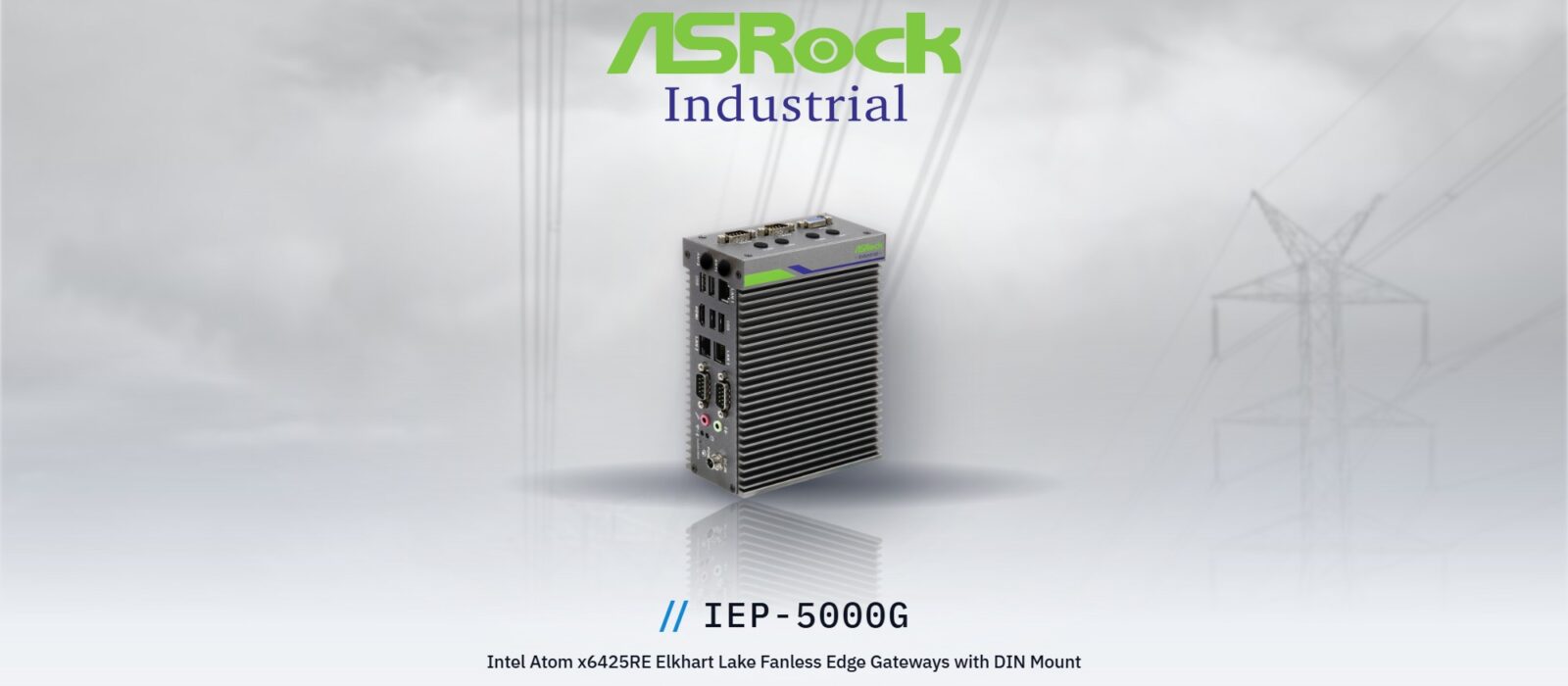
ASRock Industrial iEP-5000G: an industrial IoT gateway certified on Ubuntu 22.04 LTS
The ASRock Industrial iEP-5000G is a fanless industrial IoT gateway built on the Intel Atom x6425RE, and it is certified on Ubuntu 22.04 LTS after testing in Canonical’s lab. We supply it with Ubuntu 22.04 LTS pre-installed for smart manufacturing, energy and machine connectivity projects.
Alongside the certification, the iEP-5000G brings Time-Sensitive Networking (TSN), Intel TCC and over-the-air updates to a compact gateway that mounts on a DIN rail or a wall and runs from −40 to 70 °C.
What Ubuntu certification means

Ubuntu certification covers more than 500 hardware tests, with every element of the gateway validated in Canonical’s lab. For system integrators and machine builders, that means a tested, maintained Ubuntu install on known hardware, which extends the working life of systems in the field and shortens the time to market for their own products.
We pre-install Ubuntu 22.04 LTS, or Windows 10 where required, and test each gateway before dispatch, so it arrives ready for the application stack rather than a first install.
What the iEP-5000G brings
- 01Ubuntu 22.04 LTS certified
- Validated by Canonical with more than 500 hardware tests, for a tested and maintained Linux install.
- 02Deterministic networking
- Intel TCC and TSN support under Linux for time-sensitive data collection.
- 03Elkhart Lake at 12 W
- A quad-core Intel Atom x6425RE at 1.9 GHz, with up to 32 GB of DDR4 with In-Band ECC.
- 04Field I/O as standard
- Three GbE ports, three RS-232/422/485 ports, 4 DI/4 DO and four USB ports.
- 05Wireless options
- M.2 sockets for a 4G LTE or 5G modem and a Wi-Fi 6E with Bluetooth 5.2 module.
iEP-5000G models
Four models on the same platform: DC jack or terminal block power, two PoE ports, or five LAN ports.
Intel Atom x6425RE Fanless Edge Gateway with 3x GbE and 6-36V DC Input
- CPU
- Intel Atom x6425RE (Elkhart Lake)
- Ethernet
- 3× GbE
- Temp
- −40 to +70 °C
Intel Atom x6425RE Extended Temperature Edge Gateway with 3x GbE and 6-36V Terminal Block
- CPU
- Intel Atom x6425RE (Elkhart Lake)
- Ethernet
- 3× GbE
- Temp
- −40 to +70 °C
Intel Atom x6425RE Elkhart Lake Edge Gateway with 2x PoE and 3x GbE
- CPU
- Intel Atom x6425RE (Elkhart Lake)
- Ethernet
- 5× GbE (2× PoE)
- Temp
- −40 to +50 °C
Intel Atom x6425RE Extended Temperature Edge Gateway with 5x GbE LAN
- CPU
- Intel Atom x6425RE (Elkhart Lake)
- Ethernet
- 5× GbE
- Temp
- −40 to +70 °C
Specification highlights
| Specification | ASRock Industrial iEP-5000G |
|---|---|
| Processor | Intel Atom x6425RE, 4 cores, 1.9 GHz, 12 W |
| Memory | 2× DDR4 3200 SO-DIMM, up to 32 GB with In-Band ECC |
| Display | HDMI 2.0b, VGA |
| Networking | 3× GbE; 5× GbE on the -001 (2× with IEEE 802.3af PoE) and -002 |
| Field I/O | 3× RS-232/422/485, 4 DI/4 DO, 2× USB 3.2 Gen 1, 2× USB 2.0 |
| Storage | M.2 2280 Key M (PCIe or SATA), microSD; 2.5-inch SATA bay on the -000 and -010 |
| Wireless | M.2 Key B with nano SIM for 4G LTE or 5G (-000, -010); M.2 Key E for Wi-Fi 6E and Bluetooth 5.2 |
| Software | Ubuntu 22.04 LTS certified; Windows 10 and Linux; Intel TCC and TSN |
| Power | 6–36 V DC (DC jack on the -000, terminal block on the -010); 19–36 V DC on the -001 |
| Environment | −40 to 70 °C (−40 to 50 °C on the -001); 5 Grms vibration, 100 G shock with SSD |
| Mounting and certification | DIN rail or wall; CE, FCC Class A |
A closer look
-
01

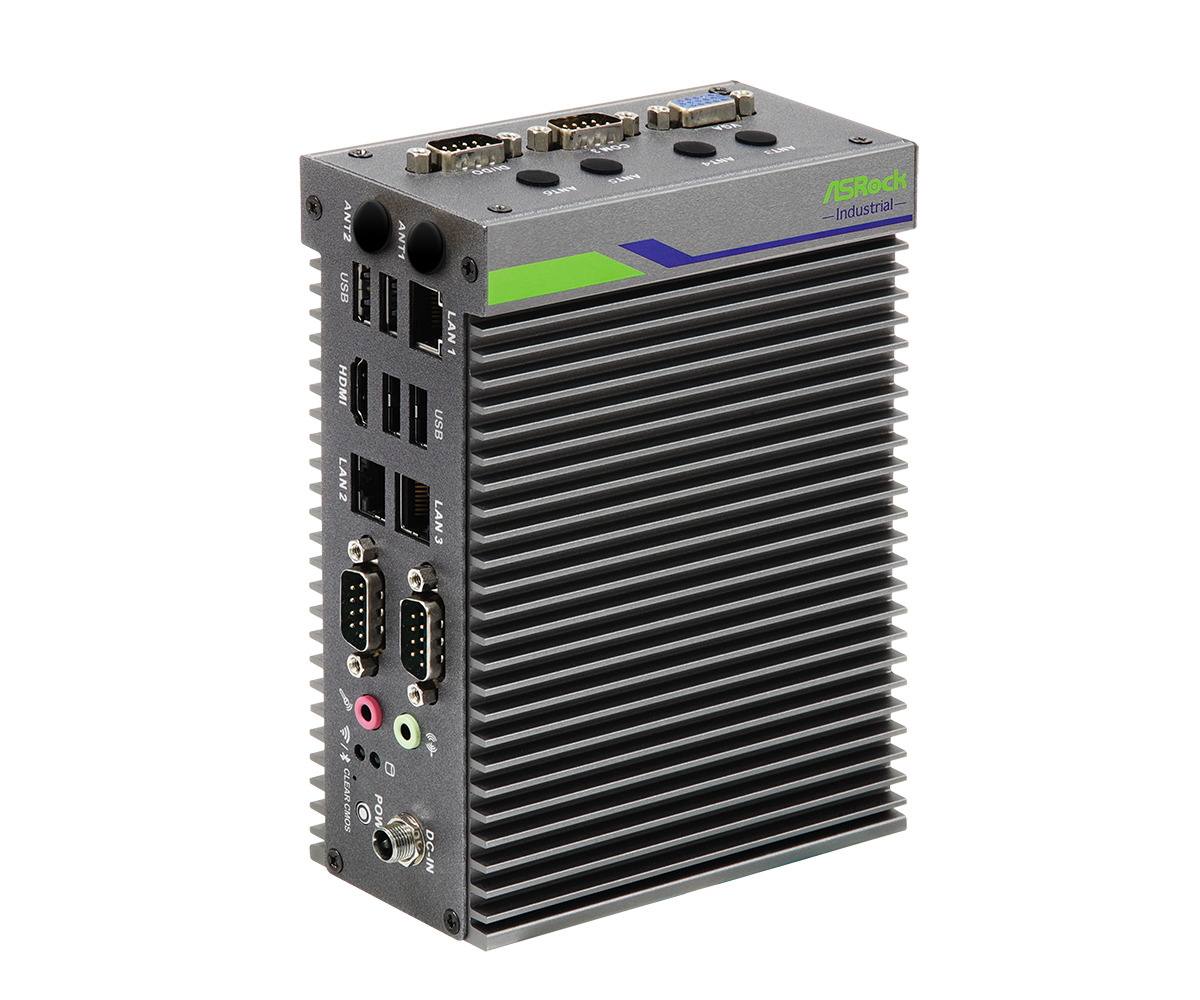
Front I/O with DC jack
LAN, USB, HDMI and serial ports on the front panel, with the locking DC jack of the iEP-5000G-000.
-
02
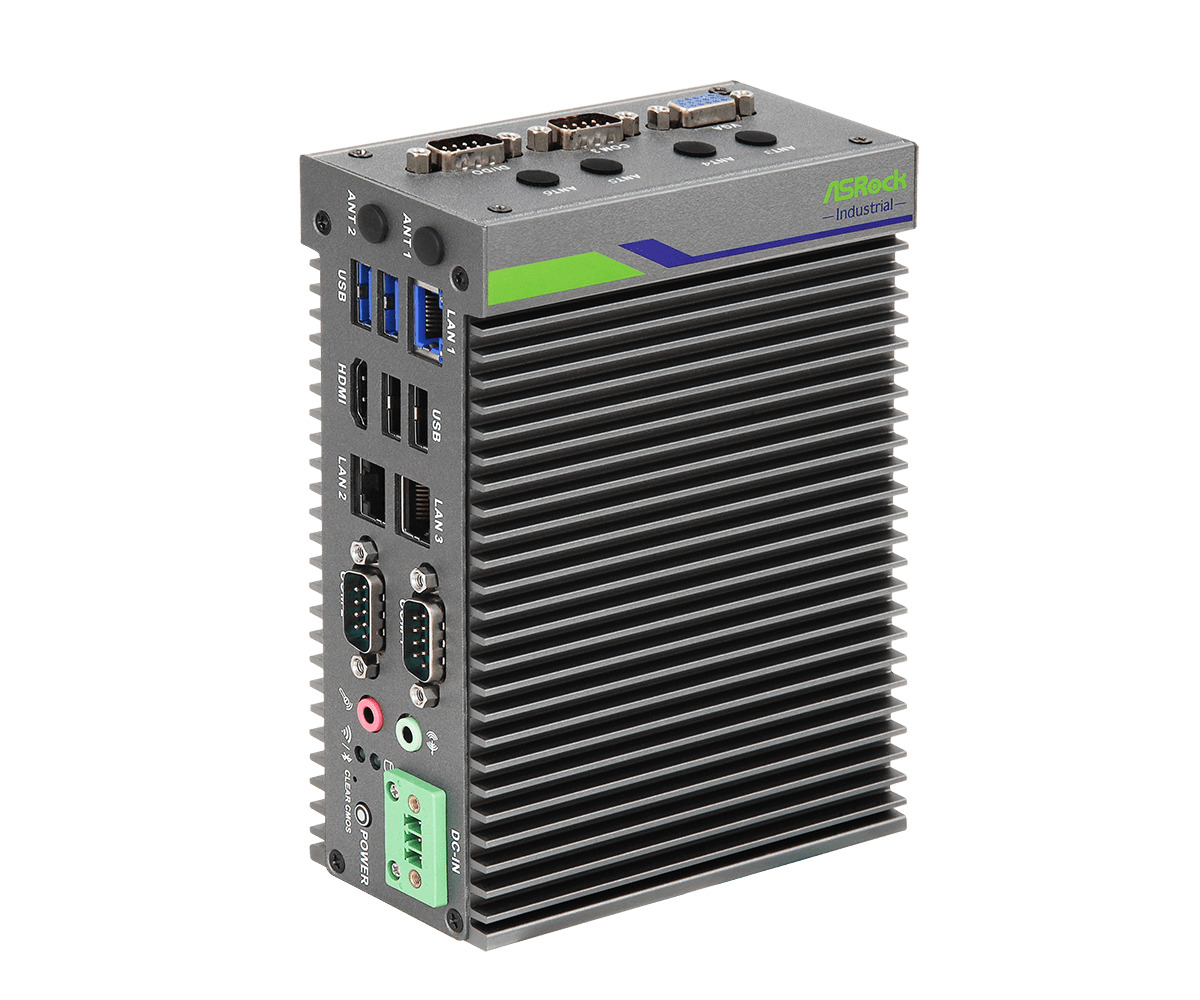
Terminal block power
The same front panel with a pluggable terminal block for cabinet wiring, as on the iEP-5000G-010.
-
03
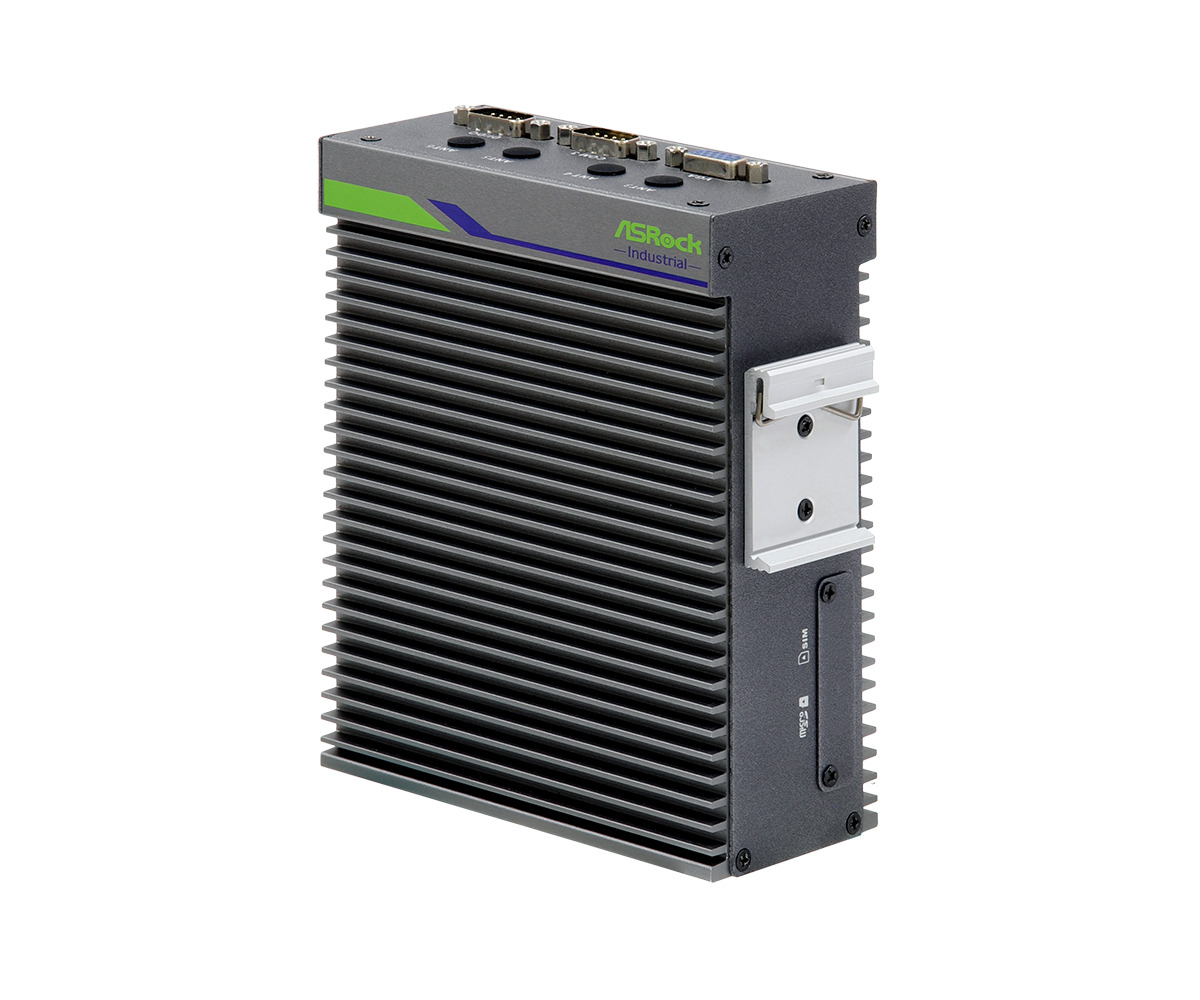
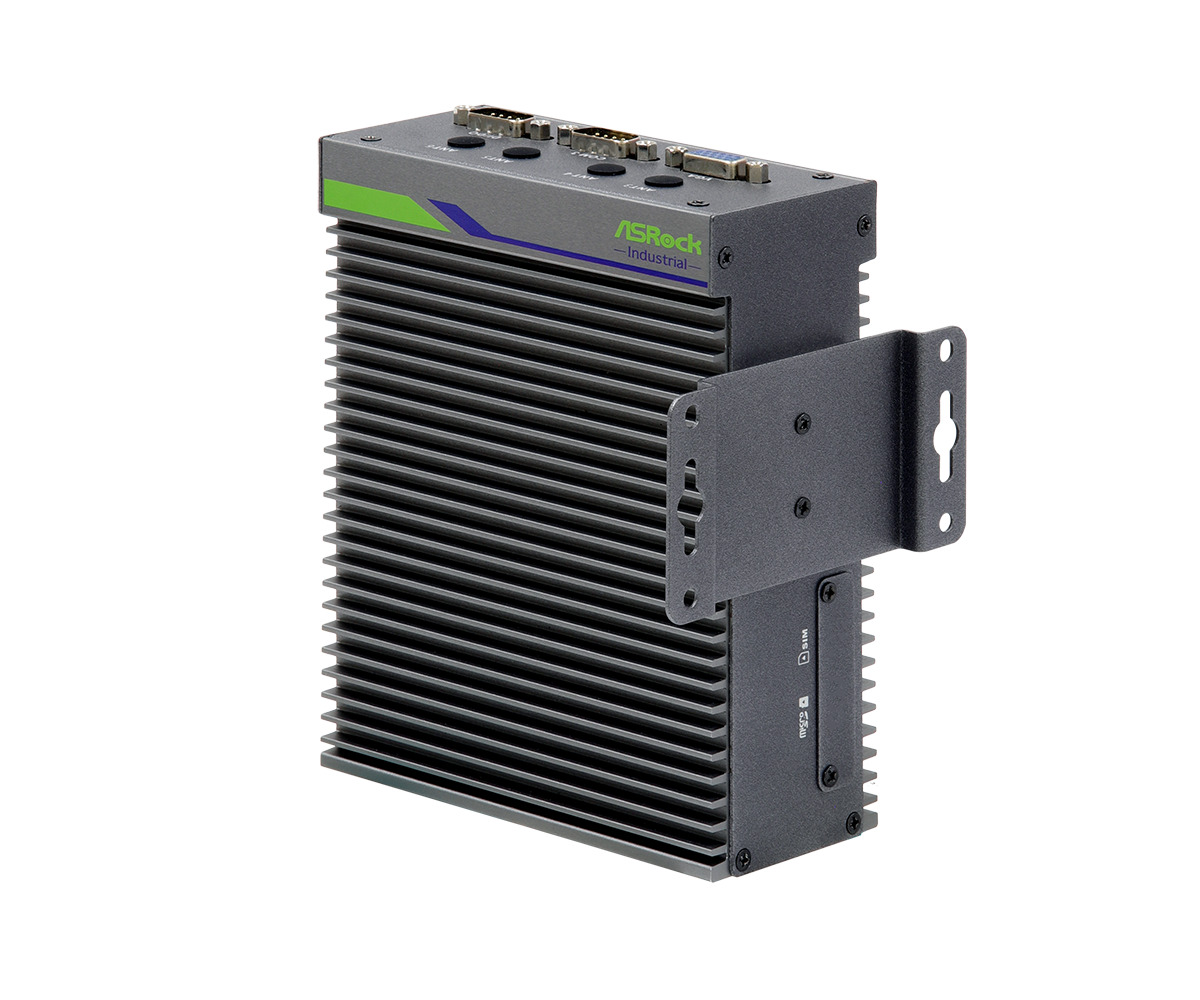
DIN rail mounting
A DIN rail clip for control cabinets, with the SIM and microSD slots on the side.
-
04
Wall mounting
A wall-mount bracket for installations outside a cabinet, with VGA, DIO and serial on top.
Before you deploy an IoT gateway
The four iEP-5000G models share one platform but differ in power, ports and temperature rating. These checks settle which one the site needs.
-
01
Power input
The -000 runs from 6–36 V DC on a locking DC jack and the -010 on a terminal block for cabinet wiring. The PoE model, the -001, needs 19–36 V DC.
-
02
Temperature at the mounting point
Most models run from −40 to 70 °C. The PoE model is rated −40 to 50 °C, so check the cabinet temperature before choosing it.
-
03
Ports and field I/O
Three GbE ports are standard, five on the -001 and -002, with three RS-232/422/485 ports and 4 DI/4 DO for sensors and actuators. Our guide to DIO and GPIO on IIoT gateways explains how the two differ, and our range of industrial IoT gateways covers other I/O mixes.
-
04
Deterministic timing
Where timing and synchronisation are critical, Time-Sensitive Networking and Intel TCC (Time Coordinated Computing) keep communication and processing predictable under Linux.
-
05
Backhaul and updates
An M.2 Key B socket with nano SIM takes a 4G LTE or 5G modem, and M.2 Key E takes Wi-Fi 6E with Bluetooth 5.2. Over-the-air updates then install software and patches without a site visit. Our guide to 4G, LTE and 5G in industrial computers explains the options.
-
06
Mounting
Each model mounts on a DIN rail or a wall bracket. Our guide to mounting DIN rail computers covers rail types, clips and cabinet placement.
Where the iEP-5000G fits
Industrial sites where data has to be collected, processed and forwarded reliably from machines, meters and sensors.

Smart manufacturing
Real-time analysis of machine data on the factory floor to optimise production and reduce costs.

Smart energy
Reliable, secure communication across smart grid infrastructure for monitoring and predictive maintenance.

Time-sensitive control
TSN and Intel TCC for deterministic traffic between machines, controllers and the plant network.
Cameras and sensors
The iEP-5000G-001 powers devices from two IEEE 802.3af PoE ports, with no separate injectors.

Remote sites
4G LTE or 5G with Wi-Fi 6E for redundant connections from huts, pilot lines and outstations.

Multi-network cabinets
Five GbE ports on the iEP-5000G-002 give each machine network its own port.
iEP-5000G FAQs
-
What Are the Advantages of Fanless Computers?
Fanless computers cool themselves passively, through a finned heatsink chassis and heat pipes, instead of a fan. With no moving parts and no airflow drawing in dirt, they are more reliable in dusty or vibrating places, silent, low maintenance and easy to seal, which is why they are the standard choice for industrial and embedded use.
-
What Is the Industrial Temperature Range?
The industrial temperature range is −40 to 85 °C: the grade an electronic component must operate across to be called industrial, compared with 0 to 70 °C for commercial parts. Rugged computers built from industrial-grade components typically run from −25 or −40 °C up to 70 °C as a complete system.
-
PoE vs PoE+ vs PoE++: The 802.3af, 802.3at and 802.3bt Standards
PoE, PoE+ and PoE++ are the three generations of IEEE Power over Ethernet. PoE (802.3af) supplies about 15 W per port, PoE+ (802.3at) about 30 W, and PoE++ (802.3bt) 60 W (Type 3) or 90 W (Type 4). PoE and PoE+ use two of the four cable pairs; PoE++ can use all four.
-
How Much Power Does PoE Deliver?
PoE delivers up to about 15 W per port (802.3af), PoE+ up to about 30 W (802.3at), and PoE++ up to 60 W or 90 W (802.3bt), all at around 48 V DC (44 to 57 V). Some power is lost in the cable, so the device receives a little less than the source supplies.
-
What is M.2 keying and why does it matter?
M.2 keying is the pattern of notches on an M.2 card and socket that shows which interfaces the slot carries. The four keys in common use are A and E for Wi-Fi and Bluetooth, B for modems and SATA SSDs, and M for NVMe SSDs. A card with the wrong key will not fit the socket.
Need a rugged industrial IoT gateway?
Tell us about your application and a member of the team will get right back to you.