
 UK
Jetson Thor news: NVIDIA's T3000 and T2000 modules for mainstream robots
NVIDIA announced two new Jetson Thor modules on 15 July 2026: the Jetson T3000 and the entry-level Jetson T2000. Both use the Blackwell GPU architecture of the existing Jetson Thor family, and both are scheduled for Q1 2027. NVIDIA has not announced pricing.
The T3000 delivers 865 FP4 TFLOPS with an eight-core Arm Neoverse CPU, 32 GB of LPDDR5X at 273 GB/s and 25GbE networking. NVIDIA says it gives similar inference performance to the T5000 on multimodal workloads, including language, vision language and vision language action models, at about half the size and power. The T2000 delivers 400 FP4 TFLOPS with 16 GB of memory, and NVIDIA positions it as the entry point for visual AI agents, autonomous mobile robots and industrial manipulators.
An IGX T3000 version keeps the T3000’s performance and adds integrated functional safety with support for NVIDIA Halos for Robotics, for machines that work alongside people.
The Jetson Thor family compared
| Specification | Jetson T2000 | Jetson T3000 | Jetson T4000 | Jetson T5000 |
|---|---|---|---|---|
| AI performance | 400 FP4 TFLOPS | 865 FP4 TFLOPS | 1,200 FP4 TFLOPS | 2,070 FP4 TFLOPS |
| GPU | NVIDIA Blackwell | NVIDIA Blackwell | NVIDIA Blackwell | NVIDIA Blackwell |
| CPU | Arm Neoverse (core count to be confirmed) | 8-core Arm Neoverse | 12-core Arm Neoverse-V3AE | 14-core Arm Neoverse-V3AE |
| Memory | 16 GB | 32 GB LPDDR5X, 273 GB/s | 64 GB LPDDR5X, 273 GB/s | 128 GB LPDDR5X, 273 GB/s |
| Networking | To be confirmed | 25GbE | Multi-gigabit up to 25GbE | Up to 4× 25GbE |
| Module power | To be confirmed | About half the T5000 | 40–70 W | 40–130 W |
| Availability | Q1 2027 | Q1 2027 | Available now | Available now |
T3000 and T2000 figures are from NVIDIA’s announcement; the full module datasheets are not yet published. For the T4000 and T5000 in detail, see our Jetson Thor specs guide.
Why the T3000 matters now
Memory is the expensive part of a Jetson Thor design. The T5000 carries 128 GB of LPDDR5X and the T4000 carries 64 GB, while the T3000 carries 32 GB with the same 273 GB/s of bandwidth. Many robots never fill 64 or 128 GB, so a module that keeps the bandwidth and most of the inference performance at a lower memory capacity is the one many projects have been waiting for. NVIDIA points to its Jetson agent skills for fitting models into less memory.
The T2000 halves the memory again, to 16 GB, and lowers the compute to 400 FP4 TFLOPS. That still brings Blackwell and the Jetson Thor software stack to smaller mobile robots, manipulators and vision AI agents that would otherwise sit on Jetson Orin.
How to start before Q1 2027
- 01Emulate on the AGX Thor kit
- NVIDIA says developers can emulate T3000 performance on the Jetson AGX Thor developer kit with JetPack 7.2.1, with T2000 emulation in a future release.
- 02One software stack
- The new modules share the Jetson Thor architecture and software, so work done on a T4000 or T5000 system carries over.
- 03Plan a new carrier
- The T3000 is about half the size of the T5000. Expect to choose a carrier board once NVIDIA publishes the module pinout and design guide.
- 04Partners already named
- NVIDIA’s hardware partner list includes Advantech, AVerMedia, Forecr, Nexcom and Yuan, manufacturers whose Jetson systems we already supply.
For the carrier side, see does Jetson Thor need a new carrier board? and our current Jetson Thor carrier boards. For the software, our guide to NVIDIA JetPack explains how the stack is versioned across modules.
Jetson Thor systems available now
Develop on a T4000 or T5000 system today, from robot computers to sealed mission computers, each configured and imaged before it ships.
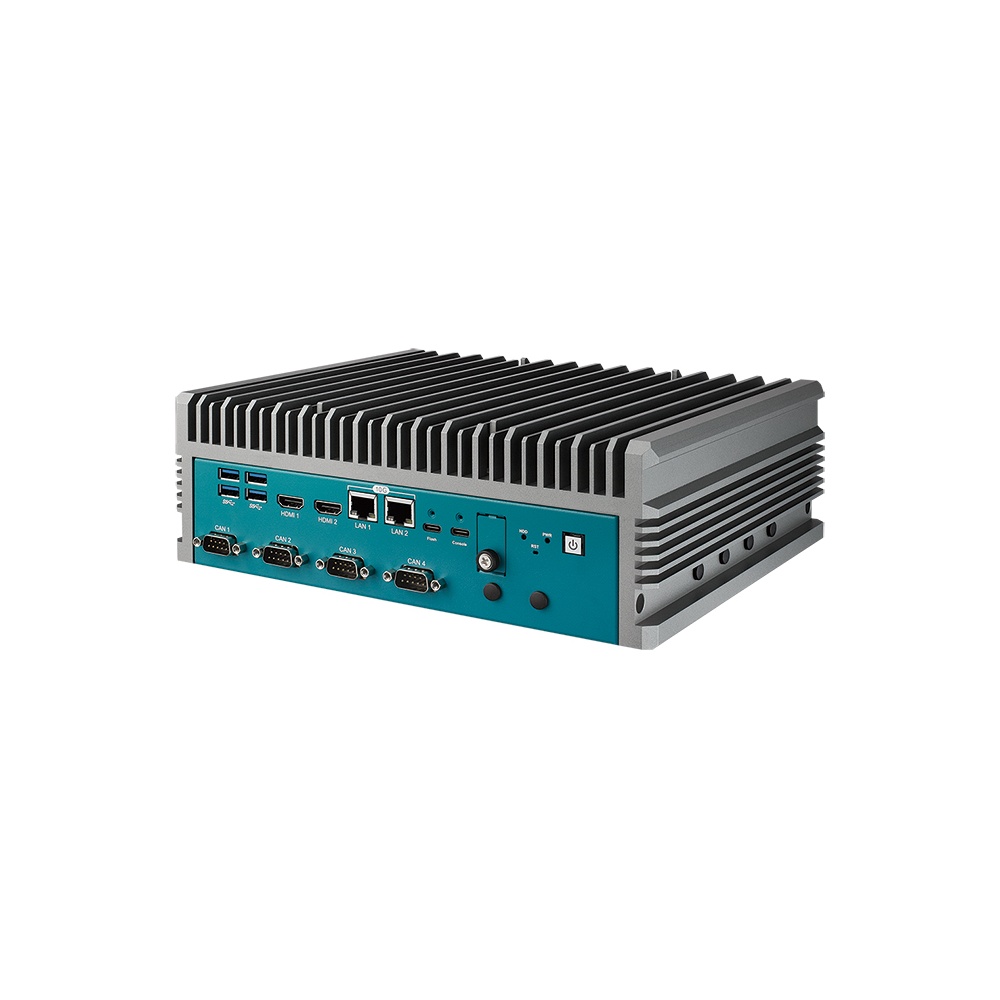
NVIDIA Jetson Thor T5000 Robot Computer with 16x GMSL, 10GbE and CAN-FD
- AI
- 2,070 TOPS
- SOM
- NVIDIA Jetson T5000
- Cameras
- 16× GMSL
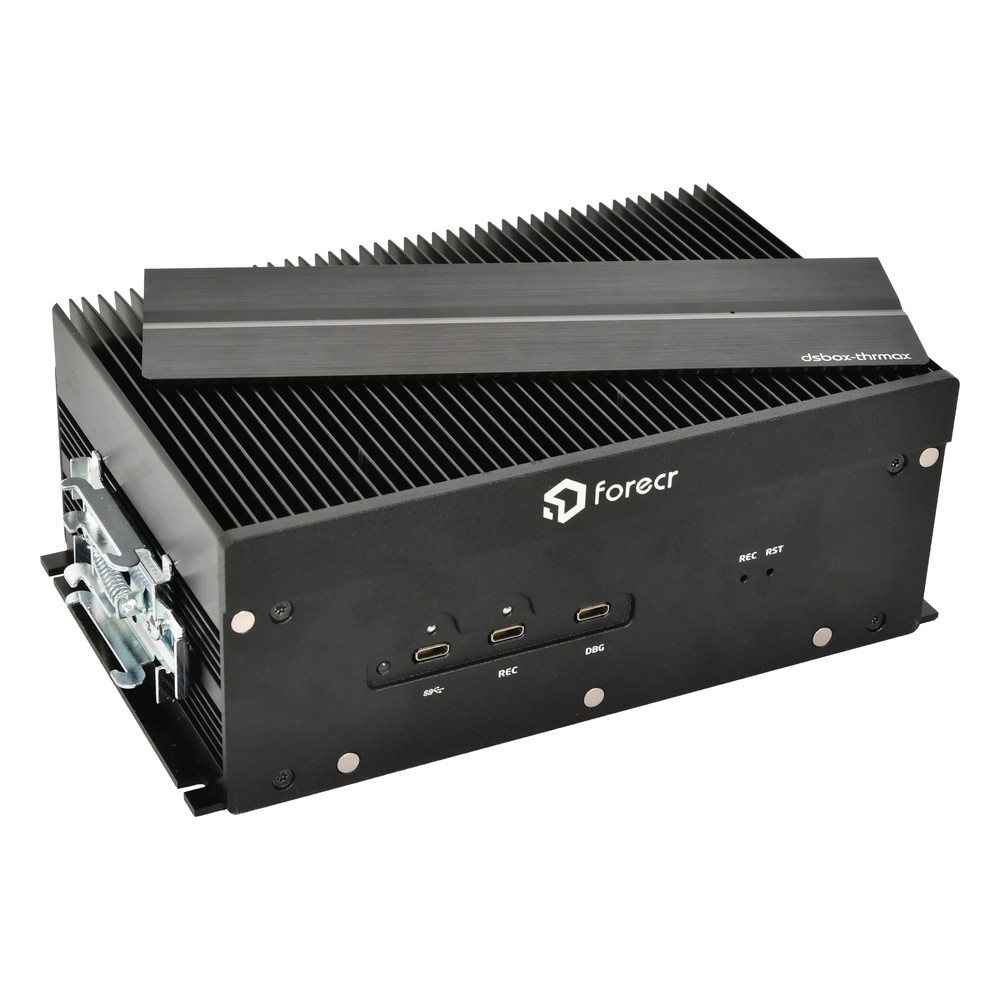
NVIDIA Jetson AGX Thor T4000 Industrial Box PC with 4x 25GbE QSFP28, Dual HDMI and Optional 8x GMSL2
- AI
- 1,200 TOPS
- SOM
- NVIDIA Jetson T4000
- Ethernet
- 4× 25GbE, 1× GbE
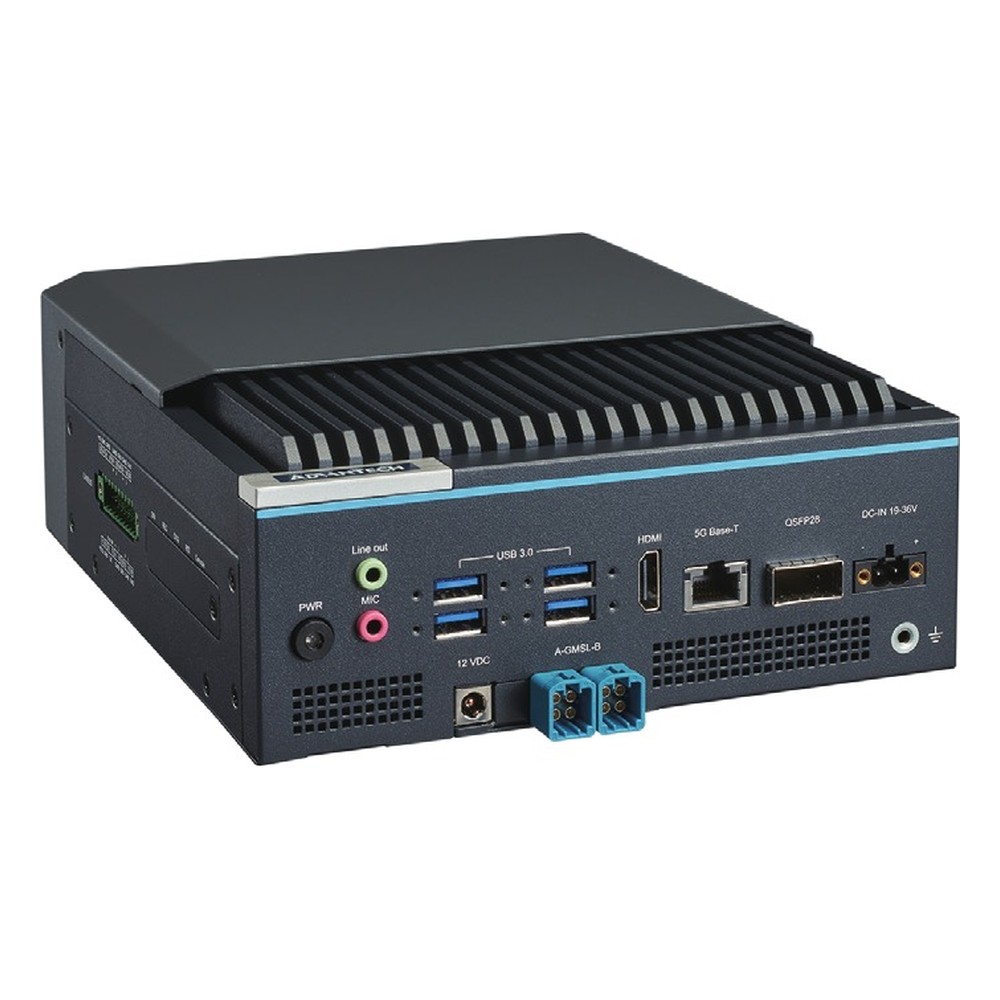
NVIDIA Jetson Thor T4000 Industrial AI Computer with 3x 25GbE QSFP28, 5GbE LAN and 8-Channel GMSL2 Option
- AI
- 1,200 TOPS
- SOM
- NVIDIA Jetson T4000
- Ethernet
- 3× 25GbE, 1× 5GbE
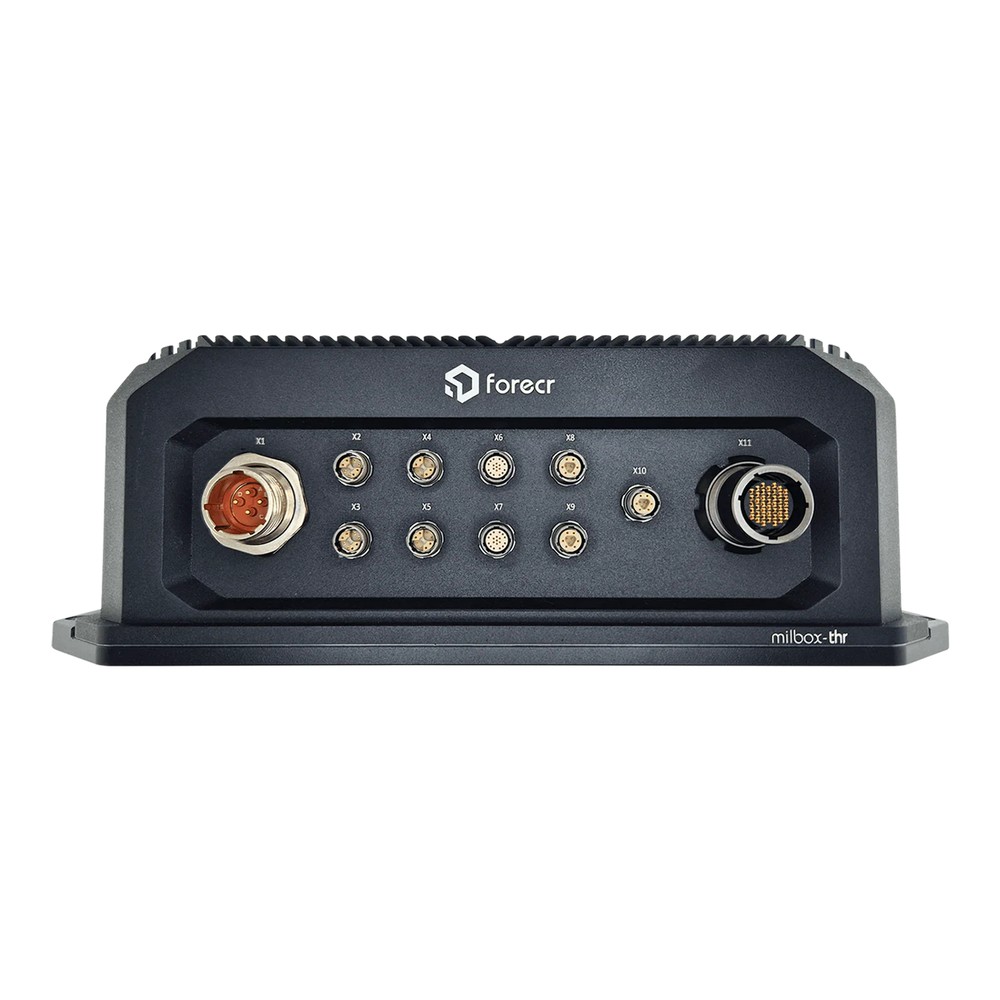
NVIDIA Jetson AGX Thor T4000 Rugged Mission Computer with IP67 Sealing
- AI
- 1,200 TOPS
- SOM
- NVIDIA Jetson T4000
- Ethernet
- 4× 10GbE
Jetson Thor FAQs
-
Jetson T5000 vs T4000: What Is the Difference?
The Jetson T5000 and T4000 are the two NVIDIA Jetson Thor modules, both built on the Blackwell GPU. The T5000 is the top variant, with up to 2,070 FP4 TFLOPS, 128 GB of memory and up to 130 W. The T4000 is the lower-power variant, with up to 1,200 FP4 TFLOPS, 64 GB and up to 70 W.
-
Does Jetson Thor Need a New Carrier Board?
Yes. The NVIDIA Jetson Thor module uses a different connector, higher power (up to 130 W) and new I/O compared with AGX Orin, so it needs a carrier board designed for Thor rather than an Orin board. Moving from AGX Orin to Thor is a platform change, not a drop-in module swap.
-
What Is the Difference Between a Jetson Module and a Developer Kit?
An NVIDIA Jetson developer kit is a reference carrier board with a module fitted, meant for evaluation and prototyping. A production system uses the production module on a carrier board designed for your I/O, environment and lifecycle. The silicon and software are the same; the kit is not what you deploy.
-
How Long Is NVIDIA Jetson Supported?
NVIDIA gives Jetson modules long, published production lifecycles, which is part of why they suit industrial designs. Current Orin modules run well into the 2030s, and Industrial variants carry a ten-year production life. The exception is the older LPDDR4 generation, Xavier and TX2, which NVIDIA has brought to early end-of-life, with last-time-buy orders closing on 1 July 2026.
Planning a robot on Jetson T3000?
Tell us the models, sensors and power budget. We will recommend a Jetson Thor system to develop on now, configured and imaged for your project, and plan the move to T3000 or T2000.