
 UK
UK 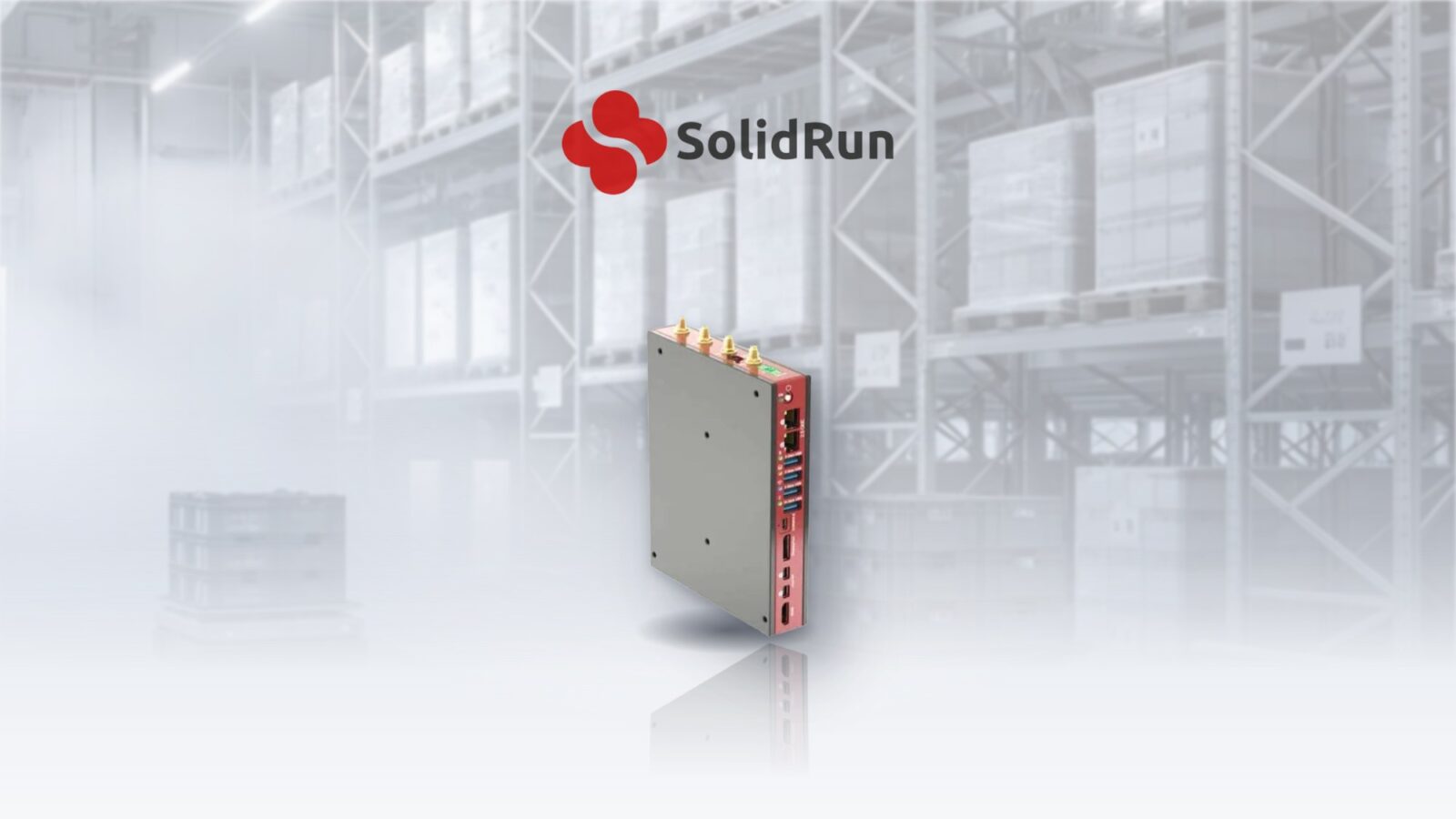
Cold-chain AMR fleet coordination on the Bedrock R8000
A cold-chain operator coordinates its AMR fleet across a refrigerated warehouse and loading yard from one conduction-cooled Bedrock R8000 DIN rail industrial PC with Hailo-8 AI accelerators.
A national cold-chain operator running a refrigerated regional distribution centre had ordered a fleet of autonomous mobile robots to move pallets between its loading yard and its cold store. What it had not specified was the computer to coordinate them: the shared perception, route planning and pick assignment that turn individual robots into a fleet.
Cloud coordination was ruled out early, because the site’s network could not guarantee the response times the fleet needed. We supplied SolidRun’s Bedrock R8000, a conduction-cooled DIN rail industrial PC, to run AMR fleet management on site. It is the kind of system we supply for logistics and warehousing.
One fleet, two thermal zones
- 01The yard
- An open-air loading bay where temperatures change with the seasons and trailers come and go, with robots moving pallets between docks and a staging area.
- 02The cold store
- Continuous sub-zero temperatures all year, with robots working assigned aisles between racks and the pick face.
- 03The interface
- A short corridor between the two, where condensation, frost on sensors and mixed traffic of robots, forklifts and people all meet.
The brief came down to one platform, at the cold-store end, running continuously below zero and coordinating a fleet across two thermal zones against a tight perception-to-action budget. Almost everything else was negotiable.
The SolidRun Bedrock R8000
An AMD Ryzen Embedded 8000 DIN rail industrial PC with Hailo AI options, conduction cooling and industrial temperature builds.
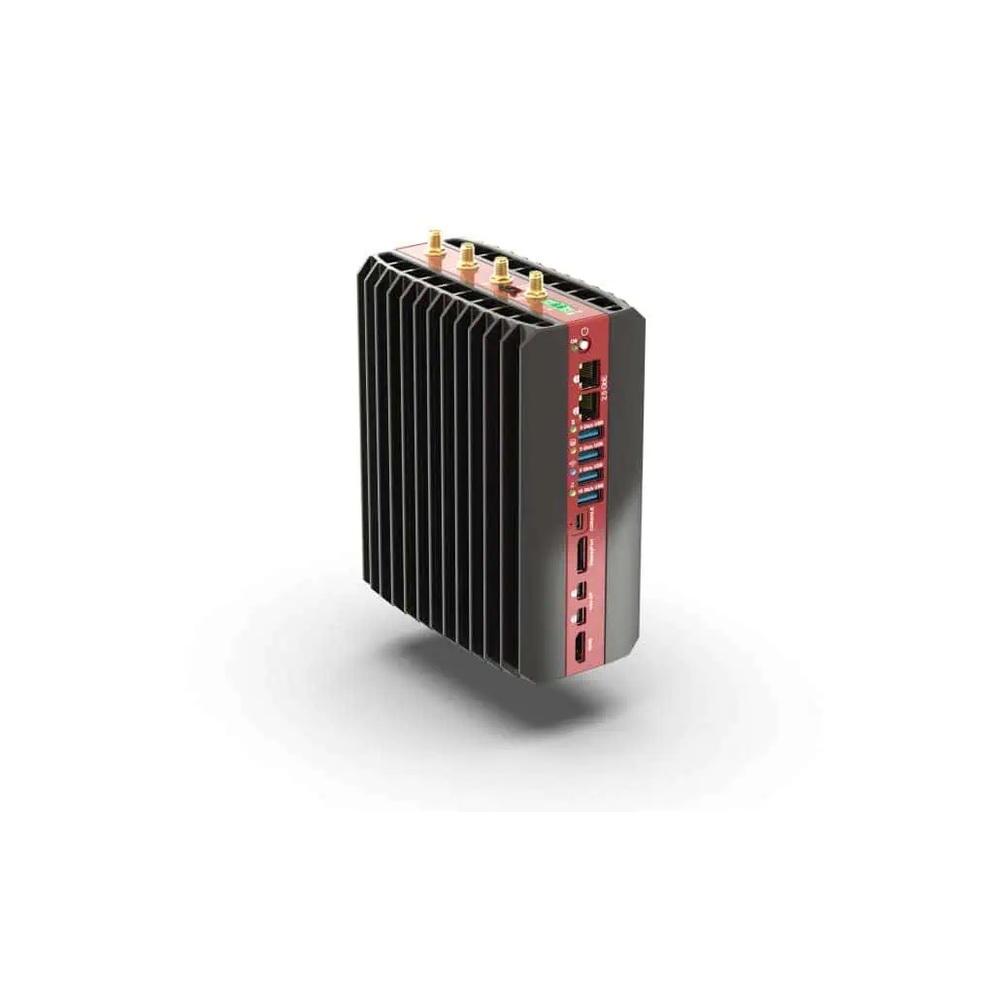
BEDROCK R8000
AMD Ryzen Embedded 8845HS DIN Rail Industrial PC with Hailo AI Options and 4x 2.5GbE
- AI accelerator
- 16–40 TOPS
- Processor
- AMD Ryzen Embedded 8000
- Networking
- 4× 2.5GbE
- Operating temp
- −40 to +85 °C
- Power Input
- 12–60 V DC Input [Terminal Block]
Why the Bedrock R8000
- 01Industrial temperature range
- Industrial builds are rated from −40 to 85 °C, covering the cold store with margin and with no heated enclosure needed.
- 02Conduction cooling
- Heat from the processor, accelerators, memory and storage flows through tile plates into the chassis, with no fans or vents to ice up; see our conduction cooling FAQ.
- 03Hailo-8 plus an integrated NPU
- Multiple Hailo-8 modules run the camera perception, while the Ryzen AI NPU takes the routing workload.
- 04Modular networking
- A NIO board with multiple 2.5GbE ports separates the camera network, the warehouse uplink and diagnostics.
- 05x86 compatibility
- The operator’s existing Linux x86 fleet management software, already integrated with its warehouse management system, runs without porting.
- 06Long lifecycle
- AMD’s Ryzen Embedded 8000 series carries a long-term availability commitment that suits a long industrial deployment.
The platform is configured with an AMD Ryzen Embedded 8845HS, ECC DDR5 memory and industrial NVMe storage. Wi-Fi 6E links the AMR fleet, with 5G as a fallback if the warehouse network goes down. Our AMD Ryzen Embedded guide explains what the integrated NPU adds.
Four pipelines on one platform
The R8000 splits the work across its Hailo modules, NPU and integrated graphics so no pipeline starves another.
-
Ceiling cameras
Hailo-8Cameras across the yard, interface and cold store detect pallets, robots, forklifts and people, with inference shared across the Hailo modules.
-
Robot cameras
Hailo-8Streams from each AMR’s own cameras run a smaller model focused on obstacles close to the robot.
-
Fleet routing
Ryzen AI NPUThe NPU runs the routing optimiser, assigning pick tasks by position, battery state, congestion and warehouse priority.
-
Operator dashboard
Radeon 780MThe integrated graphics drive the loading-bay displays showing live perception, fleet positions and events.
Why conduction cooling suits the cold
A conduction-cooled computer actually benefits from a cold environment: heat flows out through the chassis into the wall it is mounted on, which acts as a large heatsink. A fan-cooled system would draw in damp, cold air at the interface, inviting frost and condensation. Because the R8000 runs continuously, its own heat keeps the chassis surface warmer than the surrounding air; our condensation FAQ explains why that matters.
Lessons for similar deployments
What carries over to other cold-chain, outdoor, in-vehicle and defence projects.
-
01
Choose conduction cooling in the cold
Fanless designs that rely on rising warm air work less well in cold rooms; conduction to structure works better.
-
02
Count the PCIe lanes
Each AI accelerator, drive and fast network port uses lanes, so check the budget before adding modules.
-
03
Plan for the dew point
Keep chassis surfaces above dew point, or seal the enclosure, wherever humid and cold air meet.
-
04
Size for the lifecycle
Storage and memory should cover years of logs and future model updates, not just day one.
-
05
Use the integrated NPU
It runs suitable models without using PCIe lanes or extra thermal budget.
Cold-chain edge AI FAQs
-
What Is AMR Fleet Management?
AMR fleet management is the software and computing that coordinates a group of autonomous mobile robots. It assigns tasks, plans routes, manages traffic at junctions and narrow aisles, schedules charging and connects the fleet to the warehouse management system, so robots work together efficiently instead of getting in each other's way.
-
What Is Conduction Cooling?
Conduction cooling moves heat out of a computer through solid materials rather than moving air. Thermal pads, heat spreaders and heat pipes carry heat from the processor, memory and storage into the metal chassis, which passes it to the surface it is mounted on or to the surrounding air. With no fans or vents, the system can be fully sealed.
-
How Do You Prevent Condensation on Electronics?
Condensation forms when a surface is colder than the dew point of the air around it, so moisture in the air turns to water on it. To prevent it on electronics, keep their surfaces above the dew point, for example with a steady heat load or heaters, seal the enclosure, control humidity with desiccants or breather vents, and protect boards with conformal coating.
-
AGV vs AMR: What Is the Difference?
An AGV (automated guided vehicle) follows fixed routes marked by magnetic tape, wires, reflectors or floor codes, and stops when something blocks its path. An AMR (autonomous mobile robot) builds a map of its surroundings with sensors and plans its own route, steering around people and obstacles.
-
What Is Cold Chain Monitoring?
Cold chain monitoring tracks the temperature of chilled and frozen goods, such as food and medicines, as they are stored, transported and displayed. Sensors record conditions continuously, and a monitoring system raises an alarm when a reading goes out of range and keeps a record that shows the goods stayed safe all the way to the shelf.
Deploying edge AI in a cold or harsh environment?
Send us the application, the deployment environment, and the lifecycle expectation. We'll come back with a platform recommendation, a BOM, and a service stack matched to it.