
 UK
UK 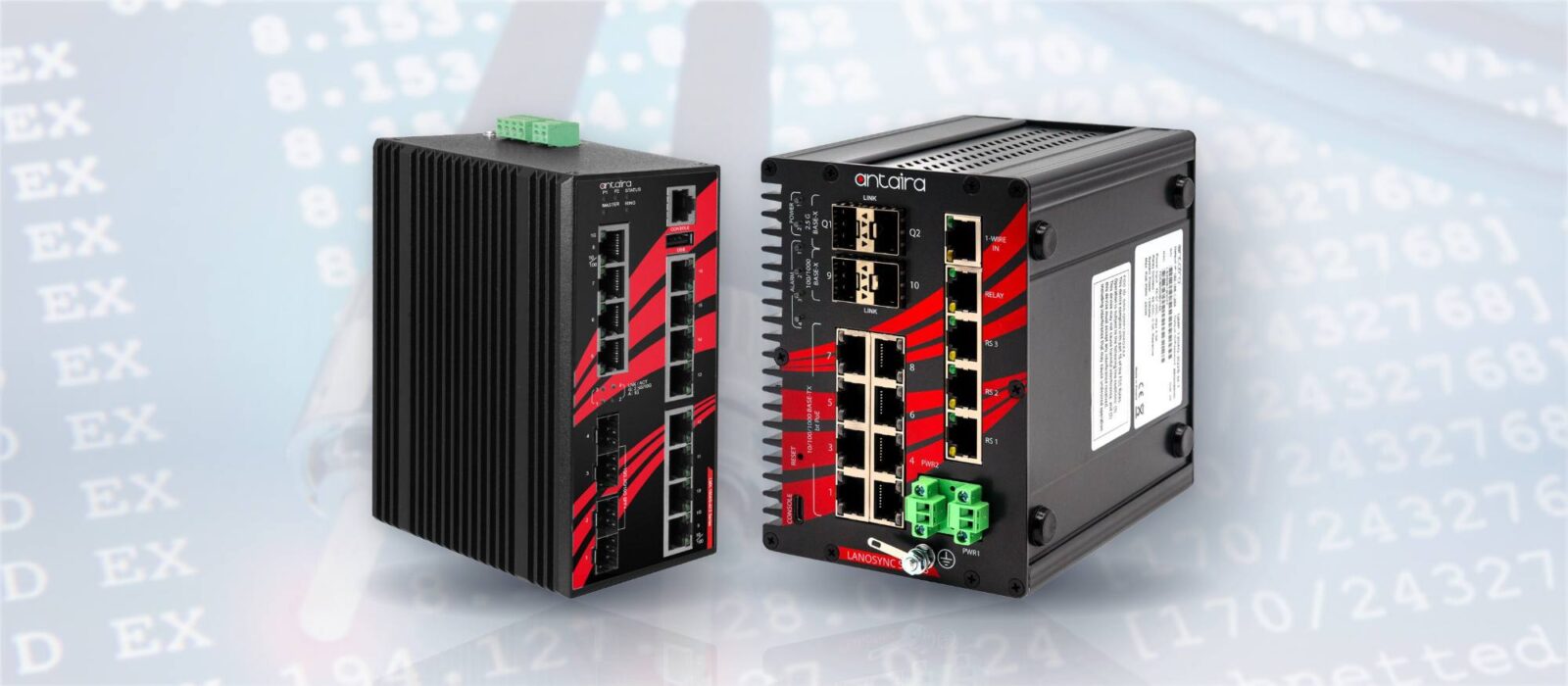
Layer 2 vs Layer 3 Switches: What's the Difference and When You Need Layer 3
A Layer 2 switch forwards frames by MAC address within one network; a Layer 3 switch can also route IP between networks. The distinction decides whether a switch can move traffic between subnets on its own, or whether it needs a router to do it.
“Layer 2” and “Layer 3” refer to the OSI model — the layers at which a switch makes its forwarding decisions. A Layer 2 switch works at the data-link layer and forwards Ethernet frames by MAC address. A Layer 3 switch adds the network layer: it can also route IP packets between different networks. In practice the question is simple — can the switch move traffic between separate subnets on its own, or does it need a router to do that? With “layer 3 switch” among the most-searched switching terms, it is worth being precise about what the upgrade actually buys you.
What a Layer 2 Switch Does
A Layer 2 switch learns which device sits on which port by reading source MAC addresses, builds a forwarding table, and sends each frame only to the port it needs to reach. It supports VLANs (IEEE 802.1Q), which split one physical switch into several separate broadcast domains. Everything it does stays within a network: traffic that needs to cross from one VLAN or subnet to another has to be handed to a router. Layer 2 switching is fast, low-latency and the backbone of every LAN — most ports in most networks are Layer 2 ports.
What a Layer 3 Switch Adds
A Layer 3 switch does everything a Layer 2 switch does and adds IP routing in hardware. Because the routing runs in the switching ASIC rather than in software, it routes between VLANs and subnets at close to wire speed — far faster than a traditional router for local traffic. All Layer 3 switches do static routing; many add dynamic routing protocols (such as OSPF or RIP) and access-control lists. The result is a single device that both switches within VLANs and routes between them.
Layer 3 Switch vs Router
Both a Layer 3 switch and a router forward IP, so the distinction is one of role, not capability. A Layer 3 switch routes in hardware, at high throughput and high port density, and is built for fast routing inside a site or platform; it usually has no WAN interfaces, NAT or the broad protocol support a router carries. A router routes in software at lower throughput but connects networks to the outside world — WAN links, NAT, VPNs and a wider protocol set, with far fewer ports. The usual pattern is a Layer 3 switch for fast inter-VLAN routing on site, and a router at the boundary to everything beyond it.
When You Need Layer 3 at the Edge
Once a network is segmented into several VLANs or subnets — control on one, video on another, corporate on a third — something has to route between them. Doing that on a Layer 3 switch at the edge, rather than hauling every cross-subnet packet back to a central router and out again (“hairpinning”), cuts latency, removes a single point of failure, and keeps the local network routing even if the uplink drops. In distributed industrial, vehicle and defence networks — where segments are many and the link back to a central site is neither fast nor guaranteed — local Layer 3 routing is often what keeps the system deterministic and resilient.
Layer 2 vs Layer 3 at a Glance
| Layer 2 switch | Layer 3 switch | |
|---|---|---|
| OSI layer | Data link (L2) | Network (L3) + data link |
| Forwards by | MAC address | MAC address and IP address |
| VLANs | Yes (802.1Q) | Yes |
| Routes between subnets | No — needs a router | Yes, in hardware |
| Dynamic routing / ACLs | No | Often (static always; OSPF/RIP, ACLs on many) |
| Typical role | Connect devices within a network | Route between segmented networks at the edge |
Where This Fits
Things Embedded supplies managed switches in both classes: Layer 2+ for connecting and segmenting devices, and Layer 3 for routing between segments at the edge — as compact board-level modules for integration and as fully-built rugged switches, up to 10G. Several models add Time-Sensitive Networking and IEEE-1588 PTP for deterministic, time-critical networks. Browse our industrial Ethernet switches, or tell us how your network is segmented and we will recommend and supply the right layer.
Frequently Asked Questions
-
Layer 3 Switch vs Router: What Is the Difference?
Both a Layer 3 switch and a router forward IP between networks, but a Layer 3 switch routes in hardware at high speed for traffic inside a site, while a router connects to outside networks with WAN interfaces, NAT and broader protocol support at lower throughput.
-
What Is a VLAN?
A VLAN (Virtual LAN) is a logical segment of a network created in a managed switch. Using IEEE 802.1Q tags, it separates traffic into independent broadcast domains over the same physical wiring, so devices behave as if they are on separate networks.
Routing at the Edge?
Tell us how your network is segmented and where traffic needs to cross between subnets, and we will recommend a Layer 2+ or Layer 3 switch to suit — board-level or rugged.