
 UK
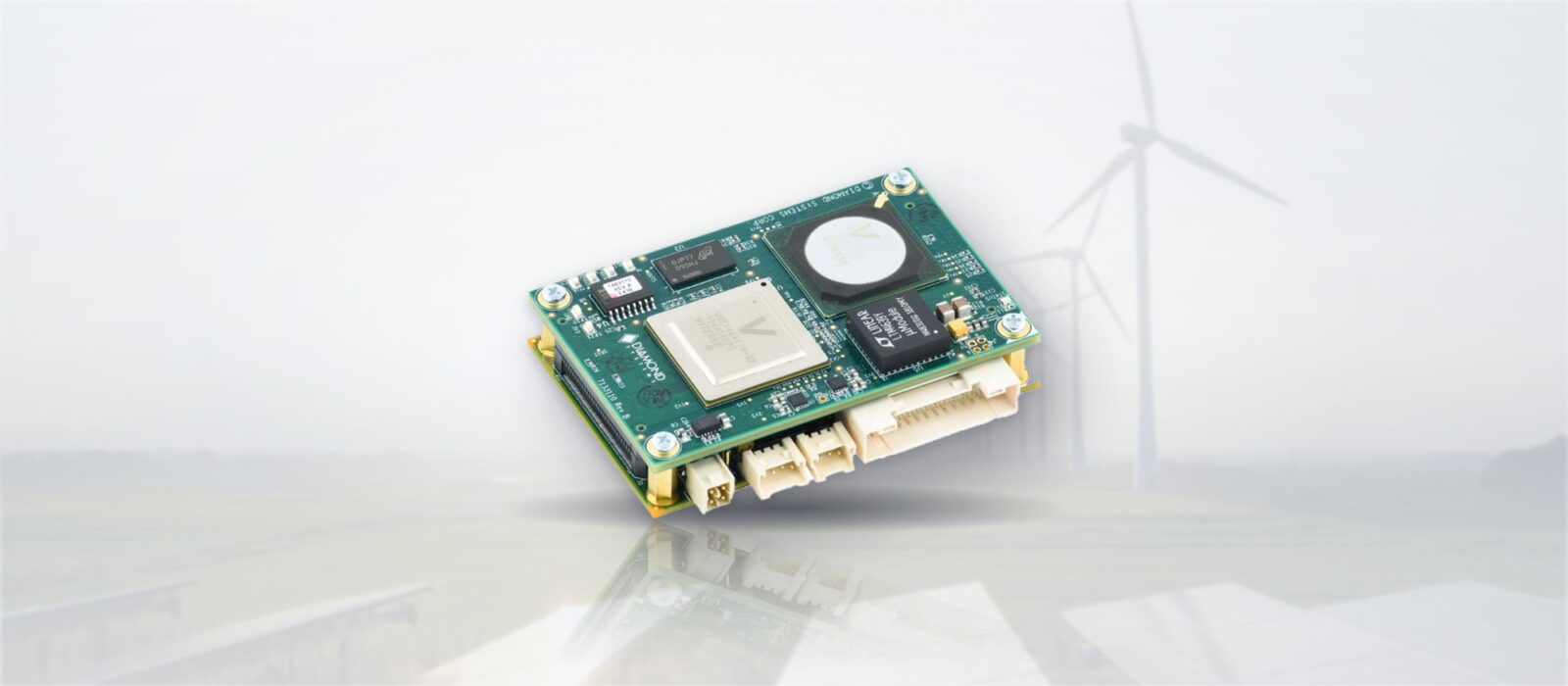
OEM Ethernet Switch Modules: Board-Level Switching for Integration
An OEM Ethernet switch puts managed switching on a module or board inside your product instead of a separate box. This guide compares modules, boards, boxed and custom switches, and covers carrier design, managed features and OEM vs ODM.
An OEM Ethernet switch is a managed switch that an equipment maker builds into its own product rather than installing as a separate box, usually as a board-level switch module or switch board mounted inside the host system. The switching silicon and management software are the same as in a boxed switch; the enclosure, connectors and power become part of the product it goes into.
Most network switches are boxes: a sealed enclosure with ports on the front. An embedded, or board-level, Ethernet switch is the switch without the box, the same managed switching silicon on a module or board that mounts inside your system. For an embedded or rugged design where space, weight and integration matter, that distinction is the difference between bolting a separate switch and its cabling onto the platform and building the switching into it.
This guide is for the engineers designing that product. It explains the difference between a switch module, a switch board, a boxed switch and a custom design, what a carrier board has to provide, which managed features to specify, and how OEM and ODM routes differ. It ends with examples from the Diamond Systems range, a checklist and answers to common questions.
Key takeaways
- 01Same switch, no box
- A board-level switch does everything a boxed managed switch does and leaves enclosure, connectors and power to the host.
- 02Module or board
- A switch module needs a carrier board you design; a switch board runs standalone with its own power and connectors.
- 03The carrier does the rest
- Magnetics, connectors, power, cooling and EMC are carrier decisions, and they decide how rugged the result is.
- 04Specify the software level
- Layer 2, Layer 2+ and Layer 3 builds differ in VLAN, multicast, routing and timing features.
- 05OEM before ODM
- Building on a proven module usually costs less time and risk than a custom switch design from silicon up.
Switch module, switch board, boxed switch or custom design?
Board-level switching comes in two packages, and both sit alongside the boxed switch and the fully custom design. The right one depends on how much hardware you want to design and how the switch will be packaged.
| Switch module | Switch board | Boxed rugged switch | Custom ODM switch | |
|---|---|---|---|---|
| What it is | Switching core and management on a small board with high-speed connectors | Standalone board with power supply, connectors and cooling | Complete sealed switch | Switch designed to your specification |
| What you design | A carrier board: magnetics, connectors, power | Mounting and cabling only | Nothing, apart from cable harnesses | Requirements; the maker designs the rest |
| Ports | 8–28, up to 10G | 8–28, up to 10G | 8–28, up to 10G | As specified |
| Management | Layer 2+ or Layer 3, often IEEE 1588 PTP | Layer 2+ or Layer 3, PTP, TSN on some | Layer 2+ or Layer 3, PTP | As specified |
| Power input | Low-voltage DC from the carrier, typically 5 V | Wide-range DC, typically 5–40 V | Wide DC, with MIL power options | As specified |
| Temperature | Typically −40 to 85 °C | Typically −40 to 85 °C | Typically −40 to 85 °C | As specified |
| Time to a working system | Longest of the standard routes; a carrier to design and test | Short | Shortest | Longest overall |
| Best fit | Products where ports, connectors and power must sit exactly where the design needs them | Systems with room for a board and standard cabling | Networks outside a host system | Volumes or requirements nothing standard meets |
The categories follow the same split: Ethernet switch modules for carrier designs, Ethernet switch boards for standalone use, and rugged boxed switches built from the same switching core.
What is a board-level switch module?
A board-level switch module is a fully functional managed switch built as a board rather than an appliance, typically a small board-level module or a board on a standard embedded footprint such as PC/104. It carries the switch chip, the management firmware and processor, and either the physical-layer interfaces or the signals to them, and it is designed to be integrated onto a carrier or stacked into a host system. It does everything a boxed managed switch does, including VLANs, QoS, redundancy, Layer 2+ switching and Layer 3 routing; it simply leaves the enclosure, connectors and power to the system it goes into.
Diamond Systems uses precise names for the two packages. An EPSM part is an Ethernet switch module that plugs into a carrier through high-speed board-to-board connectors; an EPS part is an Ethernet switch board that runs on its own. Several EPS boards are built on EPSM modules, so a design can start on the board and move to a custom carrier later with the same switching core and software.
Why integrate switching at board level?
The reason is integration. Building switching in at board level removes a separate enclosure, its mounting and the cabling between boxes, which saves size, weight and points of failure: the SWaP-C argument that drives most embedded and vehicle designs. It also lets the port layout, connectors and power match the host system exactly, rather than adapting to an off-the-shelf box. And because the module is a proven building block, a custom switch configuration can be created quickly and at low risk by integrating it onto a carrier board, instead of designing switch silicon from scratch.
| Benefit | What it removes or adds | Typical products |
|---|---|---|
| Size and weight | One enclosure, its brackets and its power supply | Drones, robots, unmanned vehicles |
| Fewer connections | Patch cables and connectors between boxes, each a point of failure | Vehicles and airborne systems |
| Exact port layout | Ports where the product’s panel needs them, on the connectors it uses | Mission computers, sensor heads |
| Single power design | The switch runs from the host’s own rails | Battery and vehicle systems |
| Product identity | Switch software can carry the product’s branding | OEM equipment sold under the maker’s name |
Integrating an OEM switch module: what the carrier must provide
With a switch board, the integration work is mounting and cables. With a switch module, the carrier board you design becomes part of the switch, and the items below are yours to get right. Diamond Systems supports this with carrier design guides, development kits with carrier design files, and a custom carrier board service where a project needs one.
| Design item | What to decide | Notes |
|---|---|---|
| Physical layer and magnetics | Where the Ethernet magnetics and connectors sit | On the EPSM-8G2F the switching core is almost fully on the module, so the carrier needs little more than magnetics, I/O connectors and power |
| Connectors | RJ45, M12 X-coded, MIL-DTL-38999 or board headers | Latching or locking connectors for vibration |
| Fibre and fast ports | SFP or SFP+ cages for the 2.5G or 10G links | Copper or fibre transceivers, chosen per link |
| Power | The module’s input rail and its tolerance | EPSM modules take 5 V DC ±5% from the carrier; a vehicle input needs a converter and protection on the carrier |
| Power budget | Worst-case consumption with all ports active | For example, up to 20 W on EPSM-10GX and EPSM-10GX4 modules |
| Cooling | Heat sink in free air, or heat spreader to an enclosure wall | Spreader suits sealed, conduction-cooled enclosures |
| EMC and ESD | Filtering, grounding, shield bonding and ESD protection at the connectors | Decides whether the product passes its EMC tests |
| Mounting | Standoffs, stiffening and board spacing | Vibration resistance depends on the carrier as much as the module |
| Coating | Conformal coating for condensation and contamination | Agree masking around connectors |
| Management access | Serial console, web interface on a port, LEDs | Plan how the product will be configured in service |
Our FAQs on custom carrier boards, SFP and conformal coating cover the background. The same approach is common in embedded computing, where a processor module sits on a carrier that the product designer controls.
Which managed features should you specify?
Board-level switches come in software levels as well as port counts. Diamond’s builds are Layer 2, Layer 2+ or Layer 3, some with IEEE 1588 PTP and some with Time-Sensitive Networking. The software level is chosen at order time, so it belongs on the specification.
| Software level | Typical features | When you need it | Examples in the Diamond range |
|---|---|---|---|
| Layer 2 | VLANs, QoS, RSTP and MSTP, link aggregation, IGMP snooping, port mirroring | Single-subnet networks with segmentation | EPSM-10GX, EPS-12000-CM |
| Layer 2+ | Layer 2 plus richer QoS, security and multicast control | Most vehicle and industrial networks | EPS-12G2, EPS-8130, EPSILON-2400 |
| Layer 3 | Static IPv4 and IPv6 routing between subnets; OSPF on some | Segmented networks without a separate router | EPSM-8G2F, EPSM-10GX4-L3, EPS-9610-L3 |
| IEEE 1588 PTP | Precise time distribution to connected devices | Sensor fusion and time-stamped capture | EPSM-10GX4-1588, EPS-24G4X-1588 |
| TSN | Scheduled traffic with bounded latency, with PTP | Deterministic control and data networks | EPS-9610-L3-TSN builds |
Our FAQs on managed switches, link aggregation and port mirroring explain the features, and our TSN guide covers deterministic networking. One feature the Diamond range does not offer is PoE: if the product must power cameras or sensors, the PoE has to come from elsewhere in the design.
OEM or ODM: build on a module or commission a custom switch?
Equipment makers sometimes ask whether to integrate a standard switch module (the OEM route) or have a switch designed for them (the ODM route). Our FAQ on OEM vs ODM explains the terms; for switches, the practical differences are below.
| OEM module on your carrier | ODM custom switch | |
|---|---|---|
| Engineering effort | Carrier board design and test | Requirements, reviews and qualification |
| Risk | Low on the switching core, which is already proven | Higher: new silicon layout, firmware and qualification |
| Time to first production switches | Shorter: development kits and design files exist | Longer: full design cycle |
| Volume | Suits low and medium volumes | Usually needs higher volumes to justify |
| Lifecycle | Module lifecycle from the manufacturer | Agreed in the design contract |
| Changes later | Carrier can change; module stays | Changes need the designer |
Between the two sits the semi-custom route: a standard module on a carrier the switch maker designs for you. Diamond offers that as a custom carrier board service, which keeps the proven core while you get your own port layout and connectors without designing the board yourself.
Board-level or boxed: choosing the packaging
If the switch sits in a rack or a cabinet, a boxed switch is the simpler package: it is easy to deploy, service and replace, and there is no integration work. Board-level suits a switch that lives inside a constrained system, such as a vehicle, a sealed chassis or an airborne or man-portable platform, where every cubic centimetre and gram counts and a separate enclosure adds weight and cabling. Because the board-level module and the rugged boxed switch can share the same switching core, the choice is about packaging, not capability: you can integrate the module now and move to a boxed build later, or the reverse, without changing the network design.
Defence platforms add their own requirements for power, EMC and connectors. Our guide to how a military Ethernet switch is built follows a board-level core into a sealed MIL-STD switch, and our guide to the types of Ethernet switches compares board-level designs with DIN-rail, rack and M12 switches.
OEM switch modules and boards from our range
Diamond Systems builds the modules and boards below; we supply them and help you choose the right one for your design. Figures are from Diamond’s published information in our catalogue.
| Module or board | Type | Ports | Power | Notes |
|---|---|---|---|---|
| EPSM-8G2F | Module | 8× Gigabit plus 2× 2.5G SFP links | 5 V DC from the carrier | Layer 3; copper 2.5G build available |
| EPSM-10GX | Module | 24× Gigabit plus 2× 10G SFI | 5 V DC ±5%, up to 20 W | Layer 2 or Layer 3 |
| EPSM-10GX4 | Module | 24× Gigabit plus 4× 10G SFI | 5 V DC ±5%, up to 20 W | Layer 2+, Layer 3 and PTP-ready builds |
| EPSM-12G2F | Module | 24× Gigabit plus 2× SFP | 5 V DC ±5% | Free branding of the web interface |
| EPS-12002L | Board | 12× Gigabit plus 2× 1/2.5/5/10G SFP+ | 5–36 V DC | Layer 2+ or Layer 3; heat sink or spreader |
| EPS-24G4X | Board | 24× Gigabit plus 4× 10G SFP+ | Wide-range DC | Built on EPSM-10GX4; PTP build |
| EPSILON-2400 | PC/104 board | 16 or 24× Gigabit, 2× SFP on the 26-port model | 5–34 V DC | Layer 2+; stacks with PC/104 computers |
| EPS-8130 | PC/104 board | 8× Gigabit | Wide-range DC | Layer 2+; fits the PC/104 height limit with its low-profile heat sink |
All are rated for −40 to 85 °C with the specified cooling. The PC/104 boards stack with the computers and I/O in our guide to PC/104, and the full families are in our embedded Ethernet switches range; for cabinet and DIN-rail networks, see our industrial Ethernet switches.
OEM switch modules and boards to start from
Two switch modules for your own carrier, a standalone board with 10G SFP+ and a PC/104 switch for stacks.
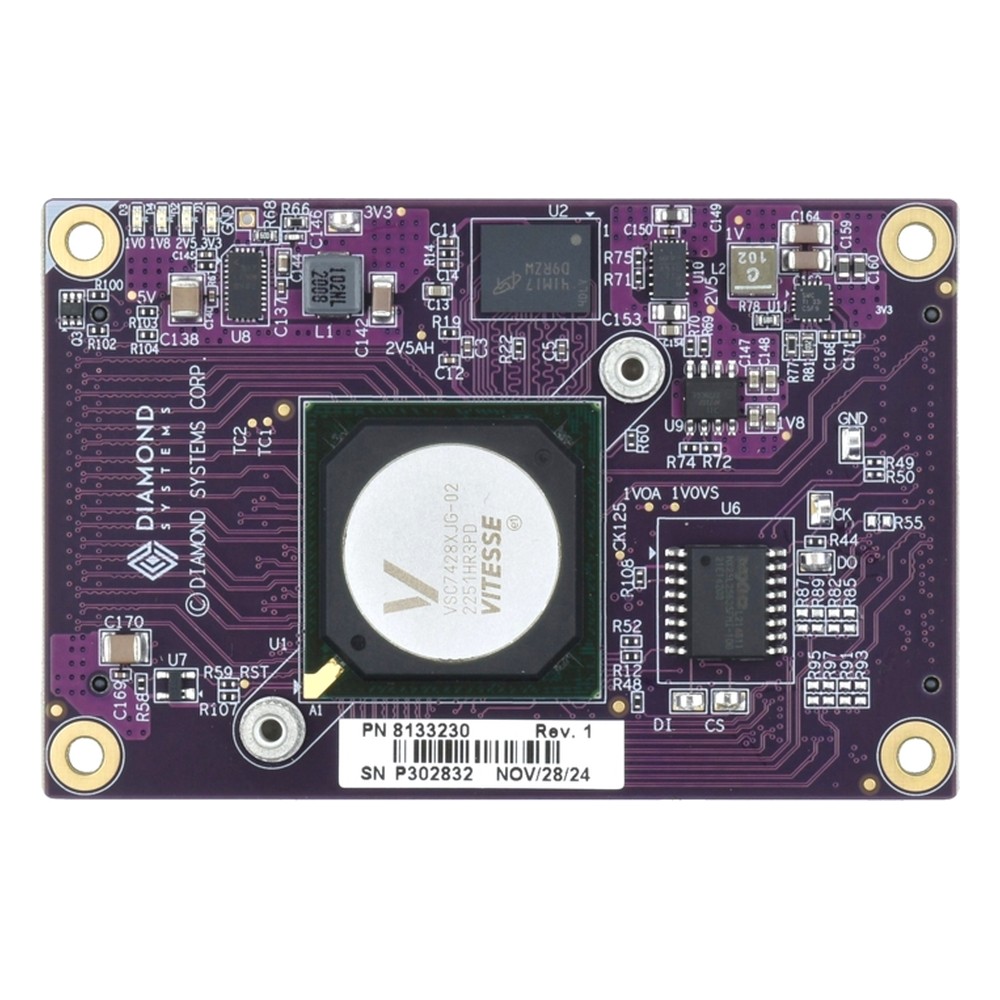
Small 8+2 Port Managed Layer 3 Ethernet Switch Module with Dual 2.5G SFP Support
- Temp
- −40 to +85 °C
- Power
- 5 V DC [Board]

Rugged Layer 3 Ethernet Switch Module with 24 Gigabit and 4x 10GbE Ports
- Temp
- −40 to +85 °C
- Power
- 5 V DC [Board]
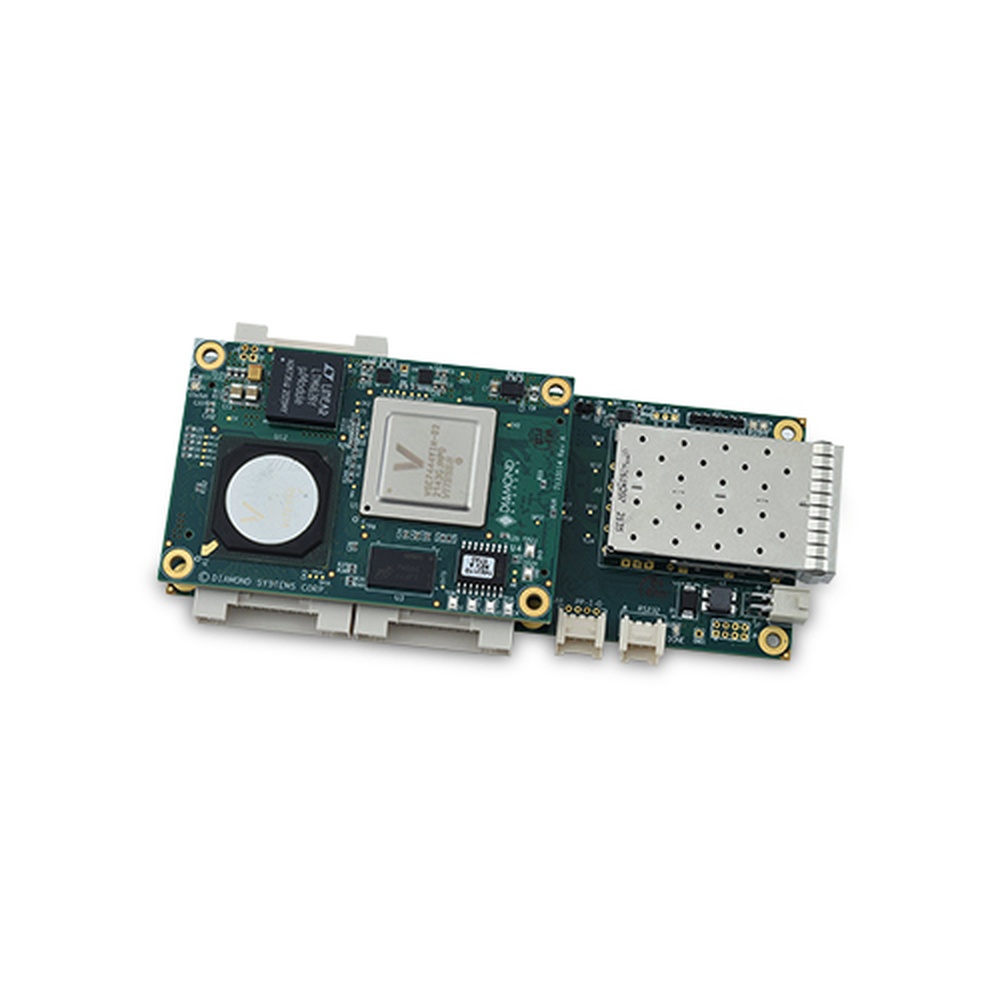
Compact Managed Ethernet Switch with 12x 1GbE Ports + 2x 1/2.5/5/10GbE SFP+ sockets, Layer 2 software & heat sink
- Temp
- −40 to +85 °C
- Power
- 5–36 V DC [Latching]
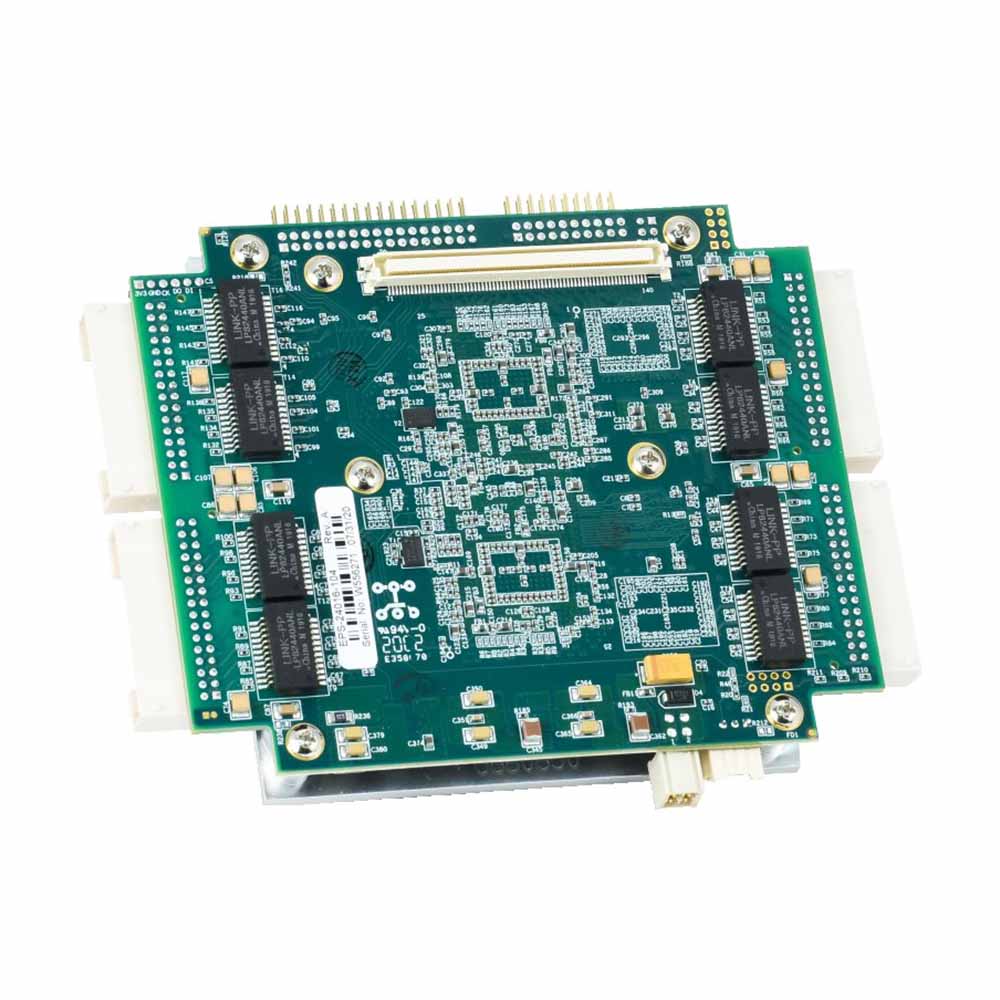
Rugged PC/104 Layer 2 Managed 26 Port Ethernet Switch with Dual SFP Ports
- Temp
- −40 to +85 °C
- Power
- 5–34 V DC [Latching]
Embedded switching across our range
From a module on your carrier to a sealed switch, built on the same switching cores.
Ethernet switch modules
Switching cores for a carrier board you design.
View range
Ethernet switch boards
Standalone managed switch boards with wide DC input.
View range
Rugged Ethernet switches
Sealed switches with circular connectors for vehicles and exposed sites.
View range
PC/104
Stackable computers, I/O, power and switch boards.
View range
Rugged mission computers
Computers that pair with board-level switching in defence systems.
View range
Industrial Ethernet switches
DIN-rail, rack and M12 switches for cabinet and field networks.
View rangeSpecifying an OEM Ethernet switch
Settle these before you choose a module or board.
-
01
Packaging
Module on your carrier, standalone board, boxed switch or custom design.
-
02
Ports and speed
Gigabit count, 2.5G or 10G uplinks, copper or fibre, and spare ports.
-
03
Software level
Layer 2, Layer 2+ or Layer 3, and whether you need IEEE 1588 PTP or TSN.
-
04
Power
Available rail or input range, worst-case consumption and any MIL power requirement.
-
05
Cooling
Free-air heat sink or a heat spreader to the enclosure wall.
-
06
Connectors
RJ45, M12, MIL-DTL-38999 or headers, with latching for vibration.
-
07
Environment
Temperature range, shock and vibration and coating.
-
08
Lifecycle
How long the product will be built, and the module’s availability over that time.
-
09
Support
Development kit, carrier design files and whether a custom carrier service helps.
OEM Ethernet switches: common questions
Quick answers
What is an OEM Ethernet switch?
A switch that an equipment maker builds into its own product. It is usually a board-level module or board inside the host, not a separate boxed switch.
What is the difference between OEM and ODM switches?
Who designs the switch. An OEM uses a standard switch module or board; an ODM designs a switch to the customer’s specification.
Can I get a custom Ethernet switch?
Yes, at three levels. A standard module on your own carrier, a semi-custom carrier designed for you, or a fully custom design.
What is a board-level Ethernet switch?
A managed switch on a board without an enclosure. It mounts inside a host system, which provides its connectors, power and cooling.
How do you integrate a switch module into a system?
Design a carrier board for it. The carrier provides magnetics, connectors, power, cooling and EMC protection, following the maker’s design guide.
Ethernet switch FAQs
-
What Is a Managed Switch?
A managed switch is an Ethernet switch you can configure, through a web interface, command line or SNMP, to set up VLANs, quality of service, redundancy and monitoring. An unmanaged switch is plug-and-play with no settings at all. Managed switches suit networks that are segmented, critical or monitored remotely.
-
What Is a Layer 2 Switch?
A Layer 2 switch forwards Ethernet frames between devices using their MAC addresses, which belong to the data link layer (Layer 2) of the OSI model. It learns which device is on which port and sends each frame only where it needs to go. It connects devices within one network or VLAN; routing between networks needs Layer 3.
-
Layer 3 Switch vs Router: What Is the Difference?
Both a Layer 3 switch and a router forward IP traffic between networks. A Layer 3 switch routes in hardware at close to wire speed across many ports, for traffic inside a site. A router connects a site to outside networks, with WAN interfaces, NAT, firewalling and VPNs, at lower throughput and with fewer ports.
-
OEM vs ODM: What Is the Difference?
An OEM (original equipment manufacturer) sells a product under its own brand and owns its design, whether or not it builds the product itself. An ODM (original design manufacturer) designs and builds a product that other companies buy and sell under their own names. The difference comes down to who owns the design.
-
What Is a Custom Carrier Board?
A custom carrier board is a baseboard designed for one product around a computer-on-module such as an NVIDIA Jetson or COM Express module. It carries only the connectors, power input and shape that product needs. It suits volume products and unusual I/O, at the cost of design work, an adapted board support package and compliance testing.
-
What Is an Ethernet Switch?
An Ethernet switch is a networking device that connects computers, cameras, controllers and other equipment on a local network. It learns the address of each connected device and forwards every frame only to the port it is meant for, so many devices can communicate at full speed at the same time.
Integrating switching at board level?
Tell us the host system, the ports you need and the environment, and we will recommend a board-level switch module or board, with matched power and isolation, to suit your design.