
 UK
UK 
Environment
Temperature range, ingress protection (IP rating) and shock and vibration: match these to where the system is actually installed, whether a cabinet, a vehicle or fully exposed outdoors.
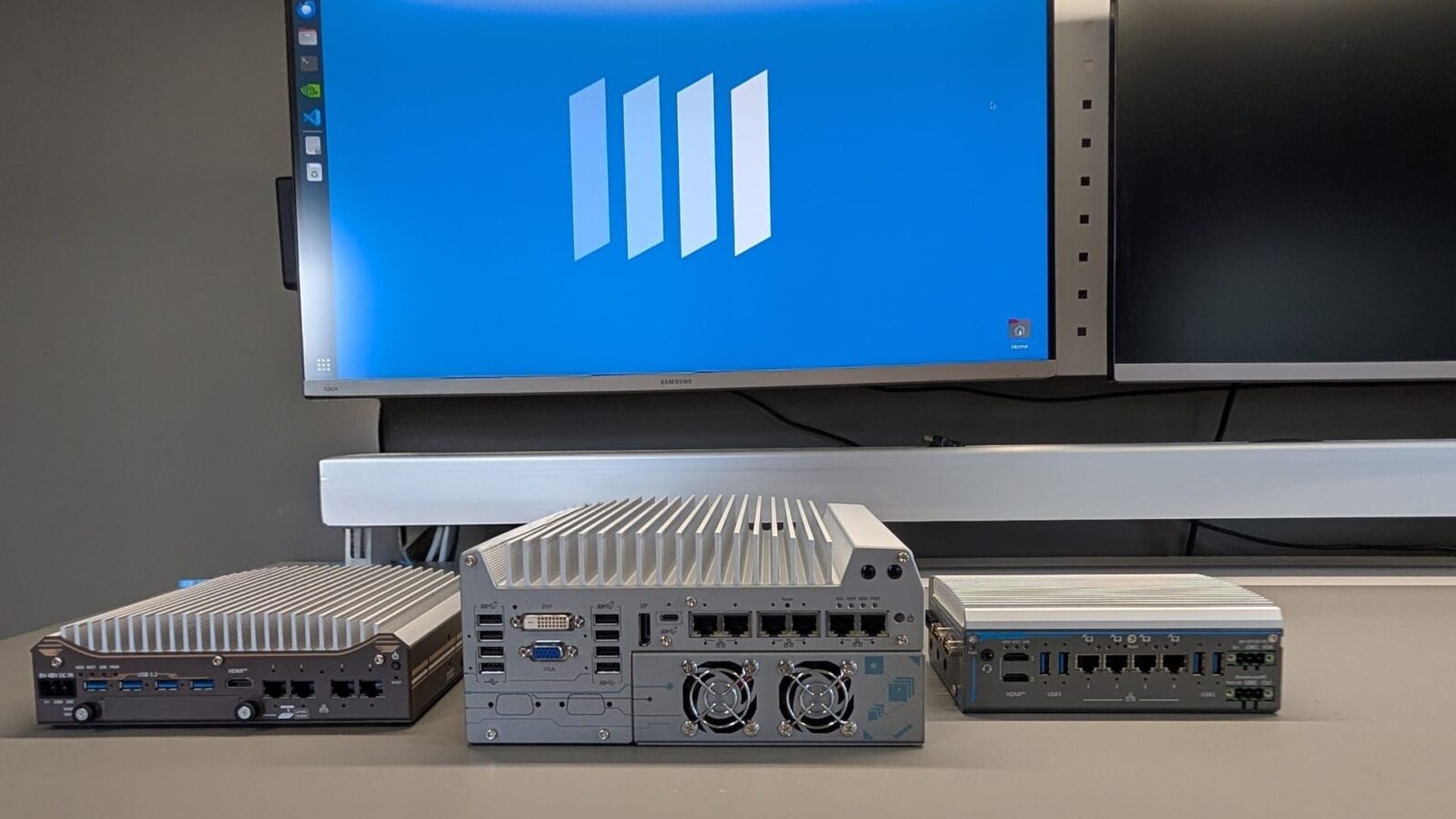
Five rugged industrial computers for automation, edge AI and harsh environments — from a highly expandable platform to a sealed IP66 box and a DIN-rail PoE edge computer.
A rugged industrial computer in 2026 has to do more than survive its surroundings. Alongside the wide-temperature operation, shock and vibration tolerance that define the category, the same box is increasingly expected to run AI inference, drive multi-camera vision and carry the connectivity for an edge deployment.
We have picked five rugged industrial computers we supply that cover that spread, from an expandable Core Ultra platform with up to 36 TOPS of on-board AI to a sealed IP66 system and a DIN-rail PoE edge computer. Whether you are an OEM designing the next platform or an integrator hardening an existing one, these are strong places to start, and we configure and test each one for the application before it ships. All five sit within our rugged computers range.
For background, our guide to the standards that make a computer rugged and our comparison of rugged and industrial computers set out where each type fits.
| Model | Maker | Platform | Strength | Best for |
|---|---|---|---|---|
| Nuvo-11000 | Neousys | Intel Core Ultra 200S | Expansion and AI (Cassette, MezIO, NPU) | High-compute automation and vision |
| Nuvo-11160GC | Neousys | Core Ultra 200S + 150 W GPU | Rugged GPU for edge AI | Vision inspection, mobile robots |
| POC-960GC | Neousys | AMD Ryzen PRO 8640U + 70 W GPU | Ultra-compact GPU computing | Space-constrained edge AI |
| SBOX-2624P-IP66 | Sintrones | AMD Ryzen R2312, IP66 | Fully sealed and waterproof | Outdoor and washdown sites |
| VBOX-3132 | Sintrones | Intel Atom x7000RE, DIN-rail | 4× PoE and CAN FD | Transport and PoE camera nodes |
Each is chosen for a different job, from expansion headroom and discrete GPUs to full sealing and DIN-rail PoE.
The Nuvo-11000 series sits at the top of Neousys’s rugged embedded computer range, built on the Intel Core Ultra 200S platform with up to 24 cores and an integrated NPU rated up to 36 TOPS. It pairs DDR5-6400 memory and PCIe Gen5 with a proven fanless thermal design, and its expansion Cassette and MezIO interface let you add a PCIe card and application-specific I/O without changing the chassis.
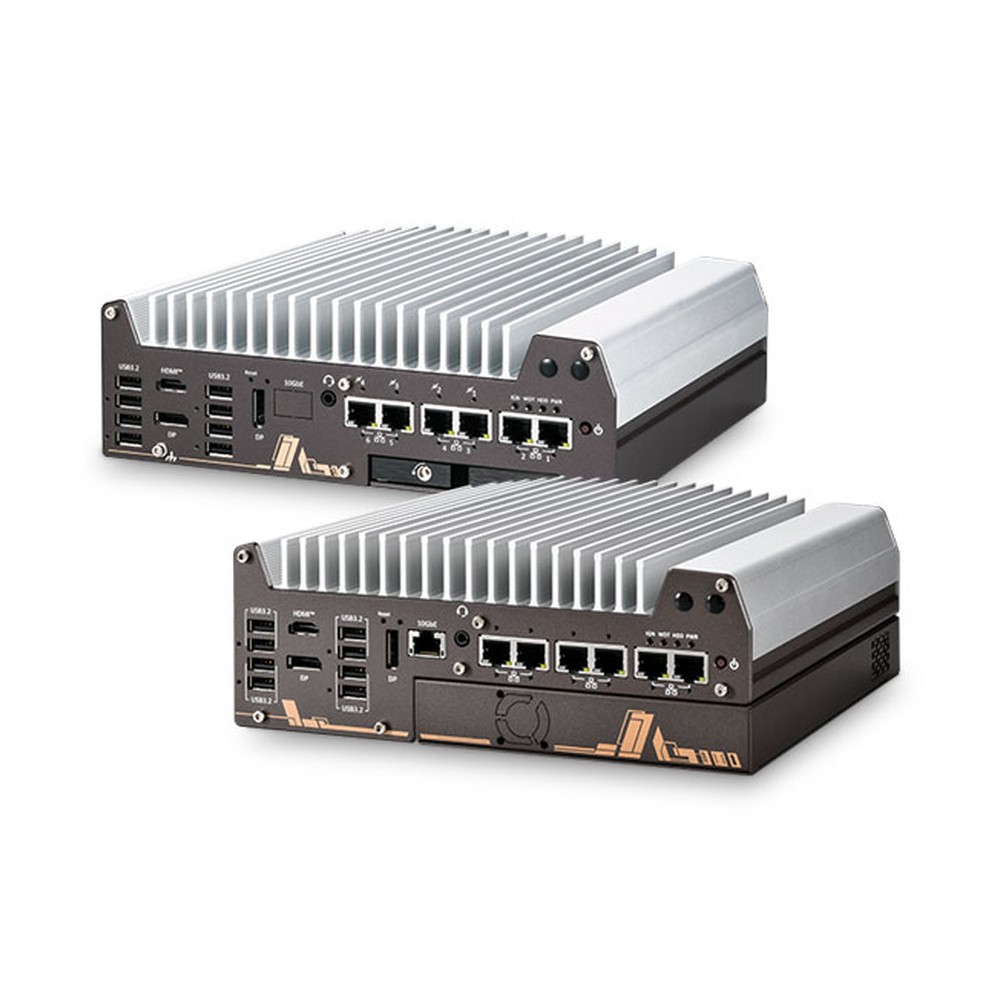
The Nuvo-11160GC takes the same Core Ultra 200S platform and builds it to carry an NVIDIA RTX GPU up to 150 W in a rugged, wide-temperature chassis. An upgraded Cassette cooling design holds −25 °C to 60 °C operation, and mini-PCIe slots accept 4G/5G modules, so it suits both fixed vision stations and mobile robots.
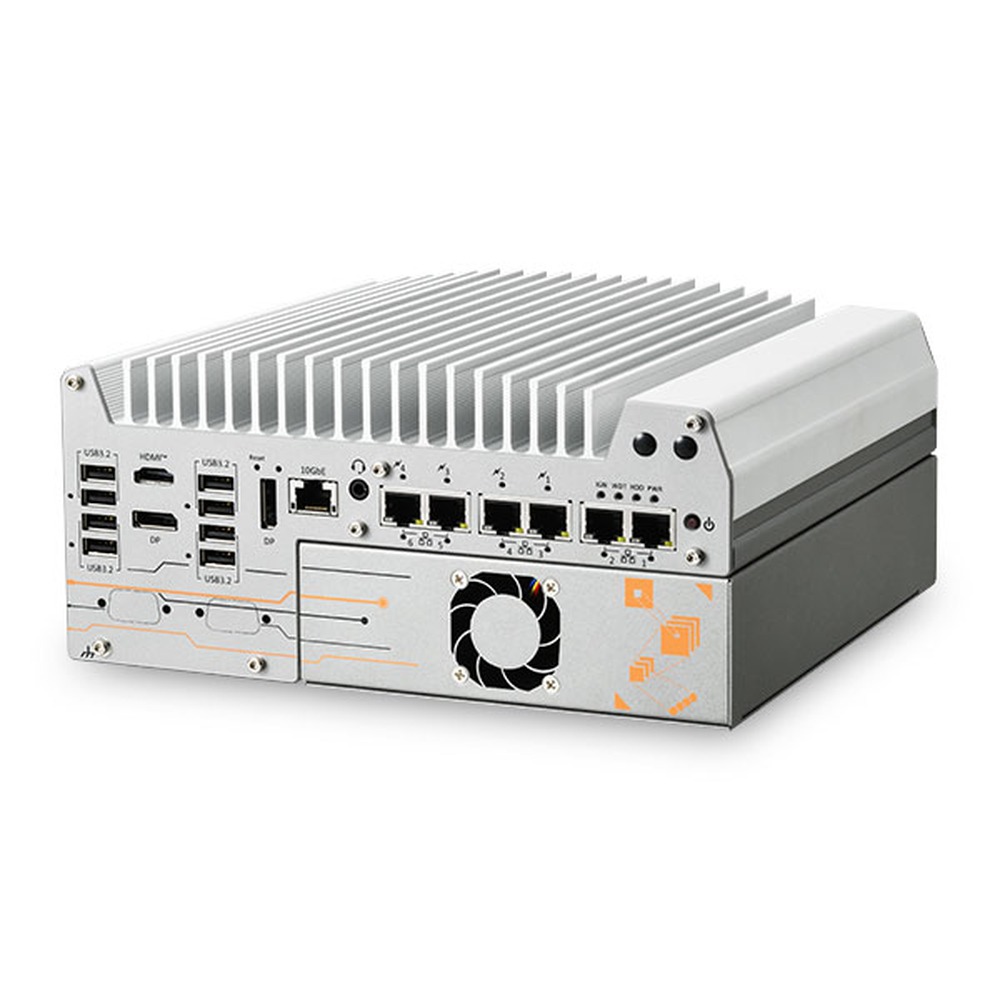
Where space is tight, the POC-960GC fits a 70 W NVIDIA low-profile GPU and an AMD Ryzen PRO 8640U, with its own 16-TOPS NPU, into a compact fanless box. The CPU handles control and data while the GPU accelerates image processing and inference, giving hybrid AI compute in a small footprint.
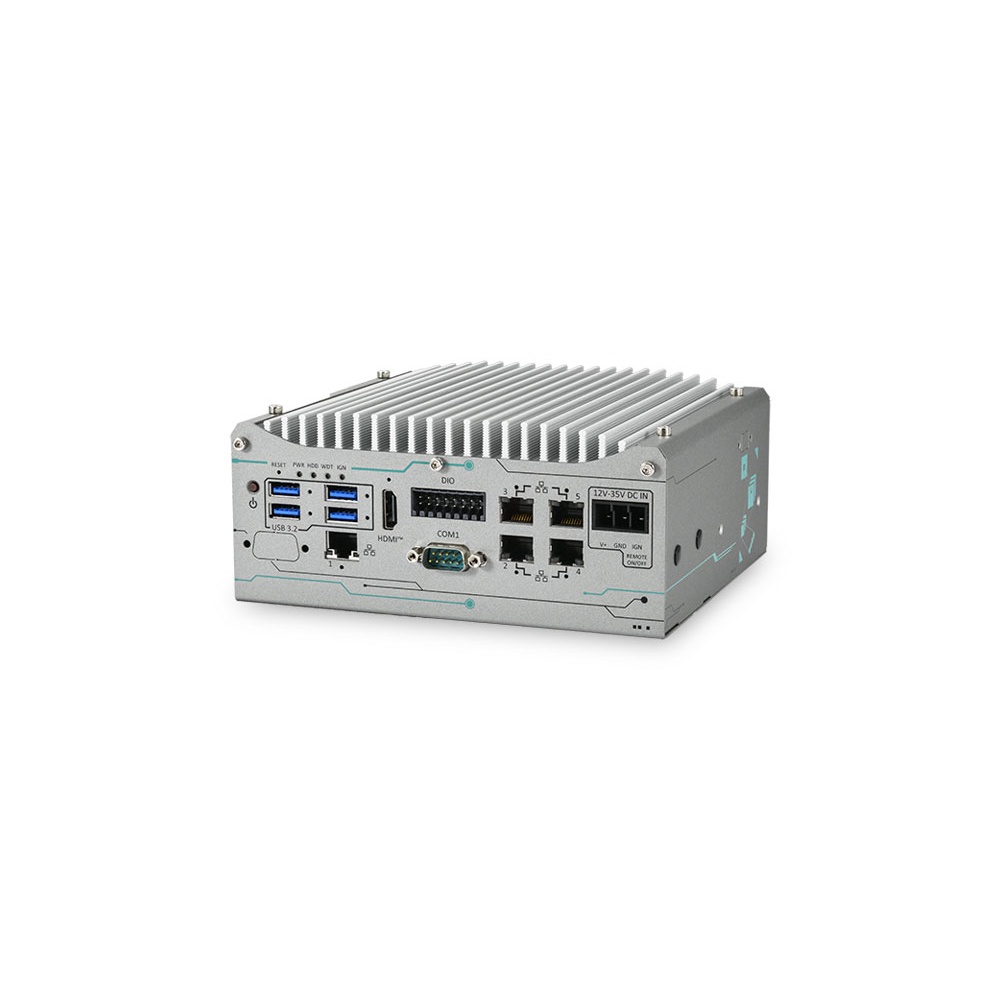
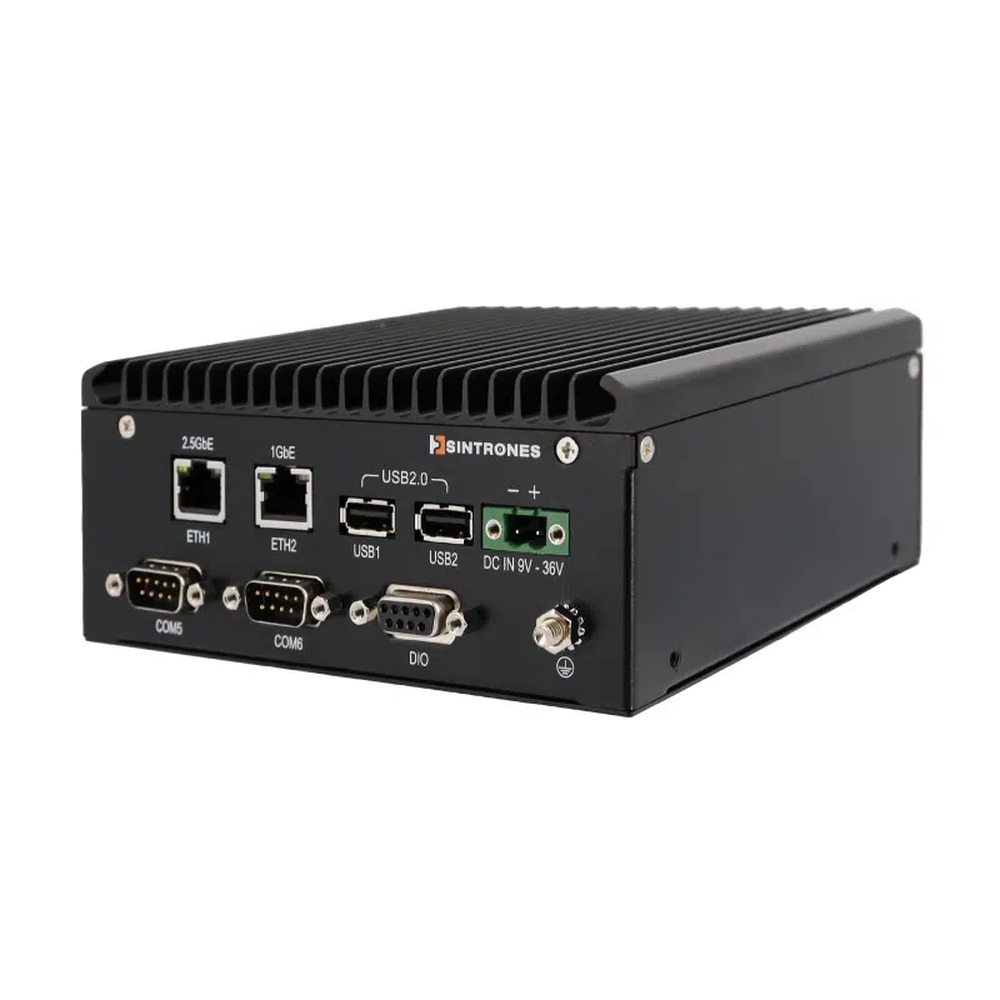
When the computer lives outdoors or gets washed down, the SBOX-2624P-IP66 is fully sealed to IP66 with M12 connectors throughout. It runs an AMD Ryzen Embedded R2312, delivers PoE over its two Gigabit ports, and takes a 5G/LTE modem for connectivity at exposed sites.
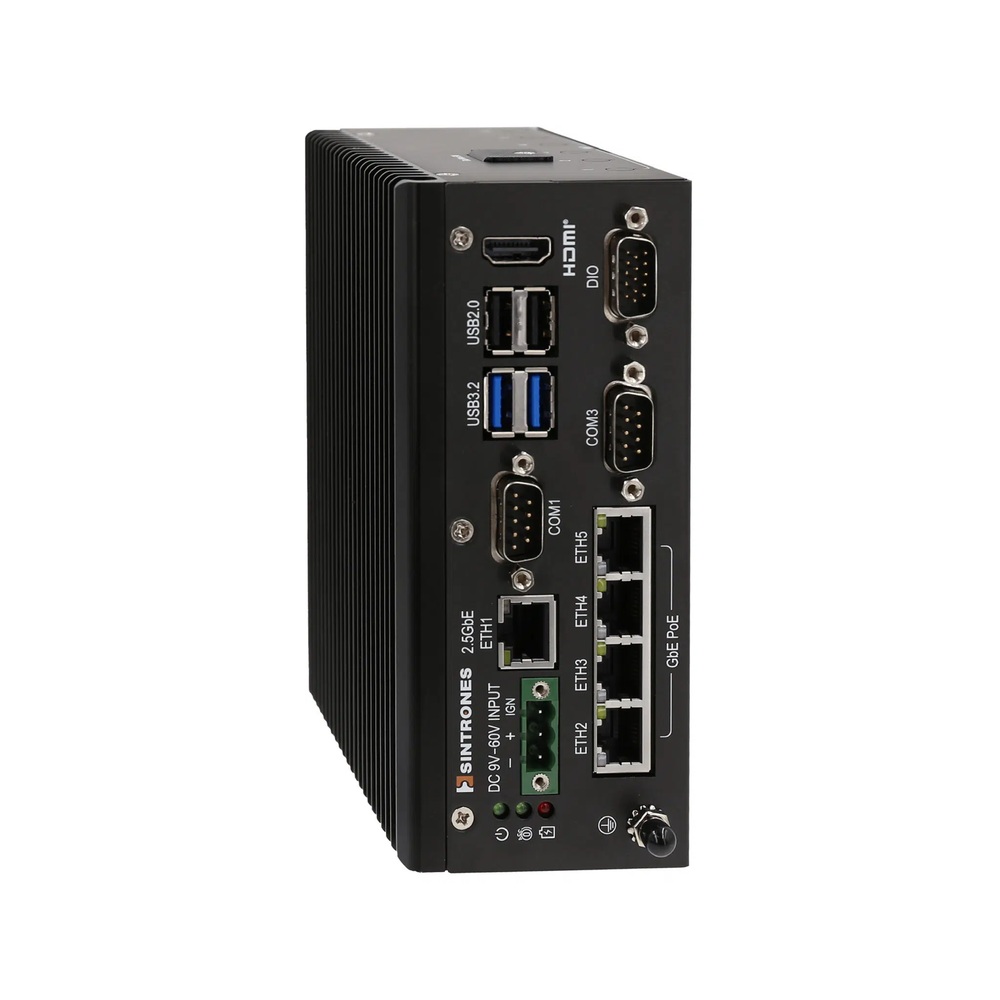
The VBOX-3132 packs four PoE ports, a CAN FD interface and a wide 9–60 V input into a DIN-rail footprint. It is aimed at traffic and transport surveillance: power and aggregate IP cameras or LiDAR, talk to vehicle systems over CAN, and fail over between networks using dual SIMs.
The five rugged industrial computers above, each with its full specification and configuration options.
Intel Core Ultra 200S Rugged Industrial Computer with PCIe Cassette and 6x 2.5GbE
Intel Core Ultra 200S Compact Rugged Edge AI Computer with NVIDIA RTX GPU
AMD Ryzen PRO 8640U Compact Edge AI Box PC with 70W NVIDIA GPU
AMD Ryzen Embedded R2312 IP66 Waterproof Embedded PC with 2x M12 PoE
Intel Atom x7000RE Amston Lake Fanless DIN Rail Computer with Four-Port PoE
Four questions narrow the field quickly; answer them in this order and the shortlist usually picks itself.
Temperature range, ingress protection (IP rating) and shock and vibration: match these to where the system is actually installed, whether a cabinet, a vehicle or fully exposed outdoors.

Control and SCADA, or AI and machine vision. Decide whether you need an integrated NPU or a discrete GPU before you size anything else.
PCIe and GPU, PoE, 2.5/10GbE, CAN FD, serial and isolated DIO: list what the application physically connects to, then match the ports.
Long-term availability, wide DC input and ignition control for mobile use, and the certifications the sector needs, such as MIL-STD-810 or EN 50155.
There is no single best rugged industrial computer: the right one follows the application. For expansion and AI headroom, the Nuvo-11000 leads; for a GPU at the edge, the Nuvo-11160GC with up to 150 W of GPU or the compact POC-960GC; for sealed outdoor use, the IP66 SBOX-2624P-IP66; and for DIN-rail PoE and transport, the VBOX-3132.
Being aware of the options, and how environment, performance and lifecycle pull against one another, saves time and cost later. Whichever platform fits, we configure and test it for the deployment, and our team can guide both the technical and commercial fit.
The right rugged computer follows the site and the workload. Tell us the environment, the compute and what it connects to, and we’ll configure the platform to suit.
The industrial temperature range is −40 to 85 °C: the grade an electronic component must operate across to be called industrial, compared with 0 to 70 °C for commercial parts. Rugged computers built from industrial-grade components typically run from −25 or −40 °C up to 70 °C as a complete system.
MIL-STD-810G (2008) and MIL-STD-810H (2019) are successive revisions of the US military environmental test standard. 810H is the current version; it refined and reorganised test methods and tightened guidance, but both define test methods rather than a pass or fail certificate.
IP66 is the rating above IP65 — dust-tight, and protected against powerful water jets. It is the standard specification for outdoor industrial computing in storm-exposed locations, marine deck equipment and light wash-down food handling, equivalent to NEMA 4 / 4X in North American markets.
Fanless computers cool themselves passively, through a finned heatsink chassis and heat pipes, instead of a fan. With no moving parts and no airflow drawing in dirt, they are more reliable in dusty or vibrating places, completely silent, low maintenance and easy to seal, which is why they are the standard choice for industrial and embedded use.
802.3af (PoE), 802.3at (PoE+) and 802.3bt (PoE++) are the three IEEE Power over Ethernet standards. They differ mainly in power per port, roughly 15 W, 30 W, and up to 60 to 90 W, with the higher tiers using all four pairs of the cable.
Sufficient for lightweight workloads — single-camera inference, gateway aggregation — but usually insufficient for multi-camera analytics, multi-sensor fusion, or multi-node edge AI clusters.
Tell us the environment, the compute you need and what it connects to, and we'll recommend a rugged industrial computer to suit, then configure and test it ready to deploy.