
 US
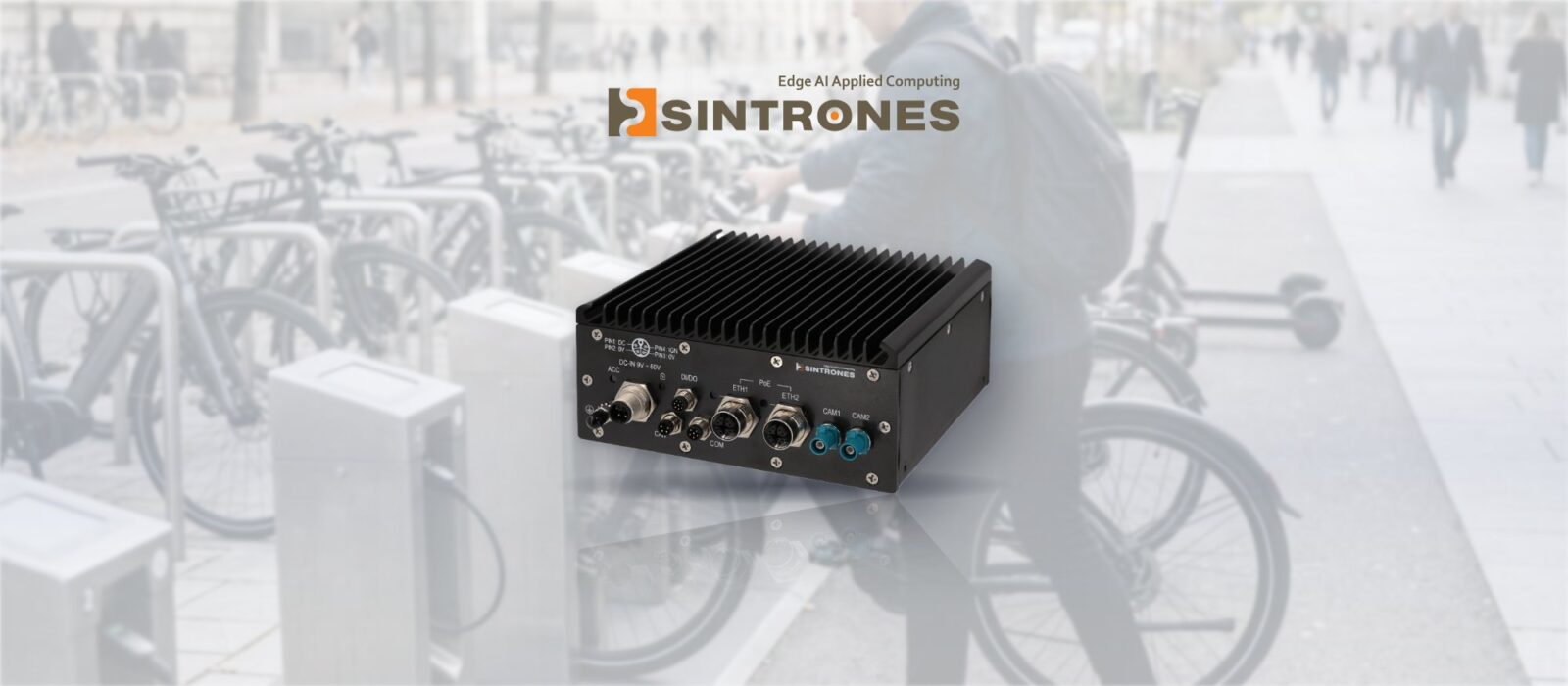
Outdoor edge AI at a bike share station
A bike share station sits on the pavement all year, with docks that riders use at every hour, and cameras with local AI can tell the operator how many bikes are there, which docks are free and when something needs attention. The computer doing that work has to live outdoors beside the docks, which calls for a rugged fanless computer sealed against the weather.
Here we look at how the Sintrones IBOX-600-IP66 fits that role. It is one of our waterproof computers, an IP66 aluminum enclosure around an NVIDIA Jetson Orin Nano or Orin NX module, with every external connection on a circular connector. As standard, we image the NVMe SSD with JetPack and the operator’s application, fit the cellular and Wi-Fi modules and set the power behavior before it ships.
What a bike share station asks of a computer
- 01Sealed against rain and dust
- Street furniture is rained on, splashed by passing traffic and cleaned with jets of water, so the enclosure and its connectors must keep water out.
- 02AI on site, not in the cloud
- Running detection beside the cameras means only results, not continuous video, need to travel over the cellular link.
- 03A cellular backhaul
- Most stations have no wired network, so the computer needs a 4G or 5G modem of its own.
- 04Outdoor temperatures
- A station sees frost in winter and direct sun in summer, with no air conditioning in the cabinet.
- 05Wiring that stays put
- Cameras, power and the dock controller need connectors that lock in place and do not loosen over time.
From camera to operator app
The computer sits in or beside the station, watching the docks and reporting what it sees.
-
Capture
M12 EthernetIP cameras covering the docks connect to the 2.5GbE and GbE ports on X-coded M12 connectors, which screw in place and keep water out of the joint.
-
Detect
Jetson OrinThe Jetson module runs video analytics models that find bikes, count them and tell an occupied dock from an empty one, or spot a bike left outside the bays.
-
Integrate
Serial, CAN, DIORS-232/422/485, CAN and digital I/O on M8 connectors link the computer to the dock controller, lights or alarms.
-
Report
4G or 5GAn optional 4G or 5G modem sends counts and alerts to the operator’s platform, with Wi-Fi as a second option where the site has it.
Sintrones IBOX‑600-IP66 builds for the station
Two IP66 Jetson Orin builds: the Orin Nano 8GB for a few cameras, and the Orin NX 16GB for more streams and larger models.
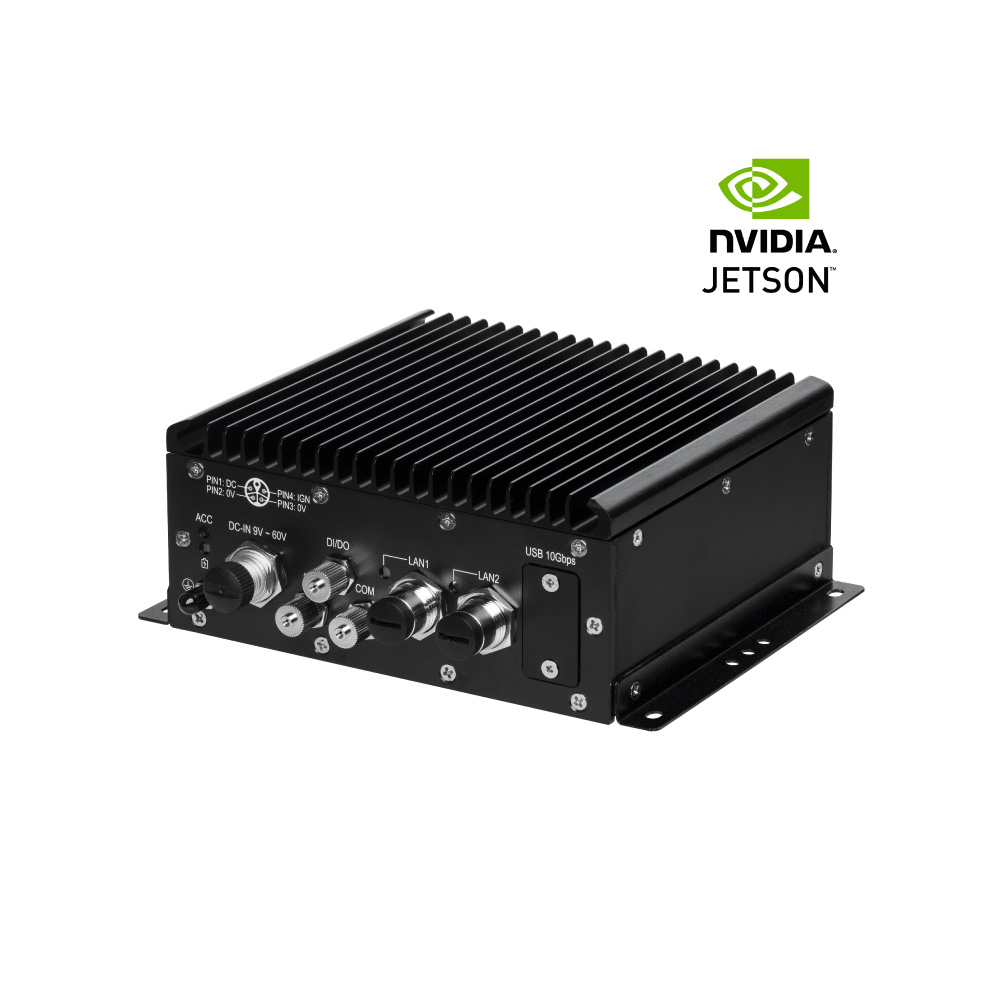
NVIDIA Jetson Orin Nano 8GB Rugged IP66 Waterproof Edge AI Computer
- AI
- 40 TOPS
- SOM
- NVIDIA Jetson Orin Nano 8 GB
- Ethernet
- 1× 2.5GbE, 1× GbE
NVIDIA Jetson Orin NX 16GB Fanless IP66 Waterproof Edge AI Computer
- AI
- 100 TOPS
- SOM
- NVIDIA Jetson Orin NX 16 GB
- Ethernet
- 1× 2.5GbE, 1× GbE
A closer look
-
01

IBOX-600-IP66
The sealed aluminum enclosure, finned for passive cooling with no fan.
-
02
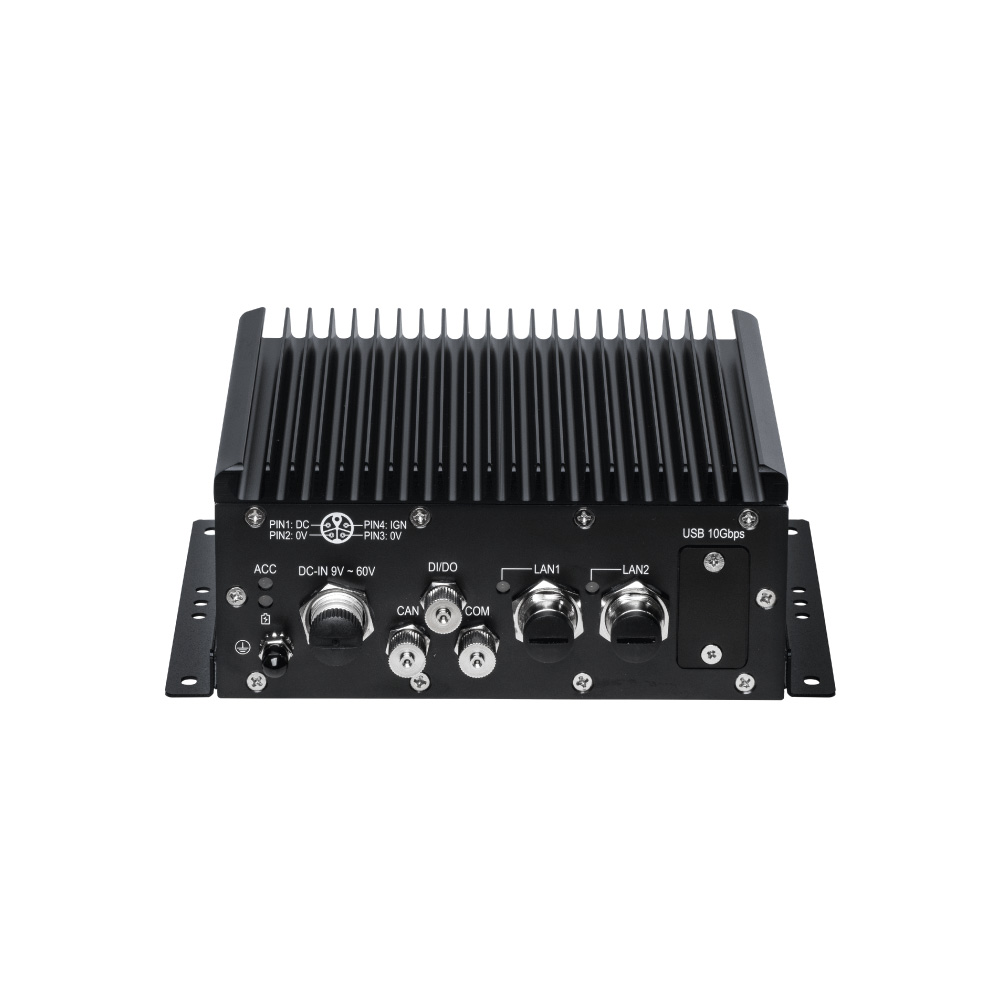
Connector panel
M12 power and LAN, with M8 CAN, serial and digital I/O, and a covered USB port.
-
03
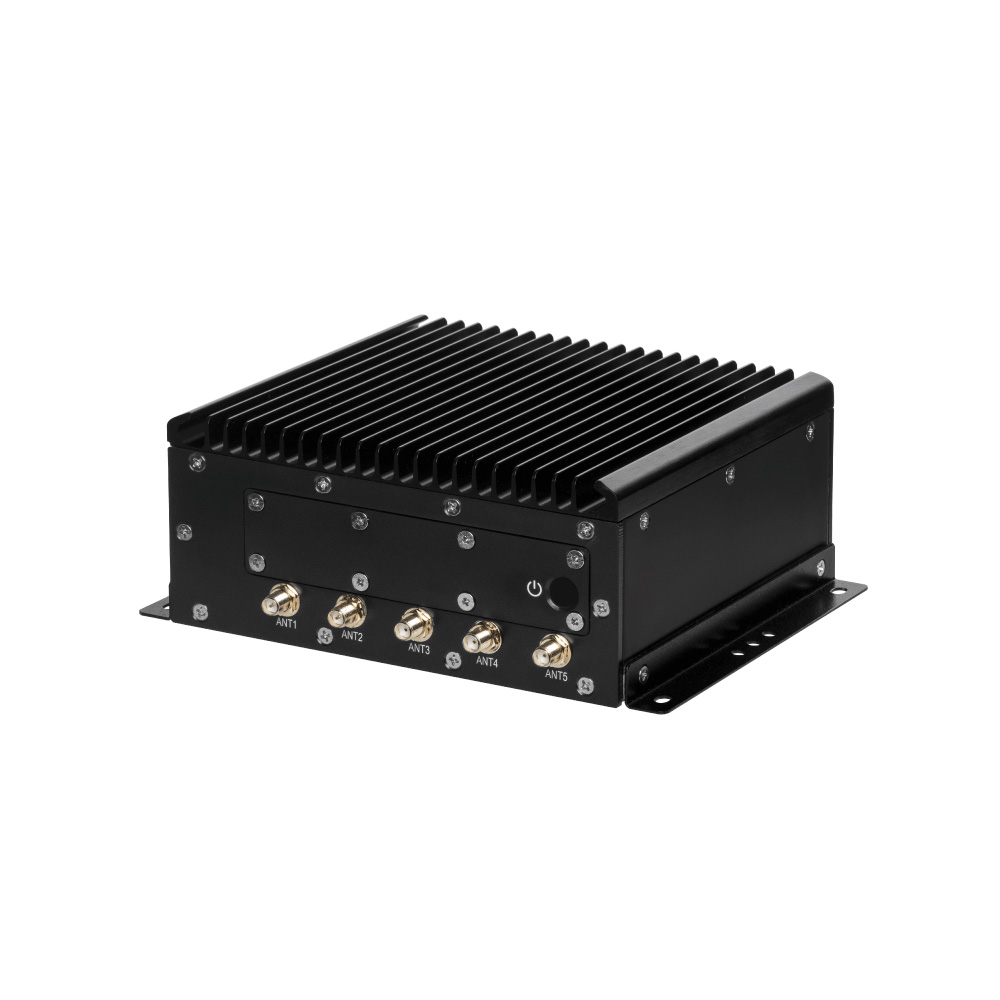
Antenna side
Antenna connectors for the cellular, Wi-Fi and GPS modules fitted inside.
Which Jetson module for the station
| IBOX-600-IP66-ON8 | IBOX-600-IP66-ONX16 | |
|---|---|---|
| Module | NVIDIA Jetson Orin Nano 8GB | NVIDIA Jetson Orin NX 16GB |
| AI performance | 40 TOPS | 100 TOPS |
| GPU | 1024-core Ampere, 32 Tensor Cores | 1024-core Ampere, 32 Tensor Cores |
| CPU | 6-core Arm Cortex-A78AE, 1.5 GHz | 8-core Arm Cortex-A78AE, 2.0 GHz |
| Memory | 8 GB LPDDR5 | 16 GB LPDDR5 |
| Ingress protection | IP66 | IP66 |
| LAN | 1× 2.5GbE + 1× GbE, M12 | 1× 2.5GbE + 1× GbE, M12 |
| Wireless options | 4G or 5G, Wi-Fi, GPS | 4G or 5G, Wi-Fi, GPS |
| Power | 9–60 V DC on M12, ignition management | 9–60 V DC on M12, ignition management |
| Operating temperature | −25 to 70 °C | −25 to 70 °C |
For one or two cameras counting bikes at a single station, the Orin Nano build is usually enough. Step up to the Orin NX 16GB when the station has more cameras or the model also tracks people and bikes between frames. Our Orin Nano vs Orin NX FAQ explains the difference between the modules.
What this setup gives the operator
Sealed hardware at the dock turns each station into a source of live information rather than a place someone has to visit to check.
-
Outcome 01
Live view of every station
Counts and dock status arrive from each site, so redistribution crews know where bikes are needed.
-
Outcome 02
Less data on the cellular link
Inference runs on the Jetson module, so the station sends results and alerts instead of continuous video.
-
Outcome 03
No separate enclosure
The IP66 case and sealed connectors mean the computer can be fitted outdoors without a weatherproof box around it.
-
Outcome 04
Room to grow the model
The same enclosure takes Orin Nano or Orin NX, so a busier station can move up without changing the wiring.
For more on how sealed hardware is specified outdoors, see our guide to designing outdoor computer enclosures and our explainer on what IP66 means.
Outdoor edge AI FAQs
-
What does IP66 mean?
IP66 is the rating above IP65 — dust-tight, and protected against powerful water jets. It is the standard specification for outdoor industrial computing in storm-exposed locations, marine deck equipment and light wash-down food handling, equivalent to NEMA 4 / 4X in North American markets.
-
What Is a Smart City?
A smart city uses connected sensors, cameras, data and digital services to run its infrastructure and public services more efficiently. Common examples include adaptive traffic lights, smart parking, connected street lighting, real-time public transport information, environmental monitoring and public safety systems, with much of the data processed by edge computers close to where it is collected.
-
What Is Video Analytics?
Video analytics is software that analyses video automatically to detect, classify and track people, vehicles and events, so operators do not have to watch every screen. Modern systems use AI models and often run at the edge, on a computer beside the cameras, to react in real time and avoid sending every stream to the cloud.
-
What Is People Counting?
People counting uses sensors, most often overhead cameras with AI, to count how many people pass through entrances and exits. Subtracting exits from entrances gives live occupancy, so operators know how busy a space is at any moment. Stations, shops, offices and venues use it for safety limits, staffing and planning.
-
Jetson Orin Nano vs Orin NX: What Is the Difference?
The Jetson Orin Nano delivers up to 67 TOPS in 7 to 25 W with 4 to 8 GB of memory, suited to entry-level, low-power vision. The Orin NX steps up to 157 TOPS in 10 to 40 W with 8 to 16 GB, adds deep learning accelerators and a hardware video encoder, and handles multi-camera, heavier inference.
-
What Is the Difference Between M8 and M12 Connectors?
M8 and M12 are circular industrial connectors named after their thread: 8 mm and 12 mm. M8 is smaller, with 3 to 8 pins, and suits compact sensors and low-power signals. M12 is larger, with up to 12 pins and more codings, and carries higher power and Ethernet up to 10 Gbit/s, which is why industrial computers use it.
Putting AI on a street-side station or kiosk?
Tell us how many cameras the site has, how it connects and what the model needs to detect, and we'll specify the IBOX build and image to match.