
 US
US 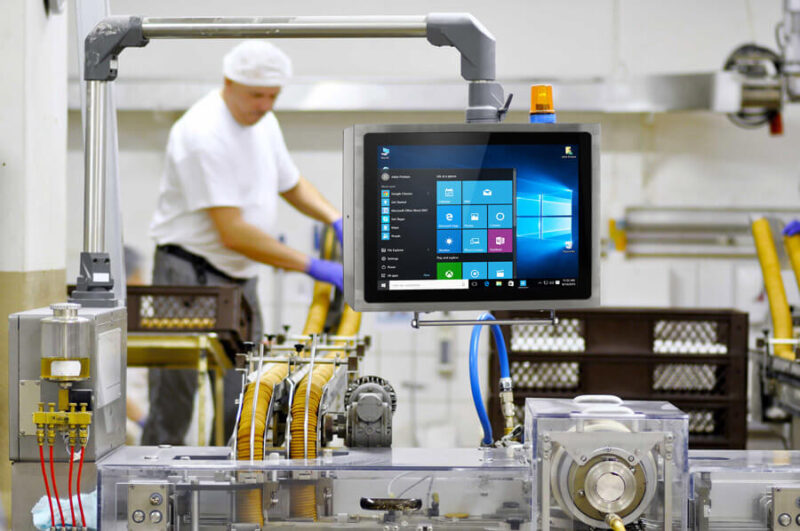
IP69K means an enclosure is dust-tight (the first digit, “6” — no ingress of dust at all) and protected against close-range high-pressure, high-temperature water jets (the suffix “9K” — water at 80°C and 8—10 MPa, from a fan-jet nozzle held 100—150 mm from the surface). It is the food and beverage industry’s standard rating for equipment subjected to daily sanitary wash-down, used in both USA and US markets — and it is extensively used in pharmaceutical, dairy, and other industries with stringent hygiene requirements.
NEMA does not publish a direct equivalent rating, so food-industry equipment for North American markets typically carries IP69K alongside NEMA 4X (stainless steel construction) — both ratings listed rather than one substituted for the other.
There is one common misunderstanding worth flagging up front: IP69K does NOT imply submersion protection. A device rated IP69K may fail when submerged, because the IP69K test does not cover the static-pressure conditions of submersion.
How IP69K is tested
The IP69K test method is specified in DIN 40050-9, a German standard that extends IEC 60529 with the “K” suffix for industrial wash-down environments. It is recognized internationally — including under USA food-industry guidance (BRC Global Standard) and US food-industry guidance (FDA / USDA / 3-A Sanitary Standards). The test conditions are precise:
The dust-tightness portion (the “6” digit) follows the standard IEC 60529 IP6x test — partial-vacuum talcum-powder chamber for 8 hours, with any dust ingress failing the rating.
After testing, the enclosure is opened and inspected. Any water ingress that could compromise safe operation fails IP69K. The rating is binary — there is no concept of “partial IP69K”. For the full IP rating structure including how IP69K fits with IP67 and IP68 for dual-rated wash-down-plus-submersion equipment, see our overview of ingress protection ratings.
-
//
Water temperature. 80°C (±5°C). The temperature mimics hot wash-down regimes used to inactivate biological contamination in food and pharmaceutical processing.
-
//
Water pressure. 8 to 10 MPa (80—100 bar / 1,160—1,450 psi). This is genuinely high pressure — comparable to a commercial pressure washer.
- //
-
//
Nozzle type. a specific fan-jet nozzle, geometry defined by DIN 40050-9.
-
//
Flow rate. 14 to 16 liters per minute.
-
//
Test angles. the nozzle is held at 0°, 30°, 60° and 90° relative to the enclosure surface. The enclosure is rotated on a platform at 5 rpm.
-
//
Duration. 30 seconds at each angle. Total water-jet time is therefore 2 minutes per orientation.
When IP69K is the right specification
IP69K is the appropriate rating for industrial computing deployments where the equipment is subjected to regular high-pressure, high-temperature cleaning:
IP69K-rated equipment is typically constructed from stainless steel (304 or 316) for chemical and corrosion resistance, with M12 waterproof connectors, and fanless cooling — three engineering choices that together address the wash-down regime’s full requirements.
-
//
Food and beverage processing. production-line HMIs, panel PCs in meat processing, dairy, beverage filling, bakery operations where daily wash-down is mandated for hygiene compliance. USA BRC Global Standard for Food Safety and FSA regulation, US FDA Food Code / USDA FSIS / 3-A Sanitary Standards — all treat IP69K stainless equipment as acceptable for direct-contact zones.
-
//
Pharmaceutical manufacturing. cleanroom and production equipment where GMP requires high-pressure sterilization cleaning. USA MHRA GMP and US FDA cGMP both apply.
-
//
Dairy operations. milking parlours, processing plants, cheese-making facilities with strict bacteriological control. USA FSA / Defra dairy regulations and US Pasteurised Milk Ordinance (PMO) both apply.
-
//
Commercial kitchens at industrial scale. back-of-house equipment in production catering, hospital food production.
-
//
Heavy-duty vehicle environments. concrete mixers, refuse vehicles, agricultural equipment that requires hot pressure-wash cleaning at end of shift. The original DIN 40050-9 specification was developed exactly for these vehicles.
-
//
Veterinary and animal-processing facilities. environments cleaned with hot disinfectant solutions at high pressure.
IP69K vs IP67/IP68 — they cover different scenarios
The numbering is misleading. IP69K has a higher second digit than IP67 or IP68, but the three ratings cover meaningfully different exposure scenarios:
A device rated IP69K alone may fail when submerged, because the construction needed to resist high-pressure jets is not the same as the construction needed to resist static submersion pressure. Equally, a device rated IP67 alone may fail in a wash-down regime, because the seal that survives static immersion may be defeated by 80°C water at 100 bar.
For environments that involve both wash-down and occasional submersion (food-processing equipment that might be dropped in a cleaning sink, for example), look for dual-rated IP67/IP69K or IP68/IP69K equipment — separately validated for both scenarios.
-
//
IP67. temporary submersion in still water at 1 m depth, 30 minutes, ambient temperature.
-
//
IP68. continuous submersion under manufacturer-specified conditions (depth and duration exceeding IP67).
-
//
IP69K. high-pressure, high-temperature water jets from close range. NOT submersion.
IP69 vs IP69K — what's the difference?
The terms are sometimes used interchangeably, but there is a distinction:
In practice, “IP69” and “IP69K” refer to the same test conditions and protection level. The “K” designation remains in widespread industry use because the original DIN standard pre-dates the IEC adoption by years. Treat IP69 and IP69K as equivalent for specification purposes.
-
//
IP69K. is the original designation from DIN 40050-9 (the German standard). The "K" originally stood for the German "Kraftfahrzeug" (motor vehicle) — the standard was developed for heavy vehicle cleaning.
-
//
IP69. appears in the IEC 60529 standard (the international standard) after DIN 40050-9 was adopted into it. The test conditions are aligned with the original DIN 40050-9 IP69K specification.
NEMA equivalent
IP69K has no direct NEMA equivalent. The NEMA enclosure type system does not include a specific high-pressure, high-temperature wash-down rating that aligns with IP69K’s test conditions. The closest NEMA designations are:
For US-market food-and-beverage deployments where IP69K is specified internationally, equivalent equipment is typically marketed as “NEMA 4X stainless steel washdown” with a separate IP69K certification listed alongside the NEMA designation. The two specifications complement rather than substitute for each other — both appear on the spec sheet, both inform the buyer.
-
//
NEMA 4X. protects against direct water spray and adds corrosion resistance (typically stainless steel construction). The food-industry standard in North America, but not equivalent to IP69K's wash-down test.
-
//
NEMA 6P. covers prolonged submersion, more analogous to IP68 than IP69K.
Common misunderstandings
-
//
IP69K is not submersible. This is the single most consequential misunderstanding. The rating covers high-pressure jets, not immersion. For submersion protection, specify IP67 or IP68 alongside IP69K.
-
//
A higher number ≠ a higher rating across the board. IP69K is more demanding than IP67 or IP68 in some dimensions (pressure, temperature) but less demanding in others (no submersion test). The ratings are not on a single linear scale.
-
//
IP69K does not guarantee chemical resistance. Caustic disinfectants, chlorinated cleaners, and acid solutions can attack gaskets and enclosure materials over time. IP69K stainless equipment typically uses 304 or 316 stainless plus chemical-grade gaskets — the IP rating alone does not specify this.
-
//
IP69K does not guarantee food-safety compliance. Under USA BRC, FSA / Defra and US FDA, USDA FSIS or 3-A Sanitary Standards, sanitary equipment design covers more than ingress resistance — surface finish (Ra), drainage geometry, crevice-free construction, and cleanability are all separately assessed. IP69K is necessary but not sufficient for food-grade certification.
-
//
The wash-down test is short. 30 seconds per angle is the standard test duration — real-world cleaning regimes can be longer and the seal must withstand cumulative exposure across the equipment's service life. Gasket replacement is part of routine maintenance for IP69K equipment.
-
//
IP69K does not imply fanless construction. Many wash-down deployments also have airborne contamination concerns that require fanless design — but that is a separate engineering choice, not implied by the rating.
Things Embedded IP69K equipment
Things Embedded supplies IP69K-rated computers, panel PCs and displays across food and beverage, pharmaceutical, dairy and heavy-duty vehicle deployments — in USA and US markets. The range includes dual-rated IP67/IP69K and IP66/IP69K options, stainless steel IP69K panel PCs in 304 and 316 grades, full-IP69K builds with M12 connectors throughout, and dual IP69K / NEMA 4X specification for North American buyers.
If you would like help specifying the right IP69K build for your deployment, send us:
…and we will shortlist practical options. Call +1 407 214 9446 or email sales@things-embedded.com.
-
//
Cleaning regime. water temperature, pressure, frequency, chemicals in use.
-
//
Surface contact. direct food / pharmaceutical contact zone, or splash-zone only.
-
//
Material grade. 304 stainless acceptable, or 316 required for halide / chloride exposure.
-
//
I/O list. and whether full M12 sealing is required.
-
//
Approval requirements. USA BRC / FSA, US FDA / USDA / 3-A Sanitary Standards, or USA MHRA / US FDA cGMP for pharmaceutical.