
 US
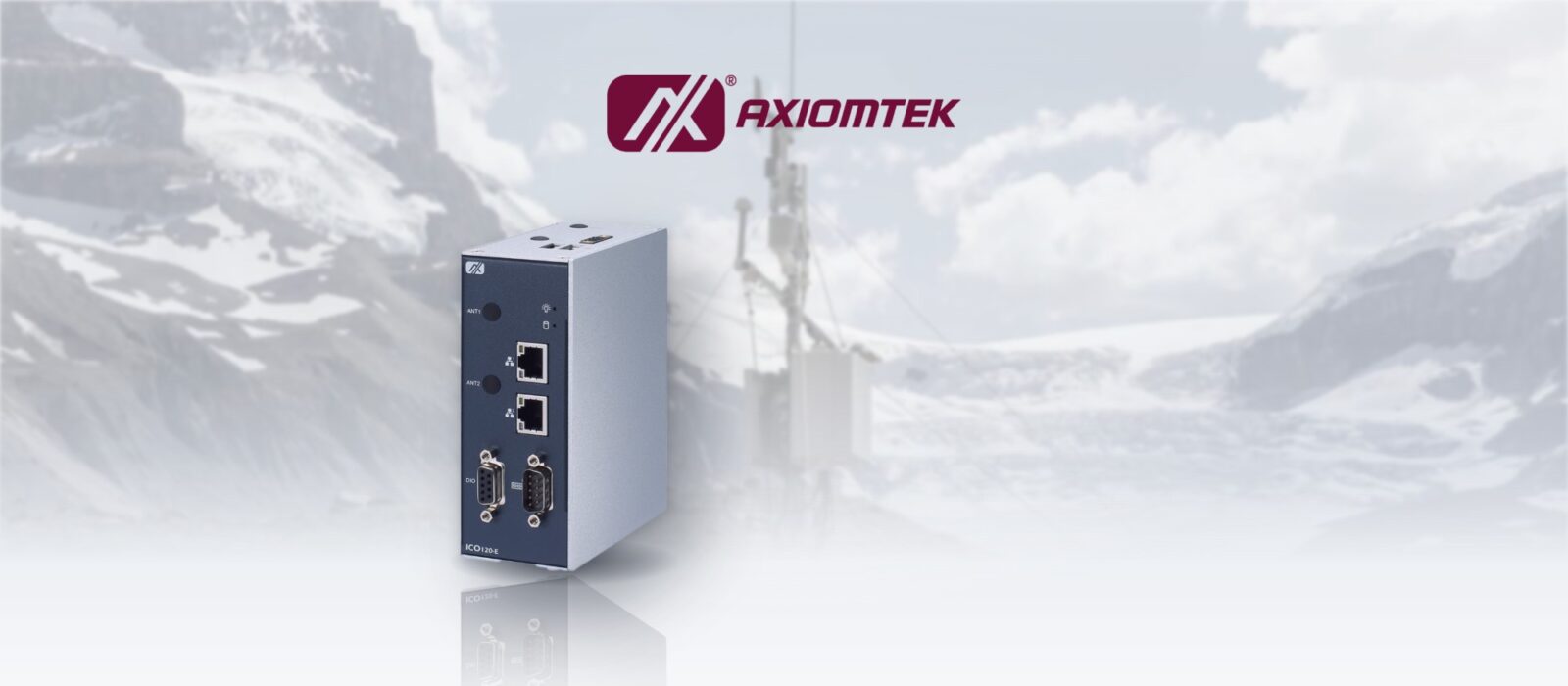
Outdoor PC Leverages Industrial IoT for Weather Monitoring
Monitoring weather in remote and mountainous regions presents unique challenges due to unpredictable conditions and harsh environments. These areas are prone to sudden weather changes, such as extreme cold, heavy snowfall, or high winds, which can make forecasting vital for safety and operations. Advanced weather monitoring systems equipped with our outdoor PCs ensure reliable data collection and help mitigate risks in these rugged terrains.
Weather in remote and mountainous regions is unpredictable and can change fast, and the people and industries below depend on early warning. Monitoring it means placing equipment where there is no mains power, no technician nearby and conditions that swing from freezing nights to hot, sealed cabinets.
For a weather monitoring deployment in the mountains, we supplied Axiomtek’s ICO120-E3350, a compact, fanless outdoor PC that collects readings from the station’s sensors, processes them on site and sends them on in real time. It is the kind of automatic weather station computer we supply for power and energy and environmental monitoring.
What a remote weather station demands
Every requirement comes back to the same fact: nobody can easily get there.
-
01
Minimal maintenance
Fanless operation removes the parts that need cleaning or replacing, keeping the station running between rare visits.
-
02
Compact cabinets
Equipment sits in small outdoor enclosures, so the PC must be space-efficient as well as rugged.
-
03
Battery and solar power
A low-power processor maximizes uptime from batteries and solar panels without frequent recharging.
-
04
Extreme temperatures
Freezing mountain nights and heat build-up inside sealed cabinets.
-
05
Many sensors
Temperature, humidity, wind speed and atmospheric pressure instruments on different interfaces.
-
06
Remote visibility
Real-time data and system health checks without a site visit.
Our guides cover each of these: the benefits of a fanless industrial PC, edge computers for sealed enclosures, designing outdoor computer enclosures and choosing a processor for efficiency. For off-grid power, see our solar power FAQ.
From sensor to forecast
The outdoor PC sits at the centre of the station, between the instruments and the people who need the data.
-
Sense
COM, CAN, DIOTemperature, humidity, wind and pressure sensors connect over serial, CAN bus and digital I/O.
-
Process
Celeron N3350The PC reads and processes the data on site in real time, spotting sudden changes as they happen.
-
Send
CellularA Mini Card modem with SMA antenna breakout sends readings over wireless or cellular links where there is no cabling.
-
Watch
eAPISystem health is monitored remotely, so issues are caught before they take the station offline.
Why the Axiomtek ICO120-E3350
- 01Fanless and cableless
- No moving parts to fail in dust or humidity, and no internal cables to work loose under vibration.
- 026 W Intel Celeron N3350
- A dual-core processor bursting to 2.4 GHz handles real-time data and sensor integration at a very low power draw.
- 03COM, CAN, DIO, USB and 2× GbE
- Connections for a wide range of weather sensors and peripherals.
- 04−40 to 70 °C
- Industrial-grade components for freezing mountains and hot, confined cabinets.
- 059–36 V DC with protection
- Runs from batteries and solar systems, with over-voltage, under-voltage, over-current and reverse polarity protection.
- 06eAPI remote monitoring
- Simplifies remote health checks, cutting the need for site visits; see our remote monitoring FAQ.
What the outdoor PC delivered
Reliable, real-time weather data from a site that rarely sees a visitor.
-
Outcome 01
Real-time monitoring
Readings processed on site and sent on, so communities and industries can prepare for sudden changes.
-
Outcome 02
Minimal maintenance
Fanless, cableless hardware keeps running without regular servicing.
-
Outcome 03
Long uptime off-grid
A 6 W processor stretches battery and solar power further.
-
Outcome 04
Fits the cabinet
A compact design suits small outdoor enclosures.
Outdoor PC FAQs
-
What Is an Automatic Weather Station?
An automatic weather station measures weather conditions without staff on site. Sensors record temperature, humidity, wind, air pressure, rainfall and often solar radiation; a data logger or embedded computer processes the readings; and a cellular, radio or satellite link sends them to a central system. Most remote stations run on solar panels and batteries.
-
How Do You Run a Computer on Solar Power?
To run a computer on solar power, you size a solar panel, charge controller and battery to cover the computer’s total daily energy use, with enough battery reserve for days of low sun. Choosing a low-power embedded PC with a wide DC input, such as 9 to 36 V, lets it run straight from a 12 or 24 V battery.
-
What Is CAN Bus?
CAN bus (Controller Area Network) is a two-wire network that lets controllers, sensors and actuators share short messages without a central computer. Developed by Bosch for vehicles, it uses a noise-resistant differential signal and gives every message a priority, so critical data gets through first. It is now standard in vehicles, machinery and remote equipment.
-
What Is a Remote Monitoring System?
A remote monitoring system collects data from equipment or environments at distant sites and makes it available centrally. Sensors feed an edge computer or gateway, which processes the readings and sends them over cellular, radio or wired links to a dashboard that shows live status, raises alerts and stores history, so problems are found without a site visit.
-
What Are the Advantages of Fanless Computers?
Fanless computers cool themselves passively, through a finned heatsink chassis and heat pipes, instead of a fan. With no moving parts and no airflow drawing in dirt, they are more reliable in dusty or vibrating places, silent, low maintenance and easy to seal, which is why they are the standard choice for industrial and embedded use.
Need a low-power outdoor PC?
Tell us about your application and a member of our team will get right back to you.