
 US
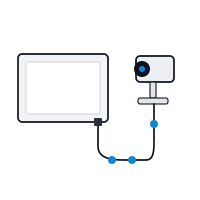
Several cameras at once
Front, rear and side views give the remote driver a full picture. Four 802.3at PoE+ ports power and connect the cameras over one cable each, on X-coded M12 connectors that lock in place.
Your Quote List ()
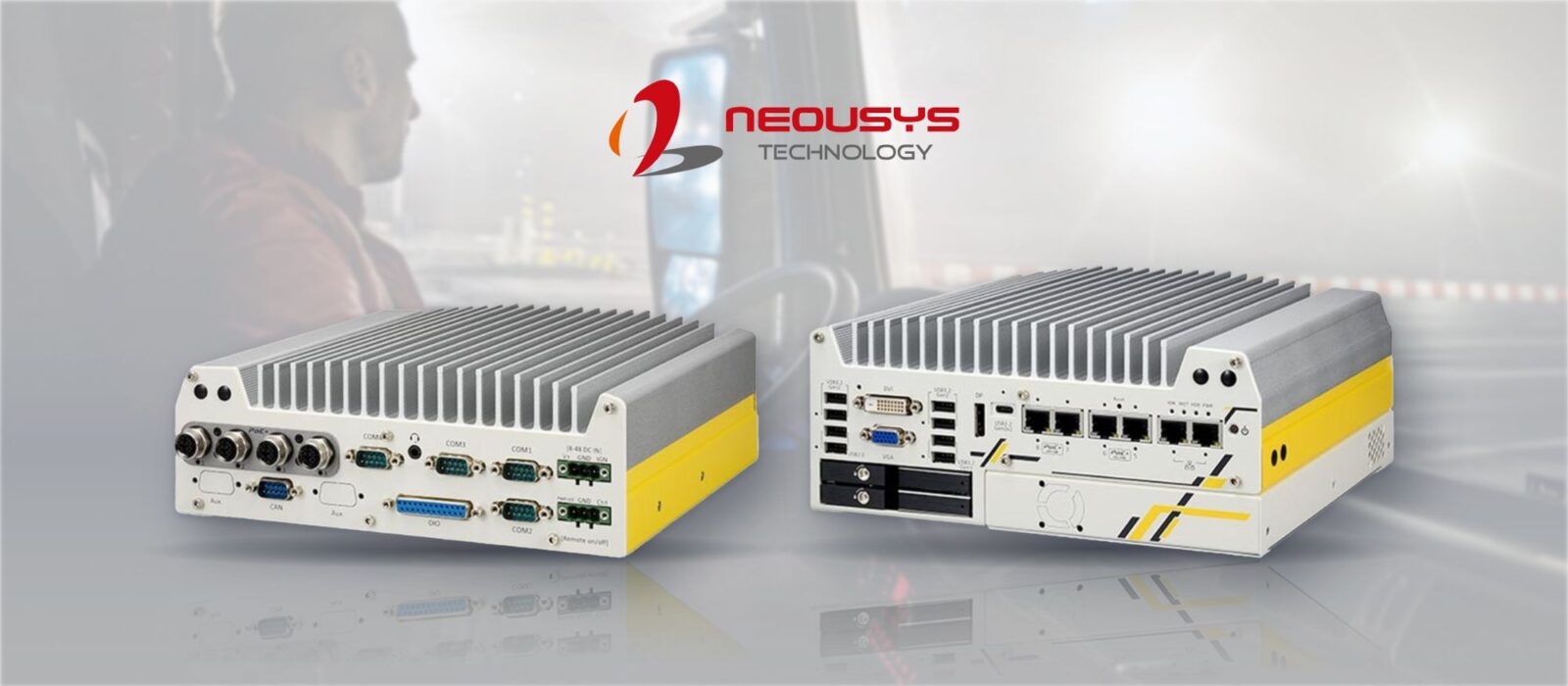
Teleoperation puts the driver at a remote station, controlling the vehicle through live camera views sent over 5G. The computer on board has to capture several cameras, send them over a cellular link with as little delay as possible, and pass the driver’s commands back to the vehicle. That is a job for a rugged box PC built for vehicle power and vibration.
Teleoperation is used where a vehicle needs a person’s judgment but not their presence: moving vehicles around depots and yards, supporting autonomous vehicles when they meet something they cannot handle, and working machines in places that are unpleasant or unsafe to sit in. The Nuvo-9100VTC and Nuvo-9200VTC used here come from our in-vehicle computers, with ignition control, E-Mark certification and locking connectors for cameras.
The remote driver only sees what the vehicle sends, so every part of the chain from camera to cellular modem matters.
Front, rear and side views give the remote driver a full picture. Four 802.3at PoE+ ports power and connect the cameras over one cable each, on X-coded M12 connectors that lock in place.
An M.2 B key socket with SIM takes a 5G module, and a mini PCIe socket with its own SIM can carry a second modem, so the vehicle is not tied to one network. Cellular bonding software can combine the two links.

Compressing and recording several camera streams while running the control software needs real processing headroom. The LGA1700 socket takes Intel 12th to 14th Gen Core processors up to the Core i9-14900 with 24 cores, with up to 128 GB of DDR5.
The driver’s commands reach the vehicle over an isolated CAN bus port, with four isolated inputs and four isolated outputs for switches, lights and interlocks.
An M.2 NVMe slot at PCIe Gen4 x4 holds the system, and two 2.5-inch SATA drives in RAID 0 or 1 keep recorded video, with hot-swap trays so drives can be changed at the depot.
An 8–48 V DC input with ignition control starts and shuts down the computer with the vehicle. Our ignition control guide covers the settings.
The onboard computer sits in the middle of a loop that runs continuously while the vehicle is under remote control.
IP cameras around the vehicle feed video to the computer over locking M12 cables that also carry their power.
The computer compresses each stream to fit the available bandwidth and records a copy to the RAID drives.
Video and vehicle status travel to the remote station over 5G, with a second modem available as a fallback.
The driver’s steering, speed and braking commands come back over the same link and reach the vehicle through the isolated CAN port.
The teleoperation software decides what happens if the link drops, typically bringing the vehicle to a controlled stop. Our white paper on 4G, LTE and 5G in industrial computers covers modem and antenna choices for a moving vehicle.
The Nuvo-9100VTC covers most teleoperation builds; the Nuvo-9200VTC adds a PCIe cassette for one expansion card.
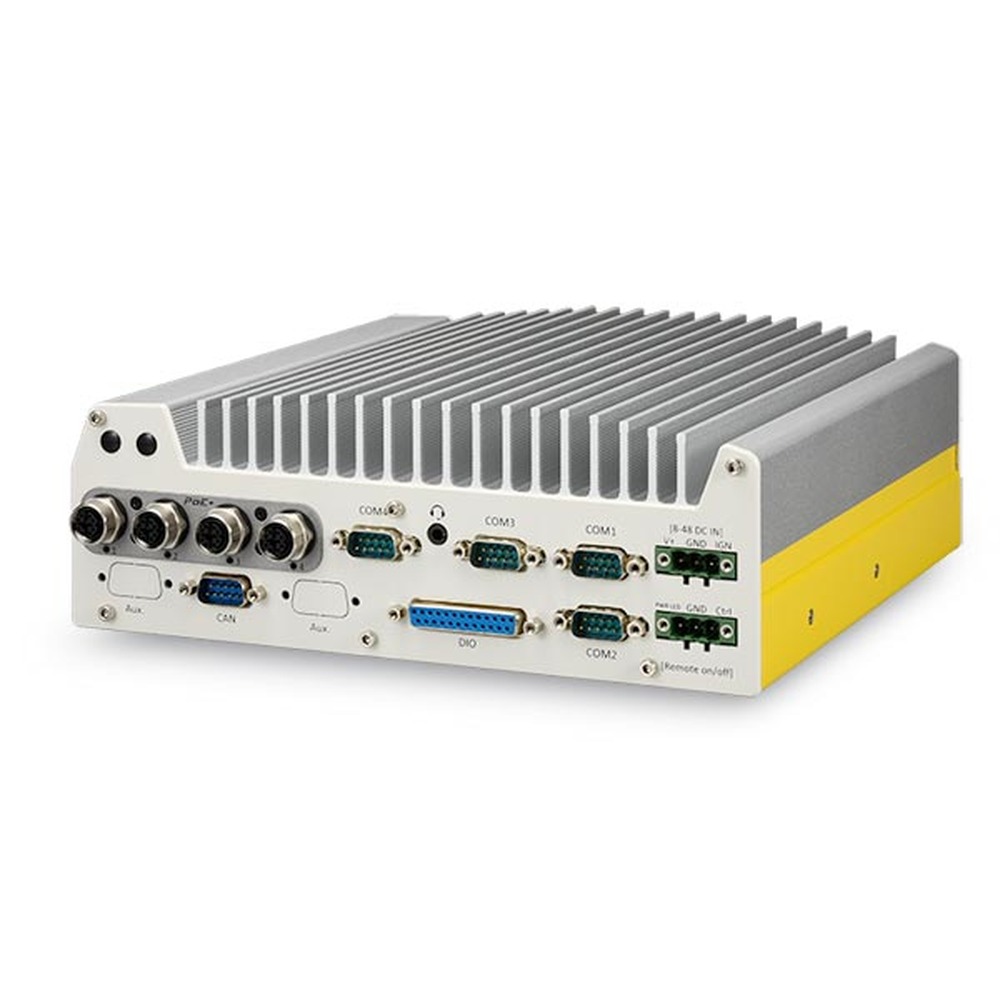
Intel 14th/13th/12th Gen Core In-Vehicle PC with 4x M12 PoE+ Ports
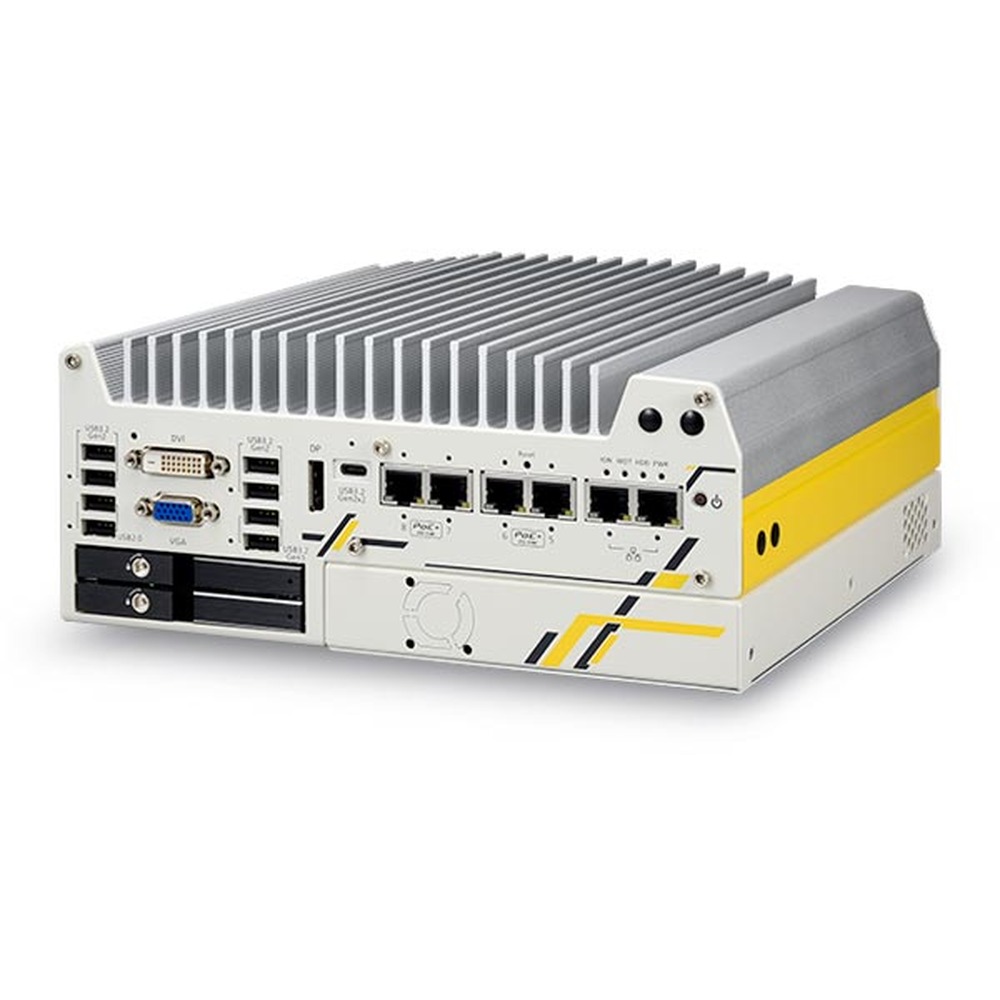
Intel 14th/13th/12th Gen Core Rugged Vehicle Computer with 4x M12 PoE+ and PCIe Cassette
| Specification | Neousys Nuvo-9100VTC | Neousys Nuvo-9200VTC |
|---|---|---|
| Processor | Intel 14th, 13th or 12th Gen Core, up to Core i9-14900 (24 cores), 35 W or 65 W | Intel 14th, 13th or 12th Gen Core, up to Core i9-14900 (24 cores), 35 W or 65 W |
| Chipset and memory | Intel Q670E; 2× DDR5-4800 SO-DIMM, up to 128 GB | Intel Q670E; 2× DDR5-4800 SO-DIMM, up to 128 GB |
| Camera ports | 4× GbE PoE+, M12 X-coded | 4× GbE PoE+, M12 X-coded |
| Other LAN | 1× 2.5GbE, 1× GbE, RJ45 with screw locks | 1× 2.5GbE, 1× GbE, RJ45 with screw locks |
| Expansion | M.2 B key with SIM, 2× mini PCIe | M.2 B key with SIM, 2× mini PCIe, 1× PCIe x16 Gen3 cassette |
| Vehicle I/O | Isolated CAN 2.0, 4× isolated DI, 4× isolated DO, 4× serial | Isolated CAN 2.0, 4× isolated DI, 4× isolated DO, 4× serial |
| Storage | M.2 NVMe (PCIe Gen4 x4), 2× 2.5-inch SATA, RAID 0 or 1, hot-swap | M.2 NVMe (PCIe Gen4 x4), 2× 2.5-inch SATA, RAID 0 or 1, hot-swap |
| Power | 8–48 V DC, ignition control | 8–48 V DC, ignition control |
| Operating temperature | −40 to 70 °C (35 W CPU, one memory module); 50 °C at 65 W | −40 to 70 °C (35 W CPU, one memory module); 50 °C at 65 W |
| Shock and vibration | EN 50155:2017, IEC 61373 Category I Class B | EN 50155:2017, IEC 61373 Category I Class B |
| Certification | E-Mark, EN 45545-2, EN 50155 EMC, CE, FCC | E-Mark, EN 45545-2, EN 50155 EMC, CE, FCC |
Choose the Nuvo-9200VTC when the build needs a PCIe x16 card alongside the teleoperation hardware. For either computer we fit the processor, memory, NVMe and RAID drives, install and configure the 5G and backup modems with their antennas, set the ignition timing and BIOS power behavior, and install Windows or Linux with the camera and CAN drivers in place. Our E-Mark guide explains what the certification covers on a road vehicle.
One rugged computer on the vehicle handles cameras, cellular, recording and control, which keeps the build simple to fit and support.
Four powered camera ports on one computer cover the vehicle without extra switches or power supplies.
Room for a 5G modem and a second modem gives the vehicle a fallback when one network is weak.
Locking M12 camera connectors and a damping bracket suit years of vehicle vibration.
Mirrored drives keep a local copy of each session, and hot-swap trays make it easy to collect.
Ignition control lets a vehicle computer follow the ignition key: it starts when the engine starts, and when the ignition is switched off it waits for a set delay and then shuts down cleanly. That protects the data on the computer and stops it draining the vehicle battery while parked.
Cellular bonding combines several mobile connections, usually from different SIM cards and networks, into one faster and more reliable link. Traffic is split across all the connections and put back together by a bonding server, so even a single video call or upload uses the combined bandwidth and keeps going if one connection weakens or drops.
CAN bus (Controller Area Network) is a two-wire network that lets controllers, sensors and actuators share short messages without a central computer. Developed by Bosch for vehicles, it uses a noise-resistant differential signal and gives every message a priority, so critical data gets through first. It is now standard in vehicles, machinery and remote equipment.
A multi-SIM router is a cellular router with two or more SIM card slots. In its simplest form, one modem switches to a backup SIM when the first fails. Routers with a modem per SIM can use every connection at once, for load balancing or bonding, which is what high-bandwidth, always-on applications need.
An M12 X-coded connector is the 8-pin M12 coding for Gigabit and 10 Gigabit Ethernet. Its four twisted pairs are separated by a cross-shaped shield that controls crosstalk at high speed, and it can carry Power over Ethernet with a suitable cable. It is defined in IEC 61076-2-109.
PoE, PoE+ and PoE++ are the three generations of IEEE Power over Ethernet. PoE (802.3af) supplies about 15 W per port, PoE+ (802.3at) about 30 W, and PoE++ (802.3bt) 60 W (Type 3) or 90 W (Type 4). PoE and PoE+ use two of the four cable pairs; PoE++ can use all four.
Tell us about the vehicle, the cameras and the network it will use, and we'll specify the processor, storage, cellular modules and cabling for the build.