
 US
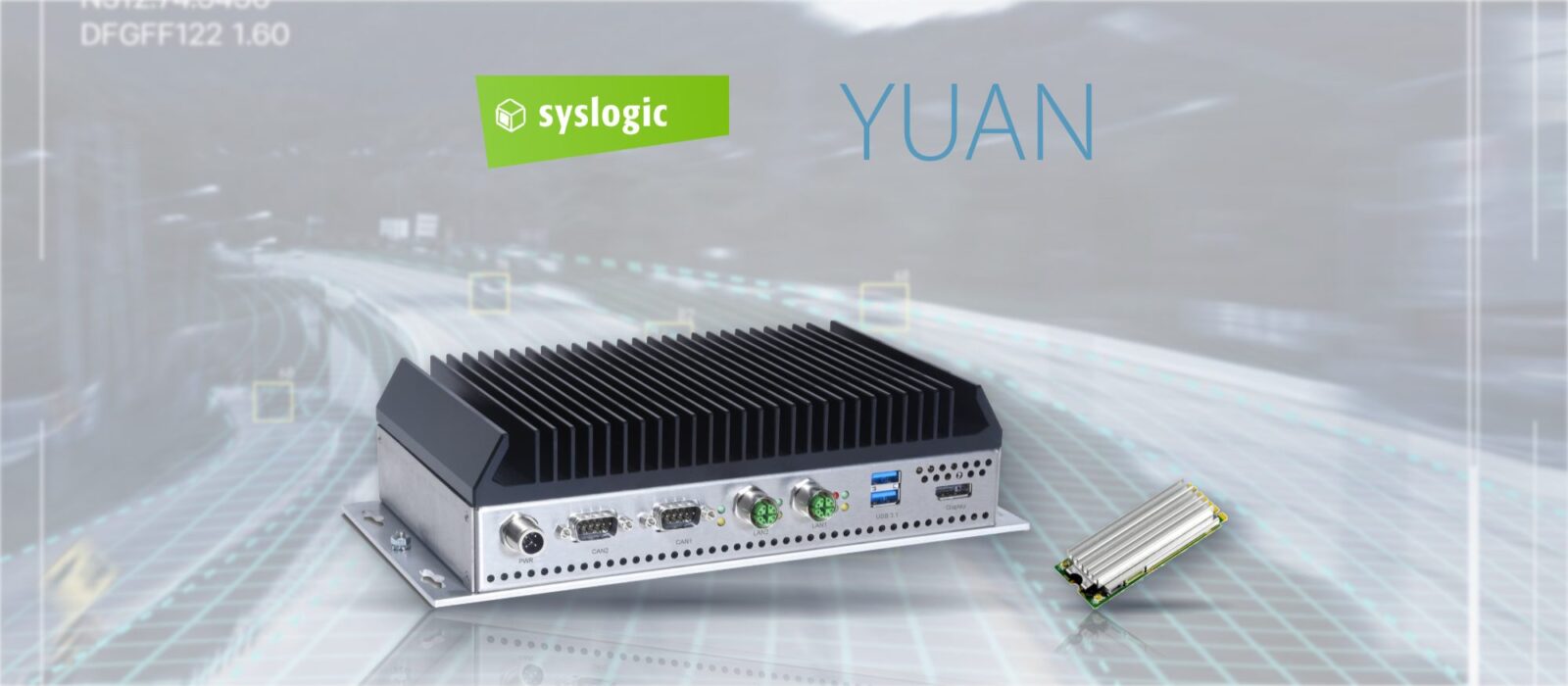
Rugged Edge AI Computer Deployed with Object Tracking Engine
A leading software developer approached us with a detection and single object video tracker that uses multiple deep neural networks to find objects of interest and hold an accurate “lock” on them. Used by customers including police authorities, the tracker steers cameras automatically, taking the strain off operators who would otherwise follow targets by hand.
To take the software out to the edge, including into vehicles, the developer needed a rugged edge AI computer that could capture video with minimal delay, control a PTZ camera and survive years of in-vehicle use. It is the kind of system we build for surveillance and in-vehicle computing.
What the tracking computer had to do
The developer set six prerequisites before any hardware was considered.
-
01
High-performance edge AI
Enough GPU processing to run several deep neural networks on live video at once.
-
02
Low-latency video and PTZ control
Fast video capture, plus PTZ camera control over serial RS-485.
-
03
Open architecture
Room for additional third-party applications alongside the tracker.
-
04
Ignition control
Delayed shutdown, so the system closes down safely after the engine stops.
-
05
Shock, vibration and cold starts
A rugged build with a wide operating temperature range for starting up in the cold.
-
06
Encrypted cellular and GNSS
Secure mobile communication and positioning for connected AIoT applications.
Vehicle computers stay in operation for many years and endure the daily rigours of repeated shock and vibration, so the compute platform has to be durable. NVIDIA Jetson system-on-modules opened the door to true fanless GPU computing.
What single object video tracking does
Object tracking analyses consecutive video frames, live or recorded, to follow the location of an object over time. Knowing where a target is and how it is moving supports alerts for unauthorised access, post-event analysis for law enforcement and real-time situational awareness for unmanned and autonomous vehicles.
The customer’s tracker turns that position into camera movement. Its real-time track data can direct any IP, AHD or SDI camera system, steering a PTZ camera over RS-485 so the target stays in frame while the operator concentrates on what it is doing. It is a focused example of video analytics at the edge.
Why the Syslogic RSL A3 was selected
- 01Jetson AGX Xavier, 32 TOPS
- Syslogic’s RSL A3 Transport PC pairs the NVIDIA module with Syslogic’s own carrier board, processing large amounts of video in parallel.
- 02Fanless, no moving parts
- Passive cooling and SSD storage, with components selected for long-term operation through wide temperature swings.
- 03M12 for power, serial and Ethernet
- Screw-on connectors hold through shock and vibration, including the RS-485 link to the PTZ camera.
- 04E-Mark and ignition control
- UNECE R10 (E-Mark) type approval and a wide voltage input with ignition control for in-vehicle deployment.
- 05mPCIe and M.2 expansion
- Slots for video capture cards and optional LTE and Wi-Fi, including vehicle-to-vehicle communication.
Ignition control lets the computer start with the engine and shut down after a set delay; our ignition control guide explains how those delays protect the vehicle battery, and our E-Mark guide covers the type approval.
Low-latency video from any camera
When every second counts, heat turbulence, fog and platform movement cannot be allowed to cause a missed threat or a delayed response. The Jetson AGX Xavier achieves 40 ms video capture latency on local 1080p video, and the tracking software reduces image degradation without compromising detection accuracy or the lock on the target.
| Camera type | Connection | How it reaches the computer |
|---|---|---|
| IP cameras | Ethernet | Dual LAN ports, with an optional add-on board for four more Gigabit PoE ports |
| AHD cameras | Coax, BNC | Yuan analog HD capture card in an M.2 or mini PCIe slot |
| SDI cameras | Coax, BNC | Yuan SDI capture card, keeping video uncompressed and low in latency |
The dual LAN ports connect to IP cameras already on board vehicles or at the roadside. For analog HD and SDI sources, the systems are configured with embedded video capture cards from Yuan High-Tech, giving complete flexibility on rollout. Our SDI capture guide explains why uncompressed SDI suits real-time AI analysis.
Yuan capture cards for AHD and SDI
Analog HD cards that accept AHD, TVI, CVI and CVBS, and SDI cards with two or four 3G-SDI inputs, in M.2 and mini PCIe formats.

M.2 TVI Capture Card with 4 x TVI Inputs at 1080p30
- Inputs
- 4× TVI
- Max input
- HD30 (1920×1080)
- Interface
- M.2 B/M-Key
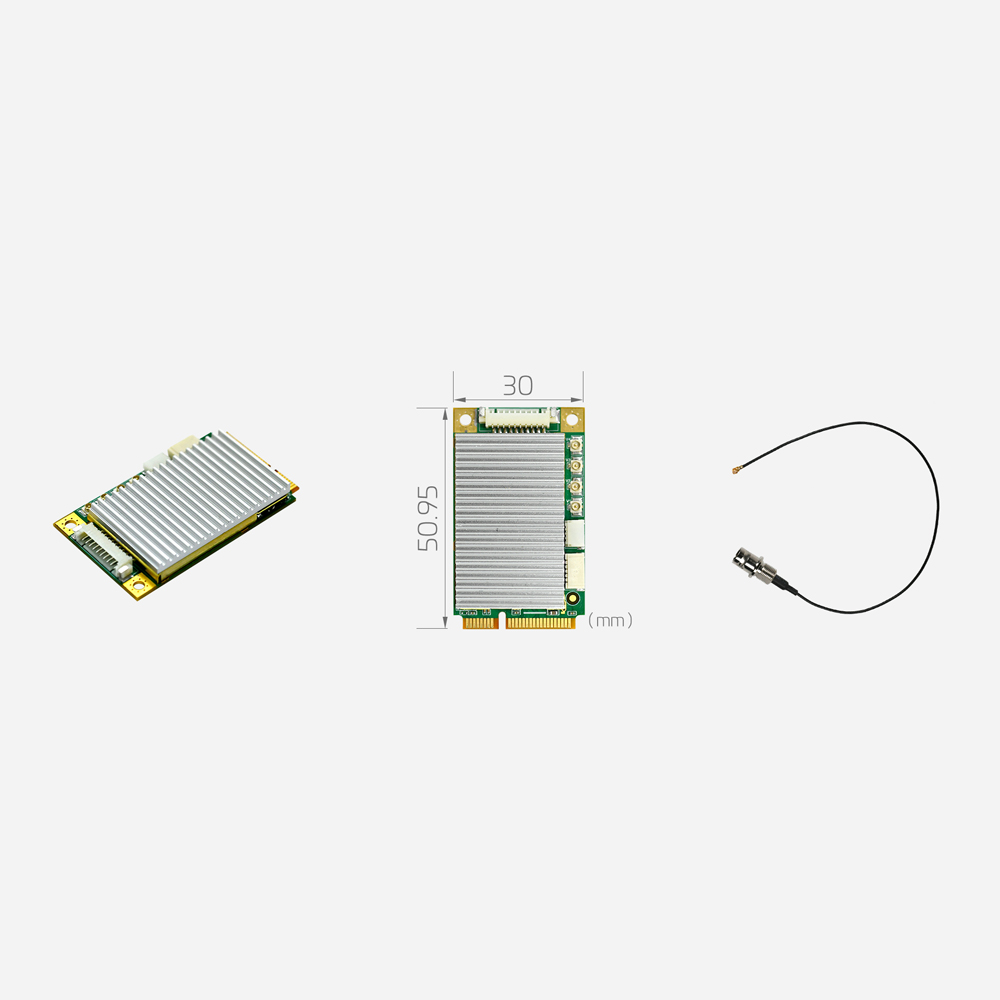
Mini PCIe TVI Video Capture Card with 4 x TVI Inputs at 1080p30
- Inputs
- 4× TVI
- Max input
- 4K30 (3840×2160)
- Interface
- Mini PCIe

M.2 SDI Capture Card with 2 x 3G-SDI Inputs at 1080p60
- Inputs
- 2×3G-SDI
- Max input
- HD60 (1920×1080)
- Interface
- M.2 B/M-Key

M.2 SDI Frame Grabber with 4 x 3G-SDI Inputs at 1080p60
- Inputs
- 4×3G-SDI
- Max input
- HD60 (1920×1080)
- Interface
- M.2 M-Key
What the deployment delivered
The tracker now runs at the edge, in vehicles, on a computer built to last as long as they do.
-
Outcome 01
Reduced operator burden
Automatic tracking and PTZ control keep targets in view without manual steering.
-
Outcome 02
40 ms video capture
Low-latency 1080p capture keeps the lock even in heat haze, fog and platform movement.
-
Outcome 03
Any camera, one platform
IP, AHD and SDI cameras all connect, so existing infrastructure can be reused.
-
Outcome 04
Ready for the vehicle
Fanless, E-Mark approved and ignition controlled, with LTE and Wi-Fi options for connected fleets.
Object tracking FAQs
-
What Is Edge AI?
Edge AI means running trained artificial intelligence models on computers close to where data is created, such as beside cameras, machines or vehicles, rather than in the cloud. Decisions happen locally in milliseconds, less data crosses the network, sensitive data stays on site, and the system keeps working if the connection drops.
-
What Is Object Tracking?
Object tracking is a computer vision task that follows an object from one video frame to the next, keeping track of where it is and where it is going. Detection finds objects in each frame; tracking links those detections over time, so a system can follow a person, vehicle or drone and act on its movement.
-
What Is Video Analytics?
Video analytics is software that analyses video automatically to detect, classify and track people, vehicles and events, so operators do not have to watch every screen. Modern systems use AI models and often run at the edge, on a computer beside the cameras, to react in real time and avoid sending every stream to the cloud.
-
What Is RS-485?
RS-485 is a serial communication standard that sends data as a differential signal over a twisted pair. That makes it resistant to electrical noise and able to run long cables, up to about 1,200 m, with many devices sharing one bus. It is widely used for industrial control, Modbus RTU, building systems and PTZ camera control.
-
What Is AHD?
AHD (Analog High Definition) is a CCTV standard that sends high-definition video over coaxial cable as an analog signal. It lets existing coax and BNC cabling carry HD cameras, with long cable runs and very low latency, because the video is not compressed or sent over a network. HD-TVI and HD-CVI are competing analog HD formats.
-
What Is a PTZ Camera?
A PTZ (pan-tilt-zoom) camera has motors that turn it left and right, tilt it up and down and zoom its lens, so one camera can cover a wide area and close in on detail. PTZ cameras are used in surveillance, security and broadcast, and can follow targets automatically when paired with AI.
-
What Is an M12 A-Coded Connector?
An M12 A-coded connector is the most common M12 coding, used for sensors, actuators, low-voltage DC power and general signals. It has a single key and comes with 3, 4, 5, 8 or 12 pins, defined in IEC 61076-2-101. On industrial computers, A-coded connectors carry DC power input, serial ports, USB and digital I/O.
Deploying video AI on a vehicle or mast?
Tell us about your application and a member of our team will get right back to you.