
 US
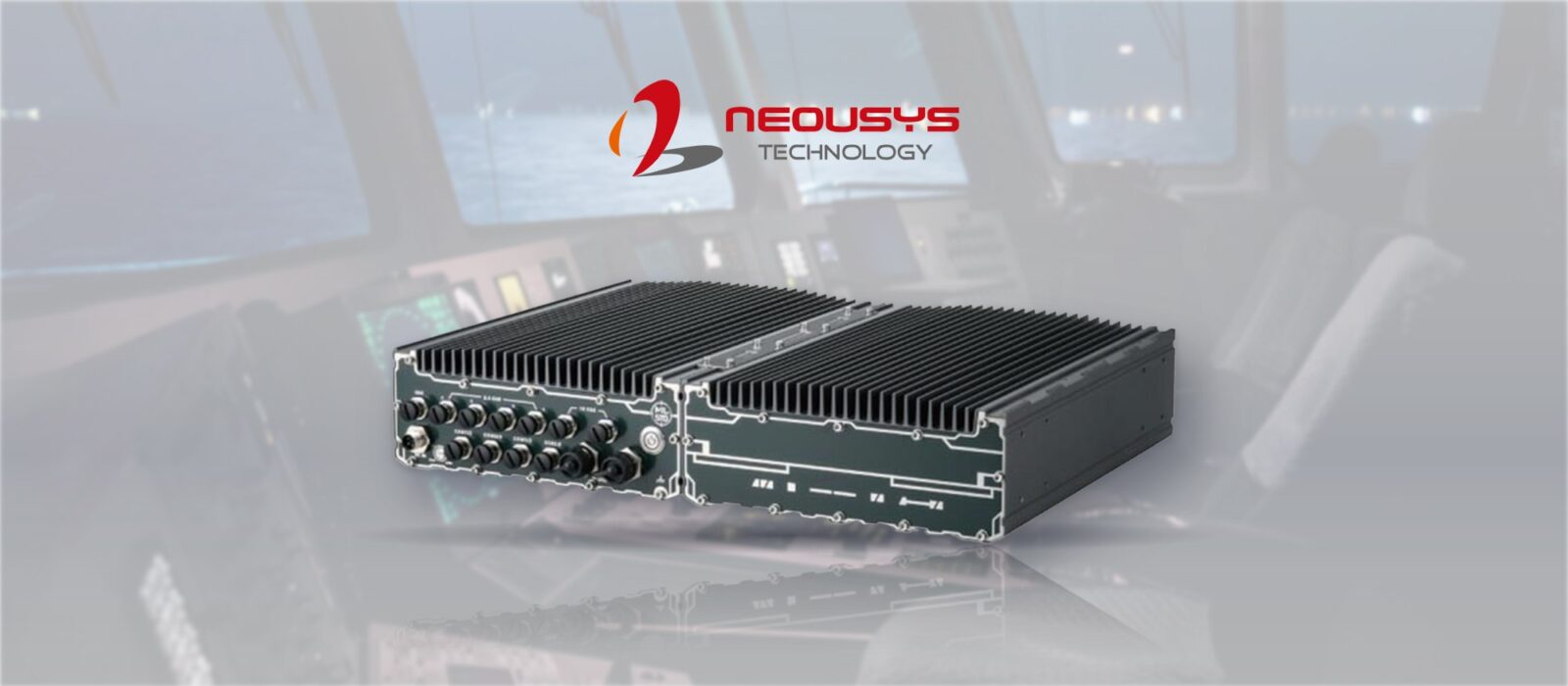
IP69K GPU computers for maritime surveillance
Maritime surveillance means keeping watch on the water around a ship, spotting other vessels, small craft and objects early enough for the crew to act, by day and by night.
Cameras and AI models can keep that watch continuously and flag what matters to the people on the bridge. The challenge is where to put the processing. Here it sits on deck in a sealed rugged GPU computer, the Neousys SEMIL-2047GC, which runs detection models on a passively cooled NVIDIA L4 inside an IP69K chassis.
What a maritime surveillance computer faces on deck
Each check is answered from the SEMIL computers' own specifications.
-
01
Spray and washdown
Sealed to IP69K: dust-tight and protected against close-range, high-pressure, high-temperature water jets.
-
02
Heat with no airflow
Fanless, with the NVIDIA L4 cooled passively and holding its performance up to a 58 °C throttling point.
-
03
Several camera feeds
Four 2.5GbE ports with 802.3at PoE+ from a 100 W budget on the SEMIL-2047GC, plus two 10GbE for high-bandwidth sensors.
-
04
Connectors that stay sealed
Every Ethernet port uses M12 X-coded connectors, with DC power on an M12 L-coded input.
-
05
Shock, vibration and cold
MIL-STD-810H vibration and shock, and operation from −40 to 70 °C.
-
06
Ship's DC supply
8–48 V DC on the SEMIL-2047GC, or 9–36 V DC on the SEMIL-2200 models, with reverse polarity protection and ignition control.
Three sealed computers for three roles
One family of IP69K chassis covers camera analytics, defense platforms and non-GPU processing.
-
01 / 04PoE+ camera build
Neousys SEMIL‑2047GC
The SEMIL-2047GC powers four cameras directly and runs inference on an NVIDIA L4, so daylight and EO/IR cameras on the mast can feed one sealed computer.
- Platform
- Intel 14th/13th/12th Gen Core, up to the Core i9-14900
- Best for
- Camera-led vessel detection and tracking on deck
- Network
- 4× 2.5GbE PoE+, 2× 10GbE, 1× GbE on M12

Fig. 01 Neousys SEMIL‑2047GC -
02 / 04sealed I/O
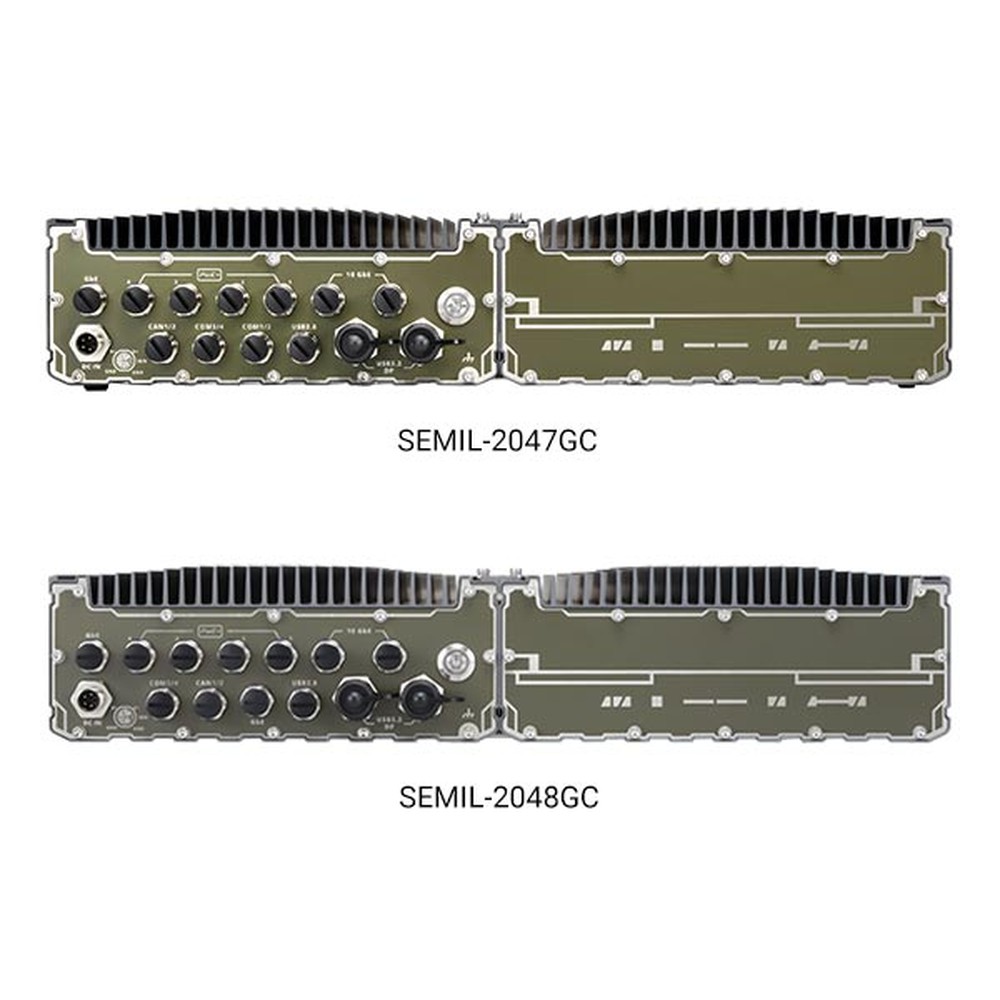
SEMIL‑2000GC front panel
All the I/O sits on threaded M12 connectors on one face, so cable runs from the mast and the bridge stay sealed and locked through vibration.
- Best for
- Recording events locally and linking to other ship systems
- Network
- 2× isolated CAN 2.0 and isolated serial on M12
Fig. 02 SEMIL‑2000GC front panel -
03 / 04military GPU build
Neousys SEMIL‑2247GC
The SEMIL-2247GC puts the same L4 in a 2U 19-inch IP69K chassis designed to MIL-STD-810H, MIL-STD-461G and MIL-STD-1275D, with ECC memory.
- Platform
- 35 W Intel Core T-series, up to the Core i9-14900T
- Best for
- Patrol and defense vessels where the platform specification calls for MIL‑STD EMC
- Network
- 2× 10GbE, 4× 2.5GbE, 1× GbE on M12
Fig. 03 Neousys SEMIL‑2247GC -
04 / 04sealed computer without the GPU
Neousys SEMIL‑2207
Where analytics runs elsewhere, the SEMIL-2207 brings the same sealing and MIL-STD design in a half-rack stainless steel and aluminum chassis, for recording, sensor fusion and networking.
- Platform
- Intel Core at 35 W with ECC memory
- Best for
- Data handling and recording beside a GPU system
- Network
- 2× 10GbE, 4× 2.5GbE, 1× GbE on M12
Fig. 04 Neousys SEMIL‑2207
How the system comes together
Mounting the computer on deck, close to the cameras, keeps camera cables short and saves space in the equipment room. Each SEMIL is a sealed, fanless rugged embedded computer in its own right, so no extra enclosure is needed. We fit the processor, memory, NVMe and RAID drives and the 5G or 4G modem, image the operating system with the GPU drivers and AI runtime, set the BIOS for ignition power-on and match the M12 cabling to the cameras and supply.
Neither model carries marine type approval in our data, so plan them for deck-mounted sensor and surveillance processing rather than bridge navigation equipment; our maritime computing guide explains those separate requirements.
Hardware in this example
Two IP69K NVIDIA L4 computers and a sealed non-GPU sibling for recording and networking.
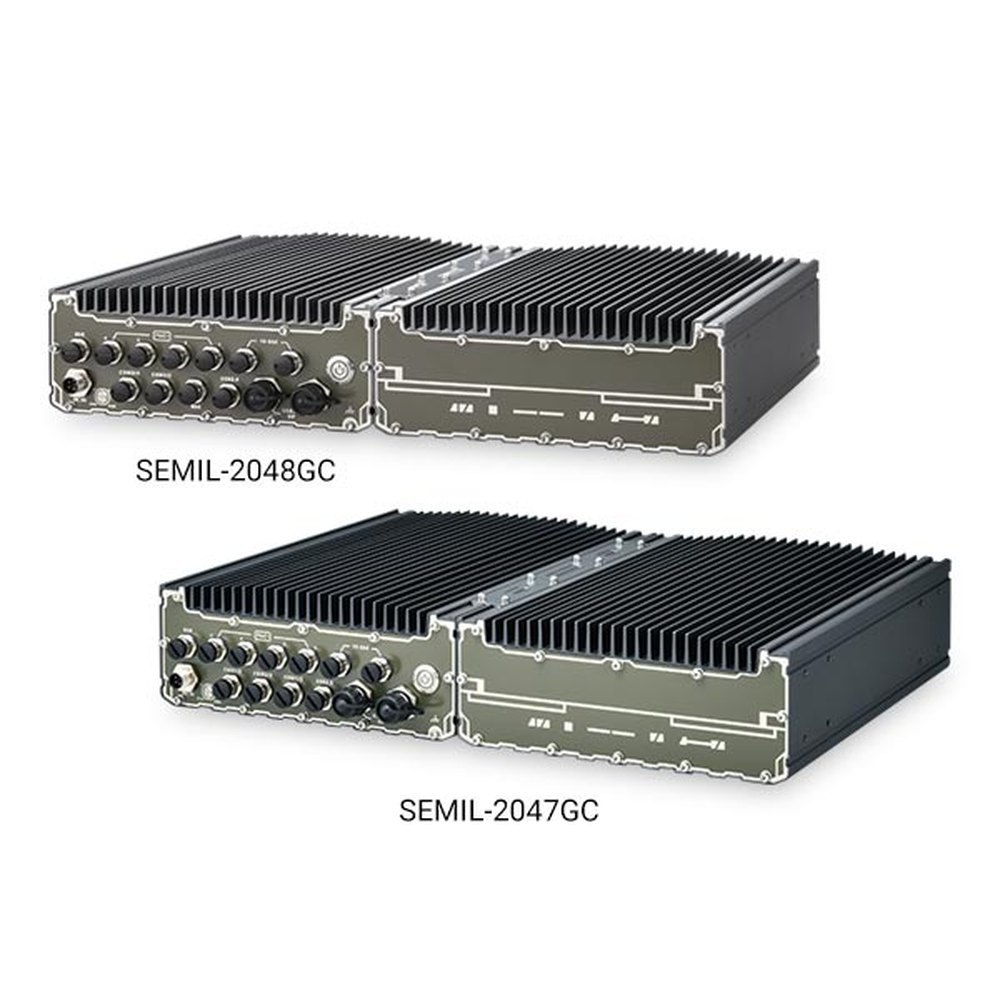
Intel 14th Gen Core IP69K Computer with NVIDIA L4 GPU and 4x M12 PoE+
- CPU
- Intel Core 13th Gen (Raptor Lake)
- GPU
- NVIDIA L4
- AI
- 485 TOPS
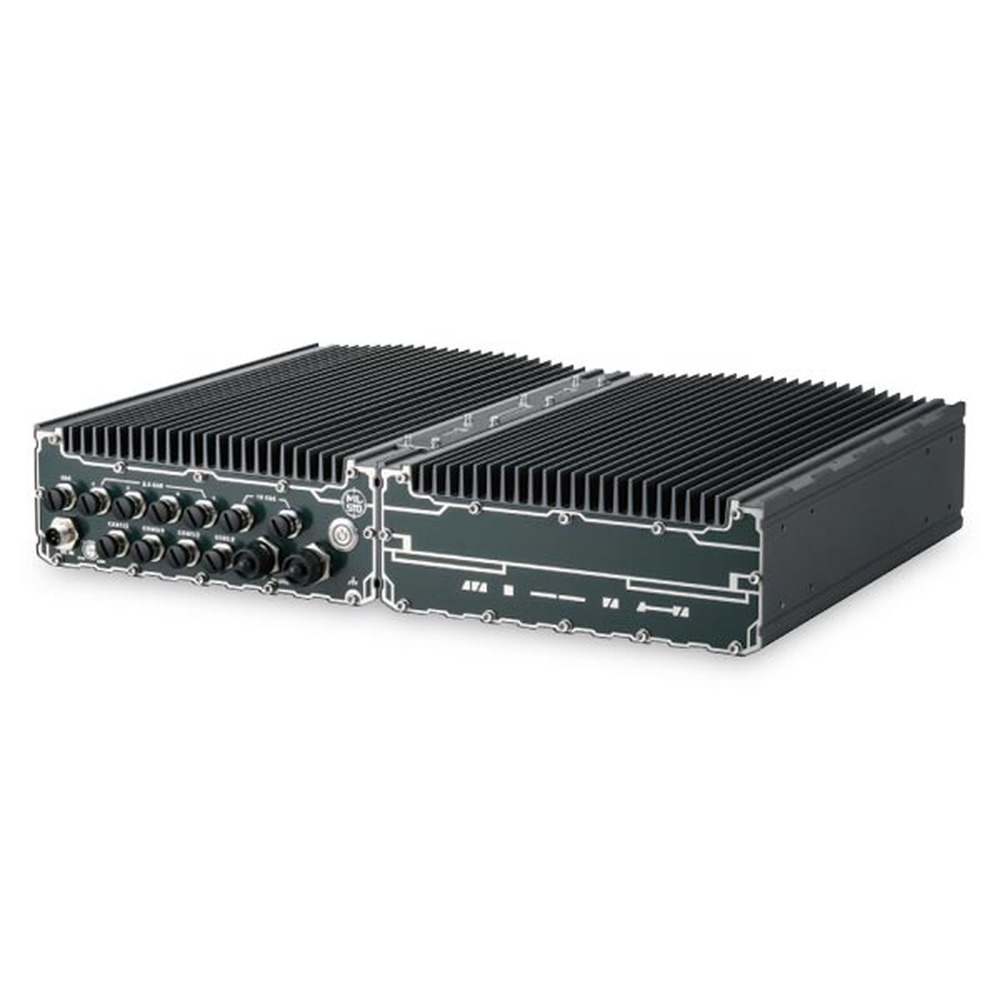
Intel 14th Gen Core Rugged Military PC with NVIDIA L4 GPU and 2x M12 10GbE
- CPU
- Intel Core 13th Gen (Raptor Lake)
- GPU
- NVIDIA L4
- AI
- 485 TOPS
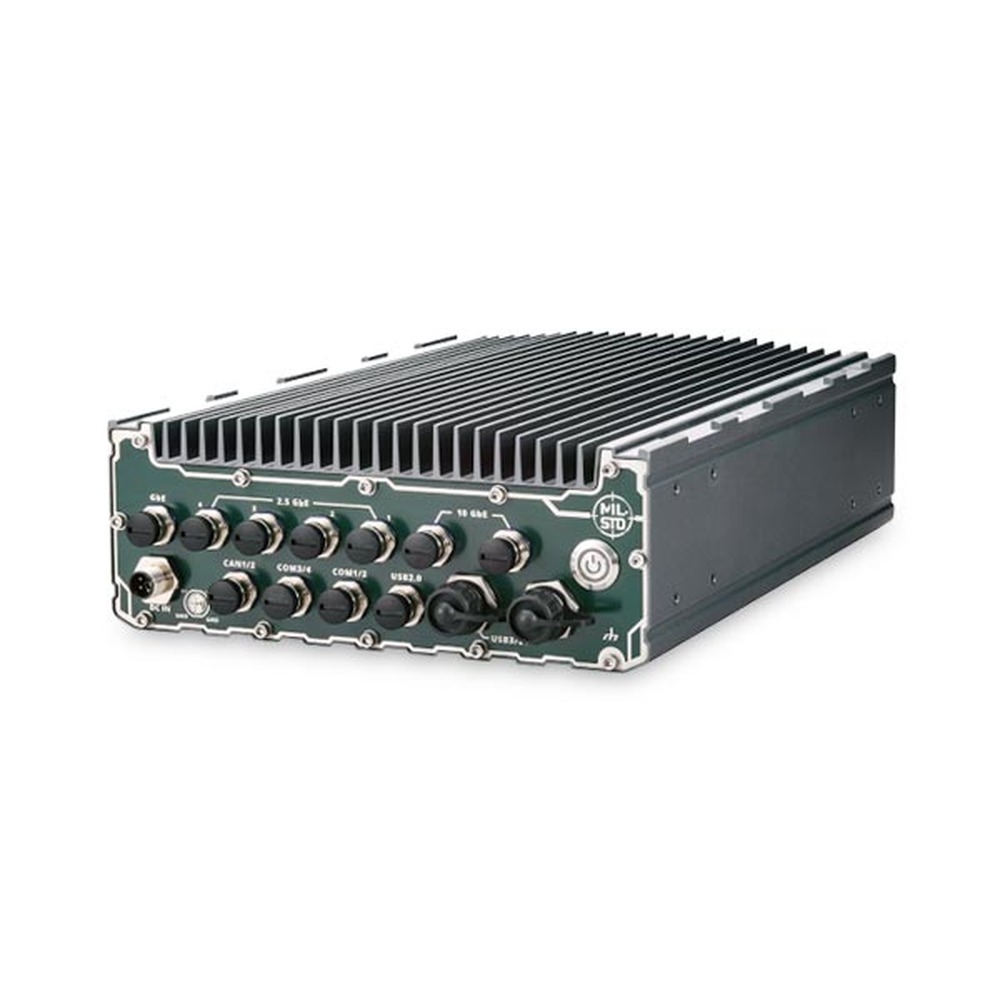
Rugged Mission Critical Computer with 2x M12 10GbE and 4x M12 2.5GbE
- CPU
- Intel Core 13th Gen (Raptor Lake)
- Ethernet
- 2× 10GbE, 4× 2.5GbE, 1× GbE
- IP Rating
- IP69K
The three builds compared
| Specification | Neousys SEMIL-2047GC | Neousys SEMIL-2247GC | Neousys SEMIL-2207 |
|---|---|---|---|
| GPU | NVIDIA L4, 24 GB | NVIDIA L4, 24 GB | Integrated graphics only |
| Chipset and memory | Q670E, up to 128 GB non-ECC DDR5 | R680E, up to 128 GB ECC or non-ECC DDR5 | R680E, up to 128 GB ECC or non-ECC DDR5 |
| Ethernet (M12 X-coded) | 2× 10GbE, 4× 2.5GbE PoE+, 1× GbE | 2× 10GbE, 4× 2.5GbE, 1× GbE | 2× 10GbE, 4× 2.5GbE, 1× GbE |
| Power input | 8–48 V DC, M12 L-coded | 9–36 V DC, M12 L-coded | 9–36 V DC, M12 L-coded |
| Sealing | IP69K | IP69K | IP69K |
| Military standards | MIL-STD-810H vibration and shock | MIL-STD-810H, MIL-STD-461G, MIL-STD-1275D | MIL-STD-810H, MIL-STD-461G, MIL-STD-1275D |
| Operating temperature | −40 to 70 °C | −40 to 70 °C | −40 to 70 °C |
Choose the SEMIL-2047GC when the cameras need power from the computer, the SEMIL-2247GC when the vessel’s specification calls for MIL-STD-461G EMC, and the SEMIL-2207 when the GPU work happens on another system.
What this setup gives the crew
Putting a sealed GPU computer on deck changes where and how the watch is kept.
-
Outcome 01
A watch that does not tire
Detection models scan every camera feed continuously and flag contacts for the crew to assess.
-
Outcome 02
Processing beside the cameras
Shorter cable runs from the mast, and less equipment to house in dry spaces below.
-
Outcome 03
Hardware that can be hosed down
The IP69K chassis and sealed M12 connectors take spray and washdown without a separate enclosure.
-
Outcome 04
Recording on board
RAID storage keeps footage and detections on the vessel, with cellular links available to send them ashore.
Maritime surveillance FAQs
-
What Is Maritime Domain Awareness?
Maritime domain awareness is the understanding of activity at sea that could affect security, safety, the economy or the environment. It combines data from radar, AIS ship transponders, cameras, satellites and patrol vessels into one picture, so authorities and ship crews can spot unusual behavior and respond early.
-
What Is the NVIDIA L4?
The NVIDIA L4 is a low-profile, single-slot GPU based on the Ada Lovelace architecture, with 24 GB of GDDR6 memory and a 72 W power rating. It is built for AI inference and video processing, and its low power and passive heatsink let it fit compact servers and rugged edge computers where larger GPUs will not.
-
What does IP69K mean?
IP69K means an enclosure is dust-tight and protected against high-pressure, high-temperature water jets per DIN 40050-9 — 80°C water at 8—10 MPa from close range. It is the food and beverage industry standard for sanitary wash-down on both sides of the Atlantic — and it does NOT imply submersion protection.
-
IP69K vs IP67: What Is the Difference?
Both ratings mean the enclosure is dust tight, but they test water in different ways. IP67 covers temporary immersion, up to 1 m deep for 30 minutes. IP69K covers close-range, high-pressure, high-temperature water jets, like those used in wash-downs. Passing one does not mean passing the other, so equipment that faces both is tested to both.
-
What Is an EO/IR Camera?
An EO/IR camera combines electro-optical (visible light) and infrared (thermal) imaging in one stabilized payload, so an operator can see by day and at night. EO/IR gimbals are standard on ISR drones, patrol aircraft, border security and maritime systems, and their video increasingly feeds onboard AI computers for detection and tracking.
-
What Does ISR Mean in the Military?
In the military, ISR stands for intelligence, surveillance and reconnaissance: the collection, processing and analysis of information about an area or target to support decisions. It is carried out by satellites, aircraft, drones, ships and ground sensors, and increasingly processed on board with AI so that commanders get an accurate picture faster.
-
What Is an M12 X-Coded Connector?
An M12 X-coded connector is the 8-pin M12 coding for Gigabit and 10 Gigabit Ethernet. Its four twisted pairs are separated by a cross-shaped shield that controls crosstalk at high speed, and it can carry Power over Ethernet with a suitable cable. It is defined in IEC 61076-2-109.
Putting AI vision on a vessel?
Tell us the cameras, the vessel's DC supply and where the computer has to be mounted. We configure the GPU system, storage and radios to match.