
 US
US 
Forecr MILBOX‑ORNX: a rugged Jetson Orin computer for drones and defense
The ForeCR MILBOX-ORNX is a 1.9 kg military-grade computer on NVIDIA Jetson Orin NX and Orin Nano, with up to 157 TOPS — compact and light enough for drone, UAV, and airborne defense platforms.
The Forecr MILBOX‑ORNX is a compact, rugged computer built on NVIDIA Jetson Orin, with Orin NX or Orin Nano modules and Super mode performance up to 157 TOPS. At 1.9 kg it suits platforms where size, weight and power are tightly budgeted, which makes it a natural fit for drones and UAVs as well as ground and airborne defense systems.
We supply it for drone and UAV integration and for rugged defense applications where Orin-class AI has to survive a hard environment. The enclosure is sealed to IP67 and designed to meet the military EMI and power standards an airframe or vehicle brings with it.
A closer look
-
01
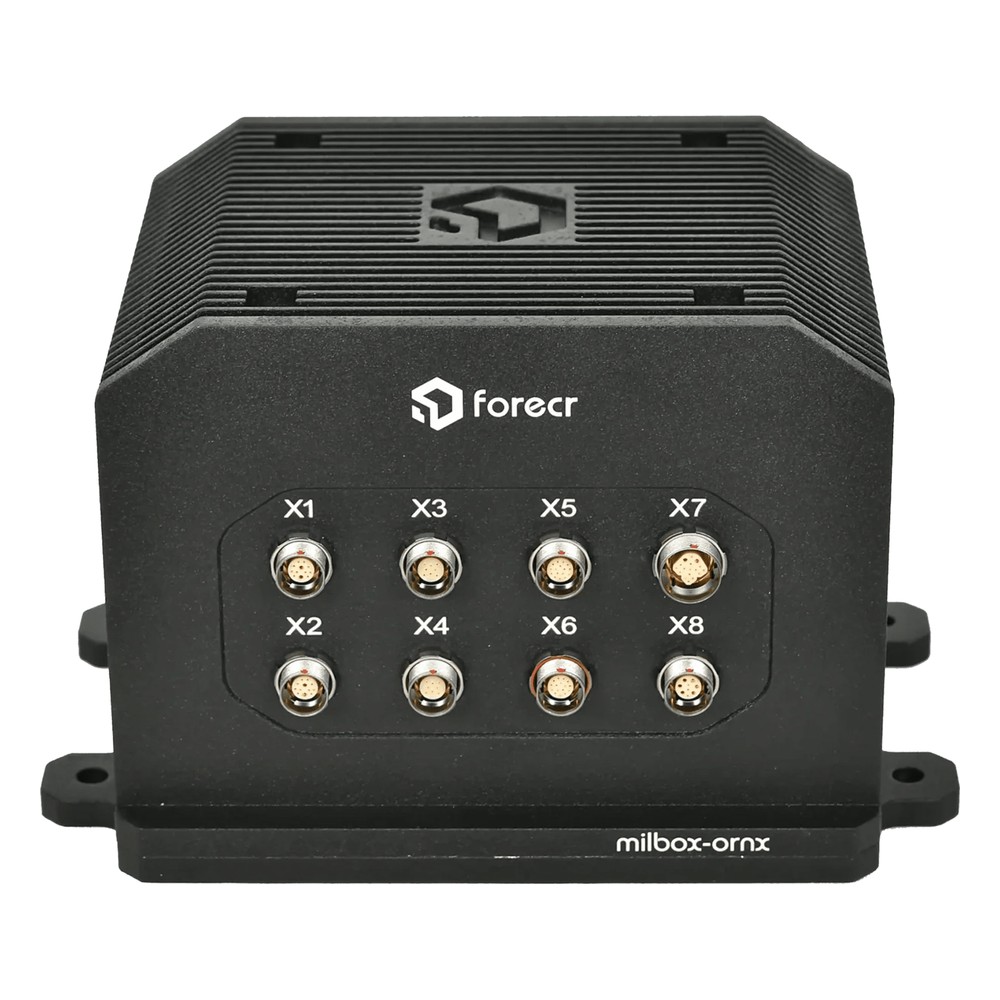
Circular connector panel
The front panel carries sealed circular connectors, X1 to X8, for power, networking and I/O.
-
02
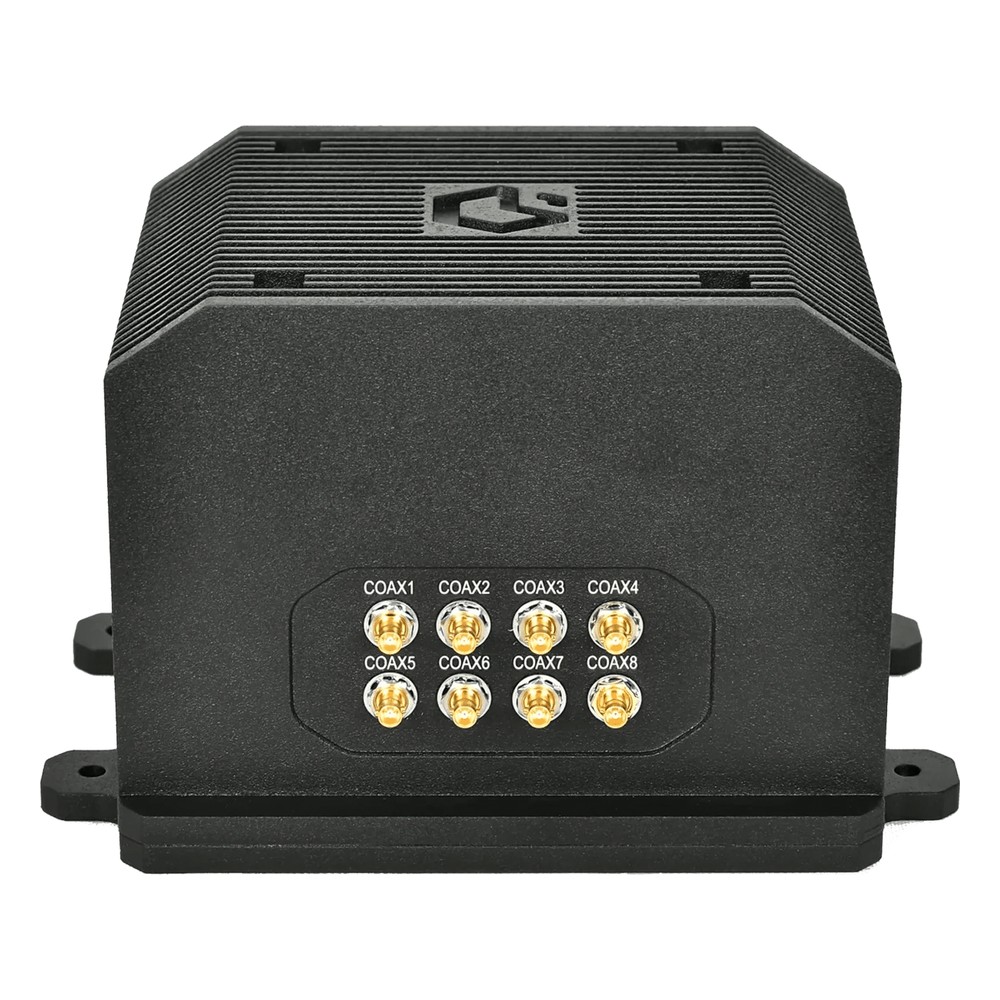
Coaxial camera panel
The rear panel's coaxial connectors take the optional GMSL2 camera inputs.
-
03
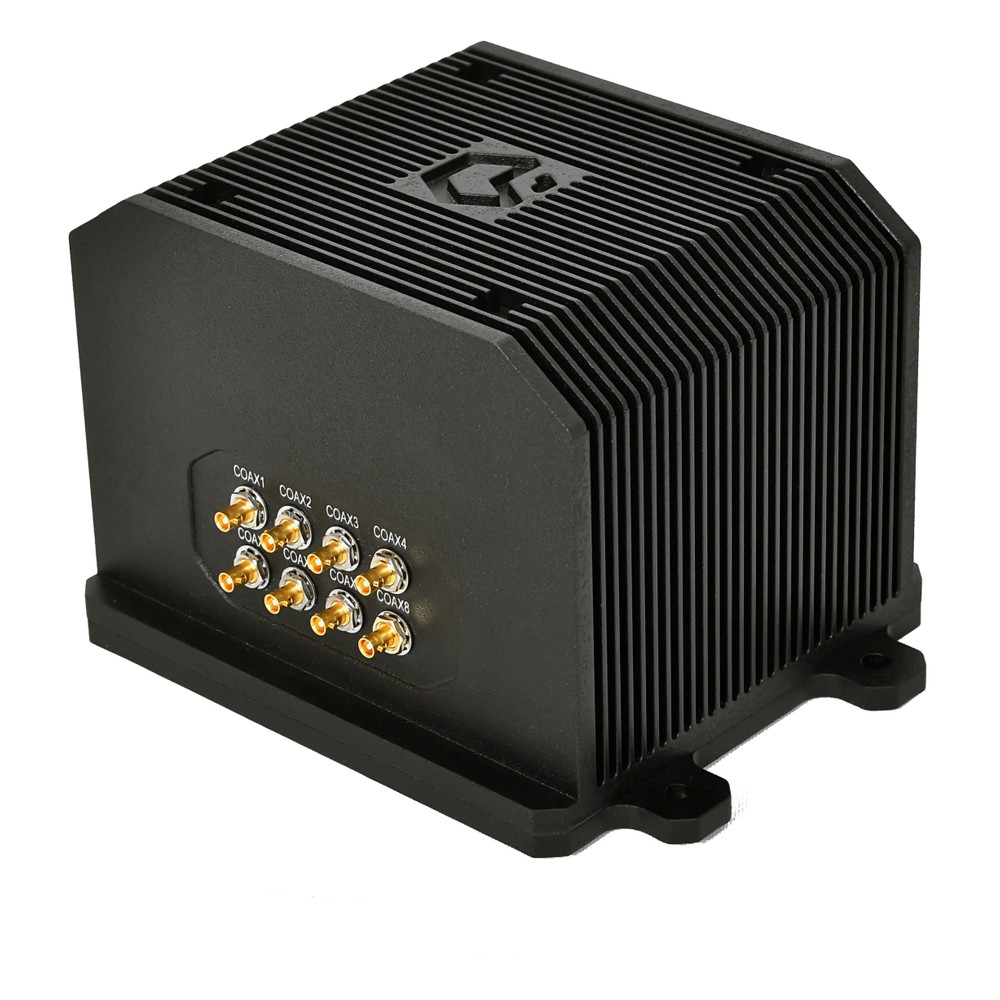
Finned, sealed chassis
An angled view of the coaxial panel and the finned enclosure, sealed to IP67.
-
04
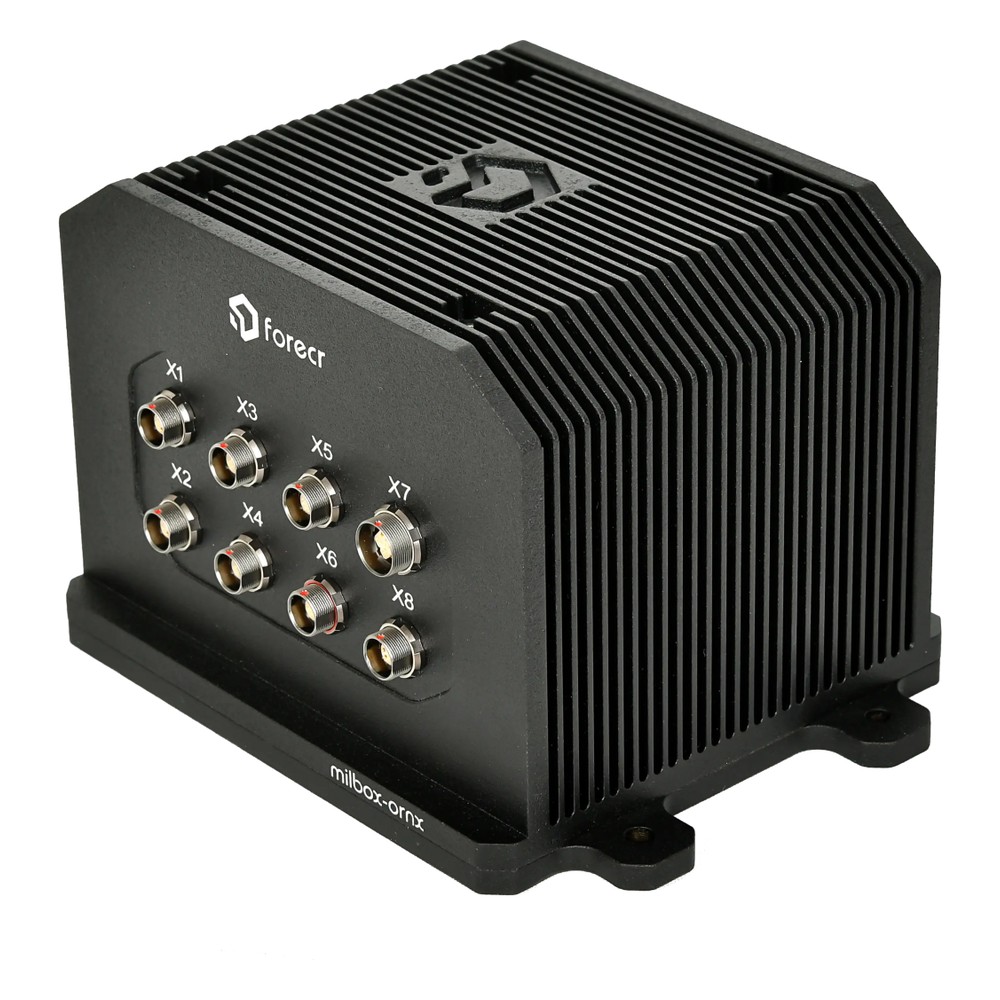
Mounting flanges
Integral mounting flanges fix the MILBOX-ORNX directly to an airframe, vehicle or payload bay.
What the MILBOX‑ORNX brings
- 01Up to 157 TOPS
- NVIDIA Jetson Orin NX 16 / 8 GB or Orin Nano 8 / 4 GB, with Super mode support.
- 02Light enough to fly
- A 1.9 kg rugged chassis built for SWaP-constrained drone, UAV and sensor pod payloads.
- 03Military qualification
- Designed to meet MIL-STD-461G, MIL-STD-704F, MIL-STD-1275E and DO-160G, with IP67 sealing.
- 04Connectivity for integration
- Gigabit Ethernet, USB 3.0, RS-232/422/485, CAN bus and a camera expansion connector, with LTE, 5G or Wi-Fi over M.2.
- 05Wide environment
- A 9–40 V DC input with military-grade filtering and a −25 to 85 °C operating range, on JetPack 5.x or 6.x.
MILBOX‑ORNX variants
Four variants on the same sealed carrier, from Orin NX 16 GB for multi-camera work down to Orin Nano 4 GB for a single detection model.
NVIDIA Jetson Orin NX 16GB Rugged Military Computer with IP67 Sealing
- AI
- 100 TOPS
- SOM
- NVIDIA Jetson Orin NX 16 GB
- Ethernet
- 2× GbE
NVIDIA Jetson Orin NX 8GB Rugged Military Computer with IP67 Sealing
- AI
- 70 TOPS
- SOM
- NVIDIA Jetson Orin NX 8 GB
- Ethernet
- 2× GbE
NVIDIA Jetson Orin Nano 8GB Rugged Military Computer with IP67 Sealing
- AI
- 40 TOPS
- SOM
- NVIDIA Jetson Orin Nano 8 GB
- Ethernet
- 2× GbE
NVIDIA Jetson Orin Nano 4GB Rugged Military Computer with IP67 Sealing
- AI
- 20 TOPS
- SOM
- NVIDIA Jetson Orin Nano 4 GB
- Ethernet
- 2× GbE
Specification highlights
| Specification | Forecr MILBOX‑ORNX |
|---|---|
| Module | NVIDIA Jetson Orin NX 16 / 8 GB, Orin Nano 8 / 4 GB |
| AI performance | Up to 157 TOPS (Super mode) |
| Weight | 1.9 kg |
| Networking | 2× Gigabit Ethernet; LTE / 5G on M.2 Key-B with SIM, convertible to Key-E for Wi-Fi and Bluetooth |
| I/O | 2× USB 3.0, 2× RS-232/422/485, RS-232 debug, 2× CAN bus, 1× HDMI |
| Camera | Camera expansion connector; optional 4× GMSL2 on HD-BNC coax |
| Storage | M.2 Key-M 2280 and 2230 NVMe |
| Power | 9–40 V DC (28 V nominal), military-grade filtering |
| Standards | MIL-STD-461G / 704F / 1275E, DO-160G, IP67 |
| Temperature and software | −25 to 85 °C; Ubuntu 20.04 / 22.04, JetPack 5.x / 6.x |
At 1.9 kg with a 9–40 V input, it is light enough to fly and tolerant of the unstable power on a moving platform: the two things a drone computer has to get right.
Where the MILBOX‑ORNX fits
Airborne and ground platforms that need Orin-class AI in a light, sealed and EMI-qualified enclosure.

Surveillance drones
Onboard detection and tracking on camera feeds, so a surveillance drone sends results rather than raw video.
Read answer
Autonomous UAVs
Vision and autonomy running alongside the flight controller, linked over CAN bus and serial.

Aircraft payloads
Sensor pod and payload computing where MIL-STD-704F power quality and DO-160G apply.

Ground defense systems
Rugged AI for ground vehicles, with MIL-STD-1275E vehicle power and IP67 sealing.
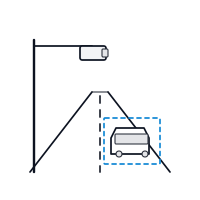
Autonomous vehicles
Perception and sensor fusion across several cameras on the Orin NX 16 GB build.
Built for airborne and rugged platforms
On a drone the MILBOX‑ORNX acts as the companion computer, running vision and autonomy alongside the flight controller; its CAN bus and serial ports make that link, and the camera expansion connector brings the sensors in.
Its military power filtering and 9–40 V DC input handle the unstable supply of a moving platform, the IP67 sealing and −25 to 85 °C range handle the environment, and MIL-STD-461G handles the electrically noisy world of an airframe or vehicle. Our reference to the military standards behind these ratings explains what MIL-STD-461, 704 and 1275 each test.
From module to deployed platform
A drone or defense computer earns its place once it is integrated: the right module, the cameras working, the flight-controller or vehicle link proven and the paperwork in order.
-
Configure
Module and optionsWe match the MILBOX-ORNX to the platform: Orin NX or Orin Nano module, storage, cellular or Wi-Fi, and the camera option.
-
Source
ModulesWe source the Orin modules, including TAA-compliant options where the program calls for them.
-
Integrate
Payload and linkCameras and payload are integrated, and the flight-controller link or vehicle bus is brought up over CAN or serial.
-
Test
DeliveryThe software image is loaded and tested on the bench, and each system ships with its configuration and test record.
Related reading
For the wider picture on airborne AI, how Airbus Defense and Space runs ISR drone video analytics on a rugged Jetson AGX Orin computer shows a deployed airborne system. For lighter airframes, we also supply the Neousys FLYC-300 low-SWaP mission computer and the Sintrones iBOX-604-G2 drone computer with GMSL, both built on Jetson Orin.
MILBOX-ORNX FAQs
-
What Is a Drone Companion Computer?
A drone companion computer is a small AI computer that runs alongside the flight controller on a UAV. The flight controller flies the aircraft; the companion computer does the thinking — running computer vision and AI to give the drone autonomy such as obstacle avoidance, navigation, and object detection. NVIDIA Jetson is the common choice because it delivers high AI performance at a weight light enough to fly.
-
Which NVIDIA Jetson Is Best for a Drone?
For most drones the NVIDIA Jetson Orin NX is the sweet spot: up to 100 TOPS of AI in a low-power, lightweight module, enough for multi-camera vision and autonomy. The lighter Orin Nano suits simpler payloads. The choice ultimately depends on the AI workload, the weight budget, and the flight time.
-
How Does a Jetson Connect to a Flight Controller?
An NVIDIA Jetson connects to a drone flight controller over a serial UART or a CAN bus, usually speaking the MAVLink protocol. The Jetson runs the autonomy software (often ArduPilot or PX4 companion software) and sends commands, waypoints, and position estimates to the flight controller, which executes them and returns telemetry.
-
What Is SWaP-C?
SWaP-C stands for size, weight, power and cost. It is the design trade-off used in defense and aerospace to judge equipment for platforms with tight limits, such as drones and vehicles, where every gram, watt and pound spent reduces endurance, payload or budget.
-
What Does ISR Mean in the Military?
In the military, ISR stands for intelligence, surveillance and reconnaissance: the collection, processing and analysis of information about an area or target to support decisions. It is carried out by satellites, aircraft, drones, ships and ground sensors.
-
Jetson Orin Nano vs Orin NX: What Is the Difference?
The Orin Nano delivers up to 67 TOPS in 7 to 25 W with 4 to 8 GB, suited to entry-level, low-power vision. The Orin NX steps up to 157 TOPS in 10 to 40 W with 8 to 16 GB, for multi-camera and heavier inference. Choose the NX when one camera or one model is not enough.
-
What Is MIL-STD-461?
MIL-STD-461 is the US military standard for the electromagnetic compatibility (EMC) of equipment. It sets limits and test methods for how much electromagnetic interference a device may emit, and how much it must tolerate, across both conducted and radiated paths.
Putting a Jetson Orin computer on a UAV?
Tell us the platform, the payload, and the environment. As your system integrator we configure the MILBOX-ORNX and integrate it into a deployable airborne or rugged platform.