
 US
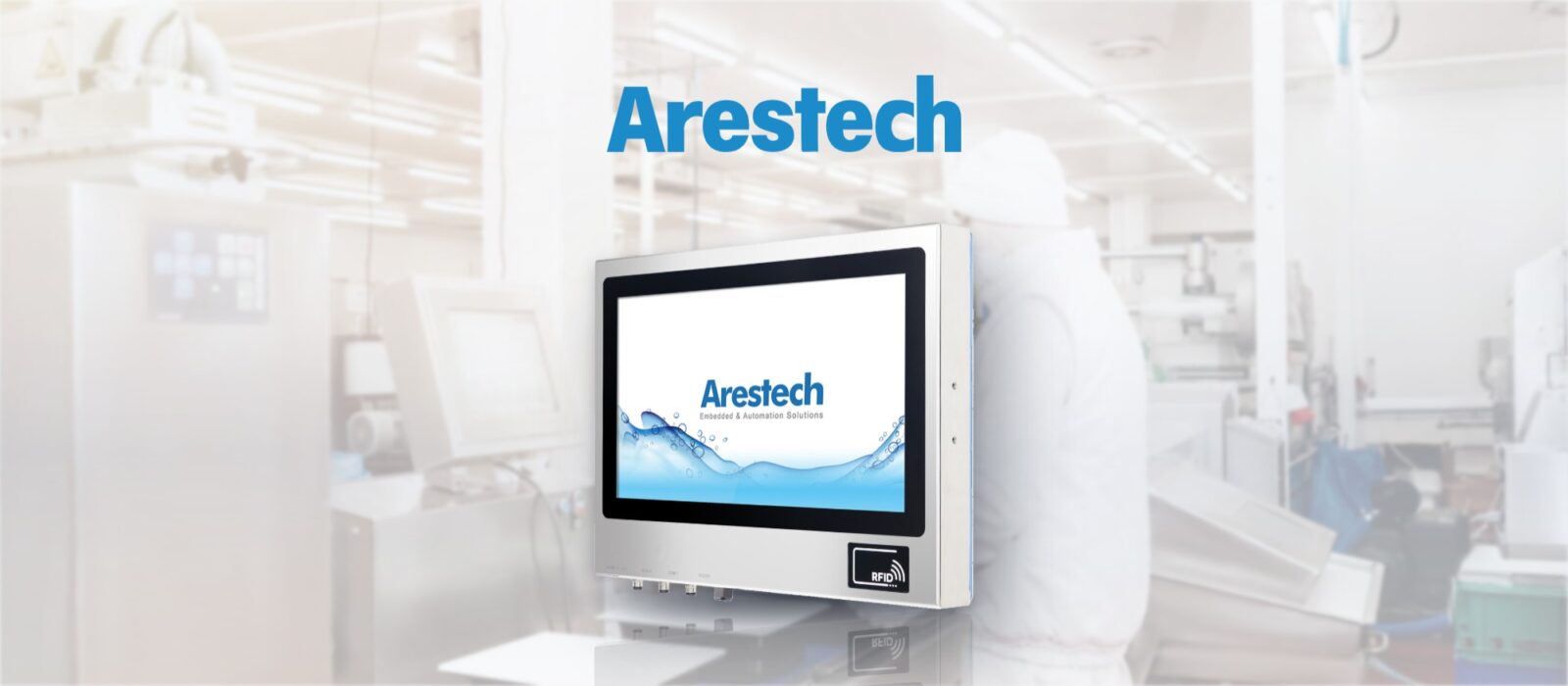
Integrating Waterproof HMIs with Leading Food & Beverage Manufacturers
Food and beverage processing plants are cleaned with high-pressure water and harsh disinfectants to stay hygienic, often at the end of every shift. Many still rely on consumer-grade computers and displays housed in IP-rated retrofit enclosures to protect them from food particles, spray and cleaning chemicals. When one of those enclosures fails, the hardware inside is exposed, and the result is a costly stoppage on the line.
We have supplied hundreds of stainless steel HMIs and waterproof touchscreen displays to food and beverage manufacturers, and the same problems come up again and again. Here is what we have learned, and the hardware we specify today. It is the core of our work in food and beverage.
Why HMIs fail on food and beverage lines
The faults we see most often in plants still using retrofit or consumer-grade hardware.
-
01
Bulky retrofit enclosures
Consumer hardware in a box takes up space and adds ledges and seams to clean.
-
02
Water and dust ingress
Substandard sealing lets wash-down water and fine particles reach the electronics.
-
03
Chemical degradation
Sanitizers attack paint, plastics and the wrong grade of metal.
-
04
Food build-up in crevices
Gaps around bezels and buttons trap residue where bacteria can grow.
-
05
The wrong touch technology
Screens that cannot be used with gloves or wet hands slow operators down.
-
06
Poor visibility
Displays that wash out under bright plant lighting are hard to read.
Most of these come down to hygienic design: what the equipment is made of, how it is sealed and whether it has anywhere for dirt to hide. Our hygienic design guide explains the principles, and our washdown area FAQ sets out what equipment has to survive.
What a stainless steel HMI does differently
- 01Food grade stainless
- SUS304 food grade stainless steel, with SUS316L as an option where chlorides and stronger chemicals are used.
- 02Full IP66/IP69K
- The whole system is sealed, not just the front, so it can take hot, high-pressure wash-downs from any angle.
- 03Flat, crevice-free front
- A true flat panel with smooth surfaces and curved edges leaves nowhere for residue to settle.
- 04Sealed M12 I/O
- Ethernet, serial, USB and power on M12 connectors, so no open ports or cable glands face the spray.
- 05Fanless and solid-state
- No fan to draw in moisture or spread contamination, and nothing to wear out on a 24/7 line.
- 06Touch for the job
- Projected capacitive glass for fast multi-touch, or 5-wire resistive where operators wear thick gloves.
IP69K and IP67 test different things, and a wash-down line needs the right one; our IP69K vs IP67 FAQ explains the difference, and our 304 vs 316 stainless steel guide helps choose the grade. For design guidance from the food industry itself, see our FAQs on EHEDG and 3-A sanitary standards.
Arestech stainless steel panel PCs
Full IP66/IP69K SUS304 panel PCs from 10.1 to 24 inch (10.1" to 24"), with Intel Core i5-1235U or Celeron J6412 and M12 I/O.
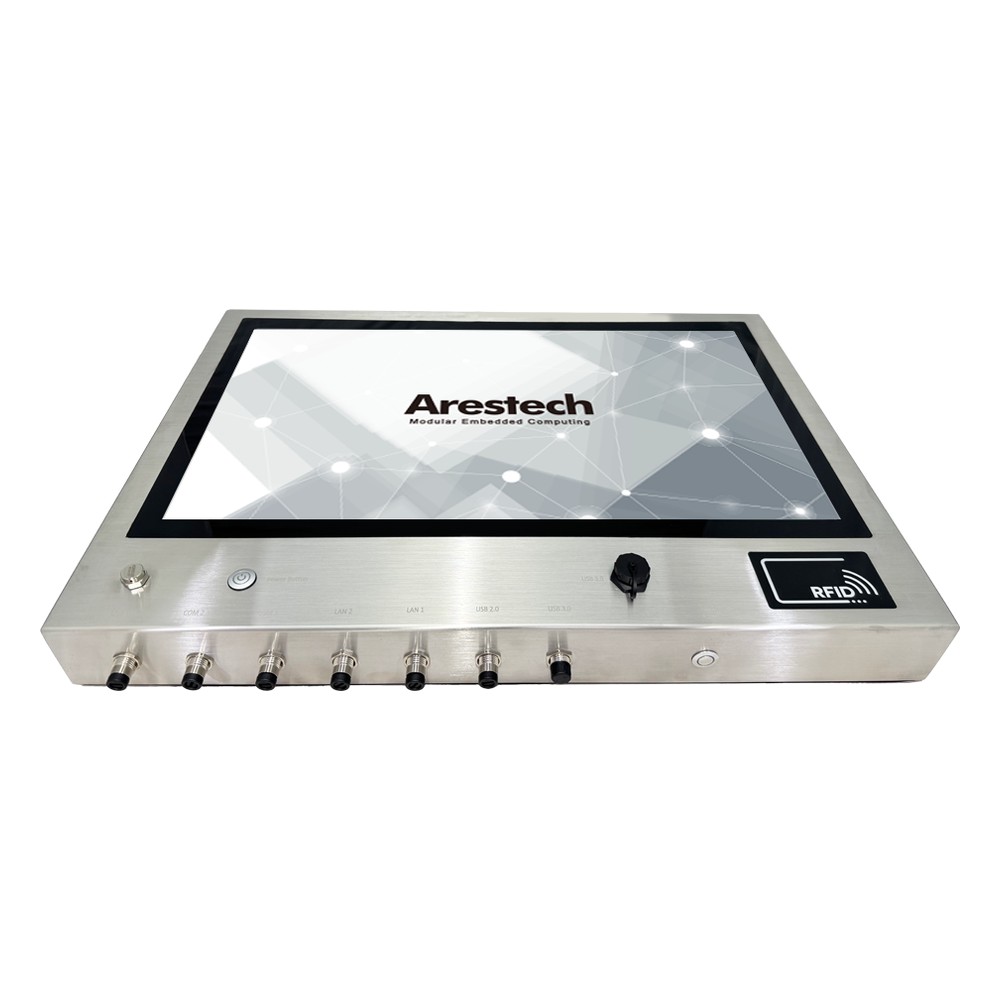
24″ Full HD PCAP Stainless Steel Panel PC with Intel Core i5-1235U, Dual 2.5GbE and IP66/IP69K
- Display
- 24″ (16:9, 1920×1080, FHD)
- Brightness
- 300 nits
- Touch
- Projective Capacitive Touch
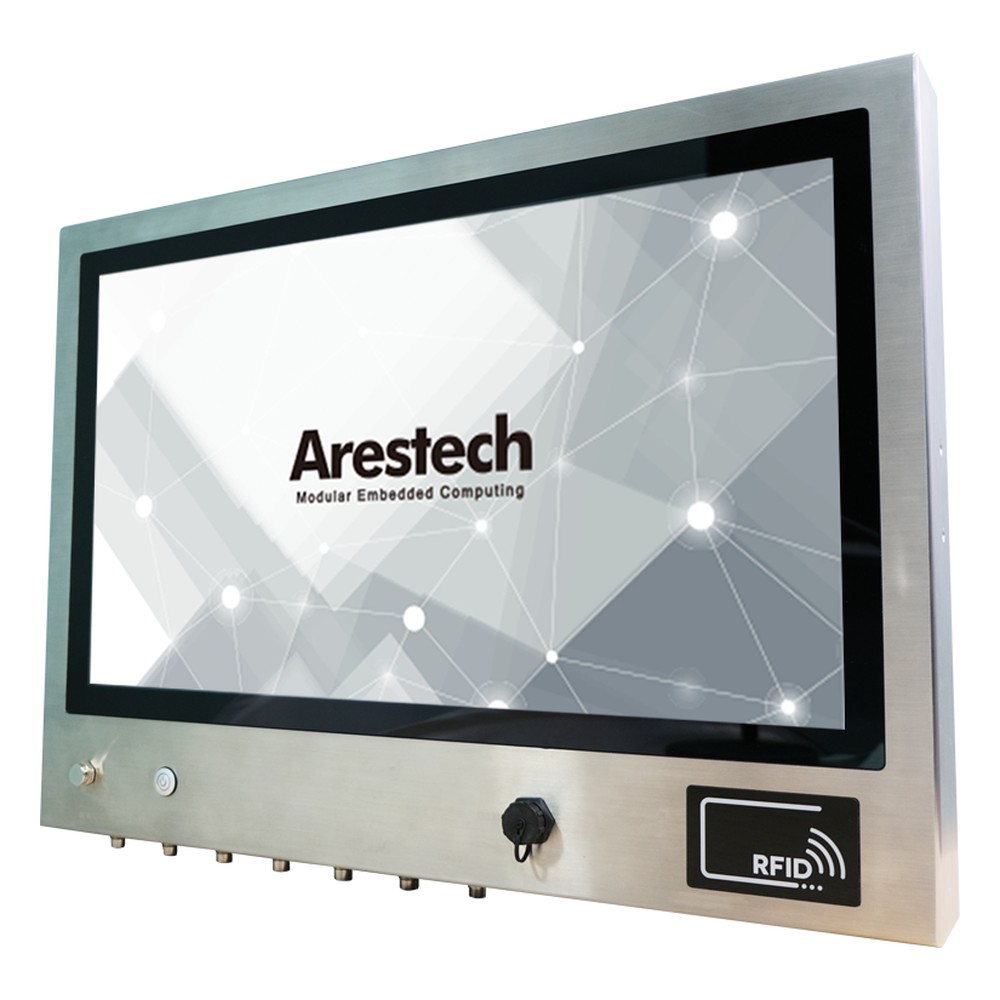
21.5″ Full HD PCAP Stainless Steel Panel PC with Intel Core i5-1235U, Dual 2.5GbE and IP66/IP69K
- Display
- 21.5″ (16:9, 1920×1080, FHD)
- Brightness
- 250 nits
- Touch
- Projective Capacitive Touch
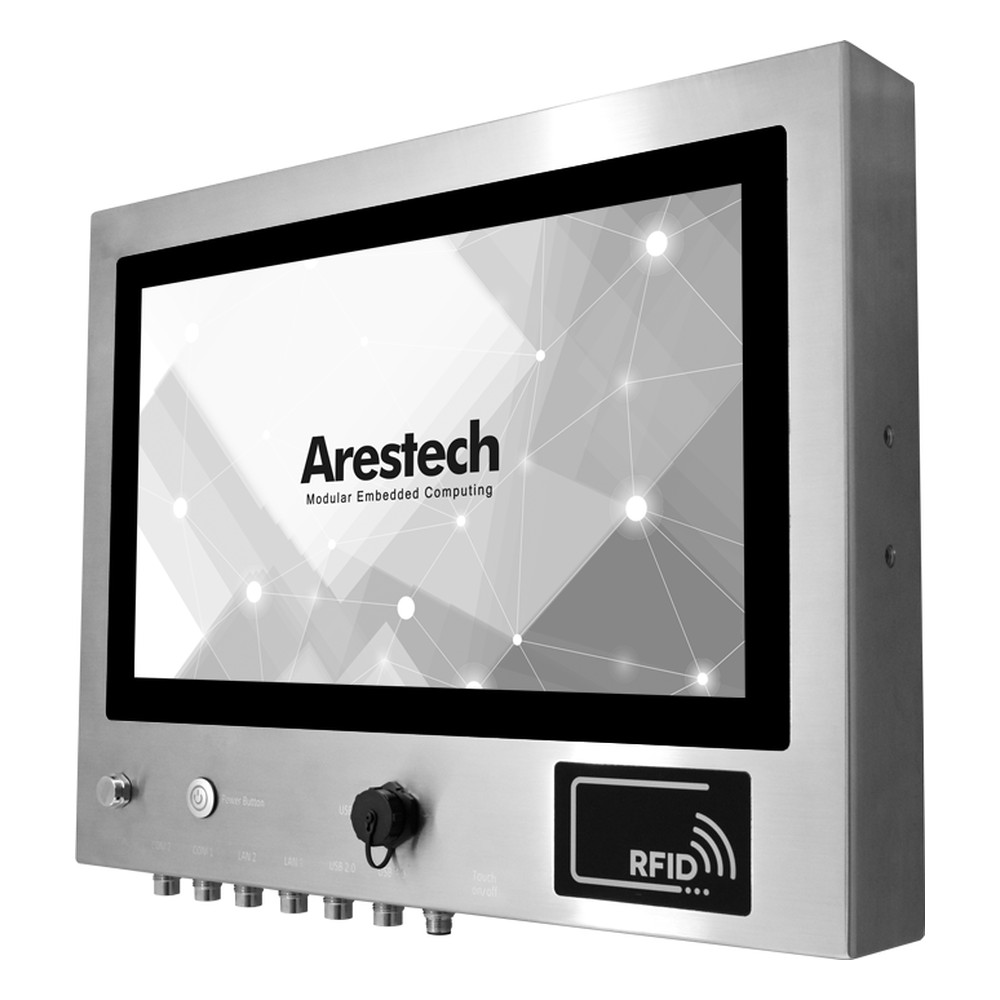
15.6″ Full HD PCAP Stainless Steel Panel PC with Intel Core i5-1235U, Dual 2.5GbE and IP66/IP69K
- Display
- 15.6″ (16:9, 1920×1080, FHD)
- Brightness
- 450 nits
- Touch
- Projective Capacitive Touch
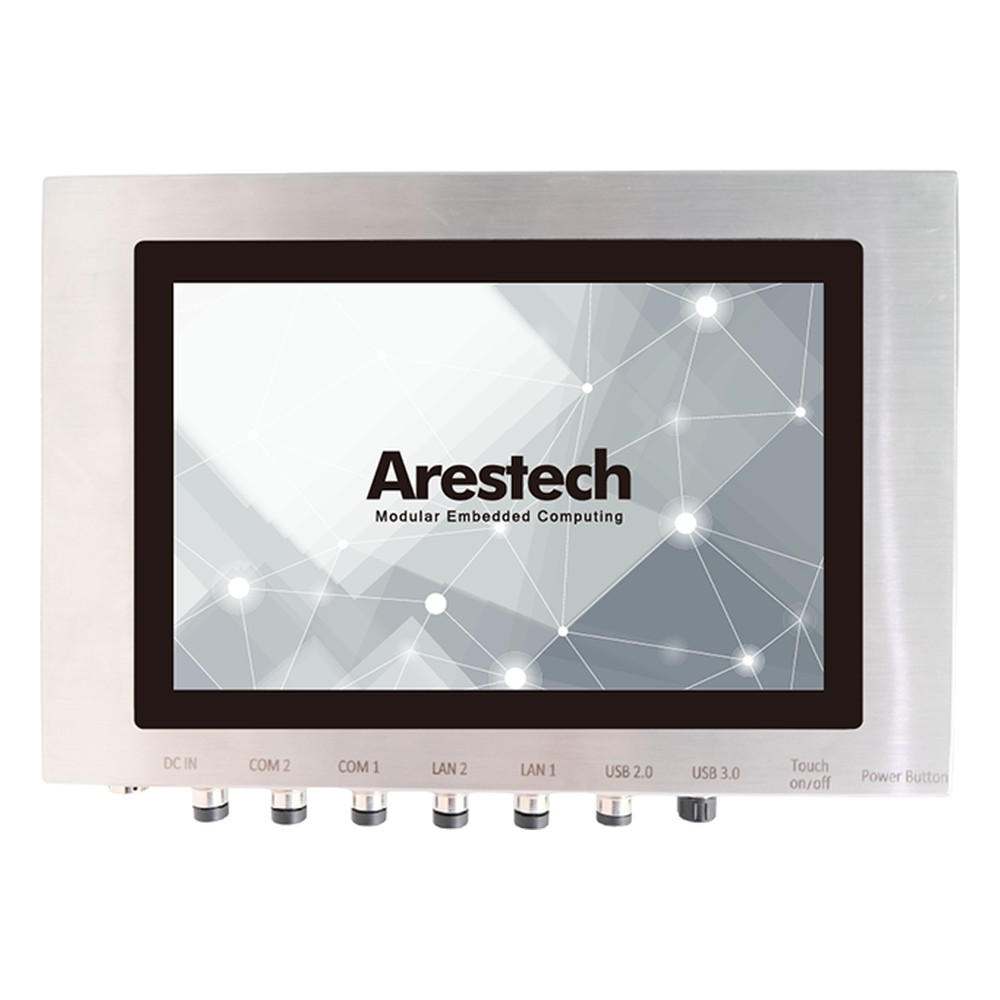
10.1″ WXGA PCAP Stainless Steel Panel PC with Intel Core i5-1235U, Dual 2.5GbE and IP66/IP69K
- Display
- 10.1″ (8:5, 1280×800, WXGA)
- Brightness
- 500 nits
- Touch
- Projective Capacitive Touch
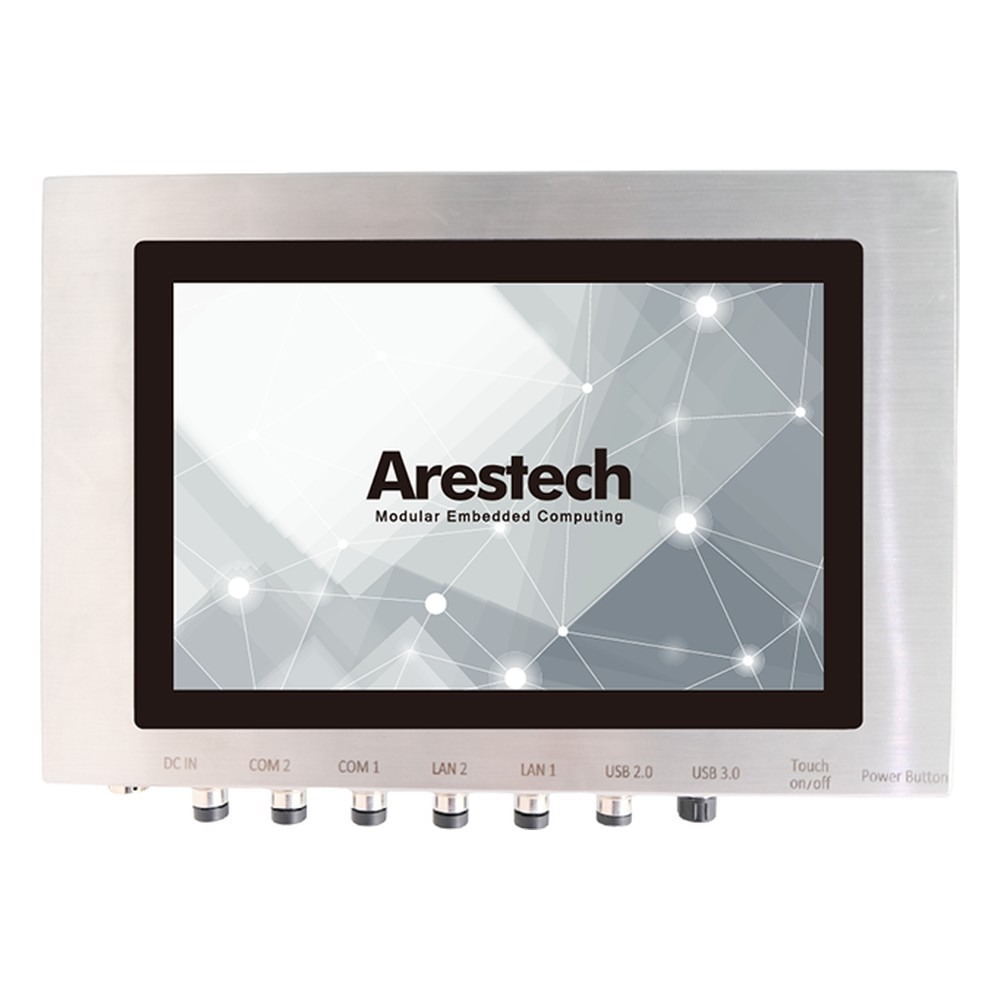
10.1″ WXGA PCAP Stainless Steel Panel PC with Intel Celeron J6412, M12 I/O and IP66/IP69K
- Display
- 10.1″ (8:5, 1280×800, WXGA)
- Brightness
- 500 nits
- Touch
- Projective Capacitive Touch
Built for the line
Arestech’s current PPC-Z range comes in two platforms. The Core i5-1235U models add dual 2.5GbE for faster connections to line systems, and the 21.5 and 24 inch versions include a 13.56 MHz RFID reader for operator log-in and a front IP67 USB port. The Celeron J6412 models cover simpler HMI tasks at a lower power draw. All run from 9 to 36 V DC or 12 to 36 V DC on an M12 input and operate from −10 to 60 °C.
| Specification | Arestech stainless steel HMIs |
|---|---|
| Materials | SUS304 stainless steel, SUS316L optional |
| Ingress protection | Full system IP66/IP69K (panel PCs); front IP66/IP69K (monitors) |
| Screen sizes | 10.1 to 24 inch |
| Touch | Projected capacitive or 5-wire resistive |
| Processors | Intel Core i5-1235U or Celeron J6412 |
| I/O | 2.5GbE or GbE, RS-232/422/485, USB, all on M12 |
| Mounting | Panel or VESA |
| Operating systems | Windows and Linux |
Where a line already has a PC in a control cabinet, matching stainless steel touch monitors put the screen at the machine with the same hygienic front.
Stainless steel touch monitors
Front IP66/IP69K SUS304 touch monitors with PCAP touch, for lines that keep the PC in a cabinet.
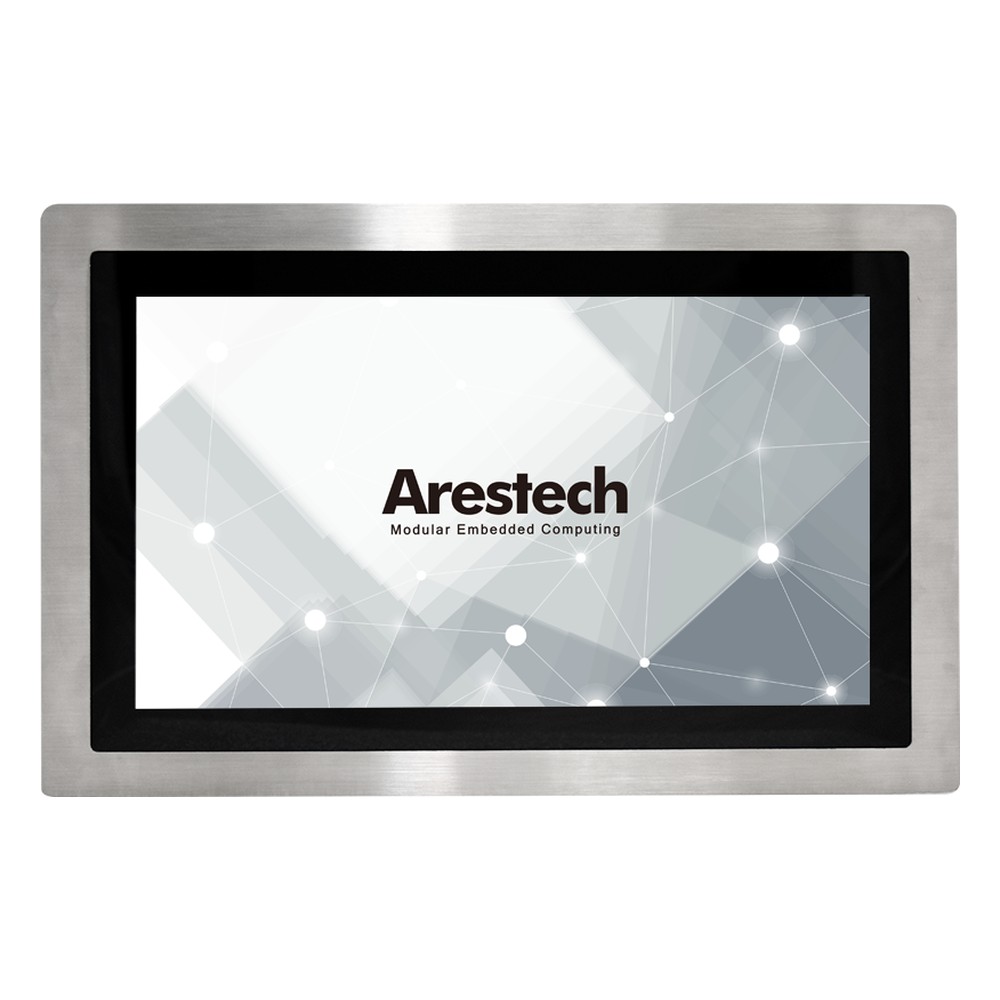
15.6″ Full HD PCAP Stainless Steel Touch Monitor with Front IP66/IP69K Sealing
- Display
- 15.6″ (16:9, 1920×1080, FHD)
- Brightness
- 450 nits
- Touch
- Projective Capacitive Touch
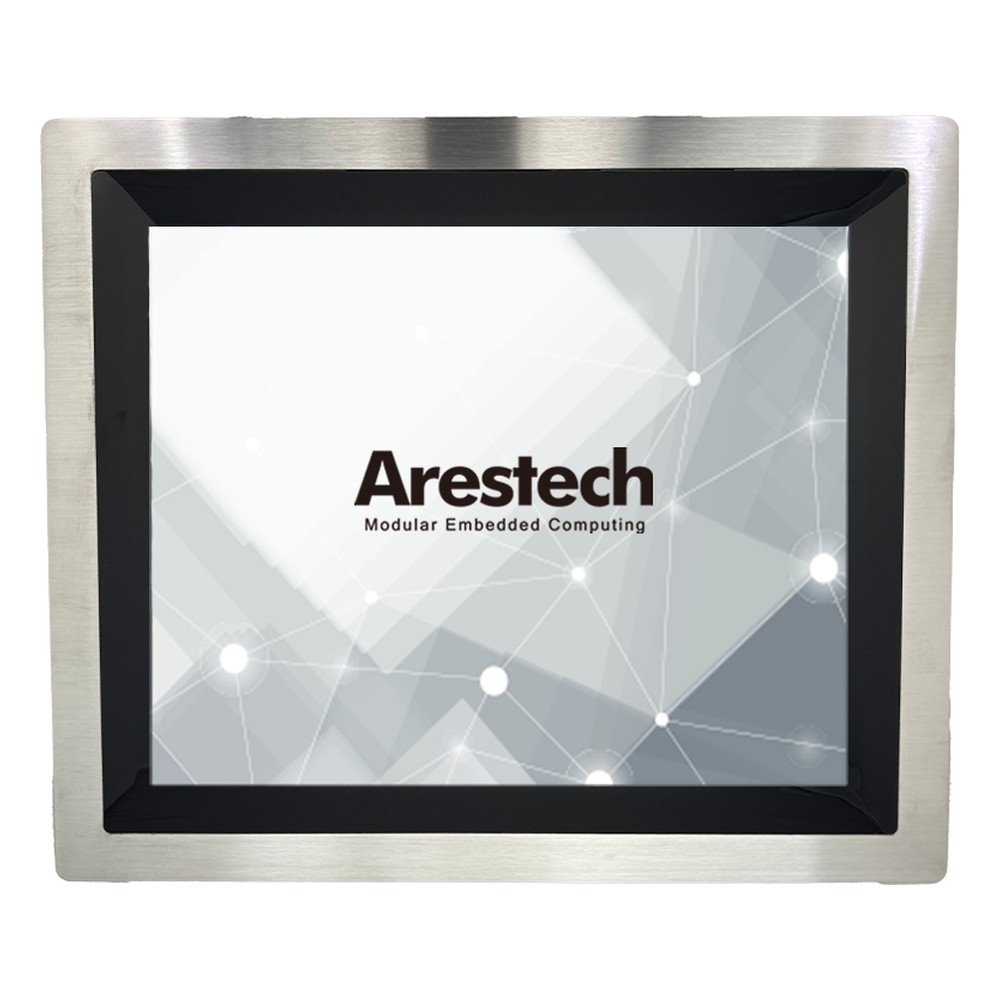
17″ PCAP Stainless Steel Touch Monitor with SXGA LCD and Front IP66/IP69K
- Display
- 17″ (5:4, 1280×1024, SXGA)
- Brightness
- 350 nits
- Touch
- Projective Capacitive Touch
What changes when the HMI is built for wash-down
Replacing retrofit enclosures with purpose-built stainless steel HMIs removes the most common causes of failure.
-
Outcome 01
No more retrofit boxes
The HMI itself is sealed, so there is no separate enclosure to fail, take up space or clean around.
-
Outcome 02
Faster, more thorough cleaning
Flat stainless fronts and sealed connectors take full wash-downs and harsh disinfectants.
-
Outcome 03
Usable with gloves
The right touch technology lets operators work without removing PPE.
-
Outcome 04
Reliable 24/7
Fanless, solid-state hardware keeps running between cleans, shift after shift.
Food and beverage HMI FAQs
-
What Is a Washdown Area?
A washdown area is a part of a plant that is cleaned regularly with water, detergents and sanitizers, often hot and at high pressure, to keep it hygienic. They are common in food, beverage, dairy, meat and pharmaceutical production, and any equipment installed there has to be sealed, corrosion resistant and easy to clean.
-
IP69K vs IP67: What Is the Difference?
Both ratings mean the enclosure is dust tight, but they test water in different ways. IP67 covers temporary immersion, up to 1 m deep for 30 minutes. IP69K covers close-range, high-pressure, high-temperature water jets, like those used in wash-downs. Passing one does not mean passing the other, so equipment that faces both is tested to both.
-
What Is EHEDG?
EHEDG, the European Hygienic Engineering and Design Group, is a consortium of equipment makers, food producers, research institutes and public health bodies, founded in 1989. It publishes guidelines on hygienic design for food processing equipment and certifies equipment designs that pass its cleanability tests.
-
What Are 3-A Sanitary Standards?
3-A Sanitary Standards are US design standards for equipment used in dairy, food and beverage processing, published by 3-A Sanitary Standards, Inc. They set requirements for materials, surface finishes and construction so equipment can be cleaned and sanitized properly. Equipment that passes third-party verification can carry the 3-A Symbol.
-
What Is Food Grade Stainless Steel?
Food grade stainless steel is stainless steel suitable for contact with food, most commonly grade 304 (18/8) and grade 316. Both are corrosion resistant, non-porous and easy to clean. “Food grade” is a description rather than a single standard: compliance comes from the food-contact regulations of your market.
-
What does IP69K mean?
IP69K means an enclosure is dust-tight and protected against high-pressure, high-temperature water jets per DIN 40050-9 — 80°C water at 8—10 MPa from close range. It is the food and beverage industry standard for sanitary wash-down on both sides of the Atlantic — and it does NOT imply submersion protection.
Choosing HMIs for a wash-down line?
Tell us about your application and a member of our team will get right back to you.